
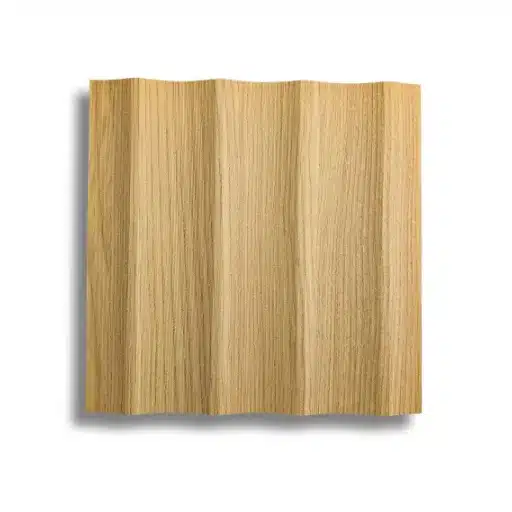
Wood Wall Veneer: Transform Your Space with Real Wood Veneer Panels
Regardless whether you improve the interior of a family house or create a commercial space, proper materials will be of the highest importance. Wood wall finishing serves as an efficient means towards converting boring walls into aesthetically pleasing features, for they add a bit of natural warmth and style to an interior. Unlike the traditional idea of paneling, wood wall finishing panels use real wood and can be used diversely to decorate a space sensibly. The current section of the paper would emphasize the most significant uses of the wood wall veneer and justify its preference and popularity to the other decorative options of the interior. Learn about the ways these panels can enhance the overall appearance of the space: the atmosphere and the design of the structure as it aged.
Understanding Wood Veneer
What is Wood Veneer?
Wood veneer or natural wood veneer sheets are thin layers of actual wood shavings obtained from a bigger wooden block. It is mainly used when the board is 0.5 to 2 mm thick and bonded to a thick material such as plywood, medium-density fiberboard or MDF, or even particleboard to make it complete. Wood veneer is introduced as a substitute to solid wood as it solves the issue of waste of raw material thus enhancing the sustainability and cost-effectiveness.
One of the key features of the wood veneer is that it can imitate wood grain patterns, textures and warmth without the excessive use of the hardwood. Different species such as oak, maple veneer, walnut or cherry veneer are available, giving an array of design options to architects and interior decorators. Today’s invention of new methods maintains the even thickness of veneer as well as assures uniform look, making it possible to produce veneers for different projects with very definite geometric parameters.
The scope of wooden veneers largely spans across furniture, cabinets as well as cladding or wood wall veneer and decorative purposes. They allow for high end wood effects without having to worry about serious wood costs as compared to expensive hardwoods and without wastage of wood. Moreover veneers are more eco-friendly than cutting thick pieces of timber since it utilizes very little trees in making large sheets.
Types of Wood Veneer Panels
Wood veneer panels can be produced in several types, with each type being suited for various construction tasks and applications. The most popular types are raw wood veneers, paper back veneers, phenolic back veneers, reconstituted leaf veneers and banding veneers. According to their processing, thickness and pliability, these kinds of veneers have various applications.
- Raw veneers: The most basic type of the veneer is the raw veneer, which is just a thin piece of wood without any support. Since they have a natural wooden look, they are simply very common in luxury wall-cladding works where such panels were habitually chosen by hand with full regard to their aesthetic aspects. These types of wood wall veneer panels need to be installed very carefully as they are easier to crack or split than backed veneer panels.
- Veneers: Paper-Base and Phenol-Base: These two types of veneers are attached to surfaces to improve their quality and usage. Paper backed veneers are very light and come in a wide range of designs suitable for smooth or complex surfaces. In contrast, calumnies backed with a phenol material have a resin impregnated backside that provides stability and enhanced water resistance. They are suitable for busy and/or damp areas. Both of these boards find popularity and extensive use in the furniture manufacturing, as well as, the interior design industries because of their functional advantages as well as visual ones.
- Veneers of Artificial Mass and for Covering: Also called re-constructed veneers, the veneers made of natural wood fibers are colored and reshaped in the way to achieve certain patterns and colors of grain. Primarily, these are used where there is a shape of the same surface i.e. contemporary structures. On the other hand, veneer is used to cover the poremost parts of furniture such as wood wall veneer furniture and partitions, etc and makes them organized and seems perfect.
Every single one of these veneer panels possesses distinctive features and benefits making them suitable for applications such as decorative complexes or furniture production among others.
Benefits of Using Wood Veneer
- Sustainability and Use of Resources: A more conscious and effective way of producing wood is wood veneering, because it optimizes wood resources. Hundreds of veneer sheets can be cut from one log, hence there is less wastage than solid wood products. This makes veneer one of the most feasible solutions for the reduction of deforestation with the added advantage of timber aesthetics.
- Affordability: Wood veneer is a cheaper alternative to solid wood. The manufacturers achieve this by placing thin slices of exquisite wood over a strong material like plywood or timber board rather than solid wood, which is more expensive. As such, it enables the application of luxury finishes when the budget is limited.
- Design Conceivability: Wood has no boundaries, as it calls for a number of techniques ranging from colors, to textures and grain patterns. As such, it allows contractors, as well as manufacturers, to create a complex and at the same time a uniform finish, which would not usually be possible as stamped wood. This unique feature of veneer allows it to be used in both modern and traditional interior designs.
- Stability Over Longer Periods of Use: When glued onto solid surfaces, wood wall veneer presents little to no tendency for warping or cracking unlike solid lumber which generally swells or shrinks in response to atmospheric changes. The improved solidity and rigidity advantage make it suitable in moist areas such as bathrooms and kitchens.
- Easy Personalization: It is easy to manipulate wood veneer to conform to any type of design envisaged. For example, veneers can be book-matched, stained, and even finished however one desires. This flexibility explains why architects and designers use this approach frequently when coming up with furniture, cabinets or and interior espcially aiming for somthing new and different.
Installation of Wood Wall Panels
Easy Installation Methods
Installing wood wall panels is not complicated and can be done in quite a few different ways effectively. How the panel is installed depends on the panel and what it is going to be fixed on. A commonly used form of installation is using adhesives to fix the panels, where construction glue is used on the base of the panels to be attached. It is most commonly used when the surface on to which you are fixing the panel is smooth as it avoids the need for other supporting structural members.
Then there’s mechanical girdering. Which means nailing or screwing the panels in place. This works best for panels that are thick and heavy and has high-traffic areas because it is more anti-deformative adapted. For the more contemporary styles, use of some kind of clip system over rails becomes more prevalent due to its innate accuracy and inferiority to spectacular holes or broken walls when you wish to remove or replace the panels.
In addition, prefabricated tongue-and-groove panels are easy to install as each panel automatically locks into place preventing any visible joints. Preparing the wall surface, for example cleaning, leveling the surface and making the measurements for the placement of the panels are very important steps to ensure a perfect installation. Depending on the material of use and application, there is a room to select the appropriate method for the installation of wood wall veneer whilst considering the practicality and aesthetics.
Step-by-Step Installation Guide
- Getting the Walls Ready: The first step is to make sure that the wall is clean, dry, and even. Fix any imperfections on the wall using a putty blade while filling the cracks or holes and let the filler completely dry before sanding. The preparation of the surface helps overcome any challenges such as sticking or alignment when being mounted.
- Measurement and Planning: Determine the necessary size and shape of the wall and figure out how many panels will be used including trimming edges, corners, appliances, etc. Use a chalk chalk or laser level to draw guide lines on the wall and prevent the panels from creeping during application.
- Size Panels Appropriately: Depending on the panel material (e.g. wood wall veneer, use a circular or fine-toothed saw), cut the panels down to size to fit the walls. Remember to mind the corners and the moldings, as some cuts are more critical and difficult than others because care must be exercised during execution to achieve neat cuts.
- Glue or Screw: To proceed with the installation process according to the selected method, spread the construction adhesive all over the back surface of each panel or perforate the panels in readiness for the use of fasteners such as screws or nails. The manufacturer’s instructions regarding any adhesive or fasteners should be strictly adhered to in order to have the assembly intact.
- Putting Up the Panels: For those employing adhesives, put the first panel in place following the previously drawn lines and exert pressure towards the wall. In the case of panels that are to be fastened to the wall, make sure that the panel is level first so that it will be easy to screw, nail, or staple it to the wall at equal distances to avoid sags by the eaching panel.
- Gluing the Rest of the Panels: Proceed paneling the walls carefully to wooden panel joints or overlapped sections to achieve a smooth surface. In the layers of adhesive, take care not to press out any of the panels.
- Check and Finish: Pre-finished wood wall veneer after even four adhesives or glue stick outs of elegance were applied on the joints can be hung towards the wall; decorative, until it is primed painting and craftsmen are needed. There is also various but, particularly wall panels established on base first and then sitting and nailing panels come and practical to use than the traditional grooved timber paneling.
When every panel is placed as required, go over the installation for any resulting junctions or joints that might be out of place or even have some gaps. Fill in the seams around any visible panels and clean off any filler right after application. Be sure to let the adhesive dry fully to specifications before proceeding to any other finish application.
Common Mistakes to Avoid
- When Surfaces Are Not Correctly Prepared: It is important to note that failing to prepare the surfaces beforehand may make it hard for the adhesive to stick longer. I strongly recommend keeping the designated surface dry and away from dust, grease, and any other foreign materials. Scrap the areas that are not level and if the wood paneling material states so, prime the surface too.
- Measurement and cutting issues: Cluster mistakes of measuring and cutting lead to mistakes in fitting, with uncomfortable gaps and changes in alignment in the end. Measure the dimensions twice and ensure the dimensions are accurate using sharp cutting tools.
- Improper Glue: Wood panels have different types of adhesives for their clean material body, thickness and where they are used. If the wrong adhesive is used, the material might fall off or warp. Get the glue prescribed by the panel supplier.
- Forgetting the allowance of expansion gaps: Just because you have expansion in othergaps doesn’t mean all gaps must be expanded. Some gaps, especially between the boundary and the wall, must be larger since the components such as end and angle components expand. Panels made of wood react with humidity and temperature and hence undergo expansion and contraction. Admittedly, a good number of causes of such prevalence include failure to provide expansion gaps to the panel members in adjoins that distort during expansion. It is recommended spacing provided.
- When you are in a Hurry to Install the Panels: Can also have skewed positioning or unnecessary application of glue for parts of the walls. Reason that doing several things one after the other is much appropriate – making sure each panel is too tight in its place before removing the next one.
- Neglecting the Needed Keep up: As much as one would wish to set and just wash and go, it is not going to happen, say, after just a month of being installed. They are a responsible mover ensuring the usage of products that keep systems in place but do not spoil or prolong the look of the walls.
These Better When Done Right Wood Wall Veneer Installation Mistakes can be avoided. This goes a long way in maintaining its integrity and beauty in many years.
Design Ideas for Wood Wall Paneling
Creative Uses in Residential Spaces
Adding a wood wall veneer in a house provides a wide range of possibilities for its design. For example, it might include creating an accent wall in the living room or bedroom. Textured wood, perforated wood or natural wood, creates a highlighted wall from which the room’s theme emerges without distracting attention from others. More contemporary designs, on the other hand, include the use of modern materials such as glass or metal with wood to bring in warmth within the structure. The combination of the raw looking wood panels with polished and elegant furniture, higher modern temperature, for example, causes the image of a distorted countryside.
Clever exploitation of wood panels can as well be applied in the space planning of areas that are assumed to be wasted, in this case minimizing resistance from the heads. Such spaces as home offices, reading nooks or study corners can be separated or enhanced without much difficulties using either horizontal and/or vertical wooden wall veneering rather than demolishing walls. Here one may not only emphasize the aesthetics, but also address functional aspects such as voice elimination or integrating shelving in the space for a given purpose. In smaller spaces – corridors or tiny bedrooms – in order to achieve full height, and do not break the general style of other rooms light or colored wooden panels can be used.
Closet interiors along with ceilings have also become some of the most unique but effective areas in the house for wood paneling. Installing cedar panels in a capacious closet, for instance, gives the sweet and mellow smell of the great outdoors in addition to their actual use, which is to keep moths away. Ceilings paneled with wood, on the contrary, offer an elevation to the ordinary and turn a common room into a distinctively interesting element. Both of the complex coffered approaches and the plain tongue-and-groove systems, in turn, are examples of how adaptable and timeless wood wall veneers are in the spheres of residential architecture.
Incorporating Wood Veneer in Commercial Spaces
Wood veneer has become popular in commercial interior design because of its aesthetic adaptability and practical productivity. Designed to withstand wear and tear, veneer panels are manufactured by gluing thin layers of natural timber to a base material, which lends the look of essential timber at a much lower cost. This is an especially cost effective solution for areas exposed to many users in corporate environments, retail facilities and on par in the tourism industry.
Wood wall veneer, for instance, is an eco-couture where it encourages the full utilization of timber resources ehich contributes to the environment by developing encouraging less wastage. In extreme cases, it has been found that project managers always order for best quality furniture pieces which […] after several years fulfill eco-friendly building protocols like the LEED (Leadership in Energy and Environmental Design).
Wood veneer keeps a lot of weight off the structure, and it takes minutes to install. It can also be used on a vast range of surfaces, whether it is furniture or panels or glass walls. Hence, the wood wall veneer can be the core component of the design, regardless of the shape and form of the structure. The advantage of such finish is that it does not warp or crack as long as the veneer is properly cared within, which is a critical factor in making use of the wood veneer for demanding environments.
Wood veneer is also being applied in schools, designing stained, grained or finished veneer that fits the business brand. Such versatility is both functional, as the need for engagement goes beyond the design, and promotional, as exploiting “the story” is about the design. Concentrating on such materials as wood veneer highlights aspects of design, along with other clear instead of soft, elements like place of work.
Maintenance and Care for Wood Wall Panels
Cleaning and Upkeep Tips
In order to maintain the natural beauty and the shape of wood wall veneers panels several steps must be taken continuously. First and foremost dust the panels with a soft brush or a microfiber cloth frequently so the dirt and dust will not collect on the panels and ruin the shine. In case of heavy soiling use a less aggressive wood soap that has been watered down and does not contain any breakers or chemical solvents that may harm the wood or its coating. Ideally to avoid wetting the wood too much it is important not to put the cleaning solution on the wood surface but instead on the fabric.
Moisture management is important in wood wall veneer paneling because there can be swelling or shrinking of the wood due to changes in moisture content of the surrounding environment. It is advisable to keep the indoor relative humidity within the range of 30% to 50% and if necessary, use humidifiers, or dehumidifiers. In addition, louvered or free standing shutters, and window blinds with high levels of UVA and UVB protection can be installed to shield the panels from the sun’s rays, which will tend to wear them out in the long term.
In case of small nicks or abrasions, opt for the use of a correction pen or an appropriate wood repair kit that is like the panel in terms of completion as well as its grain pattern. It is also suggested to regularly inspect the paneling since early warning signals like veneer or panels flaking off can be identified and repaired at the earliest. Following these guidelines guarantees the durability of wood wall panels’ Visually impressive installations through time.
Long-Term Care for Longevity
To make sure that wood wall veneer remains intact for longer, there is need to control the situation within an acceptable range. If not, the wood may bend, contract or expand. Therefore, many people recommend that the humidity level be held within the limits of 40–60%. This should be possible with the help of a hygrometer in order to check the condition of humidity within the house and if the temperature goes up, then a dehumidifier or humidifier should be employed. Moreover keeping the temperature within an ordered range for example 60°F to 80°F, helps reduce the effects of thermal expansion and contraction.
When cleaning up, use a damp cleaning cloth made of microfiber to wipe dust away and dry immediately with a drying towel to absorb the moisture. Use of strong chemicals or any abrasive material for cleaning should be steered away from as this can cause the finishing to wear out and the wood’s structure to be weakened effectively. One should not wait for the spills to dry, rather, they should be wiped right away to avoid stains or water marks on the surface by utilizing mild cleaning agents intended for wood.
In addition to the above mentioned measures, you can also pay for services such as re-sealing or refinishing the wood which can be done every couple of years to restore or reinforce the panels. This is especially the case if panels are prone to sunlight, such finishes are helpful as they contain ultraviolet light blockers that reduce fading. This twofold strategy of protection and restoration ensures that wood wall veneer panels last while retaining their visual appeal.
Sustainability and Wood Veneer Solutions
Choosing Sustainable Wood Sources
Determining which wood is eco-friendly probably involves first looking for companies who practice sustainable management of forests. In this regard, international certification systems such as the Forest Stewardship Council (FSC) and the Program for the Endorsement of Forest Certification (PEFC) promote the responsible consumption of wood resources by presenting strict environmental, social and economic measures. These attestations ascertain legal operations in forest management , the implementation of controlled cutting and the guarantee of replanting for the logged off lands.
Furthermore, focusing on wood that is available within the locality minimizes the carbon dioxide coming from transport and supports local wood processing creating region-specific benefits. Reconstructed wood and wood-composite products like veneer are environmentally friendlier as they maximize the use of resources with limited wastage. Consume less and make everything out of available raw materials and thanks to advanced technologies, even small pieces of wood can be compressed and shaped into strong elements.
Findings of recent studies emphasize the need to prevent deforestation for ecological stability in the long run. As an illustration, sustainable forest utilization practices according to the World Resources Institute can sustain ecosystems while increasing the output of forests by two times. Strict compliance mechanisms coupled with prudent use of materials can help businesses as well as individuals to protect such precious habitats while fulfilling their building and design requirements.
The Environmental Impact of Wood Veneer
Wood veneer refers to a thin layer of high-quality timber glued to the surface of internal cores, making it possible to conserve valuable trees when building furniture or erecting structures. As a result, wood wall veneer or wooden finished products and structures realise more volumes of products from a single tree thereby creating economies of elements. For example, studies postfactum assert that there is less waste produced from cutting thinner slices or surfaces into laminated sheets as compared to commodities made out of plain wood. Further, the processing of this material even for a short time is much less demanding of energy as compared to traditional wood processing or any other forms of trees. What’s more, sustainability is easily achievable with veneer because it allows full utilization of the rare much growing hardwoods hence reducing the need to cut down much wood.
Although wood wall veneer fabrics help in reducing forest cut down, the effects of such fabrics on the environment relate to a large degree to the types of resins used when making them. For example, until today, a percentage of current manufacturing processes use high VOC content adhesives which exhibit gases emission in the long run. On the other hand, with the developments that have been done in the area of green glue, sympathy from this regard has been greatly helped up to this point. In this sense, if there are appropriate veneers and glue emissions, it is possible to comply with very strict standards and at the same retain the design integrity of the items.
In fact, wood veneer goods tend to support the adoption of circular economy approaches. A good number of veneers can be recycled or reused, particularly those that do not undergo chemical treatments. Instead of causing waste, these recyclable aspects are in line with efforts to have an efficient material lifecycle. Through this, they play their part in less polluting the environment and promote good consumption.
References
-
The Influence of Brick Veneer on Racking Behavior of Light Frame Wood Shear Walls
Explores the structural impact of veneers on wood shear walls, providing insights into their strength and ductility. -
The Effects of Water-Based Color-Protective Barriers on Natural Wood Veneer
Discusses the aesthetic and protective considerations for wood veneers, including color stability and material integrity. -
Factors Affecting the Quality of Timber for Face Veneer
Examines the selection and use of wood veneers in applications like wall paneling for office buildings and public facilities. - Click here to read more.
Frequently Asked Questions (FAQ)
Q: What does wood wall veneer mean and why should it be selected for walls?
A: wood wall veneer can be understood as a thin coating of wood placed on mainly furniture surfaces in retaining the aesthetics and elegance of solid wood but without the need to apply or carry heavy pieces of wood. Whether as accent walls or decorative elements in spaces, wood wall veneer panels help achieve the looks without breaking the bank and come in different finishing options and design for varying purposes including home and business setting.
Q: Is it practical to install — will wood wall veneer be a good fit for me to use as a DIY project?
A: The important advantage of wood wall veneer lies in the fact that it is easy to mount; plank panels have been provided by several manufacturers that have ‘convenient to attach’ aspect. For walls that are already painted or structures to be installed, enthusiasts can carry out veneers with correct preparation and adhesives, however, it is best to read installation and maintenance instructions or contact qualified help for the complicated geometric patterns so as to have a perfect outcome.
Q: Can wood veneer walls be fashioned into decorative walls or other structure?
A: Yes, wood wall panels are indeed suitable for making feature walls which add an element of elegance no fake wood can offer. They work great as wall covering, decorative panels behind the TV or decorations combined with other wall textures. Wooden veneers bring in the cozy look and feel along with a certain level of sophistication even though fully painted walls generally would not.
Q: Are there any soundproofing or energy saving purposes that wood wall coverings might serve?
A: Thin veneers are not exactly known for their soundproofing qualities but these can be used along with suitable frames or sheets to soften room echos and help towards insulating a place. It is very common practice for decorators to apply wood wall veneers in combination with specific acoustic panels to control sound better and create a warm pleasant place for living or working.
Q: How do you maintain your wood wall veneer panels so that they remain in good shape over a long period of time?
A: The maintenance is easy; to clean and to remove minor dirt from veneer panels, it is sufficient to regularly wipe with a dry cloth and from time to time with a damp one. To avoid ruining the finish, as given in manufacturer’s specifications, proper cleaning agents shall be used without allowing too much moisture on the surface; with very little dedication to care for it, beautiful wood wall veneer remains intact for a very long time indeed.
Q: What finish and design is more suitable for me and my surroundings?
A: Assess the individual features of a particular room that are more related to existing light conditions, finishes currently present, and the mood that is expected to be brought out: darker wood and rich woodwork increase the sophistication and warmth of the wood used, whereas lighter shades are associated with light, comfortable spaces. Get hold of the best wooden veneer panels that interest you and study the layouts of planks at different levels to avoid embarrassment due to mismatched finishes and styles, which an expert is able to address.
Q: Is it possible to clad walls in timber veneer in areas prone to moisture or excessive use?
A: Yes. In most cases veneered surface panels provide hard wearing surfaces. However, for areas such as corridors, lounges and bathrooms, such panels rated for these environments with restoration and maintenance procedures should be utilized in order to preserve the appearance of the veneer. It is important to consult with an individual on the most appropriate materials and installation methods as not all solutions are appropriate.