
Marine Plywood: How to Choose Panels That Actually Survive Moisture
Start here: what “marine plywood” really means
Marine plywood is a promise about performance, not a marketing word on a stamp. If the core’s full of voids and the glue line gives up after a couple of soak–dry cycles, it doesn’t matter what the bundle label says. In practice, you’re paying for a panel that tolerates repeated wetting, mechanical stress, and movement without the face blowing, the core delaminating, or screws losing their bite.
Not just “waterproof plywood” in a fancy wrapper

A lot of “marine” panels on the market are basically exterior or BWP plywood with a nicer story and a slightly higher quote. The difference you actually care about is consistency under abuse: full‑or near‑zero‑void cores, stable species, and phenolic or equivalent waterproof glue lines that hold after several hours in boiling water rather than a light spray test. In a real shop, that might look like cutting a strip from the off‑cut, throwing it into a bucket overnight, and seeing if the plies stay tight when you flex it the next morning. If you’d notice ridges, bubbles, or checks on a painted hull panel after one wet season, the sheet was never truly “marine” in the first place.
So when someone says “It’s marine quality, don’t worry,” you ignore the adjective and interrogate the construction. Is the core a uniform poplar/eucalyptus combi with controlled density, or a lucky dip of whatever went through the line that day? Are face and back veneers balanced, or is one side obviously thinner and more patched than the other? Those little tells – the odd football patch, the way the edge looks when you sand it just a bit – usually say more about durability than the word “marine” on a packing list.
Standards, glue lines, and core quality in plain language
If you strip away the jargon, the standards are just someone putting numbers around what we already know works. BS 1088, for example, is essentially a recipe for minimum face veneer quality, core construction, and bond performance so boatbuilders don’t have to gamble every time they buy a new brand. A proper marine bond is typically a phenolic resin glue line designed to survive prolonged boiling or high‑temperature soak tests without letting the plies peel apart; if a supplier can’t produce any bond test data at all, that’s a useful red flag.
Core quality is the quiet killer here. You can have a technically “marine” glue but a core with so many voids that screws bridge air gaps, edges telegraph under veneer, and panels drum instead of feeling solid underfoot. That’s why serious buyers talk in terms of allowed gap size, plug rate, and target density, not just “waterproof”. Think of it like a chain: glue, species, lay‑up, and machining all have to be strong enough that the panel survives real‑world moisture, not just the salesman’s sample.
Where marine plywood earns its keep
Marine plywood earns its money anywhere moisture is not a surprise but a constant background condition. You’re not paying for a fancy grade; you’re paying to avoid that soft, drummy feeling underfoot two rainy seasons in.
Boats, docks, and structures that never really dry out
On boats and docks, the panel almost never gets to “fully dry”. There’s spray, condensation on the underside, trapped humidity in lockers, and the odd fastener hole that wasn’t sealed as carefully as the spec sheet suggested. In that environment, void‑free or near‑void‑free cores and a real marine glue line stop localized wet spots turning into long, soft blisters under paint or laminate. Think of a small 300 mm off‑cut you leave wedged near a bilge pump; if it still feels hard and tight‑faced after a season living in that soup, that’s the kind of performance you’re buying the grade for. When the structure is sitting over water – pontoons, marina walkways, ramps – the constant wet–dry cycling and fastener movement are exactly where cheaper exterior panels quietly fail first.
Wet interiors: bathrooms, kitchens, pool areas
Inside buildings, marine plywood shows its value where water finds edges and penetrations. Under a tiled shower tray, behind a pool‑side vanity, in a busy hotel kitchen where the mop water always seems to find the base cabinets – those are the spots where steam, minor leaks, and cleaning cycles add up. Here the benefit isn’t that the panel will live underwater; it’s that the bond and core hang together when the surface protection gets compromised. You’ve probably seen a so‑called “waterproof” cabinet side puff 2–3 mm around a dishwasher cut‑out; those micro‑failures are often exactly what marine‑grade construction is meant to resist for longer.
When exterior or BWP plywood is enough (and when it’s not)
That said, you don’t need marine grade every time someone says “there might be moisture”. A good exterior or BWP plywood is usually fine for covered verandas, furniture in well‑ventilated kitchens, or wall panelling that only sees occasional humidity spikes. The line you don’t want to cross is critical structural or high‑repair‑cost areas where failure is ugly or expensive: hulls, decks, permanently shaded wet zones, or any spot you really don’t want to rip apart after year three just to replace a swollen sheet. So the rule of thumb is simple: if you’d be genuinely relaxed walking away from a bit of standing water or hidden condensation for weeks, exterior grade might be enough; if not, that’s where marine plywood earns its place in the spec.
Key specs to check before you sign a PO
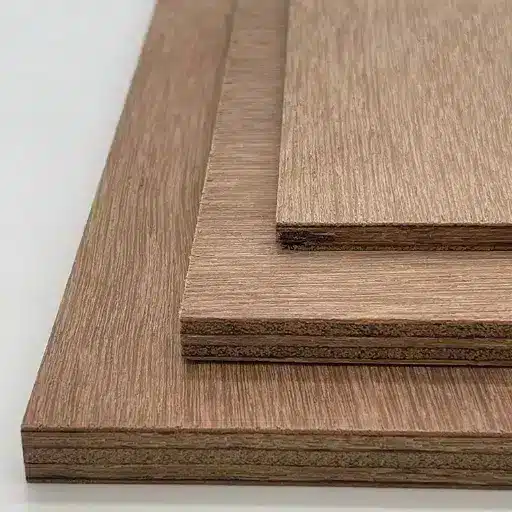
You can’t buy marine plywood by brochure language; you buy it by construction details. The quote is just a number until you know what’s inside the panel and how it’s been proven.
1) Core species and construction (voids, density, stability)
Core timber and lay‑up decide whether the sheet feels “dead” and spongy in a couple of wet seasons or still tight and solid. For marine plywood you want consistent species or a controlled combi lay‑up, not a lucky dip of offcuts; mills will often use poplar, eucalyptus, or mixed hardwood cores, but the key is controlled density and minimal voids in each ply. In practice, that means you should be asking for stated density ranges (for example, 550–680 kg/m³ for many marine and exterior cores) and gap/plug tolerances, not just “hardwood core” on a line item (see ref #1). A simple shop test is to cut a strip across the sheet, sand the edge just a bit, and count how many obvious voids or glue‑starved lines you can see in 400–500 mm – you’ll know very quickly whether the core matches the sales pitch.
2) Glue type and standards (BS 1088, WBP, boil tests)
The bond is what keeps those plies acting like a single plate instead of a stack of damp postcards. True marine plywood is typically bonded with a phenolic resin adhesive or equivalent, designed to meet “WBP” (weather and boil proof) or similar classifications under standards like BS 1088 or BS EN 314‑3 (see ref #2). That’s not a marketing term; those standards tie the label to specific test regimes such as multi‑hour boiling or high‑temperature soak cycles followed by shear testing. So before you sign a PO, you want clarity on two things: which formal standard the glue line is certified against, and whether the mill can share recent bond test data, not a decade‑old generic certificate. If a supplier dodges boil test questions or only talks about “waterproof glue” in vague terms, treat that as a serious warning sign for marine applications.
3) Thickness, tolerances, and face veneer quality
Thickness and tolerance are where a lot of value quietly disappears. A 18 mm panel that consistently comes in at 17.3 mm is not the same product, especially where you’re relying on stiffness over spans or aligning with hardware systems. Serious marine and structural panels will state tolerances like ±0.2 or ±0.3 mm on nominal thickness and back that up with QC records (see ref #3). Face veneer quality matters just as much: you’re looking for reasonably uniform thickness, no paper‑thin faces hiding a rough core, limited patching, and grain that won’t telegraph every core defect once coated. If you run a fingernail from face to edge and you can feel a pronounced “step” where that top veneer disappears in only a couple of passes with 150‑grit, the face is too thin for hard service.
4) Certification, test reports, and what they actually prove
Certificates don’t float a boat hull; they just tell you someone, somewhere, checked something. Mill certificates for BS 1088, FSC chain of custody, ISO 9001, or CE/EN markings each cover different aspects – glue bond, legality of timber, process control, or conformity with specific European standards (see ref #4). What you care about is how current those documents are and whether they match the exact product you’re buying, not just “the factory”. Ask for recent third‑party lab reports on bond strength and formaldehyde emissions for the same construction you’re ordering, and check that species, thickness, and lay‑up on the report actually line up with your spec. The practical rule: treat paperwork as a filter, not a guarantee – it should remove the obvious pretenders, then you still validate with your own cut‑up, soak, and measurement checks on the first 1–2 shipments.
“Is this really marine grade?” Questions to ask your supplier

You don’t find out if marine plywood is real by reading the brochure; you find out by cutting into it and asking awkward questions. The good news is you can do a lot of that without a lab.
Simple destructive checks you can do in your own shop
A basic boil or soak test on a small off‑cut tells you more than a three‑page sales email. Take a strip 40–60 mm wide, drop it in boiling water for 3–5 hours, then let it cool and try to flex or snap it – quality marine or BWP glue lines should stay bonded without obvious layer separation or bubbling, which is the same principle used in formal “boiling water tests” for marine and IS 710‑type panels (see ref #1 and ref #2). If you see the faces sliding off the core with finger pressure or the edge looks like puff pastry, that sheet has no business anywhere near a hull or permanently damp area.
For a lower‑effort check, do a 24‑hour cold soak in a bucket. Mark the thickness with a caliper or even a pencil before and after; significant swelling, edge fuzzing, or a permanent “potato chip” warp tells you how that panel will behave after a few wet seasons (see ref #3). Then there’s the void hunt: cut a 300–400 mm cross‑strip, sand the edge just a bit, and inspect under a bright light. Genuine marine plywood should show tight, consistent veneers with minimal or no core gaps; some inspectors literally shine a torch through the edge to spot light leaks that reveal internal voids (see ref #2 and ref #4). It’s crude, but it works.
Red flags in quotes, samples, and packing lists
The paperwork and quoting style usually telegraph problems before the panels do. A supplier who simply writes “marine ply 18mm – best quality” without naming a standard (BS 1088, IS 710, EN 314‑3 class, etc.) or stating core species, face grade, and tolerance is asking you to take all the risk; serious marine suppliers will specify bond class, species, and at least basic thickness tolerance on the quote or data sheet (see ref #5). If the “sample” they send is a tiny off‑cut with only factory sanding and no stamp, and they can’t match that exact specification to a line on the packing list, you should pause.
Watch the density and weight story too. Genuine marine plywood typically runs noticeably heavier than commodity construction panels of the same thickness because of denser cores and tighter pressing; some guidance puts quality marine sheets at 25–40% heavier than equivalent standard construction plywood at 12 mm, which you can feel when you lift a full panel (see ref #4). If the numbers on the packing list suggest a suspiciously low per‑sheet weight, it can indicate a soft, low‑density core that was never intended for long‑term wet service. So the pattern to look for is simple: vague descriptions, no recent test reports, unusually light panels, and reluctance to let you cut or boil a sample – that combination usually means the word “marine” is carrying more weight than the plywood itself.
Cost, over‑spec, and where you can safely save
Marine plywood is one of those materials where the wrong kind of “saving” gets very expensive later. The trick is knowing which parts of the spec actually drive cost, and which areas you can dial back without hurting performance.
Typical price drivers: thickness, species, compliance level
Thickness is the bluntest lever. The jump from 12 mm to 18 mm isn’t just 50% more wood on paper; in many mills it also means slower pressing cycles, tighter control on core lay‑up, and more waste control to keep the heavier panel flat, so the price per sheet climbs faster than the thickness ratio. You feel that in a container: those extra 3–4 kg per sheet add up quickly when you’re doing 600–800 sheets a load. Species and core design are next. A true marine configuration using higher‑density hardwood or selected combi cores will outprice a light, mixed tropical core that started life as a general construction panel; you pay for density, fewer gaps, and more careful veneer selection. Compliance is the quiet multiplier here: if you’re asking for strict BS 1088 conformity, audited regularly, with low‑emission glue systems and documented traceability, you’re paying for a factory that runs more tests, throws out more borderline panels, and carries more admin overhead to keep those certificates live.
So when you see a quote that’s 18–22% lower than the rest on “marine ply 18 mm”, assume something gave way: either the core, the bond class, the grading discipline, or the paperwork. Nobody is selling fully compliant, void‑controlled, heavy‑core marine plywood at commodity construction prices; if it looks like that on the spreadsheet, you just haven’t found the compromise yet.
Swapping to high‑quality exterior/BWP in low‑risk areas
That said, you don’t need marine plywood everywhere the word “water” appears in a project spec. High‑quality exterior or BWP panels with a solid core and decent glue line are perfectly acceptable in areas that see occasional humidity or splash but not standing water, salt exposure, or long‑term wetting. Think cabinet carcasses in well‑ventilated kitchens, bathroom vanities with good detailing, soffits under deep overhangs, or wall panelling that only catches steam for a few minutes at a time. In those zones, upgrading from a cheap construction board to a good exterior/BWP sheet often gets you 80–90% of the performance for maybe 60–70% of the marine‑grade cost, especially once you factor in coatings and edge sealing.
The places you do not “trade down” are the ones where failure is a nightmare to reach or structurally critical: hulls, decks, permanently shaded wet areas, subfloors under tiled wet rooms, or anything that would require tearing out built‑in finishes to fix a swollen panel. A practical way to brief purchasing is to mark drawings with two colours: true marine where you’d lose sleep if it failed, and high‑spec exterior/BWP where you’d be annoyed but not structurally exposed. That small bit of discipline often cuts the marine bill by a visible chunk without pushing risk onto the installer or the end client.
Installation and protection tips that extend service life
Marine plywood buys you a better starting point, not immunity from job‑site abuse. How you seal, fix, and store it often matters just as much as what the stamp says on the edge.
Edge sealing, coatings, and fasteners that match the panel
Edges are where panels die first. Every cut you make turns a factory‑controlled edge into an open bundle of capillaries, and if you leave those raw around showers, decks, or pool surrounds, water will eventually win. So treat fresh cuts like mini joints: seal them with an epoxy, polyurethane, or high‑solids primer, not just a casual wipe of whatever paint is open on site. On a real job, that might look like a small “cut station” with a pot of epoxy and a cheap brush – you rip, you seal, you rack; you don’t come back “later” when you’re tired and in a rush.
Coatings should match the duty. For exterior or hull work, a proper marine coating system – often an epoxy barrier followed by a UV‑stable topcoat – keeps both faces and edges from cycling moisture too fast. Inside wet rooms or commercial kitchens, good two‑part polyurethane or epoxy under tiles, stone, or HPL gives the plywood a controlled environment instead of asking it to live naked behind grout and silicone. Fasteners need to be as stubborn as the panel: stainless in genuinely wet or coastal work, high‑quality coated screws in sheltered but humid spaces. Underspec screws rusting out in a couple of seasons will loosen the assembly and pump water into those carefully sealed edges, which defeats the point of buying marine plywood in the first place.
Storage, acclimatization, and handling on busy job sites
Panels often lose years of life before they’re even installed. Storing marine plywood flat on level dunnage, off the ground, with a simple cover that keeps rain off but still lets air move, avoids the classic “banana” effect you get when one face bakes in sun while the other sits on damp concrete. If the material is coming from a very different climate or moisture condition, give it a few days – sometimes a full week – stacked and stickered near its final environment so it can acclimatize before you lock it in behind finishes. You’ll see far fewer mysterious post‑install warps that way.
Handling on site is where theory meets chaos. On busy projects, sheets get dragged through puddles, leaned against unprotected steel, and left edge‑down on fresh screed “just for a minute”. So build small habits into the workflow: a designated dry stacking area, a rule that no sheet sits directly on a slab, and a bit of discipline about re‑touching damaged edges or coating scuffs before the next trade closes things up. It doesn’t need to be perfect; it just needs to be consistent enough that the panel you carefully specified still resembles that spec by the time it disappears behind tile, paint, or laminate.
Quick buyer checklist: marine plywood in one page
A good order sheet does half your QA for you. If you can answer the right questions before you send a PO, you’ll avoid most of the “this isn’t what we discussed” grief later.
Questions to answer before you place your next order
What is the real exposure class for each area – permanent wet, frequent splash, or just high humidity? If you mix all three in one project under the same “marine plywood” label, you’ll either overpay or under‑spec something important. What minimum standard are you actually buying to: BS 1088, local marine/BWP spec, or “equivalent” with test reports to prove it? If the answer is just “marine grade”, push harder.
What core do you want and why – a denser hardwood or combi core for decks and high‑load areas, and a slightly lighter spec for non‑critical partitions? How much thickness tolerance can your design really tolerate: ±0.5 mm, or do you need tighter control where panels meet hardware, metal framing, or pre‑made joinery? And then the practical one: what destructive checks are you going to do on the first shipment (boil/soak, edge cuts, void inspection), and have you told the supplier you’ll be doing them so expectations are aligned?
Data points to keep in your spec sheet (and share with the mill)
Write your spec like you expect it to be read in a noisy office at 6 p.m. on a Friday. That means hard numbers: thicknesses and allowed tolerances, target density range, core species or mix, face/back veneer grade, and required bond class or specific standard. Add environment notes: “decking over brackish water”, “hotel bathrooms with continuous extraction”, “indoor pool hall with chlorinated atmosphere” – those context lines help the mill advise if your pick is realistic or needs adjusting.
Include finishing intent as well: epoxy and paint, HPL, tile over waterproofing, or clear varnish; different cores and face grades behave differently under each system, and a decent supplier can steer you away from awkward combinations if they see that on the sheet. Finally, lock in the paperwork: which test reports and certificates you expect with the first containers, how recent they need to be, and which lot numbers they should reference. A one‑page spec that nails those details will usually do more for you than a glossy brochure and a handshake.
Frequently Asked Questions
What’s the real difference between marine plywood and regular waterproof plywood?
Short answer: glue and core consistency. Regular waterproof (often MR or BWP) handles splashes and humidity but delaminates after repeated soak-dry cycles or boiling water exposure. Marine plywood uses phenolic resins and void-free cores to survive those stresses – think boat hulls or docks where panels live damp 24/7. In a marina project last year, we swapped generic “waterproof” for BS 1088 marine after the first batch puffed around fastener holes in under six months. Stick to marine where failure means tearing out subfloors.
Can I use marine plywood for outdoor kitchen cabinets?
Yes, but only if you seal it properly. It shrugs off steam, mop spills, and condensation better than exterior plywood, especially in humid climates. The phenolic glue and denser core prevent the slow edge-swelling you see in cheaper boards behind sinks. For a beach house outdoor kitchen we did, 12 mm marine with epoxy-sealed cutouts and marine-grade varnish lasted four seasons without a single warp, even through salt air. Just don’t skip edge treatment – raw cuts drink moisture like a sponge.
How do I know if plywood is genuine marine grade?
Cut and test it yourself. Boil a 50 mm offcut for 3 hours, cool, then flex – real marine glue holds without peeling plies apart. Check core voids by sanding an edge: gaps bigger than 2 mm signal junk. Weight helps too; proper marine sheets feel 25% heavier per square meter than construction ply. A supplier once sent us “marine” that flaked in a bucket overnight – density was suspiciously low at 420 kg/m³. Always demand BS 1088 certs and recent lab reports matching your spec.
What thickness of marine plywood do I need for boat decking?
Go 18–21 mm for most walk-on decks carrying foot traffic and gear. Thinner 12–15 mm works for light bulkheads or locker lids but flexes too much under chairs or coolers. Factor span: over 400 mm unsupported, step up thickness or add bearers. On a 7-meter fishing boat rebuild, 19 mm okoume core handled waves and coolers without drumming, but 15 mm foredeck showed telegraphing after varnish wore. Match to your beam load and always void-free cores.
How much does good marine plywood cost per sheet?
Expect $80–150 USD for an 8×4 ft 18 mm BS 1088 sheet, depending on core species and origin. Asian mills run $85–110 with okoume/meranti faces; premium Euro brands hit $130+ for tighter tolerances. Prices spiked 17% last year on glue costs, so shop quotes against density specs. We landed 18 mm combi-core marine at $92/sheet FOB Vietnam for a 40-ft container – half again commodity ply, but zero rejects after two wet seasons. Compare total landed cost, not sticker price.
References
-
BS 1088 marine plywood standard documentation and common marine panel specifications. https://knowledge.bsigroup.com/products/marine-plywood-requirements-1 (2018)
-
Plywood boiling water and delamination test description from KYZO plywood testing methods. https://kyzo.in/blogs/trends-insights/plywood-testing-methods-quality-check (2025)
-
Identification guidance for marine plywood (visual, core gap, weight and density checks) from Royale Touche marine plywood article. https://plywood.royaletouche.com/blogs/how-to-identify-marine-plywood (2025)
-
Practical marine‑grade identification techniques and weight comparisons from Goldwood Ply “Seven Techniques to Identify Marine Grade Plywood”. https://goldwoodply.com/seven-techniques-to-identify-marine-grade-plywood/ (2023)
-
BS 1088 and related marine plywood standards documentation describing WBP glue and bond testing regimes. https://www.christinedemerchant.com/marine_plywood_grades.html (2007, updated reference)
-
EN 315 and manufacturer datasheets detailing plywood thickness tolerances and face veneer grading practices. https://www.duroboil.com/blog/how-to-check-plywood-quality-at-the-shop-10-tests/ (Publication date not specified)
-
Typical marine and exterior plywood core construction and density ranges from plywood manufacturing technical manuals. https://vitalwoodglobal.com/plywood/ (2025)
-
Waterproof and BWP plywood soak/boil test practices from Greenply quality‑check guidance. https://www.greenply.com/blogs/how-to-check-if-your-plywood-is-truly-waterproof-simple-tests-and-tips (2025)