
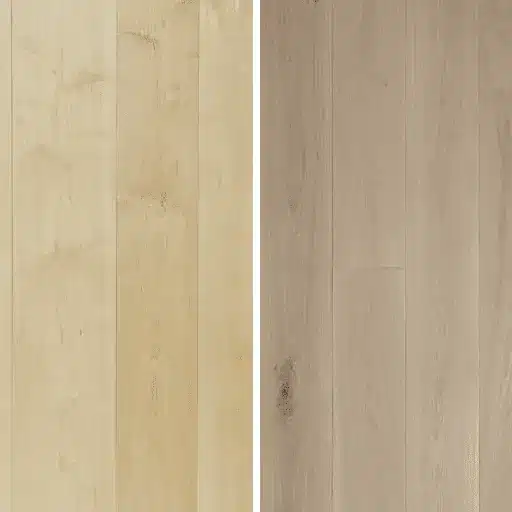
Maple vs Oak Flooring: Which Hardwood Is Right for You?
Maple and oak are the two most popular hardwood flooring choices in North America, and neither is simply “better” than the other. The right pick comes down to what you value most: hard maple is harder and more dent-resistant, while oak has a grain pattern that hides everyday scratches better and takes stain more evenly. This guide walks you through hardness, appearance, staining, cost, moisture resistance, and maintenance so you can choose with confidence.
Most people start the search armed with one piece of advice: “harder wood means better floors.” That is only half the story. When Dana and her husband were renovating their 1960s bungalow, they chose maple purely because it tested harder. Two years later, every scuff from their golden retriever was front and center on the pale, smooth surface. Oak, with its pronounced grain, would have camouflaged those same marks. The wood that feels toughest is not always the floor that looks newest.
By the end of this article, you will understand exactly how maple vs oak flooring differs in the ways that actually matter for your home, your budget, and your lifestyle. You will also know which questions to ask before you buy, so you never rely on a hardness number alone.
Key Takeaways
- Hard maple (about 1,450 on the Janka scale) is harder than white oak (about 1,360) and red oak (about 1,290), so it resists dents best, but its pale, smooth surface makes scratches more visible.
- Oak’s open grain hides daily wear far better than maple, which is why many busy households prefer it despite oak being technically softer.
- Oak absorbs stain evenly across a wide color range; maple resists stain and often blotches, so it is best left natural or lightly finished.
- White oak is the most water-resistant of the three, thanks to pore-clogging structures called tyloses; maple has no equivalent moisture defense.
- Maple is usually a bit more expensive than oak, and both are more affordable in engineered form, which uses a thin real-wood wear layer over a stable core.
Maple vs Oak Flooring at a Glance
Use this table as your quick reference. All three species are real, durable hardwoods that can last decades with proper care.
| Characteristic | Hard Maple | Red Oak | White Oak |
|---|---|---|---|
| Janka hardness | ~1,450 | ~1,290 | ~1,360 |
| Grain | Fine, subtle, uniform | Pronounced, open, bold | Tighter, more linear than red oak |
| Color | Light, creamy, pale | Warm with pinkish tones | Cooler, neutral beige to brown |
| Staining | Difficult; can blotch | Excellent, even absorption | Very good |
| Scratch visibility | High | Low (grain hides wear) | Low to moderate |
| Moisture resistance | Low to moderate | Moderate | Best (tyloses plug pores) |
| Typical installed cost (2026) | $8−$19/sq ft | $6−$15/sq ft | $9−$17/sq ft |
| Refinishing | Harder; can burnish | Forgiving | Forgiving |
| Best for | Modern, light, dent-resistant needs | Traditional, budget, stain-heavy plans | Kitchens, moisture-prone areas, modern farmhouse |
Keep this table in mind as we unpack each row below. For a deeper look at the trade-offs beyond this comparison, our full write-up of maple wood flooring pros and cons covers the species in more detail.
Hardness and Durability: Maple Is Harder, Oak Looks Newer Longer
The Janka Numbers
Hardness is measured with the Janka test, which records the force needed to push a steel ball halfway into a board. The National Wood Flooring Association publishes the standard reference values:
- Hard maple: about 1,450
- White oak: about 1,360
- Red oak: about 1,290
- Soft maple: about 950 (a different group of species, not what is usually sold as flooring maple)
Hard maple is one of the hardest domestic species available. That is why it has been the traditional surface for basketball courts, gymnasiums, and bowling alleys. The Maple Flooring Manufacturers Association notes maple’s long history as the standard athletic floor, and that heritage is a strong signal of real-world durability.
The catch is species clarity. Not everything labeled “maple” is hard maple. Soft maple is dramatically less durable, so confirming you are buying Acer saccharum matters. If you want the full breakdown of how these groups differ, our comparison of hard maple vs soft maple flooring explains how to verify what you are actually getting.
The Scratch-Visibility Trade-Off
Here is the part most buyers miss. Maple is harder than oak, which means it resists dents and gouges slightly better. But when a scratch does happen, maple shows it far more clearly. Its fine, tight, uniform grain offers nowhere for a mark to hide. Oak, with its bold open grain, breaks up the visual line of a scratch, so the same scuff that screams on maple fades into the pattern on oak.
This is the durability paradox. In a home with kids, large dogs, or heavy furniture movement, an oak floor can look flawless for longer even though oak is the softer wood. Choose maple if you want maximum dent resistance and can keep up with cleaning. Choose oak if you want wear to stay visually invisible over a long busy life.
Appearance: Grain, Color, and the Rooms They Suit
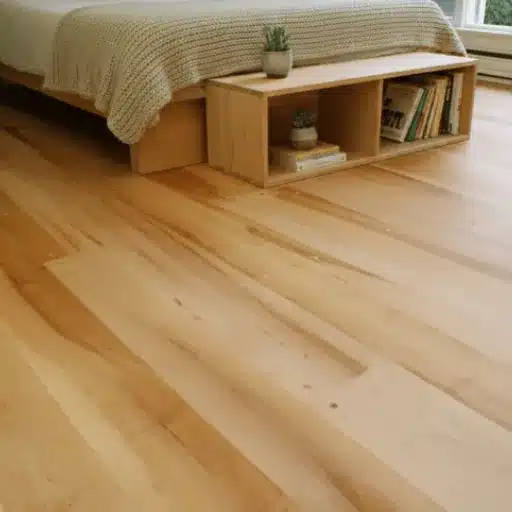
Maple delivers a clean, bright, seamless look. Its fine grain and creamy pale color make small rooms feel larger and pair beautifully with white walls, modern furniture, and Scandinavian or minimalist styling. The main caveat is that maple darkens to a golden honey tone over time as it reacts to sunlight, so the bright white floor you install will mellow. If you want to keep it light, expect to manage light exposure and finish choices.
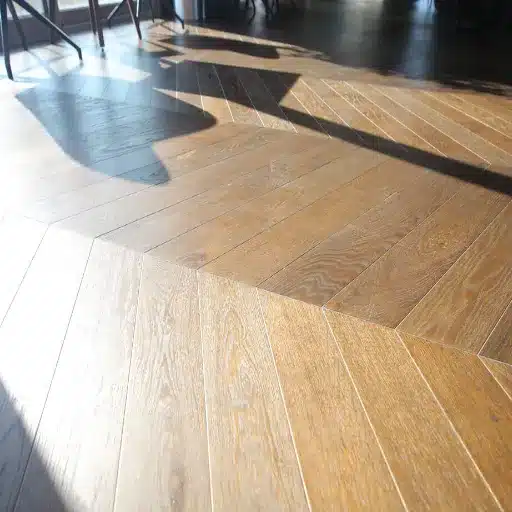
Oak offers far more visual range. Red oak has a warm, pinkish cast and bold grain that suits traditional and transitional interiors. White oak runs cooler and more neutral, with a subtler grain that anchors modern farmhouse, coastal, and contemporary looks. Because oak species differ so much in tone, you can find an oak floor that reads warm, cool, rustic, or refined.
As a rule of thumb: if your room already has strong patterns and textures, maple’s calm surface can balance it. If you want the floor itself to be the feature, oak’s grain delivers character that maple cannot match.
Staining and Finishing: Oak Cooperates, Maple Complains
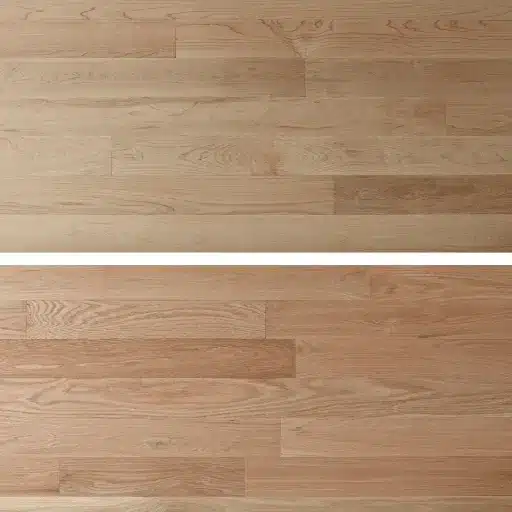
This is often the deciding factor, and it surprises many first-time buyers. Oak is porous and open-grained, which means it absorbs stain evenly across a huge color range. You can take red or white oak from pale whitewash to deep espresso, and it will take the color predictably. That flexibility is why oak dominates painted and dark-stained flooring looks.
Maple is dense and tight-grained. Its pores do not absorb pigment evenly, so stain can pool and create blotchy patches. Professional finishers use techniques like wood conditioner, gel stains, or dye to manage this, but it adds cost and risk. For most homeowners, maple looks best finished clear, lightly toned, or prefinished at the factory where conditions are controlled. If your dream floor involves a rich dark stain, oak is the safer and more forgiving choice.
This single difference explains many maple-vs-oak decisions. If you already know you want a particular stain color, that points firmly toward oak. If you love the natural pale look, maple rewards you for leaving it alone.
Engineered Maple vs Engineered Oak
Solid boards are not the only option. Engineered flooring layers a thin slice of real hardwood, called the wear layer, over a cross-laminated plywood or fiberboard core. This construction resists the expansion and contraction that makes solid wood cup and gap, so engineered floors can be installed over concrete slabs, in basements, and with radiant heat.
Both maple and oak take well to engineered construction. The stability gain is identical, because the core does the work. The differences that matter in solid form, grain, stain behavior, scratch visibility, and moisture resistance, carry over to the wear layer. The notable exception is white oak, whose tyloses make it the most water-resistant of the group even in engineered form. That makes engineered white oak a strong pick for kitchens and laundry rooms.
If you are leaning maple after reading this, our full guide to engineered maple flooring explains wear layers, cores, and what to look for on a spec sheet.
One more consideration: engineered floors cost less than solid of the same species, often by 20 to 30 percent, because they use far less of the premium wood. That efficiency matters for sustainability too, which we will return to shortly.
Maple vs Oak Flooring Cost (2026)
Pricing varies by grade, plank width, finish, and region, so treat any number as a range rather than a quote. In the U.S. in 2026, installed costs typically land around:
| Product form | Oak (red / white) | Hard maple |
|---|---|---|
| Solid, material per sq ft | $3−$10 | $4−$12 |
| Engineered, material per sq ft | $3−$9 | $3.50−$10 |
| Total installed (materials + labor) | $6−$17 | $8−$19 |
Across most U.S. markets, hard maple runs roughly 1to1to3 per square foot more than a comparable oak floor. Red oak is usually the most budget-friendly entry point, while white oak and maple sit closer together at the premium end. Region matters, and availability can swing prices, so always compare quotes for the exact species and width you plan to buy.
Do not forget the hidden costs that retailer websites often omit: underlayment or moisture barrier, transition strips, trim, subfloor preparation, and removal of old flooring. These can add $2 to $5 per square foot to the final bill, no matter which wood you choose. For a detailed, species-specific breakdown with a worked example, our maple flooring cost guide runs the full numbers.
Maintenance, Cleaning, and Refinishing
Cleaning is the same for both species: sweep or vacuum regularly, wipe spills promptly, and use a cleaner approved for hardwood rather than water-heavy mopping. The real differences appear at refinishing time.
Oak sands easily and accepts a new finish without much drama. Hard maple is so dense that sanding can burnish or swirl the surface, which is why professionals finish maple at a lower grit and use careful technique. This does not make maple impossible to refinish; it makes it more technical. It is one reason maple floors are usually best prefinished and why you want an experienced contractor if you ever sand one.
Solid 3/4-inch floors of either species can typically be sanded five to eight times over their life. Engineered floors can only be refinished as many times as the wear layer allows: a 2 mm wear layer allows about one careful sand, 3 to 4 mm allows one to three, and thinner layers are limited to a light screen and recoat.
Sustainability and Responsible Sourcing
If sustainability matters to you, both species can be excellent choices when sourced responsibly. Look for certification from the Forest Stewardship Council or PEFC, which verifies that the wood comes from responsibly managed forests.
Maple and oak are both North American hardwoods with strong supply chains, which reduces the carbon footprint of shipping compared with imported tropical species. Engineered formats add an environmental advantage: a thin real-wood wear layer stretches each premium tree further than a solid board of the same thickness, so you get the hardwood surface you want while using less of the resource.
At VitalWood Global, we apply this thinking to every product we make, sourcing from certified forests and favoring low-VOC finish systems. The point is that your species choice and your format choice both affect your environmental footprint, and asking for certification documents is the single best way to keep your project responsible.
Maple vs Oak: Which Should You Choose?
Let us bring it together with a decision framework.
Choose oak if:
- You want a classic look with visible grain character
- You plan to stain the floor, especially a dark or colored finish
- You have kids, pets, or heavy traffic and want wear to stay hidden
- You want the most budget-friendly real hardwood (red oak)
- You are installing in a moisture-prone room and want white oak’s resistance
Choose maple if:
- You want a light, bright, modern, or minimalist aesthetic
- Dent resistance is your top priority
- You are happy with a natural or lightly finished look
- You want a floor with a smooth, seamless appearance
- You appreciate maple’s sports-floor pedigree and hard-wearing reputation
Consider a quick example. Marcus, a contractor who installs a lot of flooring, watched a client request dark espresso floors and then balk when the quote for stained maple came back higher and riskier. Switching to red oak gave the client the exact dark look they wanted, at a lower cost, with a finish that will stay even for decades. The lesson: match the wood to the finish goal, not just to a hardness chart.
For a fuller look at where maple shines and where it struggles, our guide to maple wood flooring pros and cons covers solid and engineered options in depth.
FAQ About Maple vs Oak Flooring
Is maple or oak flooring more durable?
Hard maple is more dent-resistant because it is harder (about 1,450 Janka versus 1,290 for red oak and 1,360 for white oak). However, oak’s grain hides scratches and dents better, so oak can look newer longer in busy households. Durability depends on whether you value raw hardness or visual wear resistance.
Does maple scratch more than oak?
Maple does not scratch more easily, but scratches are far more visible on its smooth, pale surface. Oak’s pronounced grain breaks up the look of scratches, so the same wear is harder to see. If scratch visibility worries you, oak is the more forgiving choice.
Can maple flooring be stained like oak?
Not easily. Oak absorbs stain evenly across a wide color range, while maple’s dense, tight grain can absorb stain unevenly and produce blotches. Maple is best left natural or lightly finished, or stained with special techniques by a professional.
Is maple or oak flooring more expensive?
In most U.S. markets, hard maple runs about 1to1to3 per square foot more than comparable oak, with red oak the most budget-friendly and white oak closest to maple in price. Engineered formats of both species cost less than solid.
Which is better for kitchens, maple or oak?
White oak is the best choice of the three for kitchens because its pore-clogging tyloses make it more water-resistant. Red oak and maple are more vulnerable to standing water, so use them only where spills are managed quickly, or choose engineered versions.
Do maple and oak both add resale value?
Yes. Real hardwood of either species is consistently a strong investment and generally recovers a high share of its cost at resale. Buyers respond well to both, so choose the species that fits your style rather than guessing at future resale.
Conclusion
Maple and oak are both outstanding hardwoods, and the right answer depends on your priorities rather than any single spec. Maple wins on hardness, a clean modern look, and dent resistance. Oak wins on stain flexibility, scratch camouflage, moisture resistance in white oak, and typically a lower price. Engineered versions of either give you stability and a lighter environmental footprint, while your choice of solid or engineered affects cost and refinishing for decades.
Before you buy, decide how the floor will be lived on, whether you plan to stain it, and which look belongs in your room. Then confirm the species, grade, wear layer, and certification before signing anything.
For samples, certification documents, or a wholesale quote on sustainably sourced maple and oak flooring, contact our team today. We would love to help you build a floor that looks right, performs well, and reflects the values you care about.