
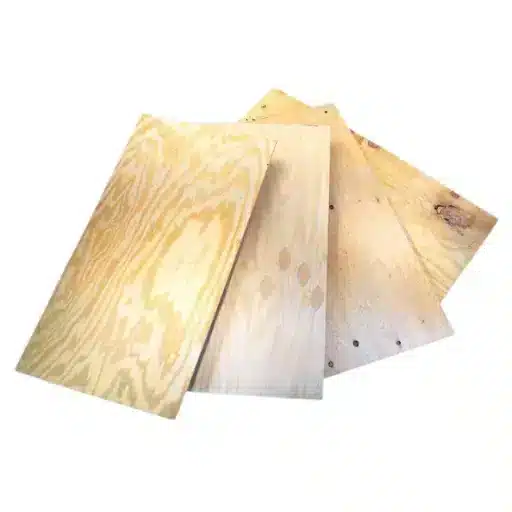
Wood Veneer Quality Control: Grading Standards, Defect Tolerances, and Testing Methods
Wood veneer quality control is the system of grading, testing, and inspection that ensures each sheet meets defined standards for thickness, moisture, surface defects, and bond strength before it leaves the factory. It uses letter grades (AA through D), specific tolerances (plus or minus 0.1mm for high-end work), and increasingly, AI-powered optical scanning to catch defects that human inspectors miss.
A sheet of veneer can look perfect under fluorescent warehouse lighting and reveal every flaw under the directional lighting of a finished interior. The difference between a successful installation and an expensive rejection often comes down to one thing: whether the quality control system behind that sheet actually works.
Most buyers know that “Grade A” is better than “Grade B.” Few can explain why, what defects each grade allows, or how to verify that the sheet in front of them actually meets the grade they paid for. This guide gives you that knowledge.
Key Takeaways
- Wood veneer grading follows ANSI/HPVA HP-1 (North America) and BS EN 13017-2 (Europe) standards, with five grades from AA (premium) to D (backer)
- Five critical quality parameters determine veneer fitness: thickness tolerance, moisture content, bond strength, surface quality, and formaldehyde emissions
- Automated optical grading systems achieve 96.1% defect detection accuracy and process 200+ sheets per hour, compared to 10-20 for manual inspection
- A receiving inspection checklist protects buyers from costly rework by verifying quality before installation begins
- Specifying the wrong grade for an application is the most expensive mistake in veneer procurement
Why Quality Control Matters for Wood Veneer

Veneer is thin, typically 0.5mm to 1.5mm, and unforgiving. Unlike solid wood, you cannot sand out a defect or hide a flaw with filler. Every knot, mineral streak, and knife mark is visible in the finished surface. Once the veneer is bonded to a substrate and installed, replacing it means starting over.
Batch inconsistency is the number one cause of project overruns in veneer applications. When sheets within a single order vary in color, grain pattern, or thickness, installers waste time sorting and matching instead of laying. Architects reject shipments. Contractors absorb delays. The cost of poor quality control compounds at every stage.
Consider what happened at a corporate headquarters in Austin, Texas, in late 2024. The design team specified quarter-cut white oak veneer for a 4,000-square-foot feature wall. The first shipment arrived on schedule, but when installers opened the bundles, they found three distinct color ranges mixed, from pale cream to warm amber.
The architect rejected the shipment. The supplier argued the veneer met “Grade A” standards because individual sheets had no defects. The problem was not defects. It was batch consistency, a quality parameter that grading standards alone do not fully address.
Investing in a manufacturer with robust wood veneer quality control prevents this kind of costly mismatch. Automated grading alone reduces defective products by up to 30%, according to industry data. For a full discussion of how to evaluate a supplier’s quality systems during a visit, see our guide on how to conduct a wood veneer factory audit.
The Wood Veneer Grading System Explained
Veneer grading classifies sheets by appearance quality, focusing on allowable defects, color uniformity, and grain consistency. The two primary standards are ANSI/HPVA HP-1 in North America and BS EN 13017-2 in Europe. While terminology varies slightly, both systems follow a similar hierarchy.
AA Grade (Premium / Architectural)
AA grade veneer allows minimal to no defects. Sheets must display uniform color, consistent grain, and a clear figure. Pin knots up to 1/8 inch may appear on no more than 10% of the surface. Mineral streaks, bark pockets, and open defects are not permitted.
This grade is specified for high-end furniture, corporate feature walls, hotel lobbies, and any application where the veneer surface is a focal point. An AA grade commands the highest price and the tightest supply.
A Grade (Select)
A grade permits minor defects: small pin knots, slight mineral streaks, and limited color variation. The sheet is generally uniform with some natural character. Defects must not cluster, and the overall appearance must be clean.
A grade suits commercial cabinetry, retail interiors, hospitality projects, and architectural panels where quality matters but minor natural variation is acceptable.
B Grade (Good / Common)
B grade allows more visible defects, including larger knots (up to 1/4 inch), broader mineral streaks, and noticeable color variation between sheets. The veneer is structurally sound but visually imperfect.
B grade works for interior applications where the veneer will be painted, stained, or used in less visible locations. It is also common to use backing veneer on two-ply panels.
C Grade (Utility)
C grade permits open defects, significant discoloration, and character marks. Knots may be open or loose. The surface may have patches of bark or pitch pockets.
C grade is used for hidden surfaces, structural applications, and industrial uses where appearance is not a primary concern.
D Grade (Standard / Backer)
D grade has no restrictions on defects. Sheets may have any combination of open knots, splits, discoloration, and manufacturing marks. D grade serves exclusively as a backing veneer or for applications where the veneer surface will be completely covered.
Grading Comparison Chart
| Grade | Defects Allowed | Color Uniformity | Typical Application | Relative Price |
|---|---|---|---|---|
| AA | Minimal (pin knots on <10% of surface) | Very uniform | Feature walls, high-end furniture | Highest |
| A | Minor (small knots, slight mineral streaks) | Generally uniform | Commercial cabinetry, hotel lobbies | High |
| B | Moderate (larger knots, color variation acceptable) | Variable | Painted veneer, interior panels | Medium |
| C | Significant (open defects, discoloration) | Not required | Hidden surfaces, structural use | Low |
| D | Unlimited | Not required | Backing veneer only | Lowest |
Standards Bodies
The Decorative Hardwoods Association administers ANSI/HPVA HP-1, the primary North American standard for hardwood and decorative plywood, which includes veneer grading definitions. In Europe, BS EN 13017-2 covers veneer grading for decorative purposes.
The Architectural Woodwork Institute (AWI) adds further requirements for architectural applications. When specifying veneer, always reference the applicable standard by name and edition.
For more on choosing a wood veneer manufacturer that meets these standards, see our complete guide.
The 5 Critical Quality Parameters
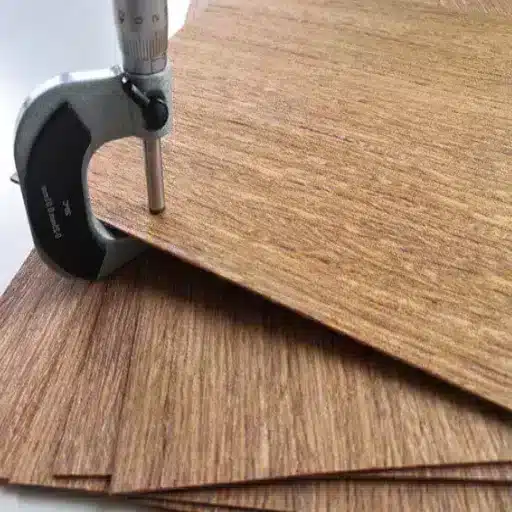
Grading addresses appearance. But five additional parameters determine whether the veneer will perform as expected in the finished application. A manufacturer’s wood veneer quality control system must test and document all five.
1. Thickness Tolerance
Thickness consistency is critical for flush bonding, uniform staining, and seamless edge alignment.
- High-end decorative: plus or minus 0.05mm
- Standard architectural: plus or minus 0.1mm
- Commercial/industrial: plus or minus 0.2mm
Testing uses micrometers, dial gauges, or digital calipers. The best factories measure every sheet at multiple points and log results at the batch level. Variations beyond tolerance cause visible ridges at sheet joints and uneven adhesive distribution.
2. Moisture Content
Moisture content determines dimensional stability, adhesion success, and long-term durability.
- Target range: 6-12% for interior applications
- Below 6%: Veneer becomes brittle and prone to cracking during handling and bonding
- Above 12%: Risk of warping, adhesive failure, and mold growth increases sharply
Testing uses pin-type moisture meters (which penetrate the surface) or pinless meters (which use electromagnetic signals). Pinless meters are preferred for finished veneer because they leave no marks. Results should be recorded per bundle.
Understanding how moisture fits into the broader production process helps buyers spot quality risks early. Our article on wood veneer production from log to finished sheet explains where moisture control checkpoints occur.
3. Bond Strength / Adhesion
For backed or reconstituted veneer, bond strength determines whether the face veneer will stay attached through handling, installation, and service life.
- Standard: EN 314 boil test
- Minimum peel strength: 0.8 N/mm or greater
- Testing methods: Boil test (immerse bonded panel, then assess delamination), peel test (pull veneer from substrate at controlled rate), shear test (apply lateral force to bonded joint)
A failed bond test means the adhesive system is compromised. This is not fixable after the fact and requires rejection of the batch.
4. Surface Quality
Surface quality grading evaluates three categories of defects.
Open defects include knots (pin, standard, or open), splits, checks, worm holes, and voids. These compromise the visual surface and may affect structural integrity.
Closed defects include bark pockets, pitch pockets, mineral streaks, and discoloration. These do not break the surface but are visually apparent.
Manufacturing defects include knife marks, torn grain, overlaps, waviness, buckling, and glue bleed-through. These indicate problems in the slicing, drying, or bonding process. Reconstituted veneer has its own defect profile; see our guide on reconstituted veneer manufacturing for details on engineered veneer quality.
Visual grading occurs under standardized lighting, typically 500 lux at a 45-degree angle to the surface. This mimics how the veneer will appear in a finished installation.
5. Formaldehyde Emissions
Formaldehyde compliance is a regulatory requirement, not a quality preference. Veneer bonded with urea-formaldehyde adhesives must meet emission limits before sale in most markets.
- CARB Phase 2 (California, widely adopted in the US): 0.05 ppm for hardwood plywood
- EPA TSCA Title VI (US federal): Same limits as CARB P2
- E0 / ENF (EU and Asia): Even stricter thresholds
Testing uses the ASTM E1333 chamber method for certification or the desiccator method for production screening. Manufacturers must maintain test reports per production run.
Common Wood Veneer Defects: A Taxonomy
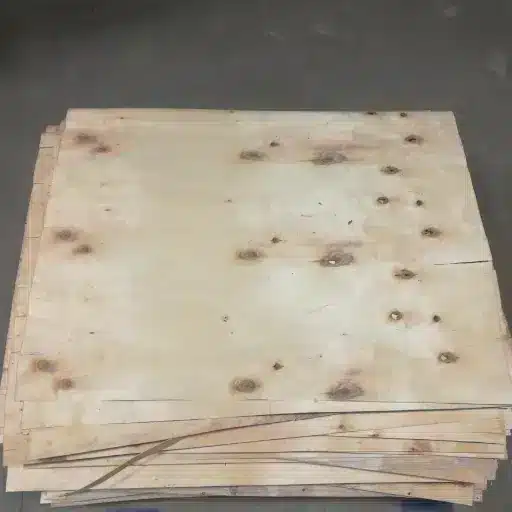
Understanding defect types helps buyers evaluate grading decisions and identify manufacturing problems. The ASTM International standards provide formal definitions; here is a practical classification.
Open Defects
- Pin knots: Small, tight knots under 1/8 inch. Acceptable in A and B grades.
- Standard knots: 1/8 to 3/4 inch. May be tight or loose. Acceptable in B and C grades.
- Splits: Lengthwise breaks in the wood fiber. Generally not acceptable above a C grade.
- Checks: Small surface cracks, often from drying. May be acceptable in a B grade if shallow.
- Worm holes: Insect damage creates small, round holes. Not acceptable above a B grade.
Closed Defects
- Bark pockets: Patches of bark trapped in the wood. Visible but surface-intact.
- Pitch pockets: Resin-filled cavities. May bleed through the finish if not sealed.
- Mineral streaks: Dark streaks from mineral deposits in the tree. Common in oak and maple.
- Discoloration: Staining from fungal activity, chemical reaction, or weather exposure.
Manufacturing Defects
- Knife marks: Parallel lines from the slicing blade. Indicates dull knife or incorrect angle.
- Torn grain: Fiber separation during slicing. Creates rough patches.
- Overlaps: One sheet edge folding over another during layup.
- Waviness: Uneven surface from improper drying or pressing.
- Glue bleed-through: Adhesive visible on the face surface. Indicates excess glue or pressure.
| Defect | Cause | Impact on Application | Fixable? |
|---|---|---|---|
| Pin knots | Natural growth | Minor visual | No (part of character) |
| Mineral streaks | Mineral deposits | Visual variation | No |
| Knife marks | Dulling blade | Surface texture | Sandable on thick veneer |
| Moisture warping | Improper drying | Dimensional instability | No (reject) |
| Glue bleed-through | Excess adhesive | Finish rejection | No (reject) |
Automated Grading Technology

The wood veneer quality control industry is shifting from subjective human inspection to data-driven automated systems. This transition is driven by three factors: speed, consistency, and accuracy.
Machine Vision Systems
High-resolution cameras scan each veneer sheet as it moves through the production line. Deep learning algorithms classify defects in real time, assigning grades and flagging rejects.
Research published in MDPI Applied Sciences found that AI-based defect detection achieves 96.1% accuracy in identifying veneer surface defects. Human inspectors typically achieve 70-80% accuracy. The gap is significant.
Leading system providers include FinScan (Finnish veneer scanning), MiCROTEC (wood scanning and optimization), and USNR (automated grading lines).
Hyperspectral Imaging
Beyond visible light, hyperspectral cameras detect subsurface defects invisible to the human eye. They map moisture content across the entire sheet surface, verify species authenticity, and identify internal voids or delamination. This technology is still emerging, but it represents the next frontier in veneer quality assurance.
Laser Scanning
Laser profilometry measures surface topology at micron-level precision. It maps thickness variation across the sheet, assesses flatness and waviness, and detects surface irregularities that visual inspection misses. Laser data feeds directly into grading algorithms for objective, repeatable classification.
Manual vs. Automated Grading
| Parameter | Manual Inspection | Automated Systems |
|---|---|---|
| Speed | 10-20 sheets/hour | 200+ sheets/hour |
| Accuracy | 70-80% | 95%+ |
| Consistency | Variable (fatigue, subjectivity) | Repeatable (same result every time) |
| Defect types | Surface-visible only | Surface + subsurface (with hyperspectral) |
| Data output | Subjective grade | Digital record with defect maps |
| Upfront cost | Lower | Higher |
| Per-unit cost | Higher (labor-intensive) | Lower (once amortized) |
For manufacturers processing thousands of sheets daily, automated grading is no longer a luxury. It is the only way to maintain consistent quality at scale. When evaluating a supplier, ask whether they use automated grading, what system they run, and what accuracy benchmarks they maintain.
How to Verify QC When Receiving Veneer
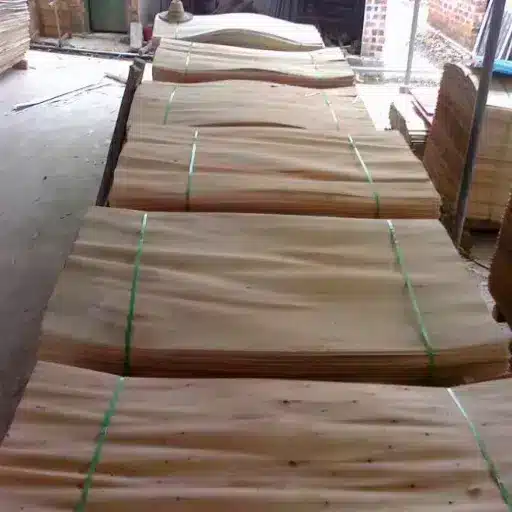
Understanding wood veneer quality control standards is useful. Applying them when the veneer arrives on-site is essential. Here is a practical receiving inspection protocol.
Pre-Shipment Verification
Before the shipment leaves the factory:
- Request batch-level QC records, including moisture readings, thickness measurements, and grading logs
- Demand samples from the exact production run, not generic showroom samples
- Verify the samples match your specification for grade, color range, and grain orientation
- Confirm that the formaldehyde test reports cover the specific batch
On-Site Receiving Inspection
When the shipment arrives:
- Visual inspection: Open at least 10% of bundles. Inspect under good lighting (500 lux minimum). Check for color consistency, grain matching, and surface defects.
- Thickness spot-checks: Use a digital micrometer to measure at least 5 sheets per bundle at 3 points each. Results should fall within the specified tolerance.
- Moisture verification: Use a calibrated pinless moisture meter. Check at least 3 sheets per bundle. Readings should fall within 6-12% for interior use.
- Adhesion test: For backed veneer, perform a manual peel test on a sample sheet. The face veneer should not separate cleanly from the substrate.
- Species verification: Confirm the species matches the purchase order. If in doubt, request a species identification report.
Documentation to Collect
Maintain a quality file for each shipment containing:
- Batch-level moisture content readings
- Thickness measurement logs with pass/fail status
- Grading records with operator signatures
- Formaldehyde emission test reports
- Bond strength test certificates (for backed veneer)
- Photographic records of any defects or discrepancies
This documentation protects you in case of disputes and provides traceability for warranty claims.
Conclusion: Specify, Verify, and Protect Your Projects
Wood veneer quality control is not a checkbox exercise. It is the difference between a project that meets specifications on time and one that stalls over rejected shipments and disputed grades. Understanding the grading system (AA through D), knowing the five critical quality parameters, and applying a receiving inspection protocol puts you in control of your veneer procurement.
The technology exists to achieve 96.1% defect detection accuracy and process 200 sheets per hour. The standards exist to define exactly what each grade permits. The testing methods exist to verify every parameter before the veneer leaves the factory. Your job is to demand them.
Start by specifying the right grade for your application. Verify that your manufacturer’s wood veneer quality control system matches your requirements. And inspect every shipment against documented standards before installation begins.
Need QC documentation or testing protocols for your next project? Contact VitalWood Global to discuss quality standards, grading specifications, and batch-level reporting for your veneer orders.