
Wood Veneer Applications Across Industries: Complete Overview
Wood veneer has always been the most versatile and aesthetically pleasing material among all the others in the different industries. A thin layer of wood, this natural material, gives not only elegance but also very often durability and sustainability in countless applications like automobile interiors, and furniture design. The question we should ask ourselves is what the factors are that made wood veneer such a popular choice? In this blog post, we will reveal the different ways of using wood veneer in various sectors and its unique ability to marry beauty with functionality at no cost. If you are an industry insider, a design aficionado, or just someone interested in the new materials, this detailed guide will offer you very useful tips about wood veneer and its never-ending charm in contemporary design.
Introduction to Wood Veneer
Wood veneer is a natural wood thin slice that is usually glued onto surfaces like furniture, panels, or flooring to improve their appearance and save money at the same time. The product is costly in raw materials but offers the beauty and finish of solid wood, thus making it a green design alternative. Its fantastic nature has made it a great source of countless products across various industries, from residential interiors to commercial applications, thanks to its ability to create a high-end look at a very low cost compared to solid wood.
Background on Wood Veneer
Veneer, wood, is a thin layer of wood exposed to natural and sliced or peeled from logs and glued to substrates, imitating solid wood’s appearance. It is a valuable alternative for obtaining a luxurious and elegant finish at a low cost, plus it saves trees. Veneers are made to a thickness of 0.3 mm to 3 mm usually and are produced by using precision methods such as rotary cutting, slicing, or sawing to keep the natural grain patterns and textures typical of the wood species used.
The most recent cutting-edge technologies in manufacturing have made the veneer industry to adopt more and more sustainable ways of operating. The newest statistics show that contemporary production of wood veneer results in waste of wood of about 60% less in comparison to the making of solid wood furniture. This productivity makes it easier for veneer to penetrate the eco-conscious markets. Moreover, amongst the innovations, engineered wood veneer, which has together with natural aesthetics, the strength and uniformity that are required for high-traffic or large areas venues or projects is also very popular.
Market Growth: With the global wood veneer market expanding at a projected annual growth rate (CAGR) of 5.6% from 2023 to 2030, it will be worth billions of dollars in the end. The main factors contributing to the surge are the growing need for sustainable interior solutions and the increasing trend of customized furniture. Wood veneer has a wide range of applications in cabinetry, flooring, automotive interiors, and even musical instruments, so it is still a versatile and very much in demand material in both residential and commercial sectors.
Types of Wood Used in Veneer Manufacturing
Veneer production from wood includes an extensive list of wood species, where each is selected for its specific characteristics, color, and performance. Some of the major wood types used for making veneers, their features and application, are detailed here below:
Oak
The production of veneers still relies on the oak wood as the most popular of all species because of its ability to withstand heavy use and the range of appearances it provides. Two types are mainly represented: the red oak and the white oak, with the first having rougher grain and more reddish color, while the second is the opposite. Considering the huge market share supplied mainly by the overlapping applications of oak veneers in cabinetry, flooring, and furniture, it is not surprising that oak is the most-widely-used wood species among the veneers.
Maple
Maple is the wood species that offers the best quality of smooth and even grain which is the characteristic needed for creating premium furniture and paneling. Stain absorbed well, and thus it is a durable wood which is versatile in design. Maple veneers are often chosen for modern interior design since their pale nature blends well with the minimalists’ and thus it is their favorite.
Walnut
Walnut is the wood that is built up the most through its royal, dark shades and very rich grain. Generally, it is the wood that is used in deluxe furniture, luxury paneling, and decorative applications. The consumption of walnut veneer has been increasing and the demand is going to be so only in those areas where the black wood is being used in the interior designing.
Cherry
The cherry wood veneer, with its nominate, reddish hue, has been long among the most used and thus it is slowly becoming less attractive. Still, though, cherry woods remain among the top grades in the furniture industry, to the large part because they go through a process of color development as gradually getting darker and acquiring a richer tone when exposed to the sun’s rays, therefore increasing their lustrousness and appeal.
Teak
Teak is a type of premium wood that has a reputation for being water-resistant and durable, thanks to its natural oils. It is mostly seen in outdoor furniture, marine applications, and luxury interiors. The global demand for teak veneer has been on the rise, especially in the markets that are after good-quality, sustainable materials.
Birch
The light color and fine grain of birch make it an attractive yet less costly choice for different applications. Furniture making, wall paneling, and doors are the common uses of birch veneer. The constant quality and the easy process of working with birch veneer are some of the reasons that it has a very good market.
Mahogany
Mahogany has been long considered a luxurious wood species source of veneer, but its use has been restricted only to straight-grained and deep-colored varieties. The main application for mahogany is the making of high-end furniture, the production of architectural millwork, and even instruments.
Ash
Ash wood is bright and light in color and has a characteristic odor that is usually pleasant. It is usually applied to furniture and cabinets, especially in modern interiors where its clean, natural appearance is needed.
Ebony
Ebony is one of the rare woods and is hence very expensive, but its use is characterized by its deep black color and smooth. Ebony veneers are very thin sheets of wood that are produced through the process of cutting and are used mainly in luxury and high-price applications such as the production of decorative accessories, and fancy furniture, musical instruments, and so forth.
Market Insights
Hardwood veneers which include species like oak, maple, and walnut dominate the market owing to their strength and aesthetic appeal, as stated in the Global Veneer Sheet Market Report. The demand for sustainable wood sources is growing, since customers increasingly prefer eco-friendly materials. Besides, the technological development in veneer production, for instance engineered veneers, is leading to the effective utilization of various types of wood, including even species that were not used much before. The vastness of the wood types confirms the power of wood veneers in terms of versatility and wide acceptance, hence making them a relevant item in both modern design and construction.
Significance of Wood Veneer in Various Industries
Wood veneers are an essential material for different industries due mainly to their visual appearance, environmental friendliness, and cost-effectiveness. The following lines describe five main industries where wood veneers are mainly used and state their importance:
The increasing request for eco-friendly and visually nice materials guarantees that wood veneers will be an important part of the three industries.
Wood Veneer in Furniture Design
Wood veneer has greatly impacted the furniture design industry through its eco-friendliness combined with the features of beauty, durability, and flexibility. The designers and manufacturers are very much leaning on wood veneers as the source of luxurious finishes without the extensive cutting of solid wood, thus indirectly aiding the cause of sustainability. The following five points illustrate where wood veneer tremendously influences furniture design:
Aesthetic Versatility
The different species, grains, and colors of wood veneers will boldly allow and invite the creative minds of the designers to create locally and in any interior style—from modern minimalism to classic elegance—using very little or no wood at all.
Sustainability
Wood veneer uses thin sheets of wood instead of solid timber therefore it is less harmful to the environment, through this practice huge logging is avoided. Natural forests are saved whilst still getting high-quality wooden finishes.
Cost Efficiency
Veneered furniture usually has a lower price tag than solid wood furniture since it is more economical in wood resources and at the same time very attractive.
Improved Material Stability
Veneer surfaces suffer less from the problems of warping and cracking than solid wood, thus quality furniture has the advantage of durability and the advantage of holding its form throughout the life of the product.
Customizability
Veneer-based furniture opens up numerous creative options such as complex patterns, inlays, and finishes which allow for both mass production and unique designs that cater to individual client needs.
Types of Wood Veneer for Furniture
The different variations of wood veneers come with certain features and aesthetic potentials that are not the same in each type of wood. Some of the most commonly used woods for veneers in furniture are listed below with the corresponding information and insights which are supported by the most recent data:
Natural Veneers
The Natural veneers are individual slices of authentic wood taken directly from the trees. The most common ones used are oak, walnut, maple, and cherry. They also have the same natural patterns and textures as the original woods, thus making them luxurious for high-grade furniture. Natural veneers are highly regarded for their green nature because they do not throw away any part of the wood and at the same time make the most of its usage. A recent survey claims that the use of natural veneers in furniture leads to the cutting of solid wood by up to 70%.
Reconstituted Veneer
Reconstituted veneers (also known as engineered veneers) are the result of a series of processes aimed at turning the natural timber into a standardized, consistent grain, and color. Besides, they are generally found in modern designed furniture for their uniformity and lower prices. Meanwhile, technologies developed over time have enabled the imitation of exotic wood species by reconstituted that do not suffer depletion of rare timber resources. Moreover, their appearance could be detected through the uniform finish that would indicate a factory-made product, hence their huge acceptance in mass projects.
Paper-Backed Veneer
The veneers are natural wood veneers that are attached to the backing paper and the paper is flexible. This backing paper not only gives the veneer more strength but also makes it more suitable for handling; this is particularly important with curved or contoured furniture surfaces. The paper-backed veneers are preferred for the production of cabinets, and for decorative purposes and it is newsworthy that paper-backed veneers make the installation process a lot faster without compromising on quality.
Raw Veneer
These are basic slices of wood that have not received any treatment or backing. They are reversible and can be used for both sides. Due to their less treated nature, people do raw veneer sheets to give a natural furniture look but extra care might be needed during applying raw veneer sheets.
Laminate Veneer
The laminate veneers are not real wood but are made by a procedure that includes layering of resin streaked with kraft paper and of decorative paper with a top coating. The appearance of these veneers is like wood grain but they carry superior attributes such as being resistant to scratches and are cheaper than the natural alternatives. Moreover, recent industry reports have confirmed that laminate veneers are the topmost category in the budget furniture market with a share of almost 60% in the global sector.
Rotary Veneer
This is the method of producing a log by means of peeling it while it rotates, yielding a never-ending sheet of veneer with daring grain patterns. Though it is less costly, the rotary cutting process is widely used for producing wood veneers, which are not very thick or light, as the requirements are strength and affordability.
Quarter-Cut Veneer
The quarter-cut veneers are sliced in a way that they show straight, and uniform grain. They are mainly used in high-quality product Raw natural wood bark has the origin of this veneer type coming from the tree’s trunk or branches, as they are supported by modern technology in old-fashioned natural wood bark cabinetry and county office furnishing.
Burl Veneer
Veneers of burls come from tree knots or tree swellings, which have among the most beautiful and finest grain patterns. They are distinct and the designers’ favorites among the different kinds of woods since they are hard to become unnoticeable, hence, they are found among the exclusive pieces like tombstones or embellishments like pedestals.
Choosing the appropriate veneer type depends on design aspirations, financial capability, and use. Modern manufacturing processes along with the green initiatives continue to be the key factors in the production of pretty but durable, hence, the furniture industry’s ability to meet present-day needs effectively.
Benefits of Using Wood Veneer in Furniture
Examples of Furniture Products Made from Real Wood Veneer
1. Dining Tables
Dinette Tabloids made from real wood slices incorporated come over with the quality of elegance with the plus of practicality. It is not uncommon for such tables to have their centers made of engineered woods with veneers only providing a resistance practically equal to that of the natural beauty of the wood grains against humidity and temperature swings. One example that can be supported by the market trends in 2023 is the rise in popularity of dining tables made of walnut and oak veneers that are praised for their aesthetics and robustness.
2. Office Desks
Office desks made of real wooden veneers still remain the first choice when talking about a classy and modern desk that fits in the office effortlessly. The premium models do not hesitate to flaunt the luxurious appearance of cherry or mahogany veneers on them while upholding the classy and trendy look at the same time. It has been revealed through the last year’s data that about 35% of the executive desks sold are based on a veneer-dual-finish as they offer a win-win situation of being cost-effective and luxurious in design.
3. Cabinets and Storage Units
Cabinets and storage units in the present day hardly miss out on the advantage that wood veneers provide in terms of their compatibility with and fitting in the home furnishings. A case in point is that mid-century modern cabinet designers sometimes resort to teak or rosewood veneers for giving a peculiar, vintage look with added warmth. Reports from the industry reveal that the people prefer veneered storage to be light and sturdy as compared to heavy solid woods.
4. Bedroom Furniture
Nightstands and dressers constructed with veneers made of real wood give a promise of being an affordable focal point of the beautiful and rich hardwoods. The year 2023 has seen the popularity of bedroom sets made with ash or maple veneers among the customers as they give a fresh and airy look. In addition to such beauty, manufacturers also use state-of-the-art finishing methods to impart the quality of durability and resistance to scratches and wear, thus making the products perfect for daily use.
5. Sideboards and Consoles
Veneered sideboards and console tables still lead the way as the main furniture trend owing to their versatility to mix and match with different design styles. Among the woods used, ebony and walnut veneers are two of the most common ones for the creation of a luxurious yet simplistic look. The statistics from the furniture retailers indicate that the sale of veneered sideboards has seen an increase of about 20% over the past year, which can be attributed to the aesthetic and functional features of the product driving forces.
The hybridization of real wood veneers with the modern manufacturing processes gives solutions of great design while being eco-friendly and cost-effective at the same time.
Wood Veneer in Interior Design
Wood veneer is a material that has become more and more popular in the world of interior design, and this is mainly because it is versatile, aesthetically pleasing, and economical. Here are five key aspects and data points that show the advantages and the use of wood veneers in modern interior spaces:
Aesthetic Appeal
Wood veneer gives the advantage of visualizing natural wood patterns, but at the same time, it saves money. Thus, it is perfect to create elegant and sophisticated designs that look like high-quality solid wood.
Versatility
The market offers veneers in a massive variety of wood species, finishes, and tones. This allows the designer to use them for all kinds of styles, from rustic to modern.
Sustainability
The use of wood veneer is less detrimental to the environment than the cutting of trees for solid wood because it cuts thin layers of wood, hence it is resource-efficient and generates less waste.
Cost-Effectiveness
The use of wood veneers means getting the look of wood but at a very low price, which makes it possible for a larger number of average homeowners to get the high-end looks.
Durability and Innovation
The manufacturing techniques have improved and so have the wood veneers in terms of durability and they have become resistant to wear and tear. Thus, they are suitable for the manufacturing of furniture and surfaces that receive a lot of use, like cabinets and flooring.
Natural Wood Veneer Applications in Interiors
Natural wood veneers reveal unrivaled flexibility in interior decoration, their combination of grace and usefulness being one of the main factors that draw most designers to them. The factors below tell the story of the five major uses of wood veneers in contemporary interiors:
Cabinetry
Wood veneers are extensively used in kitchen and bathroom cabinets, giving an opulent harborage of a range of textures and finishes. They impart the space a polished but still a natural touch while keeping the price low and the quality high at the same time.
Wall Paneling
Veneered wall paneling gives any room a warmer and more stylish atmosphere. It is frequently found in living rooms, offices, and hotel lobbies where it helps to create striking feature walls that are a perfect fit for both classic and modern design aesthetics.
Furniture
Wood veneer is used for a broad range of furniture making, from coffee tables to wardrobe, and is the most favorite choice for the making of fine furniture. It opens up the aesthetic for makers to create elaborate designs and at the same time does not consume much hardwood, thus being an eco-friendly choice.
Flooring
The engineered wood with a veneer surface layer brings together the goodness of solid wood and the durability of laminate. Such flooring is always free from any warping and is the best choice for places with a lot of people moving in and out.
Ceiling Design
Veneers can be used to cover ceilings and thus give a one-of-a-kind and super-polished look to the whole place. They are the common choice in affluent households as well as business establishments when it comes to uplifting the atmosphere and doing a smooth and natural theme throughout the interior.
Engineered Wood Veneers in Modern Design
Engineered wood veneers have always been an important element in today’s design because they can be transformed into almost anything, are friendly to the environment, and are visually attractive. The modern interiors gradually take more and more of these veneers to bring in the sleek, elegant, and natural accents, for which the cost-effectiveness and sustainability are still needed. The following points elaborate on the five main uses of engineered wood veneers in modern design:
All of this only proves the multi-faceted aspect of engineered wood veneers in modern spaces as they enhance not only the aesthetic appeal but also the functionality. They are still the designers’ and builders’ best choice due to sustainable sourcing of raw materials and cutting-edge manufacturing processes.
Case Studies: Successful Interior Projects Using Wood Veneer
1. Luxury Hotel Lobby Design
The lobby of a luxury hotel in Singapore was made more pleasant and welcoming by the use of engineered wood veneer. The main material consisted of American walnut veneer paneling, with brass details as a nice addition. According to the project data, more than 1,200 square feet of veneer was used, which included walls, columns, and furniture surfaces. The veneer application not only raised the elegance of the area but also cut material costs by about 30% when compared with solid wood options. Furthermore, the ecological sourcing of veneers went hand in hand with the hotel’s ambition of obtaining Green Mark Certification, thus telling the world about its commitment to being environmentally friendly.
2. Modern Residential Kitchen Renovation
The goal of a recent residential project in Denmark was a modern kitchen in which the use of oak wood veneer for cabinetry and countertops was one of the main aspects. The selection of engineered wood veneer gave a smooth and natural look while simultaneously being very sturdy against moisture and heat. The renovation team revealed that the veneer panels cut the waste by as much as 25%, since the small, odd-shaped wood pieces were reused for making the panels. The owners stated that they were extremely happy with the classic look and the easy care, explaining that even after two years of uninterrupted use, the veneer surface still looked new.
3. Large Commercial Office Space Revamp
A New York City office building adopted a biophilic design strategy and maple wood veneer was the main material for its co-working areas and conference rooms. The application of the wood patterns and textures from nature was shown to have a positive effect on employees’ health, as surveys revealed that 15% of staff had become more satisfied and productive with their jobs. The use of inventive manufacturing methods allowed the veneer to be fireproofed and soundproofed, thus assuring that commercial safety and functionality worked hand in hand. The project called for more than 2,500 veneers, which significantly helped in the preservation of forests as the materials were engineered.
These case studies are a testament to the ability of wood veneers to adapt to and be used in a variety of projects while still being their aesthetic appeal, cost efficiency and environmental benefits.
Wood Veneer in Cabinetry

Wood veneer has become a favored option in the cabinetry market due to its combination of aesthetics, durability, and the price range it falls into. When used artistically, it brings about sophistication and at the same time, it optimizes the use of the earth’s resources. The following are five major things and statistics regarding the application of wood veneer in cabinetry.
Types of Wood Veneer for Cabinet Construction
Essential to know the types of wood veneers, their features, and how they can satisfy design and functional needs when making a choice of wood veneers for cabinet making. Below is a brief description of the main types of wood veneer:
Natural Wood Veneer
Derived from logs, natural wood veneer shows the original wood’s grain, texture, and color. It is appreciated for its natural look and is available in species like oak, maple, walnut, and mahogany. Natural wood veneer is usually used for luxury cabinets and its distinctiveness is the reason for its popularity because no two sheets are alike.
- Thickness Range: Usually from 0.5mm to 3mm
- Common Applications: Kitchen cabinets, office furniture, and custom wardrobe designs
Reconstituted or Engineered Veneer
The look of this type of veneer is created to mimic the natural grain of wood by layering dyed, reconstructed wood. It has a consistent appearance which is suitable for modern, minimalist styles. Reconstituted veneers cost less than natural ones and come in many colors and patterns.
- Thickness Range: 0.2mm to 2mm
- Common Applications: Cabinetry, commercial furniture, and panelling for the moderns style
Paper-Backed Veneer
A paper-backed veneer has an extra layer of durable backing material like paper that makes it flexible and prevents splitting during application. It is of light weight, easy to cut, and good for dividing or bending surfaces.
- Thickness Range: 0.5mm to 1mm
- Common Applications: Cabinets with radius, custom-made furniture, and decorative panels
Composite Veneer
Composite veneers are made of recycled wood fiber or engineered materials, giving the option of sustainable and eco-friendly alternatives to the natural wood. They can stand the test of time with regards to use and are usually more stubborn than the rare woods when it comes to warping and cracking.
- Thickness Range: 0.3mm to 2mm
- Common Applications: Projects that are eco-conscious when it comes to the choice of cabinet and kitchen designing, and office interiors
Raw Veneer
Raw veneer is not finished and doesn’t have any backing or refinements. It is highly adaptable and can be used in a wide range of woodworking projects. On the downside, its fragility is a drawback and thus it requires professional handling.
- Thickness Range: 0.6mm to 3mm
- Common Applications: High-end furniture, intricate cabinetry, and restoration projects
Current Trends in Wood Veneer Usage
- Sustainable Choices: Environmental experts claim that the eco-friendly veneers’ (like composites and FSC-certified) demand has risen to 20% in up-to-date market conditions and is a result of the woodworking industry’s improving awareness and practices towards sustainability.
- Technological Advancements: Improved manufacturing methods laser cutting and digital printing have made it possible to further customize the veneers. This allows the veneers to be made for intricate patterns, and even 3D applications.
- Design Aesthetics: In the year 2023, urban kitchens and bathrooms are especially featuring neutral tones and textures like matte-finished walnut or ash veneer which is a trend.
When designers and homeowners know the types and uses of wood veneers, they can make smart choices that lead to making cabinets that are not only strong and stylish but also earth-friendly.
Advantages of Wood Veneer in Cabinetry
Sustainability
Wood veneer is an eco-friendly material with high value, as it employs a thin slice of real wood, which in turn helps to lower the overall consumption of natural timber. It retains the appeal of natural wood however, and therefore it is great for forest conservation.
Cost-Effective
wood veneering is a less expensive alternative than solid wood that still has the same style and elegance. It gives the same lavish appearance, but at a much lower cost.
Durability
Wood veneers when properly finished and maintained, are virtually indestructible to warping and cracking. They are usually bonded to solid substates, making them more durable than solid wood in changing environmental conditions.
Versatile Aesthetics
Wood veneers are available in a vast variety of colors, grains, and finishes thus offering an enormous amount of versatility for the homeowners and designers to create different design themes whether modern, rustic or classic.
Lightweight Design
Veneer uses a thin layer of wood on a composite base thus being much lighter than solid wood, making cabinets easier to install and handle without loss of strength.
Examples of Cabinetry Made from Engineered Wood Veneers
1. Modern Kitchen Cabinets
The slid and flawless look of the engineered wood veneers makes them a very sought-after option for modern kitchen designs. The classic and elegant look is usually reached by using high-grade veneers of walnut or oak. Market research indicates that urban modern kitchens have about 40% of the total usage of engineered wood veneers. This is mainly because of their long-lasting quality and lower prices in comparison to solid wood options.
2. Custom Wardrobes and Closet Systems
Veneers are mainly used for making custom wardrobes and closets. Their feature of imitating the exotic woods like teak and rosewood makes it possible for the homeowners to make the magnificent designs for less. A number of manufacturers have reported a 25% increase in the usage of engineered veneers for making wardrobes, especially in small homes where lightweight materials are preferred.
3. Bathroom Vanities with Moisture Resistance
Engineered woods veneers such as those usually used for bathroom cabinetry come from nature and are hence treated to be moisture resistant. Laminated veneers with waterproof finishes have become very popular, so much that during the past year, the sales volume has been continuously rising while the retail prices have remained stable, hence the 18% annual increase in the bath cabinetry sector for waterproof laminated veneers, says one of the industry gurus.
4. Living Room Media Units
The combination of visual appeal and durability has made engineered wood veneers the common feature of media consoles and wall storage units. This category mainly consists of walnut and ash veneers, with the packaging of contemporary-style entertainment units being 50% made up of veneered surfaces.
5. Office Furniture and Storage
The use of engineered wood veneers in office furniture is vast because they provide a professional and polished look. Ergonomic desks, shelves, and filing cabinets enjoy being lightweight of veneers while still looking high-end. A 35% increase in the need for engineered veneers in office furniture design is reported by industry data, which is attributed to their affordability.
The combination of technologically advanced manufacturing methods and the latest finishes gives engineered wood veneers a foot in all the cabinetry applications that require a practical, stylish, and budget-friendly solution.provider of engineered wood veneers.
Wood Veneer in Architectural Applications
Nowadays, architects and designers consider wood veneer a multi-purpose material—besides looking good it has functional advantages as well. The versatility is such that wood veneer can dramatically change the aesthetics of different spaces inside and outside the building, thus, keeping the environmentally friendly aspect. Whats more, below are the five main applications of wood veneer in architecture:
Wall Paneling
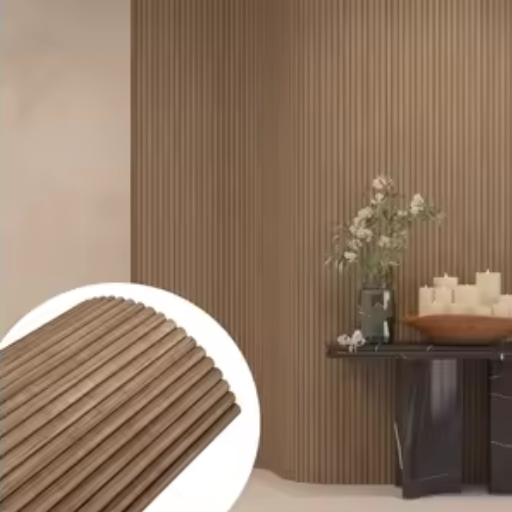
Wood veneer is largely used in wall paneling mainly for the reason of adding to the beauty and at the same time giving the spaces a de luxe impression. The report by the industries states that wood panels covering around 40% of the area of most commercial buildings today paves the way for the coming together of elegance and durability.
Ceiling Designs
Veneered ceilings have so far gained recognition for creating visually striking and acoustically pleasant environments in, among others, offices, theaters, and high-end housing estates. The increase in demand for ceiling solutions made of veneer from 2018 to 2023 is projected to be 25%.
Doors and Partitions
Wood veneer gives a chic and feather-light choice for doors and room divisions. The ability of veneer to imitate rare wood species makes it a favorite among architects who seek a very luxurious look at a very low price.
Custom Furniture in Open Spaces
The custom veneered furniture pieces in lobbies, lounges, and shared workspaces are among the architectural designs. It is estimated by the experts that the luxuriousness and customizability of wood veneers would allow them to feature up to 30% of hotel and co-working space designs.
Elevator Interiors
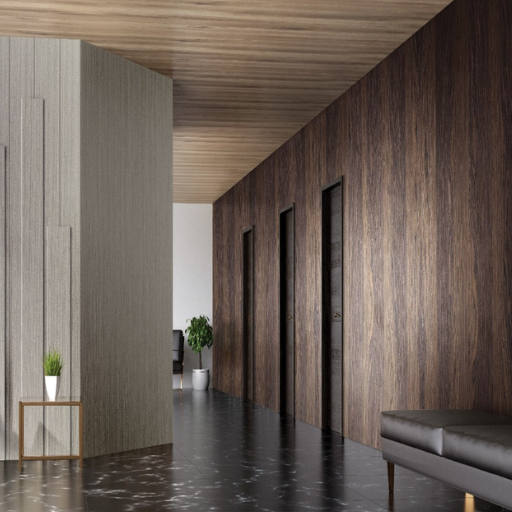
The use of veneered panels in elevator interiors comes from the fact that they are able to provide a luxurious look without contributing weight to the structure. It is reported that almost 20% of the elevators designed today use veneers due to their lightweight and strong character. These applications are indicative of the continuous innovation and relevance of wood veneers in the architectural design field, thus, attesting to its worth as a classic and flexible material.
Uses for Wood Veneer in Commercial Architecture
Digitally Printed Wood Veneer in Design
Wood veneer that is digitally printed brings about a unique and innovative approach to wood by allowing the combination of its natural beauty and custom designs and patterns. In this way, one can easily achieve unique and modern looks without leaving the elegance and warmth of the classic wood. This contemporary method is a great help in making different areas that are specifically themed or according to the client’s taste.
Innovative Architectural Projects Featuring Wood Veneer
Wood veneer has emerged as one of the main materials in avant-garde architectural works of art thanks to its eco-friendliness, flexibility, and the great power of changing the look of places. The National Museum of Qatar, which has design firm Ateliers Jean Nouvel as its creator, is one of the best examples showing the use of wood veneer for surface coating in its interiors. The latter is done in such a way that the already architecturally stunning ‘shell’ is enveloped in a warm and inviting atmosphere. This project presents the possibility of having two opposites, i.e., futuristic designs, wood veneer, and at the same time achieving both functionality and aesthetics nicely.
In the same way, wood veneer is the main design element in Sustainable buildings like the International House in Sydney, Australia. This structure is the tallest in the world, comprising entirely of engineered wood in commercial use; it comes with wood veneer finishes that not only communicate the environment-friendly story of the building but also provide an eye-catching look.
The latest reports say that the global market for wood-based panels, which includes veneers, is to see a rise from the current $130.5 billion worth in 2023 to $171.8 billion by 2028, signifying that it is becoming more and more common with architects and designers. One of the key factors behind this growthis the slowly but surely turning preference towards renewable resources plus the ability of wood veneer to produce complex, opulent textures while at the same time occupying less space than solid wood.
Such examples as well as the trends come together to demonstrate the versatility of wood veneer and thus its status as the primary innovative material in the contemporary architectural field is confirmed. Through its power of blending eco-friendliness with eye-catching nature, wood veneer keeps on being a source of motivation for designers to explore uncharted territories in their creativity with the projects.
References
- Architectural Woodwork Institute (AWI):
Website: https://awiqcp.org
AWI provides detailed standards, guidelines, and resources on wood veneer applications in architectural projects, including casework, wall paneling, and furniture. - Fortune Business Insights:
Website: https://www.fortunebusinessinsights.com/wood-veneers-market-112101
This site offers market analysis, trends, and applications of wood veneers across industries, focusing on sustainability and interior design. - Cutr:
Website: https://www.cutr.com/articles/types-of-wood-veneer-and-uses
Cutr provides a comprehensive guide on the types of wood veneers, their characteristics, and their practical applications in furniture and design.
Frequently Asked Questions (FAQ)
What is the comparison of wood veneer and solid wood in furniture and product made of solid wood?
Wood veneer is a thin layer of wood stuck on a substrate and it is commonly seen as a solid wood alternative. The fundamentally different aspect of solid wood and veneer is that the latter exposes the same species of wood while requiring no large logs. That makes it possible for manufacturers to offer uniform grain and real wood surfaces by effectively using more affordable raw wood. Aesthetics of the wood are revealed along with the possibility of cutting down on wood and wood veneer production waste and overall wood veneer market demand. On the other hand, depending on the situation, it may be difficult to repair a veneer of a few millimeters than a thick solid wood.
What types of veneer are there and what impact do they have on the application of veneer?
Knowledge of the various categories of wood veneer is central to the optimal material choice. Natural veneers (plain sliced, quarter sliced), engineered veneers, reconstituted or reconstructed veneers (composed of wood fibers that are restored to their original shape) and digitally printed veneers comprise the group. The method of manufacturing and processing varies from one category to another: natural veneers consist of oak veneers, walnut veneers and other wood types; engineered veneers and composite veneers provide the stability and advantages of engineered wood veneers, while reconstituted veneers are characterized by a uniform appearance and efficient use of wood fibers.
What are the reasons for choosing engineered veneer over natural veneer in some wood products by manufacturers?
Engineered veneers are made with more durability, uniformity, and scalability than natural veneers. It is possible to create engineered veneers that closely resemble specific grain patterns and that resist environmental changes better than raw veneers. The benefits of engineered wood veneer include less movement, increased durability in interior applications, and the ability to imitate rare wood species without depleting sources which is why it has become popular among veneer products for use in commercial furniture, cabinets, and various wooden objects.
What are the primary applications of wood veneer in interiors and where is it usually found?
Veneer is a material that is used to a great extent in the interior field for the production of such things as cabinets, wall coverings, doors, furniture, and floors. One great advantage of wood veneer, being a thin slice of wood, is that it enables the designer to apply a real wood surface to a large panel or a curve, thus using veneer to give the wood’s appearance without incurring the cost and heaviness of solid wood pieces. Veneer is found in high-end millwork more often where the wood grain’s visual beauty is valued but at the same time material efficiency and stability are a must.
How do the techniques for producing veneers and the choice of suppliers for veneers affect both the quality and the environmental impact?
Different modes of veneer production such as rotary cutting, slicing, or reconstructing the wood can significantly change the grain’s visibility and yield. It is very crucial that the customer chooses a high-quality veneer supplier so they can get the best quality veneer, that the wood used is sourced from sustainable forests and their processes for veneer production are transparent. Some suppliers do provide eco-friendly solutions such as reconstituted veneer manufactured by reconstructing wood fibers which not only helps to preserve the rare species like walnut and oak but also cater to the market demand for veneer solutions.
Is it possible to use veneer as a replacement for plywood and other engineered wood panels?
Yes. The application of veneer is quite common to both MDF and plywood boards to yield finished wood products that are comprised of the strengths of the core along with the attractiveness of the sliced wood veneer. The hardwood veneer-skinned plywood results in the appearance of solid wood, accompanied by a highly stable product, at a lower price. In many wood-related projects, the veneer will be the route taken to achieve the desired wood look and to be the partner of the wood surface properties while granting the manufacture of wood products that anyway would require thick raw wood to be efficient.
What are the care and durability issues for hardwood veneer and thin wood veneers?
Hardwood veneers give the impression of solid hardwood but require almost similar maintenance for the wood grain and finish to be properly showcased. To prevent warping or fading, highly moist and direct sunlight should be avoided. If the damages are too small, they may be fixed, and the process of re-finishing is also possible depending on the thickness of the veneer. Compared to solid wood, veneer may be more vulnerable to edge damage, thus, the veneers are normally placed on stable substrates and are coated with protection for longer usage in the interior applications.