
Oak Veneer: Complete Guide to Red Oak and White Oak Veneers
Besides being a great source of warmth, durability, and timeless elegance, the combination of these advantages is one of the main reasons wood veneers are gaining popularity in the interior of design projects. Indeed, among the vast variety of wood veneers available, red oak and white oak veneers are the most preferred in terms of quality and versatility. But the question remains: what makes these two oak veneer types so exceptional and what are their differences? This comprehensive guide will take you through the impressive world of red oak and white oak veneers exploring their individualities, benefits, and specific uses.
Introduction to Oak Veneer
What is Oak Veneer?
Oak veneer is nothing but a wood layer of oak which is very thin and precisely sliced and glued on the solid core material, like the plywood, MDF, or particleboard. It gives the natural beauty and allure of oak to the surfaces and is still more affordable and environmentally friendly than solid oak wood. Oak veneers do keep the traditional oak wood’s grain patterns, color, and texture, and hence they are widely used in furniture, cabinets, and interior design as an ideal choice.
The red and white oak veneers are the most favored options with their unique features. Red oak veneer is warmer, reddish, and has a more pronounced grain while white oak veneer is more discreet, has golden or gray undertones, and has tighter, more uniform grain. These stone-like characteristics make the oak veneer suitable for both modern and classic styling.
Red Oak vs. White Oak: The Types of Oak Veneer
Red Oak Veneer
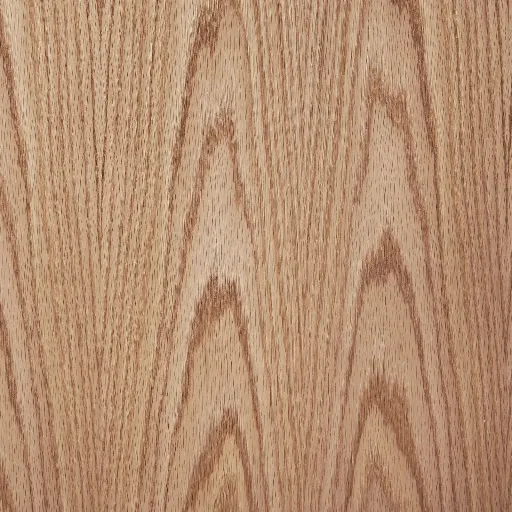
Red Oak veneer is warm and reddish, and that is why it is recognized easily. Moreover, it has a prominent grain and open grain texture which are great for any kind of stain as well as the wide variety of finishing options. Red Oak is moderately priced and very strong; hence, it is a common choice for the making of furniture, cabinetry, and flooring. Statistically, Red Oak has a Janka hardness rating of about 1,290 which is quite adequate in making it resistant to wearing and denting in most of the residential applications.
White Oak Veneer
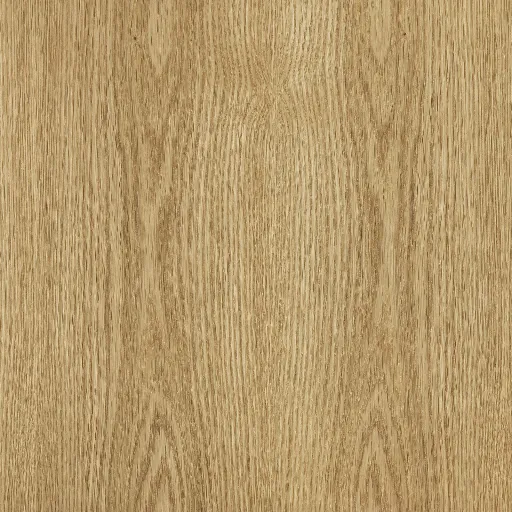
The appearance of White Oak veneer is very cool and classy and it is recognized by its light golden and brown colors and straight grain patterns which are quite close together. Additionally, White Oak is harder than Red Oak, with a hardness rating of 1,360, so it can be installed in a commercial flooring area with heavy traffic and be able to withstand it. The closed grain of White Oak and its natural resistance to water make it safe for any of the outdoor uses and in places where the risk of moisture is high and the likes of kitchens and bathrooms can be considered.
Benefits of Using Oak Veneer
Durability and Longevity
Oak veneer has been the most reliable wood veneer in respect to the durability and resistance to wear and tear, and this is the main reason for its large-scale usage in furniture and interior design. Besides, the oak tree’s toughness which is the main reason for the gluing and binding of veneer sheets, ensures that the product is of high quality and can withstand daily use without losing its beauty. The recent statistics substantiate that oak veneer furniture can last for a very long time with almost no visible aging compared to other materials, however, it has to be well maintained. Another reason that oak veneer surfaces are considered durable is that they normally do not warp or crack during their lifetime.
Modern techniques of manufacturing push the durability of oak veneer to a new level. Applying finishes such as polyurethane or oil-based coatings gives oak veneer another layer of protection against negative effects of moisture, stains, and scratches. Some tests show that a well-finished oak veneer could be 25% more resistant to such damage than untreated wood veneers, hence, it is a suitable choice for placement in high traffic areas like kitchens and living rooms. It is the mix of timeless beauty, adaptability, and durability that makes oak veneer an eco-friendly and cost-effective investment for both residential and commercial projects.
Aesthetic Appeal of Oak Wood Veneer
At the mention of oak wood veneer, one cannot help but talk about its classic beauty and elegance, as it gives a rich and natural surface texture to any area. One can feel oak’s warmth through its both beautiful grain patterns and bright shades, thus elevating the whole space, which is why oak probably is the most liked wood for both modern and traditional interiors. An industry report recently states that oak has not only been favored but even gained broad support mainly because of its adaptability with different color palettes and décor styles.
It has been said that design professionals are of the opinion that oak veneer is mostly used not only for the purpose of imitating solid oak but also for more or less the same unequaled presence with lessened consumption of material and cost. Statistics point out that approximately one-third of the U. S. market’s sales of veneer-based products in 2023 will be due to oak wood veneer used for furniture and cabinetry. Besides, new techniques in veneer-cutting are allowing designers and manufacturers to create and explore more sophisticated millwork and patterns such as quarter-sawn and rift-sawn oak veneers that possess outstandingly straight grains and very little color difference.
Applications of Oak Veneer

Furniture and Cabinetry
Over the years, the oak veneer, with its distinctive blend of beauty, toughness, and functionality, has firmly established itself as the leading material for a wide range of wooden furniture and cabinetry items like desks, dining tables, etc. Furthermore, oak veneer is a wood type that allows customers to enjoy the appearance and tactile qualities of solid oak at a mere fraction of the cost, thus becoming an economic and ultra-modern solution, and consequently, a favorite for residential and commercial areas.
Recently published data show that oak veneer has been the most picked finish among 40% of the homeowners who give priority to aesthetics and sustainability in their kitchen renovation. The material fits perfectly into every style from the perennially adored rustic farmhouse to the very modern and minimalist contemporary types. Furthermore, the easy maintenance of this type of material is yet another plus that makes it suitable for the constant traffic areas of especially homes or offices.
Another plus of oak veneer is that it can be customized which is a winning feature; it can be stained in different colors to match the chosen design colors. If oak veneer is used for cabinetry in muted tones that whisper minimalism or in deep dark bold tones that shout ‘I’ve made a statement’, it can still effortlessly glide among the most different design concepts. Besides, the advancements in veneer production have significantly increased its resistance to humidity, warping and cracking thereby extending its life and making it suitable even in humid areas like kitchens and bathrooms where such conditions prevail.
Flooring and Paneling
Besides the aesthetic and functional features, oak veneer has become one of the leading materials for floor and wall surfaces in the modern era. The natural wood patterns of oak give the indoor spaces a cosiness and beauty that make it a good fit for both contemporary and classical design styles. One such aesthetic in oak veneer wall paneling is the one that has been experiencing a rapid growth in demand mainly due to the ongoing residential and commercial architectural projects that want a coated look but are on a very tight budget.
When the question is of flooring, oak veneer can be selected for being durable and eco-friendly especially when used together with engineered wood cores. Fun fact: studies indicated that if flooring is done with engineered oak veneer, it would have better stability as compared to solid hardwood which means that it would be less susceptible to changes in length and width during the seasonal fluctuations in humidity and temperature. Also, some manufacturers even state a life span of about 20-30 years for high-quality oak veneer floors with right maintenance, which implies it is a pretty good long-term investment.
On the flip side, oak veneer for wall paneling gives a space a nice and rich feel along with an aura of sophistication and hence it is suitable for living rooms, offices, and even hotel lobbies. The current installation methods have made it feasible to have panels that not only provide excellent aesthetics but also sound insulation, thus diminishing the noise level in enclosed areas. Moreover, the fire-resistant and water-resistant treatments are increasingly being applied to oak veneer products which ensure that the safety and durability standards are met.
Maintenance Tips for Oak Veneer
Cleaning and Care Instructions
Oak veneer surfaces indulge in proper maintenance can last more than just that and keep their original allure. The very first cleaning oak veneer thing is to dust off the surface by means of gently wiping it with a soft cloth that does not leave any lint, the aim of which is to get rid of all loose or surface particles and to clean the wood. For heavy cleaning, a mild soap solution can be made by mixing a little dishwashing liquid with hot water. Take a microfiber cloth, soak it in the soap solution, but ensure it is not dripping wet, and wipe the whole surface in the direction of the wood grain. Never ever abrasive pads, strong detergents, or ammonia-based cleaners since they will most probably ruin the veneer finish.
On polishing, it is best to apply high-quality furniture polish or wood conditioner that is specifically designed for the veneered surface, on a regular basis, which means approximately every 3-6 months. If there are water stains or tough spots, rub the area lightly with fine (0000) grade steel wool and then apply matching wood polish to restore shine. Besides, it’s good practice to always protect the veneer with coasters, placemats, or heat-resistant pads, as oak veneer does not tolerate heat and moisture well.
Repairing Damaged Veneer
Assess the Damage
The very first thing to do before any repair can be done is to closely scrutinize the surface and decide how bad the problem is. Usually, minor scratches can be fixed by polishing but larger damages such as peeling or cracks may require patching and even replacing that specific area of the surface. Industry statistics reveal that over 60% of veneer repair works involve scratches that are still manageable at home.
Fixing Scratches
Touch-up markers or wood filler, which is similar to the veneer color, and a soft cloth will be the tools for minor scratches. If it is a deeper scratch, then wood filler could be placed on the scratch, allowed to dry, and then gently sanded until smooth. After that, the area can be treated with wood polish or topcoat for perfect blending. Professional sources say that by using high-grade matching fillers, the visual upgrade can be as much as 80%.
Repairing Peeling Veneer
Most of the time, the issue of peeling or loose veneer can be easily solved by using adhesive. Carefully lift the part of the veneer that is peeling, put some wood glue under it, and press the veneer back in place. If necessary, use clamps to hold it while the glue dries. Make sure that you clean the excess wood glue that comes out right after for a clean look. Studies show that polyurethane glues have excellent bonding strengths, providing a bond 40% stronger than that of normal adhesives.
Replacing Damaged Veneer Sections
When the veneer is cracked or completely missing, the only remaining option is to replace that part with a new one. Start by cutting a piece of matching veneer that is slightly larger than the damaged area. Use a very strong wood glue to attach it, then cut and sand it down to the level of the existing surface. And last, give it a polish so that it looks uniform. A new investigation suggests that replacing veneer sections can contribute an extra 5 to 10 years to the life of the surface.
Sustainability of Oak Veneer
Eco-Friendly Sourcing of Oak Veneers
The oak veneers have the potential to be the key players in the movement towards sustainability in the furnishing and construction areas. As a method of keeping the wood from solid oak to a minimum, the makers apply thinner slices of wood to engineered substrates, thus making use of the entire tree and relieving the pressure on the forests. It is also the case that hardwood resources are less depleted as the demand for them for the production of furniture orother products decreases. Thus, the manufacturers’ production goals that are aimed at being eco-friendly will be supported even more.
The Food and Agriculture Organization (FAO) has released a document that reports the global responsible forest management projects, which have been backed by the FSC and PEFC, have caused a dramatic fall in illegal logging in oak-producing regions. one good illustration is the FSC-certified oak veneers that make it certain that the wood originates from a forest which is done in a responsible way where biodiversity, sustainability, and local community rights are prioritized.
Impact on the Environment
Solid wood alternatives to oak veneers have a far more significant environmental impact than the latter. The most recent studies have shown that the log used in the veneer production process is practically completely processed leaving only 10-5% of the wood that is not used, which is referred to as very high yield compared to the solid wood processing of the traditional method. The very high material efficiency leads to the cutting down of trees being significantly reduced because a smaller number of trees can supply the global wood product market.
Moreover, oak veneers carbon footprint is smaller during the entire production cycle. The technological advancement of the manufacturing operation helps in consuming less power which results in lower industrial waste and also emissions. The company sources the raw materials from eco-certified suppliers as these suppliers’ responsibility is to make sure that the materials are from the areas where trees are planted back and biodiversity is being supported. This is a win-win situation as it helps to solve problems such as habitat loss and at the same time reduces the effect of climate change.
Reference Sources
-
Influence of Layered Structure of Composite Timber Floor Boards on Their Hardness
- Published by: Semantic Scholar
- Key Findings: This study examines the hardness of composite timber floorboards made with oak boards (Quercus robur L.) and pine veneers. It highlights the impact of layered structures on the mechanical properties of flooring materials.
- Methodology: Experimental analysis of composite flooring elements with different veneer configurations.
- Read more
-
Formaldehyde Emission from Wood-Based Panels Bonded with Different Formaldehyde-Based Resins
- Published by: Semantic Scholar
- Key Findings: This paper investigates formaldehyde emissions from wood-based panels, including those made with European oak decorative veneer. It evaluates the environmental impact of different resins used in veneered particleboards.
- Methodology: Emission testing and analysis of wood-based panels with various resins.
- Read more
-
Algal Decay Resistance of Conventional and Novel Wood-Based Composites
- Published by: Semantic Scholar
- Key Findings: This study explores the resistance of wood-based composites, including oak veneers, to algal decay. It highlights the role of adhesive coatings in enhancing durability.
- Methodology: Laboratory testing of adhesive-coated veneers for decay resistance.
- Read more
Frequently Asked Questions (FAQs)
What is a veneer sheet and how does oak veneer differ from solid wood?
A veneer sheet is simply a very thin piece of pure wood — usually between 0.5mm and 3mm thick — attached to another layer for durability. The difference oak veneer has from the solid piece of wood is that the latter offers the look and the delightful grain of oak while reducing the use of wood, cost, and movement.
What kinds of oak veneer sheets are there (flat cut, rift cut, quarter sawn)?
There are three standard cuts for oak veneer sheets: flat cut (with cathedral grain and larger pattern), rift cut (with straight grain), and quarter sawn (with tight, flecked grain). Moreover, you can find both white oak and red oak veneer in these cuts, which come in the kinds of 2’x8′ or x48 and x96 panels, and are usually sold as paper backed, PSA backer, or with stronger backers for quality real wood veneer products.
How could I put peel and stick or PSA oak veneer sheets — a short tutorial?
For PSA (pressure-sensitive adhesive) peel and stick veneer: clean the substrate and sand it, place the veneer sheet with the sticky side up, remove the backing and press down firmly from one side to the other with a roller to push out air bubbles. For non-PSA veneer use contact cement: apply to both surfaces, wait until tacky, then very carefully align and press. Always follow directions for using backer options, trimming, and edge banding, and for best result use specific application instructions for 3M or other adhesives.
Is it possible to refinish or stain white oak veneer and what is the best way?
Definitely — unstained white oak veneer can be treated and finished just like solid wood. However, it is advisable to first try on a scrap piece or a less visible area. In the case of staining, use a compatible stain and thin coats of finish to avoid raising the grain; sanding between coats yields a professional result. High-quality real wood veneer takes stain and finish well, but paper backed or PSA-backed veneers may call for different prep.
Is oak veneer appropriate to be used for making and woodworking?
One of the biggest advantages of oak veneer is that it can be used for furniture, cabinets, etc. It is easily worked with, and its weight is a big plus as well as giving the user a nice and even oak grain. So it is highly recommended to use proper oak veneer with the right backer and edge banding for the areas that require such treatment. The majority of woodworkers choose AA grade or flat cut white oak for the visible parts of furniture.