

Understanding Birch Plywood: Grades, Specifications, and Applications
Incorporating birch plywood in any project is a popular choice due to many reasons, the key being the strength and durability that it offers. In the aspect of furniture making, construction, and other intricate woodworking projects, one important point to cover is an understanding of birch plywood, otherwise, a wrong choice of the material would be made. This paper focuses on a detailed description of birch plywood, its grading scale, technical details about its structure, and various ways in which the material has been used without comprising any production. This will help in selecting the right type of plywood that will work for specific projects and making effective use of such material will be much easier.
What is Birch Plywood?
Definition and Composition
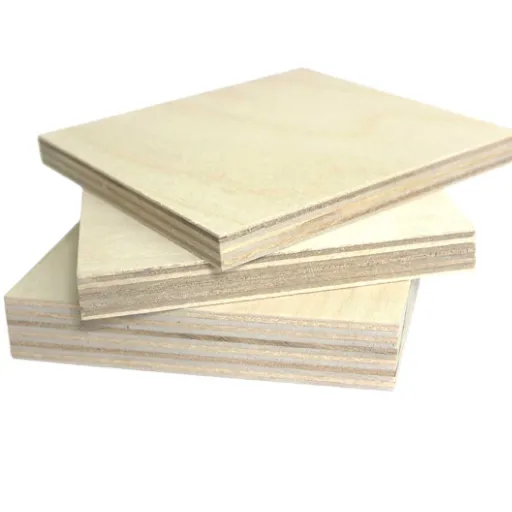
Most prefer birch plywood that has more value because its quality is superior. It is a material layer that is composed of very thin birch layers called veneers. To assemble this material layer extreme strong bonding materials are employed in a way that makes it warps resistant since each ply layer is steamed and bonded in opposite directions. Most recognized birch plywood is creamy, fine grained and light colored. Thus, the reason why most engineers select this particular material of construction due to the visual and structural factors.
One unique feature about birch plywood is its composition because it is different from other plywoods. Each veneer is sourced according to quality and appearance to match the rest of the layers. The core is mostly void free and this makes it able to withstand high pressure and more durable. Additionally, the void free core of these plywoods makes them less likely to warp, crack or have pockets and voids within the other overlay and also prevents these plywoods from falling apart as one of the thin layers does in lower cost plywoods.
Many of the manufactures offer these variants with an option of formaldehyde free adhesives for green and low VOC architectures which are essential in places that have indoor air quality standards.
The categorization system of birch plywood tends to focus on the faces of the plywood: these very top layers of veneer are named substances and these grades can be anywhere from B (excellent, no knots and defects) to D (more natural, with and without defects). The use of a classification system aids in the process of choosing a suitable grade of the material for embellishing the interior of a house or another structure such as a cupboard or floor covering, alongside all other alternative uses possible with such material.
Types of Birch Plywood: Baltic vs Other Grades
Baltic Birch Plywood
Baltic birch plywood is generally manufactured in the north-eastern parts of Europe and Russia, and is well known for its quality, uniformity of core layers, and quality of durability. This particular variant is exclusive birch veneers and has no voided core wood and also has same caliper for all ply’s thickness enhancing the jigging and machining qualities of wood.
It is highly preferred for unpublished woodworking activities like cabinetry, furniture making, high end joinery etc.
Standard Birch Plywood
Standard birch plywood, consists of layers that include veneers made from different wood species or few thicker layers than those in Baltic ply, is more prone to finishing defects, and due to its construction may have internal voids or filled areas.
Although cheaper, it does not satisfy the performance nor the aesthetic requirement as Baltic birch. This grade is most frequently applied in areas with relatively lower finishes and structural requirements in the case of subflooring or other building structures.
Knowing these clarifications in birch plywood, whether for the families or the builders, is particularly important even for construction materials. A construction that is exquisite requires the peace of mind afforded by Baltic birch plywood, which is costlier; on the other hand, cheaper grades of ply can still work even where the work is not limited by the economics.
Specifications of Birch Plywood
Thickness Options and Their Impact
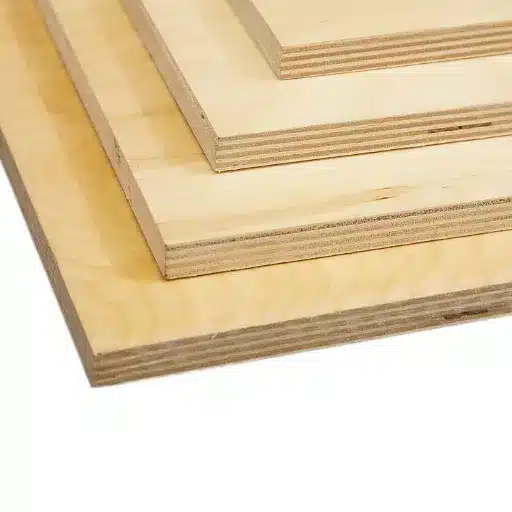
There is the birch plywood that comes in many thicknesses, which is likely to range between an eighth and an inch thick or even more. Each of these variants is intended for a certain purpose, practical or otherwise. The birch plywood thickness does determine how strong, how heavy and how adaptable the cuts are.
Thin Sheets (1/8″ – 1/4″)
When the cut is thin, such as 1/8 or 1/4 of an inch, it is best used where flexibility is vital like paper crafts, cabinet backs or constructing curves. These types of panels are light in weight, very simple to address and, if needed, can be bent or compounded.
Medium Thickness (1/2″ – 3/4″)
Such mediums particularly the 1/2 or 3/4 inch thickness are plates and are commonly used in furnishings, cabinet making and shelving because of the excellent strength-workability ratio. The surface finishes of these panels are sufficient for finishing although, they are strong enough to hold even moderate loads and pressures.
Heavy Duty (1″ and Greater)
Thicker sheet metal parts of the sorts in case of one inch thickness and greater, are common for heavy industrial duty cases where stability and strength are a must, for instance, workbenches, industrial fixtures or permanent or temporary partition walls. With the thickness of these sheets, there is little likelihood of warping even under high stresses or weight.
An important point is that one should check the materials, e.g., the number of layers combined or even density of the wood within the core because they too influence how the plywood will deliver despite its thickness. Choosing a high-grade Baltic birch plywood ensures the thickness is maintained with reduced voids, which contributes to the reliability and finish of the product.
Understanding Veneer and Its Role
Veneers can best be described as thin layers of hardwood, measuring less than 3 mm thick and laminated on some core materials in order to make a furniture, cabinet, and construction panel. Veneer assumes the cosmetic role of furnishing an attractive facade while using less costly or more sturdy core materials, such as engineered wood or MDF, to increase the sum total of the cost and the stabilizing effect.
A variety of different species, qualification, and cut of veneer exist, hence, there is an abundance of design considerations ranging from deep walnut patterns, those of birch plywood and light maple surfaces.
Technical Aspects of Veneer Cutting
It can be said that the technological aspect of the concept of veneer is the key, inasmuch as with the advances in technology and science, the process has become more precise, as well as materials capabilities are improved. The number and type of cutting—namely rotary, plain slicing, and quarter slicing—greatly affects the look and properties of a given veneer.
This can be evident in instances whereby rotary-cut veneers happen to have a wider and more intense grain figure than the quarter-sawn veneers which have straightgen vector patterns that are usually preferred due to the fact that the latter has straight grain patterns. Such differences in the veneers are not only for functional purposes but also to enhance the beauty which is why the choice of the veneers is very important in any course of action where a fine elegant surface is needed.
The wood industry is cherishing artisans and their crafts as a viable solution in today’s ever-changing business environment, especially given the upsurge in the use of veneers. Instead of felled solid wood, the use of thin veneer layers of superior quality wood helps improve the efficiency of the resource usage, supports a green approach, and also results in minimum wastage during the processing operations. With the improvement of glue compositions and pressing technologies in recent years, veneer panels are also engineered to meet if not surpass the strength of solid wood.
The Benefits of Using Birch Plywood
Durability and Strength
Creation of Detailing Under Heavy Loads
In the configuration of birch plywood, the veneers are arranged at angles. This allows for the bending stresses to be redistributed through the crossed layers which results in a structure that supports heavy loads without distortion or shattering. Investigations revealed that the particular ultimate strength in bending performance exceeds 60 MPa, therefore there is a possibility of utilization of this equipment in extremely severe conditions.
Improved Shape Retention
High quality of glue and even placement of wood fibers in the structure of birch plywood help it to preserve its shape despite the changes of environmental conditions. The maintenance of stability in turn minimizes the possibility of any distortion even when approached in wet or heated temperatures.
High Toughness
On the well-known Janka index of wood hardiness, birch plywood is ranked high, demonstrating great resistance when it comes to scratches and denting. Such denseness contributes to extending the item’s life even when there is frequent use or when subjected to an impacting factor.
Anti-Splintering Properties
Birch wood has fine texture which helps reduce splintering while cutting and working it. This characteristic is important in this material as it enables high precision in machining and in protection of the edges which further enhances the strength of this material in the building and making projects.
Screws Hold Strength Is Very High
The dense structure of birch plywood gives it excellent and screw retention capability, which in turn is critical towards the durability of the assemblies. Therefore, it is the most effective among other materials for tightly compressing chords in cases of cabinets, piece of furniture production including elements of architecture with strong joining capabilities.
Aesthetic Appeal in Furniture Design
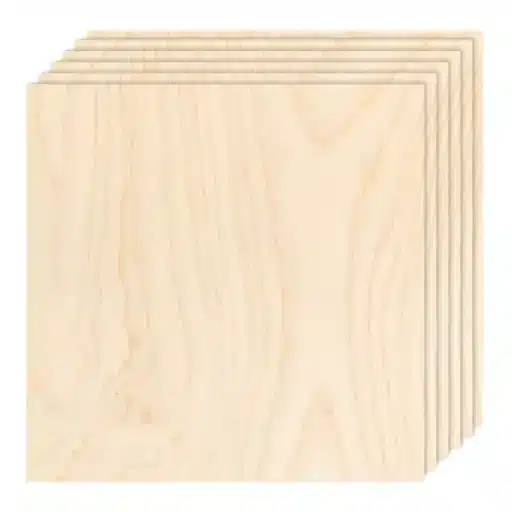
Most people can easily identify birch plywood as an interesting material used in furniture, visibly composed by its natural characteristics, gracefully flat and smooth surface, and light grain which completes the trendy look of any piece. In its default or original cream tint, it offers all kinds of shades and textures from smooth surfaces to elaborate strokes.
Smooth Finishes
The fine texture of the top of a birch plywood sheet makes it quite possible to apply paint, varnish, or even a stain in a very refined manner. This property allows for beautiful finishes that contribute to providing a smooth and glossy effect to the furniture.
Uniformity of Grain Designs
The uniform grain patterns in a minimalist birch plywood contribute aesthetically by providing balance to the design. The grain designs on the Alexandrian designs are protracted, such as those requiring the installation of symmetry and simplicity.
Soft Wood Looking
Birch plywood is, however, quite easy to stain, making it possible to replicate the texture and demanding the luxury of identity in maple and ornate beautifully to look oak-like yet affordable alternatives.
White Shade For All And Everything
Birch plywood’s light shade is a great advantage as it changes with one’s creativity, matching anything from paneled walls in Scandinavia to farm-house looks or spare contemporary ones.
Less Noticeable Imperfections
This is why this finish features less pronounced knots or voids on its surface in order to promote the universality of the material rather than put a lot of attention on specific details. This is quiet as the designs will not be dimmed by the texture of the material.
Comparing Birch Plywood to Other Wood Types
Practical Applications of Birch Plywood
Designing Furniture with Birch Plywood
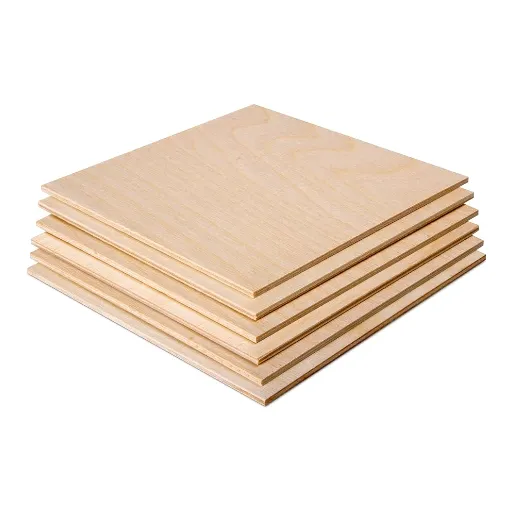
Birch plywood is a material of choice in making furniture because of its constituent qualities of beauty with strength and stability. The texture is fine and uniform aiding in achieving in the manufacturing of streamlined finish which is adaptable to offers several interior designs. A consistent surface quality aids in good veneer and finish application hence ‘professional finish’ can be obtained in either domestic or commercial settings.
When making of furniture, the birch plywood, which is a light yet firm material, creates stiff pieces which can be easily handled because of their light weight. Additionally, the cabinets, shelves and table tops which are manufactured using it have an advantageous structure and do not deform or split after some time. Moreover, the geometrical stability of such plywood remains unaffected even when exposed to moist conditions and hence can find use in the kitchens and bathrooms.
In the context of the natural environment, birch plywood is usually sustainably produced which means that such products have, among others, FSC (Forest Stewardship Council) worthiness for their uses. This renders it eco-friendly as opposed to solid hardwoods which might involve more resources in extraction and further processing.
Indeed, designers mostly opt for the use of birch plywood because of its adaptability, that is to say the furniture can be laminated with little effort and later cut into various shapes as well as bent to match for instance the most intricate or minimalistic. When also left raw, the layered composition adds a modern touch to the piece of furniture, making it more industrial but clean.
With improvements in technology, there are engineered variants of birch that keep further improvement possibilities in making complicated structures.
Using Birch Plywood for Cabinet Making
Cabinet makers are now leaning more towards birch plywood because of its structural strength, beauty and versatility. Birch plywood is made from thin birch veneers glued out of a durable glue and hence has a higher strength to weight ratio than most hardwoods. Such a structure provides firm support to build cabinets, even if they are used heavily, or might rather be placed under heavy loads.
Structural Advantages
The structural advantages associated with the use of birch plywood are an important advantage from a practical point of view. Due to temperature humidity fluctuations wood changes dimensional stability, whereas solid wood this process is reversed as a result of the wood structure itself containing more than one direction of grains. Such stability is essential in cabinetry application and more so in the case of kitchens and bathrooms. All in all, birch plywood is also available in bigger dimensions, which eliminates the need for joints in cabinet surfaces and paneling design thus minimizing material consumption.
Cost-Effectiveness and Sustainability
From a financial approach to cost-effectiveness, birch plywood is selected due to its moderate pricing and good utilities. It is normally less costly than expensive solid wood materials but durable enough to find application in mid to high cabinet construction. Also, the new technologies enabled the development of special types of birch plywood that are more resistant to humidity, scratches or wear and tear and thereby allow them to be used in high volumes. For green building techniques’ application, the birch plywood in forest stewardship council _ certified supplier also offers a green solution as this is what most people believe safe for material use.
Frequently Asked Questions (FAQ)
Q: What exactly is birch plywood and what aspect makes it more preferable in high-quality tasks to other kinds of wood materials?
A: Wood panels birch plywood are panel boards that have many layers of thin slices of wood known as veneers and are composed of alternating grains of such veneers; they are used in high end user unfurnished applications because the faces and the back of the plywood is essentially identical, smooth grained textures, aesthetically appealing, can hold screws tightly and there is no warping and breaking due to temperature changes, making it good for decorative cabinetry in particular and shop fixtures, among others, in architecture.
Q: How do birch plywood grades vary and what impact do they have on the end product?
A: The grade of birch plywood varies depending on the quality of the face and the back veneer, the number of pin knots, consistency of plies in the core and type of glue used; the higher the grade, the more there is a smoother surface which can be stained or dyed without much restrictions, fewer blemishes in the exposed sides and the end product will also have enhanced decorations while lower grades can be used where strength is the primary concern or where the surfaces are not exposed to view.
Q: Is it possible to use birch plywood for both CNC and laser cutting processes including thin sheets like those of 3mm and 6mm?
A: The answer to this question is positively birch plywood is extensively used with both CNC and laser cutting; 3mm and 6mm thick sheets with unsanded edges will generally cut out well as long as they are properly supported thus it is commonly used for decoration jigs, models, and architectural design – just check the type of glue of the particular sheet to ensure it is safe for the laser cutting.
Q: What factors should I consider in selecting birch plywood when utilized for structural work as compared to that for decoration?
A: When choosing birch plywood for structural work use inner plies of high-pressure resilient adhesives to a minimum thickness capable of successfully completing the work without compromising its strength; while for decorative work choose the grains of the face within veneers which are good in quality requisition little pin knots and a good surface capable of accommodating stain, varnish or paint ready for beauty enhancement.
Q: Can you tell me what thicknesses are most common and also their impact in DIY projects especially 3mm and 6mm birch plywood?
A: Thickness options vary including thin 3mm and 6mm sheets for veneer and light construction up to 3mm, which is also suitable for delicate laser cutting, or 6mm for small cabinetry cabinets, face frame, and other decorative such as panels due in advanced DIY especially pine and MDF materials where greater screw retention is required.
Q: How is it that one allows the birch plywood quality to be restored if it has to be sanded, finished and repaired?
A: Birch plywood should be sanded as first medium and then fine until the back and front surface is ready to be finished; a grain filling should be used for a laser portion, surface should be evenly dyed or stained to add certain features, and should any pin knots or voids be in the inner ply it will be repaired by filling with wood putty for sanding and finishing.
Q: Can birch plywood be used for moisture-proof or outdoor construction, and if so, what precautions should a woodworker take?
A: The Regular or the interior birch ply is usually meant for dry areas, although there are moisture resistant variants which use waterproof glues suited for wet places; craftsmen can opt for suitable glues, protect the edges and if possible seal even the surfaces and individual layers of the composite for extra protection when making structures that use birch which will be exposed to water.
Q: Where can I buy wholesale birch plywood and how do I pick the best plywood source?
A: If needed in large quantities, birch plywood is to be bought from various specialty and lumber markets or the woodworkers’ industry networks; the best ply or even plywood is that which can be tested for the face, which means looking through its thin outer layer for uniform plies, certificates and the numbers of available types or sizes to buy that can help make a table, benches of high duty and other good looking things.
Q: How well does birch plywood hold screws and fasteners for long-term durability?
A: Birch plywood excel in securing screws as compared to many other plywood species due to compact core and layers which ensure that minimalist or structural structures can be made; however, when assembling such arches, it is appropriate to pre-drill pilot holes, pay or take into account where pull-through is achieved, the gauge of screw as it is about the ply and band some edges for the cases expected for re-assembly or repair over many times.