
Custom Wood Veneer Panels: The Complete Specifier’s Guide to Design, Sourcing, and Ordering
Custom wood veneer panels are custom-made sheets of authentic wood that you can design according to your specifications for wood species, grain pattern, panel size, substrate material, and final appearance. Custom panels enable you to select exact materials that will meet your project’s design needs and performance standards and environmental sustainability goals, because stock panels force you to work with predefined dimensions and typical materials.
Stock veneer panels work for basic applications. But when an architect needs a 14-foot book-matched walnut feature wall with zero visible seams, or when a hotel brand requires rift white oak slat panels with a specific stain to match their global design standards, stock options fall short quickly. Custom manufacturing serves as the only effective solution to this problem.
This guide benefits you if you have received a veneer sample that almost matched your needs or if you have faced difficulties finding a supplier who can differentiate between slip matching and book matching. The results of this process will enable you to specify, source, and order custom wood veneer panels that will perfectly match your design vision.
Key Takeaways
- Crafting custom wood veneer panels is at one’s behest for species, grain, size, and substrate as one can be finished with perch upon this final choice.
- The five core specification variables are wood species, grain matching, core substrate, surface finish, and performance ratings (fire, acoustic, moisture).
- Standard custom orders are shipped within seven to ten working days; complex architectural panels with secondary manufacturing can typically take six to eight weeks.
- Base custom panels start at around $8/SF of hardwood only; premium exotic species with complex grain matching can even exceed $40/sq ft.
- FSC-certified custom panels are readily available with full chain of custody documentation for LEED and green building projects.
What Are Custom Wood Veneer Panels?
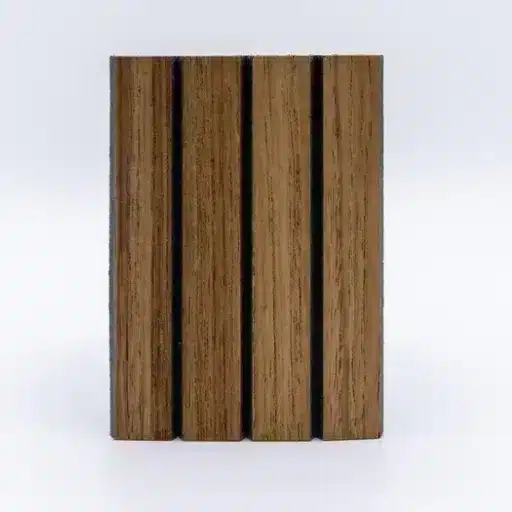
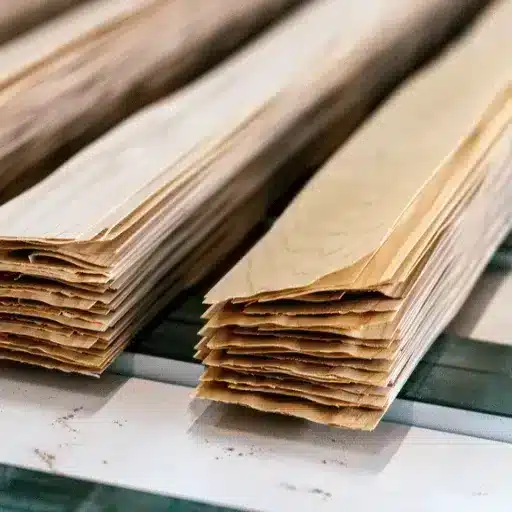
Custom veneer panels do what all veneer panels do and start with thin sheets of real wood that have been derived from an actual log, usually measuring about 0.3 mm to 0.6 mm, either sliced or sawn. The difference lies in the fact that instead of bonding this veneer to a substrate cut into a predefined size, the custom maker works on your brief to decide exactly and correctly the species and grain pattern matched over multiple panels, the core material suitable for your application, and then takes all the appropriate finishes up to the surface.
What you get is a panel system that indeed does behave almost like a piece of solid wood, but is much better in terms of dimensional stability, less weight, and yields much more material out of every cubic meter. One cubic meter of timber, for instance, would yield approximately 900 square meters of veneer at 0.6 mm thickness. That’s 45 times more usable surface area compared to the same amount milled up into solid planks.
Given the task of designing a 24-foot feature wall in a boutique hotel lobby in Chicago by the senior interior designer of a hospitality design firm, Sarah Kim knew that using a 4×8 standard panel would show visible seams every eight feet. A custom veneer producer shared in making 12-foot panels with end-matched walnut veneer and continued the grain pattern through the entire surface. It cost half the labor and all of the confusion which would be caused by a patched-together stock solution; until even now, the client’s prized marketing photo shows this wall.
If you are new to veneer construction, our complete guide to wood veneer panels covers the fundamentals of how veneer panels are built, how they compare to solid wood and laminate, and where they perform best. For a breakdown of the different types available, see our types of wood veneer panels explained.
Customization Options: What You Can Specify
The power of custom wood veneer panels lies in the breadth of variables you control. Here is what you can specify and why each decision matters for your project.
Wood Species Selection
The selection of species is everything from cost and availability to durability and visual impact. Custom manufacturing opens windows beyond the standard oak and maple species, typical of most manufacturers
Woods chosen from local production, such as white oak, walnut, cherry, and ash, which are popular, offer a good balance between cost, workability, and warmth typical of local species. White oak has become a popular choice for 2026 projects because of its ageless beauty, grain, and its compatibility with trends applicable in Scandinavian minimalism and traditional American interiors.
Exotic and figured woods such as teak, zebrawood, and ebony, on top of this burl veneer, also set standards that a local wood product cannot. This product is priced at a premium, allowing the artist to form spectacular space definers. The need to still cross-cut an extremely limited quantity of the most precious wood in the world, most preferably fresh timber, exotic species in veneers can be enjoyed via custom panel applications at costs reduced to about half of those spent for solid wood.
Engineered and reconstituted veneers are an alternative path. They consist of manufactured fibers from sustainable wood, dyed and rebuilt to mimic the appearance of endangered species. Engineered veneer is gradually becoming the most practical option for any scheme requiring endangered mahogany-like looks, as one has less risk associated with the supply chain.
Grain Matching and Pattern Options
Grain matching just separates custom veneer panels from stock, with sheet arrangements across panels looking as though the installation has been a singular, continuous surface, as opposed to a collection of individual boards instead.
Book matching takes alternating sheets of veneer and flips them to give a mirror image, sort of like flipping pages in a book. The result is a symmetrical grain pattern that is very pleasing to the eye and more formal. It is a staple choice for feature walls, upscale executive boardrooms, and high-visibility millwork.
Slip matching board verts two adjacent sheets facing one way, yet creates an undulating bulk of linear grain. It works well for large surfaces in which the wood is meant to read like a whole surface as opposed to a mirrored effect. It is the go-to look for streamlined, fitted-and-finished homes.
Random matching, sheets are taken from different parts of the log and spread out, thereby randomizing variations across the scene. I believe random matching is the most cost-effective form of matching because it is suitable for casual or rustic applications where consistency is not a big issue, as it tends to deliver more organic character than most others.
End matching aligns the grain pattern across panel joints. This synchronization of the grain pattern grants an arbitrary character to wooden covers across the board. The process is even beneficial to seam-smearing for Sarah Kim’s hotel lobby wall, since it disposes of apparent flitches all through the 24-foot installation.
Core Substrate Options
The major component of the created panel is the substrate core. Suitability for an application, the limits in weight, and the demands made on its performance will decide which substrate variety will be used.
MDF core provides the smoothest, most uniform surface and is the default choice for internal wall panels, cabinetry, and furniture. It machines very well and evenly takes veneer. The tradeoff is weight and moisture sensitivity. MDF will bulge if it absorbs water; thus is appropriate only for use in dry interior conditions.
Plywood or veneer core tends to possess much better screw-pulling capacities and structural integrity than MDF, and is a perfect choice for panels intended to carry hardware, support shelving, or get overstressed physically. Plywood-core panels also resist twisting better in high-/low-humidity alternating conditions.
Particleboard core occupies the cheap end of the spectrum. It is suitable for vertical applications like wall paneling where structural load is minimal, but it lacks the density and edge quality of MDF for high-end work.
Specialty cores solve specific problems. Fire-retardant cores meet commercial building codes for Class A flame spread ratings. Moisture-resistant cores use treated adhesives and resins for bathroom vanities and kitchen environments. Honeycomb cores, typically aluminum or paper, reduce panel weight by up to 80% for ceiling installations, large wall features, and transportation applications like yacht interiors.
Finish and Surface Treatments
The custom finish takes control from the raw veneer to the final surface chemistry.
Clear finishes should allow the grain to show while offering some protection to the wood. Clear natural finishes are popular in high-end interiors, where the chosen wood species is the statement in designing their furniture.
Stained finishes dye finishes or make color changes in the wood, but don’t hide the grain. Custom staining gives the designer another avenue to try to match existing millwork, the specific color of the brand, or a specific design palette. Low-VOC interiors have come to standard practices via the use of water-based stains.
Fumed or smoked finishes use ammonia vapor to react with tannins in the wood, darkening the fibers permanently from the inside out. This process yields a deep, grand color that can never be sanded out. One of the most requested custom finishes is smoked oak for 2026 hospitality projects, as practiced by people nowadays.
Textured surfaces like wire-brushing and sandblasting allow wood-grain embossing, so that the panel comes to self-dimensionality, so that light would catch its surface in a way different from the case of flat-sanding the panels. Such treatments are becoming quite popular for feature walls, TV backdrops, and headboard installations.
Performance Specifications
The thing about custom manufacturing is that performance isn’t slathered on at the end but actually built into the panel.
Fire ratings can be developed to Class A, B, or C flame spread requirements according to the ASTM E-84. In commercial applications, Class A requires most wall and ceiling surfaces in exit corridors, lobbies, and assembly spaces.
Acoustic performance is achieved with microperforations, micro groove, or slat construction reinforced with sound-absorbing felt. Noise Reduction Coefficient (NRC) of more than or equal to 0.85 can be gained from custom acoustic veneer panels, making the material suitable for conference rooms, auditoriums, and open offices.
Moisture resistance and exterior-grade treatments extend veneer use beyond traditional dry interiors. Specially treated panels can withstand partially covered exterior environments, restroom partitions, and high-humidity spaces.
The Custom Panel Workflow: From Concept to Delivery
Ordering custom decorative laminates isn’t the same as buying stock lumber–it actually is a cooperative effort across several stages; so it helps to comprehend the sequence to manage expectations realistically and stave off some of the less predictable delays met by first-time specifiers.
Step 1: Concept and Design Brief
The process itself starts with a concise but well-defined brief. You need to describe the application, size, species selection, aesthetic goals, and specify performance attributes before any manufacturing gets underway. The best briefs feature images from catalogs, physical samples of an existing millwork that should be matched, and a firm conception of the space where the final installation will take place.
David Torres, a project manager for a Miami retail chain, needed custom care for 120 store locations when his initial brief mentioned only “walnut veneer wall panels.” The manufacturer independently inquired about a rift cut or a flat cut. Book-matched or slip-matched? Which fire rating for mall code compliance? David took at least two more weeks to refine these points with the manufacturer’s technical team before production could start. The big lesson: the more detail you provide upfront, the faster the process moves.
Step 2: Species and Substrate Selection
Now that the brief has been made, you turn to your species and substrate selections, and your business partners deliver the perfect combination for your given application. This step integrates aesthetics, performance, budget, and availability. As in the case where the species that you prefer takes 10 weeks to deliver, and the project gets opened in the period of 8 weeks, the manufacturer should propose alternatives that will give the same visual result.
Step 3: Sampling and Approval
Sampling is the radical quality control step in the custom process. Prospective sellers will provide only grade-A production samples as they appear to cover what you will get in color, grain, and finish. If you are unsure how veneer grades affect sample quality, our guide to wood veneer panel grades explains the A, B, C, and D classification system. For large projects, it is a worthy investment to make a full-size mockup of a section or a full panel. Signing off on the sample locks the specification and becomes the production standard.
Step 4: Fabrication and Quality Control
After the sample is approved, the operation will roll out production. This process will include log selection, cutting of veneer, drying, matching substrate preparation, adhesive application, pressing, trimming, and enriching the finish. Quality assurance is carried out at each work stage, and the approved sample also forms the reference standard.
Step 5: Delivery and Installation Support
Custom panels are very sensitive to handling; they are normally packed vertically with lateral edge protection and moisture barriers. Some manufacturers also provide installation instructions and adhesive suggestions, and technical support in preparing substrates. For projects involving difficult concepts, on-site inclusion during installation can help prevent costly errors.
Custom Wood Veneer Panels by Project Type
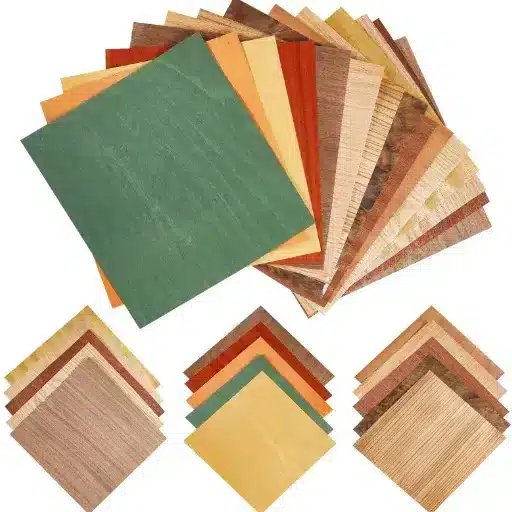
The best way to understand the value of customization is to see how different industries apply it to their specific challenges.
For Commercial and Corporate Spaces
Corporate interiors demand consistency at scale. Should a global collective of legal experts be renovating forty boardrooms around the earth, the walnut panels in London must definitely marry those that will be installed in Singapore. Custom fabrication allows this company to nail down an exact specification and then produce samples for approval once. The material is then repeated across all locations.
Branded reception counters are another common need. For example, a technology company might want custom panels with company logos in laser-cut recesses in the surface of the veneer. This kind of permanent brand mark won’t come undone, as an applied decal can peel.
As for an open office, one thing that Acoustic treatment is increasingly sought after when the attempt would be to cover things under a single roof is the implementation of custom slatted or perforated veneer panels that are backed by recycled PET felt. These methods, being highly absorbing and giving warmth, serve soundproofing loads better than foam panels, designed for noise killers.
For Hospitality Projects
Hotels and restaurants live or die on atmosphere. Custom veneer panels allow hospitality designers to create immersive environments that guests remember.
Hotel guest room headboards often run the full width of the wall behind the bed. Custom panels can be manufactured to the exact room width with continuous grain flow, eliminating the patchwork appearance of joined stock panels.
Restaurant bar fronts take abuse. Custom panels with durable, catalyzed lacquer finishes and high-wear substrates withstand the spills, impacts, and cleaning chemicals that would destroy standard veneer in months.
For Residential and Multi-Family
High-end residential projects are leaning further and further towards customization at every possible juncture, with custom veneers for kitchen cabinetry, or kitchen island panels, and built-in millwork. A specific shade, matched to the flooring in existence, or a book-matched grain across a 10-foot wall of identical kitchen cabinets, takes ‘the space’ up and away from what could be achieved with corresponding mass-produced elements.
In the case of multifamily developments, custom panels give developers the ability to create a look that only belongs to their respective place. Such panels made of a single special veneer species used across lobby walls, elevator interiors, and corridor paneling create consistency people can’t help but notice in an apartment they intend to own or rent.
For Retail and Exhibition
Retail environments always change. Therefore, it becomes necessary to create custom veneer panels that are planned specially for pop-up stores and exhibition booths. They should be lightweight, easy to install, and visually appealing. The honeycomb core panels will make the project lightweight, but custom stains and digital printing are what will really make the branded environment look great in photographs for social media.
How Much Do Custom Wood Veneer Panels Cost?
Pricing transparency is one of the biggest gaps in the custom veneer market. Here is what you can realistically expect to pay in 2026.
Pricing Tiers (2026 U.S. Market)
| Category | Material Only (per sq ft) | Installed (per sq ft) |
|---|---|---|
| Budget / Engineered Custom | 5−5−15 | 8−8−20 |
| Mid-Range Custom (Domestic Species) | 8−8−20 | 14−14−25 |
| Premium Custom (Exotic / Figured) | 15−15−40+ | 20−20−50+ |
| Acoustic / Specialty Custom | Add 5−5−15 | Add 5−5−15 |
These ranges assume standard panel thicknesses of 1/4″ to 3/4″. Thicker architectural panels add 20-40% to material cost. For a deeper dive into cost factors across all veneer panel types, see our wood veneer panels cost guide.
What Drives Custom Pricing
Species rarity is the single biggest variable. White oak and maple sit at the accessible end of the spectrum. Walnut and teak command moderate premiums. Ebony, burl, and figured crotch veneers can multiply the base cost several times over.
Grain matching complexity also affects price. Random matching adds minimal cost. Slip matching adds some labor. Book matching and end matching require skilled layout work that adds 15-25% to panel cost.
Custom sizing and CNC routing for non-rectangular panels, curved forms, or integrated hardware cutouts add tooling and programming costs. Expect a 25-50% premium for complex geometries.
Fire rating and acoustic backing add material and certification costs. Class A fire-rated panels typically cost $5-15/sq ft more than standard decorative panels.
Order volume matters. Custom manufacturing has fixed setup costs. A 500-square-foot order carries a higher per-square-foot overhead than a 10,000-square-foot order.
Budgeting Rule of Thumb
For a custom wood veneer panel project, calculate your material budget as:
Total Material Cost = (Square Footage × Panel Price per sq ft) × 1.15
The 15% contingency covers waste, cutting errors, and field adjustments. For true custom work with rare species or unusual dimensions, add 20-30% premium.
Lead Times and Ordering: What to Expect
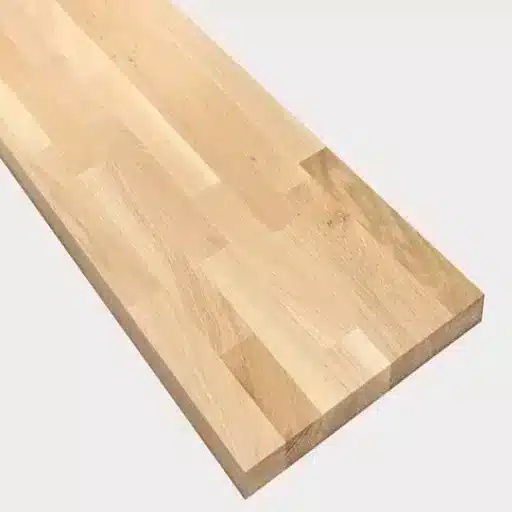
One of the most common questions specifiers ask is also one of the most variable: how long will this take?
Typical Lead Times
- Standard custom veneers (1/32″ to 1/8″ face, domestic species, stock substrate): 7-10 working days
- Thicker millwork panels (1/2″ to 1″+, plywood or MDF core): 10-15 working days
- Complex architectural panels (plank ceilings, doors, secondary manufacturing, CNC routing): 6-8 weeks
- Exotic species or special orders: Add 2-4 weeks for raw material procurement
Factors That Extend Lead Time
Species availability is the most frequent delay. They have to be provided by a specialist supplier or importer when the manufacturer does not have certain rare species that are specified in his/her requirement. Approval cycles for sampling can mean that there is more time taken, also. Rushing through one’s sampling for the sake of saving the week generally costs more in rework and delay than it will save.
The complexity of finishing tends to lengthen the time. A clear, simple lacquer dries up quicker than a multiple-step smoked and hand-rubbed oil finish. Time-sensitive projects will discuss realistic timelines with your manufacturer before finalizing the design.
It also has an impact on international projects on the length of shipping. For instance, a custom panel fabricated in the Pacific Northwest but shipped to the East Coast adds 5-7 days to transit through a warehousing location. With actual manufacturing, overseas projects might need 3-4 weeks of transit time for freight in addition to being manufactured.
Sustainability in Custom Veneer Panels
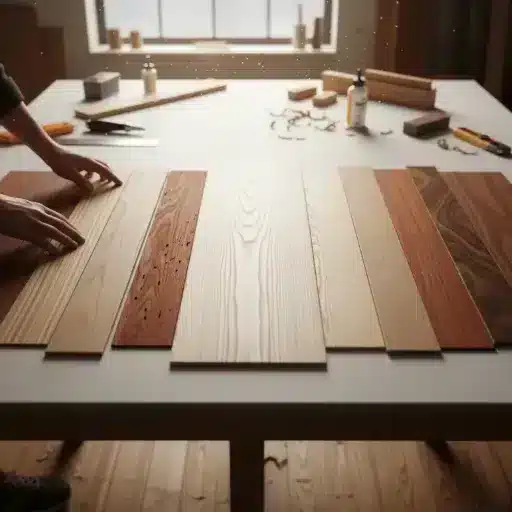
Sustainability and customization are not antithetical. In fact, tailored manufacturing often cuts down on waste by crafting exactly what is needed for the project, as opposed to forcing installers to lop off oversized stock panels and discard the excess.
Certified Sourcing
Custom panels can be specified with FSC-certified or PEFC-certified wood from the initial order. The certification applies to the face veneer, and in many cases, the substrate can also be certified. For LEED projects, this dual certification maximizes your Materials and Resources credit potential.
The critical step is verifying your supplier’s Chain of Custody documentation. Every FSC-certified manufacturer holds a license code that you can verify at info.fsc.org. Never accept a sample with only the FSC tree logo. The license code is what auditors will check during a green building review.
Material Efficiency
Veneer is already one of the most resource-efficient ways to use wood. Custom manufacturing makes it even more efficient by cutting panels to project dimensions, reducing on-site waste by up to 40% compared to standard stock sizes. When every panel arrives pre-cut to the exact size needed, there is less scrap, less dust, and less material sent to landfill.
Low-Impact Manufacturing
Modern custom panel manufacturing offers choices that reduce environmental impact without sacrificing quality. Formaldehyde-free MDF cores meet CARB P2 and TSCA Title VI standards for low emissions. Water-based adhesives and finishes reduce VOC content. Engineered veneers allow designers to specify the look of rare tropical hardwoods while using sustainable, fast-growing fiber sources.
At VitalWood Global, we believe customization should never come at the cost of sustainability. Every custom panel we produce can be specified with certified species, a documented chain of custody, and low-emission substrates. You can explore our sustainable veneer options to see how certification integrates with custom manufacturing.
2026 Trends in Custom Wood Veneer Panels
The custom veneer market is evolving rapidly. Here are the trends shaping specification decisions this year.
Fluted and reeded profile design code in 2026. Bespoke Modernistic American manufacturer now engraves almost grooved panels with a base of MDF or plywood, which is then covered with veneer, which forms three-dimensional structures with changes of light and darkness. These profiles appear on everything from kitchen islands to corporate lobby walls.
Acoustic slat panels regulating custom species and stain-matching have transitioned from a specialty to an option that any specification includes. This is due to their perfect combination of general warm presence of wood and its quantified sound absorbing property – especially great for open plan offices, media rooms, and hospitality lounge bars.
Smoked and fumed finishes are increasingly making their presence felt in the world of high-end interior design. Smoked oak and fumed eucalyptus, in other words, are the most popular custom species for upscale residential interiors. The advantage of ammonia treatment is that it has a stronger effect, such that the color gets leached into the very fibers of the wood rather than just being a surface tinting.
Biophilic design integration is now turning the vision of veneering from interior walls to complex multi-surfaces. They are talking about wood veneer for the interiors of the elevators, where natural texture is most certainly desired. Besides, there are ceiling soffits and column covers that rely more on wood than synthetic plaster.
Digital customization-based tools have chipped away the veneer’s structural core. Technologies such as laser-etching, tailored perforated designs, and picture-perfect prints, on wood-based veneers, give one the liberty to embed brand design, directional signs, and image decoration straight on the wood.
Grain-matched feature walls at architectural scale have become a signature of premium commercial interiors. Custom manufacturers now produce panel sequences with seamless grain continuity across 20 feet or more, creating walls that read as single pieces of timber rather than assembled panels.
Frequently Asked Questions
How do I start the custom veneer panel ordering process?
Start with a well-drafted design brief, which must include all dimensions, wood preferences, application, and any specific matching or performance requirements, and put this in front of a specialized manufacturer. They’ll ask questions to clarify, offer some other ideas if they are needed, and secure samples that you must approve before they go into mass production.
What is the minimum order quantity for custom wood veneer panels?
Minimums can be anything from complexity to manufacturer. A simple custom sizing area with domestic species will have no minimum. Complex grain matching with exotic species would have 500-1000 square feet as the minimum needed to justify the setup labor. MOQ always needs to be confirmed before requesting a sample.
Can I get a sample before placing a full custom order?
Yes, you must. They are exact representations of the colors, grains, and finishes you are going to receive. For those big-money makers, choose to spend money on a full panel mockup. The cost of a mockup is irrelevant compared to receiving 500 panels that bear no resemblance to what was visualized.
What is the distinction between book matching and slip matching?
Book Matching shows opposite veneer pages side-by-side to achieve similarity. In slip matching, the panels are all turned one way to form grain lines continuously, as opposed to Book Matching, which looks rather formal and striking when matched with the veneer. Slip is more subtle and, therefore, works better with larger modern surfaces.
Are custom veneer panels more sustainable than solid wood?
Yes, definitely. Veneer production can achieve close to 95% log usage as opposed to the far lesser quantities with solid lumber milling. Custom panels further cut down on waste by cutting to precise project dimensions. These veneers can combine material efficiency with verified responsible forestry when specified to FSC-certified species.
Can custom veneer panels meet fire code requirements?
Absolutely. With fire-retardant and intumescent finishes, Class A, B, or C flame spread ratings under ASTM E-84 can be achieved by manufacturing Custom Panels. Class A, B, or C; mention the needed rating when submitting the design brief.
How do I care for and maintain custom wood veneer panels?
Dust a soft, dry cloth routinely. Clean liquid spills at once with a damp cloth and mild detergent. Avoid harsh cleaning agents and extreme fluid saturation. Every 5 to 7 years, put down a topcoat of the original finish type, and in some places even sooner, usually at a depth into high-activity environments.
Can damaged custom veneer panels be repaired or refinished?
Yes, one of the bigger advantages of using real wood veneer instead of laminate is repairability. You can fill minor chips with wood putty and touch them up, and scratches can be sanded and refinished. How many times wood veneer can be refinished is dependent on the thinness of the veneer. You can do from one to two slight refinishing to 0.6 mm standard veneer before you reach your substrate.
Conclusion
Custom wood veneer panels give architects, designers, and builders something stock materials cannot: complete control. Control over the species that defines the aesthetic. Control over the grain matching that determines visual continuity. Control over the substrate and finish that ensures performance in the specific environment. And control over the sustainability credentials that increasingly determine whether a project meets green building standards.
The specification process entails more than just scooping panels from inventory. There’s the added dimension of clear communication and realistic lead time planning, coupled with manufacturers grasping both the technical and creative aspects of your need. The rest: exactly the design the way you wanted it, not forced by the availability of materials.
At VitalWood Global, we work with specifiers at every stage of the custom process, from initial concept and species selection through sampling, production, and delivery. Whether you need a single book-matched feature wall or ten thousand square feet of branded acoustic slat panels for a global retail rollout, we can tailor the material to your exact requirements.
Ready to explore custom wood veneer panels for your next project? Contact our team to discuss your specifications, request samples, or get a detailed quote.