
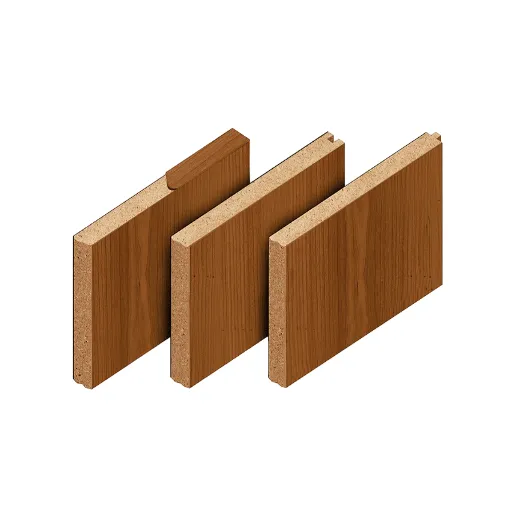
Wood Veneer Panels: The 2026 Guide to Types, Installation & Sustainable Sourcing
Wood veneer panels consist of thin wood slices that are attached to MDF, plywood, and particleboard materials for their authentic timber appearance, which costs less and creates lower environmental damage than solid timber. The design process for luxury hotel lobbies, corporate offices, and residential kitchen renovations requires designers to learn sustainable methods for panel selection and installation, and sourcing, because this knowledge determines whether their projects achieve visual appeal or lasting performance.
Your selected material from your previous project has been damaging both your financial resources and your environmental sustainability objectives. Architects and builders who prefer solid wood or inexpensive laminate materials fail to notice that wood veneer panels provide them with authentic wood grain patterns and stable dimensional characteristics while producing reduced carbon emissions. The team at VitalWood Global supports professionals who need guidance about their decision-making process because successful projects depend on teams that understand veneer panels as system components instead of surface materials.
The guide teaches you which wood veneer panel type is appropriate for your needs while showing how substrate choice determines performance results, which installation methods provide durability, and which sustainable sourcing practices will gain importance in 2026. The industry currently experiences a transformation, which we will examine through new acoustic performance panels and fire-rated materials designed for commercial construction. You will finish the program with all the necessary resources to confidently select veneer panels.
Key Takeaways
- Wood veneer panels combine authentic wood grain with substrate stability, which provides better dimensional stability than solid wood at a cost that is 30–60% lower.
- The three main cut types which include plain sliced quarter sawn and rift cut generate distinct grain patterns that match specific design styles.
- Acoustic wood veneer panels with NRC ratings that reach 0.85 have become essential for offices, hotels, and home theaters that require effective sound control.
- Fire-rated veneer panels achieve ASTM E84 Class A standards, which makes them essential for commercial projects, and this specification became the most requested addition during Q1 2026.
- The use of FSC-certified veneer together with low-VOC adhesives allows architects to earn LEED v4.1 and WELL v2 credits while reducing embodied carbon emissions by 40% when compared to solid wood options.
What Are Wood Veneer Panels?
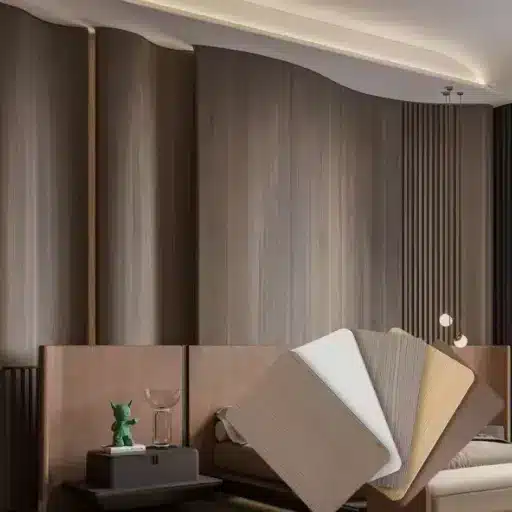
Wood veneer panels consist of a thin layer of real wood — typically 0.5 mm to 2 mm thick — laminated onto a core substrate. The veneer itself is sliced or peeled from a log, preserving the natural grain, color, and texture of the species. The genuine wood surface of veneer panels creates authentic value that printed laminates are unable to match. Light interacts with the grain in various ways because of its different patterns. The surface undergoes aging, which results in the development of new characteristics. The material supports sanding and staining while also allowing limited refinishing work.
The substrate, which exists beneath the veneer, creates structural support for the entire system. MDF (medium-density fiberboard) provides an exceptionally smooth base that painters can use to create high-gloss finishes. Plywood cores provide enhanced screw retention abilities together with protection against water damage. Particleboard remains the most economical option for vertical applications where strength is less critical. Wood veneer wall panels and furniture components create one of the most flexible material systems used in contemporary buildings because they combine an attractive wood surface with a strong engineered core.
When Maria Chen, a commercial interior designer based in Chicago, landed her first hotel lobby project in 2024, she specified solid walnut for the feature wall. The bid came back $47,000 over budget. Her supplier suggested walnut veneer panels on an MDF substrate instead. The visual result appeared to be solid wood from the guest’s perspective, but the cost was reduced to $18,500. The wooden panels maintained their structural integrity because the hotel HVAC system operated through Chicago’s severe winter temperature changes, which her firm had previously dealt with when using solid wood. Maria has specified veneer panels on every commercial project since.
Types of Wood Veneer Panels

Understanding the different types of wood veneer panels helps you match material to application. The market offers several distinct categories, each with specific strengths. For a deeper comparison of how veneer stacks up against alternatives, see our guide on wood veneer panels vs. solid wood and laminate.
Natural Wood Veneer Panels
Natural veneer panels use slices from actual logs, which produce distinct sheets that display different grain patterns and color variations. The most common wood species used in this practice are oak, walnut, maple, and cherry wood. The premium wood options of ebony burl and figured maple create a strong visual effect but require higher prices. Natural veneer panels serve as the ideal solution for situations that require authentic and distinctive product design. The material shows identical responses to staining and finishing processes as solid wood does, which makes it a preferred choice for custom furniture makers who design high-end residential spaces. Our wood veneer panels for kitchen cabinets and built-ins provide information on moisture-resistant core materials and edge-banding techniques that suit cooking areas.
Engineered and Reconstituted Veneer Panels
Engineered veneer takes on the name reconstituted veneer because manufacturers create this product by dyeing and layering softer wood materials until they reach their final form. The process lets designers create with zebrawood, wenge, and macassar ebony looks that they want to achieve without using endangered species wood. The color and grain show the same pattern across big installations, which eliminates the matching problems that natural veneer brings about. Engineered veneer emerges as the only viable option for commercial projects that need panel consistency throughout their entire budget of 300 panels.
Bamboo Veneer Panels
Bamboo veneer provides an eco-friendly substitute for conventional hardwoods because it grows back quickly. Bamboo achieves sustainable development because it takes only 3 to 5 years to grow to maturity, which stands in sharp contrast to the 40 to 60 years needed for most hardwood trees. The material displays a special grain structure that features fine lines, which create uniformity in its textural pattern that suits both modern and Asian design styles. Bamboo veneer panels achieve their optimal performance when they operate in environments with low humidity because the material needs proper sealing to maintain its stability against moisture changes.
Back and Face Veneer Grades
Veneer quality is graded AA, A, B, C, and D based on the number and size of defects. Our complete guide to wood veneer panel grades and quality standards provides specification language for each grade. AA-grade veneer is nearly flawless, which makes it suitable for use on visible surfaces of luxury products. An A-grade allows minor imperfections that most observers will not notice. B-grade and lower grades suit painted surfaces, hidden areas, and projects that require a rustic appearance. The proper grade selection for an application helps people avoid overspending while maintaining the required visual standards.
How Veneer Cuts Shape Appearance and Performance
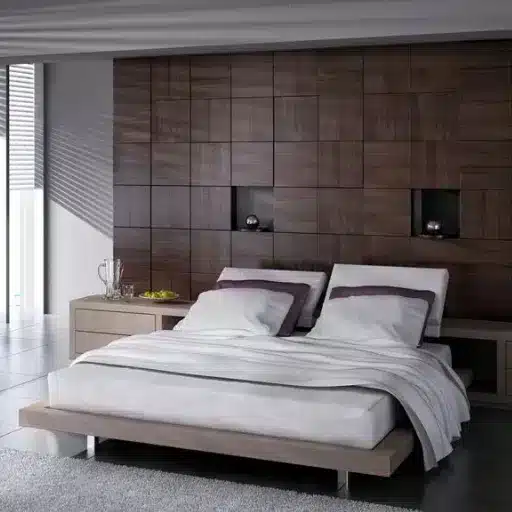
The way a log is sliced dramatically affects the grain pattern, stability, and yield of the resulting veneer. Understanding how veneer is produced helps specifiers make informed decisions about cut selection and quality expectations.
Plain Sliced (Flat Cut)
The most common and cost-effective cut method produces plain sliced veneer. The log is sliced along its central axis, which results in a crown or cathedral grain pattern that shows substantial differences between its sections. The cutting method generates maximum log yield but results in the highest amount of pattern differences between neighboring sheets. The material works best for traditional furniture and cabinetry and wall panels, which require a strong natural wood appearance.
Quarter Sawn
The log is divided into four equal parts during quarter-sawn veneer production and then the log slices are cut across the tree’s growth rings. This produces a straight, linear grain with minimal figuring. Quarter sawn veneer provides better stability than plain-sliced veneer because it experiences less width-based expansion and contraction. The method works best for mission-style furniture production and flooring installation because these applications need materials that maintain their original size. People especially value the unique fleck pattern that appears in quarter-sawn oak.
Rift Cut
Rift cut veneer exists because producers cut wood at angles that create straight wood patterns without showing any flecks. The cut method produces a modern appearance, which designers commonly use in their work. Rift cut veneer commands a premium but delivers the most uniform look of any cutting method, making it popular in modern commercial interiors.
Rotary Cut
Rotary cut veneer is produced when a log spins against a blade, which creates a method that resembles the unrolling process of a paper towel. The method produces maximum log yield which results in a wild grain pattern that creates broad grain patterns that plywood manufacturers use for utility purposes. The method only gets used in decorative interior panels that need to maintain visual uniformity.
Wood Veneer Panels vs. Solid Wood and Laminate
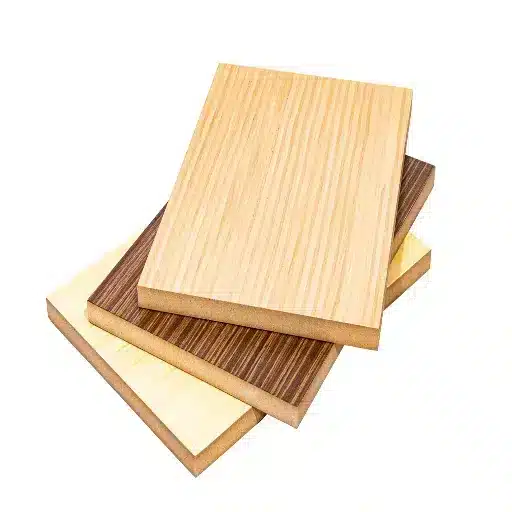
The decision to select wood veneer panels, solid wood materials, or laminate products requires people to evaluate their financial resources, required performance standards, and environmental commitments.
Veneer Panels vs. Solid Wood
Solid wood materials deliver real wood experiences that people can restore through multiple refinishing processes over the decades. Solid wood comes with high costs because it delivers heavy weight and experiences wood movement through humidity changes, which cause warping, checking and expansion. Wood veneer panels present an identical warm visual appearance at 30 to 60 percent lower cost while maintaining better control over their structural dimensions. A solid walnut dining table might weigh 80 pounds and cost $4,000. An identical table built with walnut veneer over engineered core weighs 45 pounds and costs $1,800. Veneer panels serve as better structural materials for wall paneling, cabinetry, and built-in furniture applications.
Veneer Panels vs. Laminate
Laminate surfaces, which come in either high-pressure laminate (HPL) or thermally fused melamine, are decorative films applied to the backing boards. Wooden grain patterns look authentic when viewed from a distance, but lack a realistic texture that only a real wooden surface can offer. Laminate surfaces are repairable only by replacement since they are not sanded or refinished. Veneered panels are easily restorable through a minimum of sanding and restaining. This high cost of veneered panels is therefore well expended because of the lasting tactile value which meets the project’s schedule.
When to Choose Each Material
- Solid wood: High-end furniture, heirloom pieces, small accent items where weight is not a constraint
- Wood veneer panels: Wall paneling, cabinetry, doors, large built-ins, commercial interiors, any application requiring stability across wide surfaces
- Laminate: Utility cabinets, retail fixtures, high-traffic surfaces where cost is the primary driver and replacement cycles are short
Choosing the Right Substrate for Your Wood Veneer Panels
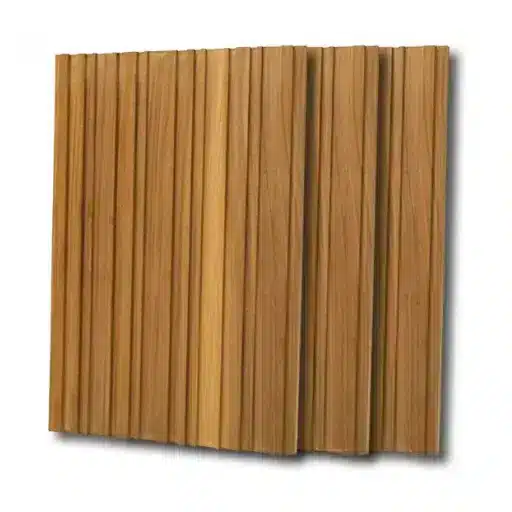
The substrate underneath the veneer controls the material’s structural strength, its ability to hold screws and resist moisture and its total mass. The most frequent specification errors occur when people select an incorrect core material.
MDF Core
MDF provides the smoothest, most uniform surface for veneer application. The material’s even density throughout its structure prevents any underlying grain or voids from showing through the veneer face. MDF serves as the optimal material for painted veneer panels and high-gloss finishes and any application that demands complete surface accuracy. MDF has heavyweight, and its ability to hold screws is worse than plywood, and it experiences severe swelling when it comes into contact with water. The product functions exclusively as an indoor material that requires dry conditions for usage.
Plywood Core
Plywood substrates — typically hardwood or fir veneer cross-banded into layers — offer the best strength-to-weight ratio and screw holding of any common core. The materials provide better moisture protection than MDF while their structural strength remains intact. The materials produce an advantage because they create a surface that is slightly less smooth than high-quality materials, but the low-grade plywood will show through its thin veneer covering. Plywood core functions as the most dependable option for cabinetry and furniture, and all projects that require hardware installation.
Particleboard Core
The most affordable substrate material, particleboard, consists of compressed wood chips that bond together through resin. The material functions adequately for vertical wall paneling applications, which will not support weight or experience moisture exposure. The material’s lightweight construction enables simple handling, but its edge fastening strength remains weak while wide horizontal spans experience sagging issues. Particleboard-core veneer panels serve as effective, budget-friendly solutions for residential and commercial projects that use decorative panels.
Specialty Cores
Fire-rated cores that contain mineral-based fire retardant materials or fire retardant chemical treatments serve as required components for commercial spaces that need to meet ASTM E84 Class A or B standards. Marine-grade plywood cores provide resistance to humid conditions found in bathrooms and coastal environments. The acoustic design needs of spaces require the use of perforated MDF or plywood cores
Acoustic Wood Veneer Panels: Design Meets Performance
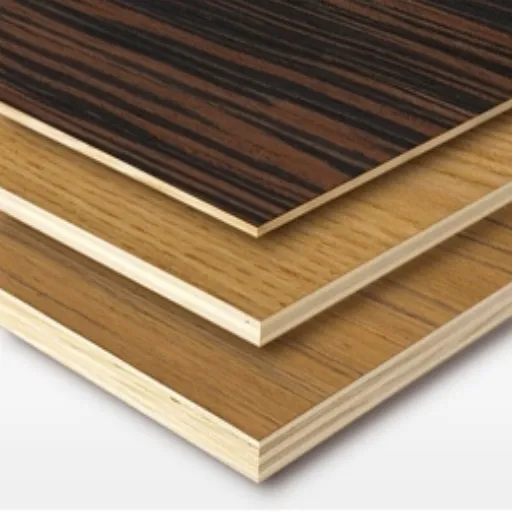
Acoustic wood veneer panels represent one of the fastest-growing segments in commercial interiors, driven by open-office backlash and the WELL Building Standard’s focus on acoustic comfort. For a deep dive into NRC ratings, perforation patterns, and project applications, read our dedicated guide to acoustic wood veneer panels. These panels combine the warmth of wood surfaces with engineered sound absorption, solving a problem that used to require ugly foam or fabric treatments.
Understanding NRC Ratings and Sound Absorption
The Noise Reduction Coefficient (NRC) quantifies the amount of sound a material can absorb across standard frequencies. On a scale of 1.0 being a perfect absorber and 0.0 being a perfect reflector, the manufacturer of wood veneer panels used on MDF standard to reflect most amounts of sound is usually rated between 0.05 and 0.10. Acoustic wood veneer panels that have micro-perforations besides mineral wool backing would get NRC ratings around 0.75-0.85, matching the acoustical performance of dedicated acoustic ceiling tiles.
Actual spaces need this efficiency. Because it gets up to 1.5 seconds, conversion of wide-open office spaces and so many reflective drywall and glass components can be hard for conversation, and tasks will be difficult. Given that 70% sucking includes at least 30% of the surfaces of the surrounding walls left untreated, which would most enrich concentration and fluency in speech, an NRC of 0.6-0.8 with acoustic wood veneer panels would fulfill such criteria.
Perforation Patterns and Acoustic Backing Systems
Micro-perforated veneer panels contain thousands of small openings that measure between 0.5 mm and 2 mm, creating a pathway for sound waves to reach their sound-absorbing material. The hole pattern, diameter, and percentage of open area determine the frequency range absorbed. The most common design uses round holes which follow a regular grid pattern, while projects that require the panel to function as a design element have started to adopt slot perforations and custom geometric patterns.
The acoustic backers positioned behind the perforated face include fiberglass boards and mineral wool, recycled cotton, and special acoustic foams. The air gap between the panel and the backing, which usually measures 25 mm to 100 mm, creates an effect that improves low-frequency sound absorption. Acoustic test data should be requested by specifiers from manufacturers because they should not assume performance, as NRC ratings will show different results based on construction methods.
Applications in Offices, Hotels, and Home Theaters
Commercial offices use acoustic wood veneer panels for their installation as wall coverings and ceiling designs, and short wall partitions. The system absorbs conversational sounds while it preserves the aesthetic warmth that biophilic design needs. The hotels use the system in their lobbies, corridors, and guest rooms to manage sound transmission, which helps establish a cozy environment. Home theater designers choose perforated walnut or cherry panels because these materials control sound reflections while maintaining a non-medical look that fabric-covered solutions provide.
The client required the architecture firm of David Parker to use exposed concrete construction and floor-to-ceiling glass for their 12,000-square-foot tech office design in Austin. Noise complaints became the biggest problem when employees took part in their satisfaction surveys six months after they moved into the office. David used oak acoustic veneer panels to retrofit the conference rooms and collaboration zones, which included micro-perforated surfaces and 50 mm mineral wool. The system achieved an NRC 0.82 rating, which decreased sound reverberation time from 1.4 seconds to 0.7 seconds. The next quarter saw employee focus scores rise by 23 percent. The panels looked so good that the client expanded the treatment to the lobby as a visual upgrade.
WELL Building Standard Acoustic Credits
Projects that seek WELL v2 certification can gain points from Feature S09 (Enhanced Acoustic Performance) by keeping their background noise levels under 40 dBA and meeting particular reverberation requirements. Acoustic wood veneer panels help meet these thresholds while contributing to Feature M09 (Biophilia — Material Connection with Nature). The use of FSC-certified veneer together with low-VOC adhesives enables multiple credit categories to be supported, which makes acoustic panels an ideal selection for wellness-centric building projects.
Fire-Rated Wood Veneer Panels for Commercial Projects
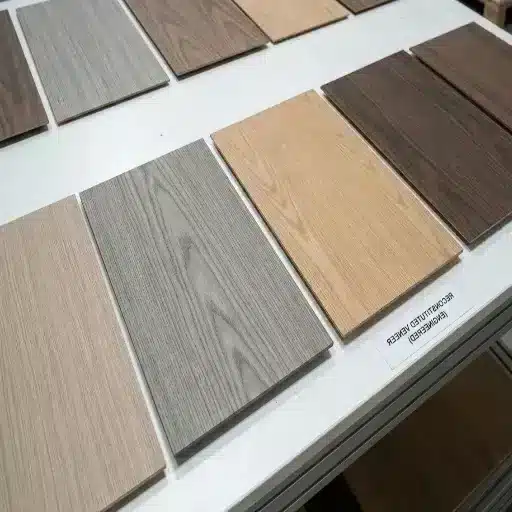
Fire-rated wood veneer panels are no longer optional for most commercial interiors. Read our dedicated guide on fire-rated wood veneer panels for full code requirements and specification language. Building codes, insurance requirements, and specifier liability have made fire performance a standard consideration for hotels, hospitals, schools, and office buildings.
Understanding Class A, B, and C Fire Ratings
Fire ratings for interior finishes are defined by ASTM E84, also known as the Steiner Tunnel Test. The test measures flame spread index (FSI) and smoke developed index (SDI) on a scale where asbestos-cement board = 0 and red oak flooring = 100.
- Class A (or Class 1): FSI 0–25, SDI 0–450. Required for most commercial occupancies, egress corridors, and high-rise interiors.
- Class B (or Class 2): FSI 26–75, SDI 0–450. Acceptable in some business occupancies and low-rise applications.
- Class C (or Class 3): FSI 76–200, SDI 0–450. Limited to specific residential and low-hazard applications.
Untreated wood veneer panels on standard MDF or plywood typically achieve Class C or unrated status. Achieving Class A requires either pressure-impregnating the core with fire-retardant chemicals or applying intumescent coatings that expand when heated, forming an insulating char layer.
ASTM E84 and Building Code Requirements
The International Building Code (IBC) requires Class A interior wall and ceiling finishes in most Group A (assembly), Group B (business), Group E (educational), Group I (institutional), and Group M (mercantile) occupancies. Group R (residential) high-rise buildings also mandate Class A in corridors and exits. Specifiers must verify local amendments to the IBC, as jurisdictions like California, New York City, and Chicago often impose additional requirements.
For projects outside the United States, equivalent standards include EN 13501-1 (Europe), BS 476 (United Kingdom), and CAN/ULC-S102 (Canada). Global projects should specify testing to the standard recognized in the jurisdiction of installation.
FR Treatment Methods for Veneer Panels
Pressure-impregnated fire-retardant (FR) cores treat the substrate — typically plywood or particleboard — with chemicals that reduce flame spread and smoke development. The veneer face is applied after treatment, preserving the natural wood appearance. This method is durable and reliable but adds cost and can slightly increase panel weight.
Intumescent coatings offer an alternative, applied like a clear finish over standard veneer panels. When exposed to fire, these coatings expand to many times their thickness, forming a protective barrier. They preserve the untreated appearance of the wood but must be applied at specified thicknesses by certified applicators to ensure performance. Re-coating may be required over the panel lifecycle.
Specification Language for Commercial Submittals
Architects and designers should include the following in fire-rated panel specifications:
- ASTM E84 test report with FSI and SDI values
- Third-party certification (UL, Intertek, or equivalent)
- Core treatment method and chemical composition
- Finish compatibility (for intumescent coatings)
- Maintenance and re-coating requirements
Reputable manufacturers provide complete submittal packages including test reports, material safety data sheets, and installation guidelines specific to fire-rated assemblies. VitalWood Global supplies Class A fire-rated wood veneer panels with full documentation for commercial submittals, backed by third-party testing and chain-of-custody certification.
Custom Wood Veneer Panels for Architects and Designers
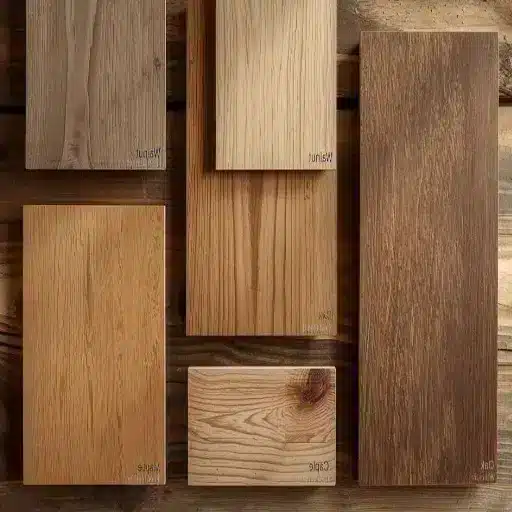
Standard veneer panels meet many needs, but distinctive projects demand custom solutions. Understanding the available options prevents costly mistakes and unlocks design possibilities that off-the-shelf products cannot match. See our architect’s guide to custom wood veneer panels for species matching, flitch sequencing, and bulk ordering.
Species Matching and Flitch Matching
Flitch matching — also called book matching — arranges consecutive veneer slices like open book pages, creating mirror-image grain patterns across panel seams. This technique produces dramatic symmetrical effects on wall panels and cabinet doors. Slip matching arranges consecutive slices side by side without flipping, creating a repeating pattern with consistent grain direction. Random matching uses non-consecutive slices for a casual, natural appearance.
For large installations, architects should specify flitch numbers and matching requirements in advance. A single flitch — the set of slices from one log — might yield 30–50 sequential sheets. Projects requiring 200 matching panels may need multiple flitches, and skilled suppliers can sequence them to minimize visible transitions.
Custom Widths, Thicknesses, and Digital Printing
Standard veneer panel sizes vary from 4×8 feet, although a few suppliers make custom dimensions to 5×12 feet. From 1/4 inch for wall paneling to 1 1/2 inch for heavy-duty countertops, there is a considerable range of thicknesses. Large feature walls would have fewer seams if oversized panels were used, but larger presses and handling equipment are required.
Digital printing on wood veneers, in which the inks are UV-dried onto the wood itself, allowing customers to request their design. It includes photos, graphics, and other patterns and preserves the tactile warmth of wood surfaces. Laser-cut veneer lamination (LcVL) was born out of this and goes one step further: it involves cutting and reassembling veneers into intricate patterns so that different forms can be made. In 2024, these technologies were considered niche; however, they are the new mainstream for hospitality and corporate projects dealing with brand identity.
Bulk and Wholesale Specification Guidance
Commercial projects ordering over 500 panels may facilitate the selection of suppliers during the design phase. Custom or matched panels require about 6–10 weeks, compared to stock items that take 2 to 3 weeks in lead time. Orders by bulk, for these come under the factory-level quality control of such parameters as measurement of the moisture content, adhesion evaluation, and color-drying runs.
Wholesale distributors and contractors should request that sample sets include a sample of the specific veneer, substrate, edge treatment, and finish used for the bulk order. The cost of producing samples amounts to next to nothing when compared to the risk of getting 1,000 non-intent panels incorrectly.
Installation Best Practices for Wood Veneer Panels
Even premium veneer panels will fail if installed incorrectly. These practices ensure lasting performance. For a complete walkthrough, see our step-by-step guide on how to install wood veneer panels.
Acclimation and Environmental Control
The veneer panels are best kept in their installation location for 24 to 36 hours before cutting or fastening is done. Job site conditions should be within 60 to 80 degrees Fahrenheit and relative humidity levels should be between 30 and 50 percent. Be sure that the panels are not placed at a place that has no climatic controls or before the activation of the HVAC systems, because the former causes warping and delamination, while the latter will form gaps between the panels and lead to splits at the seams. Though it may not represent the actual interior designation most suited for moisture-resistant cores and aquatic-grade glue, such work practice becomes mandatory in coastal or tropical settings.
Adhesive Selection and Pressing
Cold-press PVA adhesives work for low-stress applications and field repairs. The hot-press urea-formaldehyde UF and polyvinyl acetate PVA methods give stronger bonds for factory production. For the healthiest indoor air quality, specify low-emission adhesives that meet CARB Phase 2 and TSCA Title VI standards. Formaldehyde-free adhesives that include soy-based and polyurethane options are increasingly available and qualify for LEED and WELL credits.
Veneer application requires even pressure across the full surface. Vacuum presses, cold presses, and hot presses each suit different production scales. The use of hand contact cement for small repairs becomes suitable, but it creates a risk of voids and bubbles appearing on large panels.
Fastening and Edge Treatment
The design of mechanical fasteners requires them to extend through the substrate material rather than only attaching to the veneer layer. The use of brad nails through the face should be avoided in visible areas; instead, concealed clip systems should be used for interlocking edges. The practice of face fastening should follow pre-drilling procedures to protect against veneer chipping, while nails should be installed slightly beneath the surface for putty application.
Edge banding creates a finished appearance through the application of matching veneer strips, which cover exposed substrate edges. The iron-on edge banding system serves DIY and small project needs, whereas commercial applications benefit from hot-melt adhesive banding, which requires specialized equipment for its application process. The edge banding for fire-rated panels needs to match the same material as the fire-rated panels.
Ready to specify wood veneer panels for your next project? Contact VitalWood Global for expert guidance on substrate selection, custom matching, and sustainable sourcing options tailored to your timeline and budget.
Cost Guide: What to Expect in 2026
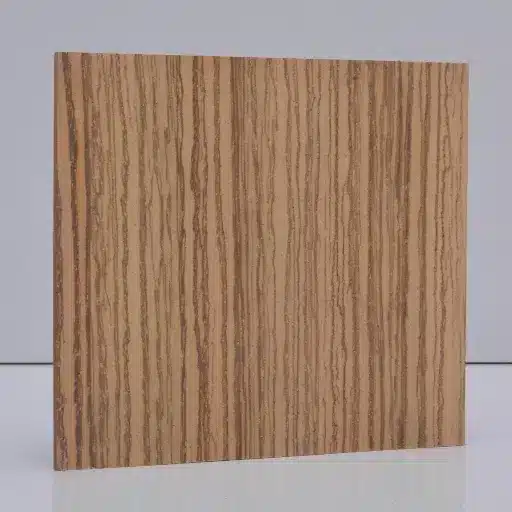
Wood veneer panel pricing varies dramatically by species, cut, substrate, core treatment, and order volume. The table below provides realistic 2026 ranges for planning purposes. For a detailed breakdown of budget factors and ROI comparisons, see our wood veneer panels cost guide.
| Panel Type | Price Range (per sq ft) | Best For |
|---|---|---|
| Natural wood veneer, standard species (oak, maple) | 10–10–25 | Residential walls, cabinetry, furniture |
| Natural wood veneer, premium species (walnut, teak) | 25–25–50 | Luxury interiors, feature walls, hospitality |
| Engineered/reconstituted veneer | 18–18–55 | High-volume commercial, consistency-critical projects |
| Bamboo veneer | 30–30–100 | Eco-focused premium projects, contemporary design |
| Acoustic slat/perforated panels | 40–40–100+ | Offices, theaters, studios, hotels |
| Fire-rated Class A panels | 35–35–75 | Commercial code-compliant interiors |
| Custom/digital printed panels | 50–50–150+ | Bespoke architectural features, branding |
These prices reflect material cost only because the total project cost increases by 30 to 60 percent due to installation and finishing, shipping, and waste factors. The company offers 10 to 20 percent volume discounts for customers who purchase 500 or more panels through bulk orders. Custom flitch-matched or oversized panels carry premiums of 25 to 50 percent above stock items because their specialized handling requires different yield calculations.
Regional variation matters. The cost of North American and European manufactured panels exceeds Asian imports by 15 to 30 percent because these products provide faster delivery times, and their quality can be verified more easily, and their certified wood documentation shows better chain-of-custody tracking. The documentation value of domestic or EU-sourced panels for LEED or BREEAM certification projects exceeds the costs associated with importing panels.
Sustainability and Ethical Sourcing
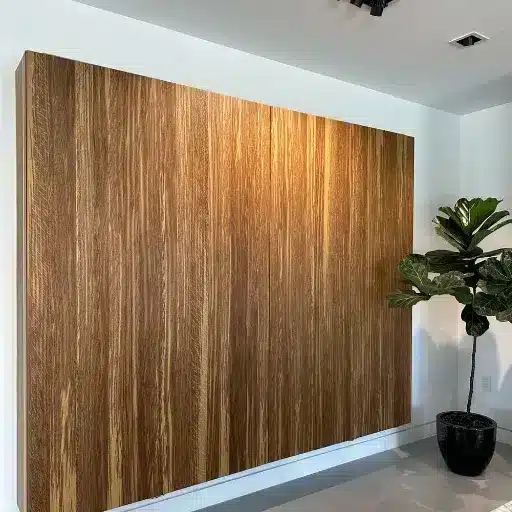
Sustainability is not a marketing add-on for wood veneer panels or sustainable wood veneer wall panels — it is a fundamental advantage. Veneer production yields significantly more surface area per log than solid lumber, making it one of the most material-efficient uses of forest resources.
The Material Efficiency Advantage
A single log produces between 800–1,000 square feet of veneer but creates between 200–400 board feet of solid lumber. The process of slicing veneer instead of sawing it results in a 80% reduction of sawdust waste. The visual appearance of wood is achieved through veneer panels, which require significantly less wood from forests. The total environmental protection benefits of large commercial projects create a major ecological result.
Forest Certification and Chain of Custody
Specifiers should demand FSC (Forest Stewardship Council) or PEFC (Programme for the Endorsement of Forest Certification) certification for all wood veneer panels. The guide to FSC-certified wood veneer panels for LEED projects provides complete specifications and credit pathways for LEED v4.1. The certifications confirm that forest management practices protect biodiversity and indigenous rights while ensuring the sustainability of ecosystems. The chain-of-custody documentation system tracks wood movement from its origin in the forest through to the completed panel, while it stops illegal timber harvesting activities.
VitalWood Global sources all veneer from FSC-certified forests and maintains complete chain-of-custody records. Our customers receive certification documentation for every order, which enables them to achieve LEED v4.1 MRc3 Building Product Disclosure and Optimization Environmental Product Declarations and MRc4 Sourcing of Raw Materials credits.
Low-VOC and Formaldehyde-Free Adhesives
Indoor spaces become polluted through the use of standard urea-formaldehyde adhesives because these adhesives release volatile organic compounds (VOCs). The most health-conscious projects currently demand the use of formaldehyde-free adhesives because CARB Phase 2 and TSCA Title VI regulations permit only reduced formaldehyde emissions. The three alternatives, which include soy-based PVA and polyurethane formulations, produce equal bonding strength, yet they remove a known respiratory irritant from their products.
Health Product Declarations (HPDs) and Declare labels provide ingredient transparency for projects pursuing WELL v2 certification or the Living Building Challenge. Specifiers should request these documents from suppliers as part of standard submittal packages.
Thermally Modified Veneer
Wood undergoes thermally modified treatment when it is heated to temperatures between 400 and 500 degrees Fahrenheit inside an environment that lacks oxygen. Thermally modified veneer panels offer superior performance in humid or exterior-adjacent applications while maintaining a natural, chemical-free profile. The process results in a slight darkening of the wood, which produces rich tones that designers increasingly seek for high-end interiors.
2026 Trends in Wood Veneer Panel Design
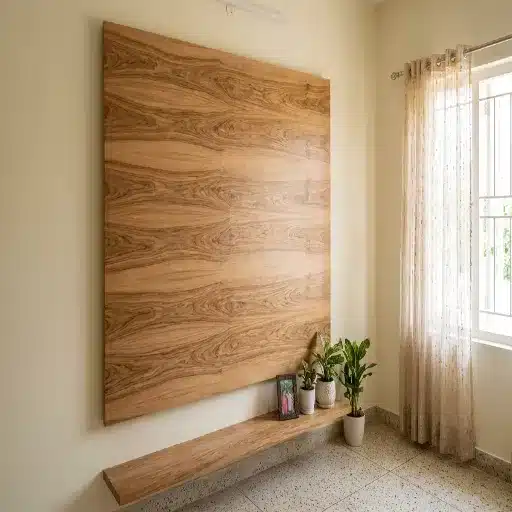
The wood veneer panel industry is evolving rapidly. These trends are shaping specification decisions in 2026.
Hyper-Tactility and Matte Finishes
Texture prevails over glossy finish as a first key step in the prevailing design trend of 2026. These matte and low-sheen finishes invite touch and create visual depth under modern LED lighting. This look is expected to supplant the high-gloss lacquer that reigned over the design scene in the 2010s. Designers and specifiers must view these finishes under actual ambient project lighting conditions, as they behave distinctly from glossy panels with natural and artificial lighting sources.
Antimicrobial Surface Treatments
Healthcare and hospitality projects are increasingly specifying antimicrobial finish coatings that inhibit bacterial and mold growth on veneer surfaces. Such treatments, which are integrated into the surfacer through silver-ion or copper-based additives, do not displace regular cleaning protocols but provide added protection in high-use areas. As an essential in managing infection control and as regards certifications from a well program, antimicrobial veneer becomes standard on the order change rather than a category upgrade.
Fluted and Sculpted Panels
Fluted wood panels — vertical or horizontal grooves cut into the veneer face attached — introduce shadow lines and acoustical diffusive properties on planar flat walls. Traditionally part of custom millwork, fluted panels have become more affordable at a larger scale thanks to innovations in CNC machining. On the horizon for 2026, such a texture overdose will gradually find its way onto fabrication treatments of walls, cabinetry, ceiling coffers, and furniture applications. The texture breaks up large planes but has relevance also vis-à-vis tactile interest.
Digital Printing and Laser-Cut Innovation
Digital printing for veneers has graduated from graphic designs to very realistic imitations of stone or metal, geometric patterns, and brand-specific motifs. Today, manufacturers develop panels with intricate inlay effects that five years ago would likely have been impossibly labor-intensive by adding laser cutting to the process. This is evident in the WVH x Drew & Jonathan Home collaboration, announced for 2026, which brings such potential to the mainstream residential collection domain.
Biophilic Integration and Living Walls
Biophilic design connecting occupants with nature is a priority, but by 2026, it will go way beyond those mere wood walls. The halved and veneer panels also attached themselves to living greenwall systems, LED grow-light channels, and the irrigation pathways. Acoustic wood panel systems integrated with pocket planters have helped blur the line between surface treatments and landscaping. The hybrid systems complement WELL and LEED biophilia credits by establishing completely distinct interiors.
Caring for Your Wood Veneer Panels
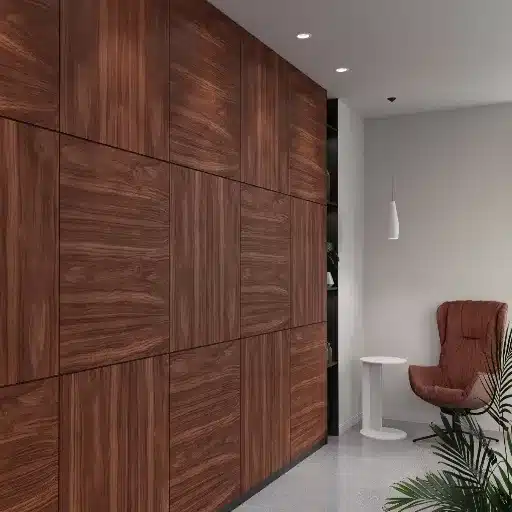
Proper maintenance extends the life of veneer panels and preserves their appearance. For a complete care protocol including repair techniques and expected lifespan by application, read our guide to wood veneer panel maintenance and longevity.
Routine Cleaning
Dust your panels with a dry soft microfiber cloth at frequent intervals. For cleaning in depth, use a damp cloth with a mild soap solution. Ensure that the soft cloth does not contain too much water because excess moisture may penetrate into the seams and edges and result in the swelling of the substrate and delamination of the veneer. Don’t use polish silicone-based, which can create dust-attracting residue. Oiled or waxed finish requires periodic reapplication, according to the manufacturer’s guidelines.
Damage Repair
Buff with fine steel wool (0000 grade) and repair minor scratches in a finished veneer with suitable touch-up markers. Wax fill sticks are all you need for any deeper gouges, in colors matching wood tones, but incognito on lower spots. Replacement might be required where the finished veneer panel is significantly damaged on major surfaces, and this is the point where getting extra 5-10% of the material bought during the initial installation pays handsomely.
Environmental Monitoring
Maintain stable indoor conditions. Sudden humidity swings — common when HVAC systems are shut down seasonally — cause the most veneer damage. In vacation homes or seasonal facilities, consider humidity control systems or specifying thermally modified veneer for greater stability. Direct sunlight fades all wood over time; UV-protective window films or strategic shading preserve color in sun-exposed installations.
When the Hendersons renovated their Portland kitchen in 2025, they chose rift-cut white oak veneer panels for the cabinetry. Their contractor warned them about the humidity spikes common in Pacific Northwest winters. They installed a whole-home humidifier set to 40% relative humidity and added UV film to their south-facing windows. Two years later, the cabinets look exactly as they did on installation day — no joint cracks, no color shift, no warped doors. Their neighbor, who chose the same veneer without environmental controls, is already planning a reface.
Conclusion
Wood veneer panels combine an unsurpassed aesthetic appeal with constructional integrity, versatility in design, and ecological soundness in one. Every factor, from the type of cut and substrate chosen up to the acoustic performance reviews, fire ratings, and finishing requirements, among other things, is a change that impacts the construction. Every detail mastered and implemented produces aesthetically superior, physically sustainable, and durable projects.
Such trends that pertain to 2026 are ultra-tactile matte ceiling, antibacterial, adhesives formulated without formaldehyde, heat-modified options, and a healthy environment combination. VitalWood Global’s strategy is geared towards forecasting such changes so that their customers can specify without concerns respecting their safety issues.
Key takeaways to remember:
- Match veneer cut to your design aesthetics: plain sliced for a traditional warmth, quarter sawn for the stability of it, rift cut for a more contemporary consistency.
- Consider substrates for the application: MDF for the seamless finishes, plywood for strength and hardware retention, and particleboard for cost-effective vertical installations.
- Specify the acoustic panels according to the NRC rating and fire-rated ASTM E84 Class A as suitable for commercial projects.
- Demand the FSC certification for chain-of-custody documentation and low VOC adhesives to meet corporate goals for environmental sustainability and points for green building.
- Order 5–10% material overage for repair and keep indoors, stable for humidity to prevent warping and delamination.
Your next project deserves materials that perform as beautifully as they look. Contact VitalWood Global today for personalized guidance on wood veneer panel selection, custom specifications, and sustainable sourcing. Our team is ready to help you bring your vision to life — one panel at a time.