
Maple Wood Flooring Pros And Cons: Is It Right For You?
Maple is a genuinely excellent wood floor: it is one of the hardest domestic hardwoods you can buy, it delivers a bright, modern look, and it can last 50 years or more. The honest answer on maple wood flooring pros and cons is that its pale, smooth surface shows scratches clearly, it resists stain, and it can yellow and react to humidity. None of those drawbacks are deal-breakers, and most shrink when you choose engineered maple, which is why maple remains a favorite for bright rooms, busy homes, and even gymnasium floors.
Most people fall for maple for one reason: the light, clean aesthetic. Priya and her husband wanted a bright, contemporary floor for their new condo, and the creamy pale maple in the showroom felt perfect. They almost missed the part the sales rep rushed past, that within a couple of years the scuffs from their sliding kitchen chairs would sit right on top of that pale surface, impossible to ignore. Maple was not wrong for them, but they needed the whole story before signing, and that is exactly what this guide gives you.
By the end of this article you will know every real advantage and every real catch of maple flooring, how solid and engineered versions change the trade-offs, and which questions to ask before you spend a cent. Let us weigh the maple wood flooring pros and cons together.
Key Takeaways
- Hard maple rates about 1,450 on the Janka hardness scale, harder than red oak (1,290) and white oak (1,360), so it resists dents well, but its pale, smooth grain makes scratches more visible.
- Maple is difficult to stain evenly because its dense grain blotches, so it looks best finished clear, lightly toned, or prefinished at the factory.
- Maple naturally warms to a honey tone over time as it reacts to UV light, especially under oil-based finishes.
- Moisture is maple’s real weakness in solid form; engineered maple solves most of it, which is why it suits basements, slabs, and humid rooms.
- Solid maple can be refinished about five to eight times, while engineered maple is limited by its wear layer, so the format you choose decides your long-term options.
Maple Flooring Pros and Cons at a Glance
Use this table as your quick reference. Maple is a real, durable hardwood that rewards owners who match it to the right room and finish.
| Characteristic | Hard Maple | What It Means for You |
|---|---|---|
| Janka hardness | ~1,450 | Very dent-resistant; used for gym and basketball floors |
| Grain | Fine, tight, uniform | Smooth, seamless look with little visible character |
| Color | Light, creamy, pale | Brightens rooms; warms to honey over time |
| Staining | Difficult, blotches | Best left natural, lightly toned, or factory-prefinished |
| Scratch visibility | High | Scuffs show clearly on the pale surface |
| Moisture resistance | Low to moderate | Solid needs dry, stable rooms; engineered is more forgiving |
| Refinishing | Technical | Dense wood can burnish; needs an experienced pro |
| Lifespan | 50+ years | Long-lasting when cared for and matched to the space |
If you are leaning toward the engineered format after this overview, our complete guide to engineered maple flooring explains wear layers, cores, and what to check on a spec sheet.
The Pros of Maple Flooring
Outstanding Hardness and Dent Resistance
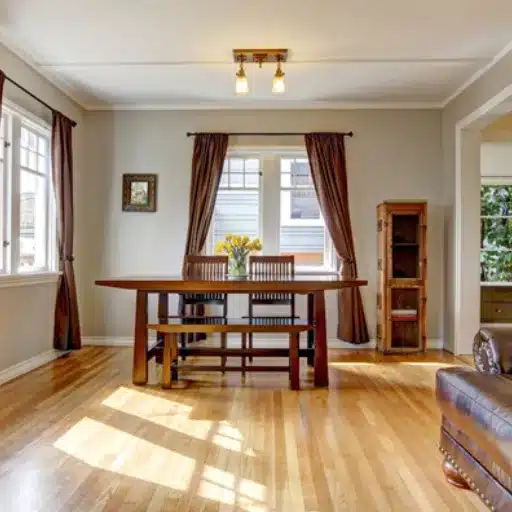
Hardness is measured with the Janka test, which records the force needed to push a steel ball halfway into a board. The National Wood Flooring Association publishes the reference values, and hard maple scores about 1,450, comfortably above red oak at 1,290 and white oak at 1,360. In plain terms, maple resists dents, gouges, and dropped objects better than most alternatives.
That toughness is proven daily in the toughest setting we have for wood: sports. The Maple Flooring Manufacturers Association documents maple as the traditional surface for basketball courts, gymnasiums, and bowling alleys. A floor that survives decades of sprinting players and dropped weights will handle a household with children, pets, and the occasional dropped pan without complaint.
The one caveat is species clarity. Not everything labeled “maple” is hard maple. The soft maple group, which includes red, silver, and bigleaf maple, scores far lower and is not what you want underfoot. Almost all flooring-grade maple is hard maple, but it pays to confirm the species on your order. If you want the full breakdown of how these groups differ, our comparison of hard maple vs soft maple flooring shows you how to verify what you are actually buying.
A Light, Clean, Timeless Look
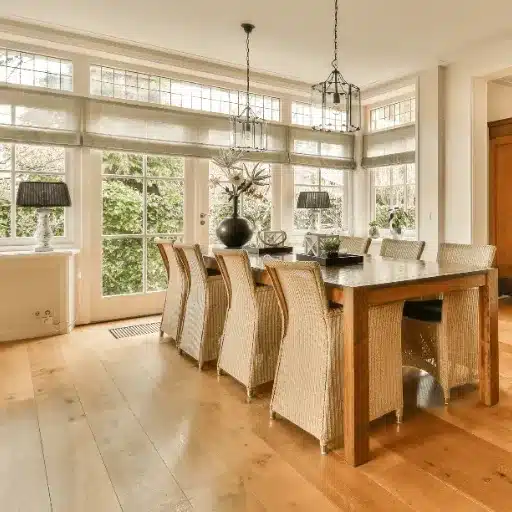
Maple has a creamy, near-white tone with a fine, uniform grain that reads as calm and seamless. That lightness does real work in a home: it reflects daylight, makes small or north-facing rooms feel larger, and pairs easily with white walls, dark furniture, and minimalist or Scandinavian styling. Unlike busy-grained woods, maple lets the rest of the room take center stage while keeping the floor quietly bright.
This is why maple is such a common choice for modern renovations, boutique offices, and light-filled kitchens. If your instinct is that a pale floor would make your space feel cleaner and more open, maple is delivering exactly that.
A Sustainable Domestic Choice
Maple grows abundantly across North America and regenerates quickly, which keeps it a more sustainable choice than slow-growing tropical imports that travel thousands of miles. Look for certification from the Forest Stewardship Council or PEFC to confirm your wood comes from responsibly managed forests.
Engineered maple adds an environmental bonus. Because it uses a thin real-wood wear layer over a stable core, a single premium tree stretches much further than it would in solid boards. You get a genuine hardwood surface while using less of the resource, which is a meaningful win if reducing your footprint matters to you.
Long Lifespan and a Proven Pedigree
With basic care, maple floors last decades, and solid maple can be refinished multiple times over its life. Add maple’s sports-floor heritage and its reputation for handling high traffic, and you have a floor with a long, well-documented service record. For a home that will stay in the family a long time, that durability is hard to argue with.
The Cons of Maple Flooring, Answered Honestly
Scratches and Scuffs Show on Pale Wood
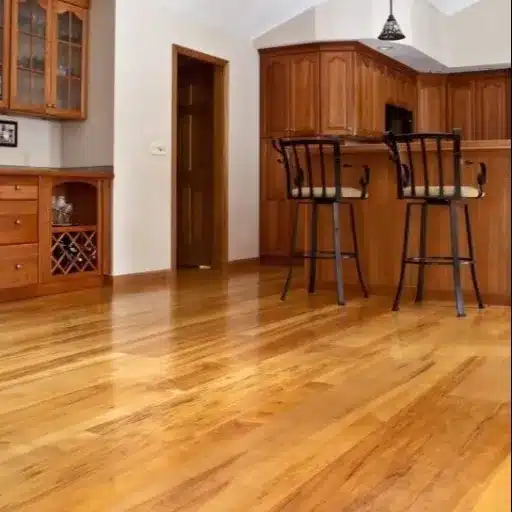
Here is the paradox that confuses most buyers. Maple is harder than oak, so it resists dents slightly better, but when a scratch does happen, maple shows it far more clearly. Its fine, tight grain offers nowhere for a mark to hide, and its pale color makes every scuff stand out, especially the dark streaks that rubber-soled shoes leave behind.
So does maple flooring scratch easily? The wood itself is not easy to scratch, but the marks it collects are easy to see. The fix is mostly about finish and expectations: a durable factory-applied finish resists scratching far better than a soft oil or matte poly, and busy households simply accept a lived-in look or choose a wood with more grain to camouflage wear. If you want a floor that looks pristine for years with heavy foot traffic, maple asks more of you than oak does.
Staining Is Genuinely Difficult
Maple’s dense, tight grain absorbs pigment unevenly, so stain can pool and create blotchy patches. A dark stain on maple is especially risky and often disappoints. This is why the common advice is that maple is best left natural, lightly toned, or prefinished at the factory where conditions are controlled.
It is fair to say the myth cuts both ways. Maple cannot be treated like oak, where you can pick any color and expect an even result, but it also is not impossible to stain. Professional finishers use wood conditioner, gel stains, or dye, and they sand to the right grit, which adds cost and skill. For most homeowners the honest guidance is simple: choose maple for its natural beauty, not for its ability to take a custom color.
Moisture and Humidity Sensitivity
Maple is less dimensionally stable than some hardwoods, notably white oak. It expands and contracts with changes in humidity, and in very damp conditions solid maple can cup, gap, or even buckle. This is why solid maple is not the best pick for a below-grade basement, a room with chronic humidity swings, or a space prone to standing water.
The good news is that the engineered format removes most of this risk. An engineered maple floor layers its real maple wear layer over a cross-laminated core that resists the expansion and contraction of solid wood. That makes engineered maple a reasonable option over concrete slabs and in rooms where moisture is a genuine concern. Format, not species, is often what solves this con.
The Light-Color Maintenance Burden
Every pale floor shows life. Dust, pet hair, and tracked-in dirt are more visible on a light maple surface than on a medium or dark wood, which means maple rewards a regular sweeping and vacuuming routine. This is not a flaw so much as a trade-off: the same brightness that makes the room feel open also makes it honest about daily life. Owners who stay on top of it find maple very easy to keep clean with a damp mop and a pH-neutral cleaner.
Color Change Over Time
Maple darkens as it ages, and direct sunlight accelerates the shift. A floor that starts bright and creamy will gradually warm to a golden honey tone, which some owners love and some, especially those chasing a permanent stark white look, find disappointing. Oil-based finishes amber the color faster; water-based finishes with UV inhibitors slow it down. If you want to understand the timing and your options, our guide to why maple flooring turns yellow explains both the science and the fix.
Solid Maple vs Engineered Maple: When the Cons Shrink
The biggest decision you will make is not maple versus something else, it is solid versus engineered. Both use the same beautiful wood, but the construction changes the experience.
Solid maple is a single 3/4-inch board of real wood. It is the classic choice, it can be refinished roughly five to eight times, and it appeals to owners who want the traditional product. Its weakness is moisture: solid wood moves with humidity, which limits where it can be installed.
Engineered maple layers a real maple wear layer over a cross-laminated plywood or fiberboard core. The core resists expansion and contraction, so engineered maple can be installed over concrete slabs, in basements, and with radiant heat, all places where solid maple struggles. The trade-off is refinishing: an engineered floor can only be sanded as many times as its wear layer allows. A 2 mm wear layer permits about one careful sand, 3 to 4 mm permits one to three, and thinner or fiberboard-core products are limited to a light screen and recoat.
For most modern homes, the stability of engineered maple outweighs the extra sanding cycles of solid, which is why engineered formats dominate new installations. If you are weighing the two, our head-to-head look at engineered maple vs solid maple flooring walks through stability, cost, lifespan, and resale in detail.
Is Maple Flooring Good for Kitchens, Pets, and Busy Homes?
The answer depends on the format and your tolerance for visible wear.
In kitchens, engineered maple is a reasonable choice because spills and humidity are manageable when you wipe them promptly. Solid maple is riskier near sinks and dishwashers, where standing water can eventually cause problems. If moisture is your main worry, you may also want to compare maple against white oak, which is naturally more water-resistant.
With pets and kids, maple’s hardness is an asset because it resists dents from claws, toys, and dropped items. The honest caveat is that scratches and scuffs will show on the pale surface, so a busy family should either choose a wood with more grain to hide wear or accept that a maple floor will develop character.
In high-traffic entryways and halls, maple’s sports-floor pedigree shines. This is a wood built for constant use, and it holds up well when finished properly.
Consider how Elena, a flooring installer with fifteen years on the job, puts it to her clients. When a family with three kids and a Great Dane asks for maple because they love the light look, she does not talk them out of it. She shows them an aluminum-oxide prefinished maple floor next to an oiled one, lets them run a key across both, and explains that the prefinished surface will shrug off what the oiled one will collect. The wood is the same; the finish and the format are what make maple work in a busy home.
How Maple Compares with Other Species
Maple does not exist in a vacuum, so it helps to see it against the other domestic hardwoods you are likely to consider.
| Species | Janka hardness | Grain | Staining | Scratch visibility | Best for |
|---|---|---|---|---|---|
| Hard maple | ~1,450 | Fine, uniform | Difficult | High | Modern, light, dent-resistant needs |
| Red oak | ~1,290 | Bold, open | Excellent | Low | Traditional looks and stain flexibility |
| White oak | ~1,360 | Tighter, linear | Very good | Low to moderate | Kitchens and moisture-prone rooms |
| Hickory | ~1,820 | Pronounced | Moderate | Low to moderate | Maximum durability and rustic character |
| Black walnut | ~1,010 | Open, rich | Excellent | Moderate | Warm, luxurious, lower-traffic rooms |
If a busy, classic, or stain-friendly floor matters more to you than a light modern surface, the oaks deserve a close look. Our full comparison of maple vs oak flooring lays out every difference side by side so you can choose with confidence.
Maple Flooring Cost in 2026
Pricing varies by grade, plank width, finish, and region, so treat every number as a range rather than a quote. Across the U.S. in 2026, installed maple costs typically land around these levels:
| Product form | Material per sq ft | Total installed per sq ft |
|---|---|---|
| Solid maple | $4-$12 | $8-$18 |
| Engineered maple | $3-$9 | $5.50-$14 |
| Installation labor | (add $2−$8) | depends on method |
Engineered maple generally costs less than solid, often by 15 to 25 percent, because it uses far less premium wood. Installation method matters too: a floating click-lock floor is cheaper to install than a nail-down solid, and buying unfinished wood adds site-finishing costs on top. Remember the hidden line items most retailers omit, underlayment or moisture barrier, transitions, trim, and subfloor prep, which can add $2 to $5 per square foot.
For a species-specific price breakdown with a full worked example for a typical room, our maple flooring cost guide runs the real numbers by grade and format.
Ready to compare real quotes? Tell your supplier the exact species, grade, width, and format you want, and ask for certification documents before you commit. Getting three itemized quotes will do more for your budget than any pricing article.
How to Decide: A Quick Checklist

When Maya and her wife toured model homes, every salesperson told them maple was the “easy” choice because it is so hard. It was only after they listed what they actually needed, a dark stain to match their furniture, a floor that would hide two rescue dogs, and a budget-conscious total, that they realized oak fit them better. Maple was the better wood on paper; oak was the better wood for their life.
Run your own home through the same filter:
- Do you want a light, bright, modern look and plan to keep it natural? Maple rewards you.
- Is dent resistance your top concern, more than scratch visibility? Maple’s hardness helps.
- Are you installing over a slab, in a basement, or with radiant heat? Choose engineered maple.
- Do you dream of a dark or custom stain color? Maple fights you; oak cooperates.
- Will the floor face heavy pet traffic where visible marks would bother you? A grainier wood may serve you better.
- Do you want the option to refinish many times over decades? Solid maple allows it; engineered limits it.
Match the answer to the floor, not the other way around. If you are still weighing formats and species, the maple hub we linked earlier, and the comparisons above, give you everything you need to feel confident.
FAQ About Maple Flooring Pros and Cons
Is maple flooring durable?
Yes. Hard maple scores about 1,450 on the Janka hardness scale, harder than red oak and white oak, so it resists dents and wear well. It is the traditional surface for gymnasiums and basketball courts. Its main caveat is that scratches are visible on its pale, smooth surface, not that it wears out easily.
Does maple flooring scratch easily?
The wood resists scratching, but scratches are highly visible on maple’s light, uniform grain. A durable factory-applied finish reduces scratching dramatically. If scratch visibility is your main worry, a wood with more prominent grain, like oak, will hide wear better.
Can maple flooring be refinished?
Yes. Solid maple can typically be sanded and refinished about five to eight times. Engineered maple can only be refinished as many times as its wear layer allows, usually one to three sands depending on thickness, so the format determines your long-term refinishing options.
Does maple flooring turn yellow?
Most maple floors warm to a honey tone over time as the wood reacts to UV light, and oil-based finishes accelerate the ambering. Water-based finishes with UV inhibitors slow the change. If you want to keep maple light, manage sunlight exposure and choose your finish carefully.
Is maple flooring good for kitchens?
Engineered maple is a reasonable kitchen choice when you wipe spills promptly and control humidity. Solid maple is riskier near sinks and dishwashers because standing water can eventually affect it. For serious moisture exposure, white oak is naturally more water-resistant.
Can you stain maple flooring?
Yes, but it is difficult. Maple’s dense grain absorbs stain unevenly and often blotches, especially with dark colors. Professional finishers use conditioner, gel stains, or dye, but most experts recommend leaving maple natural, lightly toned, or buying it prefinished.
Is maple flooring more expensive than oak?
In most U.S. markets hard maple runs roughly $1 to $3 per square foot more than comparable oak, with red oak the most budget-friendly and white oak closest to maple. Engineered versions of both species cost less than solid.
How long does maple flooring last?
With proper care, maple floors last 50 years or more. Solid maple can be refinished multiple times to renew the surface, while engineered maple lasts as long as its wear layer is respected.
Conclusion
Maple is an outstanding wood floor, but it is not the right floor for every home. The maple wood flooring pros and cons come down to a few clear truths: maple is hard and dent-resistant, bright and modern, and a responsible domestic choice, while its pale surface shows scratches, its grain resists stain, and solid maple is sensitive to moisture. Most of those cons are manageable with the right finish and format, which is why engineered maple has become the sensible default for so many homeowners.
Before you buy, settle three things: the look you want, the way your household will live on the floor, and whether solid or engineered fits your rooms and your refinishing expectations. Then confirm the species is hard maple, check the grade and wear layer, and ask for certification documents.
For samples, certification paperwork, or a wholesale quote on responsibly sourced maple flooring, contact our team today. We would be glad to help you choose a floor that looks right, performs for decades, and reflects the values you care about.