
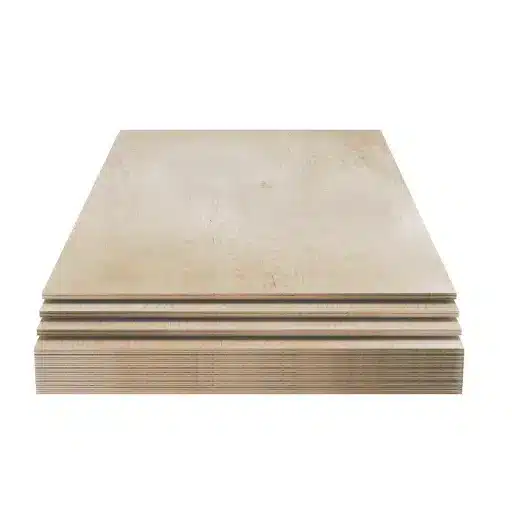
Birch Plywood: Why It’s the Go-To for Cabinets, CNC, and Builds That Last
Birch plywood gets picked apart more than most sheet goods, usually by people who’ve never cut into a real sheet. It’s all‑birch plies from face to core, which gives you tight edges, no gaping voids, and a surface that actually takes paint or clear finish without turning into a sanding nightmare.
What Makes Birch Plywood Different From the Rest?
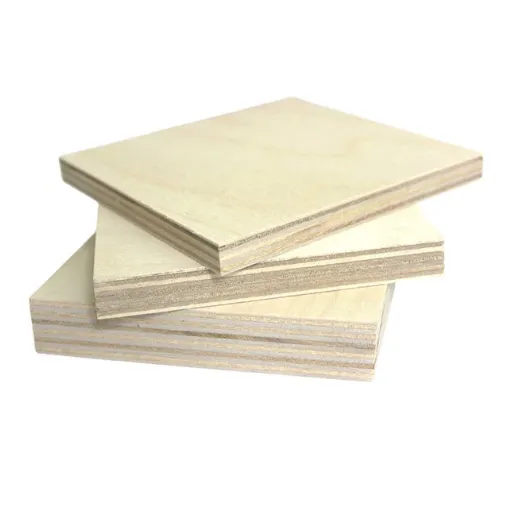
Birch plywood stands out because it’s built from the same species top to bottom, not a mixed sandwich of poplar cores and questionable face veneers. You cut an edge, and it looks consistent, not like a layered cake that’s hiding something.
Baltic birch vs standard birch
Baltic birch is the premium version, all‑birch plies from Russia or nearby, usually 13 plies in an 18 mm sheet, with voids so small you barely notice them even on a cross‑cut. Standard birch plywood might use a mix of species in the core or fewer plies, so it’s a bit lighter and cheaper but shows more telegraphing under finish or when you’re screwing close to an edge. You’d notice the difference most on drawer sides or cabinet backs where hardware bites in; Baltic holds tighter without pilot holes half the time.
That said, standard birch still laps most generic plywood because the face and back veneers are birch, giving you a workable surface out of the box. Baltic just takes it further if you’re doing high‑end exposed joinery or CNC work where edge quality can’t be fudged.
Core construction and void reality
The real magic is in the core. Good birch plywood uses mostly 1.5 mm birch plies stacked with alternating grain, so a 2440 x 1220 sheet in 12 mm gives you 8 or 9 thin layers instead of chunky 3 mm poplar slabs with football‑sized voids. Those voids are what kill screw holding and make edges look ragged after a table saw pass; in birch, they’re pin‑sized or absent, so you can route, shape, and finish without swearing at every joint.
Cut a sheet in half and hold it to the light. You’ll see why cabinetmakers reach for it first—clean, tight, predictable. Particleboard and MDF can’t touch that structural honesty, no matter how flat they sand.
4 Key Grades and When to Use Each
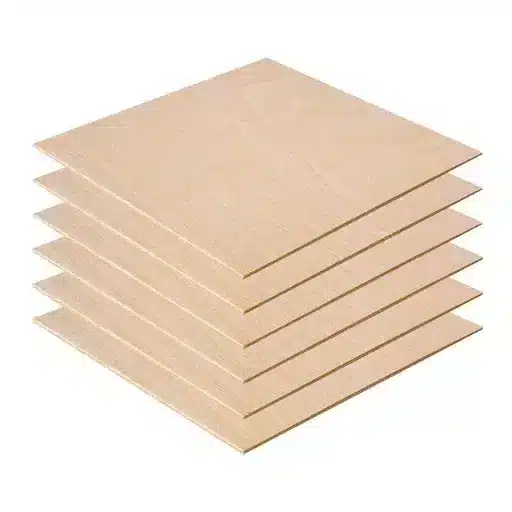
Birch plywood grades are about surface quality, not strength. The face and back get letter designations—A through C—based on knots, patches, and color variation. You pick the grade that matches what the panel will see in real life.
A/A or A/B grade is the cleanest. No knots. Minimal color streaks. Sound for high-end cabinet doors or furniture where you’re clear-coating and the grain needs to read uniform under gallery lighting. But it’s overkill for most boxes or backs; you’re paying 20-30% more for a surface nobody inspects up close.
B/BB hits the sweet spot for 80% of furniture and cabinet work. The B face has small, tight knots or sound pin knots you can fill or leave, plus a few oval patches that sand flat. BB on the back allows more repairs but still looks decent if it shows. Use this for wardrobe sides, shelves under light use, or CNC parts where edges get banded. On a 2.4-meter tall bookcase, B/BB gives you workable faces without bankrupting the material budget.
CP or C/C drops to utilitarian. Larger knots, splits filled with synthetic patches, more color variation across the sheet. Perfect for substructures, drawer bottoms, or shop jigs where it’s painted over or hidden. You’ll see this grade in trailer flooring or van conversions, sanded smooth then sealed against spills. Still strong as anything higher, just not pretty.
That leaves BB/CP as the hybrid. Solid B/BB on the good face, rougher CP on the back for when one side hides in a carcass. Common for modular office panels or kitchen base cabinets where the interior gets shelving but the exterior needs some finish. It’s the grade you reach for when balancing shop time and client expectations—saves money without compromising the visible work.
Pick wrong and you either waste cash on A-grade hidden parts or fight endless sanding on CP faces that need to shine. Match grade to exposure.
Birch Plywood Strengths in Real Workshops
Birch plywood shines when you need a sheet good that actually works with your tools and finishes, not against them. It’s the quiet workhorse that doesn’t make you adapt your process.
Screw holding and edge strength
Drive a screw into the edge of birch plywood, and it bites like it means it. Those all‑birch plies—usually 1.5 mm thick—give you dense, consistent material from face to core, so you can hang drawer slides or cabinet hinges right on the edge without pilot holes or special bits half the time. Particleboard would crumble after three cycles; MDF strips out under repeat torque. On a 700 mm deep shop cabinet, you’ll mount heavy tools directly to birch sides and never question the hold.
Edges stay crisp after cutting, too. No delam or chunking on a table saw unless you’re really abusing a worn blade. That makes it killer for exposed edge joinery or when you’re banding anyway—sand to 180 grit and it’s ready, no filler needed. You’d notice this most on shop‑built jigs or fixture work where clean edges save you masking and patching time.
Paint and finish behavior
Birch takes paint like it was born for it. The tight, even grain sands flat without blowout, and unlike open‑pore hardwoods, it doesn’t drink primer like a sponge. Two coats of quality latex or enamel, and you’ve got a surface that rivals MDF but with better screw‑pull resistance long term. Spray a 1.2 x 2.4 sheet of B/BB birch, and the edges hold build as well as the faces—no runs, no thin spots.
Clear finishes show the grain nicely, too. A few passes with oil or poly bring out that pale buttery tone without blotching, perfect for Shaker‑style doors or minimalist shelving. But it yellows over years under UV, so if you’re doing bright white cabinets that need to stay crisp, lean on paint instead. Still, for warm modern or Scandi looks, nothing in plywood matches birch’s natural read under finish.
Spec It Right: Thickness, Moisture, and Core Choices
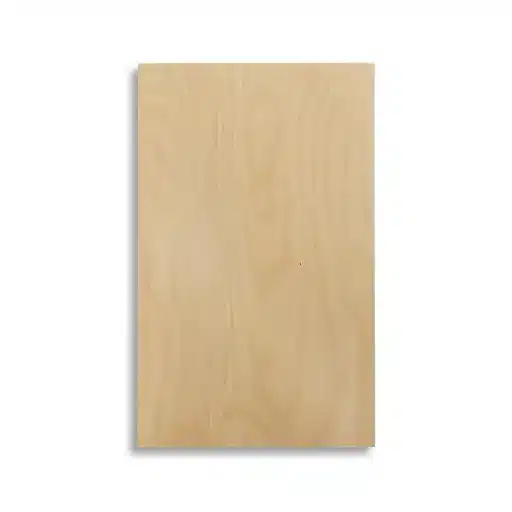
Specifying Birch Plywood is about matching the sheet to the actual load, environment, and finish—not just grabbing whatever’s on the rack. Get this wrong, and you’re either overbuilding or watching shelves sag by year two.
Matching thickness to spans and loads
Thickness drives everything. For drawer bottoms or cabinet backs, 6 mm or 9 mm birch handles light duty without flexing. Step up to 12 mm for closet shelves spanning 700 mm with books or files; it’s stiff enough that you won’t see bounce under a 40 kg load. But on a 1.2-meter span kitchen island shelf, 18 mm is the minimum—anything thinner telegraphs sag over time, even empty.
Worktops and base cabinets lean on 21 mm or 24 mm. Those thicker sheets shrug off point loads from mixers or chopping blocks, and the extra plies keep edges from crumbling when you’re trimming or routing sink cutouts. You’d notice the difference most on a heavy workbench: 18 mm might hold today, but 24 mm laughs at years of shop abuse.
Spans over 1.5 meters? Go custom or engineer the support. Birch is strong, but no plywood likes being a tightrope without help.
Kitchen, bath, and exterior tweaks
Standard interior birch plywood hates sustained moisture. Edges drink water like a sponge, swelling the face veneers and loosening glue lines in a steamy bathroom or splash zone. So for kitchens and baths, spec moisture-resistant (MR) grades with phenolic glue and seal every cut edge—top, bottom, ends—before assembly. On a vanity carcass near the shower, that extra step keeps it flat when the room hits 90% humidity.
Exterior or van builds demand exterior-grade birch plywood, usually WBP (water boil proof) with denser cores and marine glue. It’s heavier, costs more, but survives the road or weather without delam. Think trailer floors or RV walls: untreated interior birch would fail in three seasons; exterior holds 7–10 years with basic maintenance.
Core matters, too. Pure all‑birch multi‑ply is ideal for exposed edges and screw holding. But if weight’s a killer on a big run of panels, a poplar‑core birch face hybrid saves cash without much strength loss. Still, nothing routes as clean as full birch through the thickness. Match the core to your tooling and exposure, not just the budget line item.
Birch vs MDF vs Particleboard: No-Nonsense Comparison
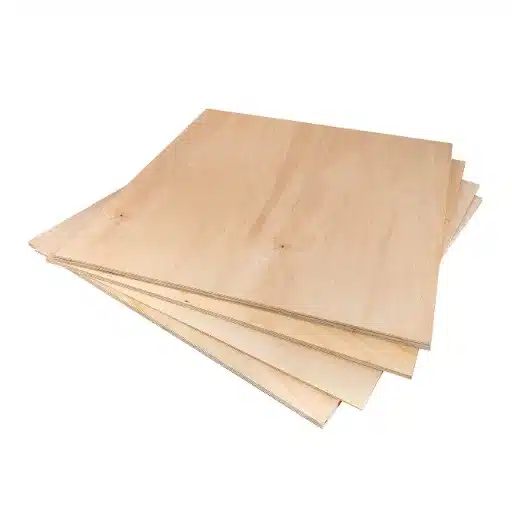
No sheet good is perfect. Birch plywood, MDF, and particleboard each win in specific jobs, but pretending one rules them all is shop talk from rookies. Here’s where they actually stack up.
Birch plywood brings real strength and edge integrity. You can saw, route, and screw it without special care; a 12 mm sheet spans 800 mm shelves with no sag under 25 kg books, while particleboard would cup and crumble. Edges look finished even raw, and it takes paint or laminate banding cleanly. But it costs 2–3 times more per sheet and shows veneer repairs if you’re not picky with grades.
MDF is the flatness king. Sand it mirror‑smooth for painting, mold it for curves, or CNC intricate profiles—the isotropic core doesn’t fight back with tearout or grain direction. On a run of 47 shaker doors, MDF gives identical results every time, no color variation headaches. Yet it drinks moisture like crazy unprotected, and edge screws pull out after a few door slams. Weight’s a bear, too—hauling 18 mm sheets feels like concrete.
Particleboard is the budget hammer. Cheapest by far, decent for paint-grade shelving or carcasses hidden behind doors, and it glues up fine for boxes. A 16 mm sheet works for low‑use closet dividers where nobody leans hard. But edges crumble under a router bit, screw holding fades fast, and one spill swells it irreversibly. You’d notice the difference on anything handling real torque or traffic—it’s the disposable option, not the daily driver.
So when do you pick what? Birch plywood for exposed edges, hardware loads, or premium feel. MDF for flawless paint jobs and complex shapes. Particleboard anywhere cost trumps longevity. Match the material to the abuse it’ll take, not the mood board.
Frequently Asked Questions (FAQ)
-
Is birch plywood good for making kitchen cabinets?
Absolutely, especially carcasses and drawer boxes. The all‑birch plies give unbeatable screw holding for slides and hinges, and 18 mm sheets span 900 mm wide uppers without sagging under dishes. Edges clean up nice for banding, too. Just seal cut ends if steam’s an issue—otherwise it’ll swell near the sink over time. -
What’s Baltic birch plywood, and why pay extra?
Baltic birch uses 13 thin plies in 18 mm, all birch, no voids. Perfect for CNC furniture where router bits need clean edges, or jigs that take shop abuse. Standard birch might have 7 chunkier plies with gaps; you’d notice stripped screws on a toolbox after 50 opens. -
Can I paint birch plywood without it blotching?
Yes—sanding to 220 grit first is key. Its tight grain takes primer evenly, unlike oak. For a Scandi media unit, two coats of water‑based enamel on B/BB grade gives a pro finish that holds up. Skip grain filler; birch doesn’t need it like open woods. -
How thick should birch plywood be for shelving?
Match span and load. 12 mm works for 600 mm toy shelves; 18 mm for 1-meter kitchen runs with pots. On a garage bench holding 60 kg tools across 800 mm, don’t drop below 21 mm or watch it creep downward yearly. -
Does birch plywood hold up outdoors or in a van?
Only exterior‑grade with WBP glue. Standard interior birch delams in rain. For a camper side panels, seal edges religiously and use 15 mm marine birch—it shrugs off road moisture where particleboard fails fast. Still, paint or seal faces for 5+ years life.
References
-
APA – The Engineered Wood Association. (2019). Voluntary Product Standard PS 1-19 – Structural Plywood. https://www.nist.gov/document/doc-ps-1-19-structural-plywood
-
APA – The Engineered Wood Association. (n.d.). Plywood Overview and Specifications. https://www.apawood.org/plywood
-
Architectural Woodwork Institute (AWI). (2024). 3.3 Panel Products – Standards for Plywood and Veneer. https://awinet.org/standards/materials/requirements-materials/3-2-lumber-2/
-
AWI Quality Certification Program. (2022). How to Specify Architectural Wood Veneer and Plywood Grades. https://awiqcp.org/news-and-blog/how-to-specify-architectural-wood-veneer/
-
APA – The Engineered Wood Association. (2021). PS 1-19 Structural Plywood Standards. https://apawood-europe.org/wp-content/uploads/2021/07/PS1-19.pdf