
Birch Plywood: Where It Actually Makes Sense to Use It
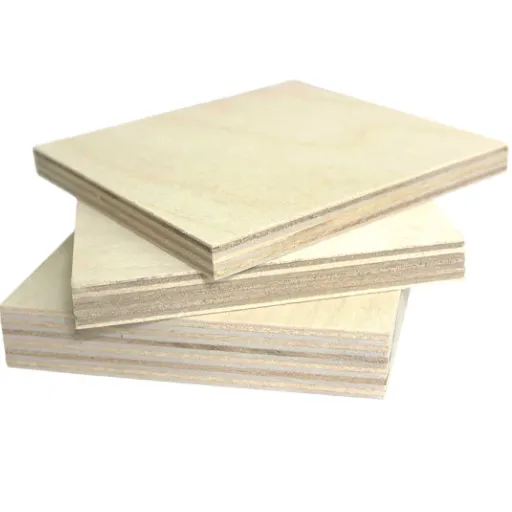
Birch plywood is one of those materials you keep reaching for once you’ve used it a few times. It’s flatter, cleaner, and just feels more “engineered” than the random softwood ply you get on big box racks, which makes it a safer choice for cabinets, built‑ins, and CNC work where small defects suddenly matter. You pay a bit more, but you get fewer surprises when you start cutting into the stack.
What Is Birch Plywood, Really?
Birch plywood isn’t just another sheet of layered wood – it’s a hardwood panel built for projects where flatness and face quality actually matter. Made from thin birch veneers cross-banded and glued under pressure, it gives you a consistent, light-colored surface that takes finish better than the knotty, variable stuff most people grab for subfloors or rough framing. You can see the difference the first time you cut into a stack and don’t find random voids or finger joints staring back.
How it differs from generic softwood ply
Softwood plywood – think pine or spruce sheathing – prioritizes cost and structural stiffness over everything else. It’s great for roofs, walls, and subfloors where you’re covering it up anyway, but run it through a CNC or try to paint a visible face and the rough grain, plugs, and occasional core gaps make life harder. Birch plywood flips that: all layers are birch, a denser hardwood, so you get tighter glue lines, less warping under load, and a face that sands to a near-perfect plane without filler.
Weight tells part of the story. A 3/4″ 4×8 sheet of birch plywood might tip the scales at 65–70 lbs, denser than the 50-ish lbs of softwood equivalent, because every ply contributes real strength instead of finger‑jointed lumber core. That density pays off in screw holding – you can drive fasteners into the edge without them spinning out – and in stability for shelves or cabinet sides that need to stay flat over years.
Softwood ply wins on price and availability for hidden structure. Birch plywood is the move when the panel is part of the visible build, like drawer bottoms or furniture carcasses where you want clean edges and predictable behavior.
Birch vs “Baltic birch” – not the same thing
People lump them together, but standard birch plywood and Baltic birch aren’t twins. Baltic birch comes from tight‑grained northern stock (Russian or Baltic region trees), typically with more, thinner plies – 13 layers in a 3/4″ panel versus 7–9 in regular birch – and exterior glue for better moisture hold. The result is almost void‑free, bombproof material that laughs at heavy drawers or speaker cabinets.
Regular birch plywood uses similar veneers but often mixes in a lumber core or fewer plies, so it’s lighter duty overall. You’ll find occasional small voids or slightly looser faces, fine for most cabinetry but not ideal for high‑stress edges or repeated disassembly. On a 19 mm sheet, Baltic might run $120–150 per 4×8; standard birch lands closer to $80–100 depending on grade.
Yet both beat softwood for finish work. If your project needs “premium but not heirloom,” standard birch plywood covers it. Push into pro audio enclosures or shop jigs that take abuse, and Baltic birch is the spec.
5 Key Properties You Should Care About

Birch plywood’s reputation comes down to five traits that make it predictable in the shop, not just pretty on paper. Ignore them and you’re guessing; dial them in and it’s the one sheet you can count on staying flat through cutting, assembly, and finishing.
Strength, stiffness, and screw‑holding
It’s strong where it counts. Birch plywood hits bending strengths around 45 MPa parallel to the face grain, which is why a 19 mm shelf spanning 900 mm barely sags under 80 kg of books or tools (see ref #1). That stiffness – often 8,000 MPa modulus – keeps panels from telegraphing flex into your doors or fronts over time, unlike softer cores that droop after a season.
Screw holding is quietly brilliant. Every ply is hardwood, so you get full thread bite edgewise or facewise; no spinning out halfway through a hinge install. On a shop jig or heavy drawer, that means 12 mm screws land solid without pilot holes, and the panel doesn’t split under torque.
Load it heavy and it laughs. Still, don’t treat it like steel – cross-grain it takes a beating faster.
Face quality, core voids, and machinability
Faces are the sell. Uniform birch veneer sands to a tight, even plane with minimal grain telegraph or color jumps, perfect for clear finishes or light stains. You’ll see occasional pin knots or tight sapwood rays on BB/BB grade, but nothing that filler can’t tame in two minutes.
Core voids? Rare in good stock. Baltic birch is nearly flawless, but even standard birch keeps them golf-ball sized at worst, so your router bits don’t dive into nothing mid‑cut. That lets you CNC intricate joinery or edge profiles without constant deflection adjustments.
Machining feels effortless. It cuts clean on table saws, drills without tearout if you score first, and takes a 3 mm roundover without burning or chipping the outer ply. A 1.5 mm bit on 12 mm stock leaves edges you can finish by hand.
Moisture resistance: standard vs upgraded panels
Standard birch plywood handles normal indoor humidity swings fine – 8–12% MC equilibrium. But push it into a steamy kitchen or unheated garage and the plies swell unevenly, usually 0.3–0.5% dimensionally across a sheet.
Upgraded panels change the game. Exterior glue turns “interior only” into “damp OK,” with phenolic resins holding bonds past 18% MC. Marine birch goes further: WBP glue, denser pressing, sometimes sealed edges for boats or wet rooms. A laundry cabinet in 65% RH stays flat; standard stock might cup 2 mm over six months.
That said, no birch loves standing water. Seal raw edges early, and even standard works harder than it should.
Birch Plywood vs Alternatives (MDF, Particleboard, Other Plys)

Birch plywood isn’t always the answer, but it beats the alternatives when flatness and finish matter more than budget. Pick wrong and your cabinets sag, edges chip, or the face looks like it needs a filler coat before you even start.
When birch is worth the premium
Visible work screams for birch plywood. A kitchen island with 19 mm carcasses and 22 mm doors stays dead flat under quartz overhangs, where particleboard might bow 3 mm after a year of heat and grease splashes. You get clean dados, solid screw retention, and a face that takes UV oil or lacquer without blotching – no sanding through to ugly core layers mid‑project.
Furniture and built‑ins lean birch too. Drawer sides cut from 12 mm stock hold rails without slop; CNC shelves for a media wall run precise joinery that MDF just approximates. That light, even tone also pairs with stains better than the random knots in softwood ply, so your “natural birch” spec lands consistent across 17 panels instead of fighting every piece.
It shines on repairs. Chip an edge? Sand and touch up. Try that on painted MDF and you’re repainting the whole front.
When MDF or cheaper ply is the smarter move
Hidden carcasses and paint‑grade work favor MDF or particleboard. They’re denser for edge banding, cheaper by the sheet – $35 vs $75 for 3/4″ 4×8 – and machine flat enough for melamine wrap or heavy primer. In a rental flat with fully concealed boxes, who cares about birch’s screw hold when #8 screws already crush the edge?
Softwood plywood wins for sheer structure. Sheathing, subfloors, or shop tables need span ratings and outdoor exposure; birch plywood’s interior glue gives up there. A garage workbench from construction ply shrugs off spills and dents; birch would delaminate after 14 wet winters.
Particleboard fits tight budgets best. It’s stable enough for wardrobe innards, takes laminates cleanly, and undercuts everything else per cubic meter. But push it into visible shelves or doors and the sag factor kicks in fast – 900 mm span with 50 kg load, and it’s flexing where birch plywood just sits there.
So match the material to the exposure. Birch plywood for faces and flex; the rest gets whatever keeps your quote under budget without call‑backs.
Spec Choices That Matter: Thickness, Grades, and Core Options

Spec right and birch plywood becomes invisible in the build; spec wrong and every sheet reminds you of the oversight. Thickness drives structure, grades set finish limits, and core choice quietly decides half your shop headaches.
Common thicknesses and where to use them
Thickness starts with use. 3 mm and 6 mm birch plywood suit drawer bottoms and curved panels – light, bendy enough for radius work, but they’ll flex under anything over 10 kg per meter. Step to 12 mm for backs, partitions, or shelving up to 600 mm spans; it’s stiff enough for a desk divider without sagging when you lean a monitor on it.
18 mm birch plywood rules cabinets and furniture carcasses. A 4×8 sheet at that gauge handles 900 mm shelves with 50 kg loads and stays dead flat for door overlays. Go 24 mm or 30 mm for tabletops, workbenches, or heavy structural panels where deflection matters – think a shop table that shrugs off a dropped 17 kg tool chest.
Metric sizes match global stock: 9 mm, 15 mm, 21 mm fill the gaps. That said, always measure actual caliper – nominal 18 mm might read 17.3 mm finished – and double-check span tables if you’re pushing limits.
Grading codes and what they actually look like on a sheet
Grades tell cosmetic truth. B/BB birch plywood means both faces are solid: B side nearly knot-free with tight sapwood rays, BB allows a few filled pin knots and minor repairs. Open a sheet and you see uniform light tone, ready for clear coat or light stain without surprises.
S/BB or BB/CP steps down. S for sanded, still decent; CP brings small splits, oval patches, and more color variation – fine for paint grade or carcasses but not exposed fronts. C grade shows up on backs: voids, knots, factory plugs that scream “don’t look here.”
All-birch core upgrades matter too. Multi-ply veneer core (13 layers in 18 mm) beats lumber core for flatness and edge screw holds; you’ll notice on hinge installs where a cheap sheet strips out after two tweaks. Baltic birch pushes this further – nearly voidless, but pricier per sheet.
Check stamps on delivery. EN 636-2 Class 3 or similar confirms moisture performance; anything less stays indoors only. Get these specs locked early, and your birch plywood stack turns into predictable parts instead of a gamble.
Finishing Birch Plywood Without Blotches
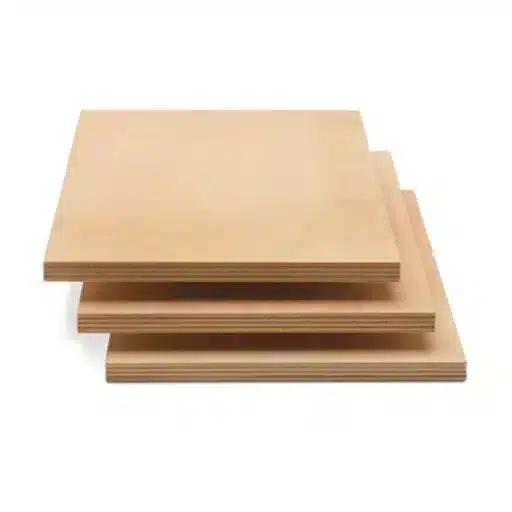
Birch plywood finishes like a dream if you respect its tight, absorbent grain – ignore the prep and you get splotchy spots that no sanding fixes. The key is even absorption across face and edge, starting with a clean, raised grain after the first pass.
Clear coats that keep the “Scandi” look
Clear coats let birch plywood’s natural light tone and subtle ray flecks shine – think pale blonde Scandi shelves or minimalist cabinets. Water-based polyurethanes work best here: low yellowing, fast stack times, and they build a thin, even film without loading up in the pores. Spray two coats at 120–150 gsm; brush if you’re careful, but back-brush immediately to kill bubbles.
Wipe-on oils or hardwax oils give a softer, more hand-rubbed feel. They soak in fast, so hit a 600 mm shelf in 90 seconds flat before it sets. Multiple passes – three or four over two days – darken it just a bit toward honey without hiding the grain figure. You’d notice the depth in morning light.
Danish oil splits the difference. It’s forgiving for hand work, enhances ray flecks on BB faces, and stacks under a light friction polish for durability. Avoid heavy oil saturation though; edges drink more than faces and end up two shades darker.
Stains, dyes, and painting strategies
Staining birch plywood demands a conditioner first. Gel stains or raw umber-toned dyes even out the end grain pull without muddying the face figure. For a mid-brown walnut fake, dilute aniline dye 1:7 in denatured alcohol, flood on, and wipe perpendicular to grain – 47 seconds open time max or it pools in tight rays.
Water-based dyes beat alcohol for color fastness. They raise grain less, so one light sanding after gets you ready for topcoat. Test on the edge first; it always takes dye differently than the face veneer.
Painting hides the grain but exposes every void and repair. Fill minor BB/BB patches with water putty, sand to 220, then prime with MDF sealer – two coats, wet sand between. Latex or oil paints spray even; roll-on leaves stipple unless you back-roll religiously. For cabinets, a 2K urethane topcoat locks it forever.
Raw edges always drink more. Seal them day one with thinned shellac or sanding sealer, or your finished fronts will show tide lines where humidity shifts. Done right, birch plywood wears like it belongs in the room.
Frequently Asked Questions (FAQ)
-
What’s the difference between birch plywood and Baltic birch for cabinet making?
Birch plywood uses mixed birch veneers with occasional small voids, fine for most carcasses. Baltic birch stacks 13+ thin plies for near-zero gaps and superior edge strength – ideal for 18 mm drawer sides holding 25 kg slides. Go Baltic when edges show or loads push limits; standard birch saves 20–30% on hidden boxes. -
Can I use birch plywood for an outdoor patio table?
Not standard interior birch – it delams at 15%+ moisture. Opt for exterior or marine-grade birch plywood with WBP glue; seal all edges with epoxy thinned 50/50. For a 1.2 m patio table under summer showers, it holds years if you recoat annually and avoid standing water. -
How do I stop birch plywood from blotching when staining?
Apply a 3:1 mineral spirits–oil conditioner first; let it soak 15 minutes, wipe off. Use alcohol-based aniline dye over gel stain – it penetrates evenly without raising grain. On a wardrobe set, this keeps 19 mm fronts uniform under oak-toned topcoats, no splotches at the ray flecks. -
Is 18 mm birch plywood strong enough for heavy kitchen shelves?
Yes, spanning 800 mm with 60 kg uniform load, it deflects under 1 mm. All-birch plies give solid screw holds for brackets too. In a pantry rebuild, pair with 100 mm adjustable cleats every 400 mm; it outperforms particleboard without sagging after loaded with cans. -
What grade of birch plywood should I buy for visible furniture faces?
B/BB grade – both faces sanded smooth with minimal pin knots. Avoid BB/CP unless painting; those oval patches show under clear coats. For a desk front, B/BB at 15 mm cuts clean on CNC and finishes like solid stock, saving hours versus filling cheaper BB faces.
References
-
APA – The Engineered Wood Association. (n.d.). Plywood Technical Guide. https://www.apawood.org/plywood
-
Decorative Hardwoods Association. (2020). ANSI/HPVA HP-1-2020 Hardwood Plywood Standard. https://www.decorativehardwoods.org/sites/default/files/2022-03/ANSI-HPVA-HP-1%202020_FINAL1.pdf