
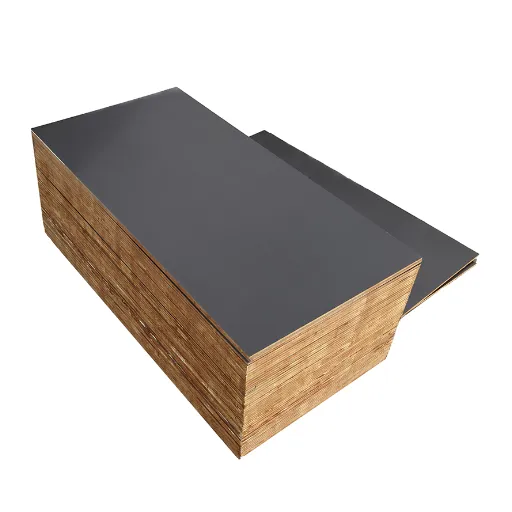
Film Faced Plywood: How Pros Actually Choose It
Most people meet film faced plywood when they’re staring at a concrete schedule and a tight budget, trying to guess which sheet will actually survive more than a few pours. You’re not just buying a panel; you’re buying surface finish, reuse counts, and how many complaints you’ll get from site when the edges start blowing out.
What Is Film Faced Plywood, Really?
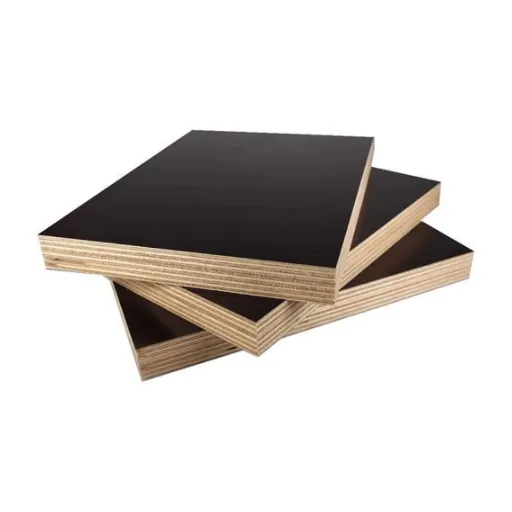
Film faced plywood is a workhorse panel built for concrete, not the showroom. You’re buying a system of core, glue, and film that either hangs together under real‑world site abuse or starts peeling and blowing edges by the third pour.
Core components: core, glue, film
The core is where most of the story sits. Poplar, mixed hardwood, or birch are common; each gives you a different weight in the hand, different screw‑holding, and different resistance to the casual abuse that happens when a carpentry gang is trying to close a deck before 6:45 p.m. Poplar will keep the sheet light and budget‑friendly, good for moderate loads and moderate reuse; birch or dense hardwood cores stay flatter, bridge small gaps better, and tolerate tighter propping and stripping cycles, but you’ll feel that in the unit price. One bad inner veneer or a lazy patch near the edge, though, and even a “good” species core can fail ugly.
Glue is the quiet part that decides whether Film Faced Plywood behaves like a structural product or like a sponge with a nice jacket on it. In serious formwork you’re usually looking for phenolic or high‑grade melamine glue rated for boiling water resistance, the kind that doesn’t let faces peel after repeated wetting and aggressive stripping. If the spec just says “MR” or feels vague on bond performance, you already know it’s not meant for a slab that’s going to see 14 or 17 pours.
Then there’s the film itself. Think of it as a sacrificial armor plate pressed onto the faces: a resin‑impregnated overlay that takes the cement paste, abrasion, and cleaning so the wood doesn’t. Go too thin or low‑grade and the fibers start lifting, the surface goes fuzzy, and your concrete finish steps down a class in just a few cycles. With a decent phenolic film and proper pressing, the panel stays dark, slick, and releases cleanly long after the cheaper boards on the rack have started to look tired.
Where it shows up on site (formwork, shuttering, platforms)
On site, these sheets follow the concrete gang. Slab formwork, beam and column shutters, shear walls, lift cores, even the odd architectural feature pour where the client will literally run their fingers across the stripped face. You’ll see Film Faced Plywood ripped down for edge forms, used as infill around proprietary systems, stacked as temporary working platforms, or laid over scaffold to keep mud and slurry out of the deck below. Walk a mid‑rise job early and you’ll often find a pile of panels chalk‑marked with reuse counts, the “good” faces reserved for exposed soffits and the beaten ones quietly demoted to platforms and side forms.
5 Things That Matter More Than “Cheap Price”

If you’re judging Film Faced Plywood on invoice price alone, you’re already losing money on site. What really drives cost is how the sheet behaves over 9, 12, 17 pours and how much rework your concrete team has to do after stripping.
Core species and density (poplar vs hardwood vs birch)
Core species is the first big lever. Poplar cores keep panels light and easy to manhandle on a deck; two guys can flip an 18 mm, 4×8 without grumbling too much, which matters on a fast‑track slab. Hardwood or birch cores push density up, so the same panel feels heavier but carries load better, holds nails and screws longer, and stays flatter when props are a bit optimistic.
You’ll see it in the edge and in the sound. Poplar tends to give a softer knock when you rap the panel; dense hardwood or birch has that tighter, higher‑pitch ring that tells you the core is packed and the veneers are doing their job. On heavily loaded beam bottoms or tall column shutters, that extra density is what stops mid‑span sagging and face ripple when someone decides the prop spacing chart is “just a guideline.” Cheap mixed cores with gaps around the perimeter might survive the first couple of pours, but start chipping and blowing out right where you’re trying to reuse panels on the critical faces.
So the question isn’t “poplar or hardwood?” in isolation. It’s “what loads, what span, what reuse target?” For short spans, modest loads, and 6–8 turns, a consistent poplar core can be completely fine. Push for 15+ reuses on long spans or architectural finishes and the extra money you put into birch or solid hardwood usually comes back as flatter soffits, fewer callbacks, and a lot less patching.
Glue type and boiling water resistance
Glue is the quiet failure point. When the adhesive spec is wrong, Film Faced Plywood doesn’t usually explode on day one; it just starts to open up at the faces and edges right when you’re counting on your “cheap” panels to go another five turns.
For real formwork duty you want phenolic or high‑grade melamine glue designed for boiling water resistance. That’s the stuff that survives repeated wetting, hot sun, then cold water wash‑downs without the outer veneers curling away from the core. It’s also what keeps the bond line intact when panels are stacked damp, forgotten over the weekend, and then forced back into service Monday morning. If you’re seeing vague “MR” (moisture resistant) in the spec for panels you intend to use outdoors or on multi‑cycle pours, that’s a red flag, not a nice‑to‑have detail.
Site gives you pretty quick feedback. Edges start to open, faces bubble slightly around nail holes, and you get that dull “drummy” tap when you knock on a suspect area. Once the glue line starts to go, it doesn’t matter how nice the core species is; you’re into early scrap and dangerous improvisations, like gangs cutting around bad patches instead of throwing the panel out. So a slightly higher sheet price for proven WBP/phenolic glue is really an insurance policy against mid‑project panel failures and schedule‑killing re‑formwork.
Film quality, thickness, and surface finish
The film is what your concrete actually sees. If the overlay is weak, the best core and glue in the world can’t save you from ugly surfaces and painful grinding after stripping.
Think of the film as a wear layer. Heavier phenolic films, properly pressed, give you a dark, tight surface that releases cleanly, handles trowel scuffs, and shrugs off 11 or 13 pours if you’re not abusing the panels. Thin or low‑grade films start to fiber‑lift quickly; you’ll notice the face going slightly fuzzy, then you see more bugholes and patchy color on the concrete. That’s when your finishing crew starts burning time on rubbing, bagging, or skim coats to get back to spec.
Surface texture matters too. Smooth film is what you want for architectural or exposed soffits where the client will walk through and look up; it delivers a cleaner, more uniform surface that takes minimal touch‑up. Mesh or anti‑slip film might be right for platforms and access areas where foot traffic and safety trump surface finish. Using a mesh‑faced sheet for a high‑end wall just because it was cheap is the kind of thing that comes back at you in the punch list.
So when you’re comparing Film Faced Plywood offers that differ by a few dollars a sheet, look beyond the bold price. Ask: what’s the core species and density, what glue system is actually used, and what’s the film weight and finish? That’s where your real cost per use is hiding.
How Many Reuses Can You Expect? (The Honest Version)
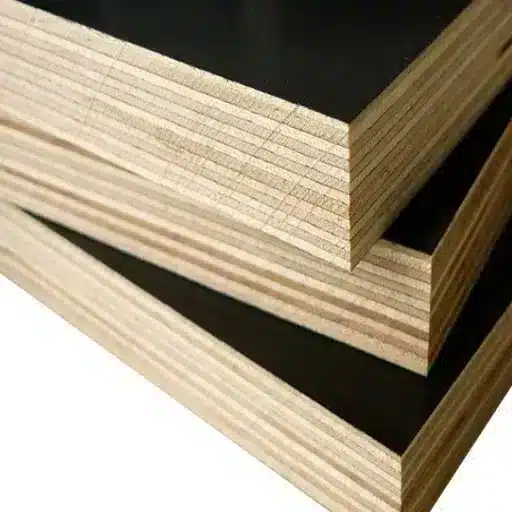
The reuse number printed on a Film Faced Plywood brochure is optimistic at best and marketing fiction at worst. On real sites, you almost never get the clean “30+ uses” people like to promise on a PDF.
Lab claims vs what foremen actually see
In test conditions, panels are handled gently, stripped properly, cleaned with care, and stored flat. Under that kind of treatment, you can absolutely push a good phenolic‑faced, hardwood‑core panel into the high‑teens or beyond in reuses. In a lab, nobody is dropping a 4×8 off the edge of a deck because it’s 6:42 p.m. and they want to go home.
On a live project, the story changes. A decent mid‑range Film Faced Plywood with a poplar or mixed hardwood core might give you 8–12 honest uses on slabs and beams if the gang respects it and the pour sequence isn’t too brutal. Push it to 15+ and you’ll usually see the pattern: more edge damage, more screw tear‑out, more patchy concrete as the film wears and fibers start to raise. A foreman who’s been through a few towers will tell you “we plan for 8, we’re happy if we see 11,” even if the catalog says 25.
High‑end birch‑core, heavy‑film panels can go further. But they only hit those impressive reuse counts when you match them with good practice: correct oil, controlled stripping, and someone who actually cares where the panels are stacked. That’s the part sales sheets don’t highlight.
What kills reuse: edge damage, poor stripping, wrong storage
Edges die first. A single unsealed cut, or a forklift tine nudging a stack, lets water and cement paste into the core; by the fifth or seventh pour that panel starts to swell at the corners and blows out right where you need a clean arris. On sites where nobody bothers to repaint cut edges or they drill fasteners too close to the perimeter, your reuse curve drops fast, no matter how fancy the film spec looked on day one.
Stripping technique is next on the hit list. Panels that are pried off with bars in the wrong place, or hammered from the back instead of eased off with wedges, develop micro‑cracks in the film and stress in the glue line. You might not notice it on pour three, but by pour nine the surface has a tired, scuffed look and you’re getting more bugholes and surface pull‑outs. Panels used on heavily congested beams and columns, where carpenters are constantly re‑nailing and patching, age faster than those on wide, simple slabs.
Then there’s storage. Stacks left in standing water or on uneven bearers will twist, cup, or delaminate long before their “official” life is up. Panels put away dirty, with cement paste hardening on the face, end up being scratched and gouged by whatever debris is trapped between sheets. The difference between a tidy stack under cover and a half‑collapsed pile in the corner of the site yard can easily be the difference between 7 and 13 usable cycles.
So when someone asks, “How many times can I reuse this Film Faced Plywood?”, the honest answer is annoying but true: the panel spec sets the ceiling, but your site habits decide how close you ever get to it.
Choosing Specs for Your Project: A Simple 3‑Step Flow
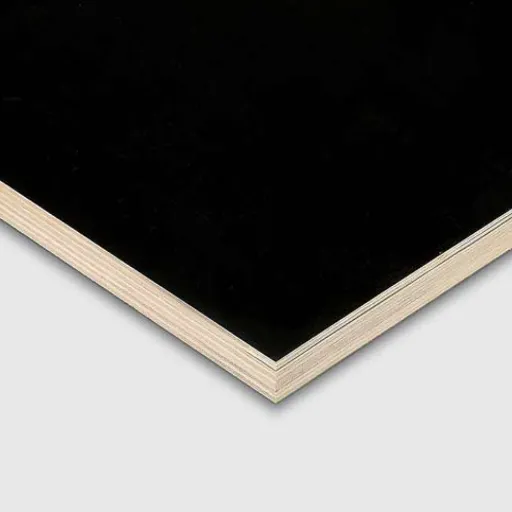
If you pick Film Faced Plywood without walking through these three questions, you’re leaving money on the table or risking ugly concrete. The spec has to track the structure, not the brochure.
Step 1: Slabs, beams, columns – what are you pouring?
Start with geometry and loading, not brand. Wide, flat slabs with simple propping are one thing; tall, skinny columns with heavy reinforcement and high pour rates are something else entirely.
Slabs spread load, give you more contact area, and usually live with more forgiving deflection limits. Here, a good poplar or mixed hardwood core with decent density and a reliable phenolic glue is often enough, especially if your spans are tight and you’re not trying to break any speed records. You can plan sheet layout to minimize cuts, keep support spacing to the manufacturer’s tables, and squeeze solid value out of a mid‑range panel.
Beams and columns are where panels get punished. Higher local pressures, more concentrated fixing points, more re‑nailing, and more chances for edge damage when stripping. On a 450 mm deep beam bottom running 4.8 m between supports, you don’t want a soft core that’s going to belly under load or start to crush at nail lines. For vertical elements with ambitious pour heights, lean into denser cores (birch or solid hardwood) and pay attention to manufacturer load charts rather than assuming “all 18 mm is the same.”
Shear walls and cores sit in between. Long, repetitive runs might justify better panels simply because you’ll cycle them more times, even if the individual pour height isn’t extreme. Think in terms of shapes and stress, not generic “formwork” as a single bucket.
Step 2: Reuse target and surface finish requirements
Once you know what you’re pouring, be honest about how many turns you actually need. Not the fantasy number, the schedule number.
If the job calls for, say, 11 slab cycles and 7 vertical cycles with some overlap, you’re already at a point where cheap panels that die at 6–7 uses will hurt you. You’ll be forced into mid‑project top‑ups, and those late‑stage purchases are rarely on your side price‑wise. For a reuse target in the low‑teens on reasonably handled work, spec a panel whose realistic site life is a few cycles above that, not just what the catalog headline claims.
Finish class matters just as much. For exposed soffits or fair‑faced walls, step up the film quality and make sure it’s a smooth phenolic surface designed for high‑quality concrete skins, not a generic overlay slapped on whatever core was cheapest that month. If the walls are going to be hidden behind drywall or heavy plaster, you can relax the film spec a bit and move the budget into more area or extra panels to reduce layout compromises.
There’s also the question of who’s walking the job. A client that inspects every pour with a flashlight and a notebook will push you toward higher‑end panels and tighter handling rules. A purely functional parking structure with low aesthetic pressure might not justify that same spend. Same keyword, very different plywood.
Step 3: Balancing sheet price against cost per use
Now you translate all that into money. Not just “sheet A is cheaper than sheet B,” but “what’s my cost per successful use?”
Take a simple example. A lower‑grade Film Faced Plywood sheet costs X and realistically gives you 6–8 decent cycles before edges and film start to fail. A better panel costs maybe 25–35% more per sheet but can reliably get you into the 12–15 use range if you store and strip sensibly. On paper, that higher‑end sheet feels expensive; on a cost‑per‑use basis, it often comes out ahead, especially once you factor in less rework and fewer emergency orders.
You can rough it out on a pad: sheet price divided by the number of planned good uses, then add a small “pain tax” for the knock‑on effects when panels start dying early—extra labour to patch, extra grinding, delays on re‑forming, the odd rejected pour. That’s usually the moment people realise that chasing the lowest upfront number was false economy.
So when you’re sitting with two or three Film Faced Plywood quotes on the table, run them through this flow. What shapes and loads am I dealing with? How many turns and what finish do I really need? And at that point, which panel gives me the lowest cost per clean, acceptable pour—not just the cheapest line on the PO.
Practical Site Tips That Save Your Panels
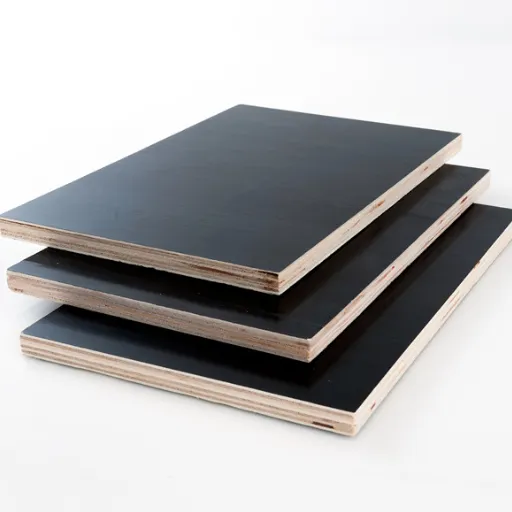
If you treat Film Faced Plywood like disposable board, it will happily behave that way. The tricks that double your reuse count are usually boring, small habits, not fancy products.
Cutting, sealing, and drilling without killing the sheet
Cut edges are where panels go to die. Every time you rip a sheet for a beam side or infill, you open up clean veneer edges that will drink water and cement paste unless you seal them fast. A quick workflow that works: mark, cut, blow off dust, then hit the fresh edge with a decent edge sealant or at least an alkyd or polyurethane paint before the panel ever sees a pour. If you let a stack of freshly cut pieces sit untreated “for tomorrow,” you’ll see swelling and hairline splits along those cuts after just a few wet cycles.
Saw choice matters more than most people admit. A sharp, fine‑tooth blade on a track saw gives you a clean, square edge that takes sealer well and doesn’t tear the film; a blunt handheld with a framing blade will chip the overlay, bruise the core, and invite early water ingress. Same sheet, same carpenter, different blade – you’d notice the difference by pour four or five.
Drilling is the other quiet killer. Keep fixings at least a couple of veneer thicknesses in from the edge; crowding screws right on the perimeter crushes the core and creates little funnels for water. Pre‑drill where you can, use proper formwork screws or nails that won’t mangle the face, and avoid “just one more nail” in the same spot every cycle. Treat each hole like something you’re going to live with for 9 or 11 turns, not one.
Stacking, drying, and cleaning between pours
How you stack panels between pours often decides whether they make it past mid‑project. Panels dumped in a skewed pile on uneven dunnage will pick up permanent warp; panels stacked flat on three or four level bearers, film‑to‑film, stay true much longer. Throw a cover over the stack if there’s any chance of standing water or long sun exposure—nothing fancy, even a sheet of tarp makes a difference—so you’re not baking one face and soaking the other all weekend.
Drying is about control, not speed. Stripped panels that are saturated shouldn’t go straight into a tight pack; give them a bit of air space so moisture can leave both faces roughly evenly. If you stack them tight while one face is still hot from the sun and the other is wet, the internal stresses will slowly teach them to cup or twist. You see this most on platforms and reuse panels that suddenly won’t sit flat on a deck.
Cleaning is where a lot of life gets scratched away. Scraping hardened laitance with whatever metal tool is closest will gouge the film, expose fibers, and invite paste to lock in deeper next time. Much better: a routine of prompt stripping, a compatible release agent that doesn’t build sticky films, plastic or rubber scrapers for the bulk, and only then light mechanical cleaning if you really have to. If a panel face already looks tired, rotate it to a less critical area instead of trying to make it look new with aggressive grinding.
Those habits aren’t glamorous. But they’re the difference between Film Faced Plywood that feels “done” at 6–7 pours and panels you’re still confidently cycling on pour 14 while wondering why the next job doesn’t run this tight.
Frequently Asked Questions (FAQ)
1. How many times can I realistically reuse film faced plywood on a mid‑rise project?
On a normal mid‑rise with decent handling, expect 8–12 good reuses from a mid‑grade hardwood or poplar‑core panel; high‑end birch with heavy phenolic film can reach into the mid‑teens if you seal all cuts and store stacks under cover instead of leaving them in the washout area.
2. Is film faced plywood worth the premium over regular plywood for small slab jobs?
If you’re pouring just one or two small house slabs and then walking away, regular structural ply plus a good release agent can be cheaper. But once you hit 4–5 slab cycles with repeat use of the same forms, film faced plywood usually wins on cost‑per‑use and gives a noticeably cleaner soffit, especially when you’re stripping on hot afternoons and washing down daily.
3. What thickness should I choose for film faced plywood in beam and column formwork?
For typical beams and columns, 18 mm is the workhorse thickness because it handles higher concrete pressures and more re‑nailing without drumming or bowing between walers, assuming support spacing follows the supplier’s tables. On very light, closely propped residential work you might get away with 15 mm, but any tall, heavily reinforced columns should stay with 18 mm or denser core options.
4. Does the color of the film (black vs brown) matter for performance?
Color alone doesn’t tell you much; what matters is the film weight and resin type. A 220 g/m² phenolic film, whether black or dark brown, will usually outlast a thinner decorative overlay and give better release for architectural walls, especially if you’re pressure‑washing after each pour and logging panel cycles with paint marks on the edge.
5. Can I use film faced plywood for temporary site platforms and access ways?
Yes, many contractors use it for platforms, stair treads, and scaffold decks because the film face resists moisture and cleans easily, but you’ll want mesh or textured film where there’s risk of mud and slip. A common pattern is to retire formwork sheets after several pours and then cut them down for tower access decks, keeping the best faces away from constant rebar dragging.
References
-
U.S. Environmental Protection Agency (EPA). (2025). Plywood and Composite Wood Products Manufacture National Emission Standards. https://www.epa.gov/stationary-sources-air-pollution/plywood-and-composite-wood-products-manufacture-national-emission
-
SVEZA (Plywood Manufacturer Association). (2024). Company Standard STO 52654419-006-2024: Film-Faced Birch Plywood Technical Specifications. https://sveza.com/upload/iblock/496/4pv2rtx97cton847cqa18og9h66e1rjg.pdf