
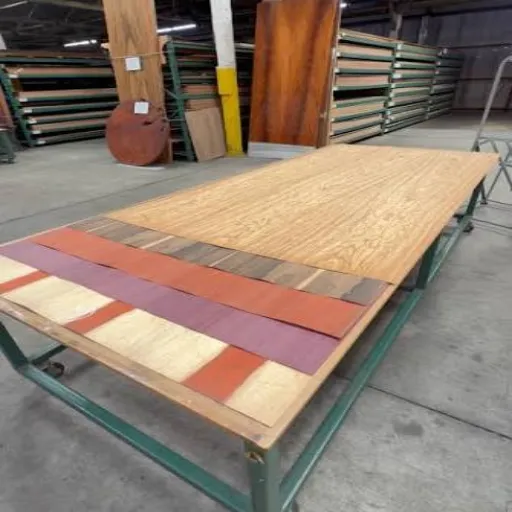
Why Book-Matched Veneer Looks Striped: Diagnosing the Barber-Pole Effect
Book-matched veneer can look striped because alternate leaves expose different faces, which can differ in reflected appearance and finish uptake. This alternating light-and-dark appearance is called the veneer barber pole effect, or barber poling; it can become especially noticeable after finishing. Columbia Forest Products explains the surface differences behind it.
A mirrored grain pattern does not guarantee identical-looking bands. If a finished panel looks different from the sample you approved, start by documenting the pattern and viewing conditions. The aim is to give the fabricator and finisher useful evidence before anyone decides to alter the surface.
Key takeaways
- Repeating light and dark bands at alternate veneer joints are consistent with barber poling, but do not establish the cause on their own.
- Note whether the contrast changes when you move or when the lighting changes. Neither changing nor persistent contrast gives a complete diagnosis.
- Compare the panel with its approved finished reference and confirm the actual layout and finish.
- Ask for a material and finish assessment before sanding, recoloring, or accepting a proposed cure.
What the veneer barber pole effect looks like
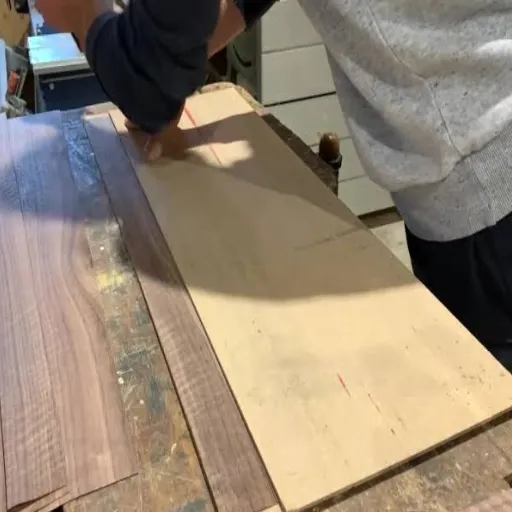
Look first at the relationship between the bands and the veneer leaves. A leaf is an individual thin sheet of veneer. On a book-matched face, the characteristic concern is a repeating light-dark rhythm across adjacent leaves, even where the grain forms a mirrored pattern.
Try to identify the leaf joints rather than assuming every visible line marks one. If they are difficult to locate, ask the fabricator to identify them on a photograph or layout drawing. That helps distinguish an alternating face pattern from a stripe within the wood itself.
Striped grain and isolated patches need separate descriptions
Wood figure, meaning its decorative visual pattern, can also look striped. A stripe within one leaf and a dark band covering an entire adjacent leaf are different observations. Dooge Veneers’ resource glossary treats barber poling separately from other figure and grain terms.
Illustrative scenario: A panel has four identified leaves. The second and fourth look darker across much of their width. That observation gives the fabricator a reason to check the alternating faces. A small dark patch halfway down just one leaf calls for a separate description; neither observation alone establishes a defect or treatment.
Why adjacent book-matched leaves can look different
Mirrored grain exposes alternating faces
Book matching opens consecutive leaves like the pages of a book, reversing every other leaf to create a mirrored grain arrangement. The sequence describes how the sheets follow one another; the match describes how their faces are arranged.
That reversal matters. Adjacent leaves can present different surface characteristics even though their grain belongs to the same sequence. Vancouver Door’s matching reference explains how alternating outward-facing surfaces can produce differences in apparent color or contrast.
Surface response and reflected appearance both matter
Veneer terminology distinguishes a loose side from a tight side. Conventional slicing or peeling can create minute fractures, known as lathe checks, on the loose side. Columbia notes that this side can absorb more finishing material than the tight side, contributing to a light-dark difference.
Reflected appearance is another consideration. The orientation of adjacent faces can affect how they look under light. An observer may therefore be seeing a combination of surface response, finish response, and reflected appearance. Describing all visible contrast as uneven stain skips those distinctions.
These explanations describe possible contributors. They do not establish the cause of every stripe on an installed panel, or predict how much contrast a particular finish will show.
Check the appearance before changing the surface
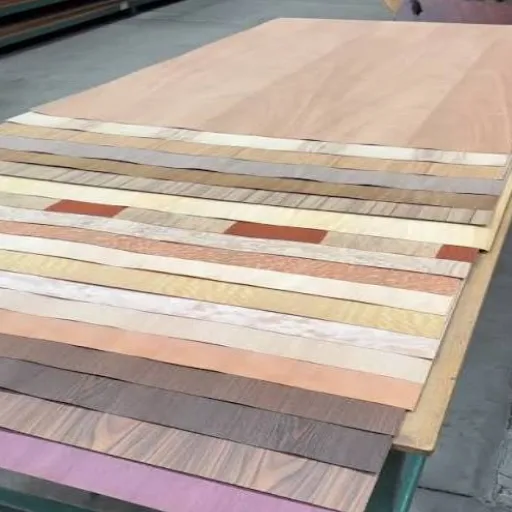
The following is an observation checklist, not a standardized acceptance test. Keep the surface unchanged while you gather the information, and follow any viewing conditions already specified for the project.
1. Record the whole face and the joints
Take an overview showing the panel’s location and a closer view showing the affected leaves. Note whether the contrast repeats across alternate leaves, occurs between whole panels, or is confined to one area. Use the same labels in your notes and photographs so another person can locate the concern.
2. Observe from normal positions and either side
Look at the same face from the positions where people normally see it, then from either side where access allows. Record whether particular bands appear stronger, weaker, or unchanged. Do not expect the light-dark order to reverse.
Because the technical references describe differences in reflected appearance, viewpoint comparison is a useful way to document the concern. It is not a validated test that separates reflection from stain or coating differences.
3. Describe the lighting
Note whether you are observing under daylight, artificial light, or both. Where practical, compare the face under the intended installation lighting and record any changes. Keep track of whether you changed the observer position or the lighting between observations.
There is no single light level, angle, or viewing distance supplied here as an acceptance rule. Use the project’s actual requirements when they exist.
4. Compare the approved finished reference
If an approved sample or mock-up is available, record its identity and compare it under comparable conditions. Ask whether it represents the same species, cut, matching arrangement, and finish as the installed face. Note differences in those details rather than treating any wood sample as an equivalent reference.
For the broader task of comparing veneer colors, keep these observations separate from general color-selection questions.
| Observation | What it may suggest | What it does not prove | Useful next question |
|---|---|---|---|
| Light-dark bands follow alternate leaf joints | Alternating face orientation may be involved | That the finish is correct or incorrect | Is this face confirmed as book matched? |
| Contrast changes with viewing position | Reflected appearance may contribute | That material or finish differences are absent | What changes under the intended lighting? |
| Contrast remains noticeable | The concern persists in the observed conditions | That stain application caused it | How does it compare with the approved finished reference? |
| One isolated patch differs from surrounding wood | The concern is localized | That it has the same cause as alternating bands | What material and finish information is available for that area? |
Use the table to organize a discussion. None of its rows selects a repair.
When the finish or material needs a closer review
Ask the responsible fabricator and finisher to review a persistent, localized, or disputed difference alongside the reference sample and project records. A single photograph can illustrate the concern, but it cannot show every viewing condition or identify the full material and coating history.
Report when you first noticed the appearance: before finishing, after finishing, or after installation. If you did not see the face at an earlier stage, say so. Avoid turning an unknown history into a claim that the stripes appeared during a particular process.
Does barber poling automatically mean a defect?
The term describes an appearance; it does not settle project acceptance. The relevant specification, approved reference, and actual supplied assembly need review. Calling the pattern barber poling is not enough to declare it acceptable, reject it, or assign responsibility.
Can darker stain fix the stripes?
Do not assume it will. Identifying a possible mechanism does not validate a recoloring method for an unknown surface. Ask the finisher to assess the actual system and any proposed treatment before approving work.
If a trial is proposed, ask how its appearance will be evaluated against the agreed reference before changes are extended to the finished work. This article does not prescribe sanding, stripping, bleaching, sizing, or a stain recipe.
What to discuss for future veneer faces
For future material, discuss the appearance priority before selecting the matching arrangement. Book matching creates grain symmetry. Slip matching places consecutive leaves next to one another without reversing alternate sheets, changing that arrangement and its visual result.
Slip matching is not a promise of identical color. Vancouver Door also describes possible contrast and leaning-grain effects with this layout. It is a choice to assess with representative finished samples, rather than a treatment for an existing panel.
Use the veneer matching chart for the wider comparison of layouts. For this concern, the practical question is whether the proposed finished face represents the balance of symmetry and visible variation your project expects.
What to send the fabricator or finisher
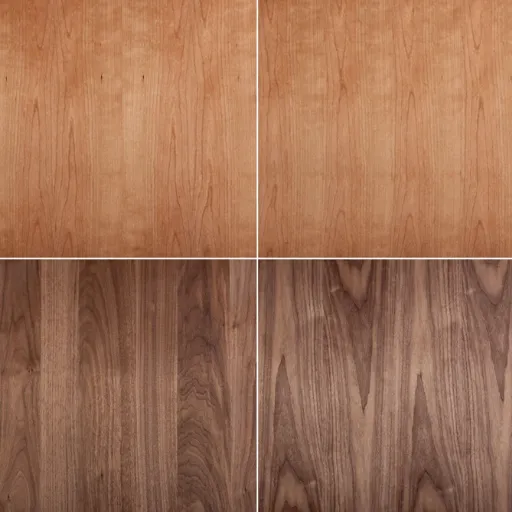
Prepare a short record that connects the visible concern with the supplied assembly:
- Location and pattern: panel or door identifier, whole-face photograph, joint details, and the leaves or areas that concern you.
- Viewing observations: normal viewing positions, lighting conditions, and what changed or stayed visible during comparison.
- Material information: confirmed species, cut, match, and leaf sequence where records exist.
- Finish information: the actual stain and coating system, who applied it, and the stage at which the concern was first observed.
- Approval reference: the sample or mock-up identifier and the relevant appearance requirements.
The veneer submittal checklist can help organize the broader document handoff. Mark missing information as unknown and ask the responsible party to confirm it.
Ask: “Is the observed pattern consistent with the confirmed leaf arrangement, and what further comparison is needed before deciding on treatment or acceptance?” This leaves room to assess the material and finish without assuming the answer.
For a veneer sourcing inquiry, describe your veneer requirement to VitalWood Global, including the intended application and reference appearance. For an existing installation, send the observation record to its fabricator and finisher before approving surface changes.