
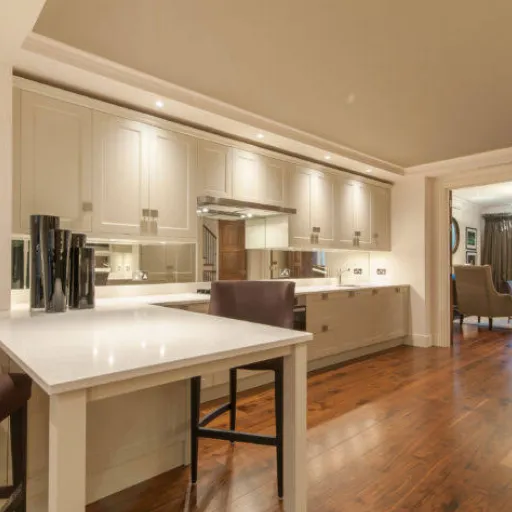
Walnut Flooring Pros and Cons: Is Walnut Right for Your Home?
Walnut flooring pros and cons come down to one trade-off. You get a deep chocolate-to-mocha color, fine grain, good stability and a real wood surface that can be refinished. You accept a soft surface (Janka about 1,010), visible dust and pale scratches, UV lightening, a 30% to 80% premium over oak, and limited refinishing on thin engineered wear layers.
Most walnut advice falls into two camps: luxury with no compromise, or too soft to consider. Neither helps you decide.
You already know the look appeals. This guide tells you what the premium buys, what it costs in maintenance, and which weaknesses engineering can fix.
New to engineered flooring? Our guide to engineered wood flooring explains cores and wear layers first.
Key Takeaways
- Walnut is a design decision first: its chocolate-to-mocha heartwood and fine grain are hard to copy with stain.
- It is soft: about 1,010 on the Janka scale, roughly 22% softer than red oak and 26% softer than white oak.
- Engineered walnut improves stability and installation options. It never makes the surface harder.
- Walnut generally lightens with UV exposure and shows dust and pale scratches more than oak does.
- It suits light-traffic rooms; oak or hickory handle kitchens, entries and large dogs better.
Walnut Flooring Pros and Cons at a Glance
This walnut hardwood flooring pros and cons table maps every trade-off.
| Factor | What walnut delivers | What it means for you |
|---|---|---|
| Appearance | Deep chocolate-to-mocha heartwood, fine grain, strong plank variation | A design feature stain cannot fully copy |
| Hardness and denting | Janka about 1,010, roughly 22% softer than red oak | Dents from dropped objects and furniture are normal |
| Scratch and dust visibility | High contrast on a smooth, dark surface | Pale marks, grit and dust stand out |
| Color change | Generally lightens and mellows under UV | Expect a warmer tone in the first three to six months |
| Moisture resistance | Stable but not waterproof | Avoid bathrooms, laundry rooms and standing water |
| Refinishing | Several cycles on solid, wear-layer dependent on engineered | Confirm thickness before you buy |
| Cost | $6−$15 per sq ft material, $10−$20 installed | Roughly 30% to 80% above comparable oak |
Quick verdict: choose walnut when the look leads, traffic is light and patina is acceptable. Choose oak or hickory when dent resistance, maintenance or budget come first.
Want to compare grades and wear layers side by side? Our engineered walnut flooring guide covers construction, grade and finish options.
The Pros of Walnut Flooring
A Naturally Dark, Premium Look No Stain Replicates
American black walnut (Juglans nigra) heartwood runs from deep chocolate to mocha, often with auburn or gray undertones. The color runs through the plank rather than sitting on top, so wear exposes more walnut instead of a pale substrate. “Premium” is a design claim here, not a durability claim.
Nadia compared samples for a townhouse study. Every oak sample read as a floor. The walnut sample read as furniture. She chose engineered black walnut with a 3 mm wear layer, kept the room spare, and used felt pads under everything. Two years on, it has a few small dents and a patina she likes.
Fine Grain and Design Versatility
Walnut’s grain is smoother and quieter than oak or hickory. That calm surface works with wide planks, herringbone and chevron patterns, and mixed-material schemes.
Good Dimensional Stability, Especially Engineered
The USDA Forest Service Wood Handbook publishes shrinkage coefficients by species and cut. Plainsawn black walnut measures about 0.00274, versus 0.00369 for red oak, so walnut moves less when both are cut the same way. Quartersawn red oak is more stable than quartersawn walnut. Engineered construction cross-laminates the core, which is why engineered walnut handles wide planks, concrete and radiant heat better than solid boards.
Real Wood That Can Be Refinished
Solid three-quarter-inch walnut can typically be sanded and refinished three to five times. Engineered walnut depends on the wear layer, covered below. Either way, the floor can be renewed rather than replaced.
Design and Resale Appeal, With a Caveat
A walnut floor is a statement, and buyers tend to read it as an upgrade in the right rooms. Do not count on a guaranteed return; resale depends on market, condition and taste. Choose walnut because you want to live on it.
The Cons of Walnut Flooring, Stated Plainly
It Is Soft: Janka 1,010 and What That Means
The National Wood Flooring Association publishes the Janka values the industry uses. Black walnut rates about 1,010; Peruvian walnut 1,080; European walnut 940 to 1,160. Red oak 1,290, white oak 1,360, hard maple 1,450, hickory 1,820.
Walnut is roughly 22% softer than red oak and 26% softer than white oak. The difference shows as dents from dropped objects, chair legs, rolling chairs and pet claws. Engineered construction adds stability, never hardness. For the full durability breakdown, read is walnut flooring durable.
Dents and Scratches: The Nuance Most Guides Miss
Walnut’s dark, smooth surface cuts both ways. Small dents and dark marks often disappear into the grain. Pale scratches, grit scratches and finish scuffs contrast sharply instead, and walnut’s fine grain does not break up scratch lines the way oak’s open grain does.
Because the color runs through the plank, a cut into the wood is less obvious than the same scratch in stained oak. Matte, satin and wire-brushed finishes hide surface wear better than gloss.
It Lightens With UV Exposure
Walnut generally lightens and mellows under ultraviolet light, moving toward warm brown and golden tones. Most change happens in the first three to six months, then slows. Some sources also describe an oxidative darkening path.
Oak tends to amber, and cherry darkens. Walnut’s direction surprises buyers who expect a floor to get darker. Rugs and furniture left in place create “tan lines.” A water-based finish with UV inhibitors holds the cooler tone longer; oil-based finishes add amber faster.
The Premium Price, and Why It Exists
Walnut typically runs 30% to 80% above comparable oak depending on grade, width, format and market. Black walnut grows slowly, yields less usable lumber, accounts for under 5% of the U.S. hardwood resource and commands the highest per-board-foot export price of any widely traded American hardwood.
Price does not equal durability. You are paying for color, grain and scarcity, not hardness. Look for Forest Stewardship Council or PEFC chain-of-custody certification on the product.
Sapwood Contrast and Grade Variability
Walnut heartwood is dark; sapwood is pale cream, and the boundary is sharp. Natural and character grades show more sapwood, plus knots and mineral streaks. Clear and select grades minimize it at a higher price. Decide which look you want before comparing quotes, because grade changes appearance and price.
Repairs Are Hard to Color-Match Later
A dark color that keeps changing under UV is difficult to match with a replacement board. A repair made in year eight will not look like the floor did in year one. Order spare boxes at purchase.
It Is Not Waterproof, and Humidity Matters
No solid hardwood floor is waterproof, including walnut. It still swells and cups when moisture sits on it or humidity swings. Keep spills brief, avoid steam mops, and skip walnut in bathrooms and laundry rooms. Aim for indoor relative humidity around 30% to 50%.
Solid vs Engineered Walnut: Which Cons Shrink?
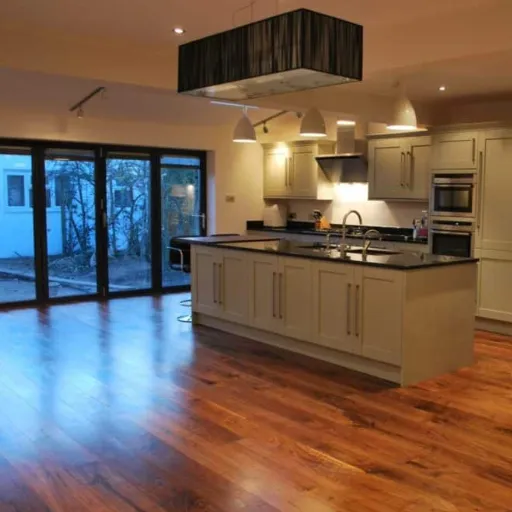
Engineered walnut places a real walnut veneer, the wear layer, over a cross-laminated plywood or fiberboard core. It is the same species, milled for stability, not a fake product.
Engineered construction improves dimensional stability, allows wider planks, works over concrete and radiant heat, and usually lowers installed cost. It does not improve Janka hardness, dent resistance, UV lightening or dust visibility. Those follow the wood, not the construction.
The wear layer determines how many times the floor can be renewed. These are rules of thumb, not warranties:
| Wear layer | Refinishing capacity | Typical lifespan |
|---|---|---|
| Under 2 mm | Screen-and-recoat only | 10-25 years |
| About 2 mm | One careful sand | 15-20 years |
| 3-4 mm | One to three refinishes | 25-40 years |
| 6 mm or more | Three or more refinishes | 40-60+ years |
Each sanding pass removes roughly 0.75 to 1 mm, and the NWFA references a minimum remaining wear layer of about 3/32 inch (2.4 mm) for a safe re-sand. See engineered hardwood vs solid hardwood and refinishing engineered hardwood floors.
Is Walnut Flooring Good for Kitchens, Pets and Busy Homes?
The honest answer is room by room. Walnut is not a whole-home floor for every household.
| Room | Suitability | Why | Recommendation |
|---|---|---|---|
| Bedroom or home office | Excellent | Low traffic, high design impact | Natural or matte finish |
| Dining room | Very good | Occasional use, chair movement | Felt pads on every chair leg |
| Main living room | Good with care | Moderate traffic and spills | Rugs and pads in walking lanes |
| Kitchen | Usable with caveats | Spills, dropped items, grit | Engineered, with a mat in the work zone |
| Entry or mudroom | Not recommended | Grit, water and heavy traffic | Choose oak or hickory |
| Bathroom or laundry | No | Standing water and humidity | Choose tile or vinyl |
Bedrooms, Dining Rooms and Home Offices
These are walnut’s best rooms. Traffic is light, the floor is the centerpiece, and the softer surface feels good underfoot. Natural or matte finishes hide small marks best.
Kitchens and Entryways
Kitchens are workable with caveats. Spills, dropped items and grit are the main threats, and the sink zone sees all three. Use engineered construction, a mat in the work zone and prompt cleanup. Entries and mudrooms are a harder sell.
Dogs, Cats and Kids
Large, active dogs and walnut are a difficult match. Claws mark the finish, accidents soak in if left, and sliding toys add dents. If walnut is non-negotiable, choose a character grade with a textured matte finish, trim nails, use rugs in lanes and clean spills quickly.
Marcus and Lena wanted walnut for a 1,400-square-foot main floor, but they had two Lab mixes and a gravel driveway. They tested a key and a leash clip on walnut and engineered white oak samples. Walnut showed every pass. They put engineered white oak with a 4 mm wear layer through the main rooms and walnut in the dining room.
Radiant Heat, Concrete and Basements
Engineered walnut is the right format over slabs, in basements and above radiant heat. Solid walnut is not. Test moisture, use a barrier, and keep humidity at roughly 30% to 50%.
Walnut Flooring Cost in 2026
Pricing varies by grade, plank width, finish, region and availability. Treat these figures as ranges, not quotes.
| Format | Material per sq ft | Installed per sq ft |
|---|---|---|
| Solid black walnut | $6-$15 | $10-$20 |
| Engineered, 2 mm wear layer | $6-$9 | $9−$14 |
| Engineered, 4-6 mm wear layer | $11-$18 | $16−$25 |
| Wide-plank or custom walnut | $14-$22 | $20−$32 |
A 500-square-foot room at $9 to $20 per square foot installed lands between roughly $4,500 and $10,000 before trim, subfloor prep and old-floor removal. That spread is why grade and wear layer matter: the cheapest and most expensive quotes are rarely the same product.
Why Walnut Costs More
Slow growth, lower yield and a small resource share drive the price. Grade, sapwood allowance, plank width, wear layer and finish each add cost. A wide, clear-grade, thick-wear-layer plank can cost more than a narrow solid board, so compare specifications, not labels.
Hidden Costs to Budget For
Retail prices rarely include underlayment, moisture barrier, trim, stair noses, subfloor preparation or old-floor removal. Those can add $2 to $5 per square foot. Ready to price a specific room? Read the full walnut flooring cost guide for grade-by-grade ranges and installation methods.
How Walnut Compares With Oak, Hickory and Other Species
| Species | Janka | Grain and color | Dent resistance | Scratch visibility | Color change | Material cost (2026) |
|---|---|---|---|---|---|---|
| Red oak | ~1,290 | Bold open grain, warm pink-tan | Good | Low to moderate | Ambers | $3−$7 |
| White oak | ~1,360 | Tight grain, cool beige-gray | Good | Low to moderate | Ambers less | $4−$10 |
| Hard maple | ~1,450 | Fine, even grain, pale | Very good | Moderate | Yellows slightly | $4−$9 |
| Hickory | ~1,820 | Dramatic grain, high contrast | Excellent | Low | Warms slightly | $5−$11 |
| Black walnut | ~1,010 | Fine grain, chocolate to mocha | Moderate | High | Lightens and mellows | $6−$15 |
| Peruvian walnut | ~1,080 | Fine grain, darker brown | Moderate | High | Lightens | $7−$16 |
| European walnut | ~940-1,160 | Softer grain, gray-brown | Moderate | High | Lightens | $9−$18 |
Ranges are approximate U.S. material prices; region and width move them significantly. For the full head-to-head, read walnut vs oak flooring, or see maple flooring pros and cons.
What About “Brazilian Walnut”?
“Brazilian walnut” is a trade name, not a botanical one. In flooring it usually means ipe (Handroanthus spp.), which rates around 3,500 on the Janka scale, or imbuia (Ocotea porosa). Neither is a true Juglans walnut. Ask for the scientific name and Janka rating. Our walnut veneer range shows how species are documented.
Can You Get the Walnut Look on a Harder Wood?
Yes. White oak is the better canvas for a cool, chocolate-brown stain because it has tighter grain and neutral undertones. Red oak takes dark stain but keeps a pink cast and open grain. The result is harder, easier to repair and often cheaper, though it lacks walnut’s depth and plank variation.
Living With Walnut: Maintenance, Repair and Longevity
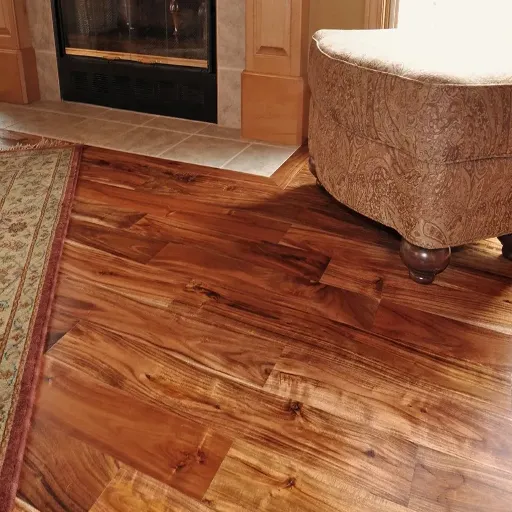
Walnut is not high maintenance, but it is not carefree. The routine is short and consistent:
- Dust-mop or vacuum with a soft brush several times a week, more in dark rooms where dust shows.
- Damp-mop weekly with a well-wrung cloth and a pH-neutral hardwood cleaner.
- Skip steam mops, vinegar, oil soaps and harsh cleaners.
- Put felt pads under every piece of furniture and use entry mats.
- Keep indoor relative humidity around 30% to 50% and wipe spills promptly.
Small dents can sometimes be lifted with a damp cloth and a warm iron, though test in a hidden spot first. Deep gouges need board replacement, which is another reason to keep spare boxes. Screen-and-recoat when the finish looks dull rather than waiting for bare wood to show.
How to Decide: A Quick Checklist
Choose Walnut If…
- The chocolate or mocha look is the design priority, not an afterthought.
- The room sees lighter traffic: a bedroom, dining room, home office or formal living area.
- You accept patina, small dents and gradual color shift as part of real wood.
- You will use rugs, felt pads and a steady cleaning routine.
- You need engineered walnut for concrete, radiant heat, a basement or wide planks.
Choose Oak or Hickory If…
- You have large dogs, young kids or heavy daily traffic.
- You want the hardest floor at a lower price.
- You need easy future repairs and color matching.
- The room is a kitchen, entry, mudroom or hallway.
Choose a “Walnut-Look” Floor If…
- You love the color but need more hardness or a tighter budget.
- You accept less natural plank variation than real walnut.
- You are willing to test stained samples under your own lighting first.
Owen and his contractor split a 2,000-square-foot renovation by room. White oak went into the kitchen, entry and family room. Engineered walnut went into the study and primary suite. Three years later, the oak zones carry the traffic and the walnut zones look nearly new.
FAQ About Walnut Flooring Pros and Cons
What are the disadvantages of walnut flooring?
Walnut is soft (Janka about 1,010), so it dents from furniture, dropped objects and pet claws. Its dark surface shows dust and pale scratches, it lightens under UV, and it costs 30% to 80% more than oak. It is not waterproof, and repairs are hard to match.
Is walnut flooring durable?
Walnut suits bedrooms, dining rooms and home offices, but it is one of the softer common hardwoods at about 1,010 on the Janka scale. It dents more readily than oak or hickory. Engineered construction improves stability, not hardness, so busy homes and large dogs are a poor match.
Does walnut flooring scratch easily?
Walnut shows scratches more readily than harder species because it is softer and its smooth dark surface contrasts with pale marks. Matte or wire-brushed finishes hide wear better than gloss; felt pads and mats reduce damage.
Is walnut flooring worth the money?
Walnut is worth it if you value its deep color and fine grain and can accept a softer surface, a premium price and gradual color change. If dent resistance, low maintenance or budget matter more, oak or hickory are more practical.
Is walnut flooring good for dogs?
Only with reservations. Large, active dogs will mark the finish and add dents. If you choose walnut anyway, use a character grade with a textured matte finish, trim nails, use rugs in lanes and clean accidents quickly.
Is walnut flooring good for kitchens?
Walnut can work in a kitchen with engineered construction and prompt cleanup, but it is not the most practical choice. Kitchens see water, dropped items and grit. White oak is harder and more moisture-resistant. Keep a mat in the work zone.
Does walnut flooring lighten or darken?
Walnut generally lightens and mellows under ultraviolet light, mostly in the first three to six months. Some sources also describe an oxidative darkening path, so the result depends on finish and exposure. Oak tends to amber.
Is walnut flooring waterproof?
No. No solid hardwood floor is waterproof, and walnut is stable but not moisture-proof. Wipe spills promptly, avoid steam mops and standing water, and keep humidity around 30% to 50%. Skip bathrooms and laundry rooms.
Can walnut flooring be refinished?
Solid walnut can usually be sanded three to five times, and it can last decades. Engineered walnut depends on the wear layer: under 2 mm allows a screen-and-recoat, about 2 mm allows one careful sand, and 3 mm or more allows one to three refinishes.
Is Brazilian walnut the same as black walnut?
No. “Brazilian walnut” is a trade name, usually referring to ipe or imbuia, not a true Juglans walnut. Ipe is far harder (Janka around 3,500) and behaves like a different floor. Always ask for the scientific name on the spec sheet.
Conclusion
Walnut flooring pros and cons come down to one honest sentence: walnut is a design decision, not a durability decision. You get a color and grain that stain cannot fully copy, good stability and a real wood surface that can be renewed. You accept a softer surface, visible dust, gradual lightening and a 30% to 80% premium over oak.
Engineered walnut shrinks some of those cons. It improves stability, supports wide planks and works over concrete and radiant heat. It does not make the floor harder, so room choice still decides whether you will love the result.
Choose walnut for bedrooms, dining rooms and home offices; oak or hickory for kitchens, entries and big dogs. If you want both, split the house by room.
For samples, certification documents or a wholesale quote on sustainably sourced walnut flooring, request samples and a quote from our team. Tell us the rooms, traffic and budget, and we will help you choose.