
What Does S4S Stand For? The Lumber Term You Need to Know Before Buying
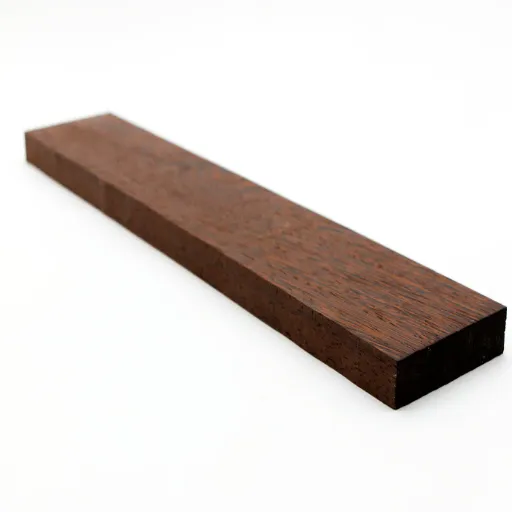
What does S4S stand for? It’s one of those yard stickers that trips up even experienced builders the first time they see it. Short answer: surfaced four sides—meaning the board’s been planed smooth on both faces and ripped square on both edges, ready to cut or clamp without your jointer sweating first.
Straight Answer: S4S Means Surfaced Four Sides
S4S stands for “surfaced four sides.” It’s the mill’s shorthand for lumber that’s been run through industrial planers and saws to smooth both faces and square up both edges, so you get a board that’s ready to measure, cut, or glue without fighting saw marks or wavy sides.
That process starts with rough sawn stock—straight off the headrig, maybe 1/8 to 3/16 over your target thickness. Planers take off the high spots and leave a consistent 3/4 or 13/16 face-to-face. You’d notice the difference hefting a true S4S 1×6 oak next to its rough cousin; one’s crisp enough to drop straight into a miter saw, the other needs your shop first.
Not magic, though. It’s just heavy equipment doing the grunt work of flattening and dimensioning so you don’t have to.
S2S, S3S, S4S Breakdown
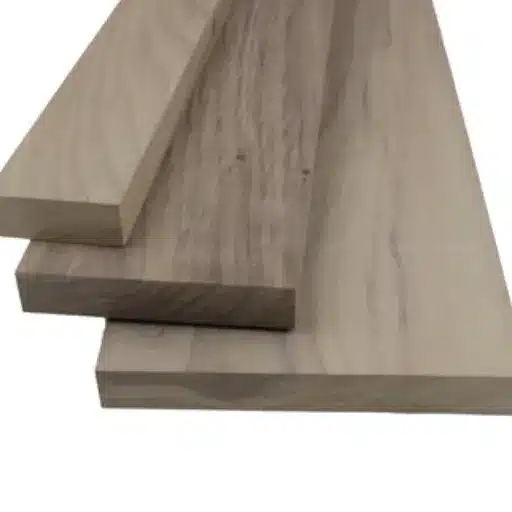
The “S” codes tell you exactly which sides the mill has touched. They stack up from there: S2S is the bare minimum surfacing; S4S is the full treatment. Knowing what does S4S stand for only makes sense once you see where it sits in that lineup.
What’s S2S lumber?
S2S means surfaced two sides: both wide faces planed smooth and parallel, edges untouched. You get clean, flat stock straight off the rough saw, usually with one face jointed as the reference and the other planed to match—often landing at 13/16 or 7/8 thick from a 4/4 rough board. It’s perfect when you want to rip your own widths or straight-line edges yourself, saving a step at the yard but still giving you predictable thickness for glue-ups.
S3S: One edge straight-lined
Take S2S and run one edge through a jointer or ripper. That’s S3S: two faces smooth, one edge dead straight. Picture a 1×8 that’s 7‑1/4 wide after planing; the mill cleans the faces and trues one long edge, leaving the other sawn or whatever shape it came off the saw in. Shops grab this when they need parallel faces but plan to rip or shape the final width anyway—like cutting tapered legs or custom stiles where only one edge needs to ride the table saw fence clean.
S4S builds on that foundation, squaring both edges too. But here’s the catch: not every yard’s S2S or S3S is created equal. A big distributor might hold tighter tolerances than a small mill cutting to order, so you still check your first board with a straightedge and caliper no matter what the sticker says. That’s why understanding the progression—what does S4S stand for versus its cousins—helps you spec exactly what your project actually needs instead of overpaying for edges you’re just going to re‑cut.
How S4S Gets Made at the Mill

S4S starts with rough sawn boards stacked right off the saw—full of saw marks, maybe a bit twisted, and carrying extra thickness so the planers have something to chew on. From there it’s a three‑machine ballet: planer for the faces, jointer or ripper for the edges, repeat until everything’s square. What does S4S stand for gets real when you see the industrial scale of that cleanup.
Rough stock hits the planer first. Twin‑head machines chew down high spots, leaving parallel faces at your target—like dropping a 1‑1/8 thick 4/4 rough board to a clean 13/16 across 200 feet an hour. You’d notice the difference in the chip pile alone.
Then the edges. A long jointer bed or precision rip‑saw straightens one side against a fence, followed by a matching rip on the table saw or another planer pass to square the final edge. It’s not hand work. These are 30‑foot‑long beasts pulling tolerances to 1/32 inch because they’re feeding kilns, distribution, or straight into pre‑fab parts.
End result? A board you can drop into production without a second thought. Yet mills still vary—some leave a whisper of texture, others go mirror‑smooth. Either way, that’s how your S4S stack gets its name.
S4S vs Rough Sawn: What You Actually Get

Knowing what does S4S stand for doesn’t tell the full story until you stack it against rough sawn stock side by side. S4S gives you convenience and uniformity; rough hands you raw volume and control. The choice hinges on your shop, your project, and how much waste you’re willing to eat.
Dimensions and tolerances side by side
Expect S4S to land tight. A nominal 4/4 S4S board measures 13/16 thick by whatever width the yard ripped—say 7-1/4 for a “1×8”—with tolerances usually holding to 1/32 inch across faces and edges. Rough sawn 4/4? You’re starting at 1 to 1-1/8 thick, full saw marks, edges wavy, and width varying 1/8 inch board to board because it came straight off the mill green.
That gap shrinks once you mill the rough yourself. You joint and plane to the same 13/16, but now you’ve chosen the straightest grain and trimmed defects on your terms. S4S wins on rack time; rough gives you yield if you bought smart.
When rough wins anyway
Rough pulls ahead on big runs or custom work. Picture milling 150 board feet of cherry for a run of 28 table legs: starting with rough lets you dodge the 3 or 4 narrow end pieces the S4S stack would force on you, squeezing every usable inch out of the log. Cost math tilts here too—rough often runs 15–20% cheaper per gross foot, and your waste stays under 18% with good layout.
S4S still rules small jobs or paint‑grade parts where you just need parts fast. But if you’re chasing figure, matching sets, or beefier sections, rough stock is the play. You trade machine hours for exactly the boards your design demands.
Do You Still Need to Joint or Plane S4S Boards?

Yes, you often do. S4S means the mill handled the heavy lifting, but tolerances and handling mean it’s rarely perfect enough for glue‑ups or precision joinery without a quick touch. What does S4S stand for doesn’t promise zero shop time—it just shrinks it.
Expect some boards to show up with a 1/64‑inch thickness variation across a stack or a slight bow you feel running a straightedge down the face. That’s normal for commercial S4S; yards hold to 1/32 overall, but board‑to‑board drift happens. You joint one edge or lighten a face to true a panel, especially if it’s been trucked cross‑country and picked up humidity along the way.
Trim work? Maybe not. A 1×4 pine S4S for baseboard goes straight to the miter saw if it looks clean. But edge‑gluing seven cherry panels for a tabletop? You’re straight‑lining every edge and sneaking a 0.005‑inch planer pass to match thicknesses dead‑on. You’d notice the mismatch otherwise when clamps pull and one rail sits proud.
Rough stock demands the full sequence. S4S just needs tuning where your eye and gauge call it out. Still, that’s usually faster than starting from saw marks.
3 Times S4S Saves Your Shop Schedule
S4S pays off when your clock is ticking faster than your jointer can spin up. What does S4S stand for matters most on jobs where every hour at the machines steals from cutting, assembly, or delivery. Here’s where it shines.
Small batch runs. Say you’re mocking up 14 paint‑grade poplar face frames for a kitchen bid. S4S lets you rip, crosscut, and dry‑fit by lunch instead of spending the morning flattening rough stock—saving you 2-1/2 hours you’d never bill anyway.
Tight deadlines. A last‑minute tradeshow display needs 27 shelf standards ripped from maple by Thursday. With S4S, you’re sizing parts while rough lumber guys are still jointing reference faces, and that gap turns frantic into finished.
Utility or paint‑grade work. Base, casing, shop stools—any project where finish hides minor variation. No one’s measuring panel flatness to 0.003 inches under paint, so S4S skips straight to joinery without the full mill sequence. You’d notice the time more than the texture.
Rough stock owns custom furniture. But when schedule trumps perfection, S4S is your shortcut.
When to Skip S4S and Go Rough Instead
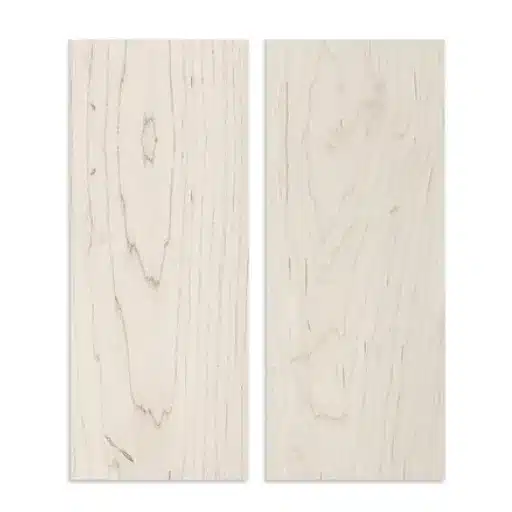
Skip S4S when volume, yield, or custom sizing tip the scales. What does S4S stand for stops mattering once your project outgrows convenience and starts demanding every board foot count. Rough lets you call the shots.
Big conference table. You need 180 board feet of quartersawn white oak milled to 7/8 thick with zero narrow rips. Rough stock gives you the full 1-1/8 starting thickness to joint flat and still land beefy; S4S stacks often hide skinny outliers that wreck your layout.
Matching sets. A run of 12‑drawer dressers where every drawer front pulls from the same log? Rough means you select the straightest, figured boards before the mill standardizes them into random widths. You’d notice mismatched grain across a bedroom set otherwise.
Exterior or oversized work. Beams, posts, or 14‑inch‑wide slab tops want the extra meat—rough 12/4 might yield a true 2‑3/4‑inch finished section while S4S maxes at 2‑1/4 from the same nominal size.
Cost and yield math for bigger projects
On 300 board feet of maple, rough at $4.25/board foot totals $1,275. Mill it yourself and lose 17% to waste: you net 249 usable feet at $5.12 effective. S4S at $5.75/board foot? Straight $1,725 for the same net yield, no shavings. That $450 gap funds half your finish materials.
Rough wins when you’ve got machine time and layout skill. S4S is the easy button. Pick your poison.
Frequently Asked Questions (FAQ)
-
What does S4S stand for on a lumber tag at the yard?
S4S means “surfaced four sides”—both faces planed smooth, both edges ripped square. It’s rough sawn stock that’s been milled at the yard so you skip the jointer and planer dance on basic projects. A 1×6 S4S oak will measure closer to 3/4 x 5-1/2, ready for ripping shelf supports without fighting saw marks first. -
Is S4S the same as dimensional lumber from Home Depot?
Pretty much. Dimensional 2x4s are S4S by default: planed faces, square edges, just labeled by rough size before milling. The difference? Hardwood S4S often comes in custom thicknesses like 4/4 or 6/4, while softwood sticks to standard framing sizes. Either way, it’s prepped for speed, not perfection. -
Do I need a planer if I buy S4S boards for cabinets?
Not always, but check the stack. S4S should be uniform to 1/32 inch, yet a week in your shop’s humidity can bow one 0.02 inches off true. For 12 door stiles, joint the edges and sneak a light planer pass; you’ll get dead-flat glue-ups without starting from rough every time. -
Why pay more for S4S when rough sawn is cheaper per foot?
S4S trades dollars for hours. Rough walnut at $5/board foot might yield 80% usable after milling; S4S at $6.75 skips 2-3 hours on your jointer for a 20-cabinet job. If you’re batching paint-grade frames or trim, that machine time pays for itself in clamps, not shavings. -
Can S4S boards still twist after I get them home?
They can. Even S4S isn’t immune to case hardening or storage shifts—a tight‑stacked bundle from the yard might arrive with ends cupped 1/16 inch after a rainy truck ride. Acclimate it 7–10 days, then straightedge the faces. It’s why pros still tune before final cuts, no matter the label.
References
-
North Castle Hardwoods. (2025). Surfaced Lumber Guide: What does S2S, S3S and S4S Mean? https://northcastlehw.com/blogs/wood/surfaced-lumber-guide-what-does-s2s-s3s-and-s4s-mean
-
KJP Select Hardwoods. (2022). What is S4S wood vs Rough Sawn Lumber. https://kjpselecthardwoods.com/blogs/wood-n-things/the-difference-between-rough-sawn-lumber-s4s-lumber
-
The Wood Whisperer. (2015). S2S, S3S and S4S Lumber – What Gives? https://thewoodwhisperer.com/articles/s2s-and-s4s-what-gives/
-
Lumber Capital. (2025). What Is S4S Lumber? Your Guide to Surfaced Four Sides Wood. https://www.lumbercapital.com/post/what-is-s4s-lumber-your-guide-to-surfaced-four-sides-wood-for-woodworking
-
Woodworkers Source. (2022). Woodworking 101: What Does 4/4 Mean In Lumber? https://www.woodworkerssource.com/blog/woodworking-101/tips-tricks/what-does-44-mean-when-talking-about-lumber/
- Click here to read more.