

Wood Veneer Panel Core Materials: MDF vs Particleboard vs Plywood
The selection of a suitable core material for the wood veneer panel of the project is the most important factor that will determine the panel’s performance, durability, and aesthetics. It can be quite a challenging decision to select the one that is most appropriate among such options as MDF, particleboard, and plywood. In fact, each of the core materials has its corresponding pros and cons when it comes to their attributes and qualities. The present article aims to point out the differences between MDF, particleboard, and plywood, thereby giving you a better understanding of the characteristics and potential applications of the three materials so that you can choose the right one for your project.
Introduction to Veneer Panel Cores
What Are Veneer Panel Cores?
MDF Core
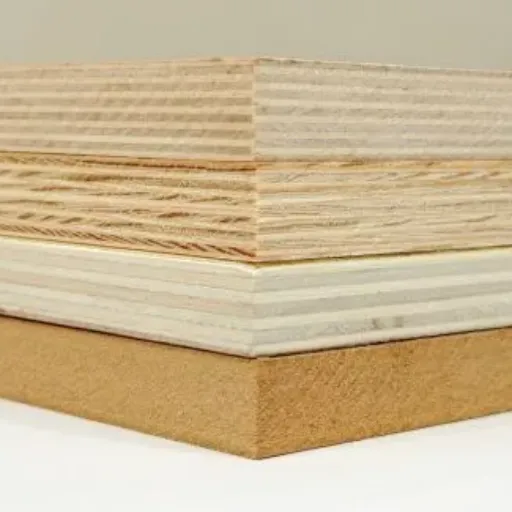
MDF is a blend of small wood shavings, resin, and the application of heat and high pressure; the result is a board that is smooth, dense, and homogeneous. It has consistently been the preferred choice for its uniform texture that allows for very accurate cutting, shaping, and finishing of either veneers or paints. However, MDF is a bit of a water-sensitive material and is not suitable for very humid environments. The average density of MDF is around 600-800 kg/m³, which puts it in the category of being denser than particleboard but offering better machining at the same time.
Particleboard Core
The process of making particleboard consists of gluing wood chips and shavings together, and then pressing them. It is a cheap option and is usually found in those projects where money is tight. In weight, it is less than MDF with a density ranging from 500-750 kg/m³, but on the other hand, particleboard is less strong and will eventually give in to moisture and lose its strength. Various surface finishes can be applied to enhance performance, but the best performance will be for low-load-bearing applications.
Plywood Core
Plywood is the assembly of several layers (plies) of wood veneer that is glued together with the alternating direction of the grains to give strength and stability. It is the most durable core material and absorbs no moisture causing warping which is why it is suitable for construction. The density of plywood depends on the grade and thickness and ranges from around 400 to 800 kg/m³. Plywood is well known for difficult to break load-bearing capacity and it is typical to see it in applications where performance requires strength.
Significance in Various Industries
Unquestionably, at the same time flexibility and performance characteristics have made veneer core panels the leading players on the market of various sectors. MDF and plywood being the engineered cores, for instance, in the furniture sector, where veneer panels are extensively used to produce the aforementioned luxuries, that include cabinets, tables, and chairs, which are not only durable but also attractive. The global wood veneer market size in 2022 was approximately $14 billion according to a recent market analysis and it is likely to keep growing at the same annual rate of 6.5% during the period 2023-2030.
In addition to that, the sending of veneer core panels to the building industry for flooring, wall panelling, and doors has become very popular for the interior applications. Hybrid cores, such as combination cores, are especially praised for their improved moisture resistance over single cores, thus making them capable of dealing with areas that have different humidity levels. Furthermore, one of the trends that is currently being observed is the employment of sustainable veneer panels as cores in green building projects.
The same trend applies to automotive and marine industries that are the main sectors experiencing the benefits of veneer panel technology as it combines the lightness with strength of core options to be used in trims and interior components thus making the vehicle more aesthetically pleasing and lighter overall which directly translates into better fuel efficiency. The transition in engineered wood technology continues to expand the application of veneer cores and hence their significance in industries is on the increase.
Types of Veneer Panel Cores
Plywood Cores
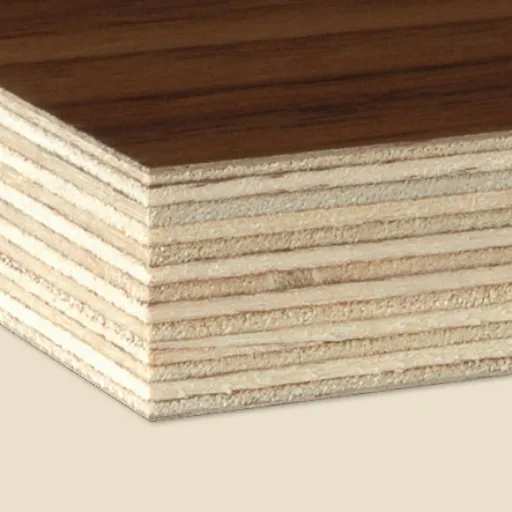
Plywood cores have been so strong, versatile, and cheap that they have come to occupy a close space in the very long list of the main types of wood and other materials that are usually found in the since the beginning of their use in the construction and processing of veneer panels. The structure of these cores consists of a stack of very thin layers of the wood which are called plies and are glued together with the respective seams being of 90 degrees with one another thus creating an alternating grain layer of four. The cross-grain structure gives strength and stiffness as well as reduces the risk of warping and provides which are stability commensurate with a wide range of applications from making furniture to building houses.
Different kinds of plywood cores are used according to application needs. For instance, softwood plywood cores are commonly for construction, cabinetry, and packaging due to their lightweight and easy handling. On the contrary, hardwood plywood cores are the first choice for high-end furniture, flooring, and decorating finishes because of their density and beauty.
Particleboard Core
Particleboard cores are produced by blending wood particles, such as chips, flakes, or sawdust, with resin and subjecting them to heat and pressure to create thick and smooth sheets. The main reason for the widespread use of this material in furniture and cabinetry production is its lower price compared to floristic plywood.
The low costs associated with particleboard are one of its major drawbacks, which, however, is balanced by the advantages such as the possibility of using reclaimed wood materials and simple processing. Smooth and uniform texture, on the other hand, makes it an excellent candidate for either veneering or laminated finishes. Still, particleboard is not only less durable but also more water-sensitive than plywood and therefore cannot be used in humid environments unless adequately protected with coating layers.
MDF Core
The MDF core which is made of medium-density fiberboard (MDF) has become the most preferred material in furniture, cabinets, and interior design because of its smooth surface, consistency in density, and adaptability. The MDF manufacturing process requires the mixing of very fine wood fibers with resin and then applying both high pressure and heat to produce a stable and durable material that takes paints and veneers beautifully. The global MDF market is expected to experience a CAGR of 5.3% throughout the years 2023-2028 as the main factor behind this growth trend will be an increasing consumer preference for inexpensive engineered wood products, as per the recent market insights report.
Besides the low price which is one of the reasons that solid wood has been replaced by MDF cores, there is also the factor of providing the same strength in all respects. In addition, producers are taking steps in the direction of eco-friendlier production such as the use of recycled fibers and the employment of low-emission resins. Besides that, the enhancement in the quality of MDF, such as moisture-resistance and fire-resistance has opened up the doors for its use in both residential and commercial projects even more. The combining factor of functionality with eco-friendliness has conferred to MDF the status of being the most indispensable construction and design material in the contemporary industry with near-universal requirements.
Core Attributes of Veneer Panels
Strength and Durability
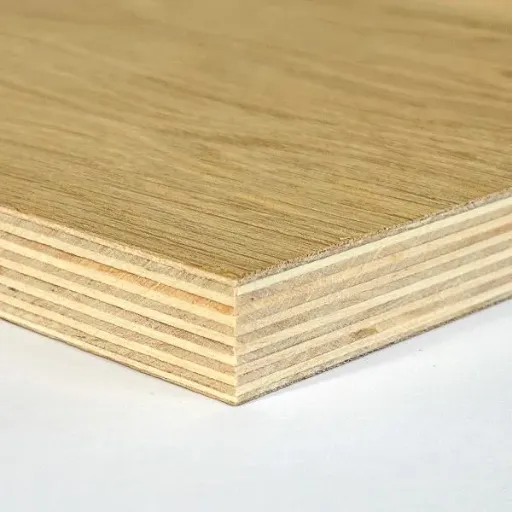
Veneer panels or wood-look laminate are the unparalleled materials in the world because of their strength and durability and thus sell widely in construction and interior design. The manufacturing process of these panels involves gluing together very thin sheets of natural wood and a substrate, such as MDF or plywood, which further stabilizes the structure and thus prevents warping or cracking over time considerably. Studies have shown that plywood veneer can stand solid wood even in dimensional stability and it can even be 30% better depending on the engineered structure.
The present-day veneer panels are made to resist not only to physical damages but also to environmental ones. For example, the high-grade veneer panels have coatings that are made to resist scratches, stains, and UV damage; thus, their lifetime is greatly prolonged. Usually, the manufacturers subject these panels to harsh conditions and the recent study suggests that the top-tier veneered panels may retain more than 90% of their initial strength for many years if treated properly and with care.
Weight and Thickness of Veneer Panels
One of the main factors contributing to the good reputation of the veneer panels being light and at the same time very durable is their weight and thickness. The weight of a veneer panel chiefly depends on the type of substrate that is used, as well as the wood species which is used for the veneer surface. As a rule, veneer panels with the most common MDF or plywood substrates weigh around 24 to 30 pounds for the 4×8-foot sheets but, depending on the substrates used, the weight may vary slightly in both directions.
The thickness factor is also very significant in the performance and application areas of veneer panels. The standard thickness for wood veneer products is from 0.5 mm to 1.2 mm for the wood veneer layer while total panel thickness (including substrate) typically ranges from 3 mm (1/8-inch) to 25 mm (1-inch) or even more. The designers are presented with a wide range of thickness options enabling them to choose the one that best meets the structural requirements and aesthetic tastes of their projects. For instance, thinner panels like those in the 3 mm to 6 mm range are generally selected for decorative purposes while thicker panels are required for supporting applications like furniture, flooring, or cabinetry.
Cost Efficiency
Wood veneer panels are one of the most elegant ways to show wood effects while saving money at the same time. These panels consist of a low-cost substrate covered with veneer of very good quality, which results in a drastic drop in material costs. For example, according to the latest industry price quotations, the price of natural wood veneer differs from $5 to $50 per square foot based on the species, while solid wood of comparable quality varies from $20 to $200 per square foot. This difference in price allows veneer panels to be used more frequently in areas such as interior wall cladding or custom-made furniture.
The manufacturing process of wood veneer panels, on the other hand, being done in an eco-friendly manner, takes the resource usage to a minimum by getting the highest yield from a single log which then leads to cheaper prices at the end. Their total cost is still very competitive when combined with substrates such as MDF or particleboard that are usually priced between $0.25 to $0.90 per square foot. This cost-effectiveness along with the structural flexibility and aesthetic appeal has made them the most preferred option for any type of project, whether residential or commercial.
Applications of Veneer Core in Furniture Design
Residential Furniture
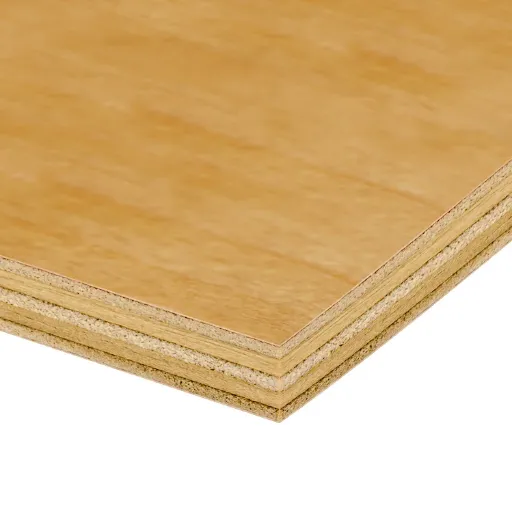
Veneer core panels have been one of the major pros in the residential furniture production industry. They have this amazing quality of being admired for the beauty of their appearance while at the same time performing their structural role. The market has changed a lot recently, and it has been indicated that more than 70% of the modern residential furniture is made from veneer core because of the combination of quality and strength. As an example, designer tables, cabinets, and mattresses are getting even lighter and stronger by using veneer cores, which facilitates easy transporting and handling during the stages of manufacturing and assembling.
Superb veneer cores can give an expensive look with fine wood veneers that are like solid wood but only cost a very small fraction of it. Besides, cutting-edge manufacturing processes have been able to make residential furniture even more moisture resistant and dimensionally stable thus, they will last a long time in various home environments. The innovation was a double win for the eco-friendly homeowners since they could get the material maximally and waste it least but also for those who prefer solid wood alternatives in terms of aesthetics.
Commercial Furniture
The commercial furniture sector has been showing strong growth with the market size estimated at USD 67.8 billion around the year 2022 and its value is anticipated to reach USD 96.7 billion by the year 2030 leading to a compound annual growth rate (CAGR) of 4.5% from 2023 to 2030. The factor which is greatly pushing this market up is the growing consumers’ demand for attractive and functional fittings in office, hotel, and retail environments.
Nextgen commercial furniture has got two sides – the side of high durability and the side of great resistance to daily usage including through the use of engineered wood, metal, and sustainable plastics. Ergonomics is still a major concern with the likes of adjustable chairs, modular desks, and personalized work stations becoming common in order to provide better comfort and higher productivity for employees. Furthermore, smart furniture equipped with technology such as charging ports and height adjustment systems is soon going to be a prerequisite in modern office setups.
Comparison of Veneer Panel Core Options

Performance Under Stress
Plywood
As compared to the other two materials, plywood is the strongest one and its cross-laminated structure is responsible for this property. Due to its capability to bear enormous loads without changing its shape or breaking, it is now a common material in the construction field. What is more, the latest studies show that the tensile strength of plywood is in the range of 6,000 to 10,000 psi (grade and type dependent) and that it does not warp easily even in very humid areas. The plywood’s layered structure not only gives the material the desired stability, but it also effectively eliminates the risk of splitting while nailing or screwing.
MDF (Medium-Density Fiberboard)
MDF is not the best option for high-pressure areas, however, it is still fairly strong and therefore doesn’t mind being in stable conditions. Besides, the uniformity of its density throughout makes it less prone to cracking compared to particleboard, still, it is more likely than plywood to sink under heavy loads. The strength of the maximum compression for MDF is approximately 1,300-1,500 psi and it performs well in dry places, otherwise, it swells and rots if left there for a long time. The latest types of moisture-resistant MDF have made this issue less of a concern, thus, it can become a possible candidate for certain damp application areas.
Particleboard
Among the three materials, particleboard is the weakest one in terms of stress and this disadvantage can be largely attributed to the fact that it consists of wood particles that are compacted together. It can bear the strength needed for light applications, such as furniture or decorative panels, only up to a certain point, (compressive strength is usually around 1,000 to 1,200 psi). Particleboard is very sensitive to moisture damage since, even water or high humidity can lead to it swelling thus its loss of strength. Moreover, it is also more prone to chip and split when subjected to nails or screws.
Environmental Considerations
Plywood, made from thin layers of natural wood veneers, is sometimes considered the “greenest” choice if the wood comes from certified sustainable forests. It is often marked with green certifications like the FSC (Forest Stewardship Council). However, the production of plywood involves the use of glues that contain formaldehyde, a chemical that is known to be one of the VOC (volatile organic compound) emission sources.
On the other hand, MDF is a product that has a larger environmental impact. Its main component is wood fibers that are treated with a large amount of glue and resin, most of which contain formaldehyde. Furthermore, recycling MDF is quite a tedious process, thus it usually ends up in landfills as waste, which adds to the negative impact on nature in general.
Particleboard, though less than hardwood or softwood in terms of environmental impact, is still produced from wood waste and byproducts and thus has less environmental impact than hardwood or softwood but still shares similar issues with MDF. It has health and sustainability issues of its own due to its reliance on synthetic adhesives, which can emit formaldehyde. However, since it is made using wood scraps, it does help to reduce the waste produced as a result of logging and cutting operations.
Reference Sources
-
“Screw withdrawal resistance of moulded laminated veneer oil palm (MLVOP) Bonded with formaldehyde resins”
- Key Findings: This paper investigates the screw withdrawal resistance of moulded laminated veneer panels made from oil palm. It highlights the impact of veneer thickness and adhesive type on the mechanical performance of the panels.
- Methodology: Veneers were produced by peeling oil palm billets, and panels were bonded with formaldehyde-based adhesives. Screw withdrawal resistance tests were conducted to evaluate performance.
- Read more
-
“The use of oil palm trunks for wood products”
- Key Findings: This study explores the use of oil palm trunks as core layers in plywood and other wood-based panels. It demonstrates the feasibility of using oil palm veneer for multilayer composites, door panels, and acoustic panels.
- Methodology: The research involves the production and testing of panels with oil palm veneers as core layers, focusing on their mechanical and physical properties.
- Read more
-
“Non-Formaldehyde, Bio-Based Adhesives for Use in Wood-Based Panel Manufacturing Industry—A Review”
- Key Findings: This review discusses the use of bio-based adhesives in wood-based panel manufacturing, including veneer panels. It highlights the potential of non-formaldehyde adhesives for improving environmental sustainability while maintaining panel performance.
- Methodology: The paper reviews existing literature on bio-based adhesives and their application in panels with veneer, lumber, or particleboard cores.
- Read more
Frequently Asked Questions (FAQs)
What are the different types and choices of plywood cores?
The various core types for plywood include veneer core, composite cores (engineered or particle cores), and softwood veneer core. The core styles depend on the wood species (birch, maple, and other hardwoods), number of plies, and method of manufacturing (rotary, plain-sliced). Each option has its own set of benefits based on characteristics like bending strength, screw-holding, flatness, tolerance, etc. Veneer core plywood and hardwood plywood usually have denser than many composite cores, superior flatness, and better screw-holding ability.
Why to choose hardwood plywood or hardwood veneer core for cabinetry and furniture?
Hardwood plywood and veneer core plywood are used for cabinet doors, top-quality furniture, and interior designing because the stunning face veneer revealing the woods’ grains and cathedral grain patterns also provides the strength and stability that the plies offer. Smooth hardwood veneers like maple or birch present a surface of high-quality suitable for sanding, overlay, or CNC machining, with uniform flatness and fewer voids as compared to lower-grade panel products.
What is the impact of plies and layup on panel performance?
The combination of plies and layup defines the flatness, bending strength, and tolerance to movement of the panel. The odd number of plies with careful crossbanding and face and back balancing minimizes warping and increases strength at the same time. More inner plies and the use of high-density hardwood veneers not only improve screw-holding but also enhance overall strength. This plywood becomes a strong contender in the areas of fixtures, shelves, and structural uses.
What are the surface and finishing of veneer core plywood main considerations?
Considerations for surfaces are influenced by the species of the face veneer (birch, maple), whether it is plain-sliced or rotary cut, smoothness, and overlay options. A well-manufactured veneer core plywood already has a furniture-grade face veneer ready for stain, clear coats, or additional overlays that are going to be applied in wall panels and cabinet door applications. Proper sanding, maintaining the balance between the face and back, and choosing the best quality panels are the steps that will minimize the risk of visible defects or voids after finishing.
How do composite cores compare with veneer core plywood in terms of screw holding and structural applications?
Composite cores may be very flexible and cost-efficient, yet, they are typically inferior to veneer core plywood in terms of screw-holding capacity and consistency of bending strength. Plywood produced through the veneer core process, particularly when birch or maple is used for the inner layers, demonstrates the attributes of higher density and better screw-holding capacity, thereby making it the application of choice for situations involving fixtures, screws, or CNC milling where tolerances and secure fastening are critical.