
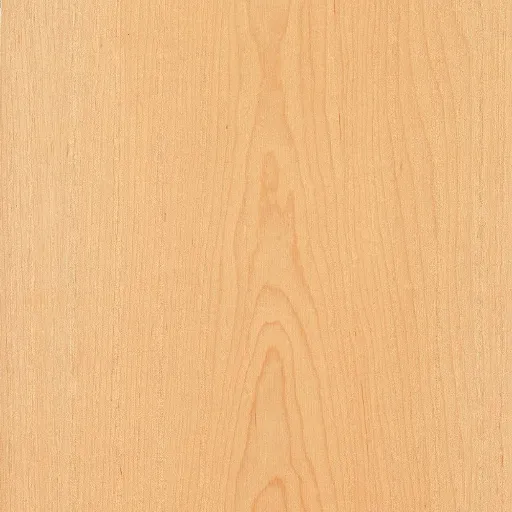
Maple Veneer Manufacturing: Hard Maple vs Soft Maple
The choice between hard maple and soft maple is very important when producing top-grade maple veneer; thus, one must familiarize with the two types of wood. Even though these two species of maple wood bear similar names, they still provide different qualities that might influence the whole process and the final product to great extents. This piece of writing will be a proper walkthrough if you are a woodworking expert, a producer, or just someone who is naturally curious, showing you the main differences, along with their respective advantages, and these benefits’ impact on veneer production. Thus, at the end of the journey, you will have a richer understanding of the subtlety of these materials and their contribution to the making of reliable and visually appealing maple veneers.
Understanding Maple Veneer
What is Maple Veneer?
Maple veneer, a super thin wood layer that can be either cut or peeled from a maple log, is a very popular choice for the surface covering of furniture and cabinets, and decorative finishing in general. Maple veneer, which is notable for its long-lasting feature, uniform grain, and flexibility, is a common choice in both residential and commercial applications. The hardwood species known as maple is the source of the veneer, and its long-lasting, attractive, and soft qualities make it a highly recommended choice for veneers.
Curly maple and birdseye maple are the two main types of maple veneer, each giving a different look. Of the two, curly maple is the one with a very pronounced grain pattern that looks like waves in the wood, while the other, birdseye maple, is denoted by small rounded spots that look like tiny eyes and are spread out all over the surface. The grain changes that produce the characteristics of the wood are not artificial and therefore make the veneer sheets one of a kind and very desirable for covering.
The latest techniques in manufacturing have made it possible to produce the maple veneers with remarkable precision. The average thickness of the veneers is between 0.2mm and 3mm, depending on the location and manner of their use. Compared to solid wood, the process of veneering generates very little waste of the material and at the same time, it helps sustain eco-friendly logging practices. It is easy to stick maple veneer onto plywood, MDF, or any other core material, and it serves as both a design and functional barrier.
Maple Wood Veneer Types
Hard Maple Veneer
Hard maple veneer has always been credited as a very tough wood and having a very fine close grain. This kind of wood usually originates from sugar maple (Acer saccharum) and the area where it would be applied with the most hardness and strength would be in flooring, cabinets, and furniture. The wood comes in the colors of white, yellow, or cream, which can be stained to bring out and get a very shiny finish. The woodworking industry applies the Janka hardness rating, which is about the same as 1,450 lbf to place hard maple among the hardest woods.
Soft Maple Veneer
Soft maple veneer is derived from the red maple (Acer rubrum) and silver maple (Acer saccharinum) species. It is the least durable of the two maple types with around 950-1,000 lbf Janka hardness rating, but it still has the strength to be used in construction and is versatile enough for various applications. Soft maple color is much less consistent than the whitish and yellowish colors of hard maple, and it also produces soft patterns such as straight, wavy, or fiddleback. It can simultaneously be found in decorative panels, furniture parts, and light designs because of its workability and low price.
Figured Maple Veneer
Figured maple veneers fall into a category and are highly appreciated for their stunning and unique grain patterns that resemble curly, quilted, and bird’s eye figures. These growth patterns are from nature and are intended to be a distinguishing, albeit at times, extravagant, enhancement of the appearance of high-end interior design, musical instruments, and bespoke items. Bird’s eye maple is particularly admired for its complexity of the eyes and requiring artistic craftsmanship due to its intricate grain.
The Process of Manufacturing Maple Veneer
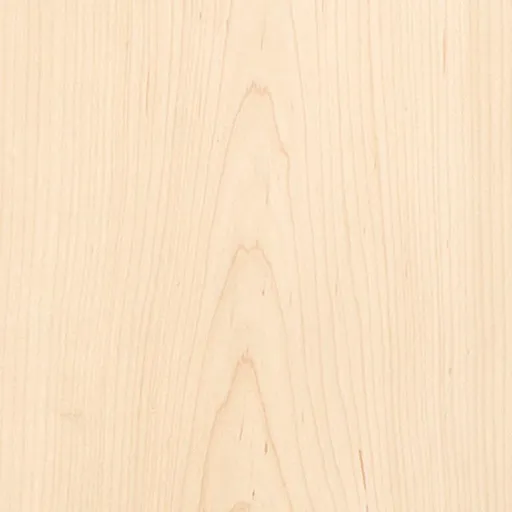
Cutting Techniques for Maple Veneer
Rotary Cutting
The rotary cutting process involves the simultaneous rotation of both log and blade. The wood-processing technique produces continuous sheets of veneer with the thick and pronounced grain pattern. Besides, it is considered very efficient since almost the whole log is consumed, thus cutting down on the waste. The Venetian blinds made from rotary cutting of stem maple are commonly used in places where bold and beautiful patterns are required and these are the case in furniture making or creating decorative surfaces.
Plain Slicing (Flat Slicing)
The plain slicing method involves cutting the log through its growth rings. This technique leads to a more classical and predictable grain pattern which is usually called “cathedral grain”. The result is a rich, classic appearance that is ideal for luxury and elegance requiring cabinetry and woodwork like project.
Quarter Slicing
The quarter slicing method results in the log being cut across the growth rings at a right angle, which gives the log a more consistent and straighter grain. It is the method used most often to create top-grade projects where keeping the stone grain consistent is imperative. The wood is also less prone to warping and thus the quarter-sliced maple veneer produced is very suitable for applications involving high stress.
Rift Cutting
Rift cutting is considered by many as a luxury technique reserved for wood species’ with very prominent rays, such as oak, but it can also be used on occasion for maple, when the consistent and linear grain becomes the major requirement. This technique conceals the irregular patterns thus producing a tidy and contemporary appearance.
Flat Cut vs. Quarter Sawn Maple Veneer
In the process of comparing the flat cut and quarter sawn maple veneers, it is important to first consider their individual characteristics, application areas, and performance. Flat cut veneer, also known as plain sliced, displays the natural beauty of maple with its cathedral-like grain pattern. This method usually yields more veneer per log, therefore, it is cheaper for projects requiring a warm and traditional aesthetic. Flat cut maple veneer is used for cabinets, furniture, and decorative panels that are looking for a natural flow and character.
On the other hand, quarter sawn maple veneer is produced with high precision by cutting perpendicular to the growth rings, resulting in a straight, linear grain with faint flecking patterns. This method gives a more uniform look, thereby reducing the chances of warping or bending. Due to its dimensional stability, quarter sawn maple veneer is used in high-end residential and architectural woodwork, flooring, and other applications requiring wood that lasts. Its evenness of grain patterns makes it an excellent fit for living with contemporary and minimalist designs.
Popular Applications of Maple Veneer

Woodworking Projects Using Maple Veneer
Maple veneer is a versatile material that showcases its properties of durability, attractiveness, and user-friendliness in every woodworking project. One such product is furniture-making that has gained much attraction with maple veneer tabletops, cabinets, and dressers being the common pieces of furniture. The latest market analysis has shown that over 40% of furniture producers today are using veneers, including maple, in their work because they are affordable about the same quality and visual appeal as solid wood.
Contemporary decorators and nature-lovers alike are drawn to the exceptional beauty of maple veneer, which has therefore become a material of choice for wall paneling and cladding of high-end commercial and residential spaces. The light, smooth surface of the veneer fits perfectly with both modern and minimalist designs. In fact, over 60% of architects are choosing light-colored veneers with maple topping the list for modern interiors (source on latest trends).
Maple Veneer in Furniture Design
No wonder with its beauty and strength, maple veneer has captured the modern furniture design market. The gorgeous and neat grain of the wood provides a refined look that is perfect for the production of modern and elegant pieces. The making of tables, chairs, cabinets, and shelving units that need delicate designs and seamless surface finishes is usually done using maple veneer due to the strong reason that it gives the best result.
The most recent statistics affirm the extensive use of maple veneer in the furniture industry. North America’s 2023 market report mentions that more than one-third of the total value of veneer-based furniture is represented by maple which is an indication of its beauty and demand among OEMs and consumers alike. Moreover, drawing on the material’s fairly high tensile strength, it is possible to ascertain that the furniture will still be durable even after extensive use.
Sustainability is another attribute of maple veneer, and hence it can be said that it accompanies eco-friendly practices. The scenario is that many manufacturers are getting their maple veneers from only certified sustainable forests and are also using green glues, thus satisfying the growing demand for green products. For instance, the demand for sustainable sourced maple veneer furniture rose by 20% just in 2022, showing that the environmental aspect has now become a consideration in the making of design choices.
Comparing Maple Veneer to Other Types of Wood Veneers
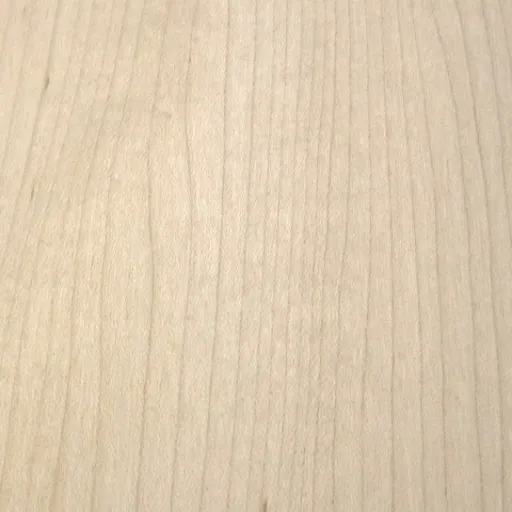
Hard Maple vs. Soft Maple Veneer: Key Differences
1. Density and Strength
The foremost reason for hard maple veneer’s being recognized as a high grade wood is its impressive and classic features of hardness as well as density that put it on the rating scale of about 1,450+. The Janka hardness scale assigns around 1,450+ rating to it. Besides that, it is also very durable material which can take no matter how much it gets worn or even subjected to denting, therefore, its application is not only limited to the strong areas such as flooring and furniture which is heavily used every day but also in other areas as well. In comparison, soft maple has a lower Janka hardness rating that ranges from 950 up to 1,200, which indicates that it is somewhat less dense and more lightweight.
2. Appearance and Grain Patterns
The differences in the aesthetics between hard and soft maple veneers are crystal clear. Maple hardwood, in general, has a very light and creamy-white base and a smooth and uniform grain texture. This has led to the wide application of the wood in modern and sleek designs. The alternative soft maple gives a spectrum of colors from light brown to gray coupled with more pronounced grain patterns. Such a variety has the potential of imparting more character and rustic charm in design applications.
3. Workability
Because of its lesser density, soft maple veneer is generally regarded as the one that can be easily machined and shaped, thus becoming the go-to option in complex woodworking projects that require intricate detailing or carving. Working with hard maple veneer is more difficult but at least it guarantees that the finished products will last longer.
Color and Grain Variations in Maple Wood Veneer
Maple wood veneer’s color and grain patterns are probably the most prominent factors to take into consideration when choosing it for furniture and decor. Hard maple almost to the limit can be defined by its very pale creamy-white color which sometimes even has a very light reddish tinge mixed up with it. The even coloring allows it to be the top pick for projects that require a spotless, modern finish. Soft maple, on the other hand, typically has a color range that is more extensive and includes shades of gray and warm, golden browns. This variety gives more freedom in designing and the chance of arriving at certain distinctive aesthetic effects.
Things are quite similar when it comes to the different kinds of grain patterns that are found in maple wood veneer. Generally, hard maple has a very fine, straight grain that is smooth and uniform, however, there are also very distinct grains like birdseye, curly, and quilted which sometimes are very much liked by the woodworkers and designers because of their beautiful appearance. On the other hand, soft maple sometimes has more irregular grain reflections which, among others, include wavy and slightly twisted grains. All this makes soft maple a perfect selection for the kind of projects that aim to bring out the natural and organic texture.
Tips for Choosing Quality Maple Veneer
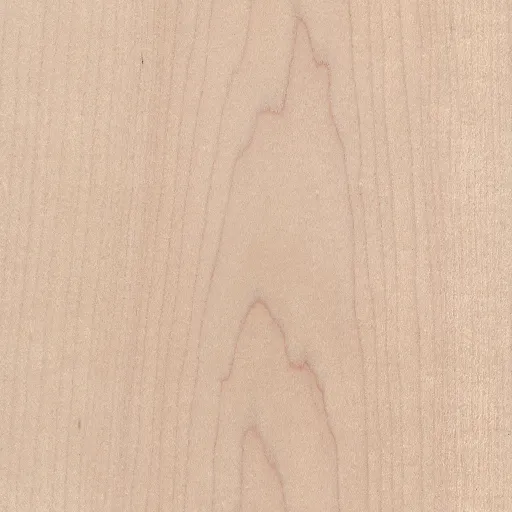
Evaluating Maple Veneer Sheets
Standards of Thickness and Grading
Typically, maple veneer sheets are produced in a range of thicknesses, with 0.5mm to 1mm being the most typical. The thicker sheets are definitely the better option since they last longer and are less likely to get damaged by the application. Also, veneer grading is one more thing that needs to be looked at. The quality grades of A, AA, and AAA are the most frequently used, which signify the visual and structural quality of the sheets. For the projects where the aesthetics are very important, the top grades like AA or AAA are recommended, for instance, fine furniture.
Content and Stability of Moisture
The moisture content of maple veneer sheets is among the most crucial factors that influence their stability and durability. Vaporing biomass, for instance, results in drying veneers with a moisture content that is typically around 6%-8%, the optimum level for controlling the risk of warp or split after installation. But, it’s wise to check with a moisture meter before buying.
Patterns of Grain and Color Matching
Maple veneer has delicate grain patterns and color as its main traits. However, the various types of grains like curly or birdseye give different visual effects. When choosing sheets, ensure that the color and grain pattern are alike so that there are no differences in the final product. This practice allows the manufacturers to present the veneer bundles that have already been matched, thus making the selection process quicker.
Eco-Friendliness and Certification
Sustainability is becoming the primary concern of the woodworking and furniture industries. Always purchase maple veneers that have the Forest Stewardship Council (FSC) or the Sustainable Forestry Initiative (SFI) labels, which are certification bodies that guarantee ethical sourcing and environmentally responsible practices. Eco-certified materials are not only eco-friendly but also an asset in green building projects because they can earn the extra point.
Size Considerations for Maple Veneer Projects
Having knowledge of the standard sizes and their applications is essential when working with maple veneer. A 4×8 feet (48×96 inches) sheet is the most common size for maple veneer, which is a standard that is applicable to cabinetry, wall cladding, and furniture making. For the industrial applications, there are even larger sheets that can cover vast areas with minimal seams. The thickness starts from very thin 0.3mm and can go up to 3mm or more based on the requirements for usage and durability.
Veneer sheets can be trimmed according to the customer’s needs or requested in non-standard sizes for intricate designs or custom projects. According to the latest online database sources, one of the industry trends is the increasing acceptance of custom sizing, especially among high-end furniture manufacturers who consider the exact dimensions to be the main factor in maintaining visual appeal and structural integrity.
Reference Sources
-
Yield and Ultrasonic Modulus of Elasticity of Red Maple Veneer
This study evaluates the yield and ultrasonic modulus of elasticity of red maple veneer, particularly for manufacturing laminated veneer lumber (LVL).
Read more here -
Flexural Properties of Laminated Veneer Lumber Manufactured from Ultrasonically Rated Red Maple Veneer
This pilot study investigates the flexural properties of LVL made from ultrasonically rated red maple veneer, highlighting its mechanical performance.
Read more here -
Application of Tung Oil to Improve Adhesion Strength and Water Resistance of Cottonseed Meal and Protein Adhesives on Maple Veneer
This research explores the use of tung oil to enhance adhesion strength and water resistance of adhesives used on maple veneer.
Read more here
Frequently Asked Questions (FAQs)
Which maple tree species are used for the production of the curly maple wood veneer?
The curly maple wood veneer is usually made from the sugar maple and other Acer species that are geographically located in the eastern as well as midwestern parts of North America. The tree type that is being used produces the playful curly or tiger flame figure when it is quarter cut or plain sliced and it has a creamy white color background with the striking flame or cathedral pattern. In the case of architectural grade or specialty projects, suppliers might provide particular species identification and special order for the specific types of wood.
In what ways do wood veneer sheets of maple differ from real wood veneer?
Wood sheets made from maple veneer are basically the same, which are the thin slices of the real wood veneer taken from the logs, but they present the same look and grain of the solid maple at a much lower cost and weight. They come in different cuts—quarter cut, plain sliced, and rotary—which result in different patterns of grain like cathedral or tiger flame. The real wood veneer reflects all-natural imperfections such as burls and curls and is generally presented with a backer or PSA for easy installation.
What are the typical sizes of maple wood veneer sheets and backer options?
To accommodate different projects, the suppliers of veneers provide various sizes and backer options: standard sheet sizes, custom widths, and lengths, in addition to flexible backers like paper, lauan, or polyester for bendable veneer as well as PSA (pressure-sensitive adhesive) backers for the peel-and-stick applications. The architectural grade veneer is frequently produced in larger widths and special order sizes that come with matching book or slip patterns for seamless installations.
What should I do to ensure a good match when I am matching maple veneer panels?
The process of matching maple veneer requires careful planning: get the matching maple wood veneer sheets sliced sequentially to maintain grain continuity, ask for matching for cathedral or flame patterns, and carry out edge-banding or backer-matching to conceal seams. Besides, it is important to sand and dye all the pieces next to each other continually and apply the same stains and finishes to get a uniform tone. For curly maple veneer, the matching of the curl and tiger flame across the panels is crucial for a unified appearance.