
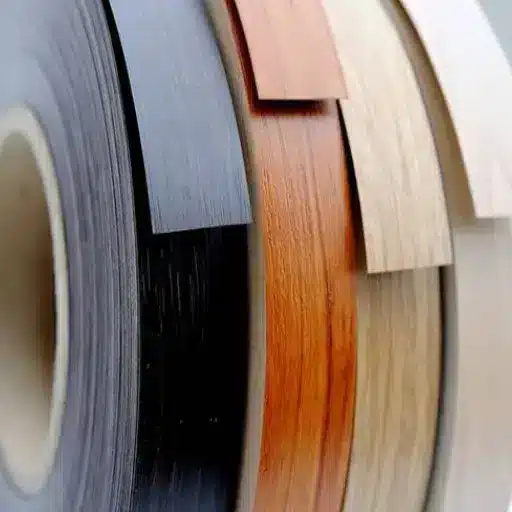
Edge Banding Essentials: Choosing Between PVC, ABS, and Wood
The process of furniture production requires the presence of a fixed element known as edge banding. Moreover, such an element is important in the environment of interior design as well. In order to satisfy our clients and aim for the best durability, aesthetics and eco-friendliness, it is very important to choose an appropriate edge banding material. Among the materials available, PVC, ABS, and wood are the three types of edge banding that are normally sought after for their events; rightly so, for each is designed to play a distinct role when particular conditions and needs are met. The objective of this article is to offer a synopsis of essential properties pertaining to these materials so that one can place an order to be used in the subsequent application. Looking at variables from cost effectiveness and performance levels to environment-related factors, we will move forward to all considerations that affect the selection of an efficient edge banding solution.
Understanding PVC Edge Banding
What is PVC Edge Banding?
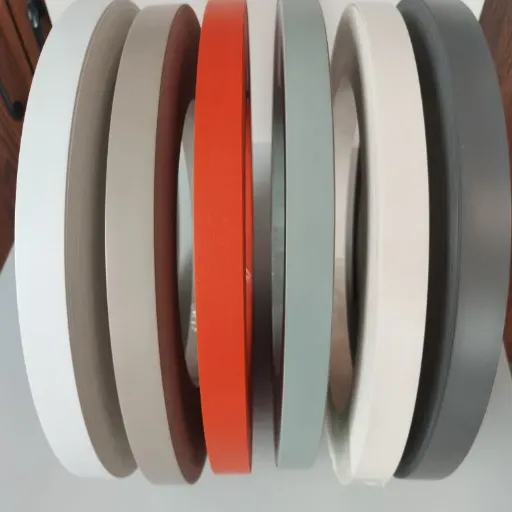
For covering exposed edges of furniture panels like cabinets, desks, and shelves, PVC (polyvinyl chloride) edge banding comes in handy for it is of no strange purpose. Edge banding is an ideal remedy for ensuring camera fairing, due to its flexibleness and adaptability, and it device is usually a heated-up installation or include an adhesive application to firmly hold or fix the parts of the carrier that will be exposed to water or damaging wear over time and other elements. They are also sensible options when it comes to purchases as their costs are not high and are easy to install as well as come in many colors, designs, and textures making them applicable in the manufacturing of furniture for houses and offices.
The main advantage of PVC Edge Banding lies in the material’s durability and physical as well as chemical resistance. Hence, it its quite durable even during regular handling where abrasion or impact is inescapable especially for furniture that is in use often or that has high traffic. Furthermore, it is worth noting that, unlike wooden edge banding, PVC is also water and moisture resistant and as such, a piece of furniture does not swell or the board composition does not degenerate, thus extending the furniture’s life further. It is the absence of – for example, detergent – chemicals that resists these edge bands; hence, they can be used in places where too much cleanliness or maintenance is required.
Utilizability of PVC Edge Banding also extends to other features apart from its conventional purposes. PVC Edge Banding can be made in different colors or textures as well as woodgrain to suit various individual preferences as regards designs. It enables the embedding of edge banding in furniture designs in the most cost-economical way. Prior to this, various edge finishing solutions were considered. With its power of aesthetics, practicality and longevity, PVC edge banding still belongs to the first line in modern furniture manufacture.
Benefits of Using PVC for Edge Banding
- Strength, Durability and Toughness: Another quality of PVC Edge Banding is that it is very strong and able to resist impact, scratching, or wearing very well. High impact distribution, makes it suitable for areas with a lot of foot tracffic. Experiments showed that PVC edge banding was able to withstand more cycles of abrasion than the other two cases – melamine and veneer – without any significant degradation.
- Damage Inhibiting Chemical and Water: Moisture and chemical agents do not affect the structural stability of PVC. Typically, this disposition makes it a suitable material for use in wet or humid spaces, like kitchen and bathroom tissues. Actually, it has been established that such exposure does not cause any form of degradation in these areas. That is to say PVC edge banding will either not warp, swell or change in color when exposed to water or cleaning agents.
- Economical alternative: PVC edge bands can surpass the aluminum and wood based edges due to their low cost. This material, thanks to the way the products are manufactured, allows reducing production costs and therefore offering an affordable solution for consumers and producers. Not to mention, taking into account it’s durability, PVC edge bands have got plenty of value vis-a-vis the cost of its application.
- Design Flexibility: The PVC edge bandings may reproduce almost any wood, any solid color or even a high gloss. Therefore, its wide range guarantees it suffices the aesthetic demands of any design. What is more, printing advancements have ensured that the PVC edge banding surfaces can deliver incredibly authentic finishes to the standpoint that they appear as an exact extension of the furniture board.
- Good Application and Working Characteristics: Applying modern edge banding machines to PVC Edge Banding is one of the few easy things. It allows a variety of materials from hot melt adhesives to laser banding to be applied, this is an advantage in production as most newly manufactured items require edge banding and this can be applied. In addition to this, because of the structural flexibility of PVC, it is possible to stick it on rounded or intricate edges smoothly, enhancing the material’s usage.
Comparative Analysis: PVC vs. ABS vs. Wood
PVC is durable and versatile, ABS is eco-friendly and impact-resistant, and wood is natural and aesthetic.
|
Aspect |
PVC |
ABS |
Wood |
|---|---|---|---|
|
Strength |
High |
Moderate |
Low |
|
Eco-Impact |
Low |
High |
High |
|
Appearance |
Versatile |
Limited |
Natural |
|
Affordability |
Low |
Moderate |
High |
|
Waterproof |
High |
High |
Low |
|
Shockproof |
Moderate |
High |
Low |
|
Flexibility |
High |
Moderate |
Low |
|
Ease of Use |
Easy |
Moderate |
Difficult |
|
Green Factor |
Low |
High |
High |
|
Chemical Safe |
High |
Moderate |
Low |
Manufacturing Processes of PVC Edge Banding
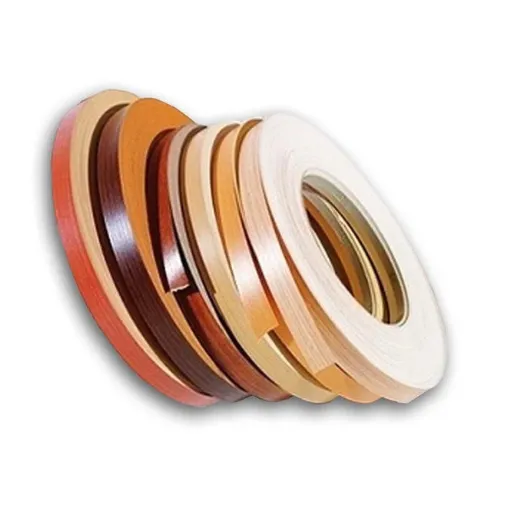
Raw Materials Used in PVC Edgebanding
In the production process of the PVC edge banding, the primary raw material is PVC or polyvinyl chloride. One of the most commonly used thermoplastic polymer, it has been praised for toughening and resistance to chemicals among other qualities. Polyvinyl chloride ring and other compounds containing chlorine allow for polymer development with the use of appropriate stabilizers. In modern requirements, those are mainly calcium and zinc-based, which do not break down the PVC during processing or affect its strength and exposure time. At the same time, plasticisers are usually enriched to produce better edgebands as they help in bending the material to different lengths and shapes.
Compounds such as calcium carbonate are added to ensure, among others, the density, hardness and economy of the product. Such ingredients guarantee the formation of the product without altering its other characteristics. Moreover, pigments and colorants are equally important for allowing PVC Edge Banding for furniture to be seamlessly integrated into the design options given, making it possible to blend in with the latest trends in furniture interiors. To achieve this, the suitable pigments have to be selected that are conducive to resistance against ultraviolet rays and are resistant to fading which becomes essential for outdoor use and in moist conditions.
Impact modifiers enhance the material’s ability to withstand mechanical stress, thus enhancing durability. Processing aids serve to make extrusion or calendaring activities in the workshop smooth and produce ionizing radiation in files of uniform thickness and quality. Similarly, PVC Edge Banding formulations save the chemicals with use of lead/zinc and other phthalates which are non-focus according to regulatory standards like REACH, RoHS etc. It is for this very reason that adequate raw materials are mixed to composite PVC Edge Banding which makes it suitable for multifunctional use both in the industry and at home.
Quality Control in PVC Edge Banding Manufacturing
To produce high quality PVC edge banding, a manufacturer must adhere to the process of quality control which ensures a certain level of performance, longevity, and aesthetics of the product. This consists of three overlapping layers of raw materials checking, processes monitoring, and inspections after production. In this phase, the corresponding raw materials, such as natural resin PVC, some stabilizers and colors are checked in within any purity, uniformity, or the regulation enforcement. Any flaw at this stage affects the quality of the end product in question.
Monitoring processes takes advantage of latest technology such as sensors in real-time and equipment with automated systems to control various aspects of the processes which may include managing the temperature or pressure as well as the speed of extrusion. For instance, extruding material at a specific temperature of around 356°F – 392°F (180°C – 200°C) helps in fusing the material and providing its surface free of defects. Also thickness is always checked and maintained to customer requirements as per various standards and shall not exceed the tolerances of plus or minus 0.1 mm.
In a post production stage, testing is another important element which may include very keen assessment of how accurate the dimensions are, or how the color stability has been maintained, or even its functionality upon impact. Such test methods as burnishing resistance and UV aging helped to reproduce conditions closer to reality, which is a rewarding practice for product durability over time. Critical performance requirements ( e.g. minimum impact energy as per ISO 180/1A limits of 10 kJ/m to 10 kJ/m2) are appropriated in view of standards to achieve the prescribed performance levels of the given quality grade.
By integrating advanced machinery, robust statistical process controls, and compliance with international standards, manufacturers are able to deliver PVC edge banding that meets diverse customer demands while optimizing production efficiency and minimizing defects.
Application Techniques for PVC Edge Banding
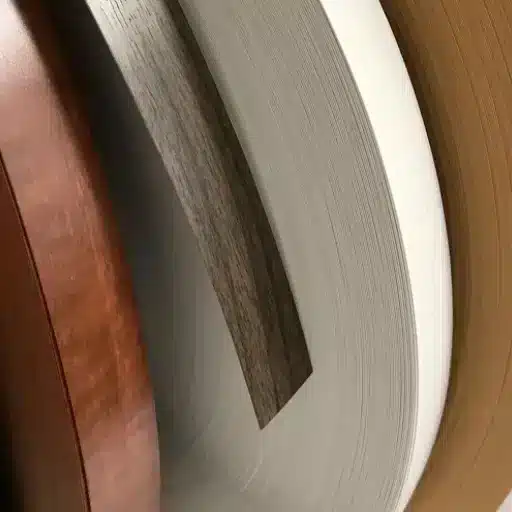
Choosing the Right Adhesive for PVC Edge Banding
There are a number of factors that I take into account when choosing an adhesive for PVC Edge Banding, all of which are necessary to get a strong and lasting hold. First of all, the substrate material is important because that affects what type of adhesive should be used and how strong it is. For example, porous materials such as particleboard or MDF tend to require hot-melt types that are more runny, whereas solvent based types are most beneficial for zones which are not porous for higher performance. The edge banding’s thickness and flexibility are also looked into to tune the application process for minimum hassle of untidy work and bonding.
I begin by assessing the conditions I expect the edge banding to be used in. The temperature-resistance properties are the most important because there will be instances where the product may be subjected to abnormal hot or cold temperatures. Polyurethane (PUR) hot melts are the preferred choice because of their high thermal and moisture resilience. In most interior applications, EVA hot melts are the cheapest and perform well enough. Also, the adhesive selection should coincide with the specification or certification of the industry in DLC format עצisons.
Lastly, I also choose the right adhesive for that particular edge banding machinery and system in use. For example: certain adhesives are more effective in high-speed automated systems; whereas others are meant only for manual work. Weighting these factors and applying an appropriate level of quality control, I am able to provide not simply integrity of joint connection itself but also aesthetically pleasing edge which also contributes to general strength and the aesthetics of the end product. This is all key in the selection of appropriate adhesives which addresses not only the available options but the cost and operating conditions.
Step-by-Step Guide to Applying PVC Edge Banding
- Surface Preparation: Select the proper PVC edge banding and appropriate adhesive for your particular use. Be sure to clean and dry the substrate surface and remove any dust, oil or other materials since any contamination reduces the adhesive strength. Wipe the surface with a lint-free towel, lightly roughen the edges with a sandpaper to improve adhesion. Good preparations minimize chances of poor bonding as well as extend the life of the final product.
- Trimming and Cutting the Edge Banding: Take measurements of the edges to be covered with a band, then slightly over cut a piece of PVC edge banding. The edges will be cleanly cut back after the performance is finished and precisely matched as will be any other elements or off cuts.
- Adhesive Application: Apply the glue uniformly along the surface edge taking care to make it reasonably uniform for effective glue application. If your edge band uses pre glued edge banding with a hot melt glue system then make sure that the glue film is still present and fit for application. Regulate the amount of adhesive that is dispensed and the extent of its application to prevent wastage in the form of excess leakage.
- Heat Activation Technology in Pre Glued Banding: In the case of edge banding pre glued, heat gun, edge banding machine, or household iron can be used as tools to make the glue work. Keep the temperature within the required range (usually 320°F – 400°F, in accordance with the adhesive used) and apply the impact on the entire width of the band in order to ensure adherence.
- Application of the Banding in Manual or Automatic Mode: Affix the PVC edge covering to the trimmed edge of the material and make sure it is, extending from the start of the edge to the finish of the edge. In the case of manual application, press the banding firmly using a roller or a block to remove air pockets and provide proper adhesion. In automated machines, even the machine settings are adjusted depending on the thickness of the PVC material, the type of adhesive to be used and the settings of the machine in the case of picture frames. Adjustment of the image is aimed at attaining a meaningful result.
- Checking and cooling of bonding: Give the adhesive ample time to cool then bond permanently. At this point, inspect the edge for any faults such as gaps, bubbles, or offsets present at the seam. These must be corrected while the adhesive is still fresh.
- Trimming and Final Steps: Trim away the excess banding using an edge banding trimmer or a sharp knife. Take care not to damage the surface by any means and use sharp instruments. Run fine sand paper or edges scrapers around the edges for a neat finish.
- Review and repair process: Make sure you accurately check at the end that the varnish edge banding is smooth and even. A color marker may come in handy to hide any joints or scratches that might be observed. Investing effort to this level allows for the enhancement of other characteristics of the finished product.
With the help of this exhaustive manual, it is quite possible to level and enhance the standard of any task subjected to PVC edge banding regardless of the scope or specifications involved.
Common Mistakes When Applying PVC Edge Banding
- Failure to Achieve Adequate Bond Surface Preparation: A common mistake relies on applying edge banding without adequately preparing the substrate surface first. Presence of, dirt unwanted chemicals or defects (unevenness) on the surface may hinder the adhesion process, which as a result causes bond failure or loss after some time. Minimize such risks by keeping the surface clean and supporting both an even and dry surface properly.
- Wrong Coverage and Adhesive Use: A wrong amount of adhesive application causes failure in edge banding application. Under or over application of adhesive causes vigorous ‘bleeding’, smearing the places which are being edge banded and in some places; this very same process of under application causes very poor bonding. Therefore, apply the recommended adhesive in the right manner, thickness and measure.
- Improper Trimming or Overhang Management: One common problem that is likely to occur after edge banding is noted to be rough edges which arise due to poor alignment and unsightly overhang. A well-finished surface uses high precision trimmers which contain no rough edges. This step cannot be skipped to ensure that all elements function as intended, and also look as intended.
- Not Adjusting Temperatures: Compared to the usual bonding procedure, installation of PVC edge banding uses their adhesive layer which needs altering the working temperature. When the temperature is set too high, the PVC may deform and burn; if it is not high enough, the temperature does not activate the glue sufficiently. To manage this better, always change the temperature according to the edge banding and adhesive used.
- Omitting the Final Touches After Application: Neglecting the completion and inspection of work may cause certain minor omissions to remain, such as joints and burrs as well as discoloration. Such aspects spoil the look and wear tendencies of the edge banding effort. The benefit of ending all the labor is even and smooth edges.
- Using Inferior Materials or Implements: The use of poor quality PVC edge banding, glues or tools in most cases translates into poor results. Cheap materials are likely to have problems over time in terms of hardness, bend ability or color retention and on the other hand deficient tools make it impossible to work accurately. To attain the desired results which are durable and aesthetically pleasing, proper protective and commercial equipment and materials should be employed in all applications.
Such common errors can be avoided with good co-ordination and precision and gives high quality PVC edge banding designs which are durable. There is no doubt that there is every possibility that the given proper measures have been ensured and undertaken in the process of carrying out the work, the end product as a result of the design will not only meet the purpose but also exceed the expectations.
Market Trends in Edge Banding
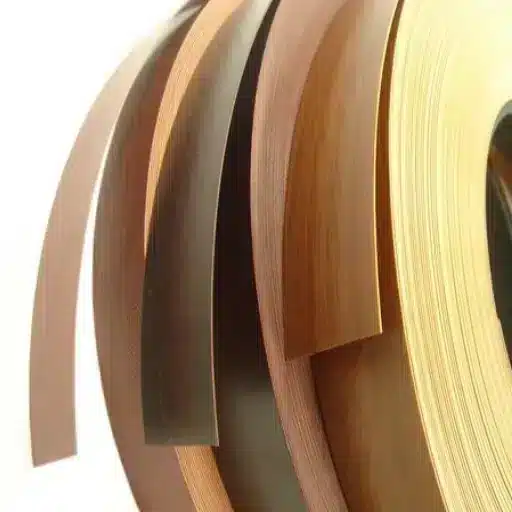
Current Trends in PVC Edgebanding
The PVC Edge Banding market has been experiencing transformation as it is pertinent to the changes that technology provides coupled with the ageless nature of humanity and their preferences. A key notable pattern in the market changes is the increase in the demand for “Green Products.” In particular, more and more manufacturers choose to manufacture their products from elements that are recyclable and have a Low Emission to comply with the ‘green’ missions in the society which has seen new born high conscientious consumers.
Besides, the sector is kendely transformed by existing technological solutions. For instance, the use of laser and hot air features in the edgebonding process enhances the art of bonding by removing the issue of visible glue lines having surfaces perfect finish. Such developments result in aesthetic benefits as well as enhanced efficiency while minimizing wastage of resources and minimizing the time required for production.
More and more consumers are demanding personalization and variety in design. Particularly, users prefer edgebands that come in multiple colors, textures and designs more to their satisfaction of modern furniture than the available options. As a result, there is the widespread application of PVC Edge Banding with digital prints with high definition, looking like real wood or stones.
In conclusion, the enhancement of automation and intelligent manufacturing techniques in production facilities is helping in optimizing the supply chains which are helping in reducing the costs of production. All these reveal the market trends which optimize the innovation, aesthetic quality, the environment and costs to adhere to the needs of industries and the consumers.
Impact of Sustainable Practices on Edge Banding Materials
Edge banding materials manufacturers have been instrumental in fostering sustainability. Such promotion is witnessed in various aspects of production, precisely, the fabrication or structuring and constituents used as raw materials. This is a system that enables manufacturers to minimize, recycle and sieve all waste materials, embrace the carbon policies as well as to provide products that are in line with the eco-friendly consumer’s outline. The impact of such practices on edge banding materials can be categorized into five key areas:
- Application of Reclaimed Content: Present day edge banding incorporates both post-consumer and post-industrial content to minimise the usage of virgin fiber. Indeed, production procedures now involve recycling of PVC Edge Banding or even ABS material more than in the past days; this in turn actively curtails manufacturing outputs.
- Control of VOCs (Volatile Organic Compounds) usage: Better countries encourage use of adhesives and coatings that have no or very low VOCs. This reduces toxic gases, helping to meet standards for the environment and makes the atmosphere in the buildings more comfortable for users.
- Manufacturing Processes with Energy Savings: Creative ways like extruders running on alternative energy sources are being used to improve the efficiency of several production processes. They help to reduce the amount of energy used with search claims of who manufacturers that can reduce energy usage by about 30 percent.
- More Strong Environmental Materials: Development of edge banding that is biodegradable, for example, that is based on natural fibers, or polymers from biomaterial is increasing. Such products can be easily dispersed at the end of its useful life and able to stagger the waste in the landfills over a long period.
- Sustainable Sourcing and Eco Certifications: The businesses assurance of certified sustainable sources for raw materials for the sake of thriving example wood with Forest Stewardship Council certification assures the stakeholder’s environmentally friendly practices. Further to it being up to set laws, it also strengthens customer perception of the brand by targeting green consumers.
The incorporation of such sustainable practices in the manufacturing of edge banding material underscores the industry’s dedication to global sustainability goals without losing all the principal elements of quality, functionality and beauty.
Future Projections for the Edge Banding Market
Plotting the coming years with steady growth of the global edge banding market is feasible where such expectation is grounded on demand for premium furniture, advancements in edge banding technology as well as the green cause. A prediction done by the industry points at an increasing market size at a given compound annual growth rate (CAGR) indicating increment in the level of global investments both in residential and commercial building and construction. The Asia-Pacific region, which is of strategic importance to this growth, is expected to be dominated by the emerging markets of the Asia Pacific, which is associated with rapid urbanization, a growing middle class, and real estate development that is happening at a fast rate.
It is possible that the increasing use benefits of zero-joint technologies, for example, laser edge banding and improvements, may gain momentum as manufacturers as also those in construction invest in accuracy and beauty enhancement. At the same time, market development processes will be largely assisted by the modernization of product materials, such as using bio-based adhesives and polymers that are recyclable, to shore up against tougher environmental policies, while fostering eco-friendly products in the face of growing consumer market demand.
E-commerce development is also another aspect of consideration for the likely growth in the future as the businesses that deal in edge banding have benefited a great deal. Such demand arises from an increased availability in ready to assemble furniture products sold from online retail platforms. Sales of finished furniture that requires fully functional and appealing edge banding materials is set to soar. In connection with the digitization of production, the industry is highly anticipated in terms of how it will address the changing customer needs and preferences. This provides the global edge banding market with a buoyant view, come what may, with the changes in manufacturing and furniture industries.
Sustainability Concerns with PVC Edge Banding
Environmental Impact of PVC Production
An erector in polyvinyl chloride (PVC) entails an economic degradation that is protective of the environment, due to the high energy intensity of the production techniques used and the literary dependence on raw materials. The chlorine and ethylene, which is most frequently available in oil or gas, results in PVC. Energy consumption during the production of the process is high, resulting in a release of a lot of greenhouse gases, specifically emissions of CO2 that causes warming of the atmosphere. Moreover, PVC production also entails the creation of certain deleterious waste materials such as dioxins and vinyl chloride monomer which are carcinogenic and highly harmful for the healthy existence of workers and communities around the plant.
Moreover, it is as well admitted that their degradation into alumina has nothing communal with the process of treating with alkali squirted on the soil. Plastic is designed to last — in many parts of the world, it is largely inefficient to shred plastic because it is cheaper to transport most of the plastic to the closest landfill, where it will again sit for big periods of time, all the while potentially comforting toxic contents into the soil and water. Also there is the technical problem of recycling PVC got complicated as it means to separate any added additives for processing method of produced PVC.
Many enhanced and fast-growing plant-based acetonitrile is used in the making of certain band designs That is a very serious issue from a health point of view, as barbed wires and sharp corners are dangerous when children or other people are playing on the playground. This mainly involves active promotion of eco efficient measures and searching for or composition of alternative materials with similar properties and characteristics mainly glue although not necessarily include bio plastics or secondary materials. There is, however, counteract measure such as enforcement of t regulation and development in production policies, which would bring down plastic usage of such a product as PVC.
Recycling and Disposal of PVC Edge Banding
Complicated chemical structure and added ingredients complicate the process of recycling PVC edge banding. We should admit that it does make sense to use this and certain other traditional mechanical recycling methods as the quality of the material degrades every cycle there is a point in mind though where such deformation rather than the usefulness of the material itself limits its applications. Moreover, recycling compromised with adhesives or any other composite material is impossible leading to it clogging certain specialized equipment already fitted with clean materials.
There is an interesting technique which is called chemical recycling and it refers to reprocessing of PVC into its chemical constituents to be used in other constructions. But even the chemical recycling is such a hard and energy consuming process, discharge of possible byproducts will have to be much more strictly regulated. At the present time efforts are under way to overcome both of these challenges by researching new developments, including pyrolysis and pretreatment of plastics or its constituents with the view of enhancing the viability of such a recycling strategy.
The decomposition of PVC edge banding is not recommended especially through incineration despite the use of specially equipped units which aim to prevent the emissions of harmful gases, for example, dioxins and chlorine gas as in the event of combustion of PVC. The burning of dioxins and chlorine gas which are the natural outgrowth of PVC burning cannot burn in the atmosphere hence they have to be denatured prior to their release. The most commonly used disposal method is landfills however, there are a variety of reasons why it should be discouraged. This is because PVC by its very nature will not decompose and worse still, in the case of a landfill, the chemicals and materials will eventually leak into the water and soil consequently contaminating it.
In enhancing the well-being of PVC Edge Banding, the ultimate goal of manufacturers and governments is to institute all mechanisms that facilitate the collection, recycling, and reusing of PVC waste in} cyclic technology processes. It will also be important to develop new methods for the production of edge banding materials, considering the changing materials in terms of PVC composition, as well as the possibility of producing recyclable or biodegradable materials that is possible to throw away without damaging the environment.
Alternatives to PVC: Exploring Eco-Friendly Options
The interest in creating PVC alternatives for edge banding has seen a considerable surge owing to environmental preservation responsibilities and the expectation to adhere to responsible practice. Perhaps the most hopeful of such alternatives is Polypropylene (PP), due to its ability to provide strength and workability even under wet conditions like PVC edge banding without containing any chlorine which is harmful. Furthermore, the weight of PP is low and can be recycled completely, making it more environmentally friendly.
Also suited for the same purpose, are Thermoplastic Elastomers (TPE), which presents the elasticity attributed to elastomers and thermoplastic materials which are generally easy to recycle. TPE is a poly fno avail, however. which has soft and hard segments, giving it excellent mechanical properties, low toxicity, and more recyclability, which allows them to be use in edge banding too. in addition from the wood looking edge banding materials veneer strips can also be used for this purpose as well. They are usually obtained from ecological wood and can undergo added protection.
Biopolymers are seen as replacements for plastic materials such as PVC with polylactic acid (PLA) and polyhydroxyalkanoates (PHAs). They are biodegradable as they break down under specific heat conditions known as industrial composting conditions thus there is less waste disposal unlike plastics. Studies on these materials as well as their life cycle analysis entails investigation to their potentials in clean production and sustainable economy.
Appropriate policy, in capable with production and market systems which demand new products, materials and processes involves among others – development of such new materials and infrastructure. These measures aim at making such systems, in particular production processes, using such materials, pvc edge banding, available efficient and effective.
References
-
Wikipedia – Edge Banding: This page provides a comprehensive overview of edge banding, including its applications and materials like PVC.
- Click here to read more.
Frequently Asked Questions (FAQ)
Q: Explain PVC Edge Banding and wood veneer edgebanding. How do they differ in comparison?
A: The purpose of a PVC Edge Band is to deal with fixed edges of panels for instance plywood, MDF, laminate, etc. Wood veneer edgebanding is thin and therefore keeps the look of a natural wood grain and it also allows for sanding or staining unlike PVC which is tough, waterproof and usually more colorful and patterned even to the extent of wood grain designs or even Wilsonart or Formica designs.
Q: Is there a wide range of options with PVC edge banding when it comes to pre-glued versus stick on? Which is the easiest way to put them on?
A: PVC Edge Banding is principally offered in two versions: pre-glued (or edge banding) that is pre-glued for an adhesive layer that is activated upon heating and peel and stick or fast sticking tape having an adhesive film. Pre-glued edges generally last much longer as they are designed to be applied by an edgebander or a hot iron. On the other hand, peel and stick edges are much easier to incorporate into one’s DIY plans. Both have their own specific use case edges; the pre-glued one makes the endeavor a lot more proficiently applied for the professionalism, and on the other hand, peel and stick sticks on due to the simplicity involved.
Q: What sizes do PVC edge banding come in, and is it available for thick wood edges?
A: Different sizes may extend between 0.5 millimeters and 3interons in thickness, with common use of 2mm and 3mm for thick and visible edges. PVC Edge Banding is available – they can be cut into specific shapes as required (including utility knives, routers or even edge trimmers) to fit thick edge wood and plywood or laminated boards. For heavy duty and postform design applications such as woodblock laminate or a thick wood countertop edge, 3 mm PVC and other multilayer options are used instead.
Q: What is the suitability of flexible PVC edge banding in terms of its exposure in either high moisture or high friction zones?
A: Flexible PVC edge banding performs very well when used around water, or in areas that are commonly hit and rubbed against, such as in the kitchen, bathroom or in a very high user furniture. It is much better than melamine or timber veneer when used in such conditions; nonetheless, ensuring it is in place (heat bonded in case of pre-glued type or stuck properly in the case of peel and stick) is paramount supporting the enhanced effectiveness.
Q: Is it advisable to apply PVC edge band on plywood or MDF as an edge finish? How does that affect the surface’s finishing?
A: Indeed. PVC Edge Banding bonds effectively, providing a smooth edge finishing on plywood and MDF, concealing the core of the panel against moisture and surface chipping. With proper application, the edge band bridges the laminate to the edge of the panel, enhancing the appearance with a choice of wood edge band pattern, maple edge finish, or modern plain colors.
Question: How to professionally attach pre-glued PVC edge banding?anks and their proper usage in order to obtain a satisfactory result?
A: The most essential items required for the application of pre-glued PVC Edge Banding would include an iron or heat gun, an edge trimmer, a flush cut router bit or a chisel, and a piece of fine grit sandpaper. The procedure involves four steps. First, clean the surface. Then it’s necessary to activate the glue by heating up the edgeband and keeping it in position. Next, any excessive portion should be removed with the help of the trimmer or the router to ensure that there is no height difference. Finally, use the sandpaper – work the edges. As a result of this, a smooth and clean appearance can be achieved which is typical of any edge banding application.
Q: Are available different types of PVC edge bandings such as a walnut or a veneer edge bandings for example in furniture?
A: Certainly. In this case, specialty items which are available are the veneer edge banding which looks like the real wood veneer, the maple edge banding when one wants the grain of the wood to appear, and the wood grain PVC for furniture harmony. Those who love the feel of real wood, however, will have to resort to the melamine edge banding or the wood veneer edgebanding. This way assures the possibility of making the appropriate finishes on cabinets, casegoods and countertops.
Q: How can I make a good selection of the edge banding available?
A: Consider the surface material (plywood, MDF, or laminate), the required thickness (2mm and 3mm), the type (wood grain, solid color, or Formica and Wilsonart matches), the fixing mechanism (pre-glued, peel off, or cold UV glue), and the desired performance (resistance to moisture, conformity to curved shapes). Think about how it integrates visually; fit maple or wood edge banding for designs focused on wood and focus on ease of fitting and longevity over efficiency.