
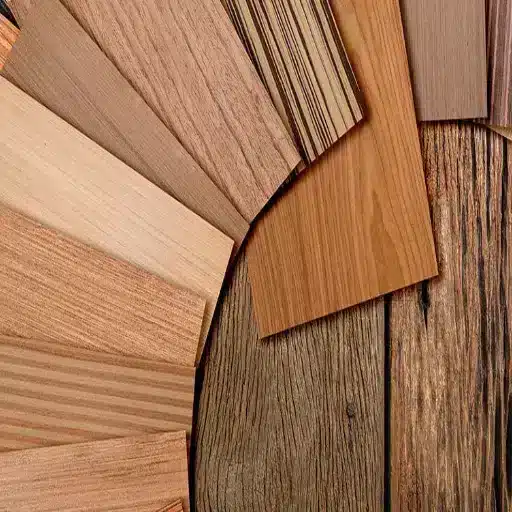
Wood Veneer: A Sustainable Guide to Types, Grades & Choosing the Right Sheet for Your Project
One log can produce enough wood veneer to cover twenty to forty times more surface area than traditional solid lumber. The statement does not function as a promotional assertion. Architectural design now depends on a fundamental scientific principle together with a forestry operational fact to define interior space aesthetics.
People who experience walnut wall panels and oak cabinets firsthand immediately realize wood veneer provides an effective solution to their design needs. The process requires you to determine which particular type, grade, and backing will suit your project needs.
The guide provides a complete explanation of wood veneer, which shows its environmental benefits to modern surfacing materials and helps you select the ideal sheet for your upcoming construction project. The tutorial will explain various cuts and grades and backing choices and show how veneer differs from solid wood in practical applications. You will acquire the ability to create specifications that achieve aesthetic goals while delivering operational efficiency and environmental protection by completing this course.
Maria Torres, a sustainable interior designer in Austin, first specified wood veneer for a commercial office lobby, but her client pushed back. The client requested authentic wood material. Maria presented them with the data. The veneer panels they chose used less than three percent of the timber required for an equivalent solid wood installation. The project received LEED certification points, stayed within budget limits, and the client uses the panels to demonstrate their sustainability efforts to all incoming guests.
What Is Wood Veneer?
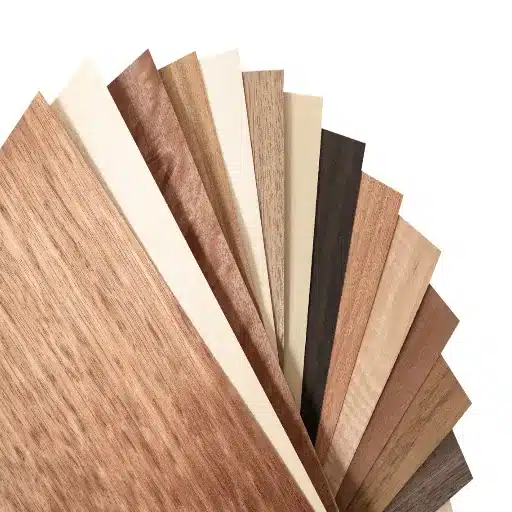
Wood veneer represents a thin hardwood slice that measures between 1/40 inch and 1/64 inch and adheres to plywood, medium-density fiberboard or particleboard. It delivers the authentic appearance, grain, and warmth of solid wood while using a fraction of the raw material.
Veneer is not a synthetic imitation. It is real wood. The difference exists because different methods enable different levels of wood utilization. Instead of milling a solid plank from a log, manufacturers slice or peel ultra-thin sheets from the same timber. The sheets receive an application onto an engineered core, which supplies dimensional stability and strength.
This approach has been used in fine furniture and architectural millwork for centuries. The combination of advanced adhesives, precise cutting methods, and environmentally friendly sourcing techniques has made wood veneer an increasingly popular choice for residential kitchens and corporate headquarters.
Why Wood Veneer Is a Sustainable Choice
Sustainability in construction and design goes beyond acquiring certified building standards. The process requires companies to create maximum value through their waste management system. The wood veneer material produces exceptional performance in both evaluation criteria.
Forest Conservation Through Efficiency
The production of veneer sheets enables the processing of logs into usable material at higher rates than traditional solid lumber milling methods. The current state of modern veneer production achieves an operational success rate between 85 and 90 percent, whereas traditional sawmills operate with 25 percent waste material. The same visual effect requires fewer trees to be cut down.
The process becomes critical when dealing with rare and exotic plant species. Designers use veneer to create burl walnut and zebrawood visual effects, which extend throughout the entire space while preserving their precious wood resources.
Lower Carbon Footprint
Lifecycle assessments show that environmentally sustainable wood veneer production results in 40 to 70 percent lower carbon emissions than solid wood manufacturing. The reasons are straightforward. The forest loses fewer materials through harvesting. The milling process and wood drying process need less energy. Transportation emissions decrease because veneer products weigh less and take up less space.
Certifications Matter
The environmental impact of veneer products varies by type. The most sustainable options carry third-party certifications such as:
- FSC (Forest Stewardship Council): The organization guarantees that wood products originate from forests that professional operators manage according to responsible forest operations.
- PEFC (Programme for the Endorsement of Forest Certification): The organization establishes sustainable forest management standards, which independent auditors must verify through their assessment procedures.
- CARB Compliance: The regulation restricts the amount of formaldehyde that adhesives and substrate materials can emit into the environment.
- Low-VOC or LEED/WELL Certified: The certification demonstrates that products maintain safe indoor air standards while using environmentally friendly manufacturing methods.
When you choose certified sustainable wood veneer, you are not just buying a surface material. The purchase supports a supply chain that focuses on reforestation efforts, biodiversity protection, and ethical labor methods.
Want to learn more about how we source our materials? Explore our commitment to sustainable wood sourcing and see how every order supports responsible forestry.
Types of Wood Veneer Explained

People who work with wood need to understand different types of wood veneer because this knowledge enables them to select appropriate materials for specific uses. Veneers are typically categorized by how they are cut from the log, what backing they carry, and whether they are natural or engineered.
By the Cut and Slicing Method
The method of log slicing determines the wood veneer grain pattern and visual appearance, and the production expenses of your selected wood veneer types.
Rotary Cut
The log is mounted on a lathe and peeled in a continuous sheet, similar to unrolling a paper towel. This method generates wide circular grain patterns, which produce materials at a reduced production expense. Plywood manufacturers and big commercial enterprises utilize rotary cut veneer to create plywood surfaces that require striking visual effects.
Plain Sliced (Flat Cut)
The log is sliced parallel to its center, creating the classic “cathedral” grain pattern with straighter grain at the edges. This cut stands as the top choice for creating premium furniture pieces and architectural paneling because it perfectly resembles authentic wood.
Quarter Sliced
The log is divided into four sections, through which workers cut the growth rings. The result is tight, straight, parallel lines. Oak wood reveals unique flecking patterns through this cutting method. Designers who create contemporary minimalist styles consider quarter-sliced veneer to be the most valuable material.
Rift Cut
Rift cut veneer uses a special slicing technique that creates perfectly straight grain patterns, which show minimal flecking. The design community uses this product as their primary material for building upscale modern spaces, which demand complete pattern consistency.
Half-Round
This cut produces wider leaves, which show a combination of bold and refined grain patterns because it exists between rotary and plain sliced cutting methods. The treatment applies to smaller logs and burls and special figured species like Bird’s Eye Maple.
Backing Material Types
Backing material provides three essential benefits, which include improved stability, enhanced strength, and simplified installation. Your choice should depend on the characteristics of your substrate material and the requirements of your project.
Raw Veneer
Raw veneer exists as the purest material, which requires no backing. Raw veneer stands as the most genuine material, which requires sufficient thickness for sanding and refinishing. The material breaks apart easily, which needs vacuum press or contact cement to achieve proper bonding. The material suits only skilled craftspersons.
Paper-Backed Veneer
The veneer sheet receives a paper backing, which creates a thin layer. This treatment increases resistance to tearing while making the sheet more manageable for handling on extended flat surfaces and gentle curved sections. The material serves as an ideal solution for cabinet refacing and wall paneling installation.
PSA (Peel-and-Stick) Veneer
The back of the product contains pre-applied pressure-sensitive adhesive, which remains covered by a release paper. Users can complete the task by discovering the simple method, which involves peeling the product and applying it with pressure. This product stands as the simplest choice for non-professional users who need to handle minor repair tasks. The product requires replacement in areas with high levels of moisture.
Phenolic-Backed Veneer
The backing material consists of resin-impregnated paper, which creates a rigid sheet that withstands pressure in commercial areas and between countertops and moisture-sensitive locations.
Mesh-Backed Veneer
Woven fiberglass or polyester mesh provides superior flexibility and strength. The backing material serves as the ideal solution for wrapping around columns, curved furniture, and complex architectural designs.
Natural vs. Reconstituted Veneer
Natural Veneer is sliced directly from the log. The material maintains its original grain patterns together with its natural color changes and its authentic organic features. The material functions as real hardwood, which allows for sanding and refinishing operations throughout its lifespan.
Reconstituted wood veneer, also called engineered veneer, is manufactured from fast-growing wood fibers that are dyed, layered, and re-sliced to mimic rare or exotic species. The product provides stable color results together with expected grain patterns and reduced environmental impact. Organizations that need to maintain visual consistency throughout multiple panels should choose reconstituted veneer as their most effective material solution.
Understanding Wood Veneer Grades

Veneer grades tell you what to expect in terms of appearance, allowable defects, and cost. The most common system in North America is the WDMA letter-grade standard, used widely for architectural doors, panels, and custom millwork.
WDMA Letter Grades
AA (Premium)
The highest quality available. AA grade veneer has minimal to no defects with strict control over color and grain consistency. The material is used in luxury interior spaces, executive offices, and courthouses, and any situation where wooden surfaces need to function as the main visual element.
A (Custom)
The default architectural door grade for many buildings exists at this excellent quality level. A grade delivers strong aesthetic value at a price that costs less than AA. The material works best for visible cabinetry, furniture,, and decorative millwork elements.
B (Standard)
The material maintains good quality but shows minor natural imperfections, which include small knots, slight color variation, and pinholes. B grade works well for sides and backs of furniture, budget-conscious cabinetry, and rustic wall paneling.
C (Utility)
The material shows visible defects, which include larger knots, splits, and discoloration. C grade is suitable for structural components, shelving cabinet backs, and any surface that will be painted or hidden from view.
D (Commercial/Utility)
The material contains multiple significant defects, which include flaws, patches, and inconsistencies. The material gets used in areas that need to remain hidden, plus for unfinished work and paint-grade applications.
Width Standards
The WDMA also specifies minimum leaf widths to ensure consistency:
- Rift and Quarter-Cut: Minimum 3 inches for both AA and A grades.
- Plain-Sliced and Rotary-Cut: Minimum 5 inches for AA grade; 4 inches for A grade.
Choosing the right grade is about matching expectations to application. A lobby wall deserves AA. The inside of a closet is perfectly fine with C.
For a deeper look at how these grades affect pricing and performance, check out our dedicated guide to wood veneer grades.
Wood Veneer vs Solid Wood: How to Decide
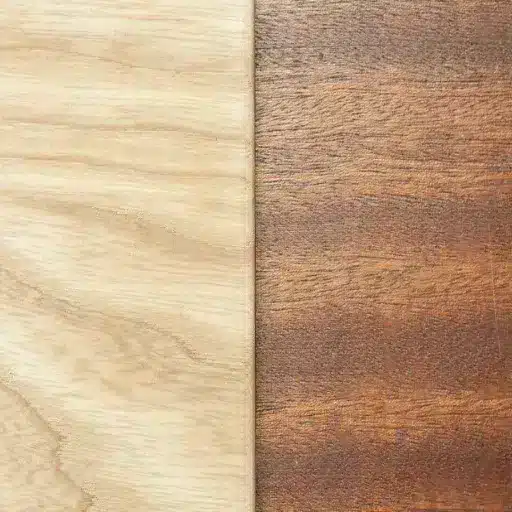
There is no universally “better” material in the wood veneer vs solid wood debate. The right choice depends on your project’s lifespan, performance requirements, budget, and sustainability goals.
Durability and Lifespan
High-quality solid wood furniture can last 50 to 100 years or more. The material allows for multiple sanding, refinishing, and repair processes. The longevity of veneer furniture ranges from 5 to 20 years based on its quality and maintenance. The repair process becomes challenging when deep scratches or water damage affect the thin surface layer because it requires complete panel replacement.
Stability and Climate Performance
Veneer bonded to an engineered core provides better dimensional stability than solid wood. The material maintains its shape under humid conditions and temperature changes because it resists all three forms of damage. Solid wood requires stable environmental conditions and proper surface finishing because of its high durability to avoid cracking and swelling.
Environmental Impact
Solid wood contains no engineered substrates or synthetic adhesives. The material becomes fully biodegradable after it reaches the end of its life cycle. The negative environmental effects of manufacturing veneer products decrease because they require less wood and create fewer emissions during production. The choice between veneer and solid wood depends on your preference for immediate environmental effects combined with material efficiency versus extended product lifespan with complete reuse capabilities.
Cost
Veneer provides lower costs than solid wood for extensive surface applications because it requires less expensive materials, which include exotic wood species. Heirloom items become more affordable through solid wood because it requires a more expensive initial investment, yet allows for multiple refinishing sessions, which decrease total ownership costs.
Quick Comparison
| Factor | Wood Veneer | Solid Wood |
|---|---|---|
| Material efficiency | 20-40x more coverage per log | Lower yield per log |
| Upfront cost | Lower for large surfaces | Higher |
| Lifespan | 5-20 years typical | 50-100+ years |
| Refinishing | Limited or none | Multiple times |
| Stability | High (engineered core) | Requires climate control |
| Biodegradability | Depends on substrate and adhesive | Fully biodegradable |
| Best for | Panels, cabinetry, large surfaces | Heirloom furniture, long-term investment |
When James Chen, a commercial contractor in Seattle, was selecting materials for a 12-story office building, solid wood was simply not practical for the thousands of square feet of wall paneling required. He specified FSC-certified plain-sliced walnut veneer on an MDF core. The installation came in on budget, the panels have held up beautifully through three humid summers, and the building achieved its green certification targets.
How to Choose Wood Veneer for Your Project
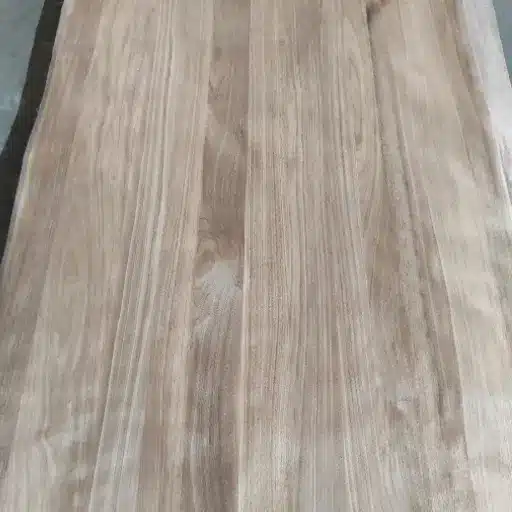
Selecting the right veneer does not have to feel overwhelming. Follow this step-by-step framework to make a confident specification.
Step 1: Define the Application
Begin with fundamental elements. Will the veneer be used for cabinetry, wall paneling, furniture, or curved architectural details? Is the location interior or exterior? The area will experience high traffic, moisture contact, and direct sunlight exposure.
High-traffic spaces require desks and restaurant tables to use durable materials, which include white oak, hard maple, and wenge. Decorative accents and low-impact furniture should use soft species materials, which include pine and alder.
Step 2: Match the Species to the Environment
High-Traffic Areas: Choose white oak, hard maple, ash, or wenge.
Moisture-Prone Spaces: White oak, teak, and mahogany perform well with proper sealing. Red oak should be avoided because its open pores enable moisture retention.
Sunlit Rooms: Cherry and walnut age gracefully, developing a rich patina over time. UV-resistant finishes must be applied at all times.
Painted Finishes: Maple, birch, or MDF-backed veneers provide the smoothest surface.
Step 3: Select the Right Grade
Match the grade to the visibility of the surface. Specify AA or A for show surfaces. Use B for sides and interiors. Reserve C and D for hidden structural areas or paint-grade work.
Step 4: Pick the Backing and Substrate
For flat panels and beginners, paper-backed veneer is forgiving and stable. For curves and complex shapes, choose mesh-backed. For high-moisture or commercial wear, specify phenolic-backed. For quick DIY projects, PSA veneer offers the simplest installation.
Your substrate matters too. MDF core provides a smooth, uniform surface ideal for veneer. Veneer core plywood offers superior strength and screw holding. Particleboard is cost-effective for large production runs.
Step 5: Plan the Matching Technique
How individual veneer leaves are arranged creates the final visual effect:
Book-Matching: Alternating leaves are flipped like open book pages, creating a symmetrical, mirrored pattern. Stunning for statement walls and tabletops.
Slip-Matching: Leaves are laid side by side in the same orientation. This produces a repeating, uniform grain ideal for seamless, consistent coverage.
Random Match: Leaves are placed in random order for a casual, rustic appearance similar to natural lumber.
If your project calls for a unique combination of species, cuts, and finishes, our custom wood solutions team can help you specify exactly the right product for your design vision.
Wood Veneer Installation and Finishing Best Practices
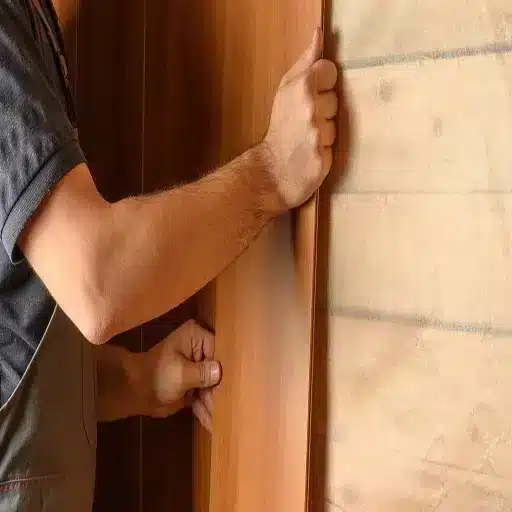
The best wood veneer will fail to meet its performance standards when the installation and finishing processes are not done correctly. The following best practices will enable you to achieve results that match professional standards.
Substrate Preparation
The surface beneath the wood veneer sheets must be smooth, clean, and flat. Use high-quality filler to fill all surface imperfections and sand the area until it becomes smooth. The thin veneer layer will make any surface bump or groove visible.
Adhesive Selection
- Contact cement: Traditional choice for raw wood veneer and large surfaces.
- Wood glue or PVA: Suitable for paper-backed and phenolic-backed veneers.
- Pressure-sensitive adhesive: Pre-applied on PSA veneer; simply peel and stick.
Pressing and Clamping
The vacuum press system establishes uniform pressure across all surfaces of both small and large curved components. For smaller projects, use a J-roller to eliminate air pockets and ensure full contact. You must use sufficient weight or clamps to create pressure while you wait for the material to complete its curing process.
Finishing
Your veneer requires a strong protective coating to safeguard it from damage.
- Polyurethane: Offers strong protection against both scratches and spills because it creates a highly durable finish. The water-based options create a clear finish that dries with minimal odor.
- Lacquer: The product achieves a fast drying time, which results in a hard, glossy finish that provides outstanding visual clarity. Best sprayed.
- Varnish: The product offers strong protection against water, heat, and ultraviolet rays. The product requires an extended time for curing, which results in a heavy protective layer.
- Oil Finishes (Tung or Linseed): The oil finishes penetrate wood surfaces to create an authentic appearance that has minimal shine. The wood finish is simple to fix, but it provides inadequate protection against water damage.
You should always perform a test of your finished product on either scrap material or an area that will not be visible to others. Certain coatings will cause unpredictable reactions with particular species that include oily exotics.
Conclusion
Wood veneer provides an exceptional blend of aesthetic appeal, practical performance, and environmentally friendly properties, which enables you to select the appropriate wood veneer material needed for your particular project requirements. The product enables you to achieve an authentic hardwood ambiance together with actual wood character while using only a small portion of the material needed for solid wood. The material becomes an environmentally responsible surfacing solution that architects, builders, and designers can use when they select materials from certified forests while using low-emission adhesives.
The following main points should be remembered as essential information:
- One log of veneer can cover 20 to 40 times more surface area than solid lumber.
- Choose your cut, grade, and backing based on the specific demands of your project.
- AA or A grade should be specified for visible surfaces, while B, C, or D grade materials should be applied to concealed areas.
- The species needs to match the environment because you should apply a finish that corresponds with expected usage patterns.
- To verify authentic sustainability, you should look for FSC, PEFC, and low-VOC certifications.
The appropriate wood veneer selection for your project enables you to create a single accent wall or select materials throughout your commercial building design.
Ready to explore sustainably sourced options for your next build? Contact our team today for a personalized quote and expert guidance on selecting the perfect veneer for your project.