
FSC Certified Wood Veneer Panels: A Specifier’s Guide for 2026
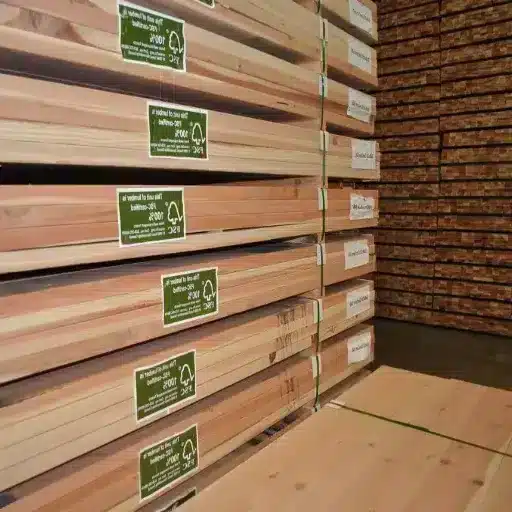
FSC certified wood veneer panels consist of thin sheets that combine actual wood with engineered substrates that include MDF and plywood, and these panels have received Forest Stewardship Council certification, which tracks their movement from forest to construction site. The products replicate the visual appeal of solid timber yet require 75 percent less base material, which makes them the preferred option for architects and builders who require both operational efficiency and sustainable proof through authorized documentation. Our complete guide to wood veneer panels provides detailed information about all panel types, their corresponding substrates, and their available sourcing options.
The worldwide wood veneer industry reached a market value of almost $5 billion, as research shows that 46 percent of imported veneers possess sustainability certification. Design and construction professionals encounter an opportunity, together with a challenge, because of this shift in the industry. What process do you use to select FSC certified wood veneer panels that ensure that the certification exists, the LEED review process will accept the documentation, and the material will function as expected during installation?
If you have ever tried to determine your certification needs after looking at a veneer sample with an FSC logo, you should know that. This guide provides detailed information about panel operation, certification label selection, and the initial documentation procedure.
Key Takeaways
- FSC certified wood veneer panels need 75% fewer raw materials than solid wood yet deliver identical visual warmth and performance.
- Four FSC labels exist: FSC 100%, FSC Mix, FSC Recycled, and FSC Controlled Wood. Each label requires unique documentation which affects project execution.
- The panels enable LEED credit achievement for MR 4.1, MR 4.2, MR 6, and EQ 4.4 once Chain of Custody documentation is finished.
- The typical FSC premium is 5 to 15 percent yet lifecycle cost analysis together with compliance value will usually balance out the initial cost difference.
- Always check a supplier’s FSC license code at info.fsc.org before selecting their product for use in a certified project.
What Are FSC Certified Wood Veneer Panels?
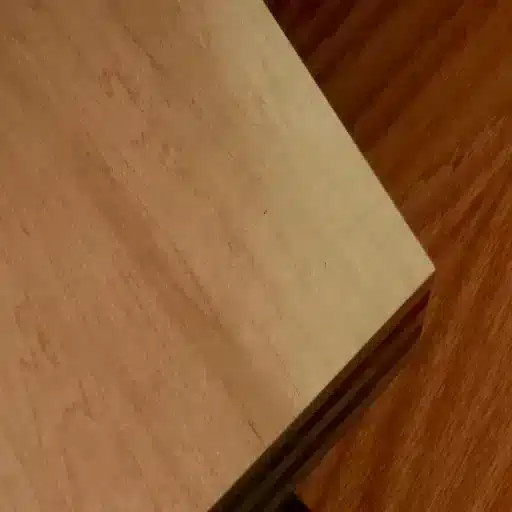
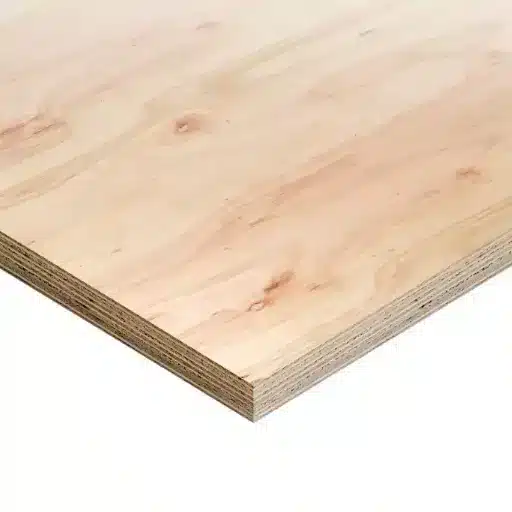
Wood veneer panels begin their existence as sheets that contain real wood at thicknesses between 0.3 mm and 0.6 mm, which woodworkers cut from logs through either slicing or peeling methods to create sheets that they attach to permanent substrates. The most common substrates used in this process include MDF and plywood and particleboard, and phenolic cores. The material creates a panel that resembles solid wood but provides better dimensional stability and utilizes materials more efficiently than solid wood.
FSC certification creates a verified system of accountability that organizations must follow. The Forest Stewardship Council evaluates forests through a set of environmental and social and economic evaluation criteria that they have developed. When a veneer product displays the FSC label, it indicates that the wood originated from a well-managed forest while the entire supply chain maintains protection through a Chain of Custody system, which stops illegal logging and provides tracking capabilities.
Elena Chen, who works as a senior specifier at a San Francisco architecture firm, received her first large commercial interior project with a LEED Gold target, which made her think that the FSC logo on her veneer samples would fulfill all requirements. During the LEED review process, the auditor requested the Chain of Custody certificate number from the supplier. The samples displayed the FSC tree logo, but they lacked a license code. Elena dedicated two weeks to obtaining documents from a distributor who had never participated in a certified project. She lost time on her project because of the delay, which resulted in extra costs for her company due to the postponed millwork schedule and rush-order premium. She now checks every supplier’s FSC status through the official database before the sample arrives at her office.
If you are new to veneer construction, our complete guide to wood veneer panels covers manufacturing, types, and how veneer compares to solid wood and laminate.
Understanding FSC Certification Labels for Veneer
Not every FSC label means the same thing. For veneer panels specifically, the label on the face veneer determines how you document the material and what claims you can make. Here is how each label applies to veneer.
FSC 100%
From an FSC-certified forest, every gram of wood in the sheet is a veneer. This fundamentally means the veneer itself is 100 percent certified if it is a natural one. As it is typically a single-species product, FSC 100% puts natural veneer at the top of the list for decorative applications. Said to be the most robust certification vis-à-vis LEED or with green-building audits.
FSC Mix
At a minimum, 70% of the wood must come from certified or recycled sources, and the remaining 30% from “controlled wood.” Such controlled wood minimally meets any of the criteria even though it is not accurately certified. MDF-core veneer types for composite panels are found in FSC Mix, mostly as wood-based substrates, which can have fiber sources from several locations. This tag is perfect for commercial work most of the time; remember, however, that for some certification programs, you need to know the percentage of both ingredients.
FSC Recycled
Its veneer or substrate is totally made from 100% reclaimed or recycled wood material. It is reclaimed wood veneer, so artistic that the appeal of its sustainability stems from history. In specific cases, additional LEED credits can be earned.
FSC Controlled Wood
Not entirely FSC certified, except that the wood does not derive from illegal logging, genetically modified trees, or violently disputed regions. Controlled Wood is usually found to be the alternative, for example, on door cores or certain surfaces when fully certified veneer is unavailable or too expensive.
| Label | What It Means | Best For | Documentation Level |
|---|---|---|---|
| FSC 100% | 100% certified forest origin | High-visibility decorative veneer, LEED projects | Full Chain of Custody |
| FSC Mix | 70%+ certified/recycled content | Standard commercial panels with composite substrates | Percentage tracking |
| FSC Recycled | 100% reclaimed material | Accent walls, feature panels, story-driven design | Reclaim source records |
| FSC Controlled Wood | Minimum responsibility standard | Internal cores, non-visible components | Basic origin verification |
Understanding these distinctions before you specify saves you from the documentation scramble Elena experienced. The label on your sample is not decorative. It is a legal claim that auditors will test.
Why Specify FSC Certified Veneer Panels?
Most articles treat FSC certification as an ethical choice. It is. But for architects, builders, and procurement teams, FSC-certified wood veneer panels are also a risk management and project value tool. Here is why they matter beyond the feel-good factor.
Environmental Benefits
Veneer manufacturing achieves up to 95% log utilization, compared to significantly lower yields in solid lumber milling. A single log produces far more veneer surface area than it could as solid planks. If you need a direct comparison, our wood veneer vs solid wood guide breaks down cost, durability, and environmental impact side by side. When that veneer is also FSC certified, you are combining material efficiency with verified responsible forestry. The FSC system protects wildlife habitats, respects indigenous rights, and conserves biodiversity across more than 230 million hectares of certified forest worldwide.
Performance Advantages
The FSC certification does not guarantee quality, but regulates sourcing. The process to get disciplined supply chain management commonly leads to the elaboration of good production standards to be able to get FSC certification. An FSC-certified panel that is made of veneers has the same dimensional stability, moisture resistance, and strength of wood fibers as those that are not certified. Also, it can be sanded, filled, and refinished if ever damaged. In this way, the useful life of this panel is expanded a lot more than what synthetic laminates allow.
Regulatory and Market Access
The documented sustainable sourcing is being preferred or required in government procurement contracts, the EU timber regulations in the US Lacey Act, and Australian import standards. FSC-certified professionals bear proof, which can be used in auditing. In commercial markets, 56% of global shoppers prefer to buy from companies labeled as ethical, and over 70% of architects prioritize sustainable materials in their specifications.
Green Building Credits
The FSC-certified plywood makes a direct contribution towards the LEED credits under Materials and Resources. The exact credits and documentation will be detailed in the next section, but the main point is this: your project leaves points on the table that bring about the difference between silver and gold without the use of certified material.
Marcus, a contractor from Portland, went for a bid to renovate a municipal library in the city, and the competitor underquoted him by 8% by using non-certified panels in the job. Marcus stuck with FSC-certified veneers and Chain of Custody documentation included them within his submittal. One of the city’s green procurement policies mentions the credentials for preferring certified material, and marked Marcus higher than the rest on a technical score and gave him the job despite his higher bid. The certification did not cost him the project. It definitely won it.
Choosing the Right FSC Certified Veneer Species
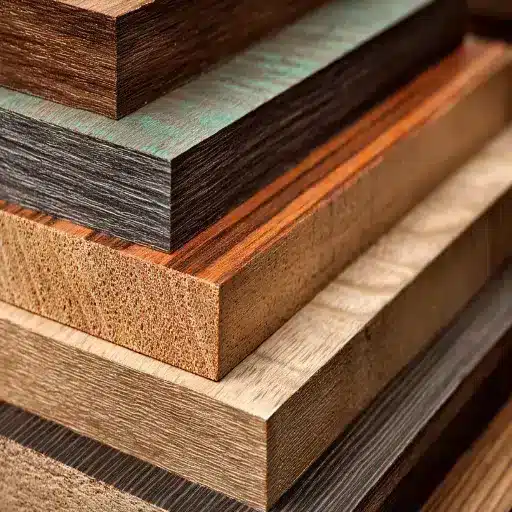
Not every wood species is readily available as FSC-certified veneer. Specifying a rare exotic without verifying certification availability first is a common mistake that leads to last-minute substitutions. Here are the species you can typically source with confidence.
North American Species
Oak, cherry, maple, and walnut are playing in the big league in the certified veneer market. The certification of North American FSC is mature, lead times are predictable, and documentation is straightforward. Oak’s chemical characteristics, resulting from tough graining and extensive porosity, give it a very special character. A clean and crisp modern look is Maple’s contribution. Natural dark brown walnut shades. Cherry red-brown secondarily deepens over time to become a robe for high-end executive interiors.
European Species
In European FSC-certified forests, ash, beech, and slim birch trees grow. It is both native, with sweet and straight grains, and a common material in commercial cabinetry and furniture due to its fine and grindable quality. Beech woods are extremely hard and, because they contain more abrasion resistance, such wood is well-suited to high-traffic areas.
Sustainable Tropical Options
A Teak, mahogany from plantations, and okoume are available as veneer, FSC certified, for the projects where tropical visual applications are required. In marine-grade panels, good-quality architectural panels might be faced with okoume. It is vital to verify the FSC status of the particular species and origin before specifying, as tropical supply chains can be somewhat complex.
Engineered and Reconstituted FSC Veneers
Engineered veneers are a dyed re-arrangement of fast-growing forest, certified to provide the appearance of exotic species. This is consistent in color and grain without compromising rare trees. This last year had about 20% growth in the use of reconstituted veneer in commercial projects, influenced by the directives on sustainability and guaranteed supplies. For big jobs where uniformity is a key consideration, FSC-rated engineered wood veneer could indeed be a better specification than natural veneer.
Matching Cores and Applications for FSC Veneer Projects
The face veneer is the most visible part, and yet, it is the core that will determine whether your panel performs or fails. Matching the substrate for an application is of utmost importance. Also, during the issuance of these certificates, the full panel is being installed.
MDF Core
MDF veneers the smoothest and most uniform surface available for veneer facing. Its typical dry interior uses include office wall panels, retail store fixtures, and cabinetry. But there is a known propensity of MDF to swell dramatically when exposed to bulk water. You can specify that these FSC-certified projects are built with an FSC-certified MDF core joined with low-VOC or formaldehyde-free adhesives.
Plywood Core
Plywood is resistant to the effects of moisture and is good structurally. It is ideal for toilets, kitchens, and marine applications, as well as in any situation where humidity varies. Cross-grain is used to keep the panels from warping or splitting. You should also look for a plywood core that carries some FSC certification if your project requires that all of its core be made from 100% certified material.
Particleboard Core
Particleboard is the most cost-effective large dry-span option in terms of cost when cost is the principal driving force. It machines well and acts as a stable backing for veneer. The trade-off for particleboard would be in its weaker screw-holding strength and limited resistance to moisture compared to plywood.
Phenolic Backing
For applications in highly critical environments, the addition of phenolic resin backing makes it possible to withstand both moisture and chemicals. Phenolic-backed veneer panels can sometimes be found in marine interiors, laboratory casework, and commercial kitchens.
LEED and Green Building Documentation
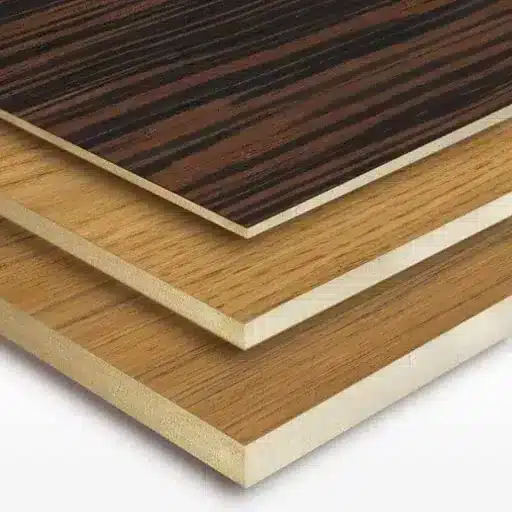
FSC-certified wood veneer panels can contribute to multiple LEED v4 and v4.1 credits. Knowing which credits apply and what documentation is required separates a smooth submittal from a weeks-long scramble.
Applicable LEED Credits
- MR Credit 4: Building Product Disclosure and Optimization — Material Ingredients. FSC-certified panels with Environmental Product Declarations or Health Product Declarations can contribute.
- MR Credit 5: Construction and Demolition Waste Management. Projects using FSC certified veneer report up to 30% less construction waste compared to traditional solid wood installations.
- EQ Credit 4: Low-Emitting Materials. Panels manufactured with low-VOC or formaldehyde-free adhesives support indoor air quality credits.
Chain of Custody Documentation Requirements
For every FSC certified panel on your project, you need:
- The supplier’s FSC Chain of Custody certificate number
- The specific FSC label claim (100%, Mix, or Recycled)
- A delivery note or invoice referencing the FSC certificate
- Product descriptions that clearly identify the certified material
Keep these records organized by lot or delivery. LEED auditors and building certifiers will ask for them.
How to Verify Supplier Certification
Before you specify, ask the supplier for their FSC license code. It follows the format FSC-C followed by numbers. Enter that code at info.fsc.org to confirm the certificate is valid, current, and covers the product category you need. If the supplier cannot provide a license code, they are not FSC certified. Full stop.
Cost Considerations and Long-Term Value
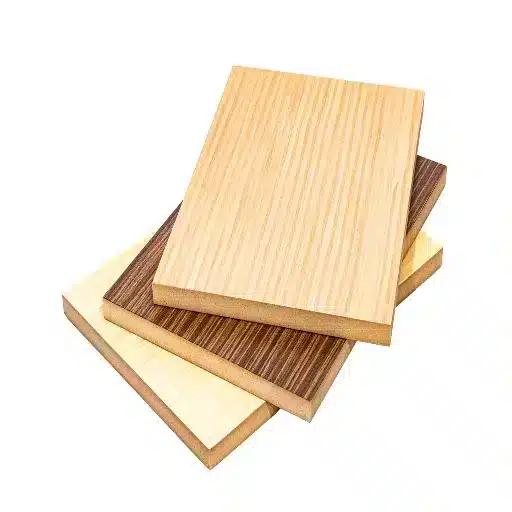
The most common objection to FSC certified wood veneer panels is cost. Certification typically adds a 5–15% premium over non-certified alternatives. But framing the decision purely on upfront material cost misses the bigger picture.
Lifecycle Cost Justification
Certified panels provide the same longevity and ability to restore as a conventional wood veneer. A cheaper panel that must be replaced after ten years costs far more in its lifespan compared to a panel that lasts for twenty years and can be refinished twice. Add to that the reduced site waste, and the total installed cost gap gets narrower.
Risk Mitigation
Choosing to use a non-certified wood veneer for a project concerned about “green” leads the payer company into the risk of legal and reputational damages. The number of “greenwashing” claims made by the present-day group of certification claimants, again, indeed, maybe for the very first time. Certification proves independently that the FSC has been audited.
Project Value
The Urban Heights Hotel in Los Angeles achieved LEED Gold certification using engineered FSC veneers and reported 25% savings in total material costs through reduced waste and efficient installation. The certification also became a marketing asset, featured in the hotel’s sustainability story. For commercial clients, certified materials are increasingly a brand requirement, not a nice-to-have.
When you present the 5–15% premium to a client, frame it as compliance insurance, marketing value, and waste reduction. It is not an added cost. It is risk management with a wood grain.
How to Verify Authentic FSC Certification
Greenwashing is real. Some suppliers use the FSC tree logo without authorization, or claim certification for products that are not actually covered. Here is how to protect your project.
Check the FSC License Code
Every certified organization has its own license under FSC; this is in the FSC-CXXXXXX format. This number should be shown in invoices, delivery notes, or products. If you only see the tree symbol without a number, it’s a red flag.
Use the FSC Database
Visit info.fsc.org and put in the license code. This will eventually show you the certification status of the organization, service level, and expiry date. Check to see if the product category listed includes the material you are trying to buy.
Request Chain of Custody Certificates
For large projects, ask the provider for the most recent Chain of Custody certificate. Always find out which license number stands behind each of these certificates. A recipient’s hesitation or inexplicable delay in supplying this document should throw up a red flag.
Red Flags to Avoid
- Generic claims like “sustainably sourced” without a specific certification label
- FSC logos without a license code
- Suppliers who cannot explain the difference between FSC 100% and FSC Mix
- Prices that seem too low for certified material
- Missing documentation at delivery
If you are managing procurement for a certified project, build verification into your standard submittal review process. Do not wait for the auditor to find the gap.
2026 Trends in FSC Certified Veneer Panels
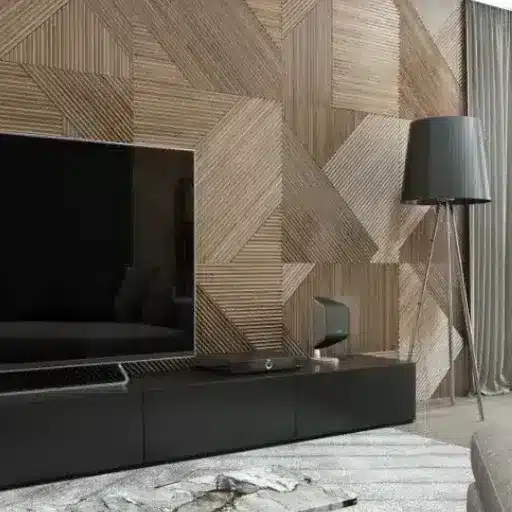
The veneer market is evolving quickly. Here is what architects and builders should watch this year.
Rising Demand for Engineered FSC Veneers
Engineered veneer is currently projected to be the fastest-growing segment in the certified market with an expected CAGR of about 6.2–6.4%. Predictable pricing, consistent supply, and exotic looks offer safe alternatives to rare hardwoods’ supply chain risks. For great commercial volumes ensured by engineered FSC veneer, one would expect the default specification.
Prefinished and Fire-Rated Certified Panels
Prefinished FSC veneer panels are gaining ground because they reduce on-site finishing time, VOC emissions, and labor cost. Fire-rated options with Class A ASTM E-84 ratings are now available with certified faces, opening new applications in commercial and hospitality projects. For specification details on code-compliant options, see our guide to fire-rated wood veneer panels.
Digital Chain of Custody Tracking
Moving towards this new variation, some producers are, in fact, now implementing the combination of blockchain and QR code for their Chain of Custody tracking. A forest of origin, route to the mill, and the certification status for a panel are visible upon scanning the panel code. This technology is still emergent, but in a while, it will become standard practice for high-profile certified projects.
Tighter EU and US Import Rules
Both the EU Deforestation Regulation and the revised enforcement for the Lacey Act in the USA are much higher in demanding documentation for the timber. Many of these requirements are pre-empted by the FSC certification, giving certified suppliers tremendous advantages in compliance.
A major development this year from VitalWood Global concerns the expansion of engineered FSC veneer bases, digital traceability formation for the items in its certified catalog. Discovering the latest species and core options is what would help traders comply with whatever new regulations may come up.
Conclusion
FSC-certified wood veneer panels offer something rare in construction materials: verified sustainability, proven performance, and visual beauty in a single specification. They use up to 75% less raw material than solid wood. They carry independently audited documentation that passes LEED review. And they give your clients a defensible story about where their materials came from.
The key to specifying them successfully is understanding the certification labels, matching the core to the application, and verifying supplier documentation before the material hits your site. Get those three things right, and FSC veneer becomes an asset, not a headache.
Here is what to remember:
- Choose the FSC label that matches your project’s certification requirements: 100% for maximum defensibility, Mix for standard commercial work, or Recycled for reclaimed aesthetic.
- Match the core to the environment: MDF for dry interiors, plywood for moisture-prone areas, phenolic for extreme conditions.
- Verify every supplier’s FSC license code at info.fsc.org before specifying.
- Document Chain of Custody for every delivery. Organize it by lot. Your auditor will thank you.
- Frame the 5–15% premium as compliance insurance and lifecycle value, not extra cost.
At VitalWood Global, we do not just supply wood. We supply confidence that your materials will perform, your documentation will pass, and your project will meet the sustainability standards you promised. If you are specifying FSC-certified wood veneer panels for an upcoming project, get in touch for samples, Chain of Custody certificates, or a specification review tailored to your needs.
Together, we are building a greener tomorrow, one verified panel at a time.