
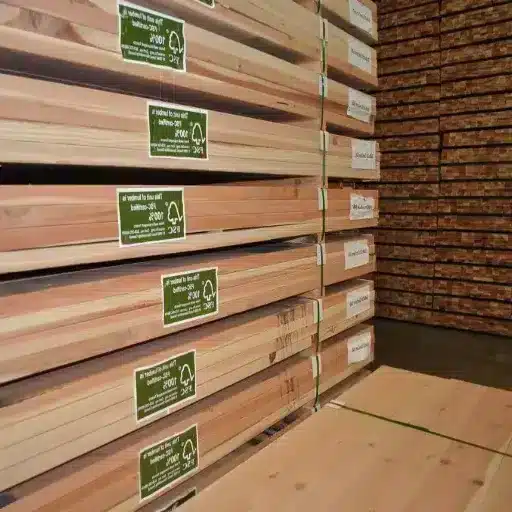
FSC Certified Wood Veneer Panels: A Specifier’s Guide for 2026
FSC certified wood veneer panels combine a decorative wood surface with a substrate, such as MDF or plywood, and are supplied with a claim under the Forest Stewardship Council’s chain-of-custody system. For a specification, the important question is whether the finished panel you order carries the required claim. A logo on a sample or a certificate for the face veneer alone does not answer that question.
Start with the appearance and panel construction, then agree the claim and documentation before ordering. This guide explains the three FSC labels, supplier checks and delivery records, with a short update on the revised 2026 FSC Regulatory Module.
Key Takeaways
- FSC has three product labels: FSC 100%, FSC Mix and FSC Recycled. Controlled Wood is a separate category, not a fourth certified end-product label.
- Check the seller, relevant product scope and finished-panel sales claim together.
- Distinguish the trademark licence code from the certificate code used on sales documents.
- Specify fire, emissions, moisture and other performance requirements separately from FSC sourcing requirements.
- The revised FSC Regulatory Module is a voluntary add-on. FSC certification does not replace statutory due diligence.
What Are FSC Certified Wood Veneer Panels?
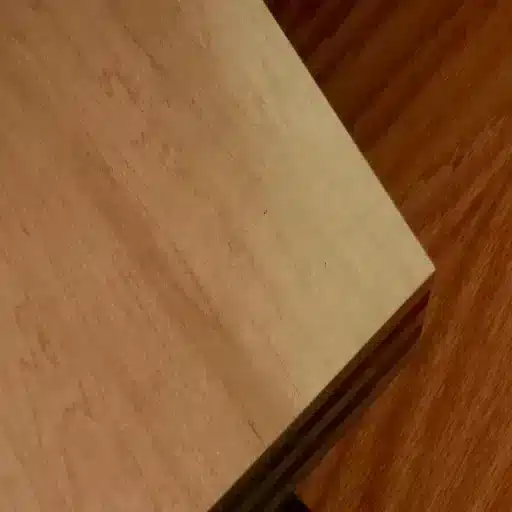
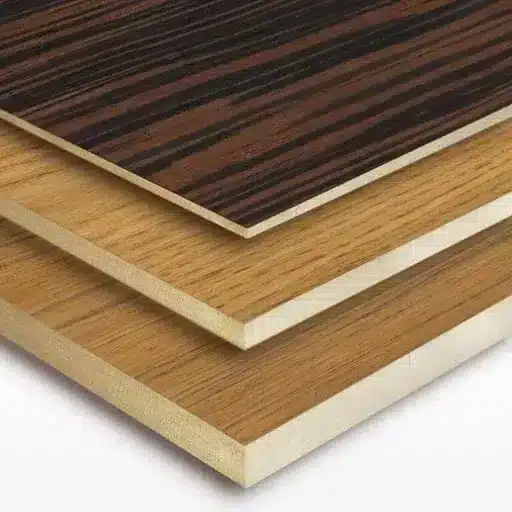
A decorative veneer panel has a wood face attached to a supporting substrate. The back, core, adhesive and finish also form part of the product specification. Our guide to wood veneer panels explains the construction choices in more detail.
FSC chain-of-custody certification sets requirements for sourcing, handling and selling products with FSC claims. It connects eligible inputs with controlled production and sales records. It does not mean that every product sold by a certified business is FSC-certified, or that a certified face automatically establishes the claim for a newly assembled panel. Check the relevant product group and output claim for the panel being supplied. See the FSC chain-of-custody standard.
For example, when a quotation describes an oak face over an MDF core, ask whether the quoted FSC claim applies to that complete construction. If a fabricator changes the core or adds another manufacturing step, confirm the claim for the product that will actually reach the project.
Understanding FSC Certification Labels for Veneer

The label describes the forest-based material sourcing category. It does not identify the veneer species, core grade or technical performance. FSC’s explanation of its labels distinguishes three labels:
| Product label | Meaning for forest-based materials | What to confirm for your order |
|---|---|---|
| FSC 100% | All forest-based materials come from FSC-certified forests. | The claim applies to the finished panel, with the relevant seller and product scope. |
| FSC Mix | Materials come from FSC-certified forests, recycled sources and/or controlled wood. | The exact sales claim and whether it meets the project’s purchasing requirement. |
| FSC Recycled | All forest-based materials have been verified as reclaimed. | The actual panel construction and sales claim; the label does not prescribe a reclaimed appearance. |
FSC Mix: a Label Is Not a Physical Content Breakdown
FSC uses transfer, percentage and credit control systems. A Mix label alone does not tell you that each individual board contains a fixed physical percentage of wood from certified forests.
Under the percentage system, the Mix labelling threshold is at least 70% qualifying FSC-certified and/or recycled input. Under the credit system, eligible input credits determine the quantity that can be sold with a credit claim. Other forest-based inputs must meet the applicable controlled-material requirements. The FSC UK label guidance explains the distinction. If your project has a percentage-based purchasing rule, obtain the exact claim rather than estimating it from the logo.
Why Controlled Wood Is Different
Controlled Wood is assessed to reduce the risk of material coming from unacceptable sources. It is not equivalent to forest-management certification and is not a fourth FSC product label for an end user.
The chain-of-custody standard limits sales with an FSC Controlled Wood claim to raw or semi-finished products sold to FSC-certified customers. Do not accept “Controlled Wood” as a substitute when your specification requires an FSC-certified finished decorative panel.
Why Specify FSC Certified Veneer Panels?
The useful benefit is documented sourcing under a recognised certification system. An agreed FSC claim gives a procurement team a defined requirement to check against the supplier’s scope and sales records. It can also support a project’s responsible-purchasing requirements, subject to that project’s rules.
Keep sourcing and technical acceptance as separate decisions. FSC status does not establish a panel’s strength, fire classification, emissions, resistance to moisture or ability to be refinished. Those depend on the specified product and supporting evidence.
For wider supplier-selection questions, see our sustainable wood veneer sourcing guide. Use the order-specific FSC checks below alongside that broader sourcing review.
Choosing the Right FSC Certified Veneer Species
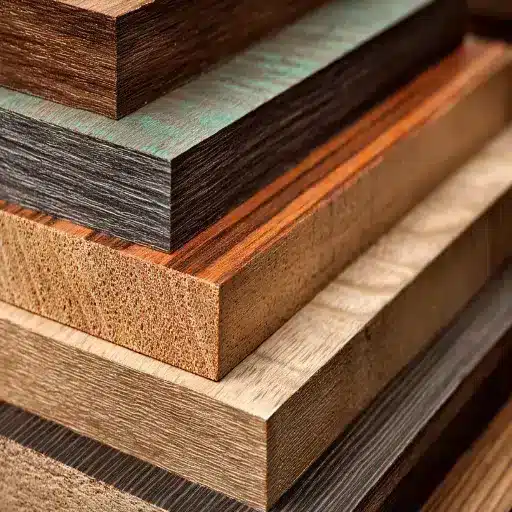
Choose the appearance first, then confirm that it is available with the required construction and claim. Oak, walnut, maple, cherry, ash and other species can be part of a design brief; naming a species does not establish certification or availability for a particular order.
Ask the supplier to identify the species, cut, matching pattern, face grade and finish on the proposed panel. For a large installation, agree how samples, colour variation and adjoining sheets will be reviewed. For reconstituted veneer, confirm the product description and approved appearance rather than assuming that an exotic-looking surface identifies the underlying species.
Make substitutions explicit. A change in face, core or manufacturing route should trigger a check of the revised specification and FSC claim before approval. For the broader construction comparison, our wood veneer versus solid wood guide provides further reading.
Matching Cores and Applications for FSC Veneer Projects
Record the complete assembly: face, back, core, thickness, finish and edge treatment. Ask for the manufacturer’s intended-use limits and technical documentation for that exact product.
MDF and Particleboard Cores
If considering MDF or particleboard, ask which grade is proposed and whether the finished assembly is suitable for the expected interior conditions. Confirm fixing requirements, panel dimensions, exposed edges and any moisture exposure. Request the applicable emissions documentation rather than inferring low emissions from the FSC claim.
Plywood and Special Backings
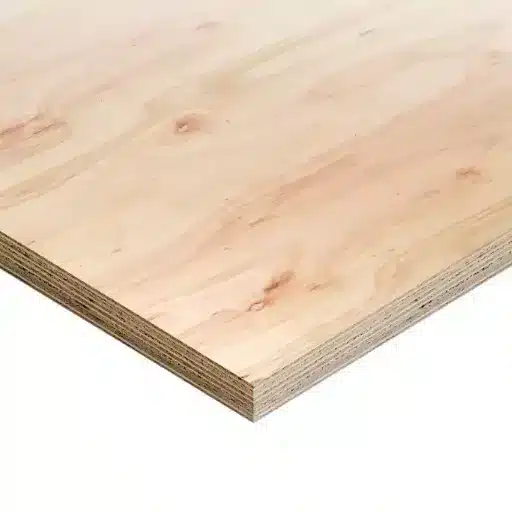
For plywood, identify the grade, bond specification and intended exposure. The word “plywood” alone does not establish suitability for a bathroom, marine interior or structural application.
Apply the same discipline to phenolic or other special backings. Ask what the named backing does in the proposed assembly, which test evidence supports it and what installation limits apply. A backing description is not a universal moisture- or chemical-resistance guarantee.
These checks help keep two approvals aligned: the assembly must suit its intended use, and its sourcing claim must meet the purchase specification.
LEED and Green Building Documentation
FSC-certified products may contribute to responsible-sourcing requirements in a LEED project. The applicable treatment depends on the project’s registered rating system, version, credit and documentation rules. Confirm these with the project’s sustainability professional before selecting the claim or calculating a contribution.
USGBC’s LEED v4 reference guidance addresses sourcing documentation within a particular rating-system framework. It should not be treated as a universal credit list for every project version. Avoid assigning points to a panel solely because a sample carries an FSC label.
Keep the submittal evidence distinct:
- Sourcing: the relevant FSC claim, supplier certificate information and purchase/delivery records.
- Emissions: product-specific evidence required by the project for the panel, adhesives and finish.
- Fire or other performance: the required test or classification documentation for the relevant assembly and use.
For fire-related specification questions, see our fire-rated wood veneer panel guide, then obtain the actual product or assembly reports. FSC certification alone does not establish a fire classification or indoor-air-quality result.
Cost Considerations: Compare Like-for-Like Quotations
Compare quotations against the same specification. A price comparison is incomplete if one offer uses a different face grade, core, finish, dimension or delivery basis.
Ask each seller to state the species or decorative product, construction, quantity, finish, FSC claim, documentation scope and delivery terms. Confirm which items are included in the certified offer and how substitutions will be handled.
There is no universal certification premium or payback figure to apply to every veneer-panel order. Assess maintenance and replacement assumptions using the proposed product’s instructions and project conditions. Ask specifically whether refinishing is permitted; a wood surface is not a promise that repeated sanding will be possible.
How to Verify the Supplier and Delivery Claim
1. Match the Seller to the Certificate and Scope
Use FSC’s public certificate search to check the organisation’s identity, certificate status and relevant product scope. Compare the record with the legal seller on the quotation. If a group, multiple site or distributor arrangement is involved, ask which certified entity and site supplies your order.
A certificate copy is a useful starting point, but it does not establish that every quoted item is certified. Ask the seller to confirm the claim for the exact panel and record it in the purchase documents.
2. Distinguish the Two Codes
The trademark licence code, commonly shown as FSC-C followed by digits for certificate holders, identifies authorised trademark use. The certificate code identifies the certified organisation under its certification arrangement and is the code required in the standard’s sales-document provisions.
These codes serve different purposes. Do not reject an otherwise valid invoice solely because it does not repeat the trademark licence code, or accept a delivery solely because it displays a logo. Match the certificate information, product and sales claim.
3. Check the Product Items and Linked Records
The FSC chain-of-custody standard, section 5, sets out sales-document requirements. For a practical delivery review, check:
- Supplier and customer identification, where applicable, and the document issue date.
- Product descriptions and quantities that match the goods received.
- The supplier’s certificate code.
- A clear FSC claim for each relevant product item, such as FSC 100%, FSC Mix with its stated percentage, or FSC Mix Credit.
- References that connect the sales document, delivery note and any supplementary record.
The standard permits defined supplementary-document arrangements, including certification-body-approved cases where claims or codes cannot appear on the main document. The records must clearly link together and identify which products carry which claims. An unexplained general statement that “all wood is sustainable” is not an item-level FSC claim.
Hypothetical document check: a quotation covers decorative panels and non-certified accessories. Ask the seller to mark the panel items with their actual claim and keep accessories clearly separate. At delivery, compare the panel descriptions and quantities with those marked items and their linked records. This is a checking example, not a customer case or a certification guarantee.
If details do not match, request clarification before accepting the material as meeting the FSC requirement. A low price or delayed response alone does not prove fraud. Keep the resolved records with the purchase and delivery files. For other market and product documents, use the broader wood-panel compliance document checklist.
2026 Update: The Revised FSC Regulatory Module

FSC announced revised Regulatory Module addenda in August 2026. Its Chain of Custody addendum, FSC-STD-40-004r V1-1, records a publication and effective date of 17 August 2026. The revision aligns user categories and applicable requirements with changes to the EU Deforestation Regulation framework. See FSC’s revision announcement and the Chain of Custody addendum.
The module is a voluntary extension to existing FSC certification. An ordinary FSC certificate does not establish that the organisation also holds this extension. Where it matters to an EU-bound order, ask which applicable version, activities and product groups are covered, and which information the seller will provide to support the buyer’s duties.
The module does not replace statutory due diligence or guarantee a competent authority’s compliance decision. FSC explains this distinction in its FSC and EUDR guidance. Confirm applicable version and transition arrangements with the supplier or certification body rather than treating a certification transition as an extension of a legal deadline.
For the broader material handoffs and role-specific EU purchasing context, see our wood veneer supply-chain guide. It also covers the European Commission’s July 2026 implementation update. Keep those legal and logistics checks alongside, rather than inside, the panel’s FSC product-claim check.
Questions Before Ordering
Is an FSC Logo on a Sample Enough?
No. Confirm the seller’s relevant scope and the claim for the finished product, then match the sales and delivery records to the order. A sample establishes neither the claim for every panel nor the status of later substitutions.
Does FSC Certification Prove Low Emissions or Moisture Resistance?
No. Obtain separate evidence for the specified assembly, finish and intended exposure. Apply the same separation to fire performance and any structural requirements.
Is Every FSC Mix Board at Least 70% Certified Forest Wood?
No. The label does not provide that physical content assurance for each board. Percentage and credit systems operate differently, and qualifying inputs can include recycled material. Check the actual sales claim against the project’s rule.
Does a Certified Face Make the Whole Panel FSC-Certified?
Not by itself. Verify the output claim for the complete product supplied through the relevant certified organisation and scope.
Next Step for Your Panel Specification
Define the appearance and assembly, agree the required FSC claim, check the seller and scope, then verify the delivered product against its documents. Keep technical performance and project certification requirements explicit throughout.
To discuss a project with VitalWood Global, send us your panel requirements: intended use, destination market, species or appearance, dimensions, quantity, core, finish and required claim. Ask us to confirm available construction options and order-specific documentation before placing the order.