

Wood Veneer Panels Cost: 2026 Pricing Guide for Specifiers and Homeowners
The material cost of wood veneer panels in 2026 ranges from $5 to $50 per square foot, which requires additional installation costs of $5 to $15 per square foot. The standard residential sheet costs approximately $5 per square foot, while mid-range architectural panels cost between $18 and $40, and premium custom or acoustic systems cost more than $80 per square foot when installed.
Wood veneer panels consist of multiple products, which creates a large price gap between different wood veneer panel products. The products exist as a collection of various goods. A 4 by 8 sheet from a home improvement aisle and a CNC-perforated acoustic panel with a book-matched walnut face are both technically “wood veneer panels,” and the price difference between them is intentional.
This guide helps you identify which quote matches your project budget when you compare three estimates that differ by ten times. Our analysis of wood veneer panel costs will show different costs according to panel type and wood species, panel finish, and panel installation. We will present cost ranges for 2026 and three project budget examples, and the key questions needed to evaluate any quotation you receive.
Key Takeaways
- Wood veneer panels cost between $5 and more than $80 for each square foot of material in 2026. The right tier depends on whether you need a residential overlay, a commercial architectural finish, or a high-performance acoustic system.
- Five factors drive most of the price difference: veneer grade, substrate, finish, certifications (FSC, fire rating, CARB P2), and customization (species, grain matching, CNC work).
- The installation process adds installation costs, which range from $5 to $15 for each square foot of work. Specialist acoustic installers who work with Z-clip or T-grid systems charge between $10 and $20 for each square foot of installation.
- Over 20 years, premium architectural wood veneer panels deliver lower total ownership costs compared to solid wood because they require 30 to 60 percent less initial investment and provide 15 to 25 years of functional use.
- The cheapest quote is rarely the cheapest project. Most cost surprises occur because the project team overlooks line items, which include trim and fire treatment and samples and delivery, and because they select a residential-grade panel for a commercial-grade installation.
How Much Do Wood Veneer Panels Cost in 2026?

Wood veneer panel cost depends on three layers of decisions: the panel category you choose, the species and finish you specify, and the labor you hire to install it. Take any one of those layers out of context, and the numbers stop making sense.
Here is the 2026 picture for the United States market at a glance:
| Tier | Material Cost (per sq ft) | Total Installed (per sq ft) | Typical Use |
|---|---|---|---|
| Standard residential sheet | $5 to $12 | $12 to $25 | Renovations, cabinetry, and basement walls |
| Mid-range architectural panel | $15 to $35 | $25 to $55 | Commercial offices, retail, hospitality |
| Premium custom or acoustic | $35 to $80+ | $55 to $120+ | Boardrooms, lobbies, studios, heritage |
Outside the United States, these numbers shift. The United Kingdom and the European Union run approximately 10 to 20 percent higher on imported species because of their freight and duty costs. The Gulf region experiences 15 to 25 percent higher expenses because its logistic and climate-controlled storage expenses increase the total landed price. Australia and New Zealand maintain a middle ground that depends on their choice of either local veneer pressing or importing complete products.
The single most useful question you can ask yourself before shopping for wood veneer panels is which tier you actually need. A boardroom finished in a $7 per square foot residential sheet will look wrong, perform poorly, and need replacing within five years. A homeowner who specifies a $50 per square foot architectural panel for a basement is overpaying for a substrate they will never see. The budget management process of your project becomes simpler after you match the job requirements with their respective tiers. For a complete overview of how the product family fits together, see our pillar guide to wood veneer panels.
Wood Veneer Panel Cost by Type
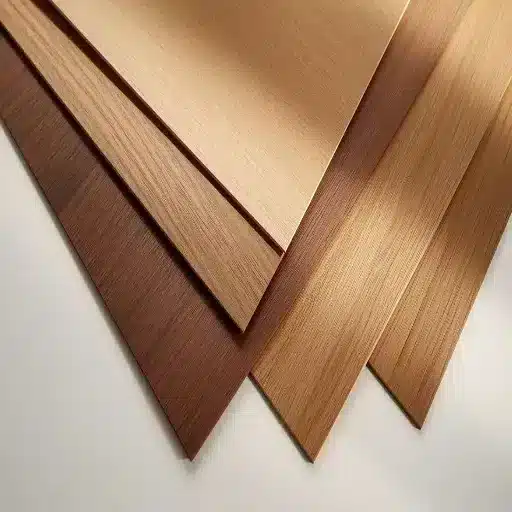
The “panel type” you choose has more impact on the cost of wood veneer panels than the species you face it with. A standard veneered sheet in walnut is still a standard veneered sheet. An architectural perforated acoustic panel in white oak is still a premium product. Here is how the categories stack up.
Standard Wood Veneer Sheets
These are the panels most homeowners and DIY renovators picture. They are 4 by 8-foot sheets, typically 1/4 to 3/4 inch thick, with a plywood or MDF substrate and an A or B-grade veneer face. Material cost lands at 5to5to15 per square foot. Best uses are residential renovations, basement walls, and cabinetry overlays where the substrate is not visible. Specifying veneer for kitchen millwork is its own pricing exercise, covered in our guide to wood veneer panels for kitchen cabinets and built-ins.
Architectural Flat Veneer Panels
Architectural flat panels look similar at a glance but are engineered for commercial environments. The substrate material has a higher density and better dimensional stability, while the veneer face maintains A-grade quality, and the adhesives contain low VOC emissions. The panels have a material cost that ranges between $18 and $40 for each square foot. These panels show up in commercial offices, retail buildouts, and hospitality interiors where appearance and durability both matter.
Slatted Wood Veneer Panels
The design trend that started five years ago shows its current popularity through slatted panel designs. Solid or veneered wood slats are bonded to a PET felt backer, usually in 600 mm or 1200 mm modular sizes. The material cost for this product ranges between $12 and $30 for each square foot based on the slat profile and species. The product provides light acoustic absorption together with a warm biophilic appearance, which has gained popularity from upscale cafes to residential and commercial spaces.
Perforated and Grooved Acoustic Veneer Panels
Perforated and grooved panels are engineered to absorb sound. The substrate is CNC-drilled or kerf-cut, then faced with veneer that aligns with the perforation pattern. Material cost runs $25 to $60 per square foot. These are the panels you spec for open offices, restaurants, classrooms, healthcare environments, and any commercial space where noise control matters as much as appearance.
Micro-Perforated Architectural Panels
Micro-perforated panels use sub-millimeter holes that are nearly invisible from one meter away. They are the right answer when a project needs acoustic performance without a visible perforation pattern. Material cost runs $35 to $80+ per square foot and rises quickly for custom species and grain matching.
Exterior-Rated and Specialty Veneer Panels
Exterior-rated panels use UV-stable resins, marine-grade adhesives, and substrates engineered to handle weather exposure. Material cost runs $40 to $100+ per square foot. These panels are specified for building facades, weather-exposed canopies, and other applications where standard interior panels would warp or delaminate.
| Panel Type | Material Cost (per sq ft) | Typical Project Use |
|---|---|---|
| Standard veneered sheet | $5 to $15 | Residential, retrofit |
| Architectural flat panel | $18 to $40 | Commercial walls, ceilings |
| Slatted acoustic | $12 to $30 | Feature walls, residential |
| Perforated or grooved acoustic | $25 to $60 | Offices, hospitality, education |
| Micro-perforated architectural | $35 to $80+ | Premium ceilings, heritage |
| Exterior-rated | $40 to $100+ | Facades, canopies |
For a deeper breakdown of these categories and where each one fits, see our guide to the main types of wood veneer panels.
Wood Veneer Panel Cost by Species

The choice of species stands as the second most important factor that impacts costs after the selection of panel type. The cost of two panels that have identical substrates and finishes will differ because of the different veneer face materials.
Domestic Species (Budget to Mid-Range)
White oak, red oak, maple, ash, cherry, and hickory serve as the mainstay species in the North American veneer industry. The materials exist in large quantities because they undergo sustainable harvesting processes, which deliver consistent product quality. White oak paneling costs approximately the same as the basic panel price for all panel tiers.
Premium Domestic and Imported Species (Mid to High)
American walnut represents the leading premium domestic species, which customers select because it costs 25 to 50 percent more than white oak veneer. Sapele, anigre, and European beech occupy the same market space as each other. The market expects these species to have price increases between 30 and 60 percent.
Exotic Species (High to Premium)
Wenge zebrawood teak makore and ebony together form exotic wood species which come with restricted availability and expensive shipping charges and CITES documentation requirements. The premiums for these products range between 60 and 200 percent above the standard species price. Some species present more accessibility challenges because they exist at a higher expense.
Engineered and Reconstituted Veneers
Engineered veneers replicate rare wood species through the use of fast-growing fibers and dyes, and reconstituted blocks. The materials provide consistent grain patterns that enter the market through an unlimited supply while protecting endangered wood species from potential harm. The product costs 10 percent less than the natural species or 10 percent more than it, while achieving better sustainability.
| Species | Typical Veneer Premium | Notes |
|---|---|---|
| White oak (rift, quarter, plain) | Base price | Mainstream, abundant |
| Maple, ash, cherry | -5% to +15% | Common, readily available |
| American walnut | +25% to +50% | Premium domestic |
| Sapele, anigre, beech | +30% to +60% | Imported, decorative |
| Wenge, zebrawood, teak | +60% to +150% | Exotic, limited supply |
| Engineered veneer | -10% to +10% | Sustainable, consistent |
Maya Hernandez, a residential designer in Denver, learned the species lesson the hard way. In 2024, she specified a $7 per square foot domestic oak panel for a client’s home office feature wall, then changed her mind and asked the supplier to swap in a quartersawn walnut face at the last minute. The face change alone added $11 per square foot and a four-week delay because the original panel had to be re-pressed. Picking the species before the panel goes into production is the cheapest version of that decision.
What Affects Wood Veneer Panel Cost?
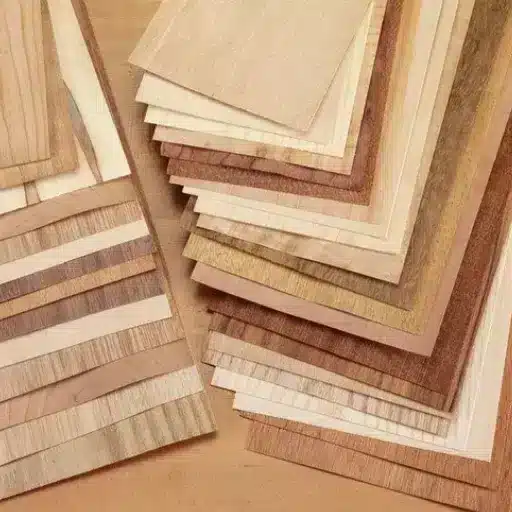
Panel type and species explain about 60 percent of the price you pay. The other 40 percent comes from a stack of smaller decisions, each of which adds or subtracts a few percent. Most cost surprises happen because one of these line items got skipped in the original quote.
Veneer Grade and Grain Matching
A grade veneer with book-matched grain across multiple panels costs more than a B-grade veneer with random match. Random match is the base price. Slip match adds 5 to 10 percent. Book match adds 10 to 20 percent. Sequence matching across a long feature wall can add 15 to 30 percent.
Substrate
Standard MDF is the base substrate. Fire-rated MDF adds 15 to 30 percent. Marine-grade plywood adds 25 to 50 percent for moisture resistance. Lightweight honeycomb panels for ceilings or large-format walls add 30 to 60 percent.
Backing and Acoustic Performance
A panel with no acoustic backing is the base price. Adding PET felt typically adds 10 to 20 percent. Mineral wool backers add 15 to 30 percent. Custom-engineered cavity systems for high NRC targets can add 20 to 40 percent.
Finish Quality
Pre-finished UV-cured panels are the most cost-efficient finish. Custom stains and dyes add 10 to 25 percent. Hand-rubbed oil or wax finishes add 25 to 50 percent and require care during installation.
Fire Rating
Standard panels carry no formal fire rating. Class B or Euroclass C-s1, d0 ratings add 10 to 20 percent. Class A or Euroclass B-s1, d0 ratings add 15 to 30 percent. For most commercial projects, fire rating is a non-negotiable line item, not an option.
Certifications
Uncertified panels are base price. FSC or PEFC certified veneer faces add 5 to 15 percent. Combined certifications (CARB P2 plus TSCA Title VI plus FSC plus low-VOC adhesives) typically add 10 to 20 percent and are increasingly demanded by LEED, WELL, and BREEAM projects.
Custom Sizing and CNC Work
Standard 4 by 8-foot sheets are the base price. Custom dimensions add 5 to 15 percent. CNC perforations, grooves, or routed details add 20 to 50 percent, depending on pattern complexity. For a full walkthrough of how architects and designers scope these jobs, see our guide to custom wood veneer panels for architects and designers.
Lead Time
Domestic stock veneer panels carry no rush premium. A six to ten-week custom production schedule typically holds at a base price. Rush orders under four weeks add 15 to 25 percent in expedited charges.
Project Volume
Larger orders unlock real discounts. A 500 square foot order is the base price. A 1,000 to 5,000 square foot order typically earns 3 to 7 percent off material. Orders over 5,000 square feet can earn 7 to 12 percent off, depending on species availability and lead time.
Installation Cost for Wood Veneer Panels

Material cost is only one half of the equation. Labor is the other half, and labor varies more than most homeowners expect.
Labor Cost Ranges
A homeowner who installs veneered sheets in a basement space needs to spend only on the required equipment and adhesive materials, and trim elements. A general contractor or handyman charges $5 to $10 per square foot for residential installs. A licensed millwork installer or architectural finisher who handles grain alignment, book-matching, and proper fastening charges $8 to $15 per square foot. A specialist acoustic installer using Z-clip or T-grid systems charges $10 to $20 per square foot.
What Drives Labor Cost
Numerous factors create fluctuations in labor prices. Substrate condition matters: an installer who has to level a wall before mounting panels charges more than one who walks into a flat, finished surface. Pattern alignment matters: a book-matched walnut feature wall requires more measuring, planning, and waste than a random-match install. The adhesive-only method allows for the fastest installation, while Z-clip systems require more time, and concealed T-grid suspended systems become the priciest option. Ceilings cost more than walls because of access and overhead work. The requirement to work at height adds both scaffolding costs and additional labor hours.
Hidden Installation Costs
The only elements that are quoted present in their panel and labor breakdowns create missing details, which always appear in the final invoice. Trim, end caps, and J-channel add roughly $1 to $3 per linear foot of perimeter. The cost of adhesives and fasteners ranges from $0.50 to $1.50 for each square foot. Physical samples for design sign-off run $50 to $300 per sample, and many suppliers credit them back against the order. Delivery and handling on commercial projects run $0.50 to $2 per square foot. The project requires site protection and post-installation cleaning based on the particular trade and total project scope.
Sample Project Budgets
Per-square-foot ranges only get you so far. Here are three realistic 2026 project budgets that show how the line items add up.
Project A: Residential Feature Wall (120 sq ft)
A homeowner in Denver installs a slatted acoustic veneer feature wall behind a living room sofa.
- The project uses slatted acoustic veneer panels, which cost $18 per square foot and total $2,160.
- The licensed installer charges $8 per square foot for his work, which results in a total cost of $960.
- The project requires trim together with fasteners and samples, which will cost $400.
- The total project cost is approximately $3,520, which equals about $29 per square foot installed.
Project B: Corporate Boardroom (480 sq ft)
Priya Shah, a project architect at a Chicago firm, budgets a 12-person executive boardroom in book-matched American walnut.
- Architectural flat veneer panels in book-matched walnut at $32 per square foot material: $15,360
- Specialist millwork installer at $12 per square foot labor: $5,760
- Trim, end caps, and fire-rated tape: $1,400
- Sample program (four samples for design sign-off): $800
- Total project: roughly $23,320, or about $48 per square foot installed
Project C: Hospitality Lobby (2,200 sq ft mixed wall and ceiling)
Carlos Mendes, an FF&E procurement lead for a Miami hospitality group, scales an acoustic veneer package across a hotel lobby that combines walls, columns, and a perforated ceiling element.
- Perforated acoustic veneer panels at $40 per square foot material: $88,000
- Z-clip system and acoustic backing at $7 per square foot: $15,400
- Specialist acoustic installer at $14 per square foot labor: $30,800
- Custom finish and stain: $5,500
- Sample program, mock-up panel, and fire testing certifications: $3,500
- Total project: roughly $143,200, or about $65 per square foot installed
They all follow the same pattern through all three projects. Materials were 55-70 percent of the cost. Labor was 20-35 percent of the cost. There were another 5-10 percent from trim, samples, and certifications. Ask your supplier or installer to walk you through the other 30-45 percent when a quote only shows the panel cost before comparing it to anything to convey the above.
Ready to build a project budget that holds up? Request a transparent line-item quote from VitalWood Global, and we will include every cost driver upfront.
Wood Veneer Panels Cost vs. Alternatives

Wood veneer panels are not the most affordable finishing option because their initial cost per square foot is higher than that of other options. Wood veneer panels provide higher total cost savings than any other option. The following information shows how they perform against typical options that project teams use for evaluation.
vs. Solid Wood Paneling
Solid wood paneling costs $25 to $80+ per square foot for the material alone. Veneer panels deliver 80 to 95 percent of the visual quality at 30 to 60 percent of the cost. The material efficiency of these products creates advantages because one cubic meter of veneer-quality log produces approximately 900 square meters of veneer face, while the same log only creates solid planks. For a side-by-side comparison, see wood veneer panels vs solid wood.
vs. Laminate or Melamine
Laminate panels cost $3 to $10 per square foot. The initial costs of veneer panels exceed those of their competitors by 2 to 5 times. The product offers an actual wood appearance, which enables simpler onsite repairs while extending product durability. Commercial laminate typically lasts 7 to 12 years before showing edge wear. A well-installed veneer panel lasts 15 to 25 years before refinishing.
vs. Painted Drywall
The installed cost of painted drywall makes it the least expensive finishing option on this list, which ranges from $1 to $1.4 per square foot. Veneer panels cost 5 to 15 times more up front, but they eliminate the three to five repaint cycles that drywall needs over 20 years. The total cost of the project reaches its final point at a faster rate than most owners think it will.
vs. Fabric Acoustic Panels
They cost $8 to $20 per square foot for Fabric-wrapped panels and 1.5-2.5 times more for acoustic veneer, but twice as durable, and integrate with the aesthetics of other millwork in most commercial environments. Acoustic veneer systems can help a project utilize existing wood specifications and thus mitigate the issues that arise from having two dissimilar finishes.
vs. 3D-Printed or Resin Veneer Wood-Look Panels
Synthetic wood-look panels cost $10 to $30 per square meter, while veneer is 1.2 to 1.8 times the cost of synthetic wood. However, it assures high-end product options that have the capacity to be recycled.
| Material | Initial Cost (per sq ft installed) | Service Life | Estimated TCO over 20 yrs |
|---|---|---|---|
| Painted drywall | $5 | 5 to 7 yrs (3 to 4 repaints) | 15to15to20 |
| Laminate panels | $12 | 7 to 12 yrs (1 to 2 replacements) | 20to20to28 |
| Wood veneer panels | $35 | 15 to 25 yrs (no replacement) | 35to35to40 |
| Solid wood paneling | $60 | 25 to 50 yrs (2 to 3 refinishes) | 55to55to70 |
The 20-year math is the part most cost guides skip. If a wood veneer panel lasts 20 years and the painted alternative needs three repaints in that span, the gap shrinks fast.
How to Get an Accurate Wood Veneer Panel Quote
The single best way to compare wood veneer panel prices fairly is to give every supplier the same brief. Quotes that vary by 40 percent often turn out to be quotes for different products with a different scope.
Specify These Items in Your RFQ
Include all of the following in your request for quote and ask each supplier to break out their price by line item:
- Panel type (standard sheet, architectural flat, slatted, perforated, grooved, micro-perforated)
- Wood species and veneer grade (A, B, or C)
- Grain matching (random, slip, book, or sequence match)
- Substrate (MDF, plywood, fire-rated, mineral fiber, lightweight)
- Backing and target NRC if acoustic
- Finish (clear UV, stained, dyed, oil)
- Fire rating (Class A or B, Euroclass B-s1, d0)
- Certifications (FSC, PEFC, CARB P2, TSCA Title VI)
- Project quantity in square feet plus a tolerance for waste
- Delivery timeline and destination
- Number of physical samples required
Questions to Ask Every Supplier
Use these six questions to surface hidden cost differences before you compare quotes:
- What is included in the price per square foot, panels only, or panels plus trim and fasteners?
- Are samples free, or do they apply against the final order?
- What is the lead time for the species, finish, and certifications I want?
- Does the price include fire testing and certification documentation?
- What volume discounts apply at 500, 1,000, and 5,000 square feet?
- What is the warranty on the veneer face and on the substrate?
When a supplier gives crisp, written answers to all six questions, you have a quote you can compare. When the answers are vague, expect the final invoice to surprise you.
Sustainability and Cost: Is Certified Wood Veneer Worth It?
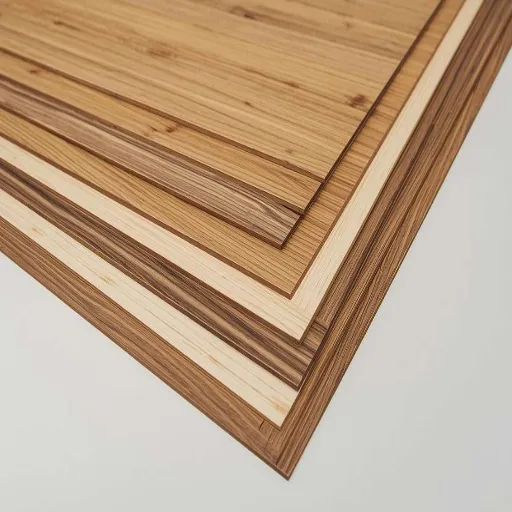
The most common pushback on FSC-certified veneer is the 5 to 15 percent cost premium. The math on that premium is more favorable than it looks at first.
The certified veneer product decreases legal risks through its assurance that all timber resources originate from completely legal and traceable sources. The product achieves LEED Materials and Resources credits while it delivers WELL v2 Indoor Environmental Quality concepts and BREEAM materials credits. Commercial tenants increasingly demand certified interiors, which enables properties to lease their spaces at higher rates while they demonstrate interior certification. The price premium typically pays itself back through one of three channels: regulatory simplicity, green building credits, or tenant attraction.
Engineered veneers are added as an additional selection option. The engineered face manufacturing process uses fast-growing fiber materials, which enables it to avoid using rare-supply species. The cost premium versus the equivalent natural species is often negative.
At VitalWood Global, all panels we create offer FSC-certified faces together with formaldehyde-free cores and recycled-PET acoustic backing as panel specifications. The cost premium requires only a minor expense. The project delivers long-term value, which benefits both the project itself and the entire planet.
Frequently Asked Questions
How much does it cost for wood veneer panels per square foot?
Wood veneer panel prices cost from $5 to $80+ per square foot for the materials in 2026, plus an additional $5 to $15 per square foot for professional installation. Basic residential sheets start at around $5 per square foot, mid-range architectural panels range from $18 to $40, and premium custom or acoustic systems can go up to over $80 per square foot with installation.
Are wood veneer panels cheaper than solid wood?
Answer: Yes. Wood veneer paneling typically costs between 30 and 60 per cent less than solid wood panels because every log produces 45 times more veneer faces than it will solid faces. The sight quality may be 80% to 95% of better value for a much reduced cost in veneer panels.
The average cost of wood veneer paneling installed?
The average wood veneer paneling installed price in 2026 is about $25 to $55/SF installed for standard commercial jobs, while $12 to $25 per square foot applies to domestic renovation works with standard sheets.
How much does FSC certification add to the cost of wood veneer panels?
FSC certification typically adds 5 to 15 percent over uncertified equivalents. Combined certifications (FSC plus CARB P2 plus TSCA Title VI plus low-VOC adhesives) usually add 10 to 20 percent and are often a hard requirement for LEED and WELL projects.
Is wood veneer cheaper than laminate?
The cost of wood veneer panels would be two to five times higher in anticipation of the purchase of laminates. The trade is real wood aesthetics, repairability, and a life span twice that of commercial purposes.
Do custom wood veneer panels cost a lot more than standard ones?
Custom panels will generally add up to 30% more than standard sheets, but premium custom panels with species- and grain-matching will typically push that number to 50% or more. That premium covers control of design, live-to-paint finishes, and a result that looks exactly like the design of the project.
How long do wood veneer panels last for the price?
An average installed commercial wood veneer wall can last 15 to 25 years, and over 25 years residentially. Veneer faces are typically good for one or two refinishings during that period of utility for a longer service life.
Can I install wood veneer panels myself to save money?
For standard residential panels in easy applications, yes; but not for anything as exacting as book-matched panels, acoustic systems, or assemblies needing a fire rating, among other possible traits. Simple jobs genuinely save labor costs, easily exceeded by mess-ups when deals get more intricate.
Why are some wood veneer panels over $80 per square foot?
Premium panels have many features, mainly coming up with the combination of pristine ones: rare species, A-grade veneer with book or sequence matching, fire-rated substrates, custom finishes, acoustic backing, and full certification packages. Every and any additional layer adds 10 to 30 percent to the total price, quickly forming a very high price for these panels.
Do larger projects qualify for volume discounts?
Definitely. There are generous cuts to be paid to volume shoppers. Most panel makers for architectural panels give out discounts of 3-7% in sales of 500-1,000 square feet. For sales above 5,000 square feet, 7-12% discounts are well realized. Discounts on species are dependent upon availability, the level of complexity of finish, and the time taken to deliver.
Conclusion: Pay for the Right Tier, Not the Cheapest Sticker
Wood veneer panels cost start at a few dollars per square foot for hardware-store sheets and go up to $80 or even more for premium architectural systems. Such variation in the prices is neither capricious nor unpredictable. From the cheapest to the most expensive that can be bought reflects an upgrading to a higher grade of veneer, substrate, finish, certifications, or customization. Attend to the echelon, and the economics of construction will work out in your favor.
Basements that cost more than they should, boardroom tables that cost less than they should, and bids with totally unmatching scopes are the greatest cost mistakes rather than the majority of design mistakes. Apply the same solution, which involves clear writing of the RFQ, asking the suppliers to break down everything in their offers to any level of detail, and benchmark based on full prices for the whole duration of the project, and not just the entry level for the panels.
If you are sourcing wood veneer panels for a project right now, VitalWood Global is built to give you a transparent, line-item quote with FSC-certified veneer faces, formaldehyde-free cores, full fire and acoustic documentation, and global delivery. Request a quote from VitalWood Global, and we will help you pick the right tier, the right species, and the right finish for your goals, your timeline, and your budget. Sustainable wood, specified the right way the first time, is always cheaper in the long run.