
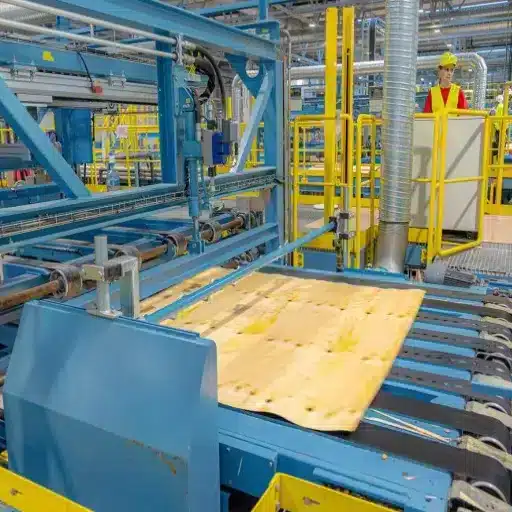
Global Wood Veneer Manufacturing Hubs: A Regional Sourcing Guide for 2026
The world’s top wood veneer manufacturing hubs are concentrated in three regions: Asia-Pacific leads in volume with Vietnam, China, and Indonesia; Europe dominates in quality and sustainability with Germany, the Czech Republic, and Italy; and North America specializes in premium hardwood veneer across the United States and Canada. Where you source directly affects your project’s cost, lead time, quality consistency, and certification compliance.
When procurement director Elena Voss received three quotes for the same walnut veneer specification in March 2026, the prices varied by 340%.
The lowest came from a new Vietnamese mill. The highest from a German manufacturer she had used for years. The middle option was a Pennsylvania supplier she had never considered.
Each quote reflected a different manufacturing reality — different labor costs, different certification standards, different logistics risks, and different quality consistency profiles. She needed more than prices. She needed a map.
That map is what this guide provides.
The global wood veneer market reached $16.74 billion in 2025 and is projected to grow to $21.42 billion by 2034. But those numbers hide a critical truth for buyers: not all manufacturing regions produce the same product.
Whether you are choosing a wood veneer manufacturer for a hospitality rollout or sourcing materials for a single bespoke project, understanding where veneer is made — and why it matters — protects your budget, your timeline, and your quality standards.
Key Takeaways
- Vietnam overtook China in 2023 as the world’s largest veneer producer at 3.03 million m3 annually, while China remains dominant in consumption and plywood integration.
- Asia-Pacific controls 36-38% of global production and offers the lowest costs, but quality consistency varies significantly between established and emerging mills.
- Europe leads in sustainability certification (FSC/PEFC), technical innovation, and premium quality, anchored by the Czech Republic’s most technologically advanced veneer plant.
- North America specializes in premium hardwood species like walnut and white oak, with the shortest lead times for US-based projects.
- 2025-2026 tariff changes — 35% on Canadian wood, 50% on Brazilian — have reshaped trade flows and sourcing economics.
The Global Wood Veneer Manufacturing Landscape
The wood veneer industry is larger and more concentrated than most buyers realize. Understanding the global landscape of wood veneer manufacturing hubs helps you negotiate from a position of knowledge.
Market Size and Regional Share
According to Fortune Business Insights, the global wood veneers market was valued at $16.74 billion in 2025. The regional breakdown tells the sourcing story:
| Region | Market Share (2025) | Estimated Value | Key Strength |
|---|---|---|---|
| Asia-Pacific | 36-38% | ~$6.42 billion | Volume, cost, scale |
| North America | 28% | ~$4.70 billion | Hardwood quality, domestic supply |
| Europe | 24% | ~$4.07 billion | Sustainability, certification, innovation |
| Latin America | 5% | ~$0.88 billion | Tropical species, emerging capacity |
| Middle East & Africa | 4% | ~$0.67 billion | Raw materials, growth potential |
Top Producing Countries by Volume
FAO forest product statistics show the leading producers of veneer sheets:
| Rank | Country | Annual Production | 5-Year Trend |
|---|---|---|---|
| 1 | Vietnam | 3.03 million m3 | +23.55% |
| 2 | China | 2.76 million m3 | -1.85% |
| 3 | United States | 2.31 million m3 | +0.91% |
| 4 | Indonesia | 1.69 million m3 | +5.25% |
| 5 | Russia | 1.63 million m3 | -1.47% |
| 6 | Canada | 588,600 m3 | -1.62% |
| 7 | Brazil | 554,290 m3 | +0.16% |
| 8 | Mexico | 494,880 m3 | +0.08% |
| 9 | Gabon | 475,150 m3 | +4.08% |
| 10 | New Zealand | 450,650 m3 | -1.90% |
These numbers reveal the first critical insight for buyers comparing wood veneer production by country: production leadership and consumption leadership are not the same thing. China produces the second-most veneer globally, yet it is also the world’s largest importer — primarily core veneer to feed its massive plywood industry. Vietnam produces the most, but much of that production is re-exported as finished goods to the US and EU.
Need help navigating regional pricing differences for your project? Our guide to wood veneer manufacturer pricing breaks down how geography affects cost structures.
Asia-Pacific: The Volume Leader
Asia-Pacific remains the dominant global wood veneer manufacturing region, driven by abundant raw materials, low-cost manufacturing, massive domestic construction demand, and established export infrastructure.
China — The Production Giant
China’s veneer production sits at approximately 2.76 million m3 annually. The country is simultaneously a massive producer, consumer, and importer — a unique position that blurs the line between manufacturer and supplier in global trade.
Key manufacturing centers cluster in Guangdong Province, with Dongguan serving as a major timber distribution and processing hub. Major companies like Dongwha Enterprises and Sun Wood Corporation continue investing in R&D to improve veneer quality and diversify product lines.
China’s strength is integration. Its veneer industry feeds the world’s largest plywood manufacturing base — China produces roughly 71% of global plywood. For buyers, this means China excels at volume orders where veneer and plywood come from the same supply chain.
The sourcing profile is clear: China works best for large-volume standard grades, integrated panel production, and projects where cost is the primary driver. Quality inconsistency at lower tiers remains a concern, and China’s import dependency for exotic species means lead times can stretch when domestic species won’t suffice.
Vietnam — The Rising Star
Vietnam is the story of the decade in global veneer manufacturing. With 3.03 million m3 of annual production and a five-year growth rate of 23.55%, Vietnam overtook China as the world’s largest producer in 2023.
Vietnam’s model is different from China’s. It functions primarily as a processing and re-export hub — importing raw timber, processing it into veneer and finished goods, then shipping to the US and EU. This model has made Vietnam particularly attractive as trade tensions redirected orders away from Chinese suppliers.
The country’s share of global wood product exports sits at approximately 7%, and that figure is climbing. For buyers, Vietnam offers cost-competitive face veneer with improved quality standards. The watchouts are raw material dependency — Vietnam imports most of its logs — and quality variation among the country’s hundreds of smaller mills.
Indonesia and Malaysia — The Tropical Legacy
Indonesia produces approximately 1.69 million m3 annually and maintains strong plywood integration. Historically, Indonesia accounted for 70% of Asia-Pacific plywood exports. Malaysia, meanwhile, was once the region’s veneer export powerhouse, shipping 91% of Asia-Pacific veneer exports in the mid-1990s.
Both countries face a shared challenge: declining natural forest resources are pushing producers toward plantation timber, primarily eucalyptus and fast-growing alternatives. For buyers seeking tropical species like meranti or teak, Indonesia and Malaysia remain relevant, but supply is tightening.
India — The Domestic Demand Engine
India’s veneer market is projected to reach $0.73 billion by 2026, driven by rapid construction growth and expanding furniture manufacturing. Greenply Industries and Century Plyboards are expanding regionally with innovative products and broad distribution networks.
India is a significant veneer importer — import volumes have grown at approximately 46% annually — because domestic raw material supply cannot meet demand. For regional Asian supply chains, India offers scale and growing capability. For international buyers, it functions more as a competitor for raw materials than a primary sourcing option.
Europe: The Quality and Sustainability Leader
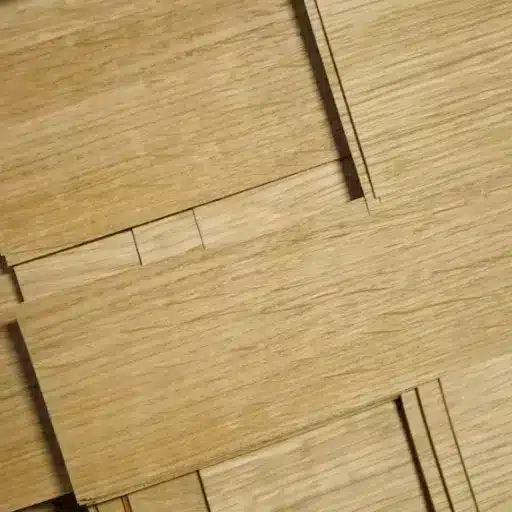
Europe holds 24% of the global veneer market, but its influence exceeds its volume. European manufacturers set the global standard for sustainability certification, technical innovation, and premium quality.
Germany — Precision Engineering Meets Forestry
Germany’s veneer market is projected to be $1.31 billion by 2026. The country’s manufacturers — Kaindl, Richter Furniertechnik, and Danzer’s Kesselsdorf facility — specialize in precision-engineered veneer for luxury furniture and automotive interiors.
Germany’s competitive advantage is regulatory. Strict environmental policies, FSC and PEFC certification dominance, and EU-wide sustainability frameworks make German veneer the default choice for projects requiring a documented chain of custody. The birthplace of Danzer’s patented 3D-Veneer technology, Kesselsdorf represents the intersection of forestry tradition and manufacturing innovation.
For buyers, Germany delivers: premium furniture veneer, certified sustainable products, and technical or engineered veneer requiring tight tolerances.
Czech Republic — The Hidden Industrial Powerhouse
The Czech Republic hosts what may be the most important single facility in the global veneer industry. Danzer Bohemia Dyharna in Mělník and Horní Počaply is the largest and most technologically advanced veneer plant in the world, employing over 500 people and producing everything from standard veneers to rare burls and technical veneers.
A second Danzer facility in Raspenava specializes in spliced veneer faces for doors and panels. Together, these plants represent the pinnacle of veneer manufacturing technology.
For buyers with ultra-premium or technically complex requirements, the Czech Republic offers capabilities no other region can match.
Italy, France, and Austria — Design-Driven Excellence
Italy’s veneer industry is inseparable from its luxury furniture heritage. Companies like ALPI and Tabu lead the world in reconstituted and decorative veneer, supplying architects and designers who specify for high-end interiors. France’s Cedan contributes sophisticated decorative veneer lines. Austria brings Alpine forestry expertise and precision cutting technology.
This cluster excels at design-forward applications where aesthetics drive specification more than cost.
Russia — The Raw Material Giant
Russia produces approximately 1.63 million m3 of veneer annually and possesses some of the world’s largest forest reserves. The country’s strength is raw material abundance and proximity to both European and Asian markets.
For buyers, Russia offers cost-competitive standard grades and raw material access. The watchouts are geopolitical risk, gaps in internationally recognized certification, and exposure to trade restrictions that can disrupt supply without warning.
Poland — The Emerging Exporter
Poland is gaining traction as a processed wood exporter to North America and Europe. EU regulatory compliance, competitive labor costs, and strategic logistics positioning make Poland an increasingly viable option for buyers seeking European standards at moderate cost.
For projects requiring EU-compliant documentation without premium pricing, Poland deserves consideration.
Want to understand how European certification standards compare across regions? Our guide to sustainable wood veneer sourcing covers FSC, PEFC, and LEED documentation in detail.
North America: The Hardwood Specialist
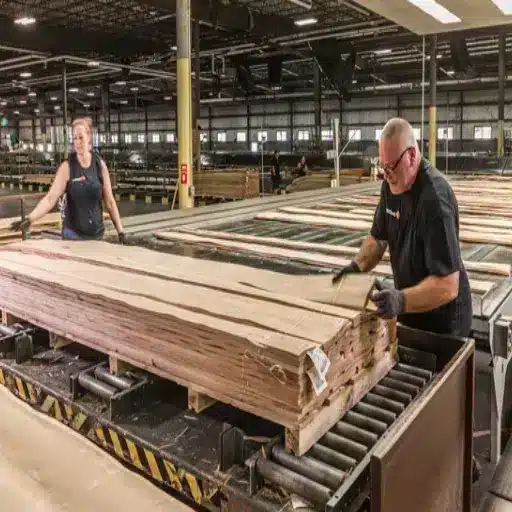
North America controls 28% of the global veneer market and dominates in one category that matters deeply to many buyers: premium hardwood veneer.
United States — Premium Hardwood Powerhouse
The US produces approximately 2.31 million m3 of veneer annually, ranking third globally. But volume understates American strength. The US hardwood veneer sector operates in some of the world’s most valuable timber regions.
Key production centers include:
- Indiana (Edinburgh) — Historically known as the “veneer capital of the world,” this region sits in one of the most valuable hardwood belts globally. Danzer operates a major facility here with proprietary VS4000 slicers.
- Pennsylvania (Williamsport, Darlington, Shade Gap) — Williamsport hosts one of Danzer’s largest US slicing operations. Darlington serves as the central clipping, grading, and sorting hub for North American distribution. Shade Gap specializes in drying demanding hardwoods, particularly thick walnut and maple stock.
- Oregon (Eugene, Springfield) — Murphy Plywood and Timber Products Company anchors the Pacific Northwest plywood and veneer corridor. Roseburg Forest Products adds significant regional capacity.
- Arkansas (Monticello) — Weyerhaeuser announced a $500 million engineered wood products facility investment in late 2024, signaling continued industrial commitment to the region.
For buyers, the US offers what no Asian producer can replicate: native walnut, white oak, and maple processed with short domestic lead times and consistent quality standards.
Canada — The Northern Forestry Anchor
Canada produces approximately 588,600 m3 of veneer annually. A Danzer facility in Durham, Ontario, produces spliced veneer faces for doors and panels, serving both custom and industrial orders.
Canada’s sustainable forest management practices and proximity to the US market are strengths. The watchout is tariff exposure — US tariffs of 35% on Canadian wood products in 2025 significantly disrupted traditional cross-border flows.
Emerging Hubs: Africa and Latin America
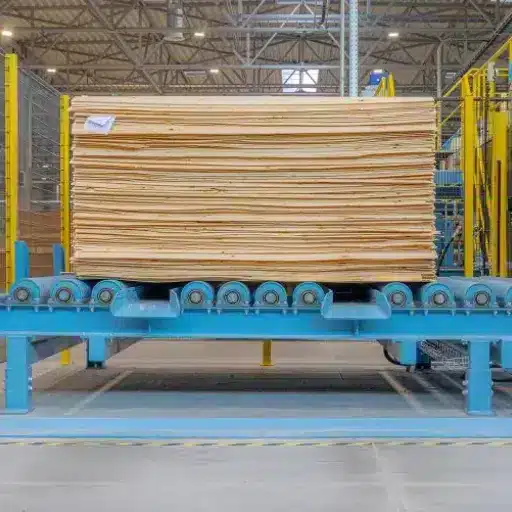
Beyond the three major regions, two emerging hubs deserve attention from buyers seeking diversification or specific species access.
Gabon — Africa’s Rising Producer
Gabon produces approximately 475,150 m3 of veneer with a 4.08% growth trend. The country is leveraging abundant tropical timber resources and increasing foreign investment to build processing capacity.
For buyers seeking tropical species access with competitive pricing, Gabon represents a growing alternative to traditional Asian tropical suppliers.
Brazil and Mexico — The Americas Alternatives
Brazil produces approximately 554,290 m3 annually and holds vast timber resources. However, US tariffs of 50% on Brazilian wood products have severely limited access to the American market.
Mexico, at approximately 494,880 m3, offers a different profile. USMCA trade advantages, growing capacity, and geographic proximity make Mexico an increasingly attractive option for US-facing buyers seeking tariff-advantaged supply.
Trade Dynamics and Tariffs: What Changed in 2025-2026
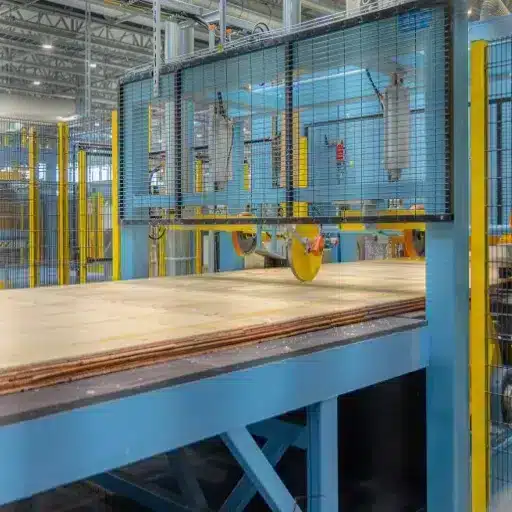
The global veneer sourcing map shifted significantly in 2025-2026 due to trade policy changes. Buyers who ignore these shifts risk budget overruns and supply disruptions.
US Tariff Restructuring
The US imposed 35% tariffs on Canadian wood products and 50% tariffs on Brazilian wood products. These tariffs have rerouted trade flows in measurable ways:
- Cross-border Canadian veneer flows to the US dropped significantly
- Brazilian veneer became economically unviable for most US buyers
- Vietnamese and Chinese suppliers gained market share as alternatives
- Domestic US producers saw increased demand, tightening capacity
EU Deforestation Regulation (EUDR)
The EU’s deforestation regulation, effective in phases through 2025-2026, requires proof that wood products are not linked to deforestation. This regulation favors European domestic producers and certified suppliers while creating compliance hurdles for uncertified tropical sources.
What This Means for Buyers
Trade policy is no longer background noise. It is a primary variable in sourcing decisions. The region that offered the best price last year may not offer it this year. Buyers need regional diversification and real-time awareness of tariff exposure.
Understanding how trade flows affect your lead times and logistics costs? Our guide to wood veneer supply chain covers shipping, packaging, and disruption mitigation strategies.
Regional Comparison: Where to Source What
The decision framework below matches project requirements to the right manufacturing region.
| Factor | Asia-Pacific | Europe | North America |
|---|---|---|---|
| Best for volume | Excellent | Good | Good |
| Best for premium quality | Good | Excellent | Excellent |
| Best for sustainability certs | Good | Excellent | Excellent |
| Lowest cost | Excellent | Moderate | Moderate |
| Shortest lead time (to US) | 8-14 weeks | 6-10 weeks | 2-6 weeks |
| Best for exotic species | Excellent | Moderate | Limited |
| Best for hardwood | Moderate | Good | Excellent |
| Tariff risk (US market) | Moderate | Low | None |
Source from Asia-Pacific When:
- Volume and unit cost are primary decision drivers
- You need an integrated plywood and veneer supply
- Lead time flexibility of 8-14 weeks is acceptable
- Standard or commercial grades meet your specification
Source from Europe When:
- Sustainability certification is required or valued
- Premium quality or technical complexity is essential
- Design-forward or luxury applications demand precision
- EU regulatory compliance is necessary
Source from North America When:
- Premium hardwood species are specified
- Shortest possible lead times are critical
- Domestic sourcing requirements or preferences exist
- Consistent batch-to-batch quality is paramount
Source from Emerging Hubs When:
- Cost optimization with managed risk is the goal
- Tropical species access is needed beyond the Asian supply
- Supply chain diversification is a strategic priority
What These Global Wood Veneer Manufacturing Hubs Mean for Your Next Project
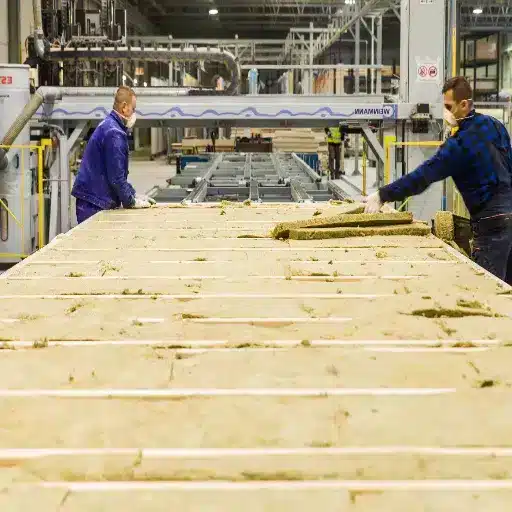
Geography is not destiny in veneer sourcing, but it is a powerful variable. The smartest buyers do not treat the region as an afterthought. They build it into their specification process from the start.
When Marcus Chen, a senior estimator for a Chicago-based millwork firm, bid a 400-panel hotel project in February 2026, he built three sourcing scenarios into his proposal.
The Asian-sourced option saved 28% on material costs but added four weeks to delivery. The European option guaranteed FSC certification and matched the designer’s sample perfectly, but pushed the project 18% over budget.
The domestic Pennsylvania option landed in the middle on cost, delivered two weeks faster than the Asian option, and eliminated tariff risk. The client chose the domestic option. The project’s final invoice came within 2% of Marcus’s estimate.
That is the power of understanding manufacturing hubs. It turns sourcing from a gamble into a structured decision.
The future of global veneer manufacturing points toward convergence.
Asian producers are investing in certification and quality control. European producers are expanding capacity to meet growing demand. North American producers are leveraging technology to maintain competitiveness.
Plantation timber is replacing natural forest harvests across all regions. The gaps between regions are narrowing, but they have not disappeared — and informed buyers can use those gaps to their advantage.
Need multi-regional sourcing guidance for your next project? Contact VitalWood Global to discuss regional options, request samples from specific manufacturing hubs, or review technical data sheets tailored to your application.