

Wood Veneer Supply Chain: A Complete Guide to Sustainable Sourcing, Logistics & Risk Management
The wood veneer supply chain moves raw timber from certified forests through peeling, drying, grading, and pressing before reaching manufacturers, distributors, and architects. Each stage introduces risks: quality inconsistency, regulatory compliance gaps, tariff exposure, and traceability failures that can cost buyers thousands in rework or legal penalties.
You already know sourcing veneer is more complex than ordering standard lumber. But most procurement guides stop at the surface, listing challenges without showing you how to navigate them. That’s a problem when the global wood veneer market is valued at over $16.74 billion, and the EU Deforestation Regulation deadline is now just months away.
In this guide, we map the complete wood veneer supply chain from forest to finished product. You’ll learn the six production stages, five critical risks with mitigation strategies, a seven-point supplier audit framework, and how 2026 trade policies are reshaping where and how you should source.
Key Takeaways
- The wood veneer supply chain has six stages: forestry, conditioning, peeling/slicing, drying/grading, pressing, and distribution — each with distinct quality control checkpoints.
- Raw material costs fluctuate 15–30% annually, making diversified sourcing and forward contracts essential for price stability.
- EUDR compliance is mandatory by December 30, 2026, requiring GPS geolocation data and Due Diligence Statements for every shipment entering the EU.
- AI-driven grading systems now reduce raw material waste by up to 15%, while blockchain traceability provides immutable chain-of-custody records.
- A seven-point supplier audit covering origin documentation, certification validity, and EUDR readiness separates reliable partners from high-risk vendors.
What Is the Wood Veneer Supply Chain?
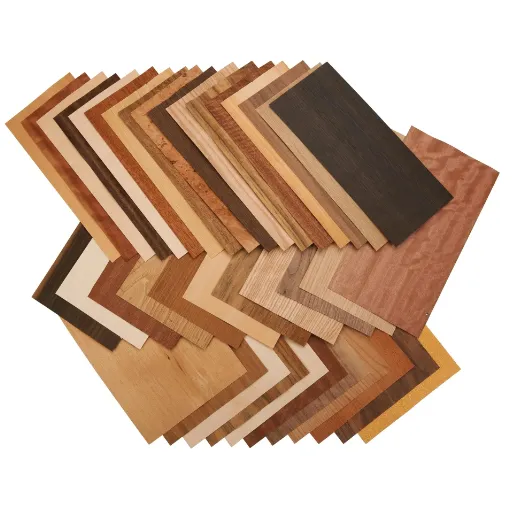
The wood veneer supply chain is the end-to-end flow of materials and information from forest harvesting through manufacturing to final delivery. It differs from solid wood supply chains in one critical way: veneer production adds multiple processing stages — peeling or slicing, drying, grading, and pressing — that each introduce quality variables and traceability complexity.
A single sheet of veneer can pass through six or more facilities before reaching your project. Each handoff is a potential failure point.
Moisture content drifts. Grain patterns mismatch. Certification paperwork gets lost.
That’s why understanding each stage isn’t optional. For serious buyers, it’s a procurement necessity.
The supply chain also operates across vastly different regulatory environments. A log harvested in Indonesia may be sliced in Vietnam, dried in China, pressed onto MDF in Malaysia, and shipped to a millwork shop in Germany.
Each border crossing adds customs complexity, tariff exposure, and documentation requirements. And with 60% or more of manufacturers now prioritizing sustainable sourcing, the pressure to verify every link in that chain has never been higher.
When Marcus, a procurement manager for a mid-sized furniture manufacturer in North Carolina, first started sourcing walnut veneer from Southeast Asia, he assumed the supplier’s FSC certificate covered everything. It didn’t. The certificate applied to the mill, not the specific forest plot where his logs originated.
Six months later, a client audit revealed the gap. Marcus had to switch suppliers mid-production, delaying a $200,000 hospitality project by four weeks. His mistake wasn’t negligence. It was assuming the supply chain was simpler than it actually is.
Stage-by-Stage: From Forest to Finished Product

Stage 1: Forestry and Log Sourcing
Everything starts in the forest. Logs are selected based on species, diameter, straightness, and visible defects. For veneer production, log quality matters more than for sawn timber because slicing and peeling amplify any imperfections.
Legal compliance begins here. The US Lacey Act prohibits trade in illegally harvested wood. The EU Deforestation Regulation (EUDR) goes further, requiring GPS geolocation coordinates for every plot where timber was harvested after December 31, 2020. That data must survive through every downstream processing stage.
Key risk at this stage: Origin fraud. Some suppliers mix legally harvested logs with undocumented timber. The result? Your “certified” veneer may contain material that violates import regulations.
Stage 2: Debarking and Conditioning
Raw logs arrive at the mill with bark intact. Debarking removes the outer layer, exposing the wood beneath. Then logs are conditioned — typically soaked in hot water or steamed at approximately 165 degrees Fahrenheit for up to 16 hours. This softens the wood fibers and ensures clean, smooth cutting in the next stage.
Inconsistent conditioning creates problems that show up later. Under-conditioned logs produce rough veneer surfaces with lathe checks — surface cracks caused by blade pressure. Over-conditioned logs become too soft, leading to torn grain and weak adhesion during pressing.
Key risk at this stage: Temperature and timing variations between batches. Smaller mills often lack precise controls, leading to inconsistent veneer quality across orders.
Stage 3: Peeling or Slicing
This is where the transformation happens. There are two primary methods:
Rotary peeling spins the log against a blade, producing a continuous ribbon of veneer. This method is fast, cost-effective, and commonly used for plywood production. The grain pattern is broad and somewhat random.
Slicing moves rectangular blocks against a stationary blade in crown cut, quarter cut, or rift cut orientations. This produces the architectural-grade decorative veneers used in high-end furniture, cabinetry, and wall panels.
The slicing method directly affects appearance, cost, and yield. Crown cut reveals dramatic cathedral patterns. Quarter cut produces straight, consistent grain ideal for matching across large surfaces. The choice between methods should be specified in your procurement contract — not left to the supplier’s discretion.
Key risk at this stage: Blade quality and maintenance. Dull blades create lathe checks and uneven thickness. Without rigorous QC, defective sheets move downstream and get pressed into finished panels.
Stage 4: Drying and Grading
Freshly peeled or sliced veneer contains 30–60% moisture. Industrial dryers reduce this to 4–12%, with 8% being the ideal target for most applications. Too wet, and you get mold, warping, and poor glue penetration. Too dry, and the surface becomes inactive, preventing proper adhesion.
After drying, sheets are graded by visual quality. The A/B/C/D system is standard in the industry:
- Grade A: Minimal defects, uniform color, premium architectural applications
- Grade B: Minor imperfections acceptable for furniture and cabinetry
- Grade C: More visible defects, suitable for paint-grade or low-visibility uses
- Grade D: Significant defects, typically used for structural or hidden applications
Understanding wood veneer panel grades before you order prevents costly specification mismatches. Grade A walnut costs significantly more than Grade C, but the visual difference is immediate and permanent.
Key risk at this stage: Drying defects and grading inconsistency. Uneven drying causes warping and cracking. Subjective grading means one inspector’s B-grade might be another’s C-grade — unless you specify an accepted standard like WDMA or AWS.
Stage 5: Pressing and Lamination
Dried veneer sheets are bonded to substrates — typically MDF, plywood, or particleboard — using adhesives under heat and pressure. This stage determines the panel’s structural integrity, dimensional stability, and emission profile.
Adhesive selection matters for both performance and compliance. Urea-formaldehyde adhesives are inexpensive but emit volatile organic compounds (VOCs). Phenolic resins offer superior water resistance and lower emissions but cost more. For LEED projects or indoor air quality requirements, specify E0 or E1 emission class adhesives.
Key risk at this stage: Delamination and bond failure. Inadequate pressure, incorrect adhesive spread, or moisture content mismatch between veneer and substrate can cause panels to separate months after installation.
Stage 6: Distribution and Logistics
Finished panels or raw veneer sheets are bundled, warehoused, and shipped to distributors, manufacturers, or end users. This stage introduces risks that have nothing to do with wood quality and everything to do with handling:
- Moisture absorption during ocean transit
- Physical damage from improper strapping or stacking
- Customs delays due to incomplete documentation
- Tariff cost surprises from misclassified HS codes
Key risk at this stage: Moisture damage and documentation gaps. Veneer exposed to humidity changes during shipping can warp before it ever reaches your facility. And a missing phytosanitary certificate can hold a container at port for weeks.
When the team at Meridian Interiors ordered 500 sheets of rift-cut white oak for a commercial lobby installation, the shipment arrived with visible water stains. The ocean container had a slow leak that went undetected for three weeks.
The insurer denied the claim because the damage was “gradual deterioration” rather than sudden loss. Meridian had to reorder at rush pricing, absorbing a $12,000 cost overrun. Their fix? Now they require moisture barrier wrapping and container inspection photos for every international shipment.
Key Supply Chain Risks and Mitigation Strategies
Raw Material Scarcity and Price Volatility
Supply disruptions, weather events, and logging restrictions cause raw material costs to swing 15–30% annually. The Asia-Pacific tropical hardwood supply — including meranti, teak, and gurjan — has tightened significantly, forcing many buyers toward plantation species like eucalyptus.
Mitigation: Diversify your species portfolio. Build a strategic inventory of critical species. Negotiate forward pricing contracts with key suppliers. Monitor trade policy changes that affect your primary sourcing regions.
Quality Inconsistency
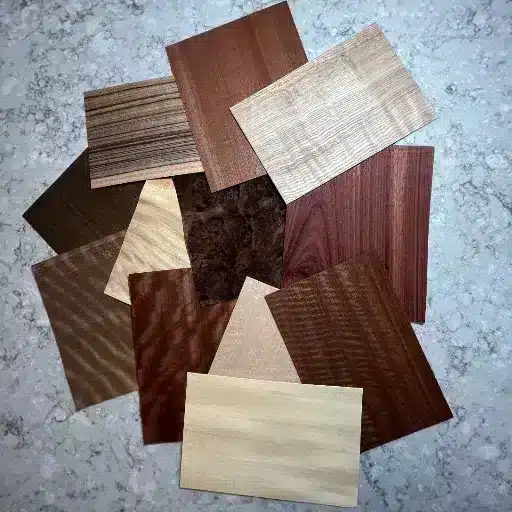
Defect rates range from under 1.5% at top-tier mills to over 2% at less rigorous operations. The gap sounds small until you’re rejecting 20 sheets from a 1,000-sheet order. Color variation, thickness inconsistency, and grain pattern mismatch are the most common complaints.
Mitigation: Require incoming quality control (IQC) protocols in your supplier contracts. Specify batch matching for large installations. Define acceptable defect tolerances in writing before placing orders. Audit mills annually, not just at onboarding.
Regulatory Compliance: EUDR and Lacey Act
The EU Deforestation Regulation sets the highest bar yet for wood product traceability. Large operators must comply by December 30, 2026. Small and medium enterprises have until June 30, 2027. Non-compliance penalties reach up to 4% of total EU annual turnover.
The regulation requires:
- GPS geolocation or polygon data for every harvest plot
- Due Diligence Statements submitted via the EU’s TRACES-NT system
- Risk assessments show deforestation risk is “negligible.”
- Five-year record retention
FSC certification helps, but is not automatically sufficient for EUDR compliance. You still need plot-level geolocation data beyond what FSC currently mandates.
Mitigation: Audit your supplier base now. Request GPS origin data for current inventory. Map your supply chain back to the forest plot, not just the immediate supplier. Implement batch tracking systems before the December deadline.
Tariff and Trade Policy Disruption
US tariffs on wood products have reshaped global trade flows. Canadian wood faces a 35% tariff. Brazilian wood products carry a 50% tariff. These aren’t abstract policy debates — they’re line-item cost increases that can make last year’s cheapest supplier economically unviable today.
Mitigation: Diversify sourcing across multiple tariff jurisdictions. Evaluate near-shoring options where feasible. Confirm HS code classifications with your customs broker before committing to large orders. Build tariff impact into your pricing models.
Logistics and Lead Time Challenges
Ocean freight should be booked three or more months ahead during peak season. Container shortages, port congestion, and weather disruptions continue to extend lead times.
Mitigation: Shift from pure just-in-time to just-in-case inventory for critical species. Use multimodal logistics to reduce the single point of failure risk. Develop relationships with regional backup suppliers who can fill gaps during disruptions.
Want to see how direct manufacturer relationships cut lead times and compliance risk? Explore our wood veneer manufacturer capabilities to compare the supply chain and models.
Sustainability in the Wood Veneer Supply Chain

Chain of Custody: FSC and PEFC
Chain-of-custody certification tracks wood from certified forests through every processing stage to the final product. The two dominant systems are FSC (Forest Stewardship Council) and PEFC (Programme for the Endorsement of Forest Certification).
FSC is stricter and more widely recognized in North American and European markets. PEFC has broader international coverage, particularly in Europe. For LEED projects, FSC is typically the specified standard. Understanding the difference helps you match certification to client requirements.
Chain of custody works by assigning certification numbers to each batch. When a mill processes certified logs, it maintains segregated inventory and passes certification documentation to the next buyer.
That documentation must be intact when you receive the finished product. Any break in the chain — missing paperwork, commingled inventory, unverified subcontracting — voids the certification.
Learn more about certification requirements in our guide to sustainable wood veneer sourcing.
Carbon Footprint Advantage
Veneer production is one of the most material-efficient processes in woodworking. One cubic meter of timber yields approximately 900 square meters of veneer surface area. Compare that to solid wood plank production, which yields roughly 20 square meters from the same volume. That’s a 45x yield advantage.
The utilization rate in veneer production reaches 95%. Peeler cores become MDF feedstock. Clippings and trimmings are recovered for particleboard or biomass energy. Even sawdust finds use in pellet fuel.
Very little enters the waste stream.
This efficiency translates directly into carbon performance. Veneer products sequester carbon over a 20 to 25-year product lifespan while requiring dramatically less harvested timber per square meter of finished surface. For architects and builders targeting net-zero or carbon-neutral projects, that data point belongs in every material specification.
Circular Economy Integration
The veneer supply chain naturally supports circular economy principles. By-products from one stage become inputs for another. End-of-life veneer products are biodegradable and can be processed into mulch, compost, or energy recovery rather than landfill disposal.
At VitalWood Global, we map waste-to-value flows at every production stage. Peeler cores go to engineered wood manufacturers. Green veneer clippings are collected for particleboard production.
Dryer exhaust heat is recovered for facility heating. The result is a supply chain that minimizes waste while maximizing the value extracted from each log.
How to Evaluate a Veneer Supplier’s Supply Chain

The Seven-Point Supplier Audit
Use this framework when vetting new veneer suppliers or auditing existing partners:
- Origin Documentation and GPS Geolocation: Can the supplier provide GPS coordinates or polygon maps for every forest plot where raw timber was harvested? This is now a baseline requirement, not a premium feature.
- FSC or PEFC Certification Validity: Request the certificate number and verify it directly on the certifier’s database. Check that the certification scope covers the specific products you’re buying — not just the company’s general operations.
- Quality Control Protocols: Ask for documented QC processes, including moisture content testing, thickness measurement, visual grading standards, and defect rate tracking. The best suppliers share this data proactively.
- Production Capacity and Lead Time Consistency: Can the supplier reliably meet your volume requirements during peak season? Request references from customers with similar order profiles.
- Financial Stability and Trade References: A supplier’s financial health affects your supply continuity. Request bank references and trade credit reports for orders above your risk threshold.
- EUDR Readiness: With the December 2026 deadline approaching, suppliers should already have traceability systems, DDS submission capability, and risk assessment frameworks in place. If they don’t, that’s a red flag.
- Sustainability Reporting and Carbon Data Transparency: Does the supplier publish environmental impact data? Can they provide carbon footprint estimates for specific products? Transparency here correlates strongly with overall supply chain reliability.
Red Flags to Avoid
- Cannot provide plot-level origin data or evades the question
- Vague, outdated, or missing certification documentation
- Unwilling to share QC records or allow facility audits
- Prices significantly below market rate — this often indicates undocumented or illegally sourced timber
- No EUDR preparation plan with the deadline six months away
- Inconsistent lead times with no explanation or improvement plan
Need help navigating supplier selection? Our guide to custom wood veneer manufacturing breaks down the different production capabilities and which model fits your procurement strategy.
Digital Innovation in Veneer Supply Chains
AI-Driven Grading Systems
Artificial intelligence is transforming how veneer quality is assessed. Computer vision systems scan each sheet for defects, color variation, and grain pattern consistency. The technology then optimizes cutting patterns to maximize usable surface area from each log.
The impact is measurable. AI grading reduces raw material waste by up to 15% compared to traditional visual inspection. For a mill processing 10,000 cubic meters of timber annually, that’s 1,500 cubic meters of additional yield. At current tropical hardwood prices, the value of that recovered material can reach six figures.
Blockchain Traceability
Blockchain technology creates immutable, timestamped records of every transaction in the supply chain. From forest harvest to final delivery, each handoff is recorded in a distributed ledger that cannot be altered retroactively.
For EUDR compliance, this is transformative. GPS geolocation data, harvest dates, processing certificates, and shipping documents can all be stored on-chain. When an EU importer submits a Due Diligence Statement, they can reference blockchain-verified records that prove deforestation-free origin with cryptographic certainty.
Predictive Analytics for Procurement
Machine learning models trained on historical pricing, seasonal demand, and trade policy data can forecast optimal procurement timing. These systems identify when to buy, which species to prioritize, and how much inventory to hold.
Seasonal patterns are particularly valuable. Wood veneer sheet searches peak in February as buyers plan spring projects. Predictive analytics can flag this pattern and recommend procurement in Q4 to avoid the peak-season price premium and capacity constraints.
Regional Sourcing Strategies for 2026
Asia Pacific holds 36 to 40% of global wood veneer production capacity, driven by China’s slicing infrastructure, Vietnam’s re-export processing, and India’s growing domestic market. The region offers cost efficiency and scale but presents EUDR compliance challenges and quality variability.
North America accounts for roughly 25% of the market. US and Canadian mills offer shorter lead times for North American buyers, strong FSC prevalence, and no tariff exposure for domestic purchasers. The tradeoff is higher labor costs and limited availability of exotic species.
Europe represents about 15% of production but shows the fastest growth trajectory. Strict sustainability standards, EUDR-ready supply chains, and premium quality positioning make European mills ideal for architect-grade projects and EU-bound exports.
| Source Region | US Tariff (2026) | EU EUDR Ready | Strengths | Best For |
|---|---|---|---|---|
| Canada | 35% | Yes | FSC prevalence, proximity to the US | Domestic US orders if the tariff is exempted |
| Brazil | 50% | Partial | Exotic species, large scale | Non-US markets only |
| Vietnam | 0–5% | Improving | Cost efficiency, re-export hub | High-volume standard orders |
| China | 0–25%* | Variable | Largest slicing capacity, lowest cost | Budget-sensitive bulk orders |
| Germany/France | 0% | Yes | Premium quality, EUDR-ready | Architectural and LEED projects |
*Varies by product type and trade agreement status.
For a deeper dive into regional capabilities, read our global wood veneer manufacturing hubs guide.
Frequently Asked Questions
How long is the typical wood veneer supply chain?
From forest harvest to finished product delivery, the wood veneer supply chain typically spans 6 to 12 months. Species selection, processing complexity, and logistics distance all affect timing.
Exotic species with limited harvest seasons extend the timeline. Custom slicing and specialized drying add weeks. Ocean freight from Asia to North America or Europe accounts for 4 to 8 weeks alone.
Is FSC certification enough for EUDR compliance?
No. FSC certification demonstrates responsible forest management but does not automatically satisfy EUDR requirements. The EU Deforestation Regulation mandates GPS geolocation data for every harvest plot, risk assessments for source countries, and Due Diligence Statements submitted through the TRACES-NT system. FSC is a strong foundation, but EUDR compliance requires additional documentation and traceability steps.
What is the biggest risk in sourcing wood veneer?
Traceability loss is the most pervasive risk. Industry studies indicate that 20 to 40% of traceability is lost during wood processing stages due to log mixing, incomplete documentation, or subcontracting to unverified facilities. When traceability breaks down, you cannot verify legal origin, sustainability claims, or EUDR compliance — exposing your business to regulatory, financial, and reputational risk.
How can buyers verify a supplier’s sustainability claims?
Request FSC or PEFC certificate numbers and verify them directly on the certifier’s official database. Ask for GPS origin data with harvest coordinates. Review QC records for consistency.
Check for third-party sustainability audits or published environmental reports. And visit the facility if possible. The suppliers most confident in their practices welcome buyer audits.
Conclusion
The wood veneer supply chain is complex, global, and increasingly regulated. From forest geolocation data to pressing parameters, every stage offers opportunities for efficiency and risks of failure. The buyers who thrive in 2026 and beyond will be those who treat supply chain management as a core competency, not an afterthought.
Here’s what to remember:
- Map your supply chain back to the forest plot, not just your immediate supplier
- Diversify sourcing regions to reduce tariff and disruption exposure
- Verify certifications independently — don’t trust supplier claims at face value
- Build EUDR compliance into your procurement process now, before the December deadline
- Embrace digital tools like AI grading and blockchain traceability as competitive advantages
Ready to simplify your veneer sourcing? Connect with our team to explore direct manufacturer partnerships that cut lead times, ensure traceability, and deliver consistent quality from forest to finished product. At VitalWood Global, we believe transparency isn’t just good ethics — it’s good business.