
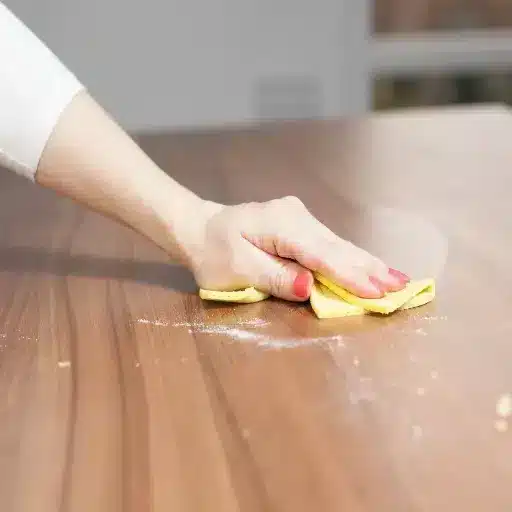
How to Remove Heat Stains from Wood: 7 Proven Methods
The fastest way to remove heat stains from wood is to apply gentle, dry heat with a hair dryer or clothes iron until the trapped moisture evaporates from the finish. Most white or cloudy heat marks are not burns; they are water vapor trapped under the surface coating, which means they can often be reversed in minutes without sanding or refinishing.
Picture this: you set down a hot pizza box during game night, and now your dining table has a pale, ghostly ring. Your first thought might be that the wood is ruined. Take a breath. That milky mark is usually moisture that got cooked into the finish by heat, and it can almost always be coaxed back out. This guide is part of our complete resource on how to remove water stains from wood. By the end, you will know exactly why heat stains happen, how to diagnose whether your mark is fixable at home, and seven methods to remove fresh and old heat stains safely.
Key Takeaways
- Most heat stains are trapped moisture, not burns, so gentle heat or oil-based remedies can restore the finish.
- A hair dryer or clothes iron on a dry cloth removes fresh white marks in 5–15 minutes with an estimated 85–90% success rate.
- Household items like mayonnaise, petroleum jelly, toothpaste, and vinegar can lift older or stubborn stains.
- Always match the method to your finish type; shellac and lacquer respond differently than polyurethane or oil finishes.
- Veneer and antiques need extra caution, while deep burn marks usually require sanding and refinishing.
What Causes Heat Stains on Wood?
Why heat leaves white or cloudy marks
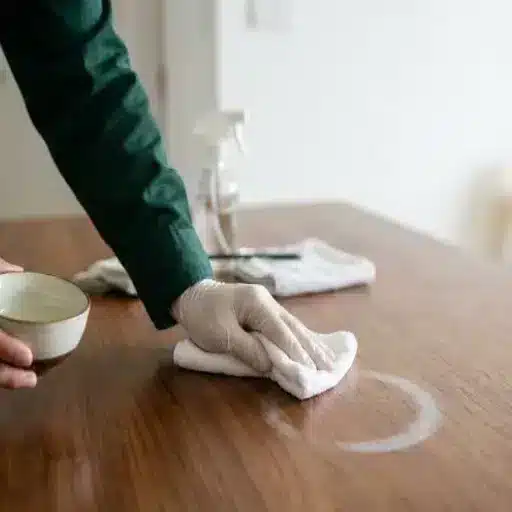
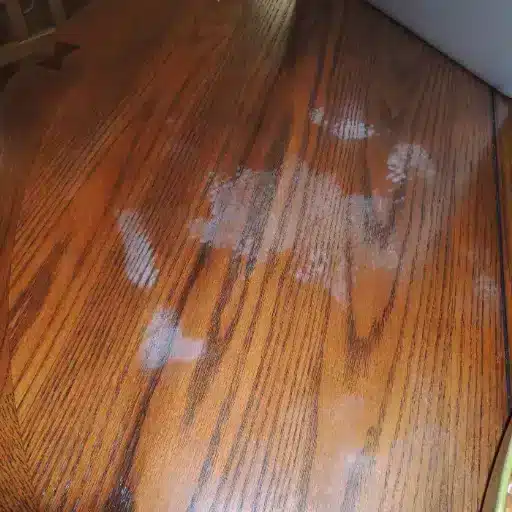
When a hot mug, plate, or box rests on a wood surface, the heat warms the finish enough to draw moisture out of the air or the wood itself. That vapor becomes trapped under the surface film of shellac, lacquer, polyurethane, varnish, or wax. Once it cools, the moisture creates a cloudy or white discoloration that looks a lot like white water stains. Think of it as a tiny blister of water suspended in the finish.
Open-grain woods like oak can hide small stains better because the grain distracts the eye. Tight-grain woods like maple, cherry, or birch show every pale mark because their surfaces are more uniform. This is why the same hot coffee cup might vanish on an oak table but scream for attention on a maple one.
The difference between heat stains and burn marks
A true heat stain is white or hazy and sits in the finish layer. A burn mark is brown or black and has damaged the wood fibers themselves. Burns happen when the heat is extreme, such as a cigarette left unattended or a pan pulled straight from the oven. White haze can usually be reversed. Brown or black char almost always needs sanding, scraping, or professional repair.
Why steam is the enemy
Steam is especially dangerous because it carries both heat and moisture at the same time. A hot casserole dish with trapped condensation, a steaming teapot, or even a damp cloth under a hot plate can drive water deeper into the finish than dry heat alone. That is why the same temperature that causes a small ring from a dry mug can create a much larger cloud from a steaming serving dish.
How to Tell If a Heat Stain Can Be Fixed at Home
Fresh vs. set-in stains
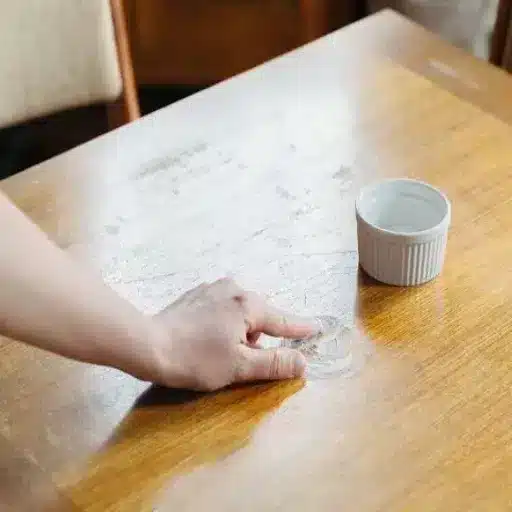
Fresh heat stains, those less than a few days old, are the easiest to fix. The moisture has not had time to bond with the finish, and a few minutes of dry heat often clears it completely. Set-in stains that have been visible for weeks or months are harder to remove because the finish may have partially cured around the moisture. They usually require repeated treatment or an oil-based remedy.
Visual inspection checklist
Before you choose a method, look closely at the mark:
- Is it white, cloudy, or milky? Good candidate for DIY heat or oil methods.
- Is it brown, black, or deeply discolored? Likely a burn that needs refinishing.
- Does it feel rough or raised? The finish may be blistered or cracked.
- Is the wood veneer thin or lifting? Avoid aggressive methods and test a hidden area first.
- Does the mark disappear when you rub it with a little mineral spirits? This can indicate a wax or oil finish that may respond to simpler remedies.
When the damage is too serious
If the mark has penetrated through the finish into the wood itself, or if the finish is cracked and peeling, home remedies will not be enough. In those cases, the best path is to sand the affected area and refinish it. If the piece is an antique, a valuable heirloom, or has a delicate veneer, consult a professional before sanding.
The Best Way to Remove Heat Stains from Wood
Hair dryer method
This is the gentlest first attempt and the one we recommend for fresh stains.
What you need: a hair dryer, a soft cloth, and patience.
- Set the hair dryer to medium heat. High heat can damage the finish or the wood beneath.
- Hold it 4–6 inches above the stain and move it in slow circles. Do not hold it still.
- Wipe the area gently with a soft cloth as the finish warms.
- Continue for 5–10 minutes, checking often. The mark should fade as the moisture escapes.
- If the stain remains, let the surface cool and try again, or move to the iron method.
When Elena noticed a fresh white ring from a takeout container on her walnut coffee table, she grabbed her hair dryer. Within eight minutes of gentle, circular heating, the cloud had completely disappeared. No products, no sanding, just warm air.
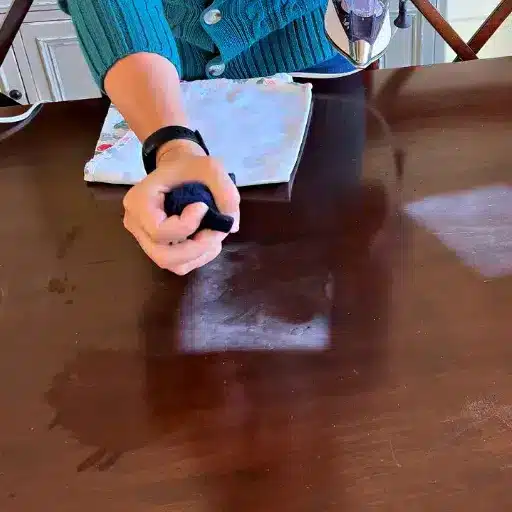
Clothes iron + dry cloth method
This method works faster than a hair dryer because the cloth distributes heat evenly across the mark.
What you need: a clothes iron, a clean white cotton cloth, and a towel.
- Lay the cotton cloth flat over the stain. It should be completely dry.
- Set the iron to low or medium heat with no steam. Steam will make the stain worse.
- Move the iron in small circles over the cloth for 10–20 seconds at a time.
- Lift the cloth and inspect the mark. Repeat as needed, letting the surface cool between passes.
- Once the mark fades, buff the area with a clean, dry cloth.
The dry cloth protects the finish from direct contact while the heat drives the moisture upward. If the mark is stubborn, increase the number of passes rather than the temperature.
Common mistakes to avoid
- Using steam. Steam forces more moisture into the finish and can enlarge the stain.
- Holding heat in one spot too long. This can soften or discolor the finish.
- Starting with high heat. Always begin low and increase only if needed.
- Skipping the test spot. Test any method on an inconspicuous area first, especially on antiques or veneer.
Household Remedies for Heat Stains
If gentle heat does not fully remove the stain, oil-based or mild abrasive remedies can help.
Mayonnaise
Mayonnaise is a classic remedy because the oil displaces trapped moisture while the mild acids in vinegar help break up the haze.
How to use it:
- Spread a thin layer of plain mayonnaise over the stain.
- Let it sit for at least one hour, or overnight for older stains.
- Wipe it away with a soft cloth.
- Buff the area with a clean, dry cloth.
Petroleum jelly
Petroleum jelly works on the same principle as mayonnaise: the oil slowly seeps into the finish and replaces the water. It is a good option if you do not want the vinegar acids in mayonnaise.
How to use it:
- Apply a generous layer over the mark.
- Cover it with plastic wrap if you want to leave it overnight without dust sticking.
- Wipe clean and buff the next day.
Non-gel toothpaste + baking soda
This mild abrasive can polish away a thin haze from the surface of the finish.
How to use it:
- Mix equal parts non-gel toothpaste and baking soda.
- Apply with a soft, damp cloth and rub gently in circular motions.
- Wipe clean with a damp cloth, then dry thoroughly.
- Use this only on hard finishes like polyurethane or varnish, not on shellac or soft wax.
Vinegar and olive oil
A mixture of white vinegar and olive oil can lift haze while conditioning the wood. The vinegar cuts through the moisture; the oil replenishes the finish.
How to use it:
- Mix one part white vinegar with two parts olive oil.
- Apply a small amount to a soft cloth.
- Rub with the grain in small circles.
- Wipe away excess and buff.
Salt and olive oil paste
For a very mild abrasive, mix table salt with olive oil to create a paste.
How to use it:
- Combine enough salt and olive oil to form a thick paste.
- Rub gently over the stain with a soft cloth.
- Wipe clean and buff dry.
If none of these household remedies work, the stain may have set too deeply into the finish. At that point, you may need a commercial remover or a refinishing approach.
How to Remove Heat Stains by Finish Type
Matching the remedy to your finish reduces risk and improves results. If you are unsure what finish you have, test a hidden spot first.
Shellac and lacquer finishes
Shellac and lacquer are common on older furniture and antiques. They are beautiful but can blush or turn cloudy when exposed to moisture and heat. For these finishes, gentle heat is usually the safest first step. If that fails, a product like Mohawk No-Blush or a blush retarder can dissolve the trapped moisture and restore clarity. For a comparison of commercial products, see our guide to the best water stain removers for wood.
Avoid abrasive pastes on shellac. They can cut through the thin finish quickly and leave dull spots.
Polyurethane and varnish finishes
Modern furniture is often coated with polyurethane or varnish, which are harder and more moisture-resistant than shellac. Heat stains on these finishes tend to sit closer to the surface, so the hair dryer or iron method usually works well. If a haze remains, the toothpaste and baking soda method can polish it away gently.
Oil and wax finishes
Oil and wax finishes do not form a hard film, so heat stains are less common but can still occur if wax traps moisture. For these finishes, try the vinegar and olive oil mixture or petroleum jelly. Heat methods can melt the wax and spread the stain, so use low heat and keep the iron moving.
Veneer and antique pieces
Veneer is a thin slice of wood glued over a substrate. Too much heat can loosen the glue or blister the veneer. Always use the lowest heat setting, keep the heat source moving, and test on the underside or back of the piece first. For more detailed guidance on delicate surfaces, see our article on how to remove water stains from wood veneer. If the furniture is antique or valuable, consider hiring a restorer rather than risking damage.
Mike inherited a mid-century dining table with a lacquered top and a large heat stain from a casserole dish. He tried the hair dryer first with no luck, then applied a blush retarder with a soft cloth. Within twenty minutes, the cloud lifted and the original sheen returned. For delicate finishes, the right product can be safer than brute-force heat.
When DIY Methods Fail: Sanding and Refinishing
How to know it is time to sand
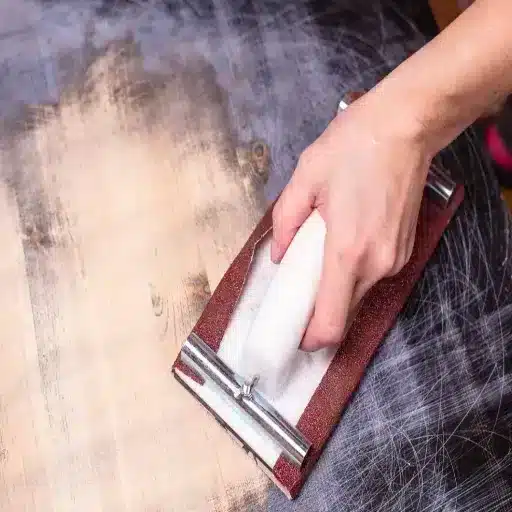
If the stain has been present for months, has turned dark, or has cracked the finish, DIY remedies may only fade it. At that point, sanding is the most reliable solution.
Sanding technique for heat stains
- Remove the old finish from the affected area with a chemical stripper or by sanding.
- Start with 120-grit sandpaper and sand with the grain.
- Progress to 180-grit and then 220-grit for a smooth surface.
- Feather the edges into the surrounding finish so the repair blends.
- Wipe away dust with a tack cloth.
Restraining and sealing the area
- Apply a wood stain that matches the surrounding color. Test it on a hidden area first.
- Wipe away excess stain and let it dry according to the manufacturer’s instructions.
- Apply a clear topcoat such as polyurethane, varnish, or shellac.
- Sand lightly between coats with 320-grit sandpaper for a professional look.
If you need help matching stain or choosing a durable finish, test products on a hidden area first and follow the manufacturer’s instructions.
How to Prevent Heat Stains on Wood
Use coasters, trivets, and placemats
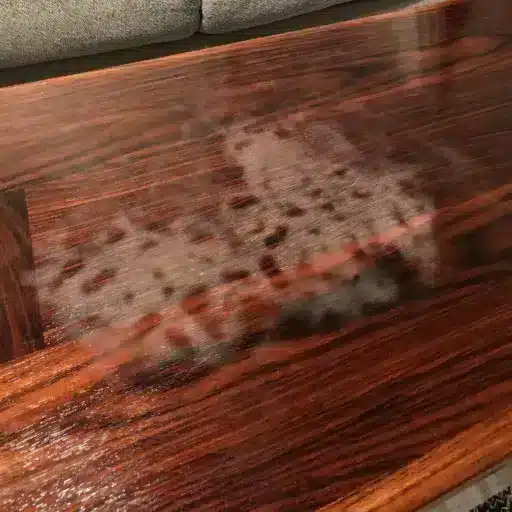
The simplest prevention is also the most effective. Coasters catch condensation from cold drinks; trivets and placemats create a barrier between hot dishes and the finish. Choose felt-backed options to avoid scratches.
Maintain the protective finish
A healthy finish is your best defense. Over time, finishes wear thin and become more porous. Reapply wax, oil, or polyurethane as needed to maintain a moisture-resistant barrier. A well-maintained finish is far less likely to blush when it meets heat.
Quick cleanup habits
If a hot dish does touch the wood, move it quickly and wipe away any moisture. The less time heat and water sit together, the smaller the chance of a stain forming. Keep a soft cloth nearby during meals so you can act fast.
For a full prevention plan, read our complete guide on how to prevent water stains on wood.
FAQ
Are heat stains on wood permanent?
Most white heat stains are not permanent. Because they are caused by moisture trapped in the finish, they can usually be removed with gentle heat or oil-based remedies. Dark burn marks, however, are permanent damage to the wood fibers and require sanding or refinishing.
What causes heat stains on wood?
Heat stains form when hot objects warm the finish enough to draw moisture into it. The moisture becomes trapped beneath the surface film and cools into a cloudy or white mark. Steam is especially likely to cause staining because it combines heat and moisture.
Can you use a clothes iron to remove heat stains?
Yes. A clothes iron set to low or medium heat with no steam, placed over a dry cotton cloth, is one of the most effective ways to draw moisture out of a finish. Keep the iron moving and check the mark frequently.
Does mayonnaise remove heat stains from wood?
Mayonnaise can remove heat stains for many people because the oils displace trapped moisture and the mild acids help clear the haze. It works best on fresh to moderately set stains. Apply a thin layer, let it sit for an hour or overnight, then wipe and buff.
What is the fastest way to remove heat stains from wood?
The fastest method is a hair dryer on medium heat held 4–6 inches above the stain. Fresh stains often clear in 5 minutes or less. For slightly older stains, the clothes iron method is faster because it covers more area evenly.
Can steam remove heat stains from wood?
No. Steam usually makes heat stains worse by adding more moisture under the finish. Always use dry heat when treating a heat stain.
How do you remove old heat stains from wood?
Old stains may need repeated treatments. Start with dry heat, then try mayonnaise or petroleum jelly overnight. If the stain remains, the moisture has likely bonded with the finish and you may need to sand and refinish the area.
How do you prevent heat stains on wood?
Use coasters, trivets, and placemats; maintain the protective finish; and wipe up moisture quickly. A well-sealed surface is much less likely to stain.
Conclusion
Heat stains look alarming, but they are usually just moisture trapped under the finish, not permanent burns. Knowing how to remove heat stains from wood can save a table, chair, or cabinet from unnecessary refinishing. Start with the gentlest method, dry heat from a hair dryer or iron, and escalate only if the stain refuses to budge. Match your approach to the finish, test hidden areas first, and remember that veneer and antiques deserve extra care.
If the stain is fresh, act quickly. If it is old, be patient and repeat the treatment. And when prevention is the goal, simple habits like coasters and regular finish maintenance will keep your wood looking its best for years.
For related repair guidance, see our complete guide to removing water stains from wood or learn how to handle white water stains, furniture stains, and veneer damage.