
How to Remove White Water Stains from Wood: 8 Proven Methods
The fastest way to remove white water stains from wood is to apply gentle, dry heat with a hair dryer or a clothes iron over a dry cloth. These white or cloudy marks are almost always moisture trapped in the finish layer, not damage to the wood itself, which means they can usually be reversed in minutes without sanding.
Picture this: you lift your morning coffee mug and notice a pale, ghostly ring on the dining table. Your stomach drops. Before you panic, take a closer look. If the mark is white, milky, or hazy, it is likely just water vapor suspended under the surface coating. This guide is part of our complete resource on how to remove water stains from wood. By the end, you will know exactly why white water stains happen, how to diagnose them, and eight safe ways to make them disappear.
Key Takeaways
- White water stains are trapped moisture in the finish, not burns or deep wood damage.
- Dry heat from a hair dryer or iron removes fresh white stains in 5-15 minutes with an estimated 85-90% success rate.
- Household items like mayonnaise, petroleum jelly, vinegar, and baking soda can lift older or stubborn marks.
- Always match the method to your finish type; shellac and lacquer need gentler treatment than polyurethane.
- Test every remedy in a hidden area first, and escalate to sanding or commercial removers only when DIY methods fail.
What Are White Water Stains on Wood?
Why do they look white or cloudy
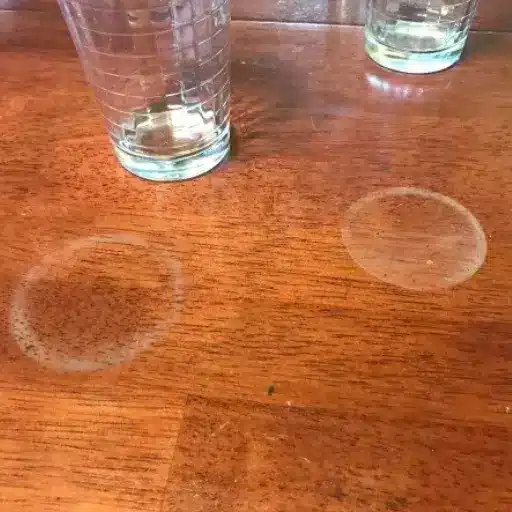
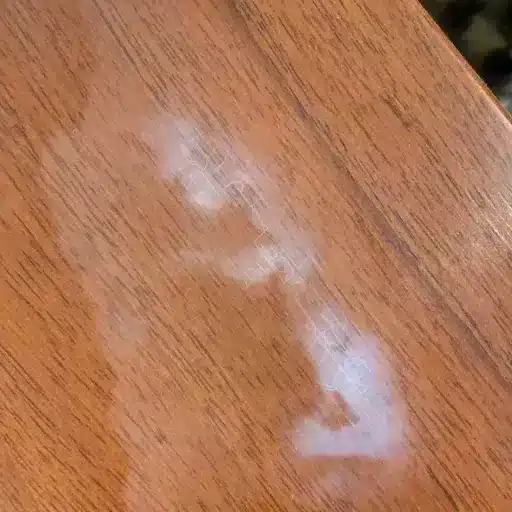
When a cold glass, hot mug, or damp cloth rests on a finished wood surface, the temperature difference can draw moisture into the finish layer. That moisture becomes trapped between the surface film and the wood beneath. Because the water scatters light, the area looks white, cloudy, or hazy. Think of it as a tiny blister of water sitting just under the clear coat.
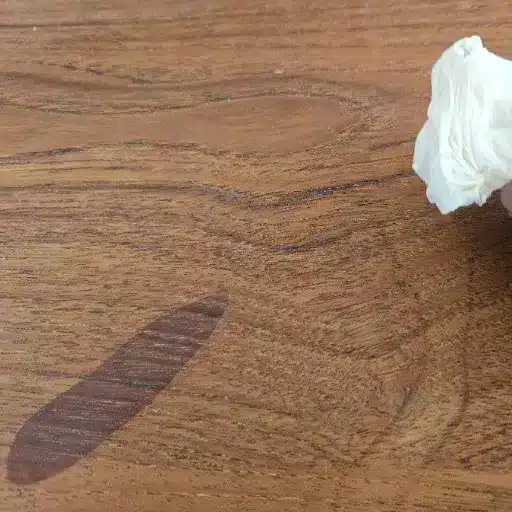
This is very different from dark water stains. A dark mark means the water has soaked through the finish and into the wood fibers, often reacting with tannins to create brown or black discoloration. White stains are surface-level. Dark stains are deeper and harder to fix.
White stains vs. dark stains
Knowing which type of mark you have will save you time and prevent unnecessary damage.
| Feature | White Water Stain | Dark Water Stain |
|---|---|---|
| Color | White, cloudy, milky | Brown, black, gray |
| Depth | In the final layer | Through finish into wood |
| Cause | Trapped moisture | Water penetration + oxidation/tannins |
| Fix difficulty | Usually easy | Often requires sanding or bleaching |
| Best first step | Dry heat | Assess before acting |
If you see a dark stain, this article is not the right starting point. See our guide on how to remove dark water stains from wood for deeper damage strategies.
Common causes
White water stains usually come from everyday moments:
- A cold glass left on a table without a coaster
- A hot mug that sweats as it cools
- A damp vase or flower pot sitting too long
- A wet cloth placed under a hot dish
- High humidity combined with a cold object on the surface
The faster you act, the better your chances of removing the stain completely.
How to Diagnose Your White Water Stain
Visual inspection checklist
Before you reach for any remedy, examine the mark carefully:
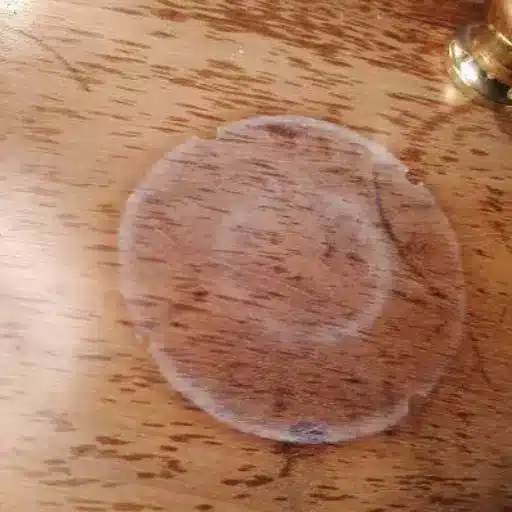
- Is it white, cloudy, or hazy? Good candidate for heat or oil methods.
- Is it raised or rough? The finish may be blistered and needs careful handling.
- Does it follow the shape of a glass, mug, or vase? This confirms a water ring.
- Is the surrounding finish intact? If the finish is cracking or peeling, be extra cautious.
- Does it disappear slightly when rubbed with a soft, dry cloth? Sometimes the haze is just surface residue.
Touch and finish tests
Run your finger lightly over the mark. If it feels smooth, the moisture is under the finish. If it feels rough or raised, the finish itself may be damaged.
To identify your finish type, find a hidden spot such as the underside of the table or the back of a leg. Dab a small amount of denatured alcohol on a cotton ball and rub gently. If the finish dissolves or becomes sticky, it is likely shellac. If it does not react, it is probably polyurethane, varnish, or lacquer. Oil and wax finishes will feel slightly greasy and will absorb the alcohol slowly.
When the stain is too deep
If the mark has been there for months, has turned dark, or has cracked the finish, DIY methods may only lighten it. At that point, sanding, bleaching with oxalic acid, or professional refinishing may be necessary.
Sarah noticed a fresh white ring on her walnut coffee table after a dinner party. She ran her finger over it; the surface felt smooth. Within five minutes of gentle heat from a hair dryer, the cloud had vanished. Acting fast and diagnosing correctly saved her from an unnecessary refinishing project.
The Best Methods to Remove White Water Stains from Wood
Start with the gentlest method and escalate only if the stain remains. Patience is your best tool here.
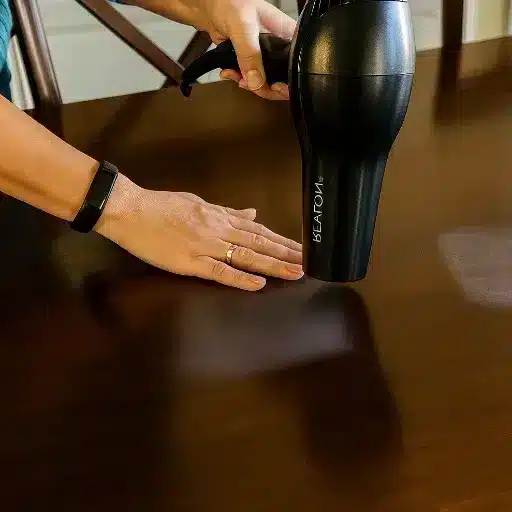
1. Hair dryer method
This is the fastest first attempt for fresh white stains.
What you need: a hair dryer, a soft cloth.
- Set the hair dryer to medium or low heat. High heat can damage the finish.
- Hold it 4-6 inches above the stain and move it in slow circles.
- Wipe the area gently with a soft cloth as the finish warms.
- Continue for 5-10 minutes, checking often.
- If the mark fades but does not disappear, let the surface cool and repeat.
The warm air evaporates the trapped moisture without introducing any new liquids or abrasives.
2. Clothes iron + dry cloth method
This method covers more area evenly and works well on stubborn white rings.
What you need: a clothes iron, a clean white cotton cloth.
- Empty all water from the iron and turn the steam setting off.
- Lay the dry cotton cloth flat over the stain.
- Set the iron to low or medium heat.
- Move the iron in small circles over the cloth for 10-20 seconds at a time.
- Lift the cloth and inspect the mark. Repeat as needed, letting the surface cool between passes.
Never leave the iron in one spot. The goal is gentle, moving heat, not pressure or scorching.
3. Mayonnaise
Mayonnaise is a classic remedy because the oil displaces trapped moisture while the mild acids help clear the haze.
How to use it:
- Spread a thin layer of plain, full-fat mayonnaise over the stain.
- Let it sit for at least one hour, or overnight for older marks.
- Wipe it away with a soft cloth.
- Buff the area with a clean, dry cloth.
4. Petroleum jelly
Petroleum jelly works on the same principle as mayonnaise, but without the vinegar acids. It is a good choice for delicate finishes.
How to use it:
- Apply a generous layer over the mark.
- Cover it with plastic wrap if leaving it overnight.
- Wipe clean and buff the next day.
5. White vinegar and olive oil
This mixture lifts haze while conditioning the wood. The vinegar cuts through the moisture; the oil restores the sheen.
How to use it:
- Mix equal parts white vinegar and olive oil.
- Apply a small amount to a soft cloth.
- Rub with the wood grain in gentle circles.
- Wipe away excess and buff.
6. Baking soda paste
Baking soda is a mild abrasive that can polish away a thin haze from harder finishes.
How to use it:
- Mix baking soda with a few drops of water to form a thick paste.
- Apply to the stain with a soft, damp cloth.
- Rub gently in circular motions for 30-60 seconds.
- Wipe clean and buff dry.
Use this only on hard finishes like polyurethane or varnish. Avoid shellac, lacquer, and oil finishes.
7. Non-gel toothpaste
Plain white toothpaste can act as a gentle polish for surface haze.
How to use it:
- Apply a small amount of non-gel toothpaste to a damp, soft cloth.
- Rub the stain gently in circular motions.
- Wipe clean with a damp cloth.
- Dry and buff thoroughly.
8. Salt and olive oil paste
For a very mild abrasive, mix table salt with olive oil.
How to use it:
- Combine enough salt and olive oil to form a thick paste.
- Rub gently over the stain with a soft cloth.
- Wipe clean and buff dry.
Choosing the right finish matters. If you are unsure what type of finish is on your furniture, our guide to the best water stain removers for wood explains which commercial products work best on which surfaces.
Removing White Water Stains by Finish Type
Matching the remedy to your finish reduces risk and improves results.
Polyurethane and varnish finishes
Modern furniture is usually coated with polyurethane or varnish. These finishes are hard and moisture-resistant, so white stains tend to sit close to the surface. The hair dryer or iron method usually works well. If a light haze remains, baking soda or toothpaste can polish it away gently.
Shellac and lacquer finishes
Shellac and lacquer are common on older or antique furniture. They can blush or turn cloudy when exposed to moisture. For these finishes, start with gentle heat. If that does not work, a blush retarder or a product like Mohawk No-Blush can dissolve the trapped moisture and restore clarity. Avoid abrasive pastes on these thin finishes.
Oil and wax finishes
Oil and wax finishes do not form a hard film, so white stains are less common but can still occur. Try petroleum jelly or the vinegar and olive oil mixture. Heat methods can melt wax and spread the haze, so use the lowest heat setting and keep the iron moving.
Veneer and antique pieces
Veneer is a thin slice of wood glued over a substrate. Too much heat or moisture can loosen the glue or blister the veneer. Always test on the underside or back of the piece first. Use the lowest heat setting and the gentlest remedies. If the furniture is antique or valuable, consider hiring a professional restorer.
David inherited a mid-century sideboard with a lacquered top and a cloudy white ring from a flower vase. He tried the hair dryer first with no success, then applied a blush retarder with a soft cloth. Within fifteen minutes, the cloud lifted and the original gloss returned. For delicate finishes, the right product can be safer than scrubbing.
When DIY Methods Fail
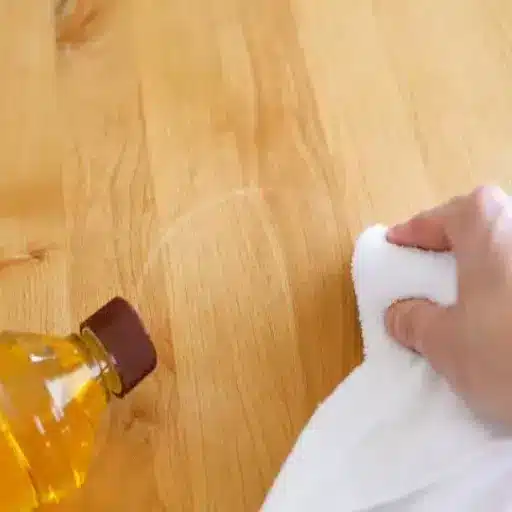
Commercial removers
If household remedies do not fully remove the stain, a commercial white water stain remover or tannin spot remover may help. Look for products designed for finished wood and follow the manufacturer’s instructions exactly. Oxalic acid-based products can lighten dark stains but may also lighten the surrounding wood, so test carefully.
Sanding and refinishing basics
For stains that have penetrated the finish, sanding may be the only solution.
- Remove the old finish from the affected area with a chemical stripper or by sanding.
- Start with 120-grit sandpaper and sand with the grain.
- Progress to 180-grit and then 220-grit for a smooth surface.
- Feather the edges into the surrounding finish.
- Apply a matching stain and clear topcoat.
When to call a professional
If the piece is an antique, has a delicate veneer, or would be expensive to replace, consult a professional furniture restorer. They can match finishes, repair veneer, and avoid causing more damage than the original stain.
How to Prevent White Water Stains on Wood
Use coasters and trivets
The simplest prevention is also the most effective. Coasters catch condensation from cold drinks. Felt-backed coasters also protect against scratches. Trivets create a barrier for hot dishes that might sweat as they cool.
Maintain the protective finish
A healthy finish is your best defense. Over time, finishes wear thin and become more porous. Reapply wax, oil, or polyurethane as needed to maintain a moisture-resistant barrier. A well-sealed surface is far less likely to stain.
Wipe moisture quickly
If a glass sweats or a spill happens, wipe it up immediately. The less time moisture sits on the surface, the smaller the chance it will become trapped under the finish.
For a full prevention plan, read our complete guide on how to prevent water stains on wood.
FAQ
Are white water stains on wood permanent?
Most white water stains are not permanent. Because they are caused by moisture trapped in the finish, they can usually be removed with gentle heat or oil-based remedies. Dark stains, however, involve the wood fibers themselves and are much harder to reverse.
What causes white water stains on wood?
White water stains form when moisture from a cold glass, hot mug, or damp object becomes trapped under the wood’s protective finish. The water scatters light, creating a cloudy or white appearance.
Can mayonnaise remove white water stains from wood?
Yes. Mayonnaise can remove many white water stains because the oils displace trapped moisture and the mild acids help clear the haze. It works best on fresh stains to set moderately.
Does toothpaste remove white water rings from wood?
Non-gel white toothpaste can act as a mild abrasive and polish away thin surface haze. It works best on hard finishes like polyurethane or varnish, not on soft finishes like shellac or wax.
Can you use a hair dryer to remove white water stains?
Yes. A hair dryer on medium or low heat is one of the fastest ways to remove fresh white water stains. Hold it 4-6 inches away and keep it moving.
How do you remove old white water stains from wood?
Old stains may need repeated treatments or longer sitting times. Try petroleum jelly or mayonnaise overnight. If the stain remains, the moisture may have bonded with the finish, and you may need a commercial remover or sanding.
What is the difference between white and dark water stains?
White stains are moisture trapped in the finish layer. Dark stains mean water has penetrated the finish and into the wood, often reacting with tannins and causing discoloration.
How do you prevent white water rings on a wood table?
Use coasters under drinks, wipe up moisture quickly, maintain the protective finish, and avoid placing cold or hot objects directly on the wood.
Conclusion
White water stains look alarming, but they are usually just moisture trapped under the finish. Knowing how to remove white water stains from wood can save a table, chair, or cabinet from unnecessary refinishing. Start with the gentlest method, dry heat, and escalate only if the mark refuses to budge. Match your approach to the finish, test hidden areas first, and remember that veneer and antiques deserve extra care.
If the stain is fresh, act quickly. If it is old, be patient and repeat the treatment. And when prevention is the goal, simple habits like coasters and regular finish maintenance will keep your wood looking its best for years.
For related repair guidance, see our complete guide to removing water stains from wood or learn how to handle heat stains, furniture stains, veneer damage, and commercial removers.