
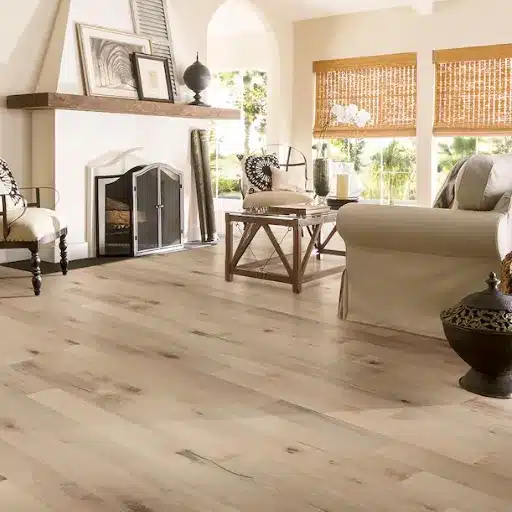
Maple Flooring Cost: 2026 Price Per Square Foot Guide
Maple flooring cost in 2026 typically lands between $6 and $17 per square foot installed for a standard residential project, with most homeowners paying $8 to $15 and premium wide-plank or solid configurations climbing above $20. Engineered maple runs roughly 15% to 30% less than solid maple, while the full price depends on grade, board width, finish, and your region. This guide breaks down every dollar, from material to labor to the hidden costs most quotes leave out, so you can budget with confidence instead of guessing.
Maple floors are beautiful, and they are everywhere: bright kitchens, modern condos, even the gym floor your kids play basketball on. The price confusion is real too. Ask five sites what maple costs and you will hear five different answers, because they are quoting different grades, formats, and line items. When Marcus priced a maple floor for his 500-square-foot living space, three contractors returned quotes from $5,900 to $11,300 for what looked like the same wood. The difference was not the maple. It was grade, width, finish, and the charges nobody mentioned until the invoice arrived.
In this guide you will get current 2026 price ranges for solid and engineered maple, the five factors that move a quote by dollars per square foot, the hidden costs competitors skip, a realistic 500-square-foot budget, and the honest answer on whether maple costs more than oak. Let us build your budget together.
Key Takeaways
- Maple flooring runs roughly $6 to $17 per square foot installed for typical residential projects in 2026; premium solid or wide-plank setups can reach $20+.
- Engineered maple is typically 15% to 30% cheaper than solid maple upfront, though solid can win on lifetime value because it can be refinished more times.
- Grade and board width swing quotes by $2 to $5 per square foot; Select maple costs noticeably more than #1 Common or Character grades.
- Hidden costs, including old-floor removal, subfloor prep, trim, and wastage, add 10% to 25% above the per-square-foot quote.
- Maple is usually $1 to $3 per square foot more than red oak, with white oak landing closest to maple in price.
How Much Does Maple Flooring Cost in 2026?
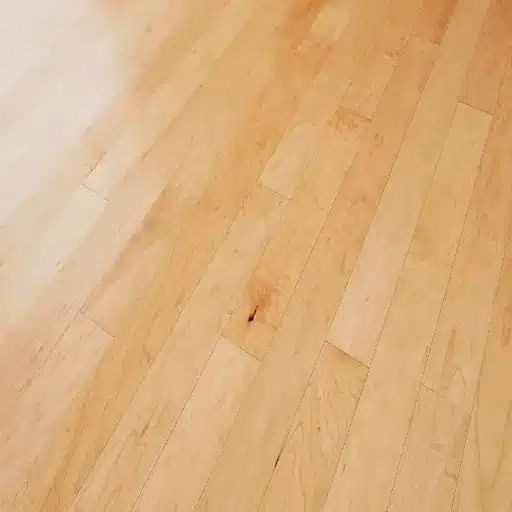
Maple flooring cost in 2026 ranges from about $5 to $25 per square foot installed, with the vast majority of standard residential projects falling between $8 and $15. Material alone runs $2.50 to $10 per square foot depending on whether you choose solid or engineered maple, and labor adds roughly $3 to $6. These ranges come from current flooring price guides, including Bruce’s maple flooring cost guide and retailer pricing, and they assume a straightforward room on a flat subfloor.
Use this table as your quick reference. It shows material, installed, and the typical use case for each maple option.
| Maple Flooring Option | Material per Sq Ft | Installed per Sq Ft | Best For |
|---|---|---|---|
| Solid maple, unfinished, #1 Common | $4 to $6 | $8 to $12 | Custom site finishing, long-term homes |
| Solid maple, prefinished, Select | $7 to $10 | $11 to $16 | Buyers who want factory finish and warranty |
| Engineered maple, 2 mm wear layer | $3 to $5 | $6 to $9 | Budget-conscious, stable rooms |
| Engineered maple, 3 to 4 mm wear layer | $5 to $8 | $8 to $12 | Most homes, refinishing option later |
| Engineered maple, 6 mm+ / wide plank | $8 to $12 | $12 to $18 | Premium look, over slabs or radiant heat |
| Wide-plank solid maple (5 in+) | $11 to $16 | $16 to $22+ | High-end, open-plan spaces |
A typical 500-square-foot maple project runs about $4,250 to $11,000 installed, while 1,000 square feet lands closer to $6,000 to $20,000+. Those totals assume a straightforward rectangular room, professional installation, and standard grades. Before you commit to a species and format, our full guide to engineered maple flooring walks through wear layers, cores, and spec-sheet checks.
Solid vs Engineered Maple: Cost per Square Foot
The biggest single decision in your budget is format. Solid maple is a full piece of hardwood, usually 3/4 inch thick. Engineered maple is a real maple wear layer bonded to a cross-laminated core. They look similar, but they cost differently and behave differently over time.
Solid Maple Prices by Grade
Solid maple material runs about $2.50 to $10 per square foot, with unfinished boards commonly $4 to $6. Grade drives much of that spread:
| Solid Maple Grade | Material per Sq Ft | What It Looks Like |
|---|---|---|
| Select / Clear | $7 to $9 | Nearly uniform color, few knots or mineral streaks |
| #1 Common | $4 to $6 | Some color variation and small character, still clean |
| Character / Rustic | $3.50 to $5 | Visible knots, streaks, and natural markings |
If you want the clean, seamless maple look, Select is worth its premium. If you can embrace a little natural character, #1 Common delivers the same species and hardness for noticeably less. The wood itself is hard maple in almost every flooring case; the grade is about appearance, not durability.
Engineered Maple Prices by Wear-Layer Tier
Engineered maple material runs about $3 to $9 per square foot. The price rises with the thickness of the real maple wear layer and the quality of the core:
| Engineered Tier | Wear Layer | Material per Sq Ft | Refinishing Potential |
|---|---|---|---|
| Budget | 2 mm | $3 to $5 | One careful sand at most |
| Mid-range | 3 to 4 mm | $5 to $8 | One to three sands |
| Premium | 6 mm+ | $8 to $12 | Approaches solid maple |
| HDF core (any layer) | Any | varies | Screen-and-recoat only |
A thicker wear layer costs more upfront but buys you the option to refinish later, which matters if you plan to stay in the home for decades. A cheap 2 mm product with an HDF core cannot be sanded at all, so its life ends when the finish wears through.
Which Is Cheaper, and Which Is the Better Value?
Engineered maple is typically 15% to 30% cheaper than solid maple upfront, because it uses far less of the premium species. That saving is real and attractive. It is not the whole story, though, because solid maple can be refinished five to eight times over a 50-plus-year life, while engineered maple is limited by its wear layer. For a full head-to-head on construction, stability, and lifetime cost, our breakdown of engineered maple vs solid maple is worth reading.
What Drives the Price of Maple Flooring?
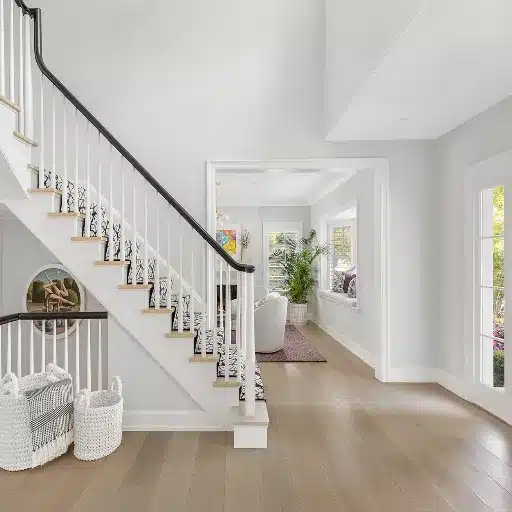
Beyond the solid-versus-engineered choice, five factors move a maple quote by dollars per square foot.
Grade
As the tables above show, grade can shift material cost by 2to2to5 per square foot. Select and Clear grades cost the most, Character and Rustic cost the least, and #1 Common sits in the middle. Grade names also vary between manufacturers, so always confirm what a grade actually allows in your order.
Board Width
Width is a quiet but powerful cost driver. Narrow 2.25-inch strip flooring runs roughly $4 to $6.50 per square foot, standard 3.25 to 4-inch planks cost $7 to $10, and 5-inch-and-wider planks climb to $11 to $16. Wide planks use more premium timber per board and cost more to mill, which is why they command a premium. If you want the wide look on a tighter budget, engineered maple achieves it at a lower price than solid. Our guide to wide plank engineered wood flooring explains the trade-offs.
Prefinished vs Unfinished
Prefinished maple arrives sealed from the factory, so you skip the site-finishing step and its cost. Unfinished maple is cheaper as a material, but you then pay a finisher $2 to $5 per square foot to sand, stain, and seal it on site. For most people, prefinished is the better value because it saves time and carries a factory warranty. Buy unfinished only if you want a custom color or a seamless, site-applied finish.
Engineered Construction
If you choose engineered maple, construction decides price and performance. A thicker real-maple wear layer, a quality plywood core, and a strong joint system all cost more and last longer. Cheaper products swap plywood for HDF and thin the wear layer to cut price, which shortens the floor’s life. This is exactly where it helps to buy from a maker who understands the veneer, not just a retailer moving boxes. We produce real maple veneer for engineered flooring, so if you want to understand the material behind the price, our page on maple veneer shows what goes into the top layer you walk on.
Certifications and Sustainability
Certified maple, from the Forest Stewardship Council or PEFC, can carry a modest premium that supports responsibly managed forests. Eco-conscious buyers increasingly treat that small cost as worthwhile, and certified hardwood also tends to hold value at resale. The premium is usually minor, so never let a tiny certification surcharge push you toward uncertified wood if sustainability matters to you.
Your Region and Labor Rates
Labor makes up a large share of any quote, and labor rates swing 10% to 25% between regions. Coastal and major metro markets trend higher, while suburban and Midwest markets often run lower. A floor that costs 8persquarefootinstalledinonecitycaneasilycost8persquarefootinstalledinonecitycaneasilycost12 in another. Always get local, itemized quotes rather than trusting a national average.
Maple Flooring Installation Cost by Method
Installation labor for maple flooring typically adds 3to3to6 per square foot, but the method changes both the price and the suitability for your subfloor.
| Installation Method | Labor per Sq Ft | Notes |
|---|---|---|
| Floating / click-lock | 2to2to5 | Fastest, DIY-friendly, best over many subfloors |
| Glue-down | 3to3to7 | Common for engineered maple over slabs |
| Nail-down / staple-down | 4to4to8 | Standard for solid maple over wood subfloors |
| Site finishing (add-on) | 2to2to5 | Only if you buy unfinished maple |
Solid maple almost always requires nail-down installation and, if unfinished, sanding and sealing on site. Engineered maple gives you the cheaper floating and glue-down options, which is part of why it costs less to install. For the step-by-step details, our engineered wood flooring installation guide covers each method.
The Hidden Costs Most Maple Flooring Guides Leave Out
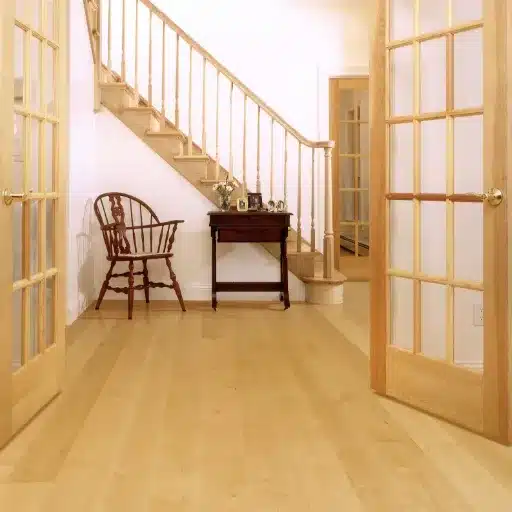
Here is where budgets get blown. The per-square-foot quote rarely tells the whole story, and these line items typically add 10% to 25% on top:
- Old-floor removal and disposal, often $1 to $2 per square foot.
- Subfloor leveling and repair, $1 to $3 per square foot when needed.
- Moisture barrier or underlayment, $0.50 to $1.50 per square foot.
- Trim, transitions, and molding around doors and room edges.
- A 10% wastage allowance for cutting and odd-shaped rooms.
- Delivery, sales tax, and, for large jobs, permits.
- Furniture moving, stairs, and anything that slows the crew.
The wastage line surprises people most. No floor installs at 100% efficiency, and rooms with angles, doorways, and closets waste more. Ordering an extra 10% is standard practice, and skimping on it risks running short mid-install, which costs more than the extra material ever would.
A Realistic Maple Flooring Budget: 500 Sq Ft Worked Example
Let us price the same 500-square-foot space three ways so you can see exactly where the money goes. These are realistic U.S. figures for 2026, not the lowest quote available.
| Budget Line | Economy (Engineered, 2 mm) | Mid-range (Engineered, 3 to 4 mm) | Premium (Solid, Select) |
|---|---|---|---|
| Material | $2,000 | $3,250 | $4,250 |
| Installation | $1,750 | $2,250 | $2,750 |
| Moisture barrier + underlayment | $450 | $500 | $0 |
| Trim, transitions | $350 | $400 | $450 |
| Wastage (10% of material) | $200 | $325 | $425 |
| Removal of old floor | $750 | $750 | $750 |
| Total | ~$5,500 | ~$7,475 | ~$8,625 |
Priya priced her 500-square-foot open-plan room last spring and almost chose the economy engineered option to save $2,000. She stopped when the installer explained the 2 mm wear layer meant her floor could never be refinished, and her family planned to stay put for 15 years. She stepped up one tier to a 3 mm engineered maple, spent roughly $2,000 more, and kept the option to refresh the surface a decade from now. The cheaper floor was not a bargain for her timeline; it was a future replacement.
Is Maple Flooring More Expensive Than Oak?
Maple usually costs 1to1to3 per square foot more than red oak, while white oak lands closest to maple in price. Hard maple also rates harder on the Janka scale, about 1,450 versus roughly 1,290 for red oak and 1,360 for white oak, so you pay a little more for a surface that resists dents slightly better.
| Species | Janka Hardness | Typical Installed Range (2026) |
|---|---|---|
| Red oak | ~1,290 | $5 to $12 per sq ft |
| White oak | ~1,360 | $6 to $14 per sq ft |
| Hard maple | ~1,450 | $6 to $17 per sq ft |
| Hickory | ~1,820 | $7 to $16 per sq ft |
| Black walnut | ~1,010 | $9 to $20 per sq ft |
The National Wood Flooring Association publishes the standard Janka reference values used across the industry. Which wood is the better buy depends on your priorities: maple wins on hardness and that bright, clean look, while oak offers more visible grain that hides wear and, in white oak’s case, better moisture resistance.
Is the Cheapest Maple Flooring Actually the Best Value?
The cheapest per-square-foot maple is not always the cheapest floor you will ever buy. Maple’s real cost shows up over decades, in how many times you can refresh it.
Solid maple, at 3/4 inch thick, can be sanded and refinished about five to eight times over a 50-plus-year life. Refinishing runs roughly 3to3to8 per square foot, with dense maple at the higher end, but it restores the floor rather than replacing it. Engineered maple can only be refinished as many times as its wear layer allows: roughly once on a 2 mm layer, one to three times on a 3 to 4 mm layer, and never on an HDF core. A mid-range engineered floor typically lasts 20 to 40 years, and a solid maple floor can outlast the house.
So the honest framing is this. If you expect to move within five to ten years, engineered maple’s lower upfront cost is the smart choice. If you plan to stay, solid maple, or an engineered floor with a thick wear layer, often costs less per year even though it costs more today. Our balanced look at maple flooring pros and cons weighs these trade-offs in full, and our guide to refinishing engineered hardwood floors explains the maintenance math.
How to Save on Maple Flooring Without Sacrificing Quality
You do not need the most expensive quote to get a great maple floor. These moves cut real money without cutting quality:
- Choose #1 Common over Select. Most people cannot tell the difference after install.
- Stick to standard 3.25 to 4-inch widths unless you specifically want wide planks.
- Pick prefinished maple so you skip the site-finishing cost and delay.
- Buy engineered maple if you are installing over a slab or radiant heat; it costs less and suits the space better.
- Source from a manufacturer or wholesaler for better material pricing on larger projects.
- Get three itemized quotes and compare line items, not just the bottom line.
- Never skip the moisture barrier or underlayment; the repair later costs far more.
The Maple Flooring Manufacturers Association tracks maple performance standards, and its material is a useful reference when you compare product specs across suppliers. A floor priced fairly, with honest specs, is the real bargain.
FAQ About Maple Flooring Cost
How much does maple flooring cost per square foot?
In 2026, maple flooring costs about $5 to $25 per square foot installed, with most standard residential projects between $8 and $15. Material alone runs $2.50 to $10, and installation labor adds roughly $3 to $6 per square foot.
Is engineered maple cheaper than solid maple?
Yes. Engineered maple is typically 15% to 30% cheaper than solid maple upfront because it uses a thinner real-wood wear layer over a stable core. Solid maple can still win on lifetime value because it can be refinished more times.
Is maple flooring more expensive than oak?
Maple usually costs 1to1to3 per square foot more than red oak, while white oak is the closest to maple in price. Maple also rates harder on the Janka scale, so the premium buys slightly better dent resistance.
How much does it cost to install maple flooring?
Installation labor adds $3 to $8 per square foot depending on the method: floating runs $2 to $5, glue-down $3 to $7, and nail-down $4 to $8. Unfinished maple also needs site finishing at $2 to $5 per square foot.
How much is a 1,000-square-foot maple floor?
A 1,000-square-foot maple floor runs roughly $6,000 to $20,000+ installed, with most projects landing between $8,000 and $15,000 depending on grade, format, and region.
What is the cheapest maple flooring?
The cheapest real maple flooring is usually #1 Common unfinished solid maple, or a 2 mm engineered maple with a floating installation. Both can come in around $6 to $9 per square foot installed.
Does grade affect maple flooring cost?
Yes, significantly. Select and Clear grades cost $7 to $9 per square foot, #1 Common runs $4 to $6, and Character or Rustic grades run $3.50 to $5. Grade can swing a full project by $2 to $5 per square foot.
How much does it cost to refinish maple floors?
Refinishing maple floors costs roughly $3 to $8 per square foot. Dense maple sits at the higher end, and engineered maple can only be refinished as many times as its wear layer allows.
Conclusion
Maple flooring cost in 2026 is clearer once you separate the real drivers from the noise. Most projects land between $8 and $15 per square foot installed. Engineered maple saves you 15% to 30% upfront. Grade and board width can swing a quote by $2 to $5 per square foot. Hidden costs add 10% to 25%, and the cheapest floor is not always the best value when you count refinishing over a 20-year horizon.
Before you buy, match the format to your timeline, confirm the grade and wear layer on paper, and get three itemized quotes. If you want help selecting sustainably sourced maple veneer or engineered maple for your project, our team can walk you through specs, certifications, and real pricing for your square footage. Reach out for a project quote and let us help you budget a floor that will look great and last.