
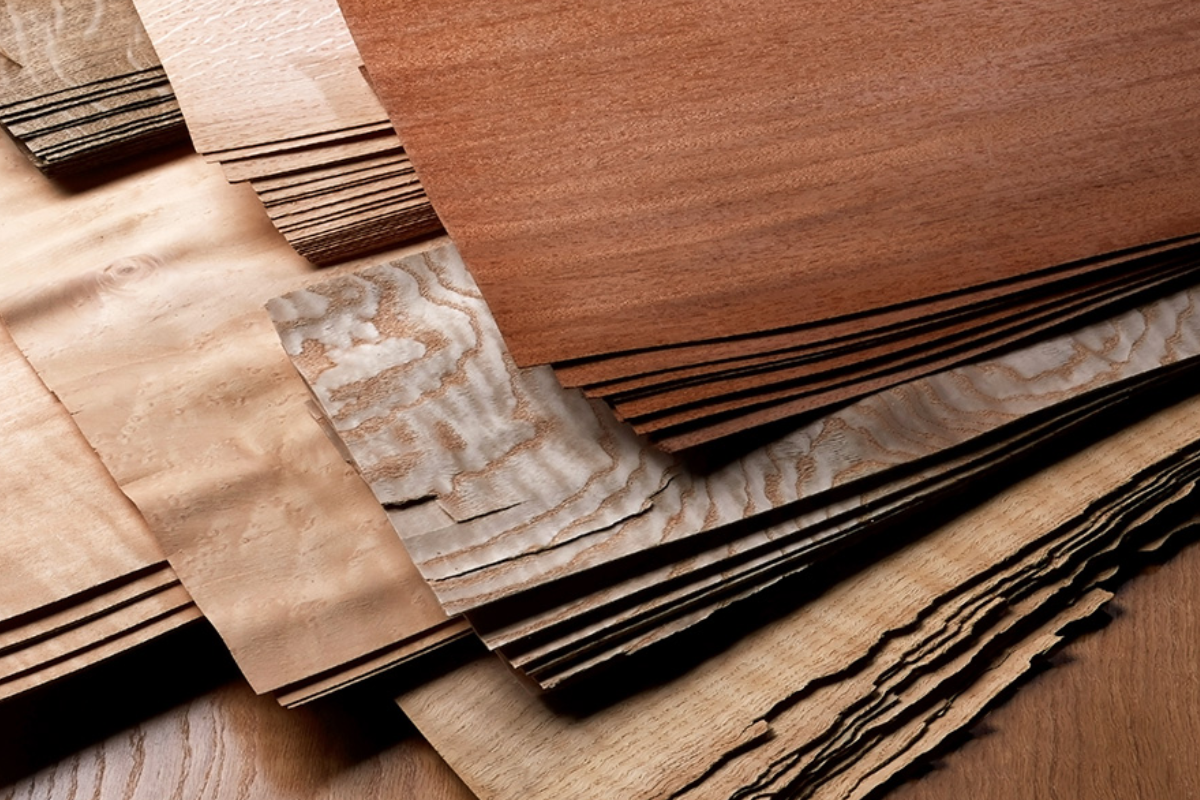
Natural Wood Veneer: Flexible Sheets & Wide Variety
Natural wood veneer delivers authentic wood aesthetics through flexible sheets available in a wide range of species, cuts and finishes. Designed for furniture makers, architects and interior professionals seeking consistent quality and natural character.
✓
50+ Wood Species Available
✓
Custom Cutting Services
✓
15+ Years Industry Experience
30+
FREE RESOURCES
Everything You Need to Specify, Calculate and Understand Wood Materials
Explore free calculators, technical charts, specification templates and practical guides for wood veneer and plywood. Every resource is organised by the task you need to complete, not by file type.
No sign-up required. Build specifications, check dimensions, compare materials and access production references in one place.
01
Specify
Create complete veneer panel specifications with guided steps covering species, cut, matching, core and compliance.
Panel Specification Builder
02
Calculate
Calculate quantity, coverage, weight and conversion values before placing an order or preparing production data.
Calculators & Tools
03
Reference
Use thickness charts, specification tables and downloadable references when you need a reliable number.
Charts & Templates
04
Learn
Understand veneer selection, installation, sustainability, technical data and material decisions.
Guides & Knowledge Base
START HERE
The Wood Veneer Resources Buyers Need First
Not sure where to begin? These three tools cover the most common specification, quantity and logistics decisions.
01
Wood Veneer Panel Specification Builder
Create a complete specification covering application, species, cut, matching, core, backer and compliance.
02
Wood Veneer Calculator
Estimate veneer quantity and account for material waste before placing an order.
03
Plywood Weight Calculator
Calculate sheet and shipment weight by size, thickness and core.
CALCULATORS & TOOLS
Find The Right Wood Veneer Tool For Your Project
Specification builders, calculators and conversion tools for planning veneer panels, plywood and decorative surfaces.
Specification & Selection
Define materials, construction and project requirements.
01
Wood Veneer Panel Specification Builder
Create a complete veneer panel specification through guided steps.
Open Tool → 02Edge Banding Calculator
Estimate edge banding requirements for panel projects.
Open Tool → 03Veneer Species Selector
Compare species options for appearance and application.
Open Tool → 04Veneer Core Selector
Choose suitable core construction for your panel.
Open Tool →Material Calculators
Calculate quantity, weight and production requirements.
05
Wood Veneer Calculator
Calculate veneer quantity with project waste allowance.
Open Tool → 06Veneer Yield Calculator
Estimate usable veneer yield before ordering.
Open Tool → 07Plywood Weight Calculator
Calculate sheet and shipment weight.
Open Tool → 08Plywood Sheet Calculator
Calculate plywood sheet requirements.
Open Tool →Conversion Tools
Convert common veneer and plywood measurements.
CHARTS, TEMPLATES & REFERENCES
Technical Resources For Wood Veneer & Plywood Decisions
Specification charts, downloadable templates and technical references to help compare materials, prepare documents and make purchasing decisions.
Technical Charts
Look up thickness, weight, matching and construction data.
Wood Veneer Thickness Chart
Thickness ranges, tolerances and mm/inch conversions.
View Chart →Wood Veneer Matching Chart
Compare book, slip and sequence matching methods.
View Chart →Edge Banding Thickness Chart
Reference edge material thickness options.
View Chart →Plywood Sheet Weight Chart
Compare plywood weight by thickness and size.
View Chart →Plywood Thickness Chart For Cabinets
Choose suitable plywood thickness for cabinetry.
View Chart →Veneer Cut Grain Pattern Chart
Understand grain appearance from different cuts.
View Chart →Databases & Specification Templates
Prepare consistent specifications before contacting suppliers.
Project Documents
Documents for architectural projects and compliance review.
RESOURCE FRAMEWORK
Explore Tools, Data and Technical Knowledge
Choose resources by the task you need to complete: calculate a number, verify a specification, or understand the material behind the decision.
01
Calculate
Quantity, weight and conversion tools for veneer, plywood and edge materials.
✓ Veneer quantity
✓ Plywood weight
✓ Unit conversion
02
Reference
Technical charts, databases and templates for specification and purchasing decisions.
✓ Thickness charts
✓ Matching guides
✓ Specification templates
03
Learn
Guides and technical documentation explaining selection, installation and material performance.
✓ Technical guides
✓ Sustainability
✓ Case studies
DATA & METHODOLOGY
Where The Numbers Come From
Figures are based on production quality control, industry references or clearly labelled technical ranges.
QC Measurement
Thickness data is measured with controlled conditions and production inspection methods.
Technical Standards
References follow recognised industry standards where applicable.
Clear Source Labels
Measured values and industry ranges are identified separately.
FREQUENTLY ASKED QUESTIONS
Questions About Wood Veneer Resources & Tools
Common questions about calculators, charts, specifications and technical references.
Start with the finished face area, then add a waste allowance based on your matching method. Book matching usually requires more veneer than slip matching because consecutive sheets must create a mirrored pattern.
A 3/4 inch 4×8 veneer-core hardwood panel is commonly around 70 lb, while a 1/2 inch sheet is often around 42–50 lb. Actual weight depends on core species and construction.
Book matching creates a mirror-image grain pattern by opening consecutive veneer leaves like a book. Slip matching places leaves in the same direction, creating a more uniform appearance with less waste.
Face appearance grades are defined by standards such as ANSI/HPVA HP-1, including AA, A, B, C, D and E grades. However, veneer thickness is not fixed by a universal standard and remains a specification decision based on application.
A veneer specification template organizes key requirements including species, cut, matching, backing, thickness and tolerance. It helps buyers and suppliers work from the same defined specification.
No. The calculators, charts and templates are designed to be free and accessible without registration, allowing buyers to find the information they need before making material decisions.