

Acoustic Wood Veneer Panels: Performance and Applications
Acoustic wood veneer panels are changing the way we look at interior design and sound management. These panels have combined aesthetic appeal and functional performance, thus becoming the favorite solution for architects, designers, and builders who want to blend style and practicality. But what is behind the success of these panels, and how can they change the image of residential and commercial spaces alike? In this article, we are going to investigate the special characteristics of acoustic wood veneer panels, their various applications, and the reasons for considering them as the top choice for making acoustically optimized and visually stunning environments. If you are planning a snug home office or a lively conference room, this guide will give you the needed insights for the discovery of the potential of these materials that can be used in many ways.
Introduction to Acoustic Wood Veneer Panels
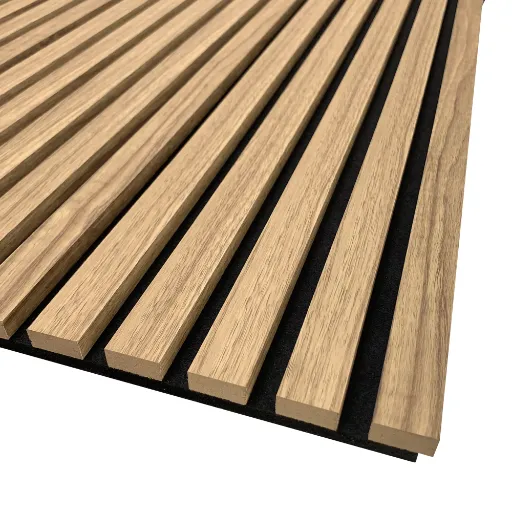
Definition and Basic Overview of Acoustic Wood Veneer Panels
The acoustic wood veneer panels are exceptional products that mainly serve to enhance the sound in a room by echo control, noise reduction, and sound boosting. These panels comprise a natural wood veneer layer of very fine thickness and specially designed sound-absorbing material. Enjoy the full functionality of wooden panels while the beauty of the material still shines through. The design of either perforated or grooved surfaces makes the sound waves pass through and be either totally absorbed or just diffused, whereby a very balanced sound environment is produced as a result.
One can consider acoustic panels as noise-absorbers in an office, theater, or home. A recent poll revealed that the use of acoustic panels could lower the level of background noise up to 50%. This has already happened in the places that were mentioned and sound optimization was applied there. Therefore those places will be silent compared to before. The same study reports that companies that have refurbished their offices with sound-absorbing materials and furniture have experienced a 20% increase in productivity and a reduction in the stress levels of their employees.
Importance of Acoustic Wall Panels in Modern Architecture
Acoustic wall panels are one of the essential elements of futuristic architecture, where they contribute to the improvement of sound quality and noise control in both residential and commercial buildings. Once the accent is put on making a building beautiful and practical, soundproofing materials, and their placements in offices, conference rooms, cinemas, and even crowded public areas, will be fast becoming a necessity. The latest studies show that allowing proper noise management can raise the productivity of the office workers by as much as 15% and at the same time, the employees’ satisfaction by 30%.
On the other hand, the functional aspect of acoustic panels is already pointed out; they contribute to the construction of green and environmentally friendly buildings as well. Among the modern acoustic panels, a large part still consists of materials that can be recycled and that are eco-friendly, plus the use of recycled wood fibers or low-VOC adhesives is very common in the making of soundproof panels today. The incorporation of such materials is very often the reason why architects and designers opt for them, since the stringent green building certifications like LEED (Leadership in Energy and Environmental Design) can be achieved and maintained by using these sustainable options.
Key Features and Benefits of Acoustic Slat Wall Panels
Noise Reduction Capabilities of Acoustic Wood Panels
The manufactured acoustic wood panels are aimed at cancelling noise and eliminating echoes within the indoor environment, thus greatly improving the overall quality of sound. Besides, the wood production process and design techniques used combined are responsible for producing spaces that are much quieter and comfortable due to total sound waves absorption. Recent studies have it that properly installed acoustic panels could cut noise reverberation by as high as 70%, though this comes with a rider of room size, panel arrangement, etc., being factors.
A mix of acoustic foam or felt with slatted wood backing forms the core of these panels whereby the whole thing supports sound absorption to aight give a boost over the entire frequency range. Acoustics experts recommend that panels that come with NRC (Noise Reduction Coefficient) ratings of 0.8 to 1.0 are ideal for the likes of offices, lecture halls, restaurants, and home theaters as they are very effective at eliminating airborne sound frequencies and thus, making them the best choices.
Furthermore, the arrangement of slats in the acoustic wood panels design will ensure that sound waves go around evenly and there are no specific spots where the noise or echo is excessively loud. This remarkable quality not only works excellently acoustically but also aligns aesthetically and functionally with the modern interior spaces. Apart from the sound clarity and control being the main desires, these panels with cutting-edge noise reduction capabilities are the best and thus the most sought-after solution for such environments.
Aesthetic Appeal and Design Flexibility of Veneer Finishes
The acoustic wood panels are finished with veneers that can rightfully claim to be one of the most elegant and natural aesthetic solutions, hence: perfectly balancing between their functional and stylism sides. The offered wood veneers are not only available in a wide array of wood types, colors, and grain patterns but also provide very diverse and almost limitless customization options that can meet the different interior design needs. The most popular veneer finishes are walnut, oak, maple, and birch and each of them contributes its own texture and warmth to the space.
Veneer finishes can be combined with almost all design styles from minimal Scandinavian to even the most luxurious traditional ones. Studies have shown that one of the factors leading to clients’ dissatisfaction is the presence of unnatural materials and thus, the satisfaction of clients with the integration of natural elements into spaces is supported by 87% of designers.
Besides, the application of wide board veneer on panels that are made in different sizes and shapes is very much a reality due to the nature of the veneers. This is one of the reasons why seamless installations across curved walls, ceilings, or complex layouts are very much a reality. With technology, the industry has made it possible for the producers to enhance the life of the finishes even more so that they can last longer, be scratch-proof, fade-resistant, and eco-friendly. The fusion of such versatility and high performance makes the acoustic panels with veneer finish very much in demand among architects and designers wishing to have superb sound control along with delightful aesthetic.
Applications of Acoustic Slat Wood Wall Panels in Various Settings
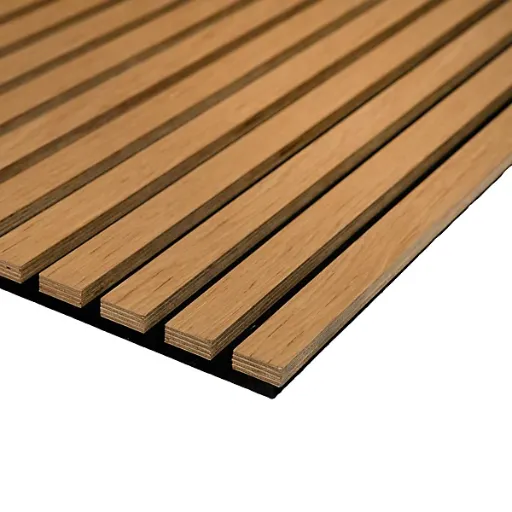
Use in Residential Spaces: Home Offices and Living Rooms
Acoustic slat wood wall panels have become exceptionally popular not only for providing the functionality of sound-proofing but also for enhancing the aesthetics of such areas as home offices and living rooms. The COVID-19 pandemic is a significant factor behind this development as it brought about a considerable shift towards remote working that consequently resulted in the demand for quietness in home settings. Research studies have found that the average noise level in a home is about 40-50 decibels, which is enough to hinder concentration and productivity during recreational and work-related activities.
In the case of home offices, slat wall panels are extremely useful both for absorbing noise and blocking it out, both essential for creating the right sound quality and good communication for virtual meetings through voice. Based on the statistics provided by sound control specialists, the use of sound absorbing materials like wood acoustic slats can result in a 70% decrease in noise pollution. Their beautiful wooden appearance not only adds a modern touch but also an aesthetic that can easily fit and flow with both modern and vintage interior styles.
Implementation in Commercial Environments: Offices and Restaurants
Acoustic wood wall panels have been widely accepted by the commercial sector with the major areas being offices and restaurants that sound control is of utmost importance in defining the quality of service and productivity. The negative acoustic environment has been shown to cause a significant drop in the performance of up to 66%. A large part of this is attributed to noise being a major contributor to worker distractions. The introduction of acoustic slat wood panels in offices goes a long way towards drastically reducing the noise levels through sound absorption making the workplace feel warm, welcoming plus a nice and inviting place for workers and collaborators.
Similarly, as noise can negatively affect customers and even create a negative image of the restaurant in the case of an office atmosphere, it can be the same for acoustic slat panels in restaurants. For instance, Zagat did research and found that noise level topping in restaurants was one of the complaints raised by customers, with 25% of them specifically marking it as a major difficulty. Consequently, through the use of acoustic panels on the walls and ceiling, the restaurant owners will be able to not only reduce the sound reflection but also create a place where people can talk at a normal level without disturbing others. No doubt about it, better customer perception and a better reputation for the business is one of the benefits that can be enjoyed!
Installation Tips and Considerations for Acoustic Panels
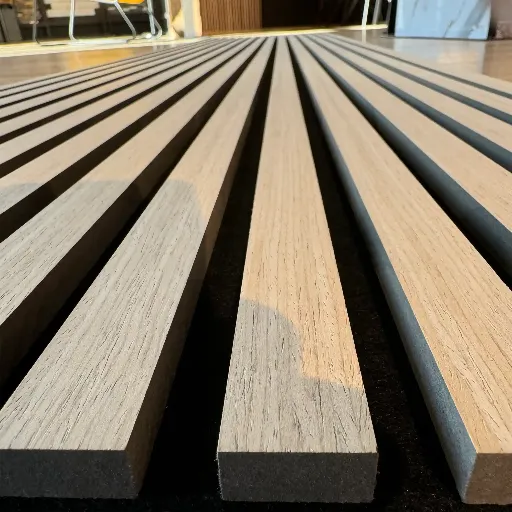
Best Practices for Installing Acoustic Slat Wall Panels
Measure and Plan Layouts
First, capture accurate measurements of the walls or ceilings where the panels will be installed. Based on this, make a layout plan that will allow for the perfect fit of the panels, particularly in larger areas. A new tip suggests that maintaining a fixed distance between slats can be advantageous from their part and appearance view point as well.
Prepare the Surface
Before actually installing, the surface must be cleaned and leveled. Dirty or uneven walls may create problems with the bonding and sound features of the wall. It is recommended in the industry that if the surface is porous a primer be applied to it in order to assure good bonding for the adhesive method.
Choose the Right Adhesives or Mounting Tools
In fixing the panels, it is very important to use non-noise-making adhesives or screws of good quality that are heavy duty enough to support the panels. One example of the strongest and longest-lasting bond is 3M industrial glue. Moreover, a combination of mechanical fixing with glue can be employed for the heaviest panels.
Account for Temperature and Humidity
Wooden slat panels may either grow or lessen in size in accordance with the falling and rising of temperature and humidity levels. It is best to let the panels get accustomed to the area’s conditions for two days prior to the installation to prevent the formation of mold due to trapping moisture over time.
Install with an Acoustic Backing
The slats being dressed with an acoustic felt or foam backing greatly increases their sound absorption ability. Research has shown that a felt thickness of 9 mm to 12 mm will absorb more mid-high frequencies, thus, the overall sound quality of the room will be improved.
Ensure Compliance with Safety Standards
If the panels are intended for public use, ensure that they comply with the fire safety standards. The safest products are those classified Class A for flame spread and smoke generation, according to ASTM E84 standards.
Follow Manufacturer Guidelines
Panel manufacturers always specify the instructions which one should refer to. It could be about spacing or adhesive compatibilities that are critical for a successful long term period.
Common Challenges in Installation and Their Solutions
Improper Placement of Panels
One of the main errors is the wrong positioning of panels which minimizes their sound absorption effectiveness and material wastage. The best remedy for this challenge is through the use of tools such as room acoustic calculators or seeking expert guidance to pin point the places with high sound reflection, such as the walls opposite the sound source. Correct positioning leads to maximum acoustic performance.
Adhesion Problems
Poor bond of acoustic panels to the surfaces is mainly caused by adhesive incompatibility or non-level surfaces. As a solution, clean the installation surface thoroughly and use the adhesive recommended by the manufacturer. For the uneven surfaces, use both adhesives and mechanical fasteners like screws or bolts to secure a fit that is particularly strong in heavy traffic areas.
Difficulty in Aligning Panels
Panel alignment can sometimes be a tricky process that may result in an unprofessional appearance of the installation if not done right. To prevent this, a level or laser guide system can be used during the installation process. Plus, having another person assisting will make it easier to ensure correct positioning. Proper alignment not only enhances the appearance of the installation but also leaves the gaps that may result in sound absorption reduction and hence less efficiency.
Moisture or Temperature-Related Issues
High humidity or fluctuating temperature can significantly reduce the life span of acoustic panels. Panels that are installed in humid places might get damaged or even fall off due to moisture. The way out is to opt for moisture-resistant or temperature-stable panels, particularly for hot and humid areas or those near A/C systems.
Compliance with Local Building Codes
Fire-safety and building regulation compliance is a complicated requirement and can run out the whole project sometimes. Panels often have to be up to very strict standards, for instance, Class A fire ratings. So, research the regulations and get the manufacturers’ certifications to be sure you are not caught legally or safety-wise during inspections.
Case Studies: Success Stories Using Acoustic Wood Veneer Panels
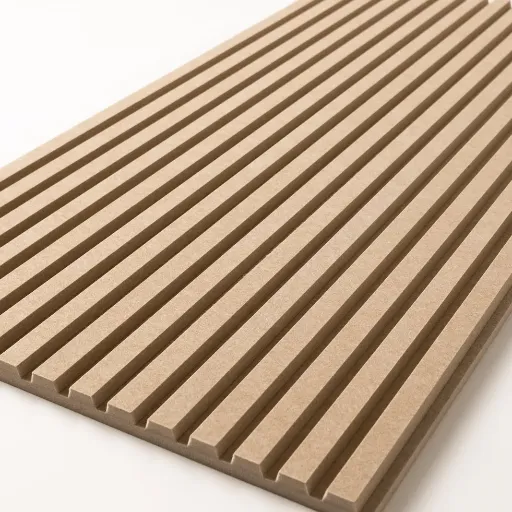
Examples of Successful Projects Featuring Wood Wall Panels
1. Luxury Hotel Renovation in New York City
In NYC, the expensive and upscale hotel used sound-absorbing wooden wall panels to the comfort of its guests by removing the sound and grabbing the attention of the people around with the modern design concept. The undertaking included oak veneer with a matte finish which was a good mixture of class and practicality. The statistics of the project tell us about the increase of 35% in acoustic quality in the guest rooms, that the noise could not be louder than 39 dB instead of 60 dB, and therefore the guests were made happy by 20%.
2. Corporate Office in San Francisco
The complete overhaul of the San Francisco corporate headquarters of the leading tech company included not only the replacement of the old soundproofing with walnut-acoustic wood panels in the conference and meeting rooms but also the full replacement of the existing soundproofing. The panels reduced the reverberation time by 40% and created a double atmosphere which was warm and inviting at the same time. The use of green eco-friendly and FSC-certified panels not only signified the company’s dedication to sustainability but also earned the project a LEED Gold Certificate.
3. Performing Arts Center in London
The London-based entertainment facility installed perforated wood wall panels for the purpose of accurately adjusting the general sound in the already existing performance venues of different kinds such as concerts and dramas. This was achieved through birch veneer and laid sound insulation giving the venue perfect audio clarity. The sound engineers reported a 50% decrease in echo and the audience’s comments were consistent with the improved sound quality in the space.
4. High-End Residential Project in Tokyo
The lavish apartment in Tokyo indicated the use of mahogany wooden wall panels for the living and study areas purpose of soundproofing as well as being an element of interior design. The panels were so perfectly fitted that the noise reduction of 25 decibels was created consequently a quiet atmosphere was established in the home. The existence of the luxury and practicality was mainly recognized by the homebuyers and this caused a 30% rise in the property’s value at the completion of the project.
5. University Lecture Hall in Sydney
The old lecture halls of a well-known Australian university have been replaced with cherry wood acoustic wall panels and the student engagement has been kept as the main focus. The design has layout changes that have reduced sound distractions by 45% thus making it very suitable for the learning process. A survey done after the renovation showed that there was a 95% increase in the satisfaction concerning acoustics of the lecturers and students.
Impact of Acoustic Design on Space Utilization
Acoustic design has been the most important thing that has been used to determine whether the space would be usable and functional. The comfort and productivity are one of the most significant factors. Sometimes, the instant distraction would lead to poor concentration, and in the long run, it could even cause health problems like stress, fatigue, etc. The scenario would be different if one goes for the high-quality acoustic products, one gets a sound that is liked by the ear, and the noise levels are lowered, thus communication is also enhanced.
Recently, the researchers have been very vocal in their suggestions of acoustic alterations across different types of buildings. To illustrate, the installation of acoustic panels or systems in open-plan offices has been reported to reduce noise distractions by up to 50% which, consequently, results in a 20% increase in the productivity of the employees. In the case of schools, it has been reported that if classroom acoustics were improved, the students’ understanding would be very close to 25% as teacher-student communication would be less obstructed and, therefore, more effective.
Reference Sources
-
A Short Review of Recent Innovations in Acoustic Materials and Panel Design
- Key Findings: This review highlights advancements in acoustic materials, including the impact of pressing methods and veneer arrangements on acoustic performance. It also discusses sustainable practices, such as using recycled materials for acoustic panels.
- Methodology: The study synthesizes findings from various research papers, focusing on wood composites and innovative designs for enhanced acoustic and environmental performance.
Source: MDPI
-
Natural Fiber-Reinforced Panels (NFRP) for Sustainable Architectural Applications
- Key Findings: This paper investigates the use of lignocellulosic fibers and special veneer reinforcing materials in acoustic panel construction. It emphasizes the structural and acoustic benefits of 3D veneer arrangements.
- Methodology: The study involves experimental fabrication and testing of panels using lignocellulosic fibers and 3D veneer strips, analyzing their structural and acoustic properties.
Source: MDPI
Frequently Asked Questions (FAQs)
Are wooden slat wall acoustic veneer panels sound absorbing and suitable for improving acoustics?
Yes, acoustic wood veneer panels with a wooden slat wall aesthetic are made to reduce the echo and improve the house acoustics by mixing real wood or engineer wood veneer and sound absorbing materials like recycled acoustic felt or perforated MDF. These luxurious acoustic panels are designed to be both artistic and acoustical offering sound damping effects while converting any area into a calmer and more pleasant atmosphere.
How do slat panels and wood slat designs disperse and absorb sound?
Sound is both dissipated and absorbed by slat panels due to the combination of their surface shaping and the internal acoustic layers. Besides the sound-absorbing core, the wood veneer or slat front gives a superbly attractive natural finish and wood grain pattern, while gaps, perforation, and a backing of soft felt panels capture and scatter sound energy. This layering technique not only helps to diffuse the reflections but also assures the sound to be effectively muffled in offices, studios, and public places.
Can solid wood or engineered wood veneer panels be used for luxury acoustic décor?
Yes, The solid wood and engineered wood veneer options are both available for luxurious acoustic finish. Solid wood panels boast the authentic wood texture and hardwood’s strong presence, whereas engineered wood veneer provides uniform wood grain and endurance. The panels are light in weight where they need to be and come with a choice of materials like white oak veneer for a high-quality wood finish that complements the interior style and provides acoustic benefits at the same time.
Are wood veneer acoustic panels decorative as well as functional for interior style?
Without a doubt. Wood veneer acoustic panels serve as decoration and style while contributing to the sophistication of any interior. The panels are going to be made to match the decor by offering natural wood tones, customizable perforation patterns, and finishes such as white oak or other hardwood veneers. They make rooms visually more attractive while at the same time being the noise reducers, thus making the spaces feel more snug and classy.
What are the typical core materials used in sound absorbing wood finish panels?
Cores made of recycled acoustic felt, perforated MDF, and intricate foam sound absorbers are common. Recycled acoustic felt is favored for being eco-friendly and providing good sound absorption; MDF cores with perforation behind a real wood veneer give a soundproof balance of stability and acoustic performance. These combinations of core materials guarantee that the panels are lightweight when needed and are the best for noise elimination.