

Advantages and Disadvantages of Veneer Wood: Veneer vs Solid Wood
The discussion on which specific materials should be used for the manufacture of furniture cabinetry and interior design is considered among the toughest up decision on veneer wood or solid wood. Each of the two choices has its distinguishing features, merits, and demerits, and therefore, homeowners, designers, and craftsmen find it difficult to settle on one. In this article, you will get to know about the advantages and disadvantages of veneer wood in comparison to solid wood, learn the difference between these two materials, and be able to choose wisely between them. This article is aimed at those who are interested in the performance, the price and the looks, of these materials. Read on to discover what makes these two things distinct from each other and how they can help give a new look to your homes.
Understanding Veneer Wood
What is Veneer Wood?
The allusive phrase ‘veneers wood’ is most commonly used in reference to wafer-thin slivers of tree outgrowth, usually just 3 mm thick, and mostly nowhere near more. Such wafer layers are then glued either to plywood, chipboard to MDF. Veneer wooden ‘wood’ is primarily used for deception.
One of the greatest advantages of the veneer wood is that wood grains are fully exposed. Being that each sheet of veneer is lifted off lumber, it holds all those motifs and textures known to many designers and clients who love furniture, cabinet and home goods. This means that one can afford the stunning looks of wood without having to pay any extra for how much hardwood would entail.
In enhanced hardwood products, there are certain advantages and disadvantages of veneer wood. Due to inconsistencies in moisture content and changing temperatures that most often range from very low to very high, ovine wood performs better in comparison to massive wood since it does not warp or crack easily. Strength is attained also, as it does not add much weight, because of the engineered core. And that is why it is stronger than all wood productions. Because of its attractiveness and utility, veneer wood is widely used in contemporary design and manufacturing sectors.
How Veneer is Made
When it comes to producing veneer, the first step is to prepare the logs, a sample of which is called a ‘peeler logs’. These logs are selected and processed based on their color, grain, and overall appearance to achieve the desired finished product.
Once selected, the logs undergo the removal of bark and the softening of logs, the latter mostly done with steam or hot water. This is necessary to prepare the timber for slicing or peeling. The softening is achieved and afterwards, the log is processed using either a rotary cutting machine where it spins, and thin layers are cut prior to the thickness setting or a slicing machine where sheets are cut from a block without any movement. The technique to use depends on the end grain to be produced and the grade of veneer to be used.
Having done the cutting, the cut veneers are then dried up to the required percentage of moisture content ensure durability and to avoid warping. The resulting sheets are then cut, selected and graded, and in most cases glued to a man-made wood core to create a stable product fit for use. Such precaution ensures the appearance of veneer wood and its functionality and application in many fields.
Types of Veneer
Veneer wood contains a wide range of surface-oriented types which are applied in different areas depending on the needs and likes of a particular user. There is a variation in the way they are manufactured and the types of trees used, hence the differences.
- Natural Veneer: This is cut or pared from raw tree trunks and natural wood is the raw material. It continues to the characteristic of the timber such as the grain for decorators and false effect lovers. These natural veneers are most common in places where they enhance the look of furniture, doors, and walls, or any other structure where appearance is very important.
- Reconstituted Veneer: A reconstucted veneer, commonly known as engineered or reconstructed veneer, is achieved by arranging natural sheets of veneer and treating them so they retain certain features. Such veneer type is suitable for applications that have a need for cohesion with the negation of the naturally occurring differences in veneers without losing the aesthetic purpose of such veneers.
- Paper-Backed Veneer: Thin paper backing helps enhance the durability and flexibility of Paper-Backed Veneers. It is successfully applied in those aspects of design where bending or sitting of veneer, such as curved furniture or cabinetry, is required.
This type of veneer comes in a number of versions for it to fit the purposes of its application which is the reason as to why this substance has been employed in numerous other crafts. Nearly each variety has its advantages and disadvantages of veneer wood which is why they are going to pick a particular veneer for their tasks.
Veneer vs Solid Wood

Durability: Veneer vs Solid Wood
Veneer is durable for large surfaces and cost-effective, while solid wood offers unmatched durability and repairability for heavy-use areas.
|
Key Point |
Veneer |
Solid Wood |
|---|---|---|
|
Durability |
Moderate |
High |
|
Repairability |
Limited |
Excellent |
|
Cost |
Affordable |
Expensive |
|
Usage |
Large surfaces |
Heavy-use areas |
|
Thickness |
Thin layer |
Solid material |
|
Sustainability |
High |
Moderate |
Cost-Effectiveness of Veneer vs Solid Wood
Veneer is more cost-effective due to its affordability and efficient use of materials, while solid wood is pricier but offers long-term value.
|
Key Point |
Veneer |
Solid Wood |
|---|---|---|
|
Cost |
Affordable |
Expensive |
|
Material Use |
Efficient |
High |
|
Design |
Flexible |
Limited |
|
Longevity |
Moderate |
High |
|
Accessibility |
Wide |
Limited |
|
Aesthetics |
Mimics exotic woods |
Natural look |
Aesthetic Versatility: Wood Veneer vs Solid Wood
Wood veneer offers greater design flexibility and consistency, while solid wood provides natural authenticity and timeless aesthetics.
|
Key Point |
Veneer |
Solid Wood |
|---|---|---|
|
Flexibility |
High |
Limited |
|
Consistency |
Uniform |
Natural variation |
|
Authenticity |
Moderate |
High |
|
Durability |
Stable |
Prone to warping |
|
Design |
Customizable |
Classic |
|
Sustainability |
High |
Moderate |
Pros and Cons of Veneer Wood
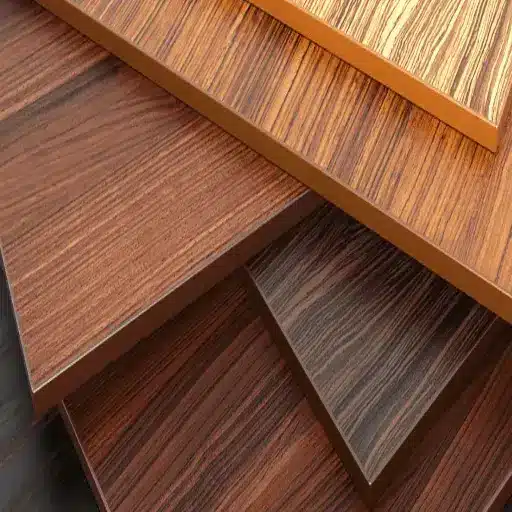
Pros of Wood Veneer
- Economical: Made with a very thin covering of actual wood over a less expensive base, wood veneer is cheaper than solid wood. This is in favor of wood veneer as it provides the same lavish effect as if it would have been from a thicker timber.
- Environmentally Friendly: With the usage of wood veneer, a small amount of wood is utilized. The fact that an enhanced ratio of finished products is centered in a unit volume of raw material accompaniment’s green behavior. It saves forests by limiting the use of solid wood.
- Diverse Design Choices: Wood veneer offers extensive choices of patterns, colors, and finishes. It can be cut to resemble different types of expensive woods. There are no limits of design scope while using it.
- Easy to carry and light: Compared to solid wood, veneer is much lighter. This is why it is easy to carry, fix, or even shape wide boards and pieces of furniture.
- Doesnot Twist: Asandvavanners of veneers involve some wood layers and glue which makes it easy to describe the advantages and disadvantages of veneer wood.
Cons of Wood Veneer
- Easily Prone to Breakage: Due to the delicate covering surface of wood veneer, it is bound to get scratches, dings, and chips fairly easily. When this happens, it becomes quite difficult to fix or work with, so it needs to be redone or replaced.
- Liberal Sanding and Refinishing: The thin layer that veneers are made of allows them to be sanded and refinished fewer times than other hardwoods. Over sanding can often lead to a complete destruction of the veneer since the bare plywood below will then be visible.
- Concerning Moisture Content: Despite the fact that veneer also expands less than solid wood, it Marinates to a Lot especially water or moisture for a long period of time. This may cause blisters, peal or detachment from the base material.
- Lower Quality in the Eyes of the Customers: Some customers consider only the veneer to be less prestigious than true wood, associating it to poor quality. Such perceptions can therefore affect the selling of good quality value furniture or products that are made out of veneer.
Comparative Analysis: Pros and Cons of Solid Wood
Solid wood is durable, repairable, and timeless but expensive, heavy, and requires maintenance.
|
Key Point |
Pros |
Cons |
|---|---|---|
|
Durability |
High |
Prone to moisture |
|
Repairability |
Excellent |
Requires upkeep |
|
Aesthetics |
Timeless |
Limited designs |
|
Cost |
Long-term value |
Expensive |
|
Weight |
Sturdy |
Heavy |
|
Sustainability |
Natural |
Resource-intensive |
Applications of Veneer Wood
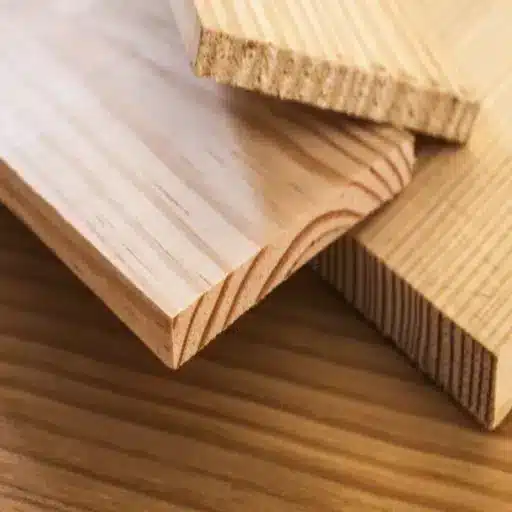
Veneer in Cabinet Making
One area in which veneer wood finds extensive application is the production of cabinets because it is versatile, and hence cheaper than solid wood, though similar in appearance. A veneer is a thin sheet of wood surface treated and attached to a stronger core such as plywood or medium-density fiberboard (MDF) substratum. A specific furniture piece design can therefore incorporate durable natural wood but without digging deep into one’s pockets. Some of the advantages and disadvantages of veneer wood in cabinet-making are listed below:
- Aesthetic Aspect: Different types of veneers are available in assortment of timber species, wood grains and textures which gives cabinet designers flexibility in terms of their creations and decorations. This as well enables them to achieve the magnificent look offered by real solid timber.
- Economic Aspect: The use of veneer wood leads to lower expenses on materials than that observed for a wooden construction made entirely of solid wood. Therefore, it is possible to design costly-looking kitchens for such low- budget clients too.
- Light-Devising: Veneer structures are much more lightweight than structures composed solely of solid wood, which makes them a lot easier to handle and fit-up.
- Non-Environmentally Harmful Solutions: Components can be manufactured in an eco-friendly way through lower utilization of wood. If one adopts the veneered materials, it is possible to cut on the use of solid wood materials because significantly thinner slices are applied to larger areas.
- Proper Foundation: On such bases as MDF or plywood, even veneer itself becomes a rigid form of construction which solves the quest f cabinet making as it makes beautiful finishes that are durable in use and does not distort or split.
Such qualities of veneer give it a great advantage when considering the design of practical and environmentally friendly cabinets to suit interiors of various purposes.
Using Veneer in Home Decor
Veneer is an adaptable product that allows decorativeand useful improvements to be made in the interior of homes. It serves in multiple applications to elaborate a unique and classic design. Presented below are detailed examples of the use of veneer in home decoration:
- Furniture design: Usually, veneer is incorporated into the construction of such stylish pieces of furniture as tables, chairs, wardrobes, etc. Its ability to simulate the look of real wood and not cost a fortune appeals to many designers and homeowners as well.
- Wall Paneling: Veneered wall panels are relevant for those who want to bring warmth and texture in the rooms. These panels are good for accent walls to make the room more interesting in living rooms, bedrooms or offices and they are found in varying wood tones to match different decors.
- Facing Cabinets: In all such cases, veneer is applied when making cabinetry for kitchens and bathrooms. This is one of the advantages and disadvantages of veneer wood in kitchens and bathrooms with cabinets – it has to be moisture sealed otherwise it will stain after a while.
- Doors: One of the most common places where people put veneer is on the inside of the house like use it on the doors as even the entry doors for that matter which gives a similar look of a solid wooden door but with the advantages of being less heavy to construct and less costly as well. It is also possible to perform various non-orthodox designs, add decoration, and perform finishing coaching appropriately.
- Ceiling Panels: It is possible to use veneer in conserving treatments of the ceilings which enhances the decorum of a place making it look more embellished and elegant. It aids in achieving harmony and uniformity in décor especially when there are veneered walls or furniture in a particular space.
Like in the adaptation of such applications, there is a growth of concern and desire for veneer making it a mandatory material in present and past house fittings.
Making the Right Choice for Your Home
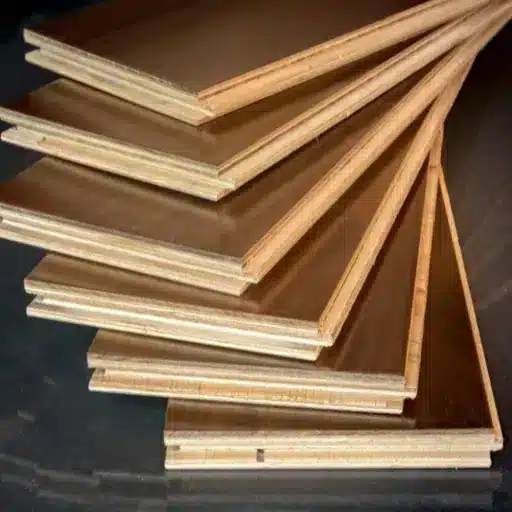
When to Choose Veneer
I prefer to use veneer primarily for cost-effectiveness rather than only for aesthetics and expenses. The reason being veneer helps in creating a warm and rich look of wood but without wood cost, therefore facilitating eclectic timeless beauty. Also the lack of restrictions in its use implies that a person could use it in so many products ranging from furniture to cladding of walls but the surfaces still look beautifully sleek.
There are other advantages and disadvantages of veneer wood as well. The longevity of the material is something that attracts me. When these factors are considered, there is a possibility that veneer will still be around in several decades despite the everyday wear and tear present in every household. This is a major warning from my perspective but… this even gets better because less wood is used in its manufacturing unlike solid materials which is quite eco friendly in my opinion.
To conclude, using veneer some applications is very necessary because it fosters my design exploration. It offers so many designs, colors and effects that each space I am in can be personalized to suit my personality. A modern or a vintage interior can also be achieved using veneer because it allows the designing of the house in any possible manner.
When to Choose Solid Wood
Plenty of advantages abound in choosing solid wood when looking for long-lasting projects. Its differences from a veneer are quite clear as it is composed of a single piece of wood rather than a mixture of a thin layer of wood and a base of parts. It is strong and durable to withstand wear and tear throughout the years. That being the case, this material is most suitable for office desks or even dancefloor surfaces that are expected to face a lot of traffic.
Then there is something else. Repairing damages to the material is also very simple by just sanding down the surface and recoating it. And that itself saves money due to the prolonged time use of the material. Aesthetic wise solid wood is never plain as it offers naturally exotic grains that form classic, extravagant look forever. When maintained regularly it would form a stunning aged surface which further enhances the home room.
For those who are concerned with the environmental impact factor, obtaining solid wood from sustainably managed forests is important. Make sure to search for certifications such as Forest Stewardship Council (FSC) which will confirm the sustainability and origin of the wood used. It may require a greater initial cost than that of veneer wood or engineered wood but the solid core still remains a first class material with its beauty and durability being unrivaled in any interior space.
References
-
Oklahoma State University Extension – Laminated Veneer Lumber (LVL) as a Construction Material
This resource outlines the manufacturing process, advantages, and disadvantages of Laminated Veneer Lumber (LVL) compared to other engineered wood products. -
North Carolina State University – Performance of Laminated Veneer Lumber Panels
This study examines the properties of laminated veneer lumber panels and the effects of different layering arrangements. - Click here to read more.
Frequently Asked Questions (FAQ)
Q: What are the major pros and cons of using veneer wood in place of solid wood?
A: There are certain advantages and disadvantages of applying veneer wood instead of solid wood, the benefits being that it looks and feels like real wood and the avoidable expense of using thick blocks of expensive wood when thin slice veneer sheets serve the same purpose, especially when the substrate is plywood or MDF since it is more stable. On the other hand, their disadvantage is that the layer of veneer would be non-sandable after few times of maintenance unlike other solid wood furniture, risks of destroying the furniture for thin or weakly attached veneer and different treatment in the case of repair of wooden items with solid wood.
Q: Can one opt for veneer finishing even in high-end fit-outs instead of solid wood furniture?
A: For certain high-end furniture, veneer can be an option if high-quality veneering and craftsmanship are considered; veneer offers the look of grain wood and proper symmetrical grain matching over some large areas which solid materials cannot do. On the other hand, when solid wood can be refashioned and polished, some consumers find it more appealing and more durable thus favoring it where veneer and solid wood diversity, bi-products (flakeboard and MDF) or even the longevity of the furniture is concerned.
Q: What level of capability does veneer have when it comes to shrinkage or swelling due to humidity changes?
A: One of the main advantages and disadvantages of veneer wood lies in its vulnerability to moisture variation: veneer over a non-moving base, such as plywood is less likely to expand and contract like wood can, and, therefore, to bend out of shape. On the other hand, when the edges of the veneer are not well adhere to the substrate or when they are poor like cheap particle boards, the veneer can peel off the board or develop cracks when there are drastic changes in the humidity.
Q: Is it possible to sand, refinish, or repair wooden furniture that is made of wood veneer in a similar way that solid wooden furniture can be sanded, finished, or restored?
A: Veneer, it should be noted, cannot be sanded as well as solid wood because there is only a thin layer of the actual wood. It can be lightly refinished or even lightly repaired, but the removal of layers deep enough to get rid of layers of paper is out of the question. This is why use of furniture with very thick veneers, or for engineered wood with thicker overlays, is more advisable.
Q: What materials and construction methods should be considered when making a purchase of furniture with veneers?
A: When considering the advantages and disadvantages of veneer wood, go for veneer furniture built on more durable materials like plywood as opposed to other cheap substrates such as particle board. When made using good glue and veneers laminated on all sides, plywood or MDF will remain sound unlike particleboard which will expand more when exposed to any moisture in the air hence causing the furniture wear and tear sooner. Also consider the application of edge bands or joint construction to safeguard against the exposing of the veneer.
Q: How does veneer compare to laminate products and what are the differences between these materials?
A: The two materials are totally different: veneer is thin layers of real wood, whereas laminate is essentially an image printed on a plastic surface that looks like wood but is polythene. Scratched unlaminated products should not be a worry in most cases, but rather missing scratched laminated products with scratches as they are laminated to the carbon fiber surface. This choice is contingent upon their preference toward look of wood grain or rather the wooden products that are easy to keep clean and are highly durable.
Q: Is Maple, or any other fine wood, better suited as a veneer?
A: Yes. Fine woods, such as maple, walnut or oak, are widely used for veneers because these thin slip veneers retain attractive grain and are economical. The choice of wood affects both the appearance and performance; maple veneer has a regular smooth grain which is great for contemporary furniture whilst others have elaborate patterns. When looking at wood veneer furniture then species, veneer thickness, and matching technique should be considered.