
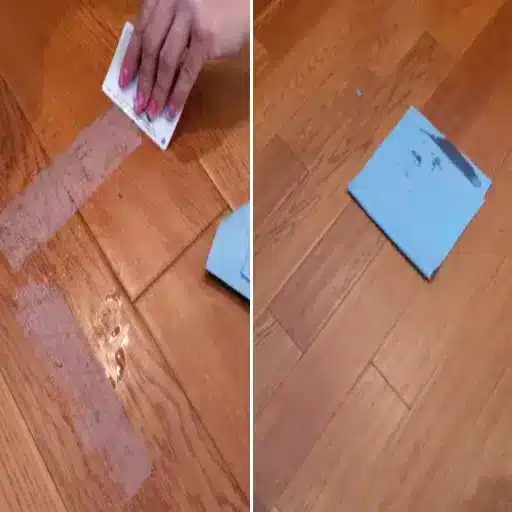
How to Clean Sticky Wood: Remove Buildup Without Ruining the Finish
The best way to clean sticky wood is to first identify the cause, then start with the gentlest method that works: warm soapy water for light buildup, white vinegar and water for grease, a baking soda paste for stubborn spots, and mineral spirits for heavy wax or polish buildup. Match the method to your finish, dry the surface completely, and the tackiness disappears without harming the wood.
Priya noticed it on a Tuesday. She reached for her kitchen cabinet handle and her fingers came away with a faint sticky pull, as if the wood itself was coated in syrup. At first she blamed the weather, then her cooking oil. When she finally scrubbed the doors with a strong all-purpose spray, the finish turned cloudy and the stickiness came back within a week. That is the moment most people give up and reach for a refinishing kit, but the fix is far simpler once you understand what is actually going on.
Wood is porous and responsive, and a sticky surface is almost always a symptom, not the cause. In this guide, you’ll learn why wood gets sticky, how to tell surface buildup from a failing finish, and how to clean sticky wood safely on cabinets, tables, and furniture without damaging the finish. You’ll also find a simple prevention routine that keeps the tackiness from returning.
For a broader look at caring for every wood surface in your home, see our complete guide to how to clean wood.
Key Takeaways
- Sticky wood is usually surface buildup from silicone furniture polish, grease, or body oils, and most of it cleans off with warm soapy water and a microfiber cloth.
- The first question is always diagnostic: if the tackiness returns within days after cleaning, the finish itself may be failing and needs refinishing, not more scrubbing.
- Match the cleaner to the finish: soap and water for polyurethane and varnish, vinegar for grease, baking soda paste for stuck-on spots, mineral spirits for wax buildup, and denatured alcohol only for shellac.
- Never use bleach, ammonia, acetone, steel wool, or abrasive scrubbers on finished wood, and always test any cleaner on an inconspicuous spot first.
- Avoiding silicone-based furniture polish is the single most effective way to prevent sticky wood in the first place.
Why Is My Wood Sticky?
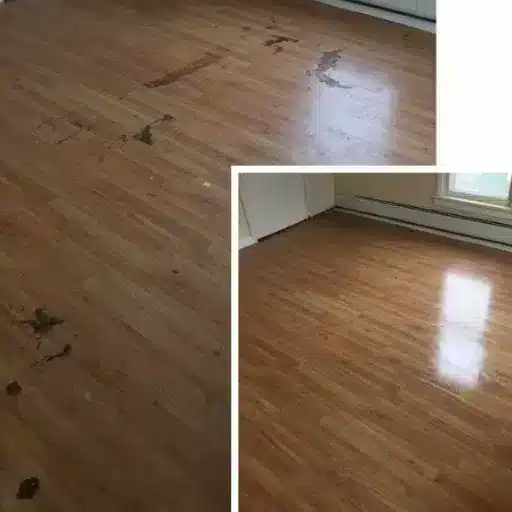
Before you reach for any cleaner, figure out why the wood is sticky. Nearly every case falls into one of two categories, and the fix is completely different for each.
Surface Buildup (Cleanable)
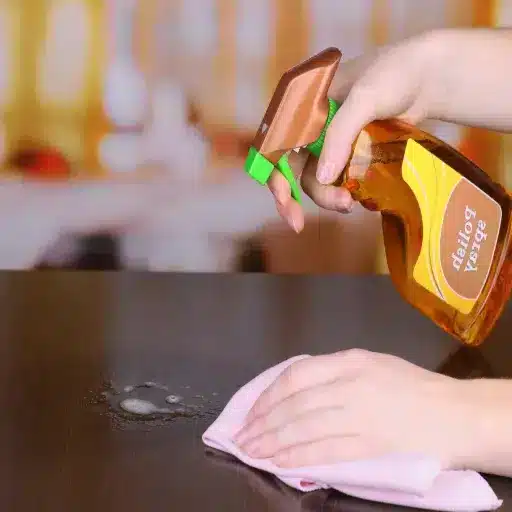
The most common culprit is furniture polish. Many commercial polishes contain silicone oils that do not evaporate. They leave an oily film behind that traps dust and dirt, and each application adds another layer. Over months and years, that buildup hardens into the tacky, gummy coating you can feel. The global furniture polish market was worth about $11.59 billion in 2025 and is projected to reach $15.94 billion by 2030, which gives you a sense of how many surfaces are being polished on a regular basis, and how many of them eventually turn sticky.
Grease and grime are the second most common cause. Airborne cooking oil settles on kitchen cabinets, while the natural oils from your hands accumulate on armrests, drawer pulls, and table edges. Adhesive residue from stickers, tape, and price tags is a third, and sticky buildup from old cleaning products is a fourth. All of these are surface-level problems. With the right cleaner, they lift away and the wood underneath is perfectly fine.
Finish Failure (Needs Refinishing)
Sometimes the stickiness is not on the surface at all. It is the finish itself. Shellac, an older and softer finish, can become tacky as it ages or absorbs moisture. Varnish and lacquer can fail if they were applied too thickly or did not cure properly. Heat and humidity can soften a finish over time. And rubber or vinyl placemats can release plasticizers that migrate into the wood and leave it permanently sticky.
Here’s the key diagnostic question: does the stickiness return within a few days even after you clean the surface thoroughly? If it does, cleaning won’t fix it. The affected area needs to be stripped and refinished. Trying to scrub a failing finish with stronger and stronger chemicals will only damage the wood further. If you’re unsure whether the tackiness is on the surface or in the finish, test a small hidden spot before you commit to a method.
| Cause | Cleanable at home? | Best fix |
|---|---|---|
| Silicone polish buildup | Yes | Mineral spirits, then soap and water |
| Grease and grime | Yes | Dish soap, then a vinegar solution |
| Body oils on high-touch areas | Yes | Warm soapy water |
| Adhesive or sticker residue | Yes | Oil soak, heat, or rubbing alcohol |
| Sticky shellac finish | No | Alcohol re-amalgamation or refinish |
| Plasticizer migration | No | Professional refinishing |
| Failed or uncured varnish | No | Strip and refinish |
Supplies for Cleaning Sticky Wood
Gather everything before you start. You will need:
- Microfiber cloths and a soft, lint-free cotton cloth
- Mild dish soap, like Dawn or a pH-neutral wood soap
- White vinegar
- Baking soda
- Mineral spirits or denatured alcohol (for specific cases, described below)
- A plastic scraper or an old credit card
- A soft-bristled toothbrush
- Olive oil or mineral oil for adhesive residue
- A wood conditioner or furniture wax for aftercare
None of these are expensive, and most are already in your kitchen or utility closet. The microfiber cloth is the most important tool on the list. It lifts and traps residue without scratching, while a rough sponge or steel wool can cut straight through your finish.
How to Clean Sticky Wood: Step-by-Step
Once you have confirmed the stickiness is surface buildup, work through these steps in order. Always start gentle and escalate only if needed.
Step 1. Dust the surface. Run a dry microfiber cloth over the area to lift loose dust and grit. Cleaning a dusty surface is like sanding it with dirt.
Step 2. Start with warm soapy water. Mix a few drops of mild dish soap into a bowl of warm water. Wring your cloth until it is barely damp, then wipe the sticky area, following the wood grain. Rinse the cloth, wipe again with plain water, and dry immediately with a clean cloth. This handles most everyday residue and is safe on sealed finishes.
Step 3. Escalate to vinegar for grease. If the soapy water is not enough, mix one part white vinegar with two parts water. Dampen a cloth, wipe the surface, let it sit for a few minutes to break down the grease, then rinse and dry. Never use straight vinegar, and test in a hidden spot first.
Step 4. Use a baking soda paste for stubborn spots. Mix baking soda with just enough water to form a thick paste. Apply it to the sticky area, let it sit for ten to fifteen minutes, then gently rub with a soft cloth or toothbrush. The mild abrasion cuts through stuck-on buildup without scratching the finish.
Step 5. Reach for mineral spirits to remove sticky wax or polish buildup. For the toughest cases, especially old silicone polish buildup, dampen a cloth with mineral spirits and wipe the surface in small sections. Work in a ventilated area, then follow immediately with soap and water to remove the solvent residue.
Step 6. Rinse, dry, and protect. Rinse away any cleaner, dry the surface completely, then apply a thin coat of wood conditioner or furniture wax and buff it dry. This restores the finish and helps it shed future residue.
Priya followed this exact sequence on her cabinet doors. The soapy water handled most of the buildup, the vinegar cut through the cooking grease near the stove, and the baking soda paste took care of the last sticky patches around the handles. Twenty minutes later, the doors felt like wood again, and a light coat of wax kept them that way.
How to Remove Sticky Residue From Wood
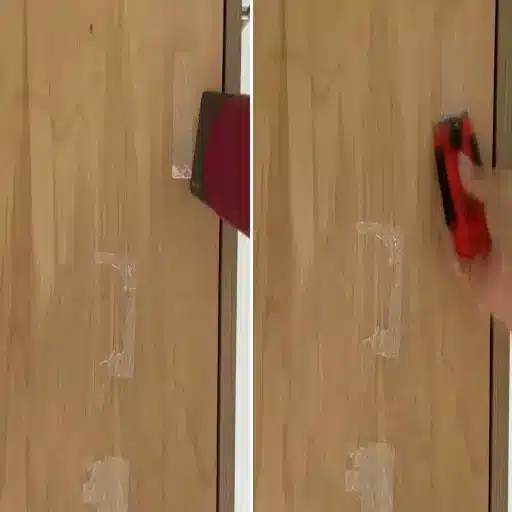
Adhesive residue from stickers, tape, and shipping labels needs a slightly different approach than grease or polish buildup.
Oil Method
For sticker and tape residue, oils are the gentlest and most effective option. Soak a paper towel in olive oil, vegetable oil, or mineral oil and lay it over the residue. Let it sit for ten to fifteen minutes so the oil can soften the adhesive, then wipe it away. The residue lifts without harsh chemicals, and the oil does not harm sealed wood.
Hair Dryer Heat
For stubborn stickers, hold a hair dryer a few inches above the residue on its lowest setting for about thirty seconds. The heat softens the adhesive, and you can then lift the sticker with a plastic scraper or credit card. Skip this method on lacquered or shellac finishes, where heat can damage the finish itself. For more ways to lift stickers, The Spruce walks through seven methods using supplies you likely already own.
Rubbing Alcohol
If oil and heat are not enough, dampen a cloth with rubbing alcohol and rub the residue in a circular motion. Alcohol is safe on most sealed and unfinished wood, but test it first and avoid letting it pool.
Commercial Removers
As a last resort, a commercial adhesive remover like Goo Gone can work. Read the label to confirm it is safe for wood, apply it sparingly, and rinse the area afterward. For a complete breakdown of residue-removal options on every wood surface, Cleanipedia has a useful guide on how to get sticky residue off wood.
How to Clean Sticky Wood by Finish Type
This is where most online guides go wrong. They recommend one universal cleaner, but the right choice depends on the finish protecting your wood, and the correct fix for a sticky wood finish depends entirely on what that finish is. Using the wrong solvent can dull, streak, or strip it.
Polyurethane and Varnish
These are the most common modern finishes, and they are the most forgiving. Warm soapy water, vinegar solution, and even mineral spirits are all safe in moderation. You have the widest range of cleaning options here.
Lacquer
Lacquer is beautiful but sensitive. It softens with heat, so skip the hair dryer. Stick to soapy water and vinegar, and never scrub. If lacquer becomes sticky, it usually means the finish has degraded and needs professional attention.
Shellac
Shellac is the classic antique finish, and it behaves differently from everything else. It dissolves in alcohol. A tacky shellac surface can sometimes be re-amalgamated by wiping it with a cloth dampened with denatured alcohol, which softens and reflows the finish. This takes practice, so test on an inconspicuous corner and stop if the finish lifts. If shellac has aged to the point of stickiness, stripping and refinishing is often the cleaner answer.
Oil and Wax Finishes
Oil and wax finishes penetrate the wood rather than sitting on top, so they need the gentlest care. Wipe with a barely damp cloth and re-oil or re-wax after cleaning. Strong solvents will strip these finishes almost immediately.
Unfinished Wood
Unfinished wood should rarely be cleaned with water or oil. Both can darken the wood or raise the grain. Dust it regularly and spot-clean with a barely damp cloth, then allow it to dry fully. If you are caring for raw wood surfaces, the guidance in our article on caring for the rest of your wood furniture covers the same principles in depth.
Tom bought an old writing desk at a flea market and could not understand why the surface stayed sticky no matter what he cleaned it with. A woodworker friend tested a corner with denatured alcohol and watched the finish soften on contact. The desk was finished in shellac, and it was dissolving slightly every time Tom wiped it down with his spray cleaner. Once he switched to the alcohol re-amalgamation technique and stopped using water, the surface stabilized, and the desk became usable again.
How to Clean Sticky Wood Cabinets and Tables
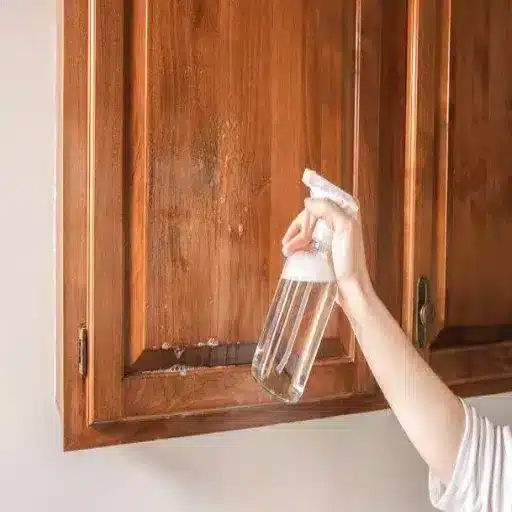
The most common sticky spots in any home are kitchen cabinets and dining tables, because they see the most grease, food, and touch.
Kitchen Cabinets
Grease is the main enemy here. Cabinets near the stove collect airborne cooking oil, and over time that film turns tacky and picks up dust. Use the step-by-step method above, and lean on the vinegar solution for the greasiest areas. For the full degreasing workflow, including how to handle years of accumulation, see our guide to degreasing sticky kitchen cabinets in depth.
High-Touch Table Edges and Armrests
Body oils collect on table edges, chair arms, and drawer fronts, right where your hands rest. These areas respond well to a quick weekly wipe with a barely damp cloth, and to a deeper soapy cleaning every few months.
Plasticizer Stains
If your sticky patch matches the shape of a rubber placemat or a vinyl tablecloth, the culprit is plasticizer migration. Plasticizers leach out of the rubber or vinyl and soak into the finish, and often into the wood. Cleaning can remove the surface film, but the embedded plasticizer may require professional refinishing to fully resolve.
Cleaners and Tools to Avoid on Sticky Wood
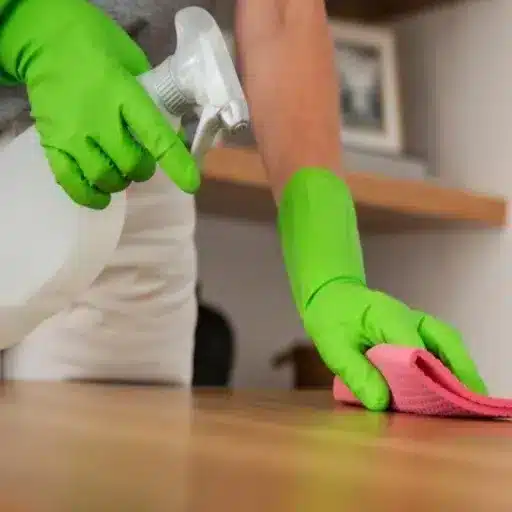
Some common cleaning habits cause more harm than the stickiness itself. Avoid these:
- Bleach and ammonia, which strip and cloud finishes
- Acetone and nail polish remover on finished wood
- TSP, unless you are stripping the finish on purpose
- Steel wool, metal scrapers, and abrasive scrubbers
- Excessive water, which causes warping and raised grain
The rule of thumb is simple. If a cleaner smells strong enough to strip paint, or a tool feels rough enough to scratch glass, keep it away from your wood.
How to Prevent Sticky Wood
Prevention takes minutes a month and spares you the whole cleaning ordeal.
Stop using silicone-based furniture polish. This is the single biggest change you can make. Silicone oils build up over time and are the most common cause of sticky wood. If you want to know which products to reach for instead, our guide to choosing the best wood cleaner for your finish breaks down the options by finish type.
Buff polish completely dry. If you do use polish, apply it thinly and buff it until no residue remains on the cloth.
Wipe spills and grease quickly. The faster you remove a spill, the less time it has to penetrate the finish.
Dust weekly and deep clean every few months. A weekly dry dusting prevents grit from grinding into the finish, and a quarterly cleaning prevents buildup before it turns sticky.
The Sustainable Way to Care for Wood
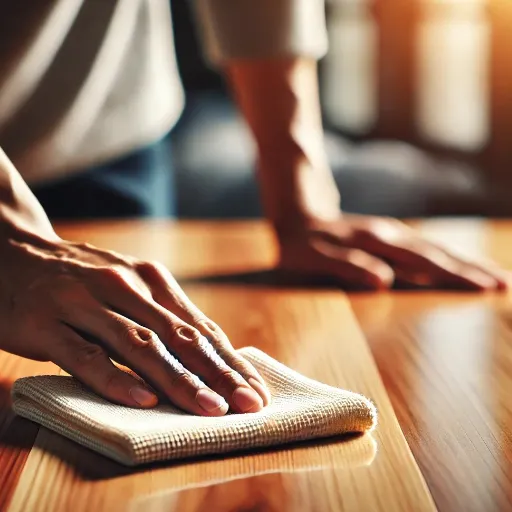
Here is the bigger picture. Learning how to fix sticky furniture is a small skill with a big payoff, because most tacky pieces are far from the end of their life. A table that feels tacky, a cabinet door that refuses to stay clean, or a desk that has lost its shine can usually be brought back with an hour of gentle work. Every piece you restore is a piece you did not throw away, and every year you extend a piece’s life is another year of demand you do not add to the disposable furniture market.
That’s why we care so deeply about this at VitalWood Global. We source wood from responsibly managed forests, and we believe the wood you already own deserves the same respect as the wood you’ll buy next. A well-maintained piece of sustainably sourced wood can last for generations. Proper cleaning and care is how you protect that investment, and it costs almost nothing compared to a replacement.
Conclusion
Sticky wood feels like a mystery, but it’s really a message. It’s telling you that something is building up on the surface, or that a finish has reached the end of its life. Most of the time, the message is good news: warm soapy water, a little vinegar, or a baking soda paste will lift the buildup and leave the wood clean and dry.
Here is your action plan for how to clean sticky wood. Diagnose the cause first, and if the stickiness returns after cleaning, treat it as a finish problem rather than a cleaning problem. Start with the gentlest method and escalate carefully, always testing in a hidden spot. Match the cleaner to your finish. And above all, stop feeding the cycle with silicone polish.
Your wood was made to last, and it will, if you care for it well. Next time a surface feels tacky, take a breath, grab a microfiber cloth, and know that you already have everything you need to fix it. If you’re starting fresh with new furniture or a renovation, explore our range of sustainably sourced wood products and give the next generation of wood the same careful attention.