
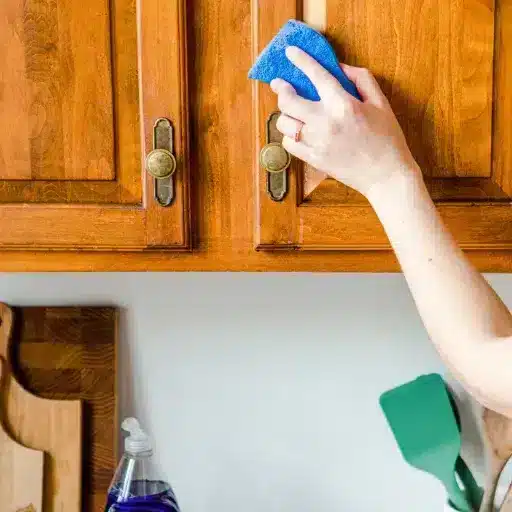
How to Clean Wood Cabinets Without Damaging the Finish
To clean wood cabinets safely, use a solution of a few drops of dish soap in warm water, wipe with a damp (not wet) microfiber cloth, then dry immediately. For grease buildup, a 50/50 mix of white vinegar and water cuts through grime without stripping the finish. The key rule: never let moisture sit on wood.
Most people reach for the nearest all-purpose spray and go to work. That’s where the damage starts. Harsh chemicals, bleach, ammonia, and most commercial kitchen degreasers can strip finishes, raise wood grain, and over time break down the very fibers that give quality wood its beauty and strength.
You’ve invested in real wood cabinets. Cleaning them right protects that investment for decades. In this guide, you’ll learn exactly how to clean wood cabinets by finish type, how to tackle heavy grease with gentle methods, what to avoid, and how a simple routine keeps them looking their best year after year.
Key Takeaways
- Dish soap and warm water is safe for all sealed wood cabinet finishes, use a damp cloth, never a soaking wet one.
- White vinegar (diluted 50/50 with water) is the most effective natural degreaser for wood kitchen cabinets.
- Baking soda paste tackles stubborn sticky buildup without scratching the surface.
- Wood species and finish type determine which cleaning method works best, veneer, oil-finished, and lacquered cabinets each have different tolerances.
- Never use bleach, ammonia, abrasive scrubbers, or steam cleaners on wood cabinets.
What You Need to Clean Wood Cabinets
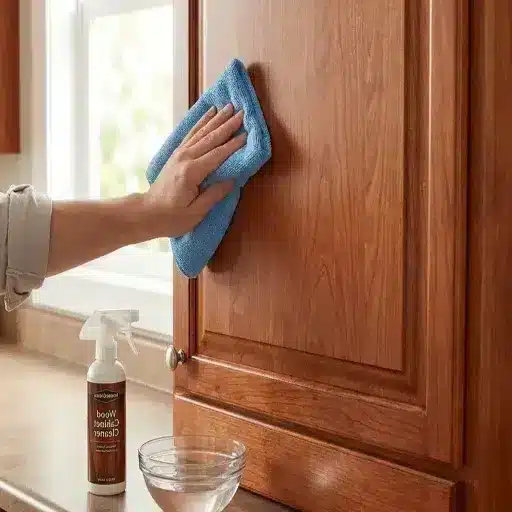
Before starting, gather the right supplies. Using the wrong tools, even something as common as a rough sponge, can scratch the finish and create micro-grooves where grime collects faster.
Basic Supplies (safe for all sealed wood finishes)
- Microfiber cloths (two: one damp, one dry)
- Mild dish soap (a few drops is enough)
- Warm water
- Small bucket or spray bottle
- Soft-bristle brush (for carved details or hardware crevices)
Supplies for Heavy Grease or Buildup
- White distilled vinegar
- Baking soda
- Castile soap
- Olive oil (for conditioning after cleaning)
That’s it. You don’t need commercial wood cabinet cleaners. In fact, for most sustainably sourced, quality-finished wood, simple household ingredients outperform expensive sprays because they clean without introducing harsh solvents that degrade the finish over time.
Want to explore which commercial products are actually safe? Our guide to the best wood cleaners for every surface and finish breaks down what to look for, and what to leave on the shelf.
How to Clean Wood Cabinets: Step-by-Step
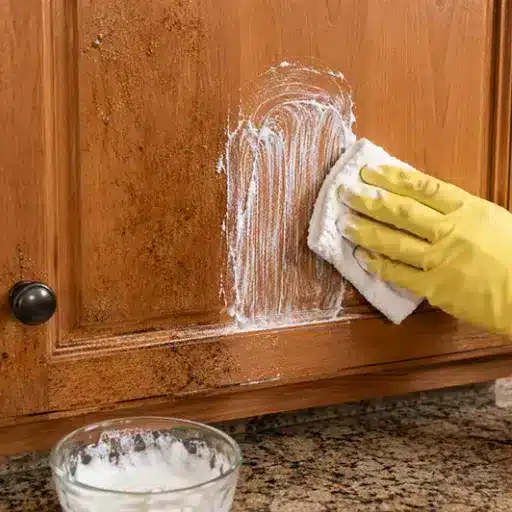
The following method works for most sealed, stained, lacquered, and painted wood cabinets. Specific variations for different finish types follow in the next section.
Step 1: Remove loose debris first.
Use a dry microfiber cloth to wipe down cabinet doors, frames, and the inside edges. This picks up dust and loose crumbs before any moisture touches the wood, moisture + grit = scratches.
Step 2: Prepare your cleaning solution.
Add 3-4 drops of mild dish soap to a cup of warm water. That’s the right ratio. More soap leaves a film that attracts more dirt. If you’re working in the kitchen near the stove, add a small splash of white vinegar to boost grease-cutting power.
Step 3: Wring out your cloth completely.
Dip the microfiber cloth in the solution, then wring it until it’s just barely damp, not wet. This is the most important step. Excess water is the primary cause of warping, swelling, and finish clouding on wood cabinets.
Step 4: Wipe with the grain.
Clean in the direction of the wood grain using gentle, even strokes. Work one cabinet door at a time. For decorative panels or moldings, a soft-bristle brush reaches into crevices without scratching.
Step 5: Clean hardware separately.
Cabinet knobs and pulls harbor grease and bacteria. Remove them if possible and clean with the same solution. Brass hardware responds well to a lemon juice and baking soda paste. Dry before reattaching.
Step 6: Dry immediately.
Follow with a clean, dry microfiber cloth. Don’t air dry. Wood absorbs ambient moisture, and even a short wait can cause cloudiness or streaking on glossy finishes.
How to Degrease Wood Kitchen Cabinets
The cabinets nearest your stove collect cooking grease. Over time that grease polymerizes, it hardens and bonds to the finish, becoming increasingly difficult to remove. Most of us notice it when the cabinet doors feel sticky to the touch.
Here’s how to handle it at every severity level.
Light Grease: Dish Soap Method
The basic dish soap and warm water solution from the steps above handles most light grease from regular cooking. The surfactants in dish soap emulsify fat-based residue without requiring aggressive scrubbing or chemicals.
Wipe, then dry. Repeat on the same spot if needed. Patience and two passes always beats scrubbing harder.
Moderate Grease: Vinegar and Water
Mix equal parts white distilled vinegar and warm water in a spray bottle. Spray lightly onto the cloth (not directly on the cabinet), wipe down, then follow immediately with a clean damp cloth to remove any vinegar residue, and dry.
Vinegar’s mild acidity breaks down the molecular bonds in grease deposits. It’s effective, affordable, and safe on most sealed wood finishes. One important nuance: on oil-finished or wax-finished wood, repeated vinegar use can dull the finish over time. Use it sparingly on those surfaces, or stick to dish soap only.
Heavy, Sticky Buildup: Baking Soda Paste
For truly stubborn deposits, mix baking soda with just enough dish soap to form a thick paste. Apply to the sticky area with your finger or a soft cloth, let it sit for 5 minutes, then gently work it in with a circular motion. Wipe clean, rinse with a damp cloth, and dry.
The gentle abrasive action of baking soda lifts hardened grease without scratching the finish. If you’re dealing with heavy buildup throughout your kitchen, our deep-dive on how to clean sticky wood surfaces covers both cabinet-specific and general wood surface strategies.
Consider this situation: Jennifer renovated her kitchen in 2022 with solid white oak cabinets, a significant investment. For two years, she used a popular citrus-based multi-surface spray because it smelled clean and cut grease well. By 2024, the finish near the stove had gone from satin to flat, and the wood felt rougher to the touch. A wood finishing expert told her the citrus solvent had slowly broken down her cabinet’s polyurethane topcoat. Refinishing the affected doors cost her 400.Thesprayshe′dbeenusing?400.Thesprayshe′dbeenusing?6 at the grocery store. Simple dish soap and vinegar would have prevented the whole problem.
Cleaners to Avoid on Wood Cabinets
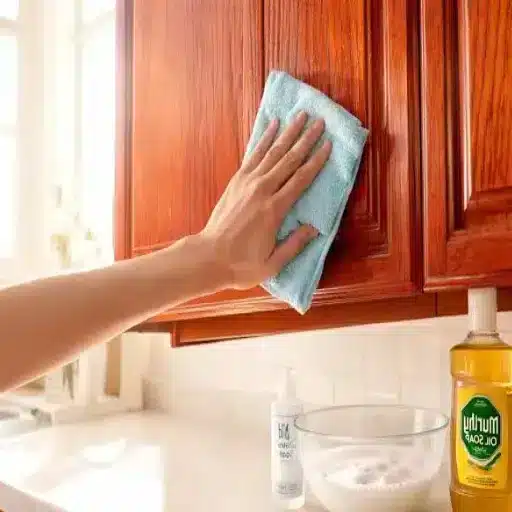
This is where most cabinet damage actually happens. People reach for familiar products without realizing they’re formulated for tile, stone, or stainless steel, surfaces that can handle far more aggressive chemistry than wood.
Never use these on wood cabinets:
- Bleach: Oxidizes the lignin in wood, causing discoloration and finish breakdown. Even diluted bleach is too aggressive for finished wood surfaces.
- Ammonia-based cleaners: Most glass and multi-surface cleaners contain ammonia. It strips varnish and lacquer and can permanently cloud the finish.
- Abrasive scrubbers or steel wool: Scratches the finish on all wood types, leaving micro-grooves that collect grime and harbor bacteria.
- Steam cleaners: Force moisture deep into wood grain and joints. The heat and steam combination causes warping, swelling, and can delaminate veneer panels.
- Commercial kitchen degreasers: Formulated for non-porous surfaces. The solvents strip wood finishes. Check the label, if it’s not specifically marked safe for wood, assume it isn’t.
- Oil-based soaps on lacquered or painted finishes: Murphy Oil Soap is fine for oil-finished or wax-finished wood, but leaves an oily film on lacquered or painted cabinet surfaces that dulls the sheen over time.
If you’re unsure whether a cleaner is safe, test on an inconspicuous spot first, the inside edge of a door or the back of a cabinet frame.
Cleaning Tips by Wood Type and Finish
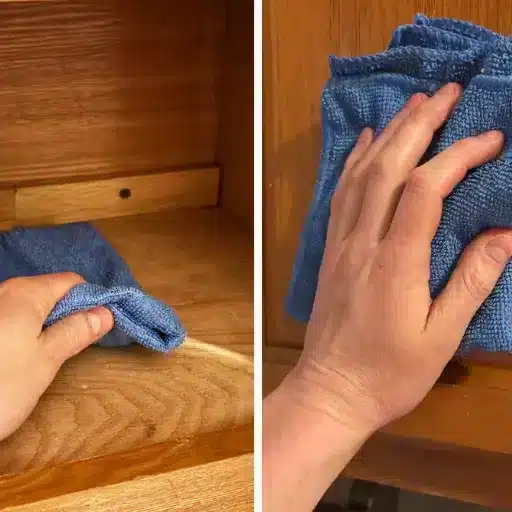
This is the section that’s missing from most cleaning guides. Wood species and finish type change everything. Oak responds differently than maple. Veneer cabinets need different care than solid wood. Here’s what to know.
Painted or Lacquered Cabinets
These have a hard, protective topcoat. They’re the most forgiving to clean. Dish soap and water work perfectly. Avoid abrasives, which will scratch through the paint or lacquer. Avoid oil-based products, which leave a film. Wipe dry quickly to prevent any moisture from working into seams.
Stained or Oil-Finished Wood (Oak, Walnut, Maple)
These finishes leave the natural wood grain more exposed and breathable. Oak, walnut, and maple cabinets with an oil or wax finish absorb products differently. Use dish soap solution sparingly. Avoid extended vinegar use. After cleaning, a light application of food-grade mineral oil or a dedicated wood conditioner helps maintain the finish and keeps the wood from drying out.
Dense hardwoods like walnut tolerate moisture better than open-grain woods like oak. Oak’s pronounced grain can trap cleaning residue if you’re not careful to dry thoroughly.
Wood Veneer Cabinets
Veneer is real wood, but it’s a thin layer bonded to a substrate. Excess moisture is your primary enemy. It can cause the veneer to bubble, warp, or delaminate. Use a barely damp cloth only, wipe immediately, and dry right away. Never use vinegar on veneer, the acidity can affect the adhesive bond over time.
For a deeper look at maintaining veneer surfaces, check our guide to wood veneer panel maintenance and long-term care.
Natural and Eco-Conscious Cleaners for Wood Cabinets
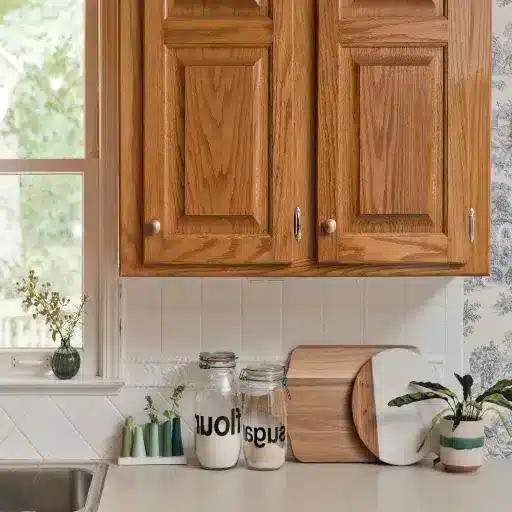
Choosing natural cleaners isn’t just about avoiding chemicals, it’s a deliberate choice that reduces household chemical waste, eliminates plastic packaging from commercial bottles, and keeps your indoor air quality cleaner. For anyone working with sustainably sourced wood products, it’s a natural extension of the same values.
These three recipes handle everything from routine cleaning to heavy grease:
All-Purpose Wood Cabinet Cleaner:
3-4 drops dish soap + 1 cup warm water. Works for daily and weekly cleaning on all sealed finishes.
Grease-Cutting Spray:
1/2 cup white vinegar + 1/2 cup warm water + 5 drops dish soap. Effective on moderate cooking grease. Apply via cloth, not direct spray.
Deep Clean and Polish:
2 tablespoons olive oil + 1 tablespoon white vinegar + 1 cup warm water. Cleans and conditions in one step. Particularly good on oil-finished or wax-finished hardwoods where the oil nourishes the wood.
Sticky Residue Paste:
Baking soda + dish soap to a thick paste consistency. Spot treatment only for hardened buildup.
All four recipes use ingredients you already have. None require single-use plastic bottles, none contain solvents, and none will harm your finish when used correctly.
How Often Should You Clean Wood Cabinets?
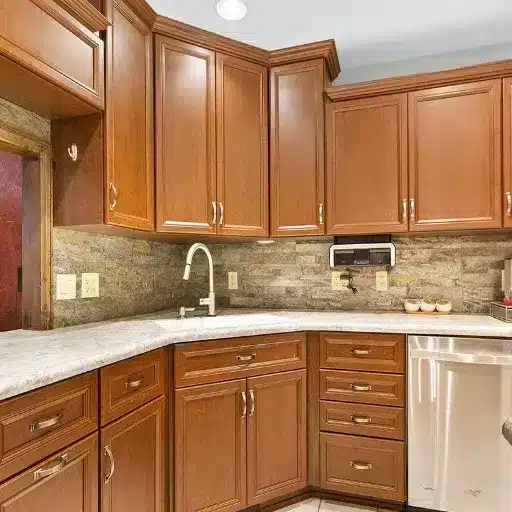
To clean wood cabinets effectively, match frequency to function.
After cooking: Wipe down any visible splatter near the stove with a damp cloth. Grease deposits are easiest to remove when they’re fresh, before they polymerize.
Weekly: A full wipe-down of cabinet doors, handles, and frames with the dish soap solution. This prevents buildup from ever becoming a problem.
Monthly: A more thorough clean including inside the cabinets, the tops (which collect grease and dust), and hardware.
Quarterly: A light conditioning pass with mineral oil or a wood conditioner on oil-finished or stained wood. This prevents the wood from drying and cracking, especially in climates with low humidity.
That’s the full routine. It takes about 20 minutes weekly and prevents the kind of heavy buildup that requires aggressive cleaning and risks finish damage.
A note from the VitalWood Global perspective: we work with sustainably sourced wood products every day, and one thing we’ve learned is that the quality of the wood matters as much as the cleaning method. High-density hardwoods from responsibly managed forests are more dimensionally stable, they expand and contract less with humidity changes, and their finish holds up better over time. Proper cleaning is one half of the equation. Starting with quality, sustainably sourced wood is the other half.
Frequently Asked Questions About Cleaning Wood Cabinets
What is the best thing to clean wood cabinets with?
A few drops of mild dish soap in warm water, applied with a damp microfiber cloth, is the safest and most effective cleaner for all sealed wood cabinet finishes. For grease, add white vinegar to the solution or use it separately at a 50/50 dilution with water.
Can you use vinegar to clean wood cabinets?
Yes, diluted white vinegar (50/50 with water) is effective on most sealed and lacquered wood cabinets. However, avoid repeated use on oil-finished or wax-finished wood, and never use it on veneer. Always follow with a clean damp cloth and dry immediately.
How do I get sticky grease off wood cabinets without damaging them?
For stubborn sticky grease, make a paste of baking soda and dish soap. Apply, let sit 5 minutes, then gently work with a soft cloth. Wipe clean and dry. Avoid scrubbing hard or using commercial degreasers not specifically rated for wood.
Is Murphy Oil Soap good for wood cabinets?
Murphy Oil Soap works well on oil-finished and wax-finished wood cabinets. It’s not recommended for lacquered or painted finishes, where it can leave an oily film that dulls the surface over time.
Can I use the same method to disinfect my cabinets?
Diluted white vinegar has mild antimicrobial properties. For stronger disinfection, a highly diluted solution of rubbing alcohol (70% isopropyl, 1 part to 3 parts water) can be used sparingly on sealed wood. Our guide on how to disinfect wood surfaces safely covers this in detail, including which finishes tolerate disinfectants and which don’t.
Conclusion
Cleaning wood cabinets comes down to a simple principle: gentle is always right. The materials that damage wood finishes most are rarely the ones we’d suspect; it’s the everyday spray cleaners, the occasional steam mop, the abrasive sponge grabbed without thinking.
To recap:
- Dish soap and warm water handle routine cleaning for all sealed finishes.
- White vinegar solution cuts through kitchen grease without harsh chemistry.
- Baking soda paste removes stubborn buildup without scratching.
- Match your method to your finish: veneer, oil-finished, and lacquered cabinets each need slightly different care.
- Dry immediately, always. Moisture is wood’s primary enemy.
Properly maintained wood cabinets last for decades. That’s not marketing language; it’s the practical reality of quality, sustainably sourced hardwood. The investment you made in real wood pays back every time you choose a gentle cleaner over a harsh one.
For a broader guide to keeping all the wood surfaces in your home in great shape, our complete guide to cleaning wood surfaces covers wood furniture, floors, veneer, and more in one place.
And if you’re planning a renovation or sourcing wood materials for a project, VitalWood Global is here to help you choose the right sustainably sourced wood for the job and ensure it lasts.