
How to Clean Wood Furniture: A Complete Guide to Safe, Effective Care
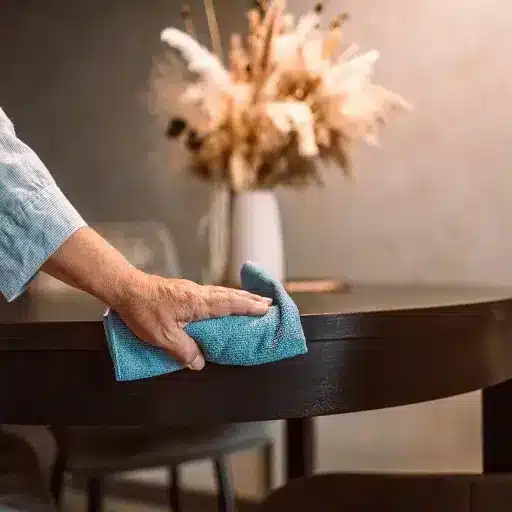
The best way to clean wood furniture is to dust it with a microfiber cloth, wipe it with a barely damp pH-neutral solution, dry it immediately, then condition or wax it based on the finish type. Most damage to wood furniture comes from using too much water, the wrong cleaner, or skipping the drying step, not from everyday use.
Lisa learned this the hard way. She had inherited a solid oak sideboard from her grandmother and wanted it to shine for a family dinner. After reading a few conflicting tips online, she sprayed an all-purpose cleaner directly onto the surface and scrubbed with a rough sponge. Within minutes, the finish looked cloudy. The next morning, white streaks appeared where moisture had seeped through the lacquer. What should have been a simple refresh turned into a refinishing project.
That story is more common than you might think. Wood is a porous, responsive material, and cleaning it well means understanding what type of wood and finish you are working with first. In this guide, you will learn how to clean wood furniture without damaging the finish, which supplies to keep on hand, how to handle stains and sticky residue, and when to condition, wax, or call a professional. Whether you are maintaining a modern dining table, a vintage dresser, or a delicate wood veneer cabinet, the principles are the same.
For a broader look at caring for all kinds of wood surfaces, see our complete guide to how to clean wood.
Key Takeaways
- The safest way to clean wood furniture is to dust, damp wipe with a pH-neutral solution, dry immediately, then condition based on finish type.
- Always identify the finish before choosing a cleaner; vinegar, oil soap, and water can damage some finishes.
- Microfiber cloths, soft brushes, pH-neutral soap, distilled water, and paste wax are the core supplies for regular wood furniture care.
- Sealed furniture can be damp wiped; unfinished, antique, and veneer pieces need gentler, mostly dry methods.
- Proper cleaning extends furniture life by decades, supports sustainability, and protects your investment in quality wood.
Why Proper Wood Furniture Cleaning Matters
Wood is often described as a living material, and for good reason. Even after it is harvested, cut, and finished, wood continues to respond to humidity, temperature, and moisture. The fibers expand when humid and contract when dry. That movement is what gives wood its character, but it also makes furniture vulnerable to the wrong cleaning routine.
A finish, whether polyurethane, lacquer, shellac, varnish, oil, wax, or paint, exists to slow that response and protect the surface. When you clean furniture with harsh chemicals, excessive water, or abrasive tools, you weaken that protective layer. Once the finish is compromised, moisture can reach the wood beneath, leading to warping, staining, mold, or permanent discoloration.
The good news is that regular, gentle cleaning prevents most of these problems. According to industry estimates, well-maintained solid wood furniture can last 50 to 100 years or more. Simple habits like dusting weekly, wiping spills quickly, and conditioning once or twice a year keep the finish intact and the wood stable.
There is also a sustainability angle. The longer your furniture lasts, the less often it needs to be replaced. That means less waste, fewer resources consumed, and more value from every piece. At VitalWood Global, we believe that caring for quality wood furniture is part of caring for the forests it came from. When you protect what you own, you reduce demand for disposable furniture and honor the responsibly sourced lumber that went into it.
Identify Your Furniture’s Wood and Finish First
Before you reach for any cleaner, take a minute to identify what you are cleaning. Not all wood furniture is the same, and the right method depends on the species, the finish, and the condition of the piece.
Common Wood Species in Furniture
Most furniture is made from hardwoods, softwoods, or engineered wood products. Hardwoods like oak, walnut, maple, cherry, and teak are dense and durable. They resist dents and wear better than softwoods, but they can still be damaged by moisture or abrasion. Oak and ash have open pores that can trap dirt, while maple and cherry have tighter grain that shows streaks more easily.
Softwoods like pine, cedar, and fir are more common in painted, rustic, or budget-friendly furniture. They dent and scratch more easily, and they absorb moisture faster. That means softwood furniture generally needs gentler cleaning and quicker drying.
Veneer furniture has a thin layer of real wood bonded to a core material like plywood or particleboard. It looks like solid wood, but the surface layer is thin and can bubble or lift if water seeps underneath. If you are cleaning wood veneer, follow our dedicated guide on how to clean wood veneer for the safest approach.
Common Finish Types
The finish is the protective layer on top of the wood. It determines what cleaners are safe and how much moisture the surface can handle.
- Polyurethane and varnish form a hard, plastic-like film. They are durable and water resistant, so they tolerate damp wiping well.
- Lacquer and shellac dry to a thinner, harder finish. They are less water resistant and can develop white rings or haze if wet for too long.
- Oil finishes like tung oil or linseed oil soak into the wood and cure to a softer, more natural surface. They need occasional re-oiling and should not be cleaned with harsh solvents.
- Wax finishes build a protective layer through repeated applications of paste wax or beeswax. They need gentle cleaning and periodic re-waxing.
- Painted wood furniture has a sealed surface, but the paint itself can be scratched or dulled by abrasive cleaners.
- Unfinished wood has no protective coating at all. It should almost never be damp cleaned. The Canadian Conservation Institute recommends dry methods for unfinished wood to avoid swelling, staining, and mold growth.
Quick Finish Identification Test
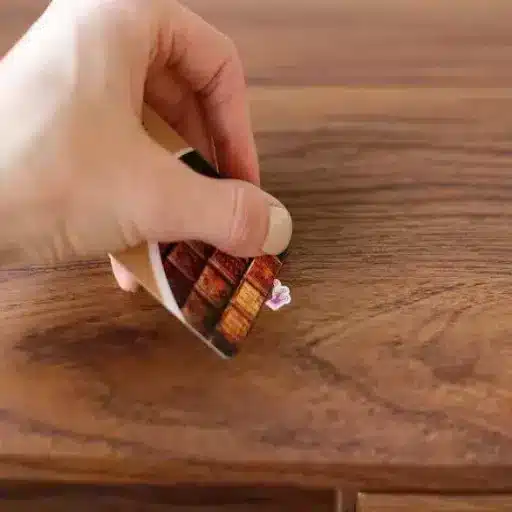
If you are unsure what finish you have, test in a hidden spot like the underside of a table or the back of a leg. Dampen a cotton swab with water and touch it to the surface. If the water beads up, you likely have polyurethane or varnish. If it leaves a dark spot that fades as it dries, the finish is probably oil or wax. If it leaves a white or cloudy mark, you may have lacquer or shellac, and you should be very cautious with moisture.
| Finish Type | Safe Cleaning Method | Moisture Tolerance | Maintenance Need |
|---|---|---|---|
| Polyurethane/varnish | Damp microfiber cloth with pH-neutral soap | High | Occasional conditioning |
| Lacquer/shellac | Slightly damp, fast-drying wipe | Low | Polish or wax carefully |
| Oil finish | Dry dusting, occasional oil soap if recommended | Medium | Re-oil as needed |
| Wax finish | Dry dusting, damp cloth only when necessary | Low | Re-wax periodically |
| Painted wood | Damp cloth with mild soap | Medium | Touch-up paint if chipped |
| Unfinished wood | Dry brush or vacuum only | None | Sealing recommended |
Essential Wood Furniture Cleaning Supplies
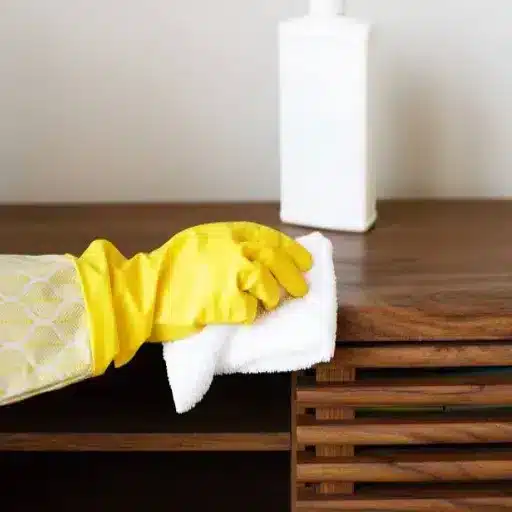
You do not need a cabinet full of specialty products to keep wood furniture clean. A small, focused kit will handle most routine care and many deeper cleaning tasks.
Dusting Tools
Start with a high-quality microfiber cloth. Unlike cotton or paper towels, microfiber traps dust rather than pushing it around. It is also less likely to leave lint behind. For carved details, spindles, and crevices, keep a soft natural-bristle paintbrush or a clean makeup brush on hand. A vacuum with a brush attachment is useful for shelves, drawers, and the areas behind furniture.
Cleaning Solutions
For most sealed furniture, a few drops of pH-neutral dish soap mixed into a bowl of distilled water is enough. Distilled water avoids mineral deposits that tap water can leave behind. Some people reach for vinegar, and while diluted white vinegar can cut grease on certain finishes, it is acidic and can damage lacquer, shellac, wax, and some oil finishes over time. Mineral spirits can dissolve sticky residue and old polish buildup, but they should only be used in well-ventilated areas and on finishes that can tolerate them.
Conditioning and Protection Products
Paste wax, beeswax, and high-quality furniture oils help replenish and protect wood. Avoid products that contain silicone, because silicone can build up over time, attract dust, and make future refinishing difficult. If you want to use a commercial polish, look for low-VOC options that match your finish type. The EPA notes that volatile organic compounds in some cleaners can affect indoor air quality, so choosing low-VOC products is better for your home and the environment.
Safety Gear
When using mineral spirits, strong cleaners, or aerosol products, work in a ventilated area and wear nitrile gloves. Even gentle products can irritate skin over time. Keep a clean, dry towel nearby so you can wipe surfaces dry immediately.
The Basic Wood Furniture Cleaning Process
Once you know your finish and have your supplies ready, the actual cleaning process is simple. The key is to work gently and to avoid letting water sit on the surface.
Step 1: Dust Top to Bottom, With the Grain
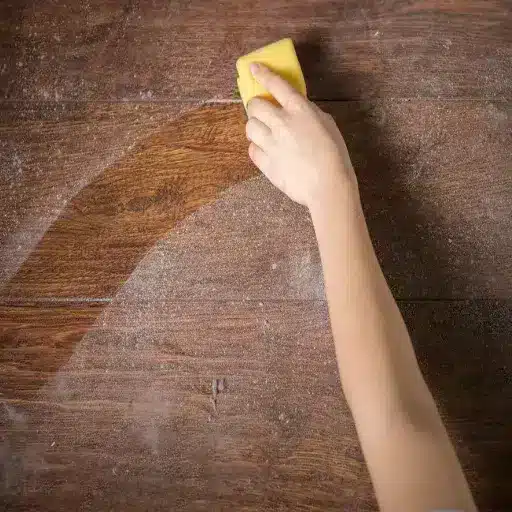
Start at the highest point of the furniture and work your way down. This prevents dust from falling onto areas you have already cleaned. Always wipe with the grain of the wood, not across it. Wiping across the grain can push dirt into open pores and create fine scratches over time. Use a dry microfiber cloth or a soft brush for carved areas.
Step 2: Damp Wipe With a pH-Neutral Solution
Dip a clean microfiber cloth into your diluted soap solution and wring it out until it is barely damp. It should feel cool to the touch but not wet enough to drip. Wipe the surface with the grain, working in small sections. Rinse and wring the cloth frequently so you are not spreading dirt around. Never apply cleaner directly to the wood. Apply it to the cloth first.
Step 3: Dry Immediately With a Clean Cloth
This is the step most people skip, and it is the one that prevents the most damage. After wiping a section, follow immediately with a dry microfiber cloth. Remove every trace of moisture. Pay special attention to edges, corners, and seams where water can collect.
Step 4: Condition or Wax as Needed
After cleaning, assess whether the wood needs protection. If the finish looks dull or feels dry, apply a thin layer of paste wax or a compatible furniture oil according to the product instructions. Buff with a soft cloth until the surface feels smooth. For most furniture, conditioning once or twice a year is enough. Over-conditioning can lead to buildup and attract dust.
How to Clean Wood Furniture by Finish Type
Different finishes respond to cleaners differently. Matching your method to the finish gives you better results and protects the wood underneath.
Cleaning Polyurethane and Varnish Finishes
Polyurethane and varnish create a hard, water-resistant film. These finishes are the most forgiving. You can use a damp microfiber cloth with pH-neutral soap for routine cleaning. For sticky spots or grease, a slightly stronger solution or a small amount of mineral spirits on a cloth may work, but test first. Dry thoroughly and buff with a clean cloth.
Cleaning Lacquer and Shellac Finishes
Lacquer and shellac are harder and more brittle than polyurethane. They are also more sensitive to water and alcohol. Use a barely damp cloth and dry immediately. Avoid ammonia, vinegar, and any solvent unless you are certain the finish can handle it. If white rings appear, they may respond to gentle buffing with a soft cloth and a tiny amount of paste wax.
Cleaning Oil and Wax Finishes
Oil and wax finishes are softer and more porous. They need less moisture and more replenishment. Dust regularly with a dry cloth. When deeper cleaning is needed, use a cloth barely dampened with water and soap, then dry immediately. Reapply oil or wax as needed to maintain the protective layer. For wax finishes, occasional re-waxing restores the sheen.
Cleaning Painted Wood Furniture
Painted furniture can usually handle a damp cloth with mild soap, but the paint itself is the finish. Avoid abrasive scrubbers that can scratch or dull the paint. Clean in the direction of the wood grain when possible, and touch up chips promptly to prevent moisture from reaching the wood beneath.
Cleaning Unfinished or Bare Wood Furniture
Unfinished wood should rarely, if ever, be damp cleaned. Use a dry microfiber cloth, a soft brush, or a vacuum with a brush attachment. If the piece is dirty, consider sealing it rather than washing it. Damp cleaning unfinished wood can cause swelling, staining, and mold.
How to Clean Different Furniture Types

The shape and use of a piece also affect how you clean it.
Tables and Desks
These are high-contact surfaces that collect dust, oils, and spills. Dust daily or weekly, wipe spills immediately, and deep clean monthly. Pay attention to edges and legs, where grime can build up from hands and feet. Use coasters and desk pads to reduce wear.
Dressers and Chests
Dressers have large flat surfaces and many drawers. Dust the top weekly, and vacuum inside drawers when you reorganize. Clean drawer pulls and handles with a cloth dampened with soap and water, then dry them. Be careful not to let moisture run down the front of the drawers.
Chairs and Stools
Chairs have spindles, rungs, and joints where dust collects. A soft brush or vacuum attachment works well for these areas. For seats, follow the finish type guidance. Spindle backs should be dusted rather than wiped to avoid forcing moisture into joints.
Beds and Headboards
Headboards, especially fabric-upholstered ones, are often neglected. For wood headboards, dust weekly and wipe down monthly. Be careful around any decorative hardware or upholstered panels. Bed frames should be vacuumed underneath periodically.
Bookcases and Shelves
Remove books and objects before cleaning shelves. Dust from top to bottom, then wipe with a damp cloth if the finish allows. Allow shelves to dry completely before replacing items. This is also a good time to check for sagging shelves or loose joints.
Veneer Furniture
Veneer requires extra care because the wood layer is thin. Avoid excessive water, and never let liquid pool on the surface. Wipe with the grain using a barely damp cloth, and dry immediately. For detailed guidance, read our article on how to clean wood veneer.
How to Clean Carved Details and Hardware
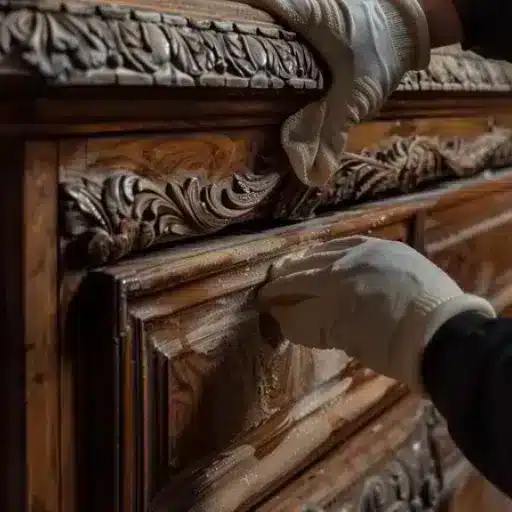
Intricate furniture with carving, turnings, or detailed hardware needs a lighter touch than flat surfaces.
Cleaning Crevices and Spindles
Use a soft natural-bristle brush, a clean paintbrush, or a vacuum with a brush attachment to remove dust from crevices. Work gently so you do not knock off delicate details. For stubborn dust, wrap a microfiber cloth around a thin dowel or a cotton swab and wipe carefully.
Protecting Metal Hardware
Brass, bronze, and iron hardware can tarnish or react with wood finishes over time. Clean hardware with a cloth dampened in soapy water, then dry it thoroughly. Avoid letting metal polish drip onto the wood, because it can stain the finish. If hardware is loose, tighten screws carefully so you do not strip the wood.
When to Remove Hardware
For a thorough cleaning or restoration, you may want to remove knobs, pulls, and hinges. Only do this if the hardware comes off easily and you can reinstall it without damaging the wood. Keep screws organized in a small container. Photograph the placement before you start so you can put everything back correctly.
How to Remove Stains and Sticky Buildup
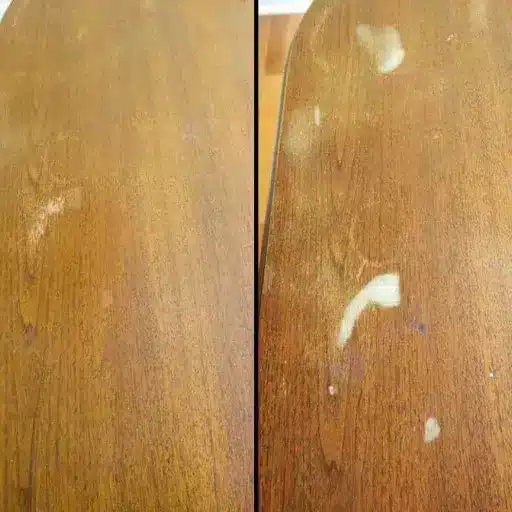
Stains and sticky residue are among the most common wood furniture complaints. The right approach depends on what caused the problem.
Water Rings and White Marks
White rings usually mean moisture has become trapped in the finish, not the wood itself. Start by gently rubbing the spot with a soft cloth. If that does not work, place a clean, dry cloth over the mark and apply a warm iron on low for a few seconds. The heat can draw the moisture out. If the ring is older or deeper, it may need professional attention or refinishing.
Grease and Grime
Kitchen tables and chair arms often develop a greasy film. A solution of pH-neutral soap and warm water usually cuts through it. For stubborn grease, a small amount of mineral spirits on a cloth can help, but only on finishes that tolerate it. Always test in a hidden area first.
Sticky Residue from Old Polish or Spills
Old furniture polish, spilled drinks, and adhesives can leave a tacky surface. Mineral spirits or a commercial wax remover can dissolve the residue. Work in a ventilated area, apply the solvent to a cloth rather than the wood, and wipe with the grain. Afterward, clean with soap and water, dry thoroughly, and re-wax or condition. For a full workflow on this problem, see our guide to how to clean sticky wood.
Ink and Marker Stains
Ink and marker are difficult to remove without damaging the finish. On sealed finishes, a small amount of rubbing alcohol on a cotton swab may lift fresh ink. Work gently and stop if the finish shows any sign of damage. On oil, wax, or unfinished wood, ink stains usually require professional help or sanding and refinishing.
How to Disinfect Wood Furniture Safely
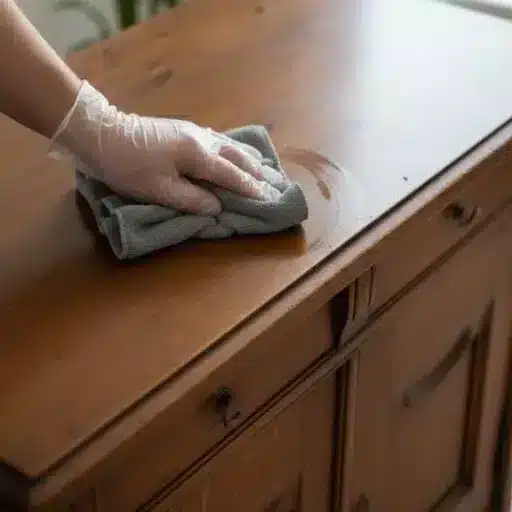
Disinfecting wood furniture became more common in recent years, but many disinfectants can damage wood finishes. The key is to match the product to the finish and to use it sparingly.
Sealed vs. Unfinished Furniture
Sealed furniture with polyurethane, varnish, or lacquer can tolerate diluted rubbing alcohol or hydrogen peroxide for short contact times. Unfinished wood should not be disinfected with liquids at all. Instead, let it dry completely and consider sealing it for future protection.
Alcohol, Hydrogen Peroxide, and Safe Contact Times
A solution of 70 percent isopropyl alcohol can disinfect many sealed surfaces. Apply it to a cloth, not directly to the wood, and wipe gently. Hydrogen peroxide is another option, but it can lighten some finishes if left too long. Let the surface stay visibly wet for the contact time recommended on the disinfectant label, then wipe dry.
What to Avoid
Avoid bleach, undiluted ammonia, and all-purpose disinfectant sprays on wood furniture. These can strip finishes, raise the grain, and cause permanent discoloration. For a deeper look at safe disinfection methods, read our guide on how to disinfect wood.
How to Condition and Protect Wood Furniture
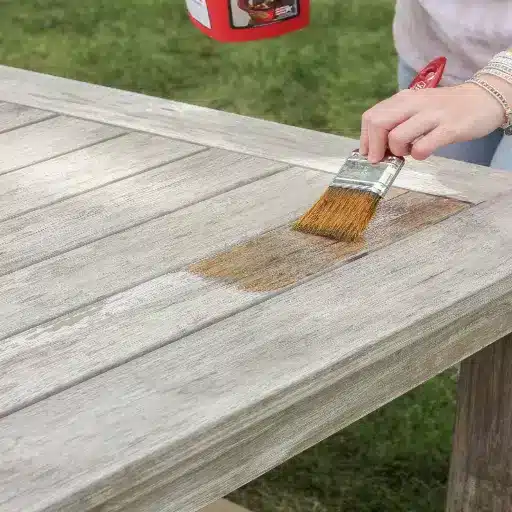
Cleaning removes dirt, but conditioning helps the finish stay healthy and resilient.
When to Use Oil
Oil finishes and some older furniture benefit from occasional applications of tung oil, linseed oil, or a commercial oil product. Oil replaces some of the natural oils that dry out over time. It is best for bare wood, oil-finished furniture, or pieces that look dry and dull. Apply a thin coat, let it absorb, and wipe off the excess.
When to Use Wax
Paste wax builds a protective layer and adds a soft sheen. It works well on wax finishes, shellac, lacquer, and many sealed surfaces. Apply a thin coat with a soft cloth, let it haze, then buff. Re-waxing once or twice a year is usually enough for furniture that gets regular use.
When to Use Polish (and When to Skip It)
Spray polishes are convenient, but many contain silicone that builds up and attracts dust. If you use polish, choose one without silicone and use it sparingly. In most cases, regular dusting and occasional waxing are better for the finish than frequent polishing.
Sustainable Product Choices
Look for conditioners and waxes made with natural ingredients like beeswax, carnauba wax, and plant-based oils. Low-VOC and water-based products reduce indoor air pollutants and are gentler on the wood. Choosing quality care products is one more way to extend the life of furniture made from responsibly sourced lumber.
DIY vs. Commercial Wood Furniture Cleaners
Both homemade and store-bought cleaners have a place in wood furniture care. The right choice depends on the job, the finish, and your preferences.
When DIY Solutions Work Best
A simple mix of pH-neutral dish soap and distilled water handles most routine cleaning. For cutting grease, a small amount of vinegar diluted in water can work on durable finishes, but it is not safe for all furniture. Homemade solutions are inexpensive and free of mystery ingredients, which makes them a good first choice for light cleaning.
When Commercial Cleaners Add Value
Commercial cleaners can save time when you are dealing with sticky buildup, water rings, or heavy grime. Look for products formulated for your specific finish. A dedicated wax remover, for example, is safer and more effective than guesswork. If you are unsure which product to choose, our guide to the best wood cleaner breaks down options by finish type and use case.
Finish Compatibility Table
| Cleaner Type | Best For | Avoid On |
|---|---|---|
| pH-neutral soap and water | Routine cleaning on most sealed finishes | Unfinished wood, wet-sensitive finishes |
| White vinegar solution | Grease cutting on polyurethane/varnish | Lacquer, shellac, wax, oil, marble inlays |
| Mineral spirits | Sticky residue, old wax buildup | Fresh finishes, painted surfaces, some plastics |
| Rubbing alcohol (70%) | Disinfecting sealed surfaces | Shellac, lacquer, unfinished wood |
| Paste wax / beeswax | Protection and sheen on sealed and wax finishes | Dusty or dirty surfaces (clean first) |
| Silicone polish | Quick shine on some sealed surfaces | Oil, wax, and antique finishes |
Common Wood Furniture Cleaning Mistakes to Avoid
Even well-meaning cleaning habits can damage furniture over time. Avoid these common mistakes to keep your pieces looking their best.
Over-Wetting the Surface
Water is wood’s biggest enemy during cleaning. A soaking wet cloth can force moisture through the finish and into the wood. Always wring your cloth until it is barely damp, and dry the surface immediately after wiping.
Using Abrasive Tools or Harsh Chemicals
Steel wool, abrasive sponges, and scrubbing powders scratch finishes and expose wood to moisture. Ammonia, bleach, and undiluted vinegar can strip or cloud finishes. Choose soft cloths and gentle cleaners instead.
Skipping the Drying Step
Leaving furniture to air dry invites water spots, rings, and finish damage. The drying cloth is as important as the cleaning cloth. Make it a habit to wipe dry right after cleaning.
Using Silicone-Based Polishes
Silicone polishes create a slick shine, but they also build up a layer that attracts dust and can complicate future refinishing. If you polish, choose silicone-free products.
Applying Cleaner Directly to Wood
Spraying cleaner directly onto furniture increases the risk of over-wetting and uneven application. Always apply the cleaner to your cloth first, then wipe the wood.
FAQ
What is the best way to clean wood furniture?
The best way to clean wood furniture is to dust it first, wipe it with a barely damp cloth using a pH-neutral solution, dry it immediately, and then condition or wax it based on the finish type. This method removes dirt without risking water damage.
Can you use vinegar to clean wood furniture?
You can use diluted white vinegar on some durable finishes like polyurethane or varnish, but it is acidic and can damage lacquer, shellac, wax, and many oil finishes. If you use vinegar, dilute it heavily, test it in a hidden spot, and never let it sit on the surface.
How often should you clean wood furniture?
Dust wood furniture weekly to prevent buildup. Deep clean with a damp cloth once a month or as needed. Condition or wax most furniture once or twice a year. High-use pieces like dining tables may need more frequent attention.
What should you not clean wood furniture with?
Avoid bleach, ammonia, undiluted vinegar, abrasive scrubbers, and all-purpose sprays not intended for wood. Also avoid soaking the surface with water, using silicone polishes excessively, and letting moisture sit on the finish.
How do you remove sticky residue from wood furniture?
Apply a small amount of mineral spirits or a commercial wax remover to a soft cloth and wipe with the grain. Work in a well-ventilated area, test first, and follow up with a damp soap wipe and thorough drying. For a full process, read our guide on how to clean sticky wood.
Is Murphy’s Oil Soap safe for wood furniture?
Murphy’s Oil Soap is generally safe for many sealed and oiled wood surfaces when diluted properly. However, it is not ideal for lacquer, shellac, or wax finishes. Always follow the dilution instructions and test in an inconspicuous area first.
How do you restore shine to wood furniture?
Start by cleaning the surface thoroughly and removing any buildup. Then apply a thin layer of paste wax or a compatible furniture polish and buff with a soft cloth. For oil finishes, a light re-oiling can restore depth. Avoid silicone-heavy products that create a temporary shine but long-term buildup.
Can you use bleach on wood furniture?
Bleach is not recommended for wood furniture. It can strip finishes, raise the grain, lighten the wood, and cause permanent discoloration. For disinfecting, use diluted rubbing alcohol or hydrogen peroxide on sealed finishes instead.
Conclusion
Learning how to clean wood furniture is one of the most practical ways to protect your investment and keep your home looking its best. The process is simple: identify the finish, dust with the grain, wipe with a barely damp pH-neutral solution, dry immediately, and condition as needed. Avoid over-wetting, harsh chemicals, and abrasive tools, and your furniture will reward you with decades of beauty and use.
The right care routine also supports sustainability. Well-maintained wood furniture lasts longer, reduces waste, and honors the responsibly sourced materials that went into it. Whether you are caring for a solid oak dining table, a painted pine dresser, or a delicate veneer cabinet, the same principles apply.
If you are restoring a piece or preparing it for a new finish, start with the right prep. For everyday care across every wood surface in your home, return to our complete guide on how to clean wood.
Ready to invest in furniture built to last? Explore VitalWood Global’s sustainably sourced wood products and custom wood solutions to find quality materials for your next project.