
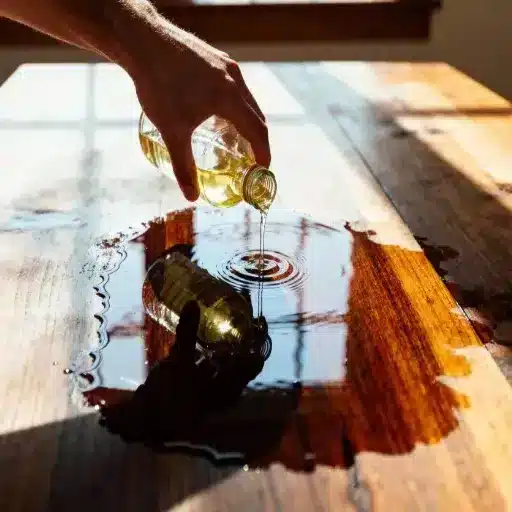
How to Remove Dark Water Stains from Wood: 7 Proven Methods
The best way to remove dark water stains from wood is to strip the finish, apply oxalic acid wood bleach to the bare wood, neutralize with baking soda, and refinish the area. Dark or black stains mean water has soaked through the finish and into the wood fibers, often reacting with tannins, so surface-level cleaning will not be enough.
Picture this: you lift an old flower vase and find a gray or black ring on the tabletop. Your heart sinks. Unlike a pale white mark, a dark stain looks serious because it is serious. The water has done more than sit on the surface. It has traveled into the wood itself. This guide is part of our complete resource on how to remove water stains from wood. By the end, you will know why dark stains form, how to diagnose them, and seven methods for safely lightening or removing them.
Key Takeaways
- Dark water stains mean water has penetrated the finish and reacted with wood fibers or tannins.
- Oxalic acid is the most effective treatment for iron-tannin black water rings.
- Chlorine bleach removes dye stains but is usually ineffective on classic black water stains.
- Always test treatments on a hidden area and work with proper ventilation and gloves.
- Deep stains that have softened the wood or cracked the finish usually require sanding and refinishing.
What Are Dark Water Stains on Wood?
Why they look dark or black
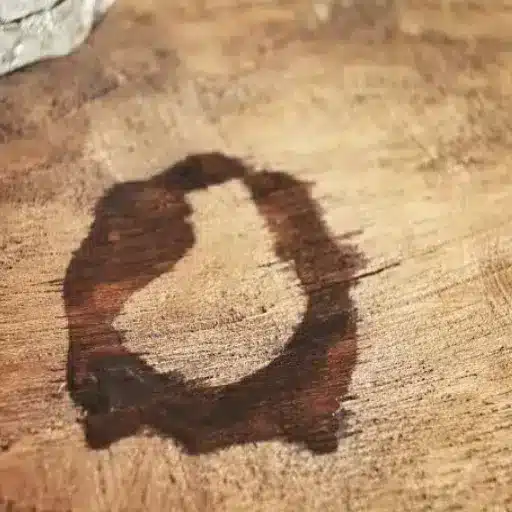
When moisture sits on finished wood long enough, it seeps through the protective film and into the wood beneath. Inside the wood, water can react with natural tannins, especially in oak, walnut, mahogany, and cedar. That reaction creates a dark or black discoloration. For more on how tannins interact with wood, see our guide to tannin stains on wood. Metal in the water, such as iron from a rusty container or minerals in hard water, can make the stain even darker.
Think of the wood like a sponge wrapped in plastic wrap. A quick splash wipes off the plastic. A slow leak finds its way through a tiny tear and soaks the sponge. Once the sponge is stained, wiping the plastic does nothing. That is the difference between white and dark water stains.
White stains vs. dark stains
Knowing which type of mark you have will save you from using the wrong method and causing more damage.
| Feature | White Water Stain | Dark Water Stain |
|---|---|---|
| Color | White, cloudy, milky | Brown, black, gray |
| Depth | In the final layer | Through finish into wood |
| Cause | Trapped moisture | Water penetration + oxidation/tannins |
| Fix difficulty | Usually easy | Harder; often needs stripping/bleaching |
| Best first step | Dry heat | Diagnose, then strip if needed |
If you see a white or cloudy mark, this article is not the right starting point. See our guide to how to remove white water stains from wood for surface-level marks.
Common causes
Dark water stains usually come from prolonged exposure rather than a quick splash:
- A plant vase left on a table for weeks
- A damp cloth or towel sitting on a surface overnight
- A leaking glass or bottle that slowly seeped moisture
- High humidity combined with a cold object that condensed water
- Water damage from a flood, spill, or plumbing leak
For stains that have spread across boards or seams, see our guide to water stains on wood floors. The longer moisture sits, the deeper it travels, and the darker the stain becomes.
How to Diagnose Your Dark Water Stain
Visual inspection checklist
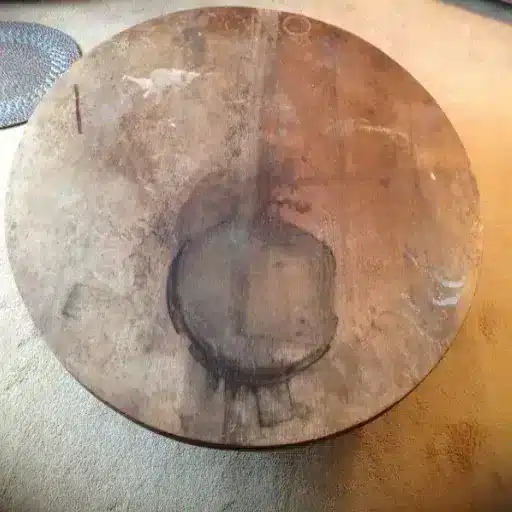
Before you choose a method, look closely at the mark:
- Is it brown, black, or gray? This indicates penetration into the wood.
- Is the finish cracked, peeling, or blistered? The stain is likely deep.
- Does the mark follow the shape of a glass, vase, or pot? This confirms a water ring.
- Is the surrounding wood darker or lighter? This helps predict how bleaching will affect color.
- Does the surface feel soft or spongy? Moisture may have damaged the wood structure.
Touch and finish tests
Run your finger lightly over the mark. If the surface feels smooth, the stain may be mostly in the finish or just beneath it. If it feels rough, raised, or soft, the wood fibers have absorbed water and possibly begun to degrade.
To identify your finish type, find a hidden spot such as the underside of the table or the back of a leg. Dab a small amount of denatured alcohol on a cotton ball and rub gently. If the finish dissolves or becomes sticky, it is likely shellac. If it does not react, it is probably polyurethane, varnish, or lacquer. Oil and wax finishes will feel slightly greasy and absorb the alcohol slowly.
When the stain is too deep
If the mark has been there for months, has turned very dark, has softened the wood, or has cracked the finish, DIY methods may only lighten it. At that point, stripping the old finish, sanding to bare wood, bleaching, and refinishing may be necessary. If the piece is an antique or valuable, consult a professional before proceeding.
Tom noticed a black ring on his oak coffee table where a metal planter had sat for two weeks. The finish was intact, but the mark was charcoal gray and clearly below the surface. He stripped the finish, applied oxalic acid, and watched the black fade to a light tan. A touch of matching stain and fresh polyurethane made the ring disappear.
The Best Methods to Remove Dark Water Stains from Wood
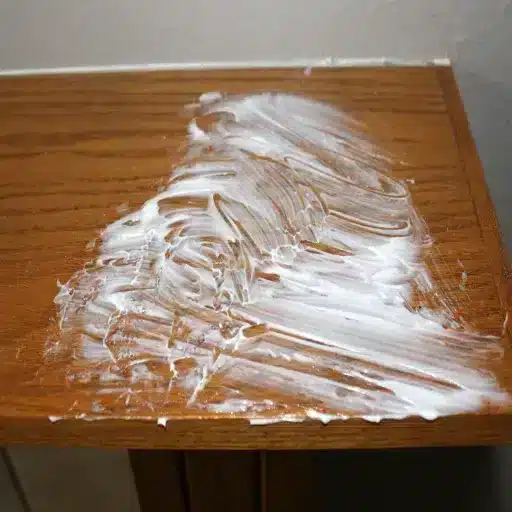
Start with the gentlest method and escalate only if the stain remains. Patience and testing are your best tools here.
1. Baking soda paste
This is the gentlest first attempt for light or fresh dark stains that have not fully set.
What you need: baking soda, water, soft cloth.
- Mix one tablespoon of baking soda with one teaspoon of water to form a thick paste.
- Apply the paste to the stain with a soft cloth.
- Let it sit for 5-10 minutes.
- Wipe it away with a damp cloth and dry the area immediately.
- Repeat 2-3 times if the stain lightens but does not vanish.
Baking soda is a mild abrasive and mild alkali. It can lift surface discoloration but will not reach deep stains that have penetrated into the wood.
2. Vinegar and olive oil
This mixture can lighten mild darkening while conditioning the surrounding wood.
How to use it:
- Mix equal parts white vinegar and olive oil.
- Apply a small amount to a soft cloth.
- Rub with the wood grain in gentle circles.
- Let it sit for 30 minutes to one hour.
- Wipe away excess and buff dry.
The vinegar helps dissolve mineral deposits and light surface stains. The oil restores some moisture and sheen to the surrounding finish. This method works best on oil or wax finishes where the stain has not sunk deeply.
3. Non-gel toothpaste + baking soda
For a slightly stronger abrasive polish, plain white toothpaste mixed with baking soda can lift a thin surface layer of discoloration.
How to use it:
- Mix equal parts non-gel toothpaste and baking soda.
- Apply with a soft, damp cloth.
- Rub gently in circular motions for 30-60 seconds.
- Wipe clean with a damp cloth, then dry thoroughly.
Use this only on hard finishes like polyurethane or varnish. Avoid shellac, lacquer, and wax finishes, where the abrasive can cut through the thin film quickly.
4. Hydrogen peroxide
Hydrogen peroxide is an oxidizing bleach that can lighten wood by breaking down pigments. It is most useful when the stain has darkened the wood fibers but has not reacted strongly with tannins.
How to use it:
- Use 3% household hydrogen peroxide for mild stains, or 12% for stronger bleaching.
- Dampen a clean white cloth or cotton swab with peroxide.
- Blot it onto the stain, do not rub vigorously.
- Let it dwell for 10-20 minutes, checking often.
- Wipe clean and let the wood dry completely.
Hydrogen peroxide can lighten the surrounding wood along with the stain. Always test on a hidden area first. For very stubborn stains, some restorers apply a paste of hydrogen peroxide and baking soda and cover it with plastic wrap for an hour.
5. Oxalic acid (best for iron-tannin black stains)
Oxalic acid is the classic wood bleach for dark water rings. It is especially effective on black or blue-black stains caused by iron reacting with tannins in the wood.
What you need: oxalic acid crystals, hot water, a glass or plastic container, wooden stir stick, sponge or brush, baking soda, water, gloves, eye protection, respirator or dust mask.
How to use it:
- Remove the finish from the stained area with a chemical stripper or by sanding to bare wood.
- Mix about 3 level teaspoons of oxalic acid crystals into 100 ml of hot water until no more dissolves.
- Apply the warm solution generously over the stained area with a sponge or brush.
- Let it work for several minutes up to an hour. Reapply if it dries.
- Mix one tablespoon of baking soda per cup of warm water.
- Wipe the neutralizing solution over the treated area and let it fizz briefly.
- Rinse thoroughly with clean water two or three times.
- Let the wood dry for 24 hours or more.
- Lightly sand with 220-grit paper and refinish with matching stain and topcoat.
Safety note: Always wear gloves and eye protection. Work in a well-ventilated area. Never mix oxalic acid in a metal container. Do not inhale the dust when measuring the crystals.
Oxalic acid does not usually lighten the natural color of surrounding wood the way chlorine bleach can, which is why professionals prefer it for black water rings.
6. Chlorine bleach
Chlorine bleach, such as laundry bleach, is good at removing dye-based and organic stains like ink, wine, or food. It is generally not the right choice for classic black water rings caused by iron and tannins.
How to use it:
- Dilute one part household bleach with four parts water.
- Dampen a clean white cloth with the solution.
- Lay the cloth over the stain for 10 minutes.
- Remove the cloth and let the area dry.
- Repeat once if needed.
Because chlorine bleach can damage wood fibers and lighten surrounding areas unevenly, use it only when you are certain the stain is organic or dye-based, not a tannin reaction. Never mix chlorine bleach with ammonia, vinegar, or hydrogen peroxide.
7. Sanding and refinishing
When the stain is too deep for any chemical treatment, sanding is the most reliable solution.
How to use it:
- Remove the old finish from the affected area with a chemical stripper or sanding.
- Start with 120-grit sandpaper and sand with the grain.
- Progress to 180-grit and then 220-grit for a smooth surface.
- Feather the edges into the surrounding finish.
- Apply a matching wood stain if needed.
- Seal with polyurethane, varnish, shellac, or wax.
If the stain has penetrated more than a thin surface layer, you may need to sand slightly below the discoloration. This can create a small depression, so work carefully and blend the area into the surrounding surface. For larger areas of damage, see our guide on how to refinish water-damaged wood.
Removing Dark Water Stains by Finish Type
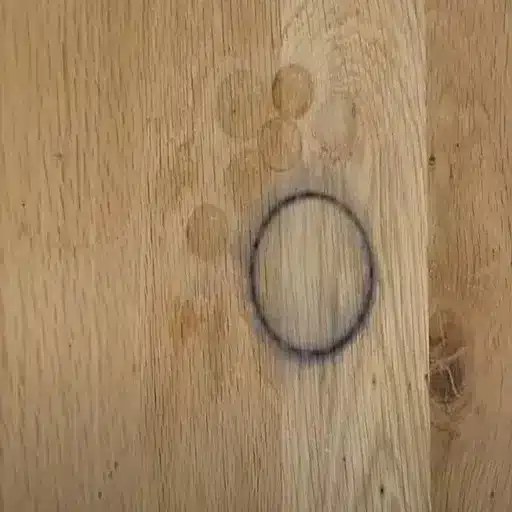
Matching the remedy to your finish reduces risk and improves results.
Polyurethane and varnish finishes
Polyurethane and varnish create a hard, moisture-resistant film. Dark stains on these finishes mean the water found a weak spot, scratch, or worn area and soaked through. You will usually need to remove the finish from the stained area before any bleach can reach the wood. After treatment, feather the new finish into the old for the least visible repair.
Shellac and lacquer finishes
Shellac and lacquer are thinner and more delicate than polyurethane. They dissolve easily with alcohol or lacquer thinner. For these finishes, stripping is usually straightforward, but the wood beneath can be more easily damaged. Use gentle abrasives and avoid aggressive sanding. A blush retarder may help with light clouding, but dark stains will still need oxalic acid or sanding.
Oil and wax finishes
Oil and wax finishes do not form a hard film, so stains can penetrate quickly. The good news is that these finishes are also the easiest to refresh. Start with the vinegar and olive oil method or a light application of baking soda paste. If the stain is deep, strip the wax with mineral spirits, treat the bare wood with oxalic acid, then reapply oil or wax.
Veneer and antique pieces
Veneer is a thin slice of wood over a substrate. Sanding too aggressively can sand through the veneer and expose the substrate beneath. For detailed guidance on delicate surfaces, see our article on how to remove water stains from wood veneer. Always test on the underside or back of the piece first. Use the finest sandpaper that will still cut the stain, and stop as soon as the discoloration lightens. If the furniture is antique or valuable, consider hiring a professional restorer.
Priya inherited a walnut dresser with a gray water stain from a damp cloth left on top for days. She tried baking soda and vinegar first, which lightened the mark slightly. When it did not fully disappear, she stripped the oil finish, applied oxalic acid, and refinished the top with tung oil. The stain was no longer visible, and the dresser looked cared for again.
Commercial Dark Water Stain Removers
Tannin spot removers
Products like Osmo Tannin Spot Remover are formulated specifically for dark tannin stains on wood. They can be a good middle ground between DIY pastes and strong wood bleaches. Apply according to the manufacturer’s instructions, let the product dry completely, and repeat if needed. Afterward, re-protect the area with a suitable finish.
Wood bleaches
Commercial two-part wood bleaches combine sodium hydroxide and hydrogen peroxide. They are powerful and can lighten the overall wood color, which makes them useful for severe discoloration but risky for spot treatments. Use them when you plan to refinish the entire surface or when the stain covers a large area.
When to choose commercial over DIY
Choose a commercial product when the stain is large, set deep, or resistant to household methods. Always read the label, test on a hidden area, and follow safety instructions. For a comparison of products, see our guide to the best water stain removers for wood.
When DIY Methods Fail
How to know it is time to sand
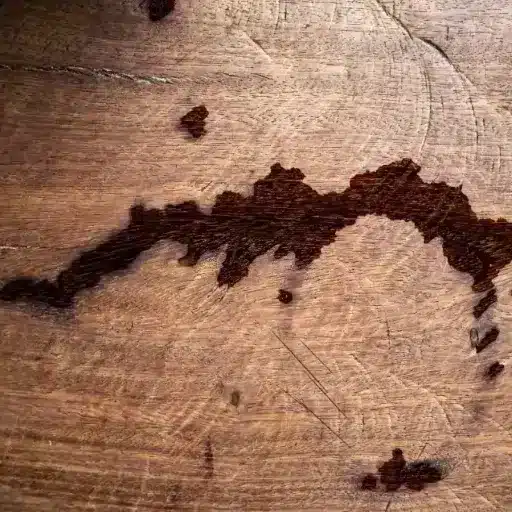
If the stain remains dark after two or three attempts with oxalic acid or hydrogen peroxide, the discoloration has bonded with the wood fibers. Sanding is the only way to remove it. If the wood feels soft, swollen, or crumbly, the moisture has damaged the structure, and the affected area may need to be filled or patched before refinishing.
Refinishing basics
After stripping and bleaching, refinishing restores protection and appearance.
- Let the wood dry completely, for at least 24 hours.
- Sand lightly with 220-grit paper to remove raised grain.
- Apply a wood stain that matches the surrounding color. Test on a hidden area first.
- Wipe away excess stain and let it dry.
- Apply two or three thin coats of clear topcoat, sanding lightly between coats.
When to call a professional
If the piece is an antique, has a delicate veneer, or would be expensive to replace, consult a professional furniture restorer. They can match stains, repair veneer, and apply finishes in ways that hide the repair. Sometimes the cost of professional restoration is far less than the cost of replacing a damaged heirloom.
Marcus bought a mid-century sideboard at an estate sale and discovered a black water stain along one corner. The veneer was thin, and the lacquer was original. Rather than risk sanding through the veneer, he took it to a restorer. Two weeks later, the sideboard came back with the stain gone and the finish matched. For valuable pieces, professional help is often the smartest choice.
How to Prevent Dark Water Stains on Wood
Use coasters, trivets, and placemats
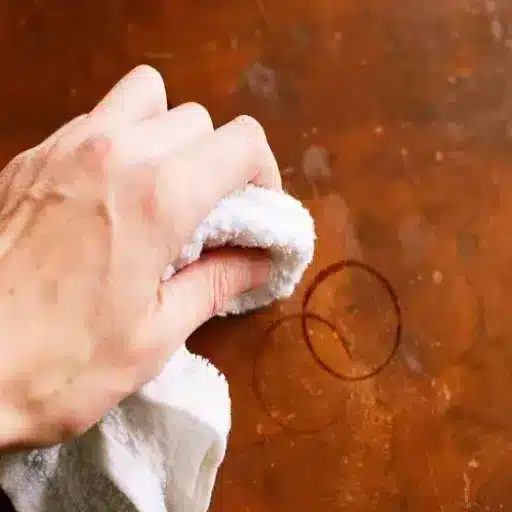
The simplest prevention is also the most effective. Coasters catch condensation from cold drinks. Trivets and placemats create a barrier for hot dishes and plant pots. Felt-backed options also protect against scratches.
Maintain the protective finish
A healthy finish is your best defense. Over time, finishes wear thin and become more porous. Reapply wax, oil, or polyurethane as needed to maintain a moisture-resistant barrier. A well-sealed surface is far less likely to stain.
Wipe moisture quickly
If a glass sweats or a spill happens, wipe it up immediately. The less time moisture sits on the surface, the smaller the chance it will become trapped under the finish or soak into the wood.
For a full prevention plan, read our complete guide on how to prevent water stains on wood.
FAQ
Are dark water stains on wood permanent?
Dark water stains are not always permanent, but they are harder to remove than white stains. If the discoloration is only in the top layer of wood, oxalic acid or sanding can usually remove it. If the stain has penetrated deeply or softened the wood fibers, the affected area may need to be sanded, filled, or replaced.
What causes dark water stains on wood?
Dark water stains form when water soaks through the finish and into the wood fibers. In tannin-rich woods like oak, walnut, mahogany, and cedar, the water reacts with tannins to create brown or black discoloration. Metal in the water, such as iron, can make the stain darker.
What is the difference between white and dark water stains?
White stains are moisture trapped in the finish layer. Dark stains mean water has penetrated through the finish and into the wood, often causing oxidation or tannin reactions. White stains are usually easy to fix; dark stains often require stripping, bleaching, or sanding.
Can baking soda remove dark water stains from wood?
Baking soda can lighten fresh or mild dark stains on the surface, but it is usually not strong enough for deep, set-in black rings. For deeper stains, oxalic acid or sanding is more effective.
Does oxalic acid remove dark water stains from wood?
Yes. Oxalic acid is widely considered the most effective treatment for black or blue-black water stains caused by iron reacting with wood tannins. It usually does not lighten the surrounding wood as much as chlorine bleach does.
Can you use chlorine bleach on dark water stains?
Chlorine bleach is generally not recommended for classic black water rings because it does not neutralize the iron-tannin reaction that causes them. It is more effective on dye-based or organic stains like ink, wine, or food.
How do you remove black water stains from wood furniture?
Remove the finish from the stained area, apply oxalic acid wood bleach to the bare wood, neutralize with baking soda and water, rinse thoroughly, and let the wood dry. Then sand lightly, stain to match, and apply a protective topcoat. For furniture-specific guidance, see our guide to removing water stains from wood furniture.
How do you prevent dark water stains on wood?
Use coasters and trivets, maintain the protective finish, and wipe up spills immediately. Avoid leaving damp cloths, vases, or containers on wood surfaces for extended periods.
Conclusion
Dark water stains look worse than white marks because they are worse. The moisture has moved past the finish and into the wood itself. Knowing how to remove dark water stains from wood can help you rescue a table, dresser, or cabinet that seems ruined. Start by diagnosing the depth and finish type, then choose the gentlest method that has a realistic chance of success.
For fresh or mild stains, household methods like baking soda or vinegar may be enough. For classic black rings, oxalic acid is usually the right tool. And when the stain has damaged the wood structure or resisted every treatment, sanding and refinishing, possibly with professional help, is the most reliable path.
If the stain is fresh, act quickly before it sinks deeper. If it is old, be patient and test every treatment in a hidden area first. And when prevention is the goal, simple habits like coasters, quick cleanup, and regular finish maintenance will protect your wood for years.
For related repair guidance, see our complete guide to removing water stains from wood or learn how to handle white water stains, furniture stains, floor stains, veneer damage, refinishing water damage, commercial removers, and tannin stains.