
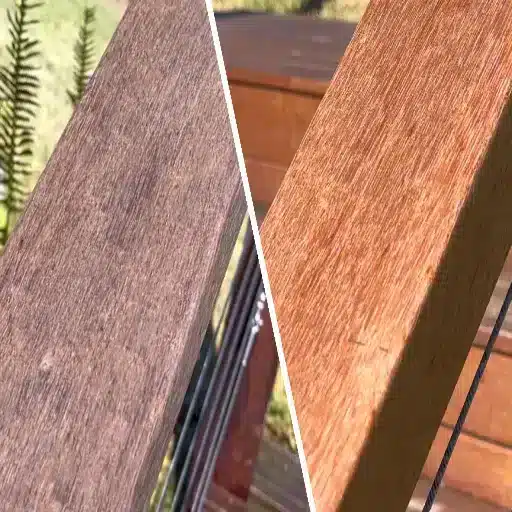
Tannin Stains on Wood: Causes, Removal, and Prevention Guide
Tannin stains on wood are brown, yellowish, or black discolorations caused by natural tannins migrating to the surface when moisture is present. You can remove most fresh stains with oxalic acid or a dedicated tannin remover, then neutralize, rinse, and refinish. Prevention comes down to sealing the wood properly, fixing moisture sources, and using tannin-blocking primer before paint.
A water ring on a table is annoying. A spreading brown patch on oak siding or a black halo around a nail in a walnut floor can make a homeowner panic. Maria noticed exactly that after a spring rain soaked the cedar trim on her new porch. The stain looked like rust. The nail was stainless steel, and the wood was barely a year old. What she saw was tannin — the same natural compound that gives cedar and oak their color — dissolving in water and reacting with trace iron in the air. Once she understood the chemistry, a simple oxalic acid treatment and a fresh coat of primer solved it. This guide is part of our complete resource on how to remove water stains from wood. By the end, you will know how to diagnose tannin stains, remove them safely, and keep them from coming back.
If the damage already runs deep or covers a large area, explore VitalWood Global’s custom wood flooring solutions for sustainably sourced replacement boards and expert guidance.
Key Takeaways
- Tannin stains on wood come from natural tannins in oak, cedar, redwood, walnut, mahogany, and cherry migrating with moisture.
- Brown or yellow marks usually mean surface tannin migration; black or blue-black marks usually mean tannins have reacted with iron.
- Oxalic acid wood bleach is the most reliable remover for iron-tannin black stains on bare wood.
- Painted surfaces need scraping, cleaning, a tannin-blocking primer, and repainting to stop bleed-through.
- Sealing bare wood, controlling humidity, and using stainless-steel fasteners prevent most tannin stains before they start.
What Are Tannin Stains on Wood?
The chemistry in plain terms
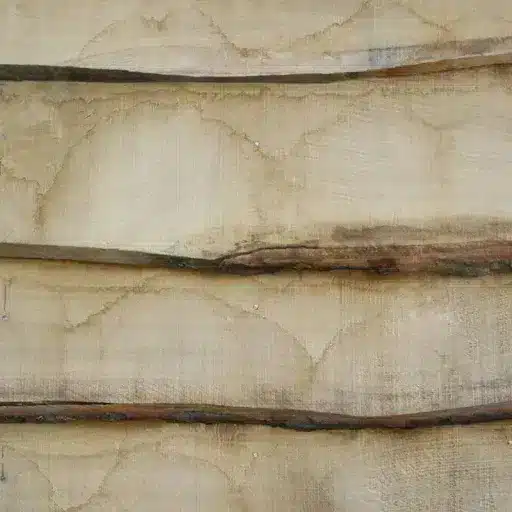
Tannins are natural water-soluble polyphenols found in many trees. They help protect living wood from pests and fungi. They also contribute to the rich color people pay a premium for in hardwoods. When the wood gets wet, tannins dissolve and travel with the water. As the water evaporates, the tannins concentrate at the surface and leave a stain.
The stain color depends on what else is present. Pure tannin deposits tend toward brown or yellowish-brown. When tannins meet iron — from nails, tools, hard water, or even steel wool particles — they form iron tannate, a dark blue-black compound. That reaction is the same chemistry behind the popular steel-wool-and-vinegar wood stain, but on your floor or siding it looks like a problem, not a finish.
Woods most likely to show tannin stains
Not all woods carry the same tannin load. High-tannin species include:
- Oak — white and red oak both bleed tannins, especially when wet.
- Cedar and redwood — common exterior culprits for paint bleed-through.
- Walnut, mahogany, and cherry — prized for color, but prone to dark marks from water and iron.
- Merbau, kwila, and jarrah — dense tropical hardwoods that can leach dark tannins for weeks.
Softwoods like pine and fir contain far fewer tannins, so unexplained dark marks are more likely to be mold, mildew, or resin than tannin migration.
What Causes Tannin Stains on Wood?
Moisture is the trigger
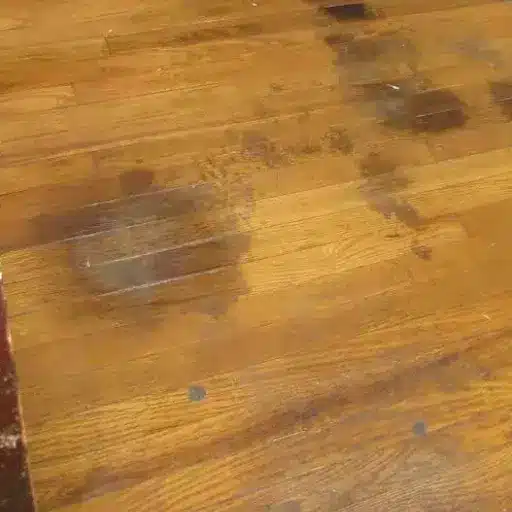
Without water, tannins mostly stay put. Rain, leaks, condensation, spills, or even high humidity can start the migration. On exterior siding or decks, repeated wet-dry cycles pull tannins to the surface over and over.
Indoors, a plant pot that traps moisture against a walnut floor can leave a mark in hours. The same happens when a damp towel rests on cherry trim.
Iron turns tannins black
The black marks that worry people most are usually iron-tannate stains. Sources of iron include:
- Rusty or non-stainless fasteners
- Steel wool is used for cleaning or sanding
- Metal containers or tools left on wet wood
- Iron-rich water or well water
- Trace iron in tap water in some regions
Even a single steel wool particle trapped in a floor crack can create a dark halo after moisture hits it.
Tannin bleeds through paint
Painted cedar or redwood can develop yellowish-brown spots or streaks that look like the paint is failing. Dunn-Edwards explains that this is tannin bleed — the finish is intact, but moisture is pushing tannins up through it. The usual causes are inadequate priming, a primer that does not block tannins, or persistent humidity behind the paint film.
New wood leaching
Fresh-cut high-tannin lumber, especially exterior decking and fencing, can leach brown liquid for weeks after installation. The streaks often run onto concrete, brick, or lower boards. This is normal tannin migration, not rot, and it usually slows as the wood seasons.
How to Identify Tannin Stains vs. Other Marks
Color and shape clues
Use appearance as a first filter:
| Mark | Likely cause | Texture |
|---|---|---|
| Brown or yellowish-brown blotches | Surface tannin migration | Flat, no fuzz |
| Black or blue-black halo around a nail | Iron-tannate reaction | Flat, hard-edged |
| Yellowish-brown spots under paint | Tannin bleed-through | Under the film, not on top |
| Gray or green fuzz with musty smell | Mold or mildew | Raised or fuzzy |
| Dark streaks that follow grain with orange tint | Rust from steel fasteners | May flake |
The spot-test rule
If you are unsure whether a dark mark is tannin or mold, try a tiny oxalic-acid solution on a hidden area. Tannin stains usually lighten within minutes. Mold does not respond to oxalic acid and may need a dedicated mildewcide or replacement.
When the damage is deeper than a stain
Soft wood, crumbling fibers, spreading darkness, or a musty smell that returns after cleaning mean the problem is rot or mold, not tannin. Bleaching will not restore structural integrity. In those cases, replacement with dry, properly finished material is the honest fix.
How to Remove Tannin Stains from Wood Safely
Safety first
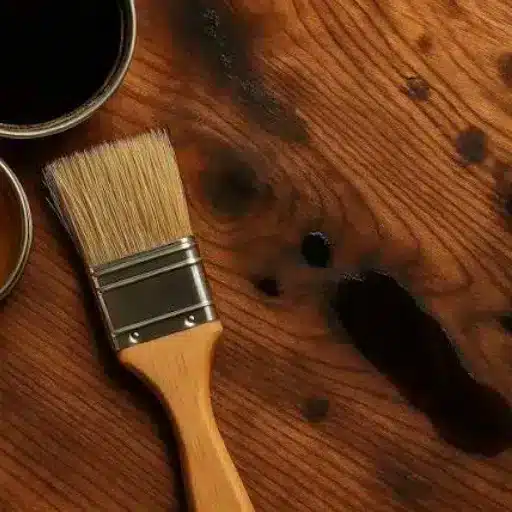
Oxalic acid and commercial tannin removers are generally safe when handled correctly, but they are still chemicals. Wear nitrile gloves, eye protection, and long sleeves. Work in a ventilated area. Protect nearby plants and metal, and keep children and pets away until the surface is rinsed and dry. Always test any treatment on an inconspicuous spot first.
Oxalic acid wood bleach step-by-step
Oxalic acid is the workhorse for tannin stains on wood because it converts colored iron tannate into a colorless compound. Follow this sequence:
- Strip or sand the finish so the acid reaches bare wood. Oxalic acid cannot work through polyurethane, paint, or wax.
- Mix the solution per the product label, usually a few tablespoons of crystals per quart of warm water. Start weaker and strengthen only if needed.
- Apply generously with a brush or clean cloth, covering the whole stained area plus a small margin.
- Let it dwell for 10 to 20 minutes, keeping the surface damp. Do not let it dry on the wood.
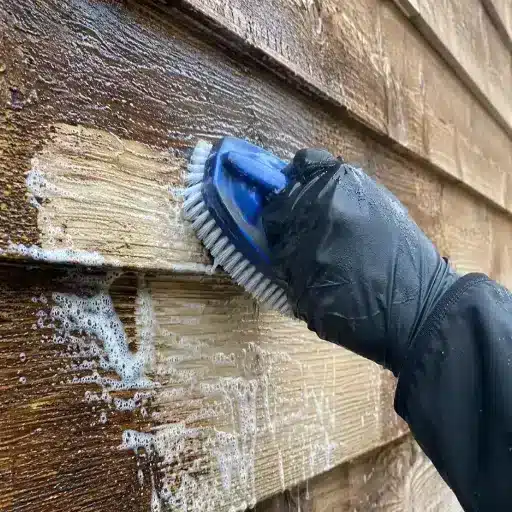
- Scrub lightly with a stiff nylon brush if the stain is stubborn.
- Neutralize with a baking-soda solution — about one tablespoon per quart of water — or follow the product directions. Never neutralize an acid with vinegar; vinegar is also acidic.
- Rinse thoroughly with clean water. Residual acid can interfere with the next finish.
- Dry completely, at least 24 hours indoors and 48 hours outside before priming or sealing.
- Sand raised grain lightly with 220-grit paper, then restain or seal to match.
For a deeper look at dark marks caused by water, see our guide to how to remove dark water stains from wood.
Commercial tannin removers and deck cleaners
Ready-made products like Rubio Monocoat Tannin Remover or oxalic-acid deck cleaners save measuring time. They work well on floors, decks, and siding where you want a consistent result. Apply, dwell, scrub, rinse, and dry exactly as the label says.
Avoid alkaline cleaners such as ammonia or high-pH detergents. They can set tannins and make the stain worse. For a detailed comparison of household and commercial options, see our guide to the best water stain removers for wood.
Sanding and refinishing for deep stains
If bleaching leaves a faint shadow, light sanding can remove the last discolored fibers. Sand with the grain, feather the edges, and restain to match the surrounding area. On a hardwood floor, this is often the final step after oxalic acid. For the full repair sequence, our guide to how to refinish water damaged wood walks through sanding, staining, and sealing.
What does not work
- Vinegar is acidic and will not neutralize oxalic acid.
- Chlorine bleach is generally ineffective on iron-tannin stains and can damage wood fibers.
- Heat can oxidize and set a fresh tannin stain permanently.
- Soap or alkaline cleaners often darken tannin marks instead of lifting them.
Tannin Stain Removal by Surface Type
Raw wood, floors, and furniture
On bare wood, oxalic acid is usually the fastest fix. For floors, work in small sections, keep the wood damp but not flooded, and dry thoroughly before walking on it or refinishing. On furniture, test inside a drawer or on the underside first because different species and finishes react differently.
Floor-specific tannin issues are closely tied to water damage. If the stain sits in a board that is also cupped or buckled, see our guide to water stains on wood floors for the full drying and replacement decision tree.
Painted wood and siding
Painted cedar, redwood, or mahogany trim needs a different workflow:
- Fix the moisture source first.
- Scrape off loose or failing paint.
- Clean the stained area with oxalic acid or an oxalic-based cleaner.
- Rinse and let the wood dry for at least 48 hours.
- Apply a high-quality tannin-blocking primer. Sherwin-Williams recommends two coats for severe staining and full coverage of shingle edges and ends.
- Topcoat with a quality exterior paint.
Dunn-Edwards notes that some tannin bleed in the first year is normal on fresh cedar or redwood, so waiting a full season before repainting is often wise.
Exterior decking and fences
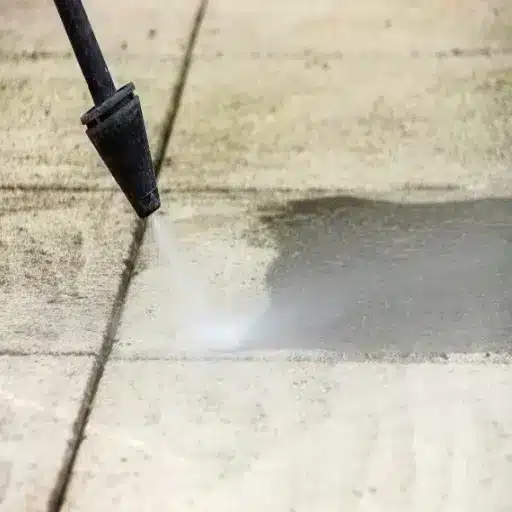
New decks can leach tannins for 6 to 10 weeks if left to weather naturally. To speed it up, wet the deck, apply an oxalic-acid or tannin-remover solution, let it sit 10 to 15 minutes, scrub, and rinse with a pressure washer or garden hose on high pressure. Let the wood dry completely before oiling or staining.
Engineered and laminate limitations
Engineered wood has a thin real-wood wear layer over a plywood or fiberboard core. Oxalic acid is safe on the wear layer if you rinse promptly, but you cannot sand aggressively. Laminate has no real wood surface, so what looks like a tannin stain is usually swelling or printed-layer damage. Laminate cannot be bleached back to health; affected planks must be replaced.
How to Prevent Tannin Stains and Bleed-Through
Seal bare wood before finishing
A proper finish is the first defense. Film-forming finishes like polyurethane, lacquer, or exterior varnish create a moisture barrier. Penetrating oils need more frequent refresh but still slow water entry. The key is full, even coverage and enough coats for the species and exposure.
Use a tannin-blocking primer before paint
For high-tannin woods, never skip primer. Shellac-based and high-quality oil-based primers block tannin migration better than most standard latex primers. Two coats are worth the extra hour if the wood is fresh or has a history of bleed-through.
Choose stainless-steel fasteners
Galvanized or non-stainless nails and screws can react with tannins and leave black rings. Stainless steel, ceramic-coated, or high-quality polymer-coated fasteners avoid the iron-tannate reaction entirely.
Control humidity and fix leaks fast
Indoors, keep relative humidity between 35 and 55 percent. Fix roof leaks, plumbing drips, and window condensation before they reach the wood. Outdoors, keep gutters clear, slope soil away from siding, and use mats or trays under planters.
Weather new exterior wood before coating
Some pros let cedar, redwood, or tropical decking weather for several weeks before sealing so the initial tannin surge happens on bare wood and gets washed away. Others prefer to seal immediately with a breathable finish. Either approach can work; the mistake is ignoring the tannin issue entirely.
When to Refinish or Replace Tannin-Damaged Wood
Surface stains vs. deep discoloration
A stain that lightens with oxalic acid and disappears under fresh finish is a surface problem. A mark that remains dark and soft after drying, bleaching, and light sanding has damaged fibers. At that point, the board may need to be replaced or the area rebuilt.
Matching species and finish on repairs
When you replace a stained board, match the species, grade, width, and finish sheen. If you cannot match the existing floor or trim, replacing a larger section usually looks better than a single mismatched plank.
The VitalWood path for replacement
When tannin damage is widespread, involves swollen engineered cores, or comes with rot and mold, repair stops being practical. Quality, sustainably sourced replacement boards with a durable finish resist the next moisture event far better than damaged wood.
FAQ
What causes tannin stains on wood?
Tannin stains form when natural tannins in wood dissolve in water and migrate to the surface. Brown or yellow marks are usually tannin deposits. Black or blue-black marks usually mean tannins have reacted with iron to form iron tannate.
How do you remove tannin stains from wood?
Strip or sand to bare wood, apply an oxalic-acid solution, let it dwell, neutralize with baking soda solution, rinse thoroughly, and dry completely. Then sand raised grain and refinish. Commercial tannin removers follow a similar workflow.
Does oxalic acid remove black water stains on wood?
Yes. Oxalic acid is especially effective on black iron-tannate stains because it converts the dark iron compound into a colorless form. It must reach bare wood to work, and it should be neutralized and rinsed before refinishing.
How do you stop tannin bleed through paint?
Scrape loose paint, clean the stain with oxalic acid, rinse, and let the wood dry for at least 48 hours. Then apply a shellac-based or high-quality oil-based tannin-blocking primer. Use two coats for severe staining before topcoating.
What woods are highest in tannins?
Oak, cedar, redwood, walnut, mahogany, cherry, merbau, kwila, and jarrah are all high in tannins. Pine, fir, and most softwoods are relatively low.
Can you sand tannin stains out?
Light sanding can remove shallow surface stains after bleaching. Deep iron-tannate stains that have penetrated far into the fibers often require sanding past the discoloration, which may thin the wear layer on engineered floors or create a depression on solid floors.
Are tannin stains harmful to the wood?
Tannin stains are a discoloration, not rot. They do not usually weaken the wood structure. However, the moisture that caused them can lead to mold, mildew, or decay if it lingers.
Conclusion
Tannin stains on wood are not a mystery once you understand the chemistry. Brown or yellow marks mean tannins migrated with moisture. Black or blue-black halos mean tannins met iron.
The right fix depends on the surface. Oxalic acid works for bare wood. Tannin-blocking primer stops painted surfaces from bleeding. Patience matters for new exterior wood that is still leaching.
Prevent most problems by sealing bare wood properly, using stainless-steel fasteners, controlling humidity, and fixing leaks quickly. When stains are too deep or the wood itself is damaged, replacement with quality, sustainably sourced boards and a durable finish is the long-term solution. For expert help and responsibly sourced materials, explore VitalWood Global’s custom wood solutions or revisit our full guide on removing water stains from wood.