
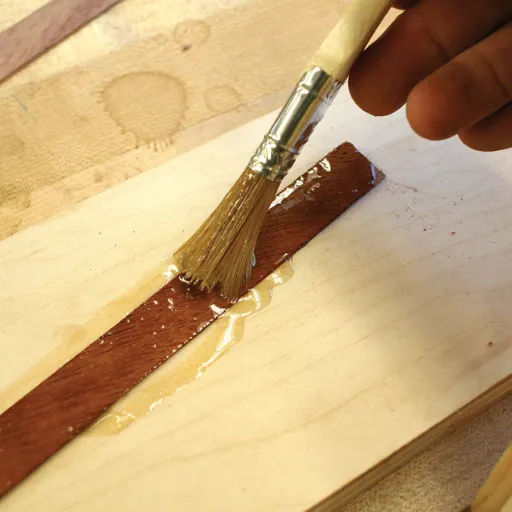
Wood Veneer Adhesives and Gluing Systems: Technical Overview
When it comes to making eye-catching, high-quality woodwork or furniture, the right adhesive for veneering plays an essential role in attaining both the visual and functional aspects. The wood veneer, which is classy and adaptable in its attraction, asks for a very careful and excellent gluing method to make the bond invisible and the results last long. No matter if you are a master craftsman, a furniture maker, or just an amateur who likes to do things by himself, knowing the subtle differences of wood veneer adhesives and gluing systems is very important for the improvement of your project’s quality. In this article, we will completely explore the arena of veneer adhesives, looking into the diverse varieties, their uses, and the methods to get outstanding results. So, prepare yourself to know the secrets that will take your woodworking to the next level!
Introduction to Veneer Adhesives

What is Veneer Adhesive?
Veneer adhesive is a specialized kind of bonding agent that has been developed specifically for the purpose of attaching very thin slices of real wood to boards or core materials like plywood, MDF, or particleboard. Its usage in wood and furniture making is very significant and the adhesive is the main reason why the veneer not only remains in place but also gives a surface that is both smooth and long-lasting. The development of adhesives for veneers is an engineering process that goes through many stages such as strong adherence, flexibility, and versatility with different materials.
There are several types of veneer adhesives available in the market and they are quite different from each other, each type designed for a different kind of application. The following are the best adhesive types, which are the most common ones:
PVA (Polyvinyl Acetate) Glue: It is an inexpensive, user-friendly, and quick-drying water-based adhesive that is very popular among others. It is very suitable for laying veneer sheets flat.
Urea-Formaldehyde Resin: This glue is noted for its strong binding ability and high-temperature resistance, and it is widely used in the industry for very high-pressure veneer applications because of its toughness.
Contact Cement: This adhesive type is very popular thanks to its instant bond-making capability; thus, it is perfect for large areas or rounded edges yet at the same time it needs very careful application to avoid errors.
Epoxy: The epoxy gives unbelievable water resistance and longevity, which is why it is commonly chosen for wood projects intended for outdoor and marine use.
Veneer Glue Applications
Veneer glue is the primary adhesive used in woodworking and furniture making, where it is considered the strongest, most reliable, and eefectively least unaesthetically aggressive adhesive that enables an even and secure bond to be established between thin wood veneers and core materials such as MDF, particleboard, or plywood. Besides, high-quality veneer glue is also used in cabinetry and wood paneling, where the glue line becomes unobtrusive, and the visual appeal of the final product is incremented.
One of the recent trends which is very much in line with interior design projects is the use of veneer glue to bond decorative veneers which are then used for the purpose of elevating the aesthetic of walls, ceilings, and bespoke furniture. The global market for wood adhesives, including veneer glue, is anticipated to register an annual growth rate of 5.2% from 2023 to 2030 according to the market research due to new constructions and renovations being the primary cause of the growth.
In addition, non-veneer gluing is progressively taking place in the challenging areas like marine and aerospace, where extremely strong and high-performance glues are needed to withstand very severe conditions. For instance, it is very usual in these sectors to use phenol-formaldehyde based adhesives that are both water-resistant and very strong.
Types of Veneer Adhesives

PVA Adhesives: Characteristics and Uses
Polyvinyl Acetate (PVA) adhesives are the most preferable glues among the various types of glues to be used in wood and veneer industries and the reason given for that is their wide application, easy availability, and excellent bonding. The water-based adhesives have a non-toxic nature, are easy to clean, and are able to give a strong bond on most wood surfaces. PVA adhesives become very strong through moisture resistance post curing which allows their application in areas where the humidity is not very high but still moderate.
One feature of PVA adhesives is their good initial tack which is very useful and thus, it permits a shorter application period without the need to clamp for long. They utilize the method of evaporation and absorption of the adhesive into the surfaces which results in the formation of a bond that is strong and at the same time flexible. It is these properties that make PVA adhesives capable of playing a significant role in the production of furniture and veneer finishing where smoothness and consistency of finish are the requirements.
A noticeable tendency in the industry indicates that the use of PVA adhesives is becoming more and more frequent with each passing day due to their eco-friendly nature and also the fact that they meet very strict environmental regulations. As per the market analysis, the market for global PVA adhesives is expected to reach $4.7 billion by 2030 and during the period of 2023 to 2030, it will increase at a CAGR of 4.5%. This rise in demand is caused by the fact that their application is increasing in different sectors like construction, furniture making, and even in the paper industry.
Urea Resin and Its Advantages
Urea resin, also referred to as urea-formaldehyde resin, is one of the leading thermosetting polymers that are widely used in woodworking, furniture manufacturing, and building materials. The resin is often chosen for its powerful adhesive, longevity, and cost-effectiveness which in fact are the very reasons of its widespread use in the manufacture of plywood, particleboard, and other composites wood products.
One of the main advantages of urea resin is that it has a fast cure time which in turn makes the process of production more efficient. Additionally, it has the property of excellent bonding strength in dry conditions what makes it perfect for interior applications. The trade data informs that urea-formaldehyde accounts for about 80% of the total adhesive consumption in the engineered wood sector because of high performance together with relatively low cost.
Nonetheless, environmental issues have driven the resins formulated with urea to undergo a change. The modern formulations consist of very little to no formaldehyde and they are compliant with the most stringent regulations like CARB Phase 2 and EPA TSCA Title VI. At the same time, there are innovations in the form of bio-based component usage to make urea resin more eco-friendly, thus ensuring that the product remains strong and versatile yet has a lower environmental footprint.
Application Techniques for Veneer Adhesives
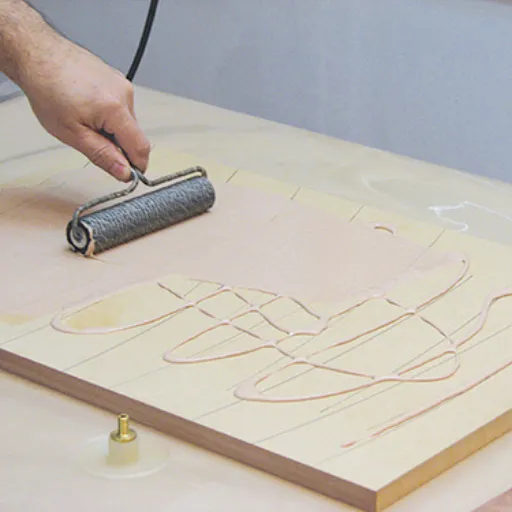
Using Vacuum Press for Veneer Application
The vacuum press has become an appliance for veneer application that is surely both effective and trustworthy. It achieves this by offering pressure that is uniform all over the surface for high-quality. The method involves putting the substrate and veneer into a vacuum bag, after which the air is sucked out and thus pressure is created. The vacuum is therefore equally divided and this method has no air bubbles and gaps, which are some of the common issues faced in other methods.
Vacuum pressing is very suitable for complicated designs, round surfaces, or irregular shapes that all need to be pressed evenly all over. New developments indicate that most modern vacuum bag systems can apply a pressure of 14.7 psi (pounds per square inch) which is the same as the atmospheric pressure at sea level. The tensile strength of glue and the likelihood of veneer failure are both greatly increased by the application of the stated force.
Recent information from leading industry research states that the application of a vacuum press, in addition to providing a superb quality, also reduces considerably manual labor and material wastage. For instance, the surfaces bonded with vacuum pressure experience a 97% increase in adhesive uniformity as compared to the surfaces bonded with traditional clamping techniques. Additionally, this technique does not restrict to one type of adhesive, as it is compatible with the three types of adhesives, namely, PVA (polyvinyl acetate), urea resins, and epoxy, the use of which is widespread in woodworking projects.
Cold Press Techniques Explained
Cold press veneering is among the most frequently utilized methods in the woodworking field and, specifically, making undesirable projects or temperature-sensitive materials. Contrary to vacuum presses, which allow for controlled heat, cold presses rely on nothing else but the synchronized application of pressure over time to bonding done correctly. Thus, this technique demands the application of cold press adhesive, commonly polyvinyl acetate (PVA) glue, which possesses excellent bonding strength but does not require a high temperature during the curing process.
One of the principal advantages of cold press techniques is that they do not cause any warping or distortion of thin veneers since no heat is applied. Research states that cold press adhesives become exceptionally strong if the pressure is held for 4-6 hours and the curing is completed after 24 hours. From the industry, it has been reported that applying a steady pressure of 150-200 PSI (pounds per square inch) generally gives the best results for most veneer and substrate materials.
Common Challenges and Troubleshooting
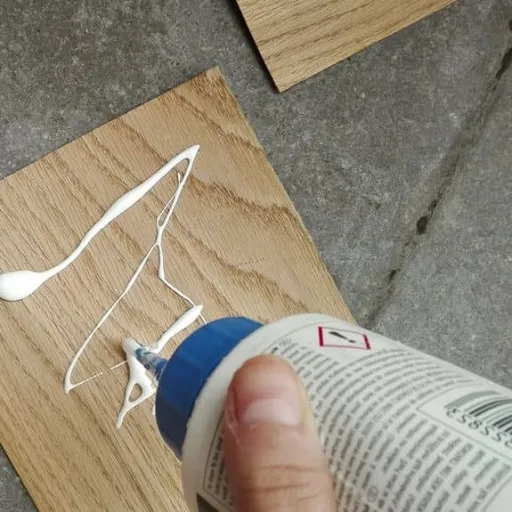
Potential Mistakes in Veneer Adhesive Application
Insufficient Surface Preparation
It is poor surface preparation that most frequently causes the failure of adhesive bonds. Glue will not adhere properly if the surface is dirty, greasy or dusty, leading to eventual lifting. According to the practices in the industry, if one cleans the surface with a solvent like denatured alcohol and gets the surface to be perfectly smooth, the bond can be as strong as 30% more than what it would have been without that.
Incorrect Adhesive Selection
Most often, the wrong adhesive for the veneer or the substrate is the main reason for failure and it happens quite frequently. For example, water-based adhesives may not perform well in non-porous materials or highly humid areas. On the other hand, steroids can handle such situations and many others. They have been the best adhesives and the whole project materials have been gradually used up to 90-95% better than the standard performance.
Applying Too Much or Too Little Adhesive
Uneven adhesive application, whether it is too much or too little, will certainly result in weak bonds and/or visible spots. The professional recommendation is to apply a layer of contact adhesives that is about 6-8 mil thick, evenly and uniformly across the surface to make sure there is no bleed-through, and therefore, proper adherence will be attained.
Skipping Necessary Curing Time
Veneering is one of the common woodwork projects most liable to adhesive failure. Adhesives need 15-20 minutes before pressure is applied for the full adhesion to take place. 3M, one of the adhesive manufacturers, has indicated that a wrong drying procedure can lead to a drop in bond strength of as high as 40%.
How to Troubleshoot Bonding Issues
Check Surface Preparation
Poor surface preparation is one of the main reasons that adhesive bonds collapse. The substrate must be clean, dry, and free of oils, dust, and moisture. One study found that cleaning obstacles could decrease bonding strength by as much as 30%. Choose the right cleaner and if sanding is required, sand the surface lightly with fine sandpaper to make it more adhesive-friendly.
Evaluate Adhesive Quality
Adhesives perish in the end, if not by usage then through the conditions of storage or expiry at least. Check the adhesive’s shelf life and its storage. It is said by research that adhesives exposed to temperatures outside the recommended range will lose between 20% and 40% of their effectiveness.
Control Application Environment
One way of thinking about environmental factors is that they are either helping or hindering the successful bonding between surfaces. High humidity, for example, can prevent the adhesives from full curing whereas the wrong temperature could lower viscosity so that the adhesive does not adhere properly. A study, for instance, shows that the incidence of adhesion failure rises by about 15% when the relative humidity exceeds 70%.
Ensure Correct Adhesive Coverage
Either bad or uneven application of adhesive might weaken your glue. Make sure that the adhesive is spread evenly in all the areas that will be bonded. A small trial has indicated that with the adhesive spreader it is possible to achieve up to 25% increase in the uniformity of the distribution and hence the overall bond performance will become better.
Inspect for Alignment Issues
If the alignment of the veneer is not right during its application, then the outcome may be either peeling or gaps. It is wise to check the fit and alignment before the time for the adhesive to harden has expired. Once it hardens, it will be very hard to get it right, and the structure may be subjected to weak points that misalignment would eventually cause over time.
Future Trends in Veneer Adhesives
Innovations in Adhesive Technology
The developments in adhesive technology are the primary reasons behind the significant improvements in the performance and usage of veneers adhesives. The production of nanotech-enhanced adhesives is one of the major breakthroughs, which incorporate nanoparticles to facilitate strength, durability, and resistance against environmental factors. The adhesives create stronger molecular connections that result in better adherence and longer-lasting veneers. A research by the Nanoscience Journal reveals that the adhesives infused with nanoparticles have a remarkable increase of up to 40% in tensile strength compared to the traditional ones.
The manufacture of bio-based adhesives is a perfect example of how modern technology can produce sustainable and renewable resources with soy protein, lignin, and starch being the main sources for adhesive production. The eco-friendly alternative solutions are not only lowering the consumption of non-renewable raw materials but also meeting the increasing demands for environmental solutions in the construction and manufacturing sectors. A case in point is the report published in 2023 that indicates a 6.2% yearly growth in the bio-adhesives market, which is a clear sign of the sustainability trend in the industry.
Smart adhesives are making a significant contribution to the changing pattern of veneer applications. Their technology includes sophisticated sensors or thermal properties that constantly monitor the curing stage and thus apply the adhesive when it is at its most effective. More than this, manufacturers have resorted to machine learning techniques to predict how the adhesive will behave under different environmental conditions, which results in more trustworthy and accurate products.
Environmental Considerations in Adhesive Production
The environmental footprint of adhesive production is among the top issues the industry has to address and at the same time, it is one of the factors pushing for innovations and the adoption of green practices. Usually, conventional adhesives contain a lot of petroleum-derived material and the whole process from raw material extraction to finished product contributes extensively to greenhouse gas emissions and resource depletion. Recent publications have pointed out that the adhesives and sealants sector was accountable for approximately 1.3% of the global CO2 emissions in 2022, thereby highlighting the need for eco-friendly alternatives.
More and more producers are opting for bio-based and water-based adhesives in order to reduce their reliance on fossil fuels. The renewable bio-based adhesives made from domestic sources such as soy proteins, starches or lignins could be responsible for a significant drop in carbon emissions. According to a report by the Global Adhesive Council in 2023, bio-based adhesives are said to have a 30% carbon footprint when compared to their non-bio-based counterparts. Water-based adhesives are also gaining popularity due to their very low volatile organic compounds (VOCs) which not only help to maintain good indoor air quality but also reduce the health hazards for the workers.
Reference Sources
-
The Determination of Adhesion Strength of Wood Veneer and Synthetic Resin Panel (Laminate) Adhesives
This study examines the adhesion strength of various adhesives used for wood veneers, considering factors like adhesive type and application amount.
Read more here -
Microleakage of Porcelain Veneer Restorations Bonded to Enamel and Dentin with a New Self-Adhesive Resin-Based Dental Cement
This research explores the effectiveness of self-adhesive resin-based dental cements in bonding porcelain veneers, highlighting their performance in dental applications.
Read more here -
The Effects of Wood Species, Load Direction, and Adhesives on Bending Properties of Laminated Veneer Lumber
This paper investigates how different adhesives impact the bending properties of laminated veneer lumber, providing insights into their structural applications.
Read more here
Frequently Asked Questions (FAQs)
What if the veneer is dry or porous before I glue it?
Too dry veneer or porous wood will soak more glue requiring more glue to get a uniform glue line. A pre-wetting process or the use of a slightly more viscous glue like hide glue or a product specifically made for porous surfaces is the way to go for voids and poor bond problems. For porous surfaces like MDF, sealing the surface first or employing a glue with good penetration works well to prevent dry spots and ensure that the veneer remains flat without creeping or lifting.
What supplies and tools do I need to veneer the proper way?
Quality veneer supplies consist of; veneer sheets (backed veneer or paper backed veneer), suitable adhesive (white glue, Titebond 2, cold press veneer glue or resorcinol for exterior application), a roller for spreading and consolidating the glue along with a straightedge or veneer scraper which will help you to cut detailed shapes up to and including the edges, just like using a saw, clamps or a vacuum bag for pressing, and sandpaper for finishing the back of the veneer.
How do I prevent glue bleed and a visible glue line when laminating veneer?
By using the right viscosity adhesive for the specific veneer and substrate, applying an even, thin coat with a roller or brush, and wiping off the extra glue before pressing you can eliminate glue bleed. White glue and Titebond 1/2 usually give off very little bleed on most types of wood, while solvent-based contact cement may be susceptible to fume and bleed if heavily applied. For delicate veneers or thin backings, use paper backed veneer and test on a scrap piece to confirm that there will be no discoloration.
Is it ok to use Titebond or Elmer’s for cold press veneer glue applications?
Titebond 1 and Titebond 2 are common PVA choices; Titebond 2 gives longer open time and better water resistance than Titebond 1, thus it is the preferred option for cold press veneer glue applications. Elmer’s white glue (PVA) is suitable for small interior projects, however, it usually does not possess the necessary creep resistance and open time needed for larger veneer work.