

Wood Veneer Matching Patterns: Book, Slip, and Random Match
Last updated:
A mirrored grain pattern can still look striped. Wood veneer matching sets how adjacent leaves meet. A pattern name alone cannot promise the same colour throughout. Book match creates mirrored figure, slip match repeats the figure, and random match allows deliberate variation. Start with that visual choice, then check the proposed material and finish together.
For architects, interior designers and cabinet makers, the useful question is what the visible surface should do. Should the grain meet around a centre line, travel in repeated bands, or resemble an irregular arrangement of boards? Those are different design goals. You still need to decide how doors and wall panels will relate across the room.
This guide compares the three patterns, explains their trade-offs and shows what to record before fabrication. It also separates matching within a face from sequencing across components. For a compact visual reference to the wider terminology, use the wood veneer matching chart. Here, the focus is the reasoning behind the choice.
What veneer matching controls

Leaves, flitches and the panel face
A leaf is an individual thin sheet of veneer. A flitch is a bundle of related leaves kept in their cutting sequence. The face is the visible veneer surface assembled from those leaves.
Figure means the visible pattern in the wood, including features such as crowns or curls.
Matching starts with the relationship between neighbouring leaves. Turning every other leaf over gives a different result from sliding leaves side by side in their cut order. That choice changes how the grain meets at each joint. It also sets which side of each leaf you see. Columbia Forest Products’ technical FAQ explains both the leaf relationship and the separate meanings of matching within a panel and between panels.
Pattern matching versus panel sequencing
Leaf width and joint position are another decision. Running assembly can leave outer components narrower than inner ones. Balanced assembly uses equal-width components before final trimming; centre matching adds a centred arrangement with an even number of components. These assembly terms don’t replace the choice between book and slip orientation.
Sequencing sets how one panel relates to the next. A book-matched door can have a symmetrical face without its grain aligning with the adjoining drawer. Decide which boundaries matter: joints within a face, the centre of a door pair, or a whole elevation. A useful starting brief might say, “Mirrored figure on each door; confirm the relationship across the pair.” It states an appearance goal without assuming the manufacturing details.
Book, slip and random veneer matching patterns

Book match: mirrored figure with an optical trade-off
Book matching reverses alternate consecutive leaves, like opening the pages of a book. Related grain features meet as mirror images at the joint.
This can make a crown-shaped figure read as a pair and place visual emphasis on a joint or centre line. The Timber Veneer Association of Australia’s assembly guide illustrates the arrangement alongside other joining methods.
The trade-off is a change of face. Every other leaf exposes the opposite side. Slicing can create minute checks on one face, called the loose side; the opposite face is the tight side.
Differences between these surfaces can affect the finished appearance, creating alternating light and dark bands despite the mirrored grain. See why book-matched veneer can look striped for the viewing checks that help distinguish this effect from other appearance concerns.
Choose book match when mirrored figure supports the design, then assess the actual finished arrangement. Don’t treat symmetry as a guarantee of even colour. Nor should the presence of alternating bands, by itself, establish a bonding defect or justify a particular sanding or staining remedy.
Illustrative scenario: A designer wants a mirrored figure across cabinet fronts. They approve the grain relationship on a layout, then ask for a finished sample with adjacent leaves. The unresolved question is whether the alternating faces give an acceptable appearance under the intended light.
A small single-leaf chip cannot show the mirrored joint. Ask to see enough of the arrangement to judge the relationship you are specifying. If the cabinet centre matters, mark it on the drawing and identify where the mirrored pair should sit.
Slip match: repeated figure with the same face exposed
Slip matching places consecutive leaves side by side without turning alternate leaves over. The result is a series of grain repeats rather than mirrored pairs. It can support a design that calls for repeated vertical lines or a consistent direction of figure, particularly with a suitable straight-grained cut.
Keeping the same side facing out can reduce the light and dark bands linked to book matching. It does not remove natural differences between leaves, and it cannot guarantee identical colour. The grain can also develop through the sequence, so repetition does not mean every band is a duplicate of the first.
Compare where the crowns or other strong features fall. A repeated crown near the top of every leaf can produce a different visual emphasis from a mirrored pair. The choice is therefore more specific than “traditional versus modern”: it is about how the particular figure repeats across the surface.
Do not assume a fixed material saving over book match. The required sizes, available leaves, trimming, selection and approved layout all affect the material needed. Ask the fabricator to compare the actual alternatives using the same project scope.
Random match: deliberate variation that needs a reference
Random matching joins leaves without a set grain sequence. It can give a casual, varied look in place of mirrors or repeats. The Canadian Hardwood Plywood and Veneer Association’s matching guide distinguishes random matching from plank matching and from arrangements selected primarily for colour.
Terminology varies between suppliers. One may use “plank match” for a deliberately composed board-like appearance and reserve “random” for a less controlled face. Ask what the quoted term includes. It does not necessarily mean mixed species, overlapping sheets, reclaimed material or a particular standard of visible character.
Define the acceptable variation with a representative sample. Decide whether contrasting leaves, knots, different component widths or clusters of figure suit the design. If the goal is a quiet background, an unrestricted random arrangement may conflict with it. If variation is the goal, demanding identical boards would contradict the specification. Random match is an appearance choice, not proof of lower cost or responsible sourcing.
Other layouts and the limits of grain continuity
Reverse slip and decorative arrangements
Reverse slip starts with slip-matched leaves and turns every second leaf end for end. This moves the crowns along the length. It does not flip the leaf over to show the other face.
It therefore differs from book matching. If the term is unclear, mark which side faces out and which end goes at the top.
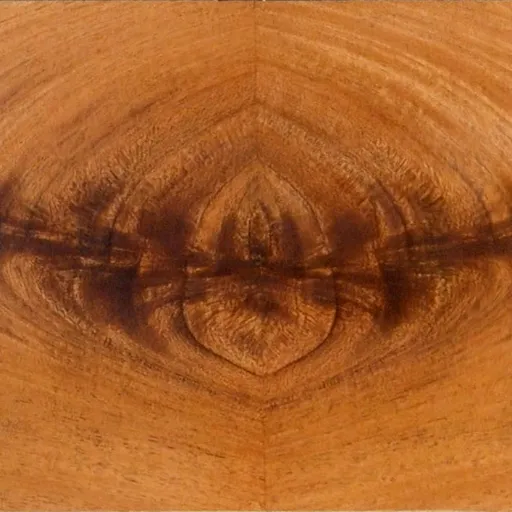
Other decorative arrangements include four-way matching and sunburst layouts, where selected pieces meet around a centre or converge towards a point. They address a different visual goal from a simple row of leaves. The earlier radiating-grain illustration shows a decorative layout. These original images provide visual context; they do not establish wood species or compare all three basic methods in a labelled diagram.
End matching and sequence across panels
End matching introduces joints at the ends of leaves when their length does not cover the intended surface. It can extend an arrangement, but it doesn’t make a physical joint disappear or guarantee uninterrupted grain. Across a room, panel sizes, openings and trimming also affect the sequence. The TVAA sequence-matching guide distinguishes uniform sequenced panels from components made to a coordinated plan.
Illustrative scenario: A wall elevation includes a doorway. The designer must decide whether grain should relate across the opening and onto the door, or only between adjacent wall panels. Record those boundaries, component positions and top directions before cutting. A face can be well matched on its own while leaving the wider elevation unresolved.
A later missing panel raises another question: how to relate new material to the remaining sequence. Use the veneer panel replacement guide for that assessment rather than assuming that the original match name guarantees a replacement.
Choose the match for the visible surface
Start with the grain effect and cut
Choose the intended grain effect before ranking pattern names. The cut shapes the figure you have to work with. The match arranges that figure across the face.
The AWI-QCP veneer overview explains this relationship in its architectural specification guidance. It is an educational overview, not a substitute for the requirements of an individual contract.
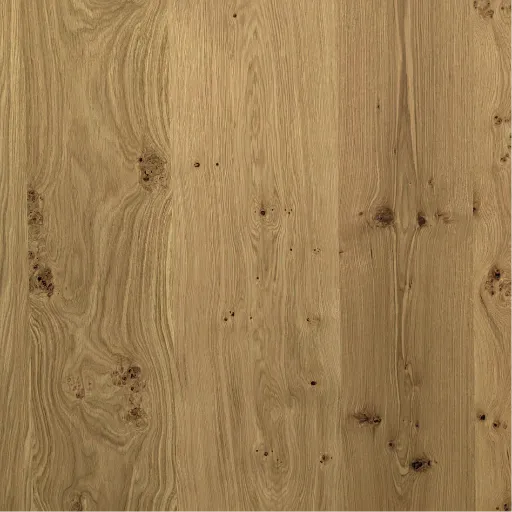
For example, when considering oak veneer, ask which cut and actual figure the sample represents. A species name alone does not define the face. With exotic veneer, review the particular grain features rather than assuming that a category name guarantees a dramatic or uniform appearance.
Illustrative scenario: A maker is planning straight-grained door faces and wants the figure to repeat rather than mirror. Slip match is a candidate arrangement. Before approval, the maker still needs to see the proposed leaves together with the planned finish.
Check reflection and finished colour separately
Use the planned light and finish to view the joined sample from the directions that matter in the room. Don’t judge an unfinished loose leaf against a photograph. Look closely at the joints, then step back to the usual viewing distance to judge the grain as a whole.
Write down what you see: a change in grain, light and dark bands, or a colour difference. Ask whether the pattern is right, whether it changes as you move, and whether the finish shows an agreed colour range.
Use the separate veneer colour-matching guide for the colour and finish checks. Here, decide whether the leaves form the pattern you want.
Ask how the choice affects yield and scope
There is no universal cheapest match. Ask whether the quotation includes leaf selection, the proposed component widths, trimming and sequencing across adjoining pieces. Compare equivalent requirements. A price for one face may not cover a matched set of doors, wall panels and side returns.
Likewise, a matching pattern does not specify the substrate, adhesive, coating or service conditions. It does not establish scratch resistance, suitability for a wet area, emissions compliance or certified sourcing. Write down those needs separately and ask for product evidence to support them. This avoids asking an appearance sample to prove something it cannot show.
Approve the layout before fabrication
Record the specification at each scale
A match name starts the conversation; a labelled layout makes the proposed result reviewable. Use the following approval record to connect the material sample with the face layout and the full set of components.
- Material and figure: Record the species, cut and reference for the proposed leaves. Identify the grain characteristics being approved.
- Leaf arrangement: State book, slip or the agreed varied arrangement. Note the exposed face and any end-for-end rotation where relevant.
- Face assembly: Show the centre line, intended joint locations and component-width arrangement, including the effect of final trimming.
- Component sequence: Label panels, doors and returns on an elevation. Identify interruptions and any planned transition between flitches.
- Finish and viewing conditions: Identify the finish sample and the light and viewing directions used for the appearance review.
- Acceptance reference: Record the approved sample, layout revision and agreed range of natural variation. Identify who needs to approve a change.
Use the record to answer these design questions before accepting the drawing:
- Where should the grain meet? If a mirrored centre matters, mark it on the face rather than leaving its position unstated.
- What should repeat? “The crowns should repeat” gives a clearer instruction than “make it consistent” when grain rhythm is the priority.
- Which pieces belong together? Label the door pair or panel group, so approval of one face cannot be mistaken for approval of every adjoining part.
- What change needs another review? Agree how to handle a different leaf selection, finish or layout before treating it as covered by the original approval.
Ask the fabricator to confirm these points on the drawing. A short written answer can identify an open design choice that the sample alone cannot settle.
Use an approved sample and layout together
The sample shows appearance; the layout shows where that appearance belongs. Keep both available during approval. A sample without component positions can leave the relationship between doors uncertain. A drawing alone cannot show the finished colour range or light and dark bands.
For the illustrative wall with an opening, identify each component and its direction on the elevation. Ask how field trimming and site dimensions will affect the sequence. If the leaves or flitch change, review the new join between sets. The old sample may not cover the new layout.
Once the arrangement is agreed, veneer splicing and jointing becomes a separate preparation topic. A chosen pattern does not prove that its seams are sound or that a panel is ready for pressing. Keep appearance approval and fabrication checks connected without treating them as the same decision.
Before committing the production material, ask for the actual species, cut, match and finish to be considered together. Identify any open item on the approval record. If a promised appearance cannot be demonstrated by the sample and layout, resolve that item before accepting it as part of the specification.
Veneer matching questions
Does slip matching guarantee an even colour?
No. Slip matching keeps the same side facing out on leaves in cut order. This can reduce the light and dark bands linked to book match. It does not make natural wood identical. Leaf selection, finish and viewing conditions still matter. Compare adjacent finished leaves when approving the appearance, and distinguish repeated grain from an agreed colour range.
If a supplier calls the result “uniform,” ask what that means for the proposed material. Does it describe grain direction, colour selection or both? A defined sample is more useful than treating that word as a guarantee of invisible joints or identical bands.
Is reverse slip the same as book matching?
No. Reverse slip turns alternate slip-matched leaves end for end. Book matching turns alternate leaves over like book pages, exposing opposite faces. Both alter the pattern, but they make different physical changes. Use a diagram or labelled sample to settle any unclear terms before cutting. This matters if crown position or reflected light is part of the design.
Can a face be book matched and sequence matched?
Yes. Book matching tells you how the leaves meet within a face. Sequence matching tells you how the panels relate to each other. A set can use both.
Neither term defines every joint or sets how much trimming is allowed. An opening in the wall also needs its own layout decision. Mark those details on the wall drawing and check the proposed leaves against it.
Does a match name establish durability or responsible sourcing?
No. A pattern describes an arrangement of visible veneer. It does not prove where the wood came from or how the finished panel will perform. Check sourcing records and the chosen panel system on their own merits. Nor does random matching, by itself, prove waste reduction: any claimed saving needs evidence for the actual material selection and fabrication scope.
Make the appearance decision explicit
Choose book match for a mirrored relationship, slip match for a repeated relationship, or a defined random arrangement for deliberate variation. Then ask how that choice will look in the actual material. Veneer matching needs both a finished sample and a clear layout. Use them together.
For the cabinet illustration, the next step is to mark the mirrored centre and review adjacent finished leaves. For the wall elevation, it is to identify the components and the boundaries where continuity matters. Those actions make the appearance request specific enough to discuss before production.
Take the selected pattern, approved reference and labelled layout into the fabrication discussion. Resolve uncertain terms, finish assumptions and component relationships there. Keep performance and sourcing requirements alongside that record with their own evidence, so the match name carries only the appearance meaning it can support.