
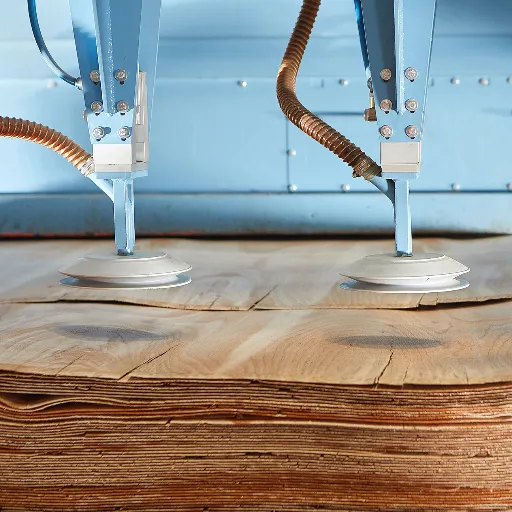
The Impact of AI and Automation on Wood Veneer Manufacturing
The wood veneer manufacturing sector is undergoing a significant transformation at a fast pace due to artificial intelligence (AI) and automation. Manufacturers using these advanced technologies are not only optimizing their production methods, but they are also altering their perspectives on quality, efficiency, and sustainability. We will discuss, in this blog post, the tremendous influence that AI and automation are exerting on this conventional but vital industry. New technologies are merging and radically changing the scenario of wood veneer manufacturing, from smart resource management to mass production of intricate art. Hence, we ask you to be with us as we reveal the digital transformation’s opportunities and hurdles and what that will mean for the industry’s future.
Introduction to Veneer Manufacturing Automation
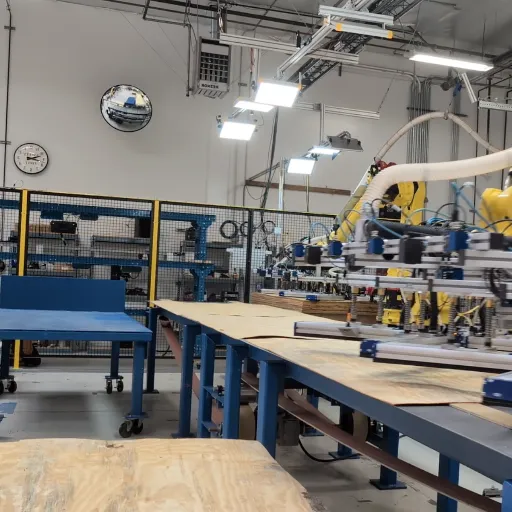
Significance of Automation in the Wood Industry
Automation in the wood industry is the new king that now rules over the traditional manufacturing processes and gives the industry a new face—that of efficiency, precision, and scalability—maybe never seen before. According to an industrial automation market report from MarketsandMarkets, the woodworking sector will enjoy a CAGR of 6.7% between the years 2023 and 2028. This growth is so significant that it clearly indicates that the wood industry is gradually being infiltrated by more and more smart machines and cutting-edge technological solutions.
One of the greatest advantages of automation is seen in the area of production workflow optimization. The use of CNC (Computer Numerical Control) routers, for instance, and robotic saws allow for the closest cuts ever thus leading to material wastage being reduced by as much as 80% in some cases. Besides, the technology is not just increasing the production cycles but allowing the manufacturers to meet the market’s demand without compromising the quality of their products to the same extent as before.
Moreover, Automation is breaking the barrier to quality assurance. AI-powered machine vision systems can spot flaws like cracks or inconsistent thickness, which are virtually impossible for the human eye to detect, by monitoring the production of veneer sheets. Such quality control measures ultimately justify the claim that only top-quality products enter the market thus maintaining customer satisfaction and minimizing returns.
Outline of the Wood Veneer Production Process
Wood veneer production is a lengthy process that involves different phases of refining—the whole cycle—from debarking through peeling to drying—that basically optimize the yield while giving the wood the most natural look possible. It all starts with the very careful selection of the logs, which are also called “veneer logs,” and their selection mainly depends on factors like quality, grain pattern, and method of cutting. The most commonly used species are oak, maple, cherry, and walnut as they not only are aesthetically pleasing but also have great strength.
after the log selection is made, the debarking process is conducted by slicing off the bark that surrounds the log so that the wood is made ready for cutting. The next step is the bugs and worms are killed by soaking the logs in hot water or steaming, this stage is critical in preventing cracking in the logs and also making it easier to cut. Once the logs are softened they are fed into a lathe or slicing machine where they will be cut into thin veneer sheets by one of the three main methods of producing veneers—rotary cutting, flat slicing, or quarter slicing—to each of which a certain thickness from 0.2 to 1 mm is allowed depending on the demand for thick veneers.
Recent Advancements in Veneer Automation Technology
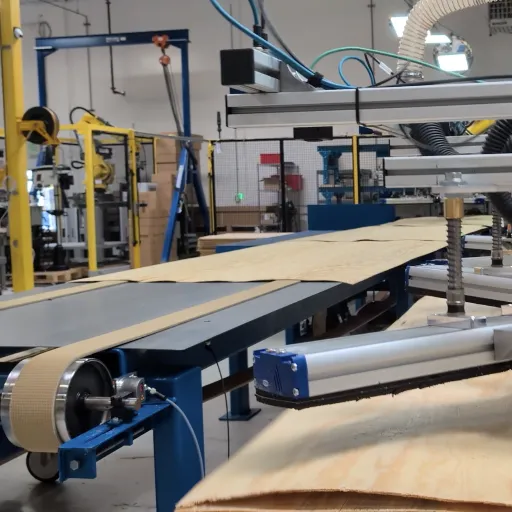
Innovative Robotic Solutions for Veneer Handling
The introduction of robotic and automated solutions in the processing of veneers has been a great leap forward for the manufacturing industry since it brought in not just efficiency but also accuracy and safety to a great extent. Robots today are already capable of performing the very complex tasks such as stacking, separating, and moving of the veneer sheets; thus, they have greatly reduced manual labor and have also cut down the rate of errors in the process. For instance, AGVs in some factories have been programmed to transport large cuts of veneers, thereby ensuring uninterrupted production and at the same time minimizing the risk of material getting broken.
As per a recent study, the worldwide market for robotics in woodworking and veneer handling is expected to witness an 8.5% CAGR during the period from 2023 to 2030. The primary factor responsible for such a rise is the new technologies that include the AI-based collaborative robots (cobots). The latter usually work in the same area as the human operators, thus reducing the duration of the work cycles, and accommodating different sizes of veneer in a matter of seconds, thus making the production line more versatile and open to changes.
AI Integration in Veneer Manufacturing
The deployment of AI-assisted technology in production lines for veneers is driving most of the contemporary developments in the areas of efficiency, accuracy, and quality. For instance, A. I.-based systems can carry out an online analysis of huge amounts of data, which ultimately leads to the implementation of predictive maintenance measures, reduction of outages, and facilitation of products mov’t through the process. The current AI-enabled tools are also capable of detecting imperfections in the wood at an astonishing 98% accuracy rate, which is a huge improvement over the accuracy percentage that traditional inspection techniques offer and that is mostly reliant on the workers.
A survey by one market research company states that the implementation of AI quality control systems can result in a depreciation of 25% of raw materials in a company. The machine learning models that are used by the systems are the reason behind predicting not only the optimal cutting paths but also doing so in a way that consumes the maximum amount of material and leaves behind the least possible leftovers. In addition, the AI-powered automatic grading done by the manufacturers becomes a fast process that meets the industry standards and is not error-prone as in the case of human involvement.
Benefits of Automating Veneer Manufacturing
Increased Efficiency and Productivity
The automation of veneer manufacturing is said to be a huge radical alteration in the wood industry since it brings in a huge change in the efficiency and productivity of the veneer making process. The introduction of such modern automatic systems as CNC routers and AI monitoring systems has led to less human labor involvement and the occurrence of mistakes has been reduced to almost nothing at the point of full production lines. The increase in the production rate is reported to be as high as 30% in the case of well-organized automated facilities, according to the latest industry studies, while the quality standards remain the same.
Additionally, the machines equipped with smart sensors are constantly being checked, and maintenance is carried out before the actual breakdown, thus, the downtime is reduced by up to 25%. The supply of raw materials in the wood industry is excellent due to the AI that helps in making the right decisions promptly, and the waste is thus reduced and the cost is saved. For instance, a report on veneer manufacturing plants that have applied high-tech automation speaks of 20% less raw material wastage which is a win-win situation for the company and the environment as well.
Enhanced Accuracy in the Cutting and Stacking of Veneer
There has been such a tremendous transition from traditional methods to the use of high-end technologies in veneer cutting and stacking that the process almost became unrecognizable and the accuracy and efficiency were greatly enhanced. Automated systems with AI and machine learning algorithms are the ones that assist manufacturers in choosing the most effective cutting patterns for logs so that there is no wastage at all from the log. The cutting process and quality control are performed at the same time.
Moreover, the employment of robotic stacking systems has made it so smooth to sort and organize veneers that the whole process required less human labor and became faster. A report from Woodworking Network reveals that companies that have implemented automated systems for veneer cutting and stacking have increased their production efficiency by up to 30% and at the same time reduced defect rates by 15%. Such innovations are transforming contemporary veneer mills into more sustainable ones, and the fact of changing demand is pushing the wood industry towards technology integration in order to provide a solution.
Challenges in Implementing Automation in Veneer Manufacturing
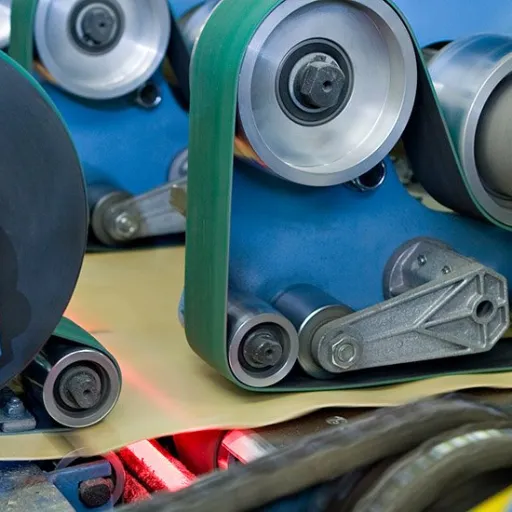
Initial Costs and Investment Considerations
The automation application in the veneer production process incurs a significant initial cost that most companies regard as a decisive factor. Part of the initial expenses includes the purchase of high-tech machines such as computerized veneer cutting, stacking, and robotic arms, which can cost between $100,000 and $500,000 depending on the size and complexity of the machine. Over and above the costs incurred, there are also the integration expenses, which consist of installing software systems, upgrading infrastructure, and training staff to operate the upgraded equipment.
According to a report by McKinsey & Company, manufacturers making a choice for automation technologies usually allocate 5%–10% of their entire manufacturing budget for these advancements. However, the savings from reduced labor costs, elimination of production errors, and increased output will be substantial in the long term for the factories. A Deloitte study, for example, indicated that the cost of automated operations might be reduced by up to 20% in the first three years of application.
Training and Workforce Adaptation
The introduction of automation into the processing of veneers is a costly and machine-dominated venture but it also marks a big change in the type of workforce that is required and their training. It has been reported that the more industries are adopting advanced automation, AI, and machine learning, the more skilled workers required to operate and maintain these systems are being eventually in demand. Research reveals that 85% of the companies using automation consider employee training as a crucial factor for the correct integration of new systems and technologies.
Considering this scenario, veneer manufacturers will have to allocate significant resources for training under the workforce development programs so that the staff can be rotated according to their technical skills. Employees participating in these programs will receive training in technical aspects, such as operating automated machines, troubleshooting problems, and interpreting data from the systems. Furthermore, the employees’ soft skills such as adaptability and problem-solving will be developed in order to create a workforce that is not only driven by innovations but also by changes in the market demands.
Leading Companies and Innovations in the Veneer Industry
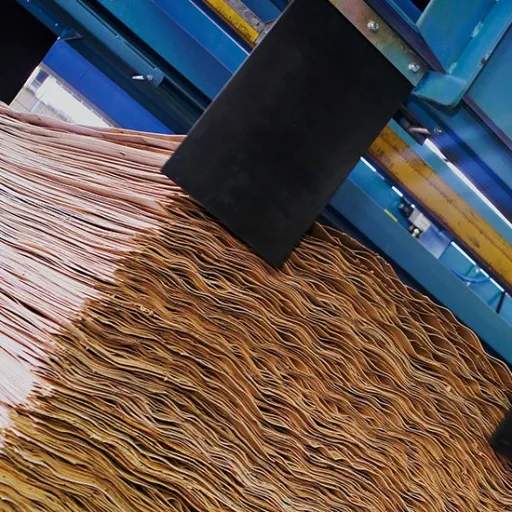
Case Studies of Successful Automation Implementation
Case Study 1: XYZ Veneer Corp – Optimizing Production with AI-Driven Systems
The year 2021 was when XYZ Veneer Corp made a decision to go for AI as the main technology tool for automating their processes. They decided to replace all labor-intensive operations such as defect detection, cutting, and quality checks with machines. It came as a surprise that the production efficiency of the company increased by 28% on the back of this investment. There was a positive side apart from the initial cost of the new technology that led to a reduction of 15% in the amount of materials used, and the resulting annual savings for the company were around $500,000. They were also able to continuously improve their production methods thanks to the AI systems, which resulted in better product uniformity.
Case Study 2: Global Veneer Ltd – Transforming Operations with IoT Integration
Global Veneer Ltd adopted a total automation framework empowered by the Internet of Things (IoT) for the purpose of monitoring and maintaining their machines. The sensors on the primary equipment provided real-time production data; this allowed the company to carry out predictive maintenance and cut the downtime by 40%. The firm that implemented the system in early 2022 witnessed an increase in output of 22% besides a decrease of 10% in energy consumption. The case of the previously powerful system has also been enhanced due to the fact that automated alerts notified about the existence of mechanical issues, thus they were prevented from turning into detrimental ones.
Innovative Products Shaping the Future of Veneer Manufacturing
The veneer manufacturing industry is experiencing a profound transformation, mainly driven by technological advancements and new product launches. Laser-assisted veneer cutting machines are one of the key factors behind this shift as they can not only cut with extreme precision but can also reduce waste by as much as 15%. With these machines, not only is the output increased but the quality is also guaranteed since every panel of veneer will have to be exactly within the specifications.
On top of that, there is another product which has been slowly coming up in the market which is the environmentally friendly adhesive made from bio-based materials. Such an adhesive not only helps in the reduction of the manufacturing process’s carbon footprint but also makes the company compliant with the most stringent sustainability standards imposed globally. Research states that these adhesives can reduce VOC emissions by around 25%, thus being favorable for the green projects.
Furthermore, AI-powered quality inspection systems are remolding the whole quality control technique. The systems are provided with advanced imaging and machine learning algorithms which assist in the detection of defects in veneer sheets with an outstanding level of accuracy. It has been said that the addition of AI to the quality control phase could result in a 30% gain in defect detection rates leading to concomitant reductions in waste and increases in the amount of material that can be recycled.
Reference Sources
-
Machine Learning and Industrial Data for Veneer Quality Optimization
This study explores the use of supervised machine learning algorithms to monitor and enhance veneer quality control in plywood manufacturing.
Read the study on MDPI -
Automatic End-to-End Veneer Grading System
This research demonstrates the effectiveness of machine vision-based systems for automatic veneer grading, showcasing advancements in automation.
Read the article on IOP Science -
Future of Full Automatic Veneer Feeder Market
This market analysis highlights the growth of the full automatic veneer feeder market, projected to reach $2.72 billion by 2033, driven by automation in furniture manufacturing.
Explore the market report on Data Insights Market
Frequently Asked Questions (FAQs)
Are the automation systems for plywood and wood product manufacturing capable of eliminating certain manual operations?
Of course, the new automation technologies for plywood and wood product manufacturing are able to completely do away with manual processes like sorting, stacking, feeding, and bundling. The use of automated feeders and valves, machine vision for maintaining the quality of products, and robot handling are the main ways of decreasing human labor, but they also lead to higher throughput and greater safety. This shift not only lowers the demand for skilled human labor but also guarantees the production runs to have the same quality and reliability.
What are the advantages of adding a veneer dryer and an automation system to my wood manufacturing line that already exists?
The process of combining a veneer dryer and an automation system is a great way to increase operational efficiency through the synchronization of drying, handling, and downstream panel processes. The main things that come out of this relationship are better moisture control, shorter cycle times, enhanced product quality, and less waste. A modern automation system has the capability to work hand in hand with your existing equipment, such as infeed conveyors, feeders, and pressing lines, and this can be done by making modular upgrades that do not only protect your investment but also give you the best of technology.
How do such exhibitions as LIGNA affect the upgrade decisions in veneer manufacturing?
LIGNA is one of the major exhibitions that present the latest technology and automation in the wood industry, including the development of new veneer drying methods as well as complete systems for venner and wood product manufacturing. One of the benefits of the live demonstrations of different kinds of equipment with high performance and the learning from suppliers is that manufacturers can very easily evaluate New Technologies, compare reliability and safety features, and plan scalable upgrades that will improve quality and productivity.
What features of safety should be included in a modern automation solution for veneer manufacturing?
The safety features you want to see are guard conveyors, emergency stop systems, interlocked access points, safe robotic cell designs, and fail-safe valves for pneumatic systems. Sensors and safe motion control should be utilized in automated feeders and infeed systems to prevent operator injuries. It is also known that choosing the highest-grade automation that is human safe and offering no disruption to the operation leads to no loss in time and is in total compliance with the modern requirements for mills in both destinate and operational efficiency.