
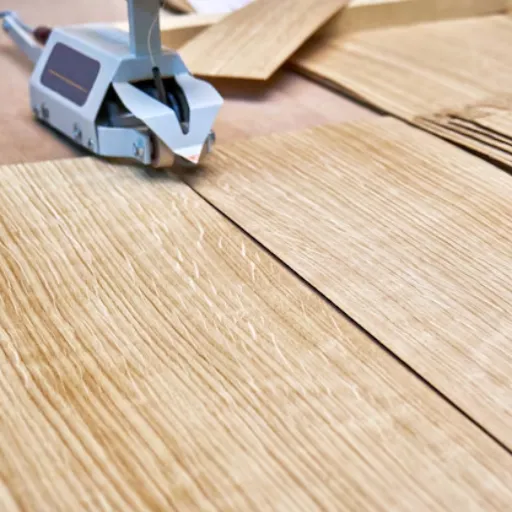
Wood Veneer Splicing and Jointing Techniques Explained
Veneer splicing and jointing are intricate techniques that, indeed, very much affect the overall perfection and quality of woodworking projects, no matter if they are done professionally or by nonprofessionals. These techniques are indispensable for expert as well as novice woodworkers who expect nothing but excellent and durable veneers. The information provided in this guide is intended to help you understand the technique and the science of veneer splicing and jointing. It will also introduce you to the tools and methods, plus the best practices that will turn you into a skilled person in these talents. The result of this guide will be a better comprehension of the questioned processes along with a recognition of their ability to contribute both esthetically and practically to your woodworking projects.
Understanding Veneer Splicing
Definition and Importance of Veneer Splicing
Veneer splicing is a labor-intensive process but very much worth the effort eventually; it is done through a series of portions being perfectly laid out and glued together one by one. The end product is a seamless, huge, and perfect-looking surface, which is unlimited in size. This process is getting more and more acceptance among the wood and furniture industry since the manufacturers and the craftsmen can create panel designs that not only get the attention of the customers but also are functional and durable. It is the work of splicing that supplies the same grain and color all over the piece, which in turn is very important for the attainment of smooth and high-grade finishes on custom-made furniture, cabinetry, and decorative surfaces such as flooring.
Veneer splicing is a significant and impressive process in facilitating the use of natural wood, the most expensive, prized, and sometimes non-available raw material. Wood is cut in smaller sizes only minimally, and the eco-friendly practice is thus enhanced by Joins of very carefully executed cuts of separate or non-regular veneer pieces. Technological advances in splicing, for example, laser-assisted machines and sewing machines boasting full automation, have gained the highest precision and uniformity in the processes. Reports from the industry state that the application of veneer splicing technology has led to the production efficiency of up to 30%, which implies that waste of material and lower operating costs are achieved.
Woodworking Industry Applications
Due to the fact that it is a very versatile and economical process, veneer splicing has been labeled as a necessity in a number of woodworking applications. Its primary area of application is furniture making, where spliced veneers give the same aesthetics as solid wood but at a much lower cost. For example, the designs done by the application of veneer on cabinets, tables, and office desks not only contribute to the visual appeal but also provide a durable quality.
Another significant application includes wall paneling and flooring production. Splicing allows the wood makers to produce large and seamless luxury sheets with uniformly designed patterns, thereby making them suitable for big interior projects. As per recent furniture market reports, there has been an ongoing trend in the growth of the global wood veneer market which is expected to exceed $16.1 billion by 2028 mainly due to the increasing demand for eco-friendly and sustainable construction and interior design materials.
Moreover, spliced veneers are of great importance in the making of musical instruments like guitars and pianos, where accuracy and beauty are highly valued. The manufacturers get to create the so-called book matching symmetrical patterns, using similar techniques, which are in turn responsible for both the quality and the aesthetics of the instruments.
Types of Veneer Splicing Techniques
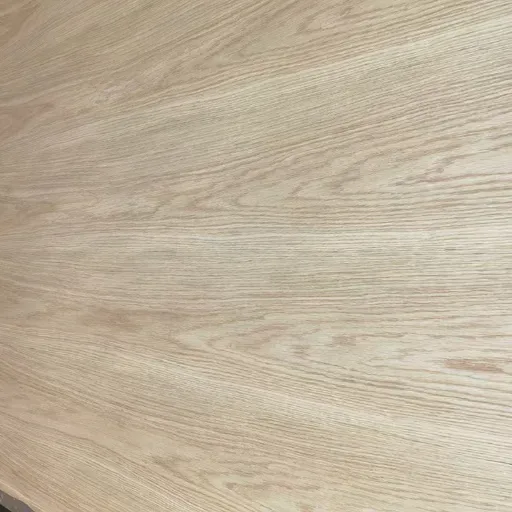
Zig Zag Splicing Method
The zig-zag splicing technique is one of the important methods in the production of wooden veneer and it is very much a cutting-edge operation comprising of the cutting and precise joining of the wood sheets for the larger panels. A very solid connection between the sheets is made, and easily manageable patterns are created, which is very important both aesthetically and functionally. The method used allows the cutting of separate sheets in a zig-zag form and later either bonding with the application of specific glues or stitching.
Zig-zag splicing technique is mainly praised for its appropriateness and ease of use when dealing with good quality and irregular size veneer pieces thus resulting in no wastage at all making it a very effective method. The latest study shows that the application of this method can completely eliminate 30% of material wastage in the production of veneers thereby providing the manufacturers with a sustainable option regarding their practices. Among the different industries availing zig-zag splicing for its unchanging and durable impersonation, the main ones are the furniture industry, interior design, and cabinetry.
End Splicing Techniques
End splicing is considered the second most important technique in veneer production, which processes involving the joining of short wood pieces into longer and continuous sheets. The splicing method is very effective in upcycling the initial supply by combining small pieces of wood that may go to waste anyways. Depending on the type of wood and precision of the equipment used, the end splicing waste reduction has been reported to obtain about 25-35% material savings.
Modern technological advancements in end splicing now come along with automated systems with laser alignment and glue application features. These systems make possible the production of joints that are completely gap-free, thus improving both the aesthetic and structural status of the veneer sheets. Moreover, some of the systems incorporate the use of green adhesives which results in the lower emission of VOC (volatile organic compound) and thus are consistent with the sustainable manufacturing practices.
End splicing techniques are extensively used in various industries which in turn results in their continuous improvement in production efficiency and product durability. For example, the furniture industry has end splicing as a way of reducing wastage of material while creating larger panels for table tops or wardrobes. In addition, global market research has indicated that with the establishment of advanced end splicing machinery, the error rate in production has been reduced by as much as 20%, thus enabling the manufacturers to achieve both cost-efficient and high-quality outputs.
Benefits and Challenges of Veneer Splicing
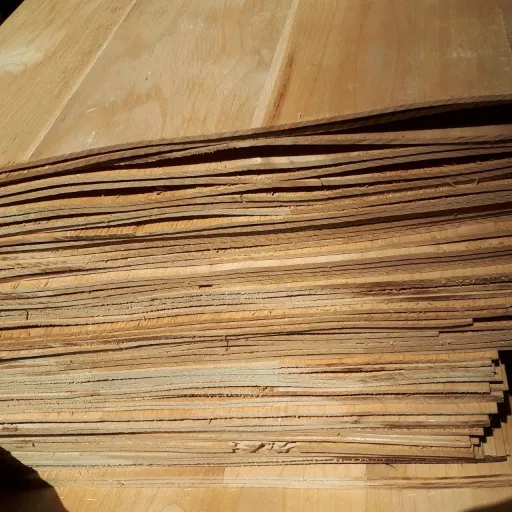
Advantages of Using Veneer Splicing
Among the advantages of veneer splicing, or veneer joining as it is also called, the cuts in wood and material wastage are the biggest one, hence, it is very hard to think about the major industries like furniture building and decorating without it. There are different benefits that come along with the process, but the main one is it allows for the consumption of raw materials by the producers of wooden goods to the point where they are actually practically using up all the substrates and thus being part of and even supporting the more eco-friendly and less wasteful manufacturing processes. In fact, not only the big companies but also the smaller ones that rely on veneer splicing machinery have reported an amazing reduction of wood wastage up to 30%, which is a considerable reduction in both expenses and costs.
Another benefit that is not only seamless and larger panels which are more beautiful but also larger panels that are more aesthetic pleasing of the products is the case of veneer splicing. This is a great help in surface pattern synchronization, such as that of tabletops, cupboards, and decorative wall panels. Moreover, the same goes for the process of designing; it allows the suppliers to fulfill market needs very creatively and with their fixing designs.
In the production phase, contemporary veneer splicing machines enhance the process even in terms of precision and quality by being so modern and having such features. Many of these advanced models even have automated systems built-in that not only increase but also do so with efficiency, thus reducing human errors and increasing output quality. It has been mentioned in the statistics that manufacturers setting up cutting-edge splicing equipment have yielded an average 25% rise in production speed along with quality that is still topnotch.
The Common Challenges in Veneer Jointing
The whole process still appears to be quite intricate and manufacturers have to overcome challenges in order to reap the maximum benefits from it, regardless of the advancements made in veneer splicing machines. One of the very frequently occurring issues is the misalignment of veneer joints, which can ruin the aesthetics and eventually lower the quality of the product. This mostly occurs due to the difference in the thickness of the veneers or mishandling during the splicing process. Some recent research states, unaligned joints account for nearly 15% of the defects happening in the veneer production process, which certainly indicates the need for precision in the process.
Another major problem is in glue application—sometimes it is not applied uniformly or too much is used. This results in two things that are opposite to each other: visible glue lines or weak joints which, in turn, lead to a product being less strong than it should be. Among other things, modern splicing machines are aiming to fix this problem by having automatic glue spreaders, but proper maintenance and calibration will still be needed to make the fewest possible mistakes.
Veneer moisture content differences are still a very big issue when it comes to veneer jointing. Veneers with different moisture contents are likely to become disabled due to warping, shrinkage, or cracking after the splicing and thus create wastage. Estimates say that moisture-related issues are responsible for the annual loss of about 20% of the usable veneer materials in the industry.
Recent Advancements in Veneer Technology
Innovations in Glue and Adhesives
Over the years, glue and adhesive technology has not only been helpful in the various stages of veneer production but has also made the process more efficient, longer-lasting, and more eco-friendly. The modern adhesives not only provide massive gluing strength but also substantially reduce the impact on the environment by the use of natural materials and the introduction of environmentally friendly chemical products in the entire process of making them.
Among these or at least one of these is the birth of bio-based adhesives coming from solar energy after years and years of soy protein, lignin and starch. These adhesives not only limit the synthetic materials but also reduce the petroleum demand and release of harmful and smelly volatile organic compounds (VOCs). To add more, the soy-based glue manufacturers have made a giant leap in gaining equal strength to synthetic glues based on formaldehyde while still observing the environmental laws.
The application of reactive adhesives, especially those of polyurethane (PUR) and moisture-curable adhesives, has also resulted in increased water resistance and longer life of veneer products. These adhesives are exceptional in their bonding even when exposed to very high or low temperatures and humidity, hence they can be used in lots of areas, like the making of furniture and buildings.
Veneer Splicers’ Latest Trends
The veneer splicing industry is changing rapidly because of new technologies and sustainability being a major focus. One of the major trends is the use of artificial intelligence and machine learning in the veneer splicing system. Some of the benefits of these new technologies are, among others, the option to make real-time changes during the splicing process that would lead to ultra-conformity and less material waste. For instance, AI-powered machines can set the best splicing parameters automatically by considering the thickness and direction of the veneer, thereby minimizing the chances of errors and improving the overall productivity.
Moreover, the introduction of green adhesives and materials is another important factor in the industry. The manufacturers are gradually moving towards water-based and formaldehyde-free adhesives in order to meet the rules for the environment that are very strict and the consumers’ needs for eco-friendly products that are constantly rising. Recent statistics show that there has been a considerable global increase in the usage of sustainable adhesives, with the market size for these products expected to reach $4.25 billion by 2028 representing a CAGR of 6.2% from 2021.
The merging of IoT technology with the latest splicer machines is another one of the remarkable innovations. Smart veneer splicers equipped with IoT sensors can provide real-time data about the productivity of the machine, the amount of adhesive used, and any problems with operation. This not only enhances the predictive maintenance capability but also empowers manufacturers to monitor and improve their energy consumption habits to the point of cutting down the electricity cost by 20% in some cases.
Practical Tips for Woodworkers and Interior Designers
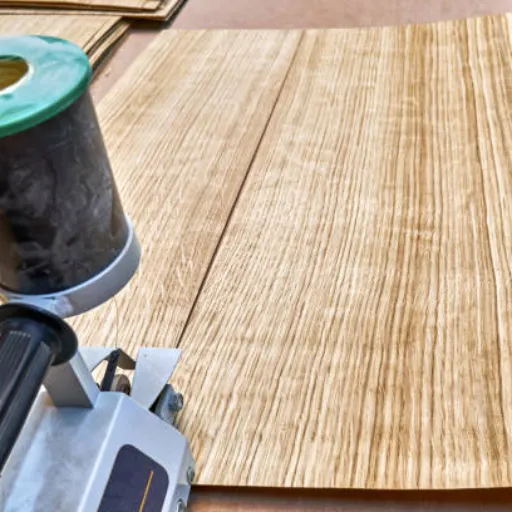
Selecting the Right Veneer Splicing Technique
Book Matching
Book matching is one of the most favored splicing techniques. This process consists of the mirroring of the veneer leaves and putting them next to each other. This not only gives rise to a symmetrical but also a visually attractive effect that is compared to a butterfly’s wings or a flowing pattern. Book matching is adopted by the decorative surfaces of cabinets, furniture, and panels. It is very important that veneers with a uniform grain structure be selected for the best results.
Slip Matching
In this method, the sheets of veneer are ordered. They are not turned and a grain pattern that is consistent and continuous is obtained. Slip matching is ideal for producing a neat, linear look and is particularly effective with quarter-sawn or rift-cut veneers. It is commonly done for wall paneling in modern interiors where elegance is subtle and perceptible.
Random Matching
Random matching is usually the choice for designs that want to emphasize the simple and natural side of things. The different sheets of veneers that are carefully selected are laid out in no particular order creating a more informal and rough look. This technique requires the edges to be jointly worked on by experts and is very often seen in both residential and commercial designs that seek uniqueness.
End Matching
End matching is meant for long panels or places where one sheet of veneer is not enough. The sheets are set at their ends and the grain becomes visible over the whole surface. It ‘s particularly good for vertical installations, wall coverings, where the continuity of the grain reinforces the perceived flow.
Best Practices for Application and Use
Surface Preparation
Always start with a substrate that is clean, level, and free of debris. Sanding is necessary for the surface since it provides a good bond and it is uneven surfaces that cause breaks or wrinkles. The research indicates that the grit size of 80 to 120 is the most appropriate for surface preparation of the veneer application.
Adhesive Selection
The adhesive selected will have a major influence on both the life span and the appearance of the veneer. The use of polyvinyl acetate (PVA) glue is still the most indeed but contact cement is frequently the first choice for hot resistance bonding. Recently invented high-bonding adhesives with laser curing support have shown to be 30% stronger than their conventional counterparts in terms of adherence.
Application Techniques
One of the tools that can be used to ensure that the veneer is pressed firmly against the substrate and no air pockets are formed is a veneer scraper. The application of vacuum presses has become more common for big projects where uniform pressure is applied and the risk of flaws is minimized. One of the recent technological advancements reveals that using automated vacuum presses can reduce the application time by up to 40% while also enhancing consistency.
Finishing Touches and Sealing
A sealer or a lacquer that matches or is more durable than the veneer should be applied to the veneer that has been sanded with fine grits (220 or higher). One of the finishes that has been noted for its effectiveness is the UV resistant one as it is known to extend the life of the veneer in direct sunlight by 25%, thus adding to the effect of the studies done in furniture conservation.
Reference Sources
-
Voluntary Product Standard PS 1-07
- This document outlines standards for wood species, veneer grading, adhesive bonds, and panel construction, including splicing techniques. It provides a comprehensive guide to ensure quality and feasibility in veneer applications.
- Read the standard here
-
Synthetic-Resin Glues
- This report from the USDA Forest Products Laboratory discusses the use of urea-resin glues in veneer splicing, highlighting their role in furniture manufacturing and laminating processes.
- Access the report here
-
Veneer Preparation and Splicing
- Published by the EPA, this document details the processes involved in veneer preparation, including grading, matching, redrying, and splicing, emphasizing its importance in plywood and hardboard production.
- Explore the document here
Frequently Asked Questions (FAQs)
What is the function of a veneer splicer and the method it uses for the joining of two veneer sheets?
A veneer splicer is a special machine or tool that is used to join the edges of a veneer in such a way that the resulting sheets will look as if they were made from one piece of veneer. The splicer uses tape, glue, or mechanical clamps to hold the face and flitch in proper alignment so that a continuous length is produced for further processing. A proper setup leads to making flat and flush joints and also guarantees precision for longitudinal or cross feed operations.
What are the advantages of using a kuper splicer in terms of accuracy when joining sliced veneers in a series?
Machines like Kuper splicers are specially built to deal with high-volume veneer joining with accuracy that can be repeated. They not only supervise the alignment of the face grain but also take care of the flitch so that the two sheets are very similar in look; the series-capable equipment cuts down on operator variability and year-over-year production run consistency is thus increased.
In what instances should tape be preferred over adhesive and vice versa in a veneer splicer?
Tape is mainly for temporary holding during handling or for light-duty splices that are followed up by immediate downstream processing. Adhesive is the option for permanent joins that need to be as strong and durable as the entire face. Which one to use depends on the further processing of the veneer sheets, such as sanding, slicing, or pressing, and also whether the splice must be flush under a load.
Is it possible for a splicer to perform longitudinal or crossfeed splicing and what is the difference between the two?
Most of the modern splicers are capable of both longitudinal and crossfeed splicing. In longitudinal splicing, the veneer is joined along its length thus longer runs are created; in crossfeed splicing, the veneer is joined across the width in order to match patterns or relax defects. The machine configuration and the application of tape or glue are different for the two types so that flatness is maintained and mismatch of the face grain is avoided.
What are the steps to prepare two sheets for a kuper splicer?
The preparation process consists of cleaning, squaring, and checking for defects at the edges, adjusting moisture to the standard levels, and aligning the flitch and face orientation for the desired pattern. The operators should double-check the slice type (sliced veneer) and size, and then set the kuper splicer for the correct feed speed and pressure in order to get a flush, accurate joint.