
The Ultimate Wood Veneer Thickness Guide: 0.3mm to 3mm Explained
Wood veneers are a versatile and classic material that find application in various projects, such as high-end furniture and detailed interior designs. The thickness of the veneer is critical to its beauty and utility, however, when picking the most suitable veneer for your project, understanding its thickness is crucial. An ultimate guide like this one is exactly what you need! Whether you are a professional craftsman or a beginner, this blog post will take you through all the things you should know about wood veneer thicknesses, ranging from the paper-thin 0.3mm to the sturdy 3mm. We’ll be discussing the pros and cons of thicknesses, their perfect applications, and how to choose the right one for your particular case. So, let us empower you to learn the secrets behind getting perfect finishes and having durable results with this all-inclusive guide!
Understanding Veneer Thickness
What is Veneer Thickness?
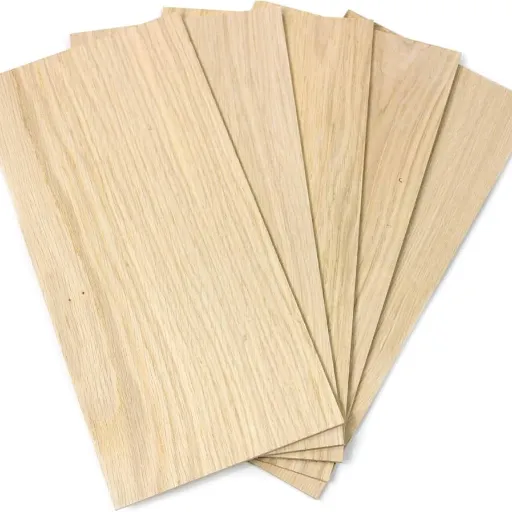
Veneer thickness is the size of the outermost layer of wood that is to be used in the production of furniture, cabinets, and interior decor mainly. It also depends on the quality and quantity of the veneer to a large extent. Most commonly, veneer is made through the process of log slicing, resulting in sheets of wood of different thicknesses, from the ultra-thin ones (less than 0.3mm) to the thicker ones (up to 3mm).
For instance, the utilization of thin veneers of about 0.3mm to 0.5mm is typical for the delicate design, the possibility of bending the application, or the project that needs weight reduction as in woodworking with decorative inlays or lightweight furniture. Medium thickness veneers of 0.6mm to 1.5mm are quite versatile and they do not easily break, which is why they are commonly used for producing everyday furniture and wall panelling. Nevertheless, 2mm to 3mm thick veneers are very much required for the aforementioned purpose of flooring and surfaces needing extra wear resistance.
Veneer Thickness in Woodworking is Important
Thickness of the veneer is one of the factors that determines if the final wood product will be durable or not, thus having a direct effect on its aesthetic appeal as well. Veneer that is thicker, specifically in the range of 2 mm to 3 mm, is very durable and can be sanded and refinished easily over time and thus, it is ideal for use in furniture and flooring, where longevity is a major concern. Thinner veneer, which is around 0.6 mm, is very light, low-cost, and can be used only for decorative purposes or intricate designs.
As per the latest market survey, the trend in the global market indicates a growing demand for engineered wood products, with manufacturers’ main strategy being optimizing veneer thickness for cost-effectiveness and sustainability. By following the precision-cut technology, it is possible to have less waste of material and uniform quality, thus giving the woodworkers more flexibility. For example, thinner veneers are now more often than before used in the making of veneered panels or cabinetry to provide both functionality and economic benefits, meanwhile thicker veneers are selected for solid furniture that needs to take a lot of abuse.
Veneer Thickness Measurements that are Standard
Veneer thickness is not the same for every application and the standard measurements mostly range from 0.5mm to 3mm with exceptions of other cases. For the most part, thin veneers of 0.5mm to 1mm thick are used as raw materials for making different kinds of decorations, such as wall panels or fine inlays. These types of veneers are light and can bend easily, so they can be used for curved surfaces or they can be incorporated where precise detailing is required.
Meanwhile, so-called medium-thick veneers measuring around 1mm to 2mm, are the preferred choice in furniture making where both the durability of the material and its-good-looking nature are of equal interest. For example, in high-class furniture and cabinetry, these veneers are just the right ones combining aesthetics and functionality. The use of thicker veneers, i.e. more than 2mm, is often unavoidable in the case of floors or tops of tables that get heavy everyday usage, as they provide not only great durability but also the possibility of sanding multiple times for maintenance and refinishing.
Types of Wood Veneer
Real Wood Veneer vs. Thin Veneer
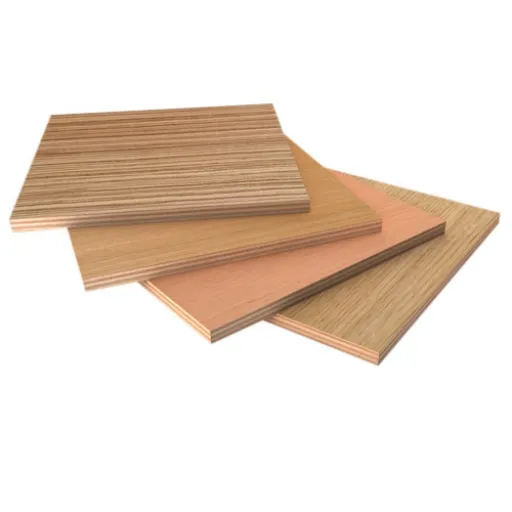
Real wood veneer and thin veneer have their own functionalities and at the same time, they come with some distinct advantages that match different applications. The process of making real wood veneers includes slicing or peeling a log and then turning it into sheets with a commonly 1mm-2mm thickness. It is responsible for the very first feeling of the wood, its warmth, and the patterns of wood grains making it highly suitable for top-notch furniture, cabinetry, and decorative paneling. It not only gives a premium look but also the thickness of the material allows some sanding and refinishing over the years.
Thinner veneers less than one mm in thickness are the other hand and are usually attached to a substrate made of MDF or plywood. This kind of veneer is the lightest, the cheapest and the most widely used in the production of mass furniture and paneling. Even though it possesses the same appearance as the real wood veneer, its thinner composition limits its ability to be sanded or repaired, thus making it less durable in the long run. A recent study of the market has shown that the thin veneer is particularly popular with the industries that prioritize scalable production and affordability, accounting for almost 60% of the wooden veneer applications in commercial furniture.
Hardwood Veneer Options: Walnut and Maple
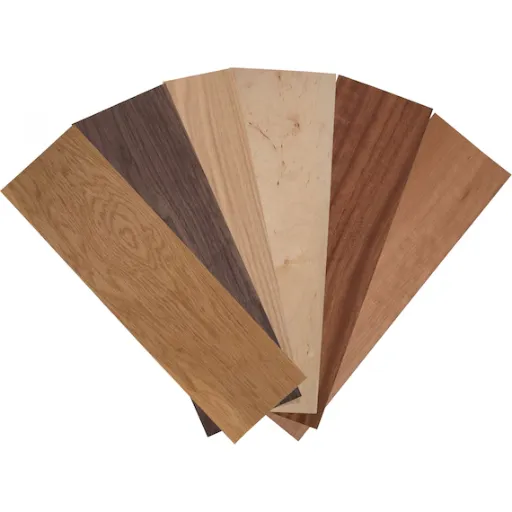
Walnut veneer is its vibrant, warm tones, and sophisticated texture that are the main points of its attraction. It typically varies in color from chocolate brown to lighter tan shades which gives it the opportunity to be used for different applications. Walnut veneer is luxurious and elegant furnishing, panels, and cabinetry with the appearance of the industry-grade and above. Recent market data indicates that walnut veneer sheets are usually priced from $1.50 to $2.50 per square foot depending on the cutting and grading. Besides, walnut veneer is moderate hard and gets a very nice aged look often with a deeper patina developed over time.
Maple Veneer
The maple veneer which is characterized by its light color and smooth texture is the one that gives a clean and modern appeal that matches all kinds of interior designs. The colors vary from creamy white to pale gold and it is often the most chosen for the projects where the bright and open space look is required. The maple veneer is a favorite of woodworkers who make cabinetry, doors, and flooring due to its great resistance to wear and hardness. The price range of maple veneer sheets is between $1.00 to $2.00 per square foot, with the figured or quilted patterns costing the highest price. Also, maple veneer is offered in eco-friendly versions which makes it a sustainable option.
Factors Influencing Veneer Thickness Selection
Considerations When Choosing Veneer Thickness
Application and Purpose
Veneers with thickness of 2mm to 6mm are perfect for structural uses or the manufacture of furniture to withstand continuous use. Examples of such furniture are tabletops and cabinets. On the other hand, veneers with thickness of 0.5mm to 1.5mm are mainly used for decorative purposes and as they are very flexible they are the preferred choice for curved surfaces.
Durability and Longevity
The thickness of the veneer layer directly impacts its resistance to damage. The thicker the veneer layer, the more it will be able to withstand high impact areas or commercial use without succumbing to the damage. For instance, a 3mm veneer can be expected to last much longer in such environments as compared to a 0.5mm veneer.
Sanding and Refinishing
If a project is likely to undergo several refinishing, a thicker veneer is recommended. Thinner veneers suffer more from wear-through during sanding and if there is little margin for error. For example, A 2mm veneer can usually endure several refinishing cycles while a 0.5mm veneer may only tolerate one.
Budget Constraints
The price of the thicker veneers is always higher than the thin ones because of the extra materials and labor needed for the production process. For projects that are large-scale or are highly sensitive to costs, the use of thinner veneers will not only cut down on costs but also the desired aesthetic will still be achieved.
Impact of Project Type on Thickness Choice
The type of project is a major selector of the ideal veneer thickness, as each application has its own specific structural and aesthetic demands. For furniture making, thinner veneers, about 0.5 mm to 1 mm thick, are frequently utilized because they can be applied to complex 3D forms and are not heavy. In contrast, architectural projects such as wall paneling or flooring often require thicker veneers (2-4mm) because of their high strength and durability characteristics.
Insights from the industry suggest that thicker veneers are the preferred choice in commercial areas of high footfall. The 2023 material trends report has the figure of 54% of architects who go for 3 mm or thicker veneers when the design is done for retail or hospitality spaces, quoting the demand for being resistant and having a nice appearance as the reasons.
Practical Tips for Using Wood Veneer
Preparing Veneer Sheets for Use
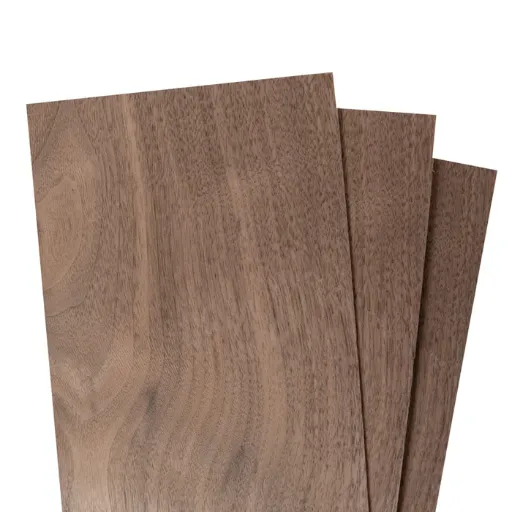
The effective application of veneer sheets strongly depends on the proper treatment of the sheets beforehand. Be sure to look over the sheets beforehand and discard or cut any parts that do not fit the final project size due to cracks, and roughness, or polishing. Light sanding of the veneer can be done with very fine sandpaper; this will eliminate roughness, and at the same time, the surface will be ready for the glue to stick. The surface of the substrate should be cleaned well and dried and no dust or grease should be there before applying as it might cause adhesion problem.
Recent data on Search trends shows that the interest in veneer preparation has significantly increased, as evidenced by a 27% rise in the number of searches for “how to prepare veneer sheets” in 2023 when compared to 2022. Also, it is suggested by the experts that veneer sheets should be in the place where they are going to be used for a minimum of 24 hours thus humidity and temperature changes would not affect them which in turn would not lead to warping or bubbling of the application area. Using a good adhesive like contact cement or wood glue along with even pressure application during bonding are the major factors determining your success in getting a smooth and professional finish.**
Cutting and Sanding Techniques for Veneer
1. Cutting Veneer
The first cutting step is always ensuring the use of sharp tools as this will not only prevent but also greatly reduce the tearing or chipping of the veneer. it is best to use a fine-tooth saw or a razor-sharp craft knife for making clean cuts. If the utility knife is being used, then making multiple light passes is the best option rather than attempting a single deep cut, as this way you also reduce the risk of splintering. Using a straightedge as a guide guarantees accurate lines. For bigger sheets, a veneer saw is recommended as it can provide smooth edges and at the same time, minimal effort is needed. When cutting complicated designs, one can think of using laser-cutting tools for their unmatched accuracy—this is a method that is widely accepted in professional woodworking due to precision of up to 0.005 inches.
2. Sanding Veneer
The sanding process requires utmost care as otherwise the thin layer of veneer might be damaged. For starters, use fine-grit sandpaper, like 320-grit and sand always with the grain of the wood so that scratches are avoided. For fragile veneers, 400-grit sandpaper provides a smooth finish without excessive thinning of the surface. It is wise to use a sanding block for consistent pressure which lowers the chance of sanding through the veneer. When dealing with edges, use soft strokes and lighter pressure so as not to lose the veneer’s strength. If the veneer is very delicate or of a special kind, then a random orbital sander with a low-speed setting will be the best choice as it will over-sanding very rare.
Veneer Application: Tools and Techniques
Veneer application is a delicate process that needs the right equipment and utmost accuracy to get the desired professional look. First of all, veneer sheets, a utility knife, and veneer glue (contact cement or wood glue), a roller, a veneer scraper will be your supplies. It is very important to make the substrate clean, dry, and free of any particles before the veneer application. Contact cement is one of the most popular types of adhesives due to its strong bonding properties and ease, while wood glue would be the best choice for projects where a longer working time is required.
To put down the veneer, first, cut the veneer sheet larger than the surface of the substrate. Use a utility knife for straight and clean cuts. Apply a layer of adhesive that is thin and even to both the veneer and the substrate simultaneously according to the manufacturer’s directions regarding the drying period. Once the glue is tacky, carefully lay the veneer on top of the substrate. Start from one side and apply the roller to press it down and at the same time.
Conclusion and Resources
Final Thoughts on Choosing the Right Veneer Thickness
Choosing the right veneer thickness is very vital as it plays a major role in making a perfect balance between aesthetics, functionality, and durability. Veneer thickness commonly varies from 0.5mm to 3mm, among which thinner veneers (about 0.5mm–1mm) are better suited for detailed work and lower-priced products, whereas thicker veneers (nearer 2mm–3mm) are liked for higher resistance and better options for the surface.
Thicker veneers are still acknowledged as offering the longest lifetime, yet the latest views state that they may possibly lead to higher costs and less application freedom. But on the other hand, thinner veneers support more complex forms and a very invisible join but might be difficult to handle as they are more prone to damage during the installation process.
According to a survey conducted by woodworking industry specialists, the application of veneers with thickness in the range of 1.5mm to 2mm would yield the best results for most furniture and the like in terms of beauty and durability. The choice of the thickest veneers is common for surfaces that are constantly in use since they last longer even though they cost more.
Reference Sources
-
- Key Findings: The study revealed that veneer thickness significantly affects the degree of conversion of resin-matrix cements. Ultra-thin veneers (around 0.1 mm) showed reduced conversion rates compared to thicker veneers (up to 1.5 mm).
- Methodology: An integrative review of multiple studies assessing the impact of zirconia veneer thickness on resin cement performance.
-
- Key Findings: Veneer thickness influenced the physical and mechanical properties of laminated veneer lumber (LVL) panels. Thicker veneers improved structural integrity but affected flexibility.
- Methodology: Experimental analysis of LVL panels made from Paricá trees, with varying veneer thicknesses, to evaluate their mechanical and physical properties.
-
Thickness and Substrate Effect on the Mechanical Behaviour of Direct Occlusal Veneers
- Key Findings: The study evaluated the fracture resistance and stress distribution of occlusal veneers. It found that minimal thickness veneers made of flowable resin composites exhibited lower fracture resistance compared to conventional composites.
- Methodology: Mechanical testing of occlusal veneers with varying thicknesses and substrates to assess fracture resistance and stress behavior.
Frequently Asked Questions (FAQs)
What are the standard thicknesses and the thinnest types of veneers?
The thickness of standard veneers is usually from approximately 0.5mm (or about 0.020 inch) to 3mm for the thicker face veneers; among the thin options, one prevalent is 0.024 inch which is among the thinnest commercial slices. Thick wood or inch thick veneers are not so common for decorative faces and are more like engineered products or solid wood slicing after a re-saw. When you are selecting veneer specifications, the application should be taken into account: super-thin slices are the best for bending and MDF or fiberboard covering, while thicker veneers produce a more dimensional, solid wood appearance and are able to take more sanding and refinishing.
In what way does the thickness of the veneer affect its durability and lasting value?
The thickness has a direct impact on the durability and the lasting value: thicker wood veneer panels or solid hardwood faces can withstand a great deal of wear and tear and can be refinished, while thin slices are less forgiving. For cabinets and high-traffic architectural applications, consider veneer specifications that favor thicker faces or phenolic-backed veneers for additional dimensional stability. Less expensive laminate alternatives imitate the look and feel of natural wood veneer but do not possess the same restoration potential and the lasting value of solid wood veneer products.
Is it possible for them to resemble solid wood and lumber?
Veneer sheets offer a lot of flexibility: they provide the real look and feel of natural wood veneer while being cheaper than solid wood or solid hardwood panels. Thin slices glued to plywood or MDF can replicate wide-board appearances without the expense or instability of wide solid lumber. Moreover, veneer products allow designers to combine quartersawn and plain sawn grain for architectural effects that would be hard to achieve or would result in a lot of wastage with solid hardwood.
In which cases should you prefer phenolic-backed or flexible wood veneers?
Flexible wood veneers and phenolic-backed veneers are the best for architectural projects with curved surfaces or high-moisture environments. The phenolic backing creates the stability and moisture resistance required for such veneers to be used on high-use surfaces or in places with varying humidity. Flexible wood veneer sheets are the best choice when it comes to wrapping columns or curved furniture without splitting the thin slices.