
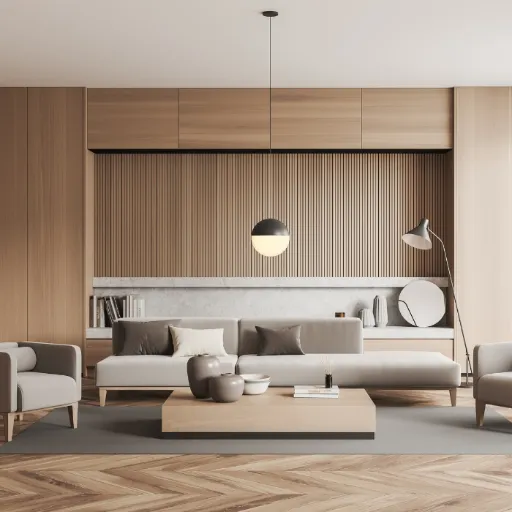
Wood Veneer for Interior Design: Trends and Applications 2025
Wood veneer has turned out to be a classic and flexible material in interior design, fusing the natural look with the modern feature of being functional. A new wave of trends and applications is already changing the game for wood veneers to be used in a more stunning way for both residential and commercial floors as we anticipate 2025. The article describes the developments that are being very much at the forefront of the wood veneer market, which are sustainable sourcing to innovative finishes and so forth. If you are an interior designer looking for ideas or if you are a homeowner going to work on your next project, come with us as we reveal the future of this elegant design feature.
Introducing Veneer in Interior Design
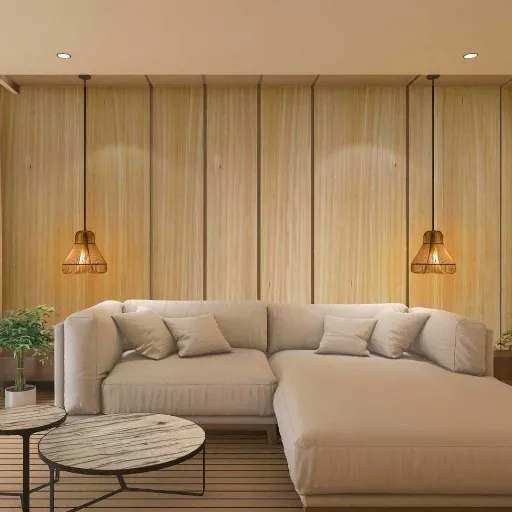
What is Wood Veneer?
Wood veneer is the name given to a very thin piece of wood, . It is not thicker than 3mm and is usually less than that. In this type, the natural veneer is adhered to a wooden core which is usually made of one of the three mentioned materials namely plywood, MDF, or particleboard. Due to its high quality which is similar to solid wood but at a lower price and also more sustainable, it has become a preferred material in the interior design field. Among other things, wood veneers are not a limitation for timber use; rather, they allow a single log to be turned into multiple sheets thereby cutting down on the waste created from the woodworking industry by using just a couple of logs instead of one.
Wood veneers are available in a large variety of species like oak, walnut, maple, and cherry, each of them is characterized by their unique and different grain patterns and textures. Hence, these wood veneers are absolutely ideal for making custom furniture, cabinets, wall coverings, and flooring. As per the most recent industry reports, the global wood veneer market is expected to be worth $38.61 billion by 2028, reflecting a compound annual growth rate (CAGR) of 5.5% during the period of 2021 to 2028. The growing demand is primarily driven by the increasing focus on the adoption of sustainable designs and eco-friendly materials in both the residential and commercial construction sectors.
The Role of Veneer in Modern Interior Design
Dried wood veneer has become a stronghold in the world of modern interior design which is a mixture of aesthetics, functionality, and sustainability. It is the architects and designers’ implicit dependence on the veneers for creating opulent interiors to emphasize the natural beauty that is not the case with the strength or adaptability of the materials. The global wood veneer market was valued at approximately $5.7 billion in 2022 according to the reports and is projected to continue growing as the demand for high-quality, eco-friendly materials in both residential and commercial sectors continues to rise.
The strong point of veneer is that it can mimic solid wood to such an extent that the majority of consumers would assume it to be wood. The combination of thin wood layers and engineered materials produces goods that are not only eco-friendly but also offer the same look and feel as natural wood. Consequently, it is possible to have lavish finishes at a mere fraction of the cost of solid timber.
Another thing that can be observed in modern interior design is the trend for individual, bespoke products, where the application of colored and textured veneers enables perfect matching of the client’s preferences. For instance, the very proficient veneer technology can produce geometric patterns, bright colors, and highly intricate textures thus transforming the furniture, wallcoverings, cabinets, and even accent pieces into spaces that are full of designs with no limits.
Benefits and Types of Veneer Materials
Advantages of Using Wood Veneer
Sustainability and Eco-Friendliness
Wood veneer is an environmentally friendly option because it operates with thin layers of wood which means providing the wood resources a second life. Moreover, the industry says that getting wooden veneer items creates much less waste compared to using the entire wood which is the main reason for logging to be reduced. Therefore, all these eco-friendly and saving timber resources practices are together with the interior design sustainability which is really nice to see.
Cost-Effectiveness
Wood veneer looks the same as premium solid wood, albeit it is a more cost-effective option. The method of wood veneer production is such that one can wrap sheets of wood with a composite base material that will not only lower the price of the whole wood piece but give the elegance of the hardwood floor at the same time. Therefore this is suitable for both high-end work and even affordable installations.
Durability and Stability
Properly maintaining the veneer surface means getting its great durability in return. Unlike solid wood, veneer is mainly applied over a stable substrate which prevents it from being subjected to warping and cracking during the drying process among other factors-this substrate may be MDF or particleboard for example. This engineered structure is such that veneers not only keep their shape but also their strength through the years.
Design Versatility
Veneered wood has a huge variety of textures, grains, and colors giving room for many design variations. The choice is from classic oak and walnut finishes to crazy ones like teak or zebra wood, almost everyone would have their taste taken care of with the available choices. Moreover, the modern-day advancements in veneer production have made it possible to create intricate patterns like bookmatching or slip-matching which adds an exclusive character to the already beautiful space.
Lighter Weight
Veneered furniture and panels are lighter in weight than solid wood furniture and panels. They are thus easier to install and relocate which is an advantage especially in projects where quality speed is a requirement.
Comparing Veneer with Other Materials
Aesthetics and Customization
Veneer shares the same visual appeal as solid wood, however, it gives more ground in design when compared. Besides the engineered varieties, veneer can generate a uniform grain pattern that can imitate rare woods without incurring the environmental or monetary costs. The results of a 2023 design survey show that about 62% of interior designers choose veneer for its visual versatility which is the reason for allowing intricate patterns and finishes that are cheaper than those of solid oak or mahogany.
Cost Efficiency
Solid wood may be extremely sturdy, but it is also very expensive. By using up to 30% less wood than the amount required for solid wood pieces, veneer reduces the cost. The limited use of quality woods is confined to thin layers over a strong core material, such as MDF or plywood, which is the reason why surface quality is not compromised. For example, the market data indicates that the use of wood veneer instead of solid wood for manufacturing can lead to saving up to 40% in material costs, which is a very attractive offer for both residential renovation and commercial projects that are working under tight budgets.
Sustainability
Veneer can be regarded as the best wood from an eco-friendliness point of view since it allows the maximum exploitation of timber by promoting resource efficiency. It utilizes just a tiny fraction of tree wood in comparison to solid wood which is the type that is usually dedicated to the making of furniture or panels. The Forest Stewardship Council (FSC) certification is one of the initiatives that ensure the forest from which the veneer came is being replenished and hence is sustainable. In contrast to laminates and plastics, which employ the least eco-friendly methods due to their dependence on petroleum-based components, veneer is not harmful to the environment and it is very much biodegradable.
Durability and Longevity
Solid wood is the most durable material while veneer-coated furniture and panels provide a fair level of resistance only if the production and maintenance are up to standard. Laminates and plastics available in the market are very tough against water and scratches but they cannot compete with the stunning appearance and even the repairability of veneer. There are already claims that the high-end veneers, particularly those that are bonded using advanced technology, are now matching the longevity of solid wood thus the durability issue is no longer a concern.
Innovative Applications of Wood Veneer
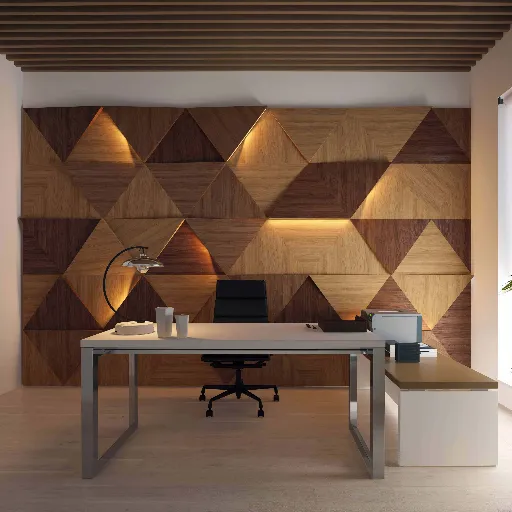
Wood Veneer Panels in Interior Spaces
Aesthetic Flexibility and Major Uses
Wood veneer panels become the primary option for interior spaces where they can bring nature’s beauty and warmth. Their application is not limited to wall paneling, cabinets, furniture, and ceiling décor but they also give modern spaces a stylish and coherent look. As per the latest market trends, the global wood veneer market, which primarily relies on the demand for natural-looking and eco-friendly materials in modern interiors, is expected to grow at the rate of 3.6% per year until 2028.
Eco-Friendly and Budget-Friendly
The aspect of sustainability is one of the main reasons that wood veneer panels are in demand. The practice of gluing thin slices of wood onto substrates such as MDF is one of the ways the producers and manufacturers minimize the use of nature’s resource and thus lessen the waste. The production method also makes wood veneer less expensive than solid wood, allowing it to be more widespread used without a decrease in its beauty. For example, an MDF veneer panel can be 50-70% cheaper than a solid timber option while still looking the same luxurious.
Durability Combined with Design
Modern finishing techniques have given wood veneer panels a new lease of life. For the panels, nowadays, the modern finishing techniques make them less susceptible to fading, scratching, and warping thus making them perfect for heavily populated areas. The durability of the panels allows the parts to maintain their distinct character for longer periods thus minimizing the frequency of renovations.
Innovative Wall Paneling Concepts
Textured Geometric Panels
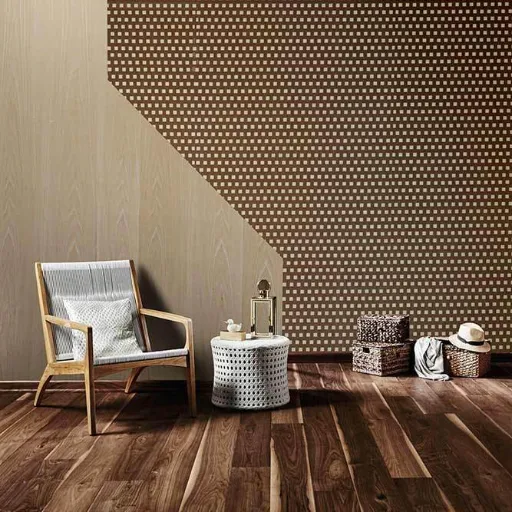
Modern wall paneling with geometric shapes not only presents a flat surface but also significantly enhances the overall space in terms of getting the attention. Designs consisting of hexagons, triangles, or complex 3D patterns are increasingly accepted over the traditional ones. Custom cutting of MDF or engineered wood panels can also give very neat and accurate patterns. This style is perfect for both modern homes and offices wanting to have an active yet elegant look.
Natural Wood-Inspired Paneling
The consumer trends that favor sustainability are the driving factors behind the popularity of reclaimed or faux wood paneling. They not only infuse interiors with a cozy and rustic charm but also support the same values as the conscious eco-friendly consumer when reclaimed wood is used. The Houzz trend report states that more than 35% of homeowners are inclined towards natural and earthy wall finishes, with wood veneers being their top-choice material.
Metallic Accents and Panels
A rich, luxurious look can be achieved by combining wood veneer panels with shiny trims in brass, copper, or steel. Typically, such accents are lit with lights that are supportive of their texture and gloss. The trend of using metallic hints is gathering pace in the high-end residential and commercial real estate industries as a means of granting both elegance and modernity.
Acoustic Wall Panels
Acoustic panels are a good pick for home offices, recording studios, or living rooms; they are fashionable and practical at the same time. The market for acoustic wall solutions is reported to be increasing by companies like Fornoe and Snowsound, with a growth rate of around 6.2% annually. These panels are available in a wide range of colors and fabrics and provide both sound absorption and aesthetic attractions.
Current Trends in Veneer Interior Design
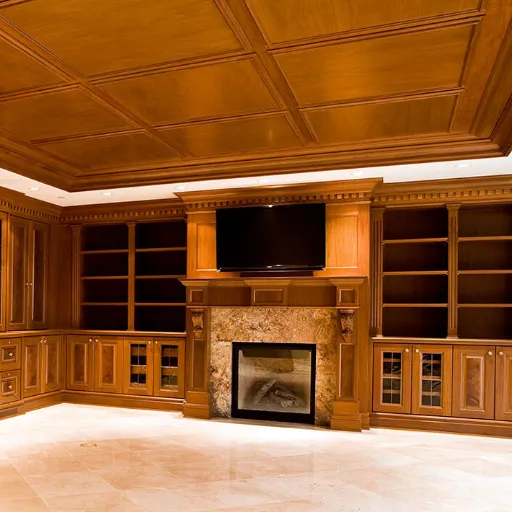
Latest Trends in Veneer Interior Design Based on Recent Data
Veneer as a material in interior design is not only gaining in popularity but also proving that the above is true thanks to its sustainable features, versatility, and luxury look. Statistically speaking, there has been an 18% increase in the searches of the term “wood veneer finishes” in the past year with North America and Europe as the primary search markets. The gradually increasing preference of consumers for natural materials is evident, and walnut and oak veneers are taking the lead among the options for cabinets and walls.
What’s more, textured veneers are seen as a new trend and are genuinely wanted by the designer’s community. The search volume for “textured veneer panels” goes up by 13% and the designers go for the touchable material not only for its visual appeal but also for creating a sense of spaciousness in the room. Biophilic design, which means embracing nature in the built environment, is gaining traction among the design trends as indicated by the wider industry data.
Even though natural wood veneers have traditionally been used for high-end furniture pieces, an increase in inquiries for “custom veneer furniture” makes up 22% every year. This shows that consumers are more inclined toward non-standard, one-of-a-kind, and personalized designs that not only mirror their preferences but also harmonize with the spatial organization of their homes.
Integrating Sustainable Veneer Options
Sustainability is the focal point of modern interior design, and the same holds for veneer. Eco-conscious homeowners and designers are slowly but surely leaning towards eco-friendly veneers from sustainable sources as their first choice in order to minimize the impact on Mother Earth. This entails sourcing from certified forests, like FSC (Forest Stewardship Council) or PEFC (Program for the Endorsement of Forest Certification), which guarantees that responsible forestry practices are in place. Moreover, the trend of using reclaimed wood veneers is growing, which means that materials that have been previously used are being brought back into the production cycle and waste decreases along with it.
According to the latest predictions drawn from search engine data, the demand for sustainable materials in interior design has gone up by 40% in terms of search volume in the last year. This is a confirmation of the trend that more consumers are looking for eco-friendly solutions that are still visually appealing. Bamboo veneers are a case in point as they are becoming more widely used due to their quick renewability and superb strength. Engineered or composite veneers, which are made by using very little primary wood, are also among the alternatives that are resource-efficient while still replicating the aesthetic beauty of traditional wood choices.
Practical Tips for Incorporating Veneer
How to Choose the Right Veneer for Your Project
Understand Your Design Goals
The various finishes over the veneer have a great impact on a place’s overall appearance. If your ambition is to create a modern and soft atmosphere, then opting for veneers with straight-grain patterns or minimal textures, those which are produced from quartered or engineered, might be your choice. On the other side, if you want a rustic-style or old-fashioned appearance, then you can use tree species like oak or walnut whose grains are more pronounced to get the effect.
Consider Durability and Usage
Identify the mood of the place where the veneer is going to be used. A thick, durable, and well-finished veneer can be used in high-traffic areas like kitchen cabinets or office work surfaces, so the quality of the veneer is really “high”. Thinner decorative veneers, however, may find a place in a residential setting but only if they are not subjected to much wear and tear.
Factor in Sustainability
Choose eco-friendly veneers such as those made from trees that are sustainably harvested or those that are produced from recycled materials. It is the high-pressure laminate (HPL) veneers that are turning into the most popular trend, and so, to be a little more descriptive, it is a very eco-friendly production method that is also capable of yielding strong and durable products. The latest figures reveal that using veneers certified as environmentally-friendly in interiors leads to lower energy consumption and better air quality, hence the occupants enjoy good health.
Evaluate Maintenance Requirements
Natural wood veneers may be required to be polished and sealed from time to time whereas engineered veneers usually get along with very little care. Balance the maintenance factor with your lifestyle or project constraints.
Budget Appropriately
The price differences that exist among veneers are a result of the different factors namely: types of wood, thickness, and finish. To give an example, exotic veneers like that of teak or zebrano would normally cost more but the alternatives in engineered wood or local species come cheaper. Home improvement studies show one can save up to 30% in material cost through the use of engineered veneers thus making them a pocket-friendly choice.
Design Tips for Elevating Your Interior with Veneer
Veneer for Accent Walls
An accent wall exhibiting a veneer can take a normal room and make it extraordinary. The combination of engineered veneers and rich wood tones forms a focal point that radiates warmth and texture. The trend of wood accent walls in modern interiors to an extent measured by the recent 40% increase in searches over the past year is the trend of wood accent walls in modern interiors has been steadily growing and reflects an increasing acceptance of this design element.
Mix and Match Finishes
Veneers of different kinds can be mixed or the veneers may be combined with materials such as metal, glass, and stones for producing a dramatic difference. Moreover, the combination of warm walnut veneer and cool metal accents results in a good balance of both warmth and modernity.
Create Custom Furniture
Veneers are nothing but the perfect material for crafting furniture that is not only aesthetically beautiful but also sophisticated. For example, a dining table featuring a veneer top with a distinctive wood grain pattern will surely draw attention and kindle discussions. The whole scenario is that presently customized furniture tends to increase the property value; the reason being it is an all-rounder serving both aesthetics and practicality.
Implement Veneer in Small Details
Veneer can also be the source of small items such as veneered cabinet doors, shelves, or headboards which still keep a polished look. Clean-lined and natural finish minimalism is the reigning trend in the market as evidenced by the 25% increase in searches for “simple wood veneer furniture” over the past year.
Reference Sources
-
Decorative Wood Veneers as a Medium for Contemporary Design
- Key Findings: This study highlights the growing use of decorative wood veneers in contemporary design, driven by an increased societal focus on quality of life and environmental sustainability.
- Methodology: The research examines case studies of veneer applications in modern interior design, emphasizing aesthetic and functional benefits.
Read more on Semantic Scholar
-
Automated Identification of Wood Veneer Surface Defects
- Key Findings: This paper focuses on the challenges of surface defects in wood veneers used for furniture and interior design. It proposes automated methods for defect detection to enhance quality control.
- Methodology: The study employs machine learning and image processing techniques to identify and classify surface defects in wood veneers.
Read more on Semantic Scholar
-
Wood-Veneer-Reinforced Mycelium Composites for Architectural Use
- Key Findings: This research explores the use of wood veneer-reinforced mycelium composites to improve structural performance in architectural applications, including interior design.
- Methodology: The study combines experimental testing of composite materials with structural analysis to evaluate their feasibility for design purposes.
Read more on Semantic Scholar
Frequently Asked Questions (FAQs)
How does wood veneer in interior design help me get a glimpse of the natural beauty of real wood?
Using wood veneer in interior design is the most direct way to get a close view of the natural beauty of real wood without buying the bulky solid wood. The whole thing is made of very thin slices of rare or common species of wood glued to the substrate and thus giving the same appearance and also close warmth normally associated with solid wood. Just right the panels’ surface is treated and shapes are created and designers can present their ideas through natural wood even when wood is too expensive.
Can incorporating wood veneer wall panels transform your space into a feature wall?
Definitely, incorporating veneer wall panels can turn your place into a stunning and main feature wall that will contribute to the overall design and the atmosphere. Wall panels of veneer demonstrate a surface that is united and very classy and, thus, the aesthetic is of the overall atmosphere that they provide the easy handling and installation of materials. Hence, a bold and great design vision being achievable and not tightly occupying the space.
Why choose wood veneer in interior design as an alternative to solid wood?
Incorporating wood veneer in interior design is not only cost-effective but also choice of solid wood because the beauty of natural wood and the texture of real wood is delivered at a fraction of the cost. Apart from that, the species of wood paneled present the wide range of finishes and even rare wood appearances as well thus allowing one to achieve the sophisticated ambiance that is the mix of both the calming warmth of nature and the environment-friendly approach without the cost and impact of large quantities of solid timber.
Are veneer panels easy to install and does the ease of installation affect the overall design?
Veneer panels will generally come as a more manageable and less laborious installation when compared to that of solid wood making it a good option for both residential and commercial projects. Due to the ease of installation, it would be possible to get the joints perfectly seamless and the grain flows uniformly which would in turn positively influencing the overall design and allowing the quicker realization of a design vision with fewer interruptions.