

Wood Veneer Waste Reduction: Sustainable Manufacturing Practices
The issue of waste reduction in manufacturing has shifted from being an ethical consideration to a business necessity. Sustainability has been gaining ground and now the wood veneer industry is turning to novel ideas for tackling waste and improving efficiency. This paper discusses the significance of eco-friendly manufacturing methods in the wood veneer waste problem and also suggests some approaches that provide not only the saving of natural resources but also the increase in the profit. The journey through pioneering technologies and better production techniques will lead to the educational sharing of practical insights that keep the companies on the competitive edge whilst doing environment-friendly operations. Keep reading to find out how the implement of eco-friendly practices can convert difficulties into chances in the fight for a cleaner planet.
Introduction to Veneer Waste
The Importance of Addressing Veneer Waste
In the woodworking and furniture sector, one of the most significant issues is the disposal of wood veneers, which ultimately drains up the resources, pollutes the environment, and lowers the overall efficiency of production. The percentage of wood losses that industries report during the whole process of the veneer production is about 25 to 30, which adds a huge quantity to the already massive wood waste. Such a scenario not only reduces profits but also indirectly affects the forests through logging and habitat loss for species.
Veneer waste is a major concern regarding the environmental footprint. Proper waste treatment has been singled out as a primary cause of the release of greenhouse gases. For example, in 2022, the carbon footprint of the wood and related products sector was approximately 8% of global industrial carbon emissions, which highlights the need for better resource management. However, the alternative of using cutting-edge recycling methods, such as precision cutting technologies and recycling offcuts, bears a lot of waste reduction potential and keeps natural resources untouched.
Current trends in sustainability practices
The global scenario on sustainability has also been a contributing factor to the wood veneer production being one of the most eco-friendly processes. In addition to that, companies are now required to not just limit their carbon footprints but also to cut down on waste and enhance energy efficiency. The report points out that the last three years have seen an impressive rise in the use of solar, wind, or biomass energy to cover the power needs of the manufacturing and taking of the sector, with a striking 35% of firms already doing so.
One new trend is that recycling has become even more extensively used. The tree cutting for veneer provision has been lessened to an extent as the manufacturers now use wood waste and by-products for their production purposes. The advancements made in recycling technology, for instance, have made it possible for some mills to recover up to 50% of the wood waste that would otherwise have been disposed of gradually over time.
Lastly, the digital technologies such as AI and IoT are transforming the way the manufacturers monitor and improve their production efficiency. Smart systems can do the real-time data processing with a saving of up to 20% of energy consumption, plus they can detect the issues that would have been magnified previously. The same goes for blockchain technology that is being used to improve the clarity of the supply chain, thereby subjecting the raw materials to very strict sustainable sourcing standards.
Challenges in Veneer Waste Management
Industry-Specific Waste Issues
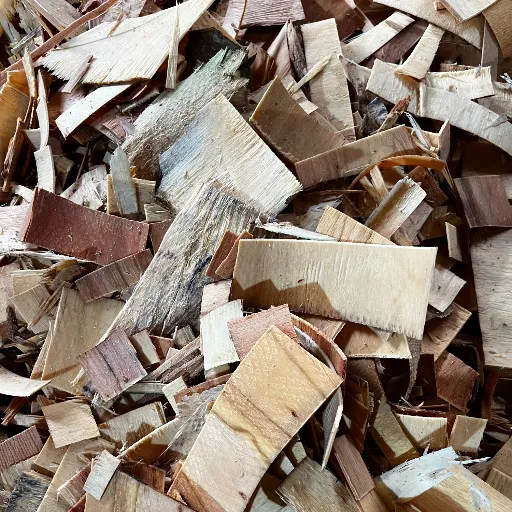
Veneer production is a sector that is always tested to the limit of their waste management skills since waste materials of a huge amount have to be dealt with that are totally unavoidable during the manufacture. That is one of the reasons why, among others, the peeling, cutting, and sanding processes take a big percentage of the waste, and studies have even indicated that the percentage of raw materials wasted can be up to 30-40%. The waste consists of wood that has been processed, bark, and sometimes even sawdust. Only a little of this waste is being used for other applications, for example: it is used for energy production and making particle boards, but still a large part goes to the landfills where it is responsible for environmental degradation.
The fact that most of the veneers are laminated with glue or resins has turned the adhesive waste management into a matter of great concern. A major concern coming from the traditional adhesives is that they contain either formaldehyde or other volatile organic compounds (VOCs), which are hazardous and not environmentally friendly. Aiming for the transition to the water-based or eco-friendly adhesives is one of the goals, yet the changes are slow due to the price being higher than that of conventional adhesives, as well as the performance not being consistent.
Inefficient Processes Generate Waste
The inefficient industrial processes are among the major contributors to the global waste problem, and coexisting with this issue are the environmental problems they cause. A recent publication from the United Nations Environment Programme (UNEP) reports that nearly 50% of the raw materials used in industrial production are waste due to outdated methods and technology. Such poor performance not only results in increased prices of the materials for the industries but also brings about quicker exhaustion of the earth’s resources.
In the case of the wood veneer industry for example, poor resource management would be one of the reasons waste in large volumes is produced, especially in form of wood offcuts and residues. According to a study by the International Institute for Environment and Development, poor wood processing can account for a 30%-40% material loss, where a big part of this loss can be avoided through modernizing and better scheduling of the processes. Furthermore, poor management of these by-products may lead not only to increased landfill filling and higher emissions of methane (which is a greenhouse gas that is far more potent than CO2) but also to negative impacts on the environment.
Innovative Solutions for Veneer Waste Reduction
Utilization of Veneer Waste Chippers
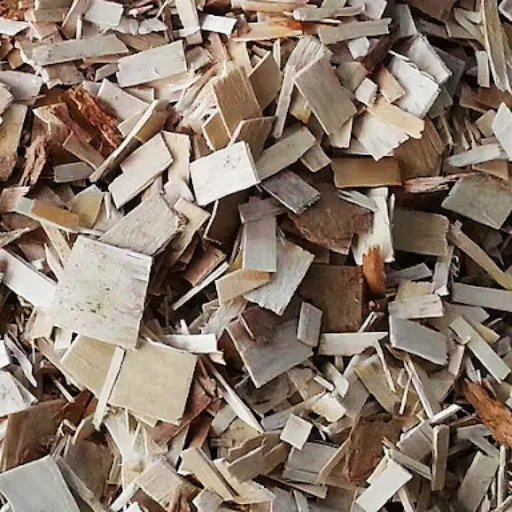
Veneer waste chippers are highly productive machines which can process and convert the entire waste of veneer production into small, reusable wood particles with total ease. Their operation may seem like a waste management technique but actually, it is a resource-saving method as well. Industries that are able to convert their bark and wood trimming waste into chips can reprocess the waste material in various ways, e.g., through energy generation via biomass, particleboard manufacturing, or even as garden mulch.
According to studies, the modern veneer waste chippers are able to process as much as 20 tons of waste every hour, depending on the model and the wood type. This very high efficiency will eventually lead to the waste being cut down on as per the disposal that will be required and, hence, the environment gets the benefit of this indirect advantage in measures. Besides that, the introduction of advanced technology such as precise blade settings and automatic sorting systems not only cools down the productivity level but also maintains the uniformity in particle size which is very crucial for the next applications.
Recycling Processes for Wood Waste
The recycling of wood waste during the wood processing stage is very crucial to the eco-friendly movement and to the environmental impact mitigation. The wood waste can come from various places involving the construction industry, furniture making, or even the soft materials like pallets that are used for packing. The result of the recycling process is not only the lesser amount of waste going to landfills but also the emergence of various end products that are of higher value.
Among different methods, the top one is to shred or chip the wood into smaller pieces so that the wood can go into various applications, e.g. as mulch, animal bedding, or as a biofuel. The hardwood chippers are among the most established wood processing machines that assure one of the quickest wood processing with the least human effort. They bring the technological advancement of wood chipping to a new level, thus enabling the industry to enjoy the benefits of more uniform particle size and increased yield altogether. For instance, it is expected that the installation of a modern industrial chipper will boost the recycling output by as much as 30% compared to the traditional ones which in turn will give rise to considerable cost savings over time.
Also, the wood waste that has gone through processing can turn into a renewable raw material when it comes to the production of synthetic wood products such as particle board and medium-density fibreboard (MDF). The wood acquired in the production of MDF from recycled materials can indeed more than halve the virgin wood consumption. Not only that, but the recycling of wood sources for this eco-friendly solution is also a win-win situation for the manufacturer.
Environmental Impacts of Veneer Waste
Carbon Footprint of Veneer Production
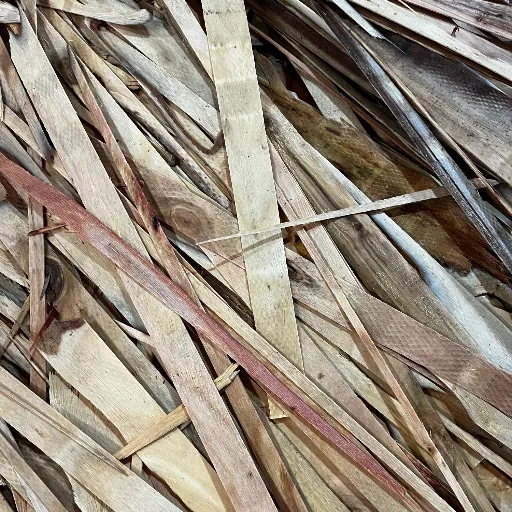
The production of veneers is an energy-intensive process that indeed requires logging, transportation, and manufacturing activities all of which contribute to its carbon footprint. Approximately 30 to 50 percent of the total emissions in the production of veneers comes from logging itself. This is due to the heavy machinery and vehicles involved in the logging process which consumes a lot of diesel fuel. In addition, the drying process takes up most of the energy in the production chain and in most cases, it is fossil fuel dependent; thus, it might be responsible for 60 percent of the overall energy consumed during the production process.
In the year 2023, the average CO2 emission from veneer production was around 0.5 to 0.8 kilograms per kilogram of end product according to a study. This figure, however, is not fixed and is likely to vary depending on factors such as the type of wood used, the production facility’s energy source, and the overall operations’ efficiency, among others. In places where renewable energy is used, the impact of emissions could be very low, while traditional energy sources will be contributing to more emissions.
Advantages of Wood Waste Recycling
Wood waste is a recycled material that has many environmental, economic, and operational advantages among them the most important being less waste going to landfills. As per the Environmental Protection Agency (EPA), wood waste accounts for around 10% to 15% of the total municipal solid waste in many countries and by recycling this waste, industries can greatly reduce the amount of waste sent to landfills and in turn, lower the amount of methane gas produced by decaying wood.
Also, there is a reduction in the over-exploitation of the earth’s resources through recycling wood waste. The reclamation of wood products cuts down the demand for tree logging thus preventing deforestation and extinction of plant and animal species. Reclaimed wood can be processed into production of various new products like furniture, engineered wood panels, and even mulch and compost; thus making the market more circular.
Another major advantage of the wood waste recycling process is the biomass fuel production hence, the energy consumption factor. The energy produced from wood waste is considered to be a renewable energy source and it can be used for heating and power generation with a lower carbon footprint compared to fossil fuel utilization. The International Energy Agency (IEA) has indicated in its report that biomass accounts for approximately 5% of the global energy consumption with the share of biomass in energy continuing to rise progressively.
Case Studies in Sustainable Veneer Practices
Successful Implementation of Chipper Solutions
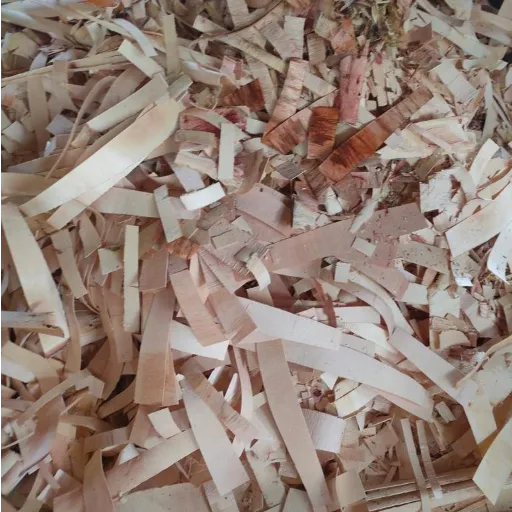
The integration of chipper solutions into wood waste management has been shown as the best way to obtain and maintain sustainability and operational efficiency in various industries. The companies that have been investing in the latest wood chippers are now able to handle the waste by turning the remaining wood into easy-to-use, and market-accepted by-products, such as wood chips, mulch, and biofuels.
A case study of a notable wood supplier performed in 2022 is one of the examples. It revealed that the manufacturer was able to reduce the amount of wood waste by 60% during the wood processing with the heavy-duty chippers in the production line. Besides, the activities yielded 80% of the excess wood being converted into chips of commercial quality thereby creating a new revenue stream which was 15% of the company’s annual profits.
A report from 2023 suggested that the cities employing chipper solutions for disposal of green wastes were capable of preventing nearly 40% of this organic waste from going to landfills. Furthermore, lesser landfilling sites not only mean lesser greenhouse gases but also cutting down non-renewable sources thus the eco-haven cities not only gain from being green but also survive monetarily through biomass energy usage.
Woodworking companies to reduce waste
Woodworking companies have made an effort to implement new techniques that not only reduce waste but also make the production process of the final product more sustainable. One of the major companies applying such techniques is Georgia-Pacific, which operates in the building materials sector and is one of its biggest players. They have a waste reduction policy in place which mainly targets the reusing of the wooden particles that result from the processing of the wood as by-products. This is not only a way of waste reduction but also allows for the production of new materials such as particleboard and engineered wood, thus, giving more value to the raw material.
Boise Cascade is another similar case that has resorted to high-tech cutting methods to ensure very minimal waste generated from the plywood making process. They use computer-operated machines that allow for very accurate cutting, so there are fewer off-cuts and less scrap. The wood that remains unused after production is then processed through biomass energy generation, thus the factory not only runs on its own energy but also supplies the grid.
Columbia Forest Products one prominent plywood manufacturer has really gone beyond the call of duty in terms of environmental responsibility by introducing PureBond technology which is formaldehyde-free in all of its product lines along with the success of this technology. It not only generates a reduction in chemical usage but also provides an assurance of eco-friendly production. The company, besides, has also set it as its responsibility to convert its waste of veneers into biomass fuel, thus, indirectly, contributing to the renewable energy movement.
Reference Sources
-
Prospective Utilization of Wood Waste from Wood-Based Industries in Ethiopia
- Key Findings: This study explores the potential uses of wood waste, including veneer waste, in energy and non-energy applications. It highlights the environmental and economic benefits of recycling wood waste in Ethiopia.
- Methodology: The research synthesizes data from existing literature and categorizes wood waste utilization into energy (e.g., bioenergy) and non-energy (e.g., composite materials) applications.
Source: Semantic Scholar
-
The Implementation of Green Manufacturing
- Key Findings: This paper discusses the role of green manufacturing in reducing waste, including veneer and sawdust waste, in the wood industry. It emphasizes sustainable practices to minimize environmental impact.
- Methodology: The study uses a literature review and case studies to analyze the adoption of green manufacturing techniques in veneer and plywood production.
Source: Semantic Scholar
-
Wood Fibers from Veneer Waste
- Key Findings: This research focuses on converting veneer waste into wood fibers for various applications. It describes the properties of fibers derived from green veneer waste and their potential uses.
- Methodology: The study involves mechanical processing of veneer waste to produce fibers, analyzing their dimensions and suitability for industrial applications.
Source: CABI Digital Library
Frequently Asked Questions (FAQs)
What is the most suitable machinery for turning veneer waste into chips?
Choosing the best equipment comes down to throughput and application: a drum chipper or an industrial wood chipper equipped with hard knives and regular changes of knives works fine for making a uniform chip output. Smaller mills can rely on a heavy-duty shredder with a conveyor plus a secondary roller screening to produce a steady chip size. Hydraulic feeds, sturdy infeed conveyors and proper knife thickness and shape not only increase extraction efficiency but also cut down on operator involvement.
Can chipped veneers be fed back into virgin wood chipping and recycling operations?
Yes. The recycling of veneers and other waste material consists of wood chipping and further processing into particleboard core or fuel. Wood recycling normally requires removal of impurities, utilization of conveyor systems to feed a drum chipper or shredder, and controlling throughput to produce chips of the same quality for composite board or animal bedding products. The right processing operations not only keep the materials valuable but also minimize the landfill disposal.
In what ways chip quality affects production of composite boards out of veneer waste?
Chip quality and composite board properties are interdependent: uniformity in chip size and strip length guarantees even resin distribution and stability in the final board. Diameter, thickness variability or contamination from laminates can lead to weakened core and thus lower board strength. Employing a drum chipper which uses strict knife geometry and has continuous infeed control will result in chip consistency that is suitable for trustworthy composite manufacturing.
What knife and blade maintenance doneness involves in throughput and efficiency?
Knife state plays a major role in the process of veneer waste inefficiently. Non-sharp knives lead to the use of more power, creation of uneven chips, and generation of more dust. The regular replacing of knives, correct setting of their position in the chippers or shredders, and planned maintenance of rollers and hydraulic feeds not only support throughput but also prolong the life of the equipment, thus contributing to the efficiency of processing as well as the consistency of the output.
Are there any applications of wood veneers waste in animal bedding and what is the processing?
Veneer waste is fit for making animal bedding after going through the necessary steps of adhesives and contaminants removal and bulk consistency size adjustment. Materials softer and more absorbent can be created by passing them through screening and dust extraction after shredding or wood chipping. Continuous conveyor systems and extraction units assist in controlling fines and ensuring that there is hygienic, stable bedding material available for livestock.