
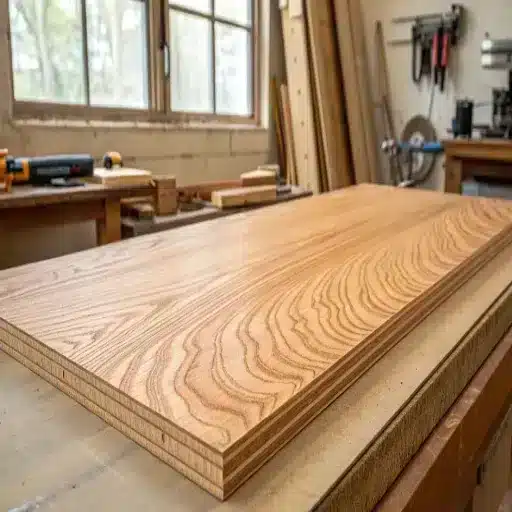
Types of Wood Veneer Panels: A Specifier’s Guide
The primary types of wooden veneer panels exist in four different classification systems. The first classification for veneer materials includes five categories, which are natural, engineered, dyed, and reclaimed materials. The second classification for backing materials consists of four different backing options, which include raw backing, paper-backed backing, phenolic-backed backing, and wood-on-wood backing. The third classification for core substrates consists of three types, which are MDF, plywood, and particleboard, along with specialty cores. The fourth classification of cut patterns includes rotary, plain sliced, quarter sliced, and rift cut patterns. The selection process requires you to determine your project requirements instead of following prestigious or expensive options.
A veneer showroom presents visitors with multiple product categories, which display dozens of different brand names. The product specifications show the following characteristics: Rotary cut and phenolic-backed, and MDF core and reconstituted material. The specification process becomes difficult for architects and builders because of their need to understand specialized vocabulary. Elena, our interior designer partner, dedicated three hours to sample assessment for a boutique hotel lobby project. She departed with an attractive collection of veneer materials yet she remained unable to identify the appropriate panel type for her client.
The situation occurs too frequently in public spaces. The issue originates from the classification system that people use to classify the products. There exists no single source that unites all essential aspects needed for specifications. The guide provides a solution to this problem.
The program will teach you about the construction methods used for wood veneer panels and their distinctive qualities, and the appropriate specifications for various applications, including wall, cabinetry, furniture, and commercial fit-outs. Our complete guide to wood veneer panels provides detailed information about their installation process, sourcing methods, and cost estimation. The document shows how VitalWood Global obtains all types of wood veneer panels through supply chains that have been certified as effective and sustainable.
Key Takeaways
- The four dimensions of wood veneer panel types include material and backing, core substrate, and cut pattern, which determine their optimal usage according to specific needs rather than their pricing.
- Premium projects use natural wood veneer panels because they show real wood grain patterns, while engineered veneer panels deliver uniformity across wide commercial spaces.
- MDF core panels create the flattest surface for luxury interior work, whereas plywood core panels provide superior performance for structural weight and hardware installation.
- Paper-backed veneer bends around curves while phenolic-backed veneer maintains its structural integrity in high-traffic areas of commercial spaces.
- All VitalWood Global wood veneer panels originate from certified sustainable forests, and architects and designers can choose from various custom options.
What Are the Main Types of Wood Veneer Panels?
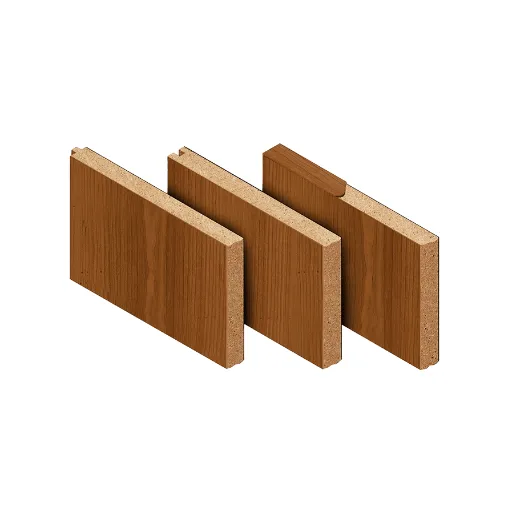
Wood veneer panels are thin sheets of natural or engineered wood bonded to a core substrate. They provide the appearance of solid hardwood at a lower cost and weight, with options for every architectural and furniture application. For a detailed comparison against solid wood and laminate, see our wood veneer vs solid wood guide. The main types of wood veneer panels are classified by four dimensions: material, backing, core, and cut pattern.
How Wood Veneer Panels Are Classified: The Four Dimensions
Most articles about types of wood veneer panels organize the topic one way — by species, or by cut method, or by backing. The approach shows specifiers only a partial view of the situation. All veneer panels result from four distinct selection processes.
Veneer material determines what you see through its selection of species, color, and grain patterns. Backing type defines the support mechanism that enables the thin veneer sheet to bend or flex. Core substrate functions as the main structural component of the panel, which determines its weight, screw-holding capacity, and dimensional stability. The visual pattern of the cut and matching process occurs through two different methods, which include the cathedral grain of a plain slice and the straight lines of a quarter slice.
You make four decisions when you select different wood veneer panel types. A plain-sliced walnut veneer on an MDF core with no backing performs entirely differently from the same walnut on a plywood core with phenolic backing. The interaction between these dimensions needs to be understood because it establishes the basis for successful specifications.
Types of Wood Veneer Panels by Material

Natural Wood Veneer Panels
Natural veneers are cut directly from real solid hardwood logs, such as oak, walnut, maple, cherry, teak, mahogany, and hundreds of exotic species. Each sheet of veneer possesses the true character of the tree that it came from, including details from a fine grain to color variation. Because of this, no sheets are exactly alike.
This duality is why natural wood veneer panels distinguish themselves and make challenges tough. Business owners are likely to opt for a feature wall of natural wood veneer panels. This is where the essence of naturalism converges because no matter how you say it, there is no remote resemblance to the engineered counterparts. As natural veneer becomes the material for covering the hotel corridors for 10,000 feet, however, uniformity and matching from one panel to another become a concern.
With VitalWood Global, natural wood veneer is available, but that is not all-the veneers we sell are mainly FSC-certified from all available domestic and exotic species. Each sheet comes with documentation for the entire process because it is believed that within the coming years, much significance will be placed on each stem from which the veneer was taken, especially in checking responsible, sustainable forest-managing processes.
Engineered and Reconstituted Veneer Panels
Engineered veneer is another term for reconstructed or recomposed veneer. It uses fast-growing, renewable species, such as ayous or poplar wood. This veneer is stained, layered, and then pressed into log-like forms and again re-sliced to create a perfect color and grain pattern.
The finished product looks like top-quality wooden logs but functions as a man-made commodity. The grain repeats in a highly predictable manner, while its color is constant from batch to batch. Large-scale commercial projects—such as lobby areas of hotels, office towers, shopping complexes, and retail chains- are now easily covered by engineered veneer through which the sourcing headache of matching natural sheets across hundreds of panels is done away with.
Make no mistake, and engineered veneer is real wood. It is not laminate, melamine, or plastic imitation. Of all the wood veneer panels, engineered veneers have the biggest environmental advantage by decreasing pressure on slow-growth and endangered species while increasing the productivity of fast-growing timber plantations. The whole base material of the paneled materials is fully FSC-certified by VitalWood Global.
Dyed and Smoked Veneer Panels
Dyed veneer begins as natural or engineered paneling soaked or injected with color through pressure staining. In the case of smoked veneer, also referred to as fumed, the material is placed in a chamber that then exposes it to ammonia fumes. The ammonia, once in the presence of air and moisture, at times leaves the tannins contained in wood, thus imparting the brown and intense shades without the aid of any surface color.
Both types of veneer produce colors not usually found in nature; for example, deep charcoal greys, ocean blues, forest greens, and warm ambers. Brand-new design possibilities are unveiled through dyed and smoked veneer for contemporary hospitality, retail, and art spaces, which the natural species alone cannot provide. The color does go in further so that light sanding or wear will not reveal an entirely different color underneath.
Reclaimed Wood Veneer Panels
On the salvaged timber, the slices are sliced and placed by means of barns and old buildings, and trees fallen in other ways, or logs may be left submerged. Each sheet tells a story of weathering, nail holes, and patina that is unique.
Reused veneer panels can immediately capture people’s emotions when the narrative of a project is a significant concern. Material aging and change are biophilic design-minded as this is a very good sign that a product is maintained and redefined as time goes by. It has an equally compelling tale about sustainability: the extension of the timber’s life, which would have been turned into waste, is carried indeed here by this veneer from a required neotropical-to-be-cut-down harvest.
Types of Wood Veneer Panels by Backing
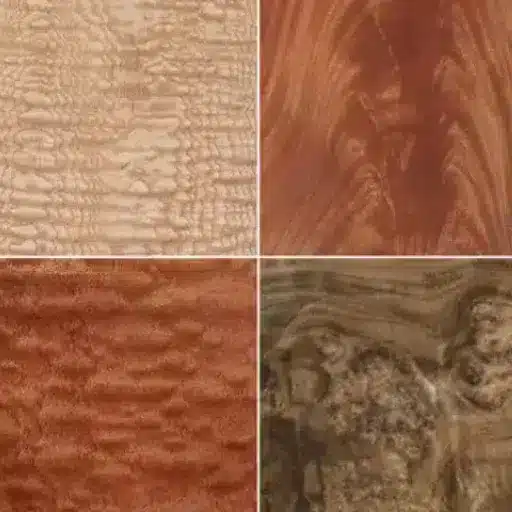
Raw Veneer
Raw veneer is veneer without the inosculation layer or backer sheets that are joined by burlasting or other methods. The veneer is rather designed in this form as it is less thick, more flexible, but delicate many times. A sheet overhung onto dry air or lifted roughly will tend to develop cracks and tears in some areas.
In customized laminated works, woodwork technologists and handicraft specialists require raw veneer for maximum versatility. Raw veneer has been noted to be the most tactile form of wood veneer panels. If the builder so wishes, an appropriate adhesive, the right substrate, along with the pressing conditions, can be used and achieved. That is why raw veneer is not fit when it comes to architectural designs or outwork, as very few contractors have the experience and the know-how to handle it as it should be.
Paper-Backed Veneer Panels
A thin sheet of paper is bonded to the back side of the veneer layer, making it flexible and preventing the grain from splitting during application. The paper backing allows an application of a curve, wrap-style, or perfect fit around things not easily accomplished by rigid panels.
For decorative millwork, curved reception desks, radius wall panels, and refacing of furniture, paper-faced veneer panels are mainly used for all flexible types of wood veneer panel work. This gives enough stability for standard contact cement or a hot press without adding significant thickness or cost.
Phenolic-Backed Veneer Panels
A phenolic backer uses a resin-saturated paper or fiberglass film, following which it is bonded to the face of the veneer. Such strong, tough, and water-resistant wood veneer panels are considerably more resistant to structural impact. Like all phenolic-backed panels, they can withstand the abuse of heavy commercial traffic — even well-tramped office corridors, hotel lobbies, hospital waiting rooms, and retail storefronts — in a way that the paper-backed or raw veneer products cannot.
The trade-off is that you are having stiffer panels. Actually, among wood veneer panels with backings, the phenolic-backed ones are the least flexible. They are aligned for flat or shallowly curved surfaces, while the emphasis is on durability over bendability. A phenolic-backed panel from a certified source provides both the performance and the documentation that are crucial for commercial specifiers meeting WELL Building Standard or LEED requirements.
Wood-on-Wood Veneer Panels
This type of plywood is also called 2-ply and 3-ply Veneer, the term given to the bonding together of two or more thin slices of wood. This principle is essential for transferring mass and cross-grain construction, giving it extraordinary dimensional stability and reducing the chances of checking or splitting. A hardwood plank has its two sides made up of true wood, thus highly suitable for door skins, cabinet interiors, and any application where the back of the panel remains exposed.
Types of Wood Veneer Panels by Core Substrate
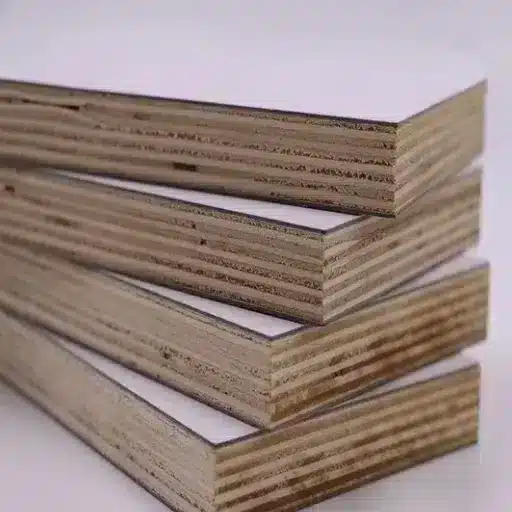
MDF Core Veneer Panels
Medium-density fiberboard (MDF) provides the flattest, smoothest, most uniform surface available in veneer panel substrates. which is very good for any bonding surface problems, and telegraphing-not-visible substrate texture will not transmit through the veneer, as when coarser cores are used.
Manufacturers will know that amongst all veneer panel woods are MDF core panels, which solve the problem of wood veneer panels in most wall paneling, casework, furniture, and fine interior millwork. Specialty formulations stretch the basic performance: moisture-resistant MDF for kitchens and baths to fire-retardant MDF for commercial code compliance, bendable MDF for curved architectural elements.
MDF has a structural limit. MDF is not as successful in hosting screws as plywood. It is heavier than veneer-core substitutes. In wet environments, standard MDF tends to swell and degrade the most. Designers select MDF core for matters concerning the highest quality and flatness of finish.
Plywood and Veneer Core Panels
Plywood core, which is referred to as veneer core or VC, is nothing but thin wood layers that are cross-banded at 90-degree angles and are held together with heat and pressure. This cross-lamination construction offers great surface strength with refining attributes of blocking resistance to warp, twist, or cup.
Areas requiring the application of hardware attachment primarily in some load-bearing environments; plywood core, when it comes to any situation where the panel will suffer structural stress, is significantly beneficial due to the engineering properties that it possesses. Use: Cabinet boxes, structural wall panels, shelving, and built-in furniture.
Particleboard Core Panels
Particleboard can be defined as a product of wooden chips and sawmill residue, and it is held together with a compound under very high pressure. It is the cheapest core type, but offers sufficient performance for vertical, low-stress applications such as closet interiors, closet organizers, and non-structural paneling.
However, there are several drawbacks to the product. Once water enters, it swells and delaminates. It is also heavy. It inadequately withstands screws coupled with typical edge fastenings. In short, particleboard core is another alternative when other factors, such as budgets, outbalance issues relative to performance and the continuing dry and vertical applications.
Blockboard and Lumbercore Panels
Another term from blockboard is laminboard, wherein a laminboard has lengthwise solidwood strips — most often pine or poplar — glued at their edges and covered with faces of veneer on both ends. The outcome will be a panel having the screw-gripping, edge-machining, and rigidity features of a solid wood, but with the dimensional stability and flatness of a panel product in it.
In high-quality furniture, premium joinery, and in some applications, trying to get the solid-wood-like properties, blockboard core, as a practice, often finds mention. E.g., the core solid woods allow one to edge shape, mortise, and install hardware more effectively than MDFs or particleboards.
Specialty Cores
Speciality cores go beyond the typical veneer panel substrates in order to cater to the specific needs of the building. They are appropriate for environments with Class A, B, or C fire, which can be rated through the ASTM E84 test. Used for commercial corridors, elevator interiors, and public assembly spaces. Moisture-resistant cores with marine-grade adhesives handle bathrooms, kitchens, and humid climates. The ultra-light core itself enhances ceiling installation and particularly works for very large suspended panels. Acoustic felt-backed core features marry veneer aesthetics with sound absorption and achieve an NRC 0.85 or better for office, studio, and theater projects.
Wood Veneer Cut Types and Grain Patterns
Rotary Cut Veneer
One of the more well-known veneer cuts is rotary cutting, wherein the entire tree trunk is attached to a lathe and is then peeled in a continuous sheet around the circumference, just like unrolling a paper towel. The grain type is characterized by broad wild randomness and full of cathedrals, swirls, and figures that are reflective in their appearance as traces of growth rings of logs.
Rotary cut yields the most economical veneers, those that are broadest in sheets, and is often used for plywood faces, utility applications, and other projects where a raw, organic aesthetic is desired. In premium architectural applications, rotary cut would normally not be catered to, as designers usually demand a much finer quality of grain result.
Plain Sliced Veneer
Plain slicing — also called flat cutting — produces the classic “cathedral” grain pattern that most people picture when they think of fine wood. The log is sliced parallel to its center, creating a central figure that resembles the arch of a cathedral, with grain sweeping outward from the centerline.
This is the most popular cut for traditional premium furniture, architectural wall paneling, and high-end cabinetry. Among types of wood veneer panels, plain-sliced options offer the richest visual character. However, the dramatic grain variation means that matching and sequencing sheets requires skill and planning — a consideration for specifiers ordering large quantities. For a full breakdown of veneer panel grades and quality standards, see our wood veneer panel grades guide.
Quarter Sliced Veneer
By taking measurements of the wooden log, a cutting perpendicular to the wood growth rings makes a quarter-sliced wood. This characteristic cut allows straight, linear grains on the quarter-cut lumber with minimal figure. Oak and some other types of wood, when used in quarter slicing, will reveal beautiful flake patterns in the form of medullary ray flecks that indicate a silvery, shimmery appearance to the surface.
This clean, consistent look of quarter- sliced veneer will look perfect in modern, minimalist interiors. Straight edges with firm grain directions are mostly specified with quarter-sliced panels in commercial offices, typical within contemporary residential spaces, and more in line with the design theme.
Rift Cut Veneer
Rift cutting is the type of cut that is not entirely perpendicular to the quarter but rather is at a slight angle, leading to a very straight and uniform grain with the minimum flake and figure. This is more uniform than quarter-sliced. It is a quieter cut than plain slicing.
That one cut veneer is now the recognized brand of a mid-century modern furniture design and plush commercial interiors. And the grain is almost uniform to the effect that large wall installations made of it will appear smooth and even from sheet to sheet — something that design enthusiasts will pay a few more dollars for.
Figured and Specialty Cuts
Beyond the standard production cuts, specialty veneers come from unusual sections of the tree. The burl is sliced from knotty bumps on trunks and branches, producing swirling, eye-like patterns that cannot be duplicated. The crotch veneer comes from where the trunk divides, giving rise to dramatic V-shaped flames or feathers. Bird’s-eye maple, flame maple, and other figured woods that arise naturally in some logs are revered for their butcher-block pieces and sumptuous interiors.
Matching Techniques: How Veneer Sheets Are Assembled
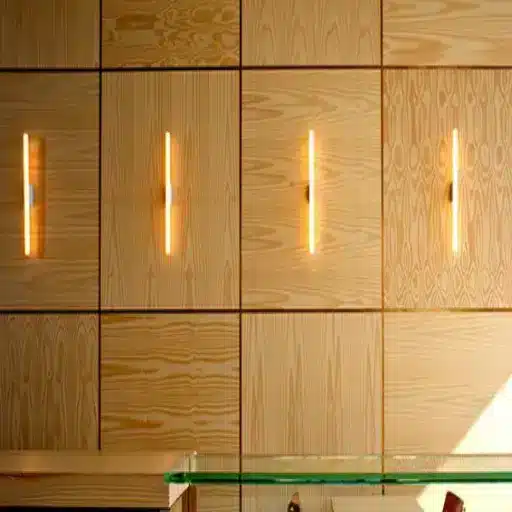
Certain veneer leaves are produced. They require coming together to form rather wide panels. Different types of veneer panels are entirely different in the method they are matched.
Book-matching creates its veneer panels. The process produces symmetrical mirror images of grain patterns in a panel by flipping alternate sheets as in a book. Formality and balance, such panels are perfect in the executive suite, luxury hotels, and other feature walls where the visual impact is important.
Side by side and one way are the two terms of slip matching. The two techniques display a repetitive grain attitude along the panel. This is more casual and gives a more natural look, often used in most cases in residential cabinetry and furniture, where the idea is to create flowing, individual, uninterrupted grain presentation.
Random matching is an intentional process that differs in the direction of the grain and the figure sheet by sheet, providing a rustic, organic appearance. In general, random matching with selected veneer panels can suggest a relaxed, natural look that is very appropriate for use in casual commercial spaces, reclaimed-style interiors, and anywhere the specifier wants to avoid too much formality achieved by grain-matching.
A diamond match is arranged in geometric shapes, mostly diamonds, herringbone patterns, or sunbursts, for prestigious decorative applications. It also features the most expensive material and labor combined among all types of wood veneer panel diamond matching, entirely customized to a particular surface. The operations require a considerable increase in material yield, skilled cutting, and detailed put-together work.
The Veneer Panel Selection Matrix
After all the terminology, the practical question remains: which of the many types of wood veneer panels should you specify? The answer depends on what you are building.
| Project Type | Recommended Specification | Rationale |
|---|---|---|
| Hotel lobby feature wall | Natural walnut, plain sliced, book-matched, MDF core, raw or paper-backed | Maximum visual impact; stable indoor environment |
| Office corridor paneling | Engineered oak, rift cut, slip-matched, phenolic-backed, fire-rated MDF core | Consistency, durability, code compliance |
| Curved reception desk | Natural cherry, plain sliced, paper-backed, bendable MDF core | Flexibility for radius; premium appearance |
| Kitchen cabinetry | Natural maple, quarter sliced, slip-matched, moisture-resistant MDF core, paper-backed | Stable grain; humidity tolerance; smooth painted or stained finish |
| Retail storefront | Engineered ash, rotary cut, random-matched, phenolic-backed, standard MDF core | Cost efficiency; high-traffic durability |
| Home theater/acoustic wall | Natural walnut, quarter sliced, acoustic felt-backed MDF core | Sound absorption combined with wood warmth |
| Bathroom vanity | Teak or engineered teak, plain sliced, moisture-resistant MDF or marine plywood core | Water resistance; tropical aesthetic |
Marcus, a project manager we consulted with last year, was specifying panels for a 40,000-square-foot corporate headquarters. His initial instinct was natural walnut throughout — until the sample-matching process revealed that achieving visual consistency across 800 panels would require sourcing from multiple flitches at premium cost. Switching to engineered walnut with rift-cut specification solved the consistency problem, cut the material budget by 30 percent, and still delivered the warm, premium look his client wanted. For detailed per-species pricing and project budget frameworks, see our wood veneer panels cost guide.
2026 Innovations in Veneer Panel Types
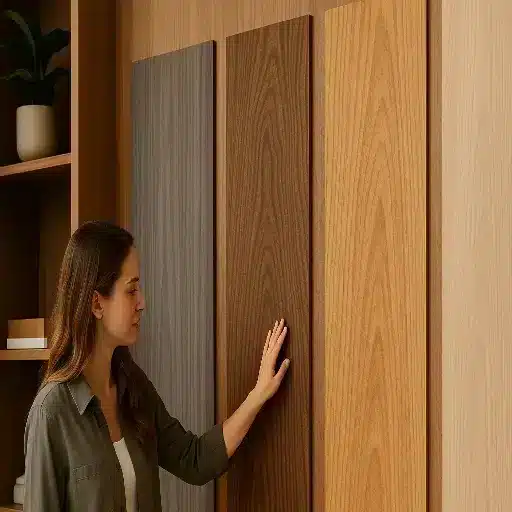
Different types of veneer panels are available to specifiers today, and the category continues to evolve. Several innovations are reshaping what is possible in 2026.
Antimicrobial surface treatments are provided with a choice of veneer finishes, with silver or copper ions evenly distributed in the lacquer. Veneers can be antibacterial & ideal for interior use where there is a lot of human traffic, such as hospitals, hotels, and commercial buildings, and where aesthetics are required.
Formaldehyde-free adhesive systems have matured beyond niche applications. Panels bonded with soy-based or polymeric adhesives meet CARB Phase 2 and EPA TSCA Title VI requirements while contributing to WELL Building Standard credits for low-emitting materials. Specifiers pursuing LEED or WELL certification should request formaldehyde-free options explicitly.
Thermally modified veneer employs no chemicals but instead heat and steam to change wood’s cellular composition and improve its resilience and stability. This technique naturally blackens the wood, achieving a color effect akin to smoking oak in ammonia, only without the use of one. When it comes to preserving wood without the use of chemicals, thermally modified panels pose an attractive proposition.
Laser-cut and digital-printed veneer panels offer the flexibility of incorporating natural wood with geometric or any other complex patterns captured by laser devices. Use of such panels is prevalent among interior decorators for building custom reception walls, way-finding installations, and other such artistic interior details that can’t be achieved only using the standard machining process.
Acoustic slat and perforated veneer panels integrate sound-absorbing backings and precision perforation patterns into standard veneer faces. NRC ratings of 0.85 and higher are achievable while maintaining the warm, natural aesthetic that acoustic ceiling tiles cannot match.
Want to see how these innovations could work in your project? Browse our full range of wood veneer panel products or reach out for a specification consultation tailored to your building requirements.
Conclusion
Understanding the types of wood veneer panels means understanding four decisions: what goes on the surface, what supports it, what forms the body, and how it looks. No single dimension determines quality. The best panel for a curved restaurant bar is entirely different from the best panel for a fire-rated hospital corridor.
Natural veneer delivers authenticity. Engineered veneer delivers consistency. Phenolic backing delivers durability. MDF core delivers flatness. Quarter slicing delivers discipline. The specifier’s job is to match the right combination to the right application.
At VitalWood Global, we supply every type of wood veneer panel described in this guide — natural and engineered, paper-backed and phenolic-backed, standard and specialty cores — all sourced from certified, responsibly managed forests. When you need help comparing types of wood veneer panels for a specific project, our team brings the specification expertise to match material, backing, core, and cut to your exact requirements. Whether you need a single custom panel or specification support for a multi-story commercial build, our team is here to help you choose with confidence.
Ready to specify your next veneer panel? Contact our team for samples, certifications, and expert guidance on choosing the right types of wood veneer panels for your project.