
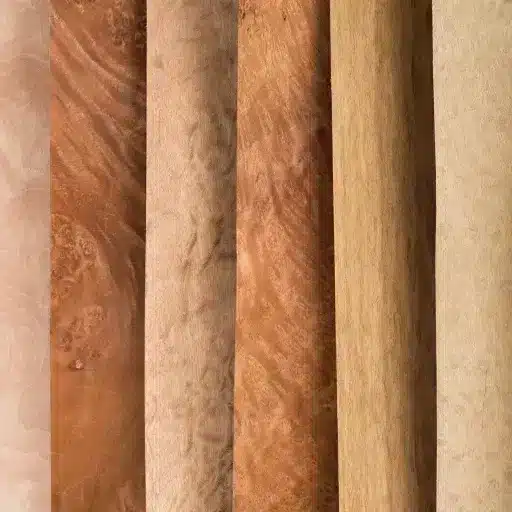
Sustainable Wood Veneer Sourcing: A Specifier’s Guide to Certifications, Compliance & Verification (2026)
Sustainable wood veneer sourcing is the practice of selecting and verifying veneer materials that meet recognized environmental standards, such as FSC or PEFC Chain of Custody certification, comply with green building credit requirements like LEED v4.1, and can be traced from a certified forest through every production phase to final delivery. In 2026, these certifications have shifted from premium selling points to baseline prerequisites for commercial projects, particularly in the European Union and North America, where procurement policies now treat documented CoC as a legal requirement rather than a voluntary credential.
That shift has changed everything for architects, builders, and procurement professionals. A specifier who could once accept a generic “sustainably sourced” letter from a distributor now faces project documentation requirements that demand verifiable FSC license codes, invoice-level certification claims, and formaldehyde compliance data for composite wood cores. The gap between what suppliers claim and what certifiers require has never been wider, and the professionals who understand how to bridge it are the ones winning bids on green building projects.
In this guide, you will learn exactly which certifications matter for wood veneer sourcing, how to verify a manufacturer’s claims through a five-phase Chain of Custody audit, what LEED v4.1 credits your specification can earn, and which red flags indicate greenwashing rather than genuine sustainability. Whether you are specifying veneer for a LEED Platinum office tower or evaluating a new supplier for your furniture line, this article gives you the framework to source with confidence.
When Elena Vasquez, a project architect in Miami, specified walnut veneer for a 12-story hospitality project, she asked her supplier for FSC certification. They sent a one-page letter on company letterhead stating the wood was “sustainably harvested.” Elena accepted it and moved on. Three months later, during LEED documentation review, the third-party auditor rejected every material claim because the letter contained no FSC license code, no certificate number, and no invoice-level CoC documentation. Elena had to find a fully certified supplier, renegotiate pricing, and absorb a three-week delay that pushed her installation into the hotel’s pre-opening window. “I thought I had done my due diligence,” she told her project team. “I had not understood what due diligence actually requires.”
Key Takeaways
- In 2026, FSC and PEFC certifications are baseline requirements, not premium options, for commercial veneer sourcing in the EU and North America.
- LEED v4.1 MRc3 credits require at least 25% by cost of permanently installed wood products to carry valid FSC Pure or FSC Mixed claims, and EQc2 mandates TSCA Title VI or CARB Phase 2 compliance for composite wood cores.
- Verifying a supplier requires a five-phase audit: certificate verification via info.fsc.org, documentation review, on-site physical inspection, transaction continuity checks, and red flag assessment.
- Common greenwashing tactics include FSC Controlled Wood marketed as certified, missing FSC claims on invoices, certificate scope mismatches, and expired certificates.
- Engineered veneer from fast-growing species, digital printing technology, and bio-based surfaces are expanding sustainable sourcing options beyond traditional certified hardwood.
Why Sustainable Wood Veneer Sourcing Matters Now
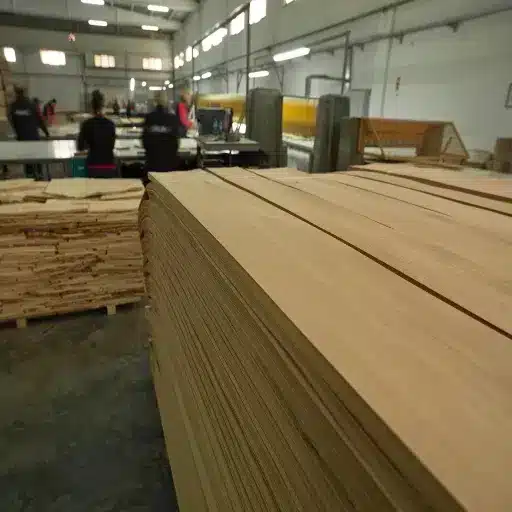
Wood veneer is one of the most resource-efficient materials in construction. A single cubic meter of log produces up to 2,000 square meters of usable veneer surface. That is roughly forty times more finished surface area than the same volume processed into solid lumber. The material efficiency alone makes veneer an inherently sustainable choice, but efficiency without verified sourcing is not enough.
In 2026, three forces have converged to make certification verification essential. First, green building codes in major markets now require a documented Chain of Custody for wood materials. Second, corporate sustainability reporting frameworks like GRI and CDP expect supply chain transparency that generic letters cannot provide. Third, buyers have grown skeptical of surface-level claims after years of greenwashing scandals across the building materials industry.
The result is a new standard. A veneer manufacturer who cannot produce a valid FSC-C license code, demonstrate invoice-level certification claims, and verify the formaldehyde compliance of composite cores is no longer competitive on commercial projects. This is not a niche concern. According to industry research from Fortune Business Insights, over 60% of wood veneer manufacturers have adopted sustainable sourcing practices in the past three years, and the segment continues to grow as procurement policies tighten.
For architects and builders, understanding sustainable wood veneer sourcing is not about environmental preference. It is about project compliance, risk mitigation, and competitive positioning.
What Makes Wood Veneer Sustainable?
Before evaluating certifications, it helps to understand why veneer itself is considered a sustainable material choice. The environmental case rests on three pillars: material efficiency, species flexibility, and waste minimization.
The 40x Efficiency Advantage
Veneer production uses a fraction of the raw material required for solid wood products. One cubic meter of timber yields approximately 900 to 2,000 square meters of veneer surface at standard thicknesses of 0.3 to 0.6 millimeters. The same volume of solid lumber produces roughly 20 to 50 square meters of finished surface. This 40-to-1 efficiency ratio means architects can specify genuine hardwood across thousands of square feet of commercial interior while consuming a fraction of the timber.
Only about 3% of felled trees meet the quality standards required for veneer production. Sawmills reserve their straightest, most defect-free logs for slicing because the thin sheets reveal every imperfection. This selective use means veneer production actually drives more careful forest management, since mills need sustained access to high-quality timber.
Fast-Growing Species and Engineered Alternatives
Natural veneer is sliced directly from hardwood logs. Engineered or reconstituted veneer is manufactured from fast-growing renewable species like poplar, ayous, and eucalyptus, then dyed and reassembled to replicate rare exotic appearances. These species mature in 10 to 15 years rather than 50 to 100, reducing pressure on old-growth forests.
When a procurement team at a major furniture manufacturer in Milan switched to FSC-certified poplar veneer for their core product line, they expected pushback from designers accustomed to exotic species. Instead, the consistent grain and lighter environmental footprint became selling points. Their carbon reporting improved, and they secured a long-term contract with a European retailer that required documented sustainable sourcing.
Waste Reduction in Production
Modern veneer mills approach zero waste. Sawdust from debarking becomes particleboard or biofuel. Steam condensate is collected and reused. Bark finds applications in landscaping mulch. Even offcuts from clipping lines feed secondary manufacturing. When you specify veneer over solid wood, you are choosing the material pathway that maximizes the utilization of every tree harvested.
The Certification Landscape: What Matters in 2026
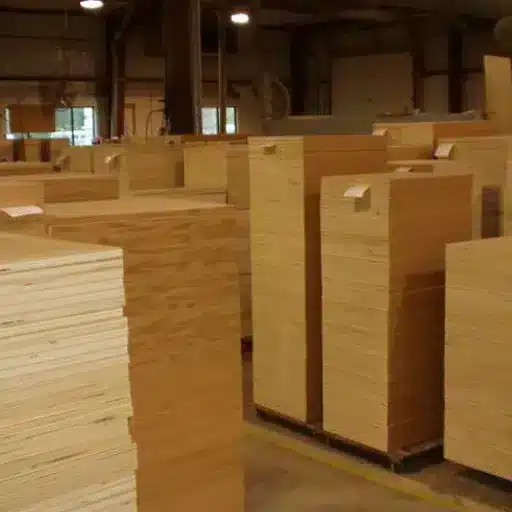
Not all certifications are equal, and not all certified claims earn green building credits. Understanding the hierarchy of standards is essential for specifiers who need their material selections to pass a third-party audit.
FSC (Forest Stewardship Council)
FSC remains the most widely recognized and accepted certification for sustainable wood products globally. For veneer buyers, three FSC claim types matter:
- FSC 100%: All wood fiber comes from FSC-certified forests. This claim earns full credit value toward LEED and other green building programs.
- FSC Mix: Contains a mixture of FSC-certified fiber, controlled wood, and/or reclaimed material. The percentage of certified content determines credit value. For LEED MRc3, only the certified percentage counts toward the 25% threshold.
- FSC Recycled: Made from 100% reclaimed material. Valuable for recycled content credits but does not count toward certified wood credits.
Critical distinction: FSC Controlled Wood is not the same as FSC-certified wood. Controlled Wood verifies that non-certified fiber meets minimum standards for legality, but it does not meet the full FSC environmental and social criteria. FSC Controlled Wood contributes zero value toward LEED MR credits.
PEFC (Programme for the Endorsement of Forest Certification)
PEFC is the world’s largest forest certification system by area, covering over 320 million hectares globally. PEFC standards are developed through multi-stakeholder processes at the national level, which means requirements vary by country. For veneer buyers, PEFC offers several advantages:
- Broader global coverage than FSC in certain regions, particularly Europe and parts of the Asia-Pacific
- Recognition by LEED v4.1 as an approved alternative compliance path
- Often, a faster and less costly certification process for manufacturers
- Strong acceptance of European procurement policies
Many procurement professionals now specify “FSC or PEFC certified” to maximize the supplier pool and reduce single-scheme dependency.
SFI (Sustainable Forestry Initiative)
SFI is the primary certification standard in North America. It is recognized by LEED v4.1 as an approved alternative to FSC for the MRc3 credit pathway. SFI-certified veneer is common from North American suppliers and carries equivalent weight to FSC for LEED purposes.
Certification Comparison
| Standard | Global Recognition | LEED v4.1 Accepted | Primary Regions | Verification Database |
|---|---|---|---|---|
| FSC | Highest | Yes (full value) | Global | info.fsc.org |
| PEFC | High | Yes (alt. path) | Europe, Asia-Pacific | peefc.org/find-certified |
| SFI | Regional | Yes (alt. path) | North America | sfiprogram.org |
LEED v4.1 and Green Building Credits: How Veneer Qualifies
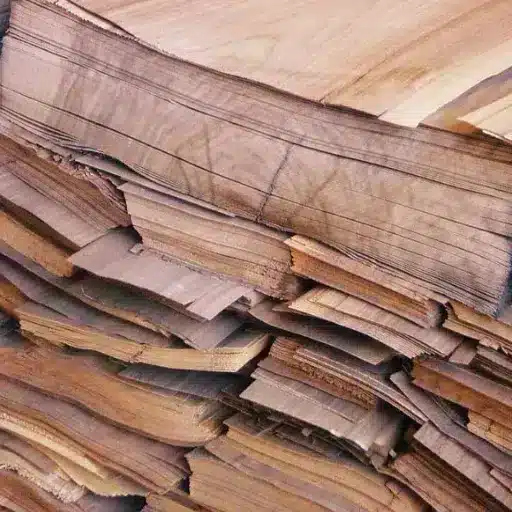
For architects and specifiers working on LEED-certified projects, understanding exactly how veneer contributes to credits is essential. Two credit categories matter most: Materials and Resources (MR) and Indoor Environmental Quality (EQ).
MRc3: Sourcing of Raw Materials
Under LEED v4.1, Option 2 of the Sourcing of Raw Materials credit rewards “Leadership Extraction Practices” for wood products. The threshold requires at least 25% by cost of permanently installed building products to be FSC-certified or approved equivalent.
FSC-certified wood products are valued at 100% of their cost for credit calculations, which makes veneer an efficient credit contributor because it is typically a high-value material relative to its volume.
The double credit strategy: Specifying an FSC-certified veneer face bonded to an FSC-certified core earns credit for both components. A walnut veneer face on standard urea-formaldehyde MDF earns credit only for the face. The same face on FSC-certified, NAUF particleboard earns credit for both the face and the core, effectively doubling your MR contribution from that panel assembly.
EQc2: Low-Emitting Materials
Hardwood veneer bonded to composite substrates is classified as composite wood under LEED v4.1. This triggers strict EQ requirements. At least 75% of all composite wood by cost or surface area must meet one of the following:
- EPA TSCA Title VI compliant
- CARB ATCM Phase 2 (ULEF, NAF, or NAUF)
- No Added Formaldehyde (NAF) or No Added Urea Formaldehyde (NAUF)
The core matters: Specifying an FSC-certified veneer face on a standard urea-formaldehyde core will pass the MR credit but fail the EQ credit. You must explicitly require the core substrate to meet TSCA Title VI or CARB standards.
Required Documentation for LEED Submittals
| Document | Requirement |
|---|---|
| FSC CoC Certificate | Valid license code (FSC-C######); verify at info.fsc.org |
| Invoice / Delivery Note | Line-item FSC claims with vendor CoC code |
| Cost Breakdown | Separate certified vs. non-certified component costs |
| Low-Emitting Verification | EPA TSCA Title VI or CARB compliance letter |
| EPD (optional) | ISO-compliant Environmental Product Declaration for Material Ingredients credits |
Ready-to-Use Specification Language
The following specification paragraph is adapted from the current 2026 specifier guides and can be inserted directly into project documents:
Wood Veneer Panel Assemblies: Provide FSC Pure or FSC Mixed chain-of-custody-certified wood veneer and panel assemblies. Composite wood cores shall contain no added urea formaldehyde (NAUF) or be No Added Formaldehyde (NAF), and shall comply with EPA TSCA Title VI and/or CARB ATCM Phase 2 formaldehyde emission standards. Submit FSC Chain-of-Custody certificate with cost documentation, third-party verified Environmental Product Declaration (EPD), and CDPH Standard Method v1.2 or UL GREENGUARD Gold low-emitting materials verification.
How to Verify a Manufacturer’s Sustainability Claims
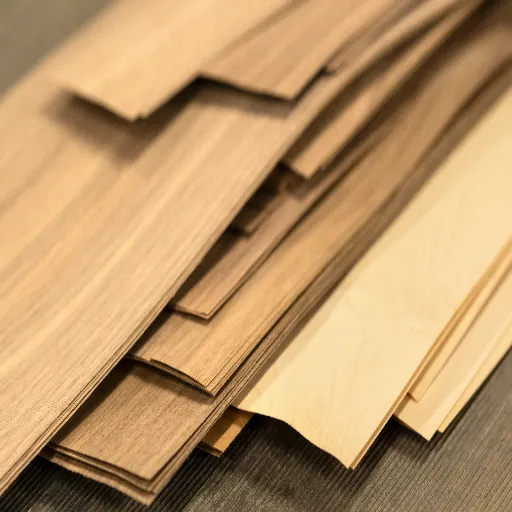
Verifying a veneer supplier’s sustainability credentials requires more than requesting a certificate PDF. A proper audit follows five phases that trace the certification from the database to the delivery truck.
Phase 1: Certificate Verification
Complete these checks on the official FSC database before placing an order.
- Obtain the supplier’s FSC License Code (format: FSC-C######)
- Verify status is Active at info.fsc.org
- Confirm certificate validity covers your contract period
- Check that the product scope includes veneer sheets or sliced veneer
- Match the legal entity name on the certificate to the invoice issuer
Common pitfall: A certificate may cover lumber but not veneer sheets. Always verify the product scope tab.
Phase 2: Documentation Review
Request and review these records, which FSC requires suppliers to retain for at least five years:
- Supplier validation log of FSC-certified raw material sources
- Incoming material records with supplier FSC codes and claim types
- Production batch control tying inputs to outputs
- Outgoing sales documents with line-item FSC claims
- Written CoC procedures covering sourcing, segregation, and invoicing
Phase 3: On-Site Physical Audit
During facility visits, verify:
- Physical segregation of certified vs. non-certified materials
- Labeling on pallets and bundles with correct FSC claims
- Production traceability from raw log to finished sheet
- Outsourcing controls whether any processes are subcontracted
Phase 4: Transaction Continuity
Ensure the FSC claim flows through every transaction document:
- The quote specifies the exact FSC claim
- Purchase Order restates the claim and certificate code
- Delivery note includes FSC-C code and claim wording
- The invoice matches the delivery note exactly
Phase 5: Red Flag Assessment
Treat these as immediate escalation items:
- FSC logo without a license code
- Generic claims without specific certification labels
- The supplier cannot explain the FSC 100% vs. the FSC Mix
- Certificate expired mid-order
- Product not in certificate scope
- Missing FSC claim on invoices
When a design-build firm in Seattle conducted a factory audit of a North Carolina veneer mill, they discovered the facility’s FSC certificate had expired two weeks prior. The supplier had continued shipping material labeled as certified. The discovery saved the project team from using non-certified veneer on a WELL-certified corporate headquarters. They terminated the relationship and found a dual-certified alternative within ten days.
Need a comprehensive factory audit checklist? Our wood veneer factory audit guide includes a 10-point inspection framework for vetting manufacturers.
The 2026 Regulatory Landscape
Global regulations governing wood product imports and indoor air quality have tightened significantly. Specifiers who source internationally need to understand the compliance requirements in each major market.
European Market
- EUTR (European Timber Regulation): Requires due diligence to ensure timber is legally harvested. FSC or PEFC certification is the standard method for demonstrating compliance.
- REACH: Governs chemical substances in products, including adhesives and finishes used in veneer manufacturing.
- CPR (Construction Products Regulation): Requires CE marking for construction materials, including wood panel products.
North American Market
- TSCA Title VI: Federal formaldehyde emission standards for composite wood products. Effective since 2018, enforcement has intensified in 2026.
- CARB Phase 2: California’s Air Resources Board standards for formaldehyde. Still referenced in many specifications even as TSCA Title VI supersedes it federally.
- GREENGUARD Gold: Third-party certification for low chemical emissions, increasingly required for WELL-certified projects.
Emerging Markets
- Gabon / West Africa: New regulations enforce 100% downstream tracking by 2026, making transparent CoC essential for species like Okoume.
- Vietnam: Wood and furniture exports reached nearly $4 billion in Q1 2026. Manufacturers are increasingly obtaining FSC, PEFC, and BSCI certifications to maintain EU and US market access.
- China: Procurement standards now require full life-cycle compliance, including ENF Grade, FSC/PEFC, and GREENGUARD Gold.
Understanding where your veneer comes from is essential for compliance. Our guide to wood veneer supply chain management covers lead times, shipping protocols, and regional sourcing considerations.
Red Flags: Spotting Greenwashing in Veneer Sourcing
Greenwashing in the veneer industry has become more sophisticated. Here are the most common tactics and how to detect them.
“FSC Controlled Wood” Marketed as Certified
Some suppliers label products as “FSC” when they actually carry FSC Controlled Wood claims. Controlled Wood verifies legality but does not meet full FSC environmental or social standards. It contributes zero value toward LEED MR credits. Always verify the exact claim type.
Missing FSC Claims on Invoices
A valid CoC requires the FSC claim to appear on every transaction document. If the invoice does not include the FSC-C code and claim wording, the chain is broken. A certificate PDF alone is not proof of a certified transaction.
Certificate Scope Mismatches
A supplier may hold a valid FSC certificate covering lumber or plywood, but not veneer sheets. Verify the product scope on info.fsc.org before accepting claims.
Expired or Suspended Certificates
Certificates expire and require annual audits. Material shipped after expiry is not certified. Always check the validity dates.
Prices Far Below Market
Certified veneer carries a premium of 5% to 15% over non-certified material, depending on species and certification type. Prices significantly below market may indicate fraudulent or non-certified material.
Letters of Assurance Without Certificate Numbers
Generic letters stating wood is “sustainably sourced” or “eco-friendly” without referencing a specific certification scheme, license code, or certificate number are not valid for LEED or any recognized green building program.
Sustainability Beyond Certification
Certification is the foundation, but the most forward-thinking manufacturers are pushing sustainability further through technology and innovation.
Engineered Veneer
Engineered or reconstituted veneer is manufactured from fast-growing species and produces 18 to 35% lower carbon emissions than harvesting old-growth exotic hardwoods. The market is growing 12 to 15% annually as specifiers seek consistency and sustainability for large commercial projects.
To understand when engineered veneer is the right choice, see our reconstituted vs natural veneer comparison.
Digital Printing Technology
High-resolution digital printing onto veneer substrates allows manufacturers to replicate the appearance of endangered exotic species without harvesting restricted timber. A project can feature the visual richness of rosewood or ebony while using sustainably sourced poplar as the base material.
Bio-Based Surfaces
New partnerships between veneer producers and biomaterial innovators are producing hybrid surfaces that blend natural wood with cellulose-based backing materials derived from agricultural waste. These products maintain authentic wood grain while pushing sustainability performance beyond traditional construction.
Energy-Efficient Production
Modern mills are integrating solar arrays, biomass kilns, and heat recovery systems that reduce energy consumption by up to 30%. Excess sawdust powers on-site biomass boilers. Steam condensate is collected and reused. These closed-loop systems lower both carbon footprints and production costs.
Frequently Asked Questions About Sustainable Wood Veneer Sourcing
What is the difference between FSC and PEFC certification?
FSC operates a global standard with consistent requirements across all regions. PEFC uses a bottom-up approach where national standards are developed locally and endorsed internationally. Both are recognized by LEED v4.1 and most procurement policies. FSC has stronger brand recognition globally, while PEFC covers more certified forest area worldwide.
Does FSC certification cost more?
FSC-certified veneer typically carries a premium of 5% to 15% over non-certified material, depending on species, volume, and certification type. The premium covers audit costs, chain of custody documentation, and administrative overhead. For LEED projects, the premium is often offset by the value of earned credits and the marketing advantage of certified construction.
How do I verify a manufacturer’s FSC certificate?
Visit info.fsc.org and enter the supplier’s FSC License Code (format: FSC-C######). Verify the status is Active, the validity period covers your order, the product scope includes veneer, and the legal entity matches your invoice issuer. Never rely solely on certificate copies or screenshots.
What LEED credits can FSC-certified veneer contribute to?
Veneer can contribute to MRc3 (Sourcing of Raw Materials) at 100% of cost value if both face and core are certified. It also contributes to EQc2 (Low-Emitting Materials) if composite cores meet TSCA Title VI or CARB standards. Optional credits include MRc4 (Material Ingredients) if Environmental Product Declarations are provided.
Is engineered veneer as sustainable as FSC-certified natural veneer?
Engineered veneer made from fast-growing renewable species like poplar can be more sustainable than natural exotic hardwoods because it produces 18 to 35% lower carbon emissions and reduces pressure on old-growth forests. However, the most sustainable option is FSC-certified engineered veneer, which combines responsible sourcing with resource efficiency.
What does Chain of Custody mean for veneer?
Chain of Custody (CoC) is a documented trail that tracks certified wood from the forest through every production and distribution step to the final customer. For veneer, this means tracing certified logs through slicing, drying, splicing, and finishing while maintaining physical separation and documentation at each stage.
Can I use veneer with FSC Mixed claims for LEED?
Yes. FSC Mixed claims contribute to LEED MRc3 at the stated percentage of certified content. For example, FSC Mix 70% veneer contributes 70% of its cost value toward the 25% threshold. FSC Mix Credit claims contribute 100% value. Always require the supplier to specify the exact percentage or claim type on invoices.
Conclusion
Sustainable wood veneer sourcing in 2026 is not about finding a supplier who claims to care about the environment. It is about verifying, through documented evidence, that every sheet of veneer meets the standards your project requires and your clients expect.
The five-phase verification framework, certification hierarchy, LEED credit requirements, and regulatory landscape covered in this guide give you the tools to evaluate any supplier with confidence. The specifiers who master these details are the ones who win bids on green building projects, avoid costly documentation failures, and deliver interiors that perform as beautifully as they look.
The next time you specify veneer, remember Elena’s lesson. A generic letter is not a certification. An invoice without an FSC claim is not proof of CoC. And a certificate that expired last month is not valid today. Demand documentation. Verify everything. Your project’s green building credits depend on it.
Ready to source verified, certified wood veneer for your next project? Contact VitalWood Global today to discuss your specifications, request FSC and PEFC-certified samples, and explore how our documented Chain of Custody can support your LEED certification goals.
Sources: