

Sustainable Wood Veneer Sourcing: A Supplier Verification Guide
Last updated:
Sustainable wood veneer sourcing means checking that the material, supplier documents and order claim support the environmental requirements you have specified. Start with the exact product and seller, then reconcile the certificate record with the sales and delivery documents.
You have a certificate PDF and a good-looking sample. Does this order carry the claim your project needs? Those two items can’t answer the question alone. Connect the agreed product, supporting records and goods received in one buying file.
This guide separates four decisions: responsible sourcing, legal due diligence, panel performance and project acceptance. It explains what to request, who should review it and when a discrepancy needs resolution. The checks apply to architects, furniture buyers and procurement teams comparing veneer sheets or finished veneered panels.
Key takeaways
- Define the product construction and required claim before comparing quotations.
- Check the seller’s certificate status and scope, then check the actual order documents.
- Review sourcing, emissions and green-building requirements separately.
- Record exceptions and the person responsible for accepting or rejecting them.
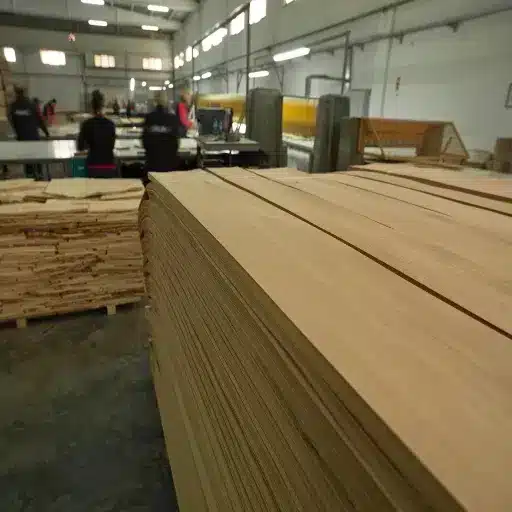
Define Sustainable Wood Veneer Sourcing Requirements Before Ordering
Identify the product and destination
Write down what you are buying. Loose face veneer, reconstituted veneer and a finished panel are different procurement items. For panels, identify the face, backing, core and adhesive system where relevant to the requested evidence. Record the species or declared material description, dimensions, application, quantity and destination.
Do not start with a vague instruction such as “eco-friendly veneer.” Turn it into a question the supplier can answer: which sourcing claim will appear against which item? Keep appearance approval separate from document approval, so an accepted sample does not silently settle an unresolved sourcing requirement.
Use the veneer specification template to capture the product description and the supporting documents you need. Complete those fields before asking suppliers to price alternatives. Otherwise, you may compare a raw-sheet offer against a finished-panel offer without noticing the difference in scope.
Assign each evidence requirement
The following is a suggested buying-file structure. Assign the reviewer within your own project team; it is not a certification procedure.
| Requirement | Record to request | Suggested reviewer |
|---|---|---|
| Product identity | Specification, construction and item reference | Specifier or technical buyer |
| Sourcing claim | Certificate record and item-level sales claim | Procurement reviewer |
| Destination compliance | Applicable product documents and responsibility statement | Importer or compliance lead |
| Project acceptance | Registered system/version and agreed evidence route | Project certification lead |
Keep a dated list of open questions alongside the quotation. A useful entry identifies the missing record, its owner and the decision it prevents. This makes a later substitution visible instead of allowing it to disappear inside an email thread.
Evaluate Material Efficiency and Environmental Claims
Compare like-for-like assemblies
Veneer provides a thin wood surface, but that description does not establish the environmental impact of a finished assembly. Ask what the comparison includes: the decorative face, the core, adhesives, finishing, transport, service life and disposal assumptions. A sourcing certificate answers a different question from a product life-cycle assessment.
Treat natural and reconstituted veneer as material descriptions, not automatic environmental rankings. The reconstituted veneer manufacturing guide explains the construction process. Assess any sustainability claim using evidence for the product being offered, rather than assuming that its manufacturing category proves a lower impact.
Illustrative scenario: A buyer receives two visually similar surface samples. One quote covers loose veneer; the other covers veneer bonded to MDF. The first supplier provides sourcing documents for the face material, while the second supplies an environmental declaration for a panel range. Neither document alone establishes which quoted solution has the lower impact in the intended installation.
The next question is whether the offers can be compared on a common basis. Ask both suppliers to identify the supplied assembly and the scope of each document. If the intended use requires a complete panel, a comparison limited to face veneer leaves the core outside the decision.
Ask what an EPD actually covers
If the project requests an environmental product declaration (EPD), read its scope before comparing results. Ask the project reviewer to check four points:
- Does it identify the offered product?
- What is the declared unit?
- Which life-cycle stages and assumptions does it cover?
- Is it valid for the proposed submission?
Keep those answers with the comparison. An isolated result is not a basis for claiming a percentage saving.
Document hubs such as Danzer’s certificates and declarations illustrate why suppliers separate document types. A declaration, a sourcing certificate and an ingredient or emissions report have different purposes. None should be renamed “proof of sustainability” without stating what it actually establishes.
If comparable evidence is absent, record that limitation. You can still assess appearance, construction and sourcing documentation while leaving an environmental ranking undecided.
Read FSC and PEFC Claims at the Correct Level
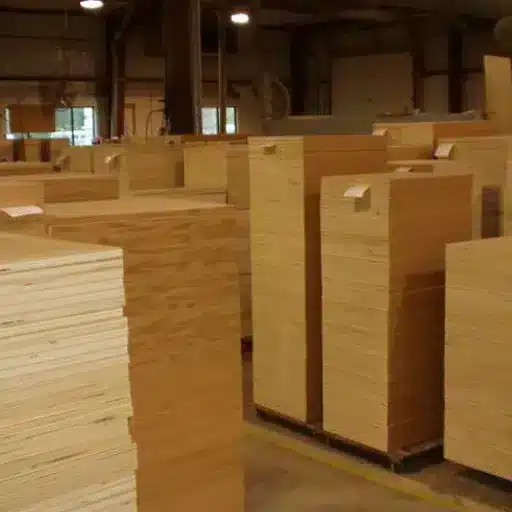
Understand the labels and control systems
FSC uses the labels FSC 100%, FSC Mix and FSC Recycled. Its label guidance explains that FSC 100% refers to forest-based inputs from FSC-certified forests, while FSC Recycled identifies verified recycled forest-based materials. FSC Mix can include certified, recycled and controlled wood inputs.
Controlled wood is not the same as wood from an FSC-certified forest. Its role is to reduce the risk of material coming from unacceptable sources. Also, do not read every FSC Mix claim as a fixed physical share of certified-forest wood in each panel: the applicable control system matters.
| Document or claim | What to check | What it does not establish alone |
|---|---|---|
| Supplier chain-of-custody certificate | Holder, status and relevant scope | That every sale carries a certified claim |
| Item-level sales claim | Named product, claim and linked seller record | Emissions performance or project credits |
| Label or promotional code | Correct scheme identity and authorized use | Complete evidence for an unlabelled commercial order |
| Environmental declaration | Product and declared assessment boundary | Chain-of-custody certification |
This table is a document-reading aid. Ask for clarification rather than attempting to reconstruct a certification body’s assessment from a marketing brochure.
Match scope, seller and finished product
For FSC, distinguish the trademark licence code from the chain-of-custody certificate code. The licence code identifies trademark authorization; it is not a substitute for the supplier certificate code required on relevant transaction records. FSC’s purchasing guidance explains the checks for unlabelled timber and panels.
For PEFC, use the official Find Certified service to check the organization, then reconcile the relevant scope and claim with the offered goods. Do not accept a database match as proof of the particular sale.
A certificate for the face material does not by itself establish a certified output claim for the complete panel you are buying. Ask the seller which supplied product carries the claim and how it will be identified. The FSC-certified veneer panel guide provides related panel context; use the official scheme documents to resolve certification requirements.
Match Project Requirements and Destination Rules
Confirm the project rating system and version
A project specification should identify its registered green-building system and version. Do not promise LEED points from the purchase of one veneer product. Ask the project lead to confirm the applicable credit pathway, accepted certification evidence and calculation method before ordering.
A 26 February 2026 announcement reproduced by CAGBC describes LEED v5 recognition of FSC, SFI and PEFC chain-of-custody standards. That development does not establish the treatment of a v4.1 project or guarantee a particular order’s contribution. Keep the approved project pathway in the buying file.
Request applicable composite-panel emissions evidence
For US-bound products, determine whether the supplied construction is covered by TSCA Title VI composite-wood requirements. EPA’s consumer guidance distinguishes covered hardwood plywood, MDF and particleboard. Do not apply a panel emission limit to raw veneer or confuse a prescribed product test with a room-air measurement.
The EPA final rule published on 28 October 2026 takes effect on 27 November 2026. It updates referenced standards.
It also adds ISO 12460-2:2024 as a quality-control test option. Ask the supplier or laboratory which method and version apply to your product. The new option does not mean that every test report must be replaced.
Illustrative scenario: A project approves a veneer-faced plywood panel, then considers an MDF-core alternative. Keep the appearance approval, but reopen the product-document check. Ask whether the replacement construction is covered by the proposed sourcing claim, emissions records and project submission. Do not assume that documents for the first panel transfer to the second.
Check EU-bound origin and role-based due diligence
For EU-bound orders, check product scope and the responsible business role using the European Commission’s EUDR overview. Its application timetable distinguishes business categories and includes transitional provisions. Confirm the applicable timing for your own product and role instead of treating one date as universal.
FSC’s voluntary Regulatory Module can support due diligence work, but certification does not replace legal responsibilities. The FSC regulatory framework page records the V1-1 revision published on 17 August 2026. Ask which supporting records are available and who will perform the required assessment. Use the supply-chain documentation guide for related handoff questions.
| Buying question | Evidence stream | Decision owner to identify |
|---|---|---|
| Can the sourcing claim be accepted? | Scheme and transaction records | Procurement reviewer |
| Does the panel meet applicable emissions requirements? | Product-specific compliance evidence | Responsible supplier/importer |
| Does the material support the project pathway? | Version-specific submission documents | Project certification lead |
| Are destination due diligence duties addressed? | Product, origin and role-based records | Applicable duty holder |
Keep these decisions separate even when the supplier sends all the documents in one folder.
Verify the Supplier from Quotation to Delivery
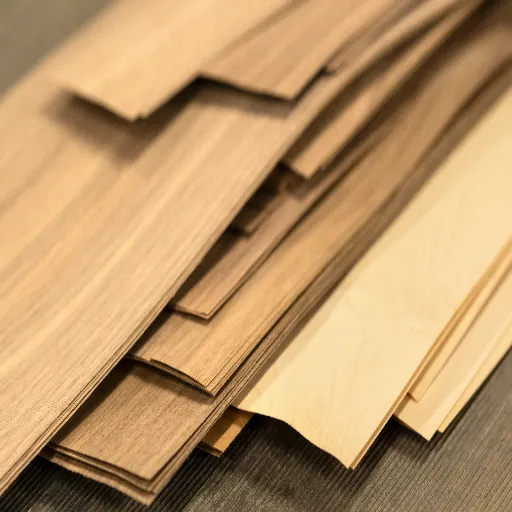
1. Search the official record
Start from the scheme’s official search service rather than a screenshot supplied with a quotation. Save the lookup date and the record you reviewed. Ask the supplier for its exact legal name and certificate identifiers if a trading name produces an ambiguous result.
The purpose is to establish a checkable starting point. A document with a familiar logo but no identifiable holder leaves that task unfinished. If you cannot resolve the record, keep the sourcing claim open and request a correction before relying on it.
2. Match entity, scope and status
Compare the record with the selling entity, relevant location and product scope. For an order needing a chain-of-custody claim, do not substitute an upstream mill’s certificate for the seller’s required coverage. FSC’s chain-of-custody FAQ explains the significance of legal ownership and certified sales.
Illustrative scenario: The certificate names a manufacturer. The invoice will come from a trading company. Who is making the certified sale?
The buyer asks for the seller’s relevant coverage and the proposed order claim. A group-company relationship doesn’t, by itself, show that the invoicing seller can pass that claim. Hold claim acceptance until the records resolve the mismatch.
3. Agree the exact claim on the order
Put the required claim against the relevant item in the quotation and purchase order. Separate certified and non-certified lines where both are offered. Ask how the final sales documents will identify the goods, and who must approve a proposed substitution.
This avoids a common procurement ambiguity: a general statement about the supplier becomes an assumption about every product it sells. Before accepting an alternative, revisit the agreed product reference and the evidence requirement. Record the approved change rather than relying on a verbal assurance.
4. Reconcile invoice and delivery records
For FSC purchases, check the invoice and/or delivery note for the identified certified products, their claim and the supplier’s certificate code, as described in FSC’s purchasing guidance. Then match those items to your purchase order and receipt record. Keep the link clear when one delivery contains multiple product lines.
Record any quantity, product-description or claim discrepancy. A warehouse receipt confirms that goods arrived; it does not alone settle the sourcing claim. Give the document reviewer enough information to distinguish the accepted order from a different batch or an unapproved replacement.
5. Resolve mismatches before acceptance
Ask for a corrected record or a written explanation that addresses the exact discrepancy. Set an internal decision owner and retain the outcome. Where the issue concerns certification interpretation, seek clarification through the appropriate scheme or certification-body channel rather than accepting a sales summary as the final answer.
A broader supplier visit may help assess capability or handling practices, but it does not replace a scheme audit. Use the factory audit guide to plan wider supplier checks. Keep those observations separate from the order-specific certification decision.
Recognize Unsupported Claims and Resolve Exceptions

Ask for evidence behind the wording
Words such as “green,” “responsible” or “zero waste” need a defined meaning and supporting evidence. Ask which product and boundary the statement covers. If a supplier cannot substantiate a broad environmental comparison, leave that comparison out of your approved purchasing rationale.
| Discrepancy | Question to ask | Suggested acceptance action |
|---|---|---|
| Generic sustainability letter | Which scheme and order claim does this support? | Request the missing specific records |
| Certificate holder differs from seller | Which entity makes the claimed sale? | Resolve coverage before claim acceptance |
| Claim absent from relevant sales record | Which items are being sold with the agreed claim? | Request corrected documentation |
| Panel changed after approval | Which documents cover the new construction? | Reopen the affected review |
| Environmental ranking lacks a common basis | What product and assessment boundary were compared? | Do not rely on the ranking |
Document acceptance, correction or escalation
Avoid treating a low price or a missing on-product logo as proof of misconduct. Unlabelled timber and panels can still have documented FSC claims. A historical “No FSC Sales” period also needs context: FSC’s advice on such declarations should inform the date-specific question, rather than an automatic accusation.
For the illustrative trading-company example, distinguish an explanation received from a claim resolved. Record which evidence connected the seller and order, who reviewed it and what remains outstanding. If the missing evidence cannot be supplied, follow your project’s exception process without relabelling an unsupported claim as verified.
Use the manufacturer selection guide for broader comparisons. This sourcing file should stay focused on the evidence needed for the particular purchase.
Sustainable Wood Veneer Sourcing Questions and Next Steps
Is a certificate PDF enough?
No. Check its current record, relevant scope and connection to the seller and specific order. Save both the lookup evidence and the linked transaction documents. A PDF is one part of the file, not the acceptance decision itself.
Does every product from a certified seller qualify?
Do not assume it does. Ask which items are offered with the required claim and check how those items are identified on the sales documents. Keep unclaimed lines separate rather than extending a company-level statement to the whole delivery.
Is reconstituted veneer always the greener choice?
That conclusion needs a defined comparison. Review the supplied construction, document boundary and intended use. Without comparable evidence, describe the material and its verified sourcing attributes instead of assigning an environmental ranking.
Does sourcing certification establish panel emissions compliance?
No. Use the applicable product-specific emissions evidence for that decision. Also keep fire, structural or other performance requirements in their own technical review. Sourcing documents should not be used to fill gaps in unrelated performance evidence.
What should a supplier inquiry include?
Send the species or material description, construction, application, dimensions, quantity and destination. State the requested certification claim and identify any project system/version, emissions or declaration requirements. Ask the supplier to explain the scope of the documents it can provide for the proposed item.
Before release, use this final check:
- Match the product reference and construction to the accepted specification.
- Match the seller and order claim to the relevant records.
- Confirm the separate project and destination document decisions.
- Assign open exceptions to a named reviewer and record the decision.
Keep the review with the purchase record. The next person should be able to see why you accepted the order and which claims the evidence supports.
To discuss your material and documentation requirements, send that specification with your inquiry. Establish what the offered product and its evidence actually cover before committing to an environmental claim.