
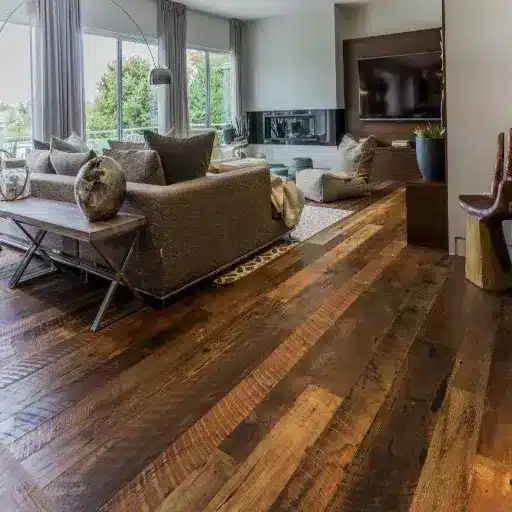
Wide Plank Engineered Wood Flooring: 2026 Buyer’s & Installation Guide
Wide plank engineered wood flooring is the best choice when you want the drama of real hardwood boards 5 inches or wider without the cupping, gapping, and moisture headaches that often plague solid wide planks. It pairs a genuine hardwood veneer with a stable multi-ply core, giving you the look of traditional wood flooring and the dimensional stability modern homes demand.
But “wide plank” means different things to different suppliers, and not every engineered board is built for the job. Choose the wrong wear layer, core, or installation method, and you can end up with seams that peak, boards that cup, or a floor that can’t be refinished when the time comes. The good news: a handful of clear specs separate boards that age gracefully from boards that age quickly.
In this guide, you’ll learn what counts as wide plank, how engineered wide plank compares to solid, which widths and species work best for different spaces, what installation method to use, and how to verify sustainability claims before you buy.
Key Takeaways
- Wide plank engineered wood flooring uses real hardwood boards 5 inches or wider bonded to a stable plywood or HDF core for better moisture resistance.
- Engineered wide planks outperform solid wide planks in basements, over concrete, and in climates with humidity swings.
- Look for a 4–6 mm wear layer, a 7-ply cross-grain core, and FSC/FloorScore/CARB-compliant construction for long-term value.
- Glue-down or nail-down with glue-assist is the safest installation method for boards 5 inches and wider.
- Budget $12–$22 per square foot installed for most wide plank engineered projects; premium installs can reach $25+ per square foot.
What Is Wide Plank Engineered Wood Flooring?
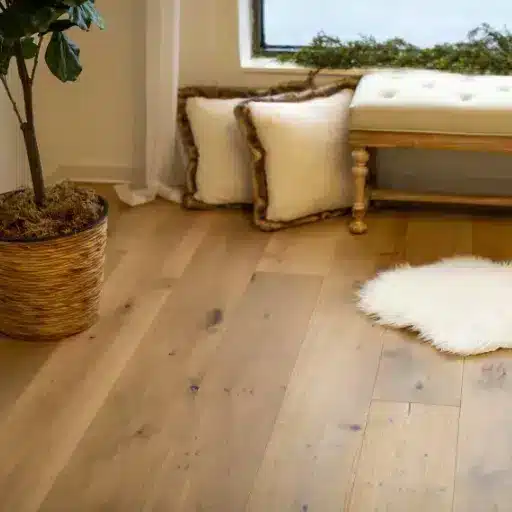
Wide plank engineered wood flooring is a type of engineered hardwood flooring built in layers. The top layer is a veneer of hardwood — oak, maple, hickory, walnut, or another species — that is 5 inches or wider. Below that sits a core of plywood, high-density fiberboard (HDF), or sometimes an additional wood layer arranged in a cross-directional pattern. A backing layer balances the board and helps it lie flat.
This layered construction is what separates engineered wide plank from solid wide plank. Solid planks are a single piece of wood from top to bottom. That sounds simpler, but a wide solid board has more surface area to expand and contract with humidity. In widths over 5 inches, that movement becomes harder to control, which is why installers often recommend engineered construction for wide plank formats.
What counts as “wide”? Most suppliers classify 5 inches as the starting point. The most popular premium range is 7–9 inches. Boards 10–12 inches or wider are sometimes called ultra-wide or extra-wide planks. Anything under 5 inches is generally considered standard-width flooring.
Why Choose Wide Plank Engineered Flooring?
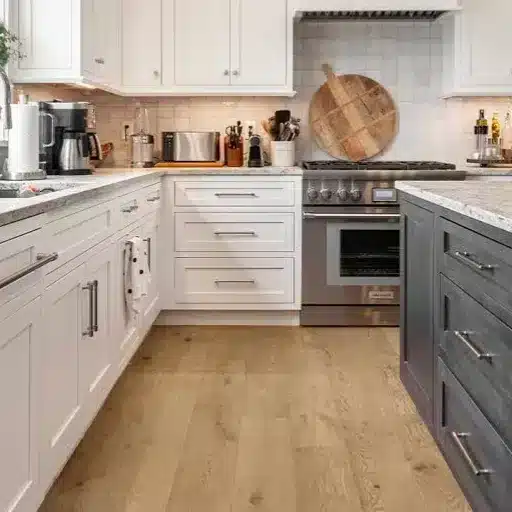
The first reason people choose wide plank wood flooring is visual. Fewer seams across the floor create a cleaner, more expansive look. Each board shows more grain, more knots, and more of the wood’s natural character. In open-plan living areas, wide planks can make the space feel larger and more cohesive.
The second reason is practical. Engineered construction adds dimensional stability. The cross-layered core resists the expansion and contraction that causes cupping, gapping, and buckling in wide solid boards. That makes engineered wide plank a better fit for:
- Basements and concrete slabs
- Homes with radiant heat
- Regions with seasonal humidity swings
- Rooms where solid wide plank would be risky
The third reason is sustainability. Because only the top wear layer uses premium hardwood, engineered flooring stretches slow-growth timber further than solid flooring. A single log produces more finished square footage when used as veneer instead of thick planks.
Wide Plank Engineered vs. Solid Wide Plank
Both options give you real wood underfoot, but they behave differently over time. Here’s how wide plank hardwood flooring compares when it is engineered versus solid.
| Factor | Wide Plank Engineered | Solid Wide Plank |
|---|---|---|
| Stability | High — cross-layered core resists movement | Lower — wide boards expand and contract more |
| Best subfloors | Concrete, plywood, radiant heat | Plywood or wood subfloor, above grade |
| Refinishing | 1–3 times depending on wear layer | Multiple times over decades |
| Moisture resistance | Better | More vulnerable to cupping/gapping |
| Cost | $12–$22/sq ft installed | $15–$30+/sq ft installed |
| Lifespan | 30–80 years with proper care | 50–100+ years if maintained |
| Installation methods | Glue, nail, float | Nail or staple only |
Solid wide plank has one major advantage: it can be sanded and refinished many times. That longevity is valuable in historic homes or spaces where the floor will see decades of heavy use. But for most residential and commercial projects, the stability and installation flexibility of engineered wide plank outweigh that benefit.
If you’re deciding between the two, start with the subfloor and the room. Below-grade spaces, concrete slabs, and radiant heat systems almost always favor engineered. Above-grade rooms with stable humidity and a plywood subfloor can handle solid wide plank if you accept the maintenance requirements.
Wide Plank Engineered Wood Flooring Pros and Cons
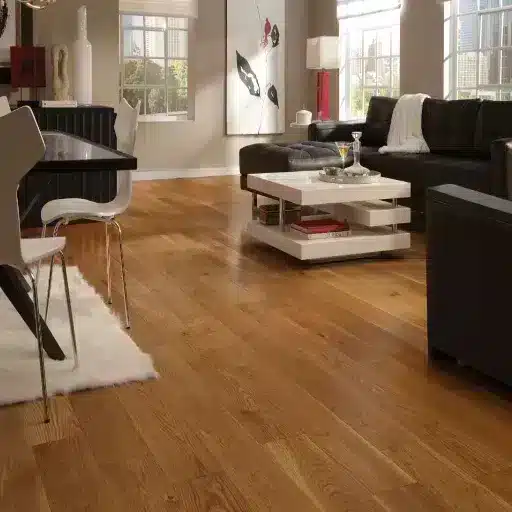
No flooring is perfect for every project. Here’s an honest look at the strengths and limitations.
Pros
- Visual impact: Fewer seams and more grain per board create a high-end, spacious feel.
- Dimensional stability: Engineered construction handles humidity and temperature changes better than solid wide plank.
- Installation flexibility: Can be glued, nailed, or floated over more subfloor types.
- Below-grade suitability: Works in basements and over concrete where solid wood struggles.
- Sustainable material use: Uses less premium hardwood per square foot than solid flooring.
- Faster coverage: Wider boards cover the same area with fewer pieces.
Cons
- Limited refinishing: Thin wear layers may not be refinishable; even thick veneers allow fewer sands than solid.
- Cost premium: Wide planks often cost more per square foot than standard-width boards.
- Moisture sensitivity: Engineered wood resists moisture better than solid, but it is not waterproof.
- Installation complexity: Wide boards need glue-assist or full glue-down to prevent movement.
- Beveled edges: Some prefinished planks have beveled edges that collect dirt and look less seamless.
- Weight: Thicker engineered boards are heavy and harder to handle on large jobs.
Choosing the Right Width and Dimensions
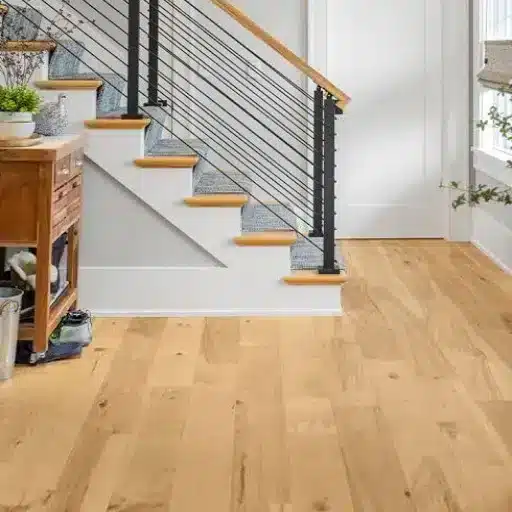
Width changes the entire feel of a room. Boards 5–7 inches wide feel classic and work in most traditional and transitional spaces. Boards 7–9 inches wide lean contemporary and are the sweet spot for open-concept homes. Boards 10 inches and wider make a bold statement but require more careful installation and climate control.
Length matters too. Longer boards — 6 feet or more — reduce the number of end joints and create a more seamless, high-end appearance. Shorter boards are easier to install and less wasteful on smaller jobs but can look busier.
Thickness affects both durability and installation method. A total thickness of 14–18 mm is typical. Thicker boards feel more solid underfoot and work well with nail-down installation. Thinner boards are better for glue-down or floating installs, especially where transitions to other flooring types matter.
Wood Species and Finishes for Wide Plank Engineered Flooring
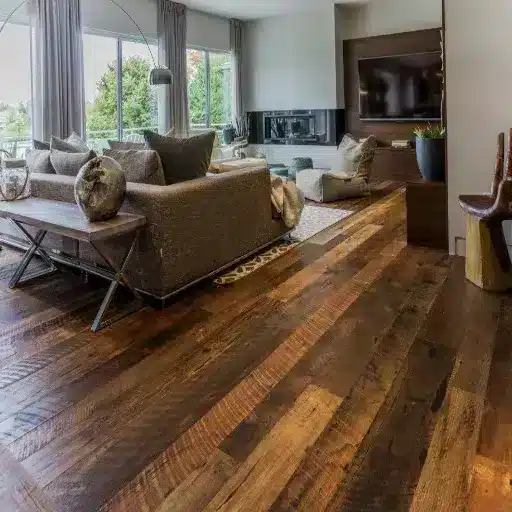
The species you choose affects hardness, grain pattern, stainability, and price. Here are the most common options for wide plank engineered flooring.
- White oak: The most popular choice. Stable, hard enough for busy households, and takes stain beautifully. Janka hardness around 1,360. See our engineered oak flooring guide for more detail.
- European oak: Longer, wider planks with a refined grain. Often used in designer and luxury projects.
- Hickory: Extremely hard and rustic, with dramatic color variation. Janka hardness around 1,820. Great for homes with pets and kids.
- Maple: Very hard and fine-grained, with a modern, clean look. Janka hardness around 1,450. Shows scratches more easily than oak.
- Walnut: Softer and darker, prized for rich color and elegant interiors. Janka hardness around 1,010. Best in lower-traffic areas.
Finish choices affect maintenance and appearance. UV-cured polyurethane is durable and low-maintenance. UV oil and hardwax oil finishes require more frequent care but are easier to spot-repair and give a natural matte look. Wire-brushed and hand-scraped textures hide scratches and dents better than smooth finishes.
Is Wide Plank Engineered Flooring Sustainable?
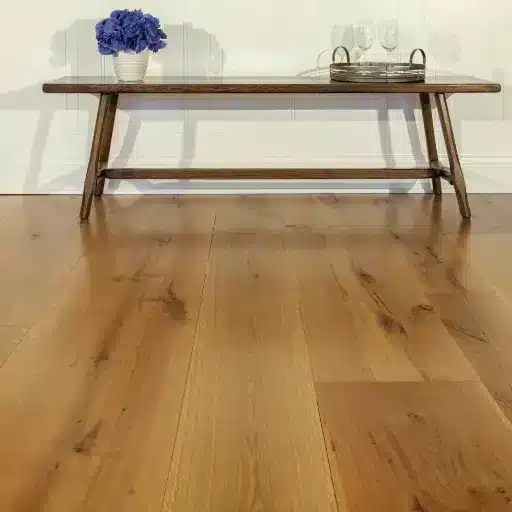
Sustainability in sustainable wide plank flooring comes down to three things: sourcing, emissions, and lifespan.
Sourcing. Look for wood from forests certified by the Forest Stewardship Council (FSC) or the Programme for the Endorsement of Forest Certification (PEFC). These certifications verify responsible harvesting, biodiversity protection, and chain-of-custody documentation.
Emissions. Engineered flooring uses adhesives, so indoor air quality matters. FloorScore and GREENGUARD certifications indicate low volatile organic compound (VOC) emissions. CARB Phase 2 and EPA TSCA Title VI compliance set limits on formaldehyde emissions from composite wood products.
Lifespan. A quality engineered wide plank floor with a thick wear layer can last 30–80 years. The longer it stays in place, the lower its environmental impact per year of use. USDA lifecycle research has shown that engineered wood flooring can store more carbon over its service life than is emitted during manufacturing when responsible forestry is included.
When a supplier claims a product is “eco-friendly,” ask for the certification. Without it, the claim is hard to verify.
Wide Plank Engineered Wood Flooring Costs in 2026
Pricing for wide plank engineered wood flooring depends on width, species, wear layer thickness, finish, and installation method. Here’s what to expect in 2026.
| Project Tier | Material Cost | Installed Cost | Typical Specs |
|---|---|---|---|
| Budget | $4–$7/sq ft | $8–$12/sq ft | 5-inch boards, domestic oak, 2 mm wear layer |
| Mid-range | $7–$12/sq ft | $12–$18/sq ft | 7–9-inch boards, oak or hickory, 3–4 mm wear layer |
| Premium | $12–$18+/sq ft | $18–$26+/sq ft | 9-inch+ boards, European oak or walnut, 4–6 mm wear layer |
Hidden costs can add up. Subfloor leveling runs $2–$5 per square foot. Old flooring removal costs $1–$3 per square foot. Moisture barriers, underlayment, and transitions add another $1–$2 per square foot. Glue-down installation over concrete typically costs more than floating installation because of adhesive and labor.
How to Install Wide Plank Engineered Wood Flooring
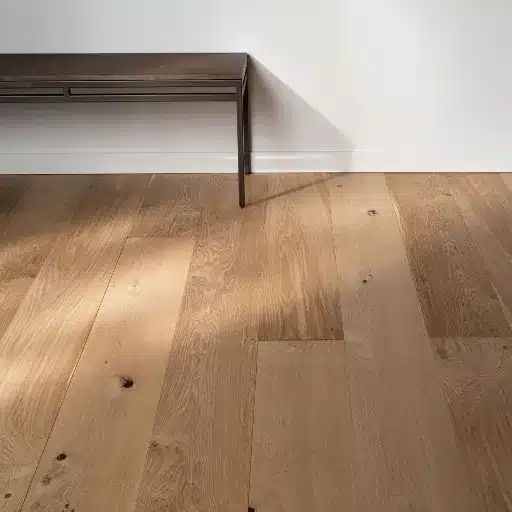
Wide plank flooring installation requires more secure fastening than standard-width boards because wide planks have more surface area to move. The three main installation methods each have a place.
Glue-Down Installation
Glue-down is the most stable method for wide plank engineered flooring, especially over concrete. A moisture-compatible adhesive is spread across the subfloor, and each board is pressed into place. This method eliminates hollow spots and reduces squeaks. It is the best choice for boards 7 inches and wider.
Nail-Down with Glue-Assist
Over plywood or OSB subfloors, wide planks can be nailed or stapled along the tongue. For boards 5 inches and wider, most installers add a bead of glue across the width of the board — called glue-assist or nail-and-bead-glue — to prevent movement and squeaks over time.
Floating Installation
Floating works with click-lock engineered planks and is faster to install. However, very wide boards are less stable when floated and may feel hollow or bouncy. If you choose floating, stick to boards 6 inches or narrower and use a high-quality underlayment.
Subfloor and Acclimation
Before installation, test the subfloor moisture. Over concrete, relative humidity should meet manufacturer specs, often below 75–85% per ASTM F2170. Acclimate the flooring in the installation space for 48–72 hours minimum, or longer in extreme climates. Leave an expansion gap of 1/4 to 1/2 inch around the perimeter and any fixed objects.
Where Can You Install Wide Plank Engineered Flooring?
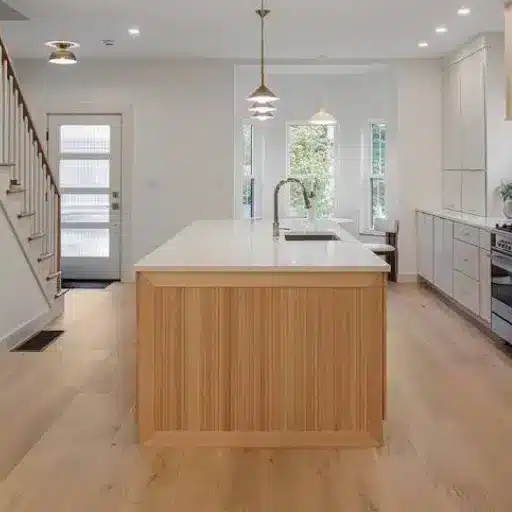
Wide plank engineered wood flooring works in most residential and light commercial spaces, but some rooms need extra thought.
Living rooms and bedrooms: Ideal. Stable humidity, moderate traffic, and plenty of design flexibility.
Kitchens and dining areas: A good fit if spills are wiped quickly. Choose a hard species like oak or hickory and a durable UV-cured finish.
Basements and concrete slabs: One of the best wood options available. Use glue-down installation and a moisture barrier.
Over radiant heat: Engineered construction handles the temperature cycles better than solid wood. Keep the surface temperature below 27°C (80°F).
Bathrooms and laundry rooms: Not recommended. Even engineered wood is vulnerable to standing water and high humidity. Consider waterproof engineered wood flooring alternatives in these spaces.
Commercial spaces: Suitable for offices, boutiques, and hospitality areas with moderate foot traffic. Specify a thick wear layer and a commercial-grade finish.
Maintaining Wide Plank Engineered Wood Floors
Routine maintenance protects your investment and keeps the floor looking its best.
- Sweep or vacuum regularly to remove abrasive grit.
- Use a pH-neutral hardwood cleaner and a barely damp mop. Avoid steam mops and excessive water.
- Maintain indoor relative humidity between 35% and 55% year-round.
- Add felt pads under furniture legs and use rugs in high-traffic areas.
- Wipe spills immediately to prevent moisture damage.
Refinishing depends on wear layer thickness. A 2 mm wear layer may not be refinishable. A 3–4 mm layer can usually be screened and recoated once. A 5–6 mm layer can be sanded and refinished one to three times. When the wear layer is gone, replacement is the only option.
Frequently Asked Questions
What is considered wide plank flooring?
Wide plank flooring generally refers to boards 5 inches or wider. The most popular premium range is 7–9 inches, with 10 inches and above considered ultra-wide.
Is wide plank flooring more expensive?
Yes, wide planks usually cost more per square foot than standard-width boards because they require larger, higher-grade logs and more careful manufacturing. However, they cover floor area faster, which can reduce labor time.
Does wide plank flooring make a room look bigger?
Yes. Fewer seams create a cleaner, less busy surface that can make a room feel more open and expansive. Lighter colors and longer boards enhance the effect.
Can wide plank flooring be used in small rooms?
Yes. The idea that small rooms need small planks is a myth. Wide planks can actually make a small room feel less cluttered.
Is engineered wide plank better than solid wide plank?
For most modern homes, yes. Engineered wide plank is more stable, works over more subfloor types, and handles humidity changes better. Solid wide plank lasts longer if perfectly maintained but is riskier in wide formats.
Can engineered wide plank flooring be refinished?
Sometimes. It depends on wear layer thickness. A 4–6 mm wear layer allows 1–3 refinishes. A 2 mm wear layer typically cannot be sanded.
What is the best installation method for wide plank engineered flooring?
Glue-down is best for stability, especially over concrete and for boards 7 inches or wider. Nail-down with glue-assist is a strong alternative over plywood subfloors.
Conclusion
Wide plank engineered wood flooring gives you the bold, natural look of real hardwood with the stability and installation flexibility modern projects need. The key is choosing the right specs: a thick wear layer, a quality cross-grain core, the right width for your space, and an installation method that keeps the boards locked in place.
Sustainability matters too. Prioritize FSC-certified wood, low-VOC finishes, and suppliers who can document their chain of custody. A floor built this way doesn’t just look better — it performs better and leaves a lighter footprint.
Ready to explore wide plank engineered wood flooring for your next project? Browse our sustainable flooring options or contact our team for a personalized quote and expert guidance.
Sources: