

Best Engineered Wood Flooring: How to Choose in 2026
The best engineered wood flooring in 2026 is the plank that matches your wear layer, core, species, finish, and certification to the room’s traffic, moisture risk, and climate, not the brand with the biggest marketing budget. That answer frustrates buyers who want a simple ranked list. It also saves them from expensive mistakes.
Most “best of” roundups online are affiliate lists. They reward whoever pays the highest commission, not the product that performs best in your project. A floor that works beautifully in a dry Arizona living room can fail within two winters in a humid Florida basement. Real wood is real wood, but engineered construction adds layers of variables. If you understand those variables, you can shop like a specifier instead of a shopper.
In this engineered wood flooring buying guide, you’ll learn a transparent framework for choosing the best engineered wood flooring for busy households, basements, radiant heat, kitchens, and design-forward spaces. We’ll cover wear layer thickness, core types, species hardness, finishes, certifications, and the most common buying mistakes. By the end, you’ll know exactly what to demand from a supplier.
Key Takeaways
- The best engineered wood flooring depends on use case, not brand popularity.
- Aim for a 3–4 mm wear layer for residential projects and 5–6 mm for premium or commercial use.
- Plywood cores are more stable than HDF cores in moisture-prone areas.
- Harder species like hickory and maple outperform softer woods in homes with pets and children.
- Always verify FSC, FloorScore, GREENGUARD, or EPA TSCA Title VI claims with documentation.
What Makes Engineered Wood Flooring “the Best”?

Engineered wood flooring is a real hardwood veneer bonded over a multi-layer core. The top layer, called the wear layer or veneer, gives the floor its grain, color, and character. The core beneath provides dimensional stability. That combination makes engineered wood more adaptable than solid hardwood in many environments.
Whether you call it engineered wood or engineered hardwood, the best engineered hardwood flooring is the plank matched to your project’s wear layer, core, species, finish, and certification needs. For a third-floor condo in Denver, best might mean a wide-plank white oak with a natural oil finish. For a basement gym in Atlanta, best means a stable plywood core, a moisture barrier, and a finish that survives foot traffic. For a commercial lobby in London, the best means a thick wear layer, hard species, and low-VOC certification.
If you want the full picture of how engineered wood is built and where it outperforms solid hardwood, read our complete guide to engineered wood flooring.
Selection Criteria for the Best Engineered Wood Flooring

Use these seven criteria as a scorecard when comparing products. A floor that scores well across all seven is usually a safer long-term investment than a floor that wins on price alone.
- Wear layer thickness. Thicker veneers can be sanded and refinished more times. Budget products often have 0.6–1 mm wear layers that cannot be refinished. Premium products offer 4–6 mm, comparable to solid wood.
- Core construction. Plywood cores are dimensionally stable and handle moisture better than high-density fiberboard (HDF) cores. Some high-end products use an engineered solid-wood core for maximum stability.
- Wood species and Janka hardness. Harder species resist dents and scratches. Oak, maple, hickory, walnut, and bamboo each suit different traffic levels and styles.
- Finish type. Aluminum oxide and UV-cured polyurethane finishes offer strong scratch resistance. Natural oil finishes look rich but need more maintenance.
- Certifications. FSC or PEFC forestry certification, FloorScore or GREENGUARD for indoor air quality, and EPA TSCA Title VI or CARB ATCM for formaldehyde limits.
- Installation method compatibility. Floating click-lock systems install quickly over concrete. Glue-down systems work well for radiant heat. Nail-down requires a wood subfloor.
- Warranty and supplier transparency. A strong residential warranty covers at least 25 years for finish and lifetime for structural integrity. Vague warranties or missing certifications are red flags.
When Priya renovated a beach rental in Sarasota, she started with brand names. Her contractor asked two questions: how much sand and salt would the floor see, and did she plan to refinish it? Those questions pushed her toward a 4 mm wear layer hickory with an aluminum oxide finish. The upfront cost was higher than the bargain option, but the floor has held up through three busy rental seasons without a screen and recoat.
Need help matching these criteria to your project? Contact our team for a tailored recommendation.
Best Engineered Wood Flooring by Use Case
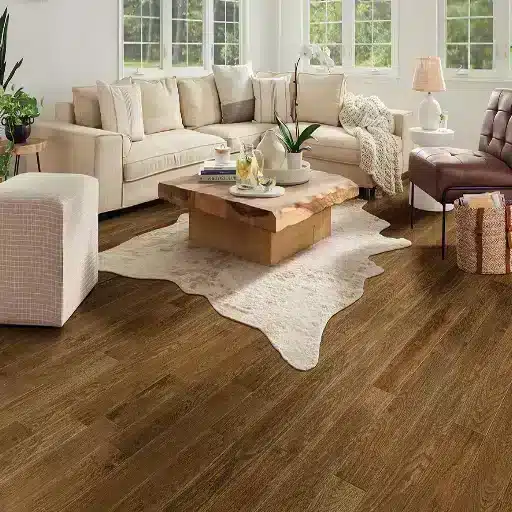
Instead of a generic top-ten list, this section matches the best engineered wood flooring to common project conditions.
Best for Busy Households and Pets
Choose hickory or maple with a wire-brushed or distressed texture and an aluminum oxide or UV-cured finish. The harder species and textured surface hide claw marks and dropped toys better than smooth walnut or cherry. A 3–4 mm wear layer gives you room to sand out future damage. For households with dogs, the best engineered wood flooring for dogs combines a hard species, a textured finish, and a tough aluminum oxide layer.
Best for Basements and Concrete Slabs
Look for a plywood core with a moisture barrier and a total thickness of 14–18 mm. Avoid HDF cores below grade. Engineered wood handles concrete better than solid hardwood, but it is not waterproof. For more on why engineered wins over solid in basements, see our engineered hardwood vs solid hardwood comparison.
Best for Radiant Heat
Stable species like oak and maple, installed as a glue-down system, usually perform best over radiant heating. Keep the surface temperature below 27°C (80°F) and follow the manufacturer’s acclimation guidelines. Total thickness around 14–15 mm allows heat to transfer efficiently.
Best for Kitchens and Water-Prone Areas
Standard engineered wood can handle occasional kitchen spills if they are wiped quickly. For higher water risk, consider a water-resistant engineered product or a waterproof hybrid. Read our guide to waterproof engineered wood flooring to understand what “waterproof” actually means.
Best for Luxury and Design-Forward Spaces
Wide-plank European oak with a natural oil or smoked finish creates a high-end look. For design guidance, explore our article on wide plank engineered wood flooring.
Best for Sustainability
Prioritize FSC- or PEFC-certified products with EPDs and low-VOC finishes. The most sustainable floor is the one you do not replace. A thick wear layer extends useful life and reduces waste.
Engineered Wood Flooring Species Guide
Species affects appearance, hardness, and durability. The Janka hardness scale measures how much force it takes to embed a steel ball halfway into the wood. Higher numbers mean harder, more dent-resistant floors.
| Species | Janka Hardness | Character | Best For |
|---|---|---|---|
| Hickory | ~1,820 | Rustic grain, high variation | Busy homes, pets, high traffic |
| Hard Maple | ~1,450 | Fine grain, modern look | Modern interiors, active households |
| White Oak | ~1,360 | Stable, versatile, popular | Most residential projects |
| Red Oak | ~1,290 | Warm tone, classic grain | Traditional homes, moderate traffic |
| Walnut | ~1,010 | Rich color, smooth grain | Low-traffic design spaces |
| Strand-Woven Bamboo | ~3,000–5,000 | Very hard, eco-friendly | High traffic, sustainability goals |
Oak remains the most popular species because it balances hardness, stability, and cost. If you want a deeper look at oak options, our engineered oak flooring guide breaks down white oak, red oak, and European oak.
Top Engineered Wood Flooring Brands in 2026
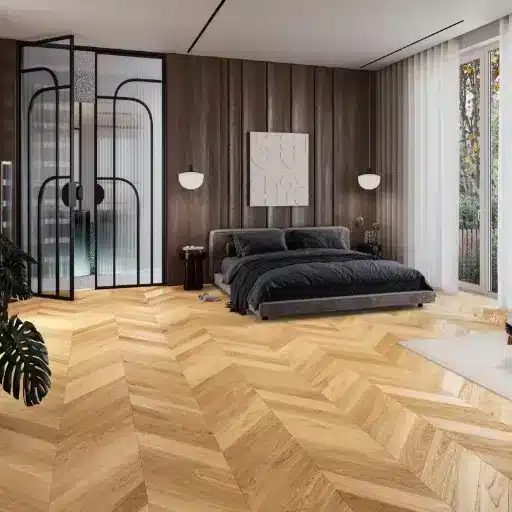
A brand-neutral overview helps you understand the market without pushing one manufacturer. Compare any product you consider against these benchmarks.
Emerging direct-to-consumer brands. Proximity Mills, Doma, Paradiso, Liberty Home, and Newton have gained attention for category-specific products and transparent specs. They often emphasize wear layer thickness and low-VOC finishes.
Legacy US manufacturers. Shaw, Mohawk, Armstrong, and Bruce have broad distribution and long warranties. Their product lines range from budget-friendly to premium, but always check the specific wear layer and core rather than assuming quality from the name.
UK and European producers. Ted Todd, Chaunceys, Lalegno, Boen, and Quick-Step are known for wide-plank European oak and strong environmental credentials. Many carry FSC and PEFC certification. These names frequently appear in top-rated engineered wood flooring lists for buyers who value both design and provenance.
At VitalWood Global, we supply custom, specifier-grade engineered wood flooring sourced from certified forests. We can match or exceed these benchmarks while tailoring species, dimensions, finish, and certification to your project.
For context on how engineered wood compares to another popular option, read our engineered wood flooring vs laminate breakdown.
How to Read Engineered Wood Flooring Reviews
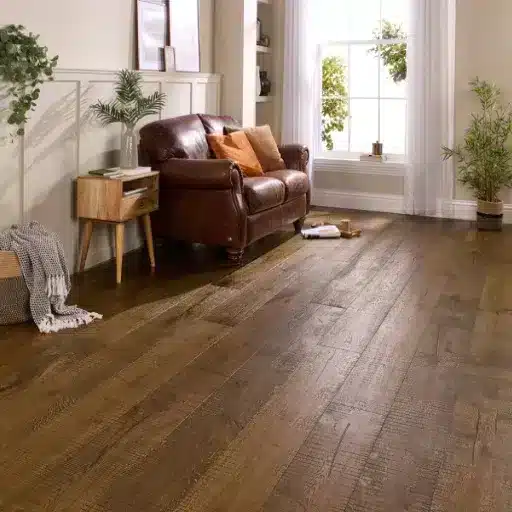
Online engineered wood flooring reviews can be helpful, but they can also be misleading. A five-star review from a homeowner in a dry climate tells you little about how the same plank performs in a humid basement. Look for reviews that mention the install environment, the wear layer thickness, and how long the floor has been down.
Pay attention to recurring complaints. If multiple buyers report chipping at the click-lock joint, that is a product or installation red flag. If reviewers praise the finish after two years of heavy traffic, the finish is likely durable. Ignore one-off shipping complaints when judging product quality.
Third-party roundups like the Bob Vila engineered wood flooring guide can give you a market overview, but they rarely disclose testing methodology. Treat them as a starting point, not a final answer. The best review is one that matches your project conditions, species, and expected traffic level.
For a deeper look at pricing, see our engineered wood flooring cost breakdown.
Certifications and What They Actually Mean
Certifications separate verifiable claims from greenwashing. Here is what the most common labels actually prove.
- FSC (Forest Stewardship Council). Verifies that wood comes from responsibly managed forests. Learn more at the FSC website.
- PEFC (Programme for the Endorsement of Forest Certification). Provides chain-of-custody tracking from forest to floor.
- FloorScore. Certifies low VOC emissions. Details are available from SCS Global Services.
- GREENGUARD / GREENGUARD Gold. Tests products for chemical emissions that affect indoor air quality.
- EPA TSCA Title VI / CARB ATCM. Sets formaldehyde emission limits for composite wood cores and adhesives.
- EPDs (Environmental Product Declarations). Offer lifecycle data on environmental impact.
LEED and BREEAM projects often require FSC or PEFC wood and low-emitting materials. If you are specifying for a green building, ask your supplier for certificates rather than marketing claims.
How to Avoid Common Buying Mistakes
Even well-informed buyers make these mistakes. Avoiding them will save money and regret.
- Believing all engineered wood is waterproof. It is not. Standard engineered wood resists moisture better than solid hardwood, but standing water damages it. Use waterproof hybrids or luxury vinyl for flood-risk areas.
- Ignoring wear layer thickness. A thin veneer cannot be refinished. If you plan to stay in the home for decades, invest in at least 3 mm.
- Choosing HDF core for wet basements. HDF swells when exposed to moisture. Plywood or solid-engineered cores are safer below grade.
- Trusting vague “eco-friendly” claims without certification. Demand FSC, FloorScore, GREENGUARD, or EPA TSCA Title VI documentation.
- Overlooking acclimation and expansion gaps. Even stable engineered wood needs proper acclimation and perimeter gaps to perform.
Marcus, a builder in Seattle, learned the acclimation lesson the hard way. He installed engineered maple in a basement fitness studio on a cold concrete slab. The planks had sat in the garage for three days, not inside the conditioned room. Within six months, slight cupping appeared near the exterior wall. The fix was a controlled re-acclimation and better moisture testing on the next job, not a product flaw, but an installation oversight.
For installation best practices, see our engineered wood flooring installation guide.
Engineered Wood Flooring Cost in 2026
Price is one of the first questions buyers ask, and the answer depends on material grade, installation method, and certification level.
| Grade | Material Cost (per sq ft) | Typical Total Installed |
|---|---|---|
| Budget | $4.50–$7 | $7–$10 |
| Mid-range | $7–$12 | $10–$16 |
| Premium | $12–$17+ | $16–$22+ |
Budget products usually have thinner wear layers, HDF cores, and shorter warranties. Mid-range products add plywood cores and 3–4 mm wear layers. Premium products offer 5–6 mm wear layers, custom finishes, and strong certifications.
For a detailed breakdown, see our engineered wood flooring cost guide. Keep in mind that new hardwood floors recover roughly 118% of their cost at resale, according to data cited by ListWithClever.
FAQ
What is the best thickness for engineered wood flooring?
Total thickness of 14–18 mm is typical. For underfloor heating, 14–15 mm transfers heat best. For maximum stability and refinishing potential, look for a thick wear layer rather than just thick total plank.
Which engineered wood flooring is most durable?
Hickory, hard maple, and strand-woven bamboo are among the most durable species. Durability also depends on finish, wear layer thickness, and installation quality.
Is engineered wood flooring good for pets?
Yes, with the right species and finish. Choose harder woods, wire-brushed textures, and aluminum oxide finishes. Keep pet nails trimmed and clean spills quickly.
Can engineered wood flooring be refinished?
It depends on the wear layer. A 2 mm layer supports one light sanding. A 3–4 mm layer supports 2–3 sandings. A 5–6 mm layer behaves almost like solid wood.
Is waterproof engineered wood flooring really waterproof?
Waterproof engineered products resist spills and humidity better than standard engineered wood, but no wood floor survives flooding or standing water indefinitely. For more details, read our waterproof engineered wood flooring guide.
What is the best engineered wood flooring for kitchens?
White oak or maple with a durable finish works well if spills are wiped quickly. For higher water exposure, choose a water-resistant engineered product or a waterproof hybrid.
How do I know if engineered wood flooring is sustainable?
Look for FSC or PEFC chain-of-custody certification, FloorScore or GREENGUARD labels, and EPA TSCA Title VI compliance. Ask the supplier for certificates.
What is a good wear layer for engineered wood flooring?
For residential use, 3–4 mm is a good balance of refinishing potential and cost. For commercial or long-term ownership, 5–6 mm is worth the premium.
Conclusion
The best engineered wood flooring is not a single product or brand. It is the combination of the right wear layer, core, species, finish, and certification for your specific project. Start with how the room will be used, then match the floor to the traffic, moisture, and climate conditions.
Engineered wood now accounts for roughly 72% of hardwood flooring sales, according to Mordor Intelligence. That dominance reflects a simple truth: buyers want the beauty of real wood without the instability of solid planks in modern homes.
At VitalWood Global, we help architects, builders, designers, and homeowners source certified, custom-engineered wood flooring that meets strict performance and sustainability standards. If you are comparing products and want a second opinion on wear layer thickness, species selection, or certification, contact our team for a personalized quote.
Ready to keep learning? Explore our engineered oak flooring species guide, compare engineered hardwood vs solid hardwood, or read our engineered wood flooring installation guide before your project starts.