

Engineered Wood Flooring: The Complete 2026 Buyer’s & Installation Guide
Engineered wood flooring is real hardwood built in layers: a solid wood veneer on top, bonded to a stable plywood or fiberboard core. That layered construction gives it the look and feel of solid hardwood while handling moisture, temperature swings, and installation in places solid wood cannot go. According to Mordor Intelligence, engineered wood captured nearly 72% of all hardwood flooring sales in recent years, and the category is still growing faster than solid hardwood.
Yet walk into a flooring showroom or start comparing quotes online, and the choices quickly become overwhelming. Wear layers, core types, click-lock systems, aluminum oxide finishes, FSC labels, and waterproof claims compete for your attention. Many buyers leave more confused than when they arrived.
This guide cuts through the noise. Whether you are an architect specifying floors for a commercial project, a builder choosing materials for a multi-family build, or a homeowner renovating a kitchen, you will learn how engineered wood flooring is constructed, where it performs best, what it costs in 2026, and how to install it so it lasts.
Key Takeaways
- Engineered wood flooring pairs a real hardwood veneer with a layered core, making it more stable than solid hardwood in humid or below-grade spaces.
- In 2025, engineered wood accounted for roughly 72% of hardwood flooring sales, driven by faster installation, wider design options, and better moisture tolerance.
- Total installed costs in 2026 typically range from 8to8to20 per square foot, with most mid-range projects landing between 10and10and16.
- A wear layer of 2 mm or more allows refinishing; 4–6 mm wear layers can be refinished multiple times.
- Look for FSC, PEFC, FloorScore, or GREENGUARD certifications to verify sustainable sourcing and low indoor emissions.
What Is Engineered Wood Flooring?
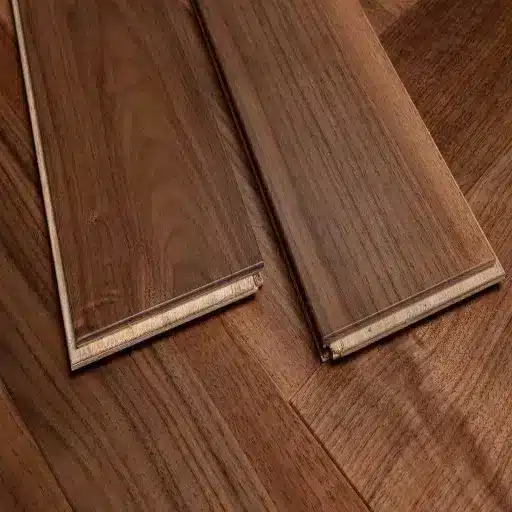
Engineered wood flooring—sometimes called engineered hardwood flooring—is a manufactured floor product that uses a thin slice of genuine hardwood, called a wear layer or veneer, bonded over a multi-layer core. The core usually consists of plywood, high-density fiberboard (HDF), or softwood layers arranged in alternating directions. That cross-layered structure is the secret to its stability.
Solid hardwood is one continuous piece of wood from top to bottom. It expands and contracts across the grain as humidity rises and falls, which can cause gaps, cupping, or buckling in damp or variable climates. Engineered wood still moves, but the opposing grain directions in the core resist that movement, so the planks stay flatter and more dimensionally stable.
The top veneer is real wood, not a printed image. That means engineered oak flooring has the same grain, texture, and warmth as solid oak. You can sand and stain it if the wear layer is thick enough, and it adds real estate value the way solid hardwood does.
Engineered Wood vs. Laminate and LVP
This is where confusion often starts. Laminate and luxury vinyl plank (LVP) may look like wood, but they are fundamentally different products.
| Feature | Engineered Wood | Laminate | LVP |
|---|---|---|---|
| Top surface | Real hardwood veneer | Photographic image of wood | Photographic image or printed vinyl |
| Core | Plywood, HDF, or softwood | Fiberboard | PVC or stone-plastic composite |
| Can be refinished | Yes, if the wear layer is thick enough | No | No |
| Feels like wood | Yes | No | No |
| Typical lifespan | 20–100 years depending on the wear layer | 15–25 years | 10–30 years |
| Adds resale value | Yes | Minimal | Minimal |
Laminate and LVP have their place. They cost less, install quickly, and handle moisture well. But if you want the authenticity, repairability, and value of real wood, engineered wood flooring is the right category.
Engineered Wood vs Solid Hardwood: How They Compare
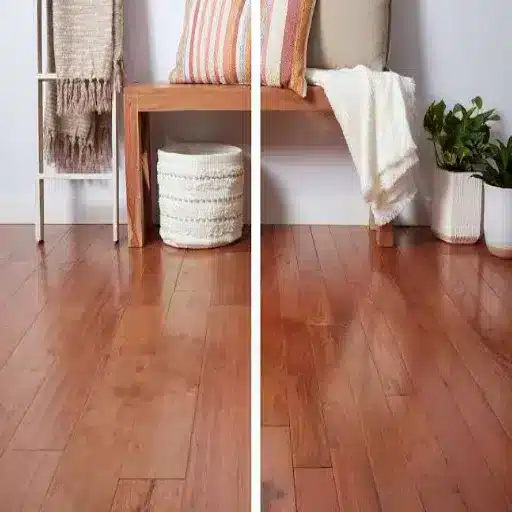
Solid hardwood has been the gold standard for centuries. It can be sanded and refinished many times, lasts generations, and carries a premium feel. However, engineered wood flooring now dominates the market for good reason.
When buyers research engineered wood vs solid hardwood, the biggest differences are stability, cost, and installation location.
Stability and Dimensional Movement
Wood is hygroscopic. It absorbs moisture when humidity rises and releases it when the air dries. Solid hardwood reacts across its width, which can create seasonal gaps or worse in climates with wide humidity swings. Engineered wood’s cross-ply core limits that movement. Some manufacturers report engineered products are up to 75% more dimensionally stable than solid wood of the same species.
This stability matters in basements, over concrete slabs, in kitchens and bathrooms, and anywhere with underfloor heating.
Cost and Installation
Solid hardwood typically costs $12 to $27 or more per square foot installed. Engineered wood flooring usually runs $8 to $20 per square foot installed. The savings come from faster installation, especially with click-lock floating systems, and from a more efficient use of slow-growing hardwood species.
Refinishing Potential
Solid hardwood can be refinished 6–10 times over its life. Engineered wood can be refinished only as many times as its wear layer allows. A 2 mm wear layer supports one or two light sandings. A 4–6 mm wear layer behaves more like solid wood and supports multiple refinishing cycles. If you want a floor that can be refreshed decades from now, prioritize a thicker wear layer.
Where Each Works Best
Solid hardwood excels in above-grade living spaces, historic restorations, and luxury homes where multiple refinishing cycles are expected. Engineered wood flooring works almost anywhere, including below-grade basements, concrete slabs, radiant-heat systems, and humid climates.
For a deeper side-by-side comparison, see our complete guide to engineered hardwood vs. solid hardwood.
Engineered Wood Flooring Pros and Cons
No floor is perfect for every situation. Here is an honest look at the strengths and limits of engineered hardwood flooring.
Pros
- Real wood surface. The top veneer is genuine hardwood, so you get authentic grain, texture, and warmth underfoot.
- Superior stability. Cross-layered cores resist expansion and contraction better than solid wood.
- Moisture tolerance. Engineered wood performs better in humid rooms, basements, and over concrete than solid hardwood.
- Installation flexibility. You can float, glue, or nail it down depending on the subfloor and product.
- Faster installation. Click-lock floating floors go down quickly, reducing labor costs.
- Design variety. Available in oak, maple, hickory, walnut, bamboo, wide planks, herringbone, and custom finishes.
- Efficient resource use. A thin veneer over a fast-growing core uses less slow-growth hardwood than solid planks.
- Radiant-heat compatible. Many engineered products are approved for installation over hydronic or electric radiant heat.
Cons
- Limited refinishing. Thin wear layers cannot be sanded and refinished more than once or twice.
- Not waterproof. Engineered wood is water-resistant, but standing water will damage it.
- Quality variance. The market ranges from premium 6 mm veneer products to cheap 1 mm veneer floors with poor cores.
- Adhesive and finish concerns. Lower-quality products may use high-formaldehyde adhesives or solvent-heavy finishes.
- Cannot be sanded to full thickness. Even thick-veneer engineered floors eventually reach the core if refinished repeatedly.
How Engineered Wood Flooring Is Constructed
Understanding the layers helps you evaluate quality and avoid overpaying for the wrong product.
Wear Layer Thickness and Species
The wear layer is the top slice of hardwood you see and walk on. Thickness determines how long the floor lasts and whether it can be refinished.
| Wear Layer | Refinishing Potential | Typical Use Case |
|---|---|---|
| 0.6–1 mm | Cannot be refinished | Budget, temporary installations |
| 2 mm | 1 light sanding | Entry-level residential |
| 3–4 mm | 2–3 sandings | Mid-range, long-term residential |
| 5–6 mm | 4–6 sandings | Premium, multi-generational use |
Species also matters. Oak and hickory are hard and dent-resistant. Walnut and cherry are softer but prized for color and grain. Our engineered oak flooring guide covers species selection in detail.
Core Types
The core is what gives engineered flooring its stability. Three common types exist:
- Plywood core. Multiple thin layers of wood veneer glued in alternating grain directions. This is the most stable and reliable core for most applications.
- HDF core. High-density fiberboard creates a very hard, flat core. It works well for click-lock floating floors but is less forgiving in wet conditions than plywood.
- Solid-engineered core. A single species core, often softwood, used in thicker products. It balances stability with a traditional solid-wood feel.
Backing and Balance Layers
A backing layer on the bottom balances the tension created by the top veneer. Without it, planks can bow. High-quality products use a backing layer that mirrors the top layer’s moisture movement, keeping the plank flat.
Click-Lock vs. Tongue-and-Groove
Click-lock planks connect without glue or nails, making them ideal for floating installations. Tongue-and-groove planks may need a bead of adhesive along the joint, especially in glue-down or nail-down applications. Both systems work well; the right choice depends on your installation method and subfloor.
Wood Species and Finishes for Engineered Flooring
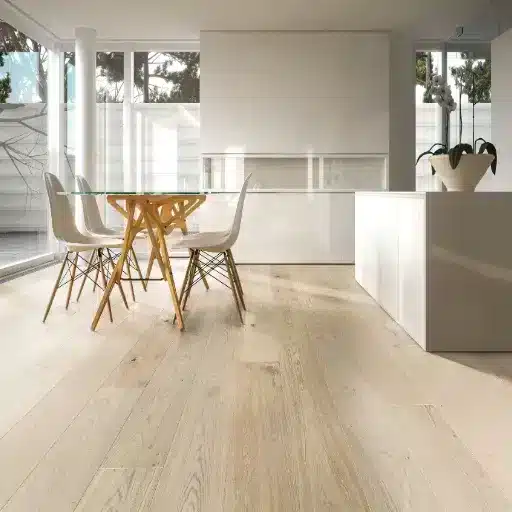
The species you choose affects hardness, color, grain, and price. The finish affects durability, maintenance, and appearance.
Popular Species
- Oak. The most popular species for engineered flooring. It is hard, stable, takes stain well, and offers a wide range of colors from white oak to red oak.
- Maple. Harder than oak with a subtle, clean grain. Best for contemporary spaces and high-traffic areas.
- Hickory. Extremely hard and distinctive. Ideal for rustic or country-style homes and homes with pets.
- Walnut. Softer than oak but valued for rich, chocolate-brown tones. Best in low-traffic, design-forward rooms.
- Bamboo. Technically a grass, but often grouped with wood flooring. Strand-woven bamboo is very hard and eco-friendly due to fast regrowth.
Finishes
- Oil-based polyurethane. Deep, amber tone. Durable but takes longer to dry and has stronger odors during application.
- Water-based polyurethane. Clear, low-odor, quick-drying. Does not yellow over time, making it popular for white oak and gray finishes.
- UV-cured polyurethane. Factory-applied and cured instantly with ultraviolet light. Extremely durable and consistent.
- Hardwax oil. Penetrates the wood and highlights grain. Easy to spot-repair but requires more frequent maintenance than polyurethane.
- Aluminum oxide. A ceramic-infused finish used on many prefinished floors. Highly scratch-resistant but difficult to refinish.
Texture options include smooth, wire-brushed, hand-scraped, and distressed. Wire-brushed textures hide minor scratches and wear, which is why they are popular in homes with pets and children.
Where Can You Install Engineered Wood Flooring?
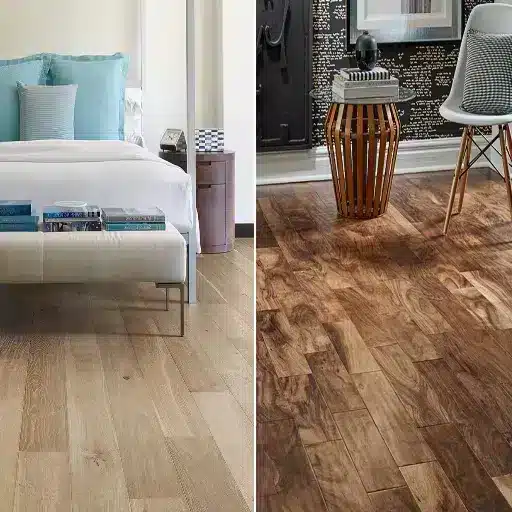
One of engineered wood’s biggest advantages is versatility. Here is a room-by-room breakdown.
Basements and Concrete Slabs
Solid hardwood is generally not recommended below grade because concrete releases moisture and basements are prone to humidity spikes. Engineered wood flooring handles these conditions better, especially when paired with a moisture barrier and the right underlayment. For a deep dive, see our guide to engineered wood flooring for basements.
Kitchens
Engineered wood works in kitchens if spills are wiped quickly. A water-resistant finish and a slightly beveled edge help, but standing water around sinks and dishwashers remains a risk. If you want real wood in the kitchen, choose a thicker wear layer and a durable polyurethane finish.
Bathrooms
Most manufacturers do not recommend engineered wood in full bathrooms because steam and pooled water can seep into joints. Powder rooms are usually fine with proper precautions. For wet areas, see our article on waterproof engineered wood flooring.
Living Rooms and Bedrooms
These are the easiest applications. Engineered wood adds warmth, comfort, and resale value. Floating click-lock installations are popular here because they are fast and less disruptive.
Commercial Spaces
Offices, retail stores, and hospitality projects often use engineered wood because it installs quickly and handles high foot traffic when specified with a thick wear layer and durable finish. Builders should look for commercial-grade products with higher Janka hardness and longer warranties.
Homes with Pets
Choose a harder species like hickory or maple, a wire-brushed or distressed texture, and an aluminum oxide or UV-cured finish. Keep nails trimmed and clean spills promptly. Even the hardest wood will scratch under the right conditions.
Over Radiant Heat
Engineered wood is one of the best real-wood options for radiant heating because its layered core resists the drying effects of heat. Follow manufacturer guidelines: keep surface temperature below 27°C (80°F), acclimate the flooring properly, and leave expansion gaps.
Engineered Wood Flooring Cost in 2026
Understanding engineered wood flooring cost helps buyers allocate budget across material, labor, and subfloor preparation. The engineered wood flooring market continues to expand as homeowners and commercial specifiers prioritize durability and aesthetics, a trend tracked by Business Research Insights.
Material-Only Costs
| Grade | Cost per Sq Ft | Typical Features |
|---|---|---|
| Budget | $4.50–$7 | Thin wear layer, basic core, limited species |
| Mid-range | $7–$12 | 2–3 mm wear layer, plywood core, more species and finishes |
| Premium | $12–$16+ | 4–6 mm wear layer, thick plywood core, custom finishes |
| Luxury/wide plank | $16–$25+ | Extra-wide planks, long lengths, designer finishes |
Total Installed Costs
| Project Type | Installed Cost per Sq Ft |
|---|---|
| Budget / entry-level | $7–$10 |
| Mid-range | $10–$16 |
| Premium / high-end | $16–$20+ |
| Solid hardwood comparison | $12–$27+ |
HomeAdvisor reports an average of $6,750 for a 500-square-foot engineered wood installation, or about $13.50 per square foot, with total projects ranging from $3,500 to $10,000. The Business Research Company also publishes global wood flooring market data useful for commercial budgeting.
Hidden Costs to Budget For
- Subfloor leveling or repair: $2–$10 per square foot
- Old floor removal: $1–$4 per square foot depending on material
- Moisture barrier or underlayment: $0.50–$2 per square foot
- Stairs: $90–$160 per tread
- Complex patterns: Herringbone and chevron can add 25–40% to labor
For a full pricing breakdown, visit our engineered wood flooring cost guide.
How to Install Engineered Wood Flooring
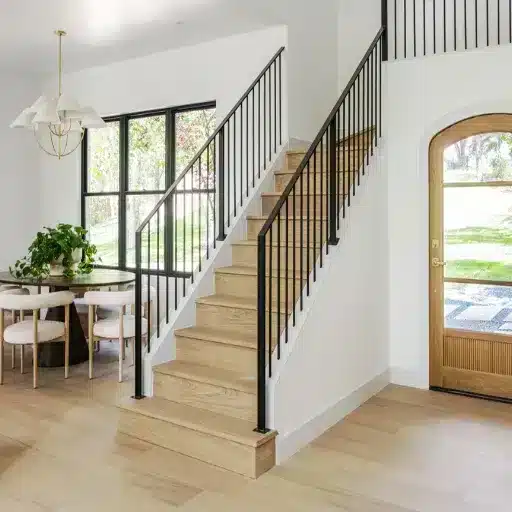
Installation method depends on the subfloor, the product, and the room. Most engineered floors can be installed three ways.
Floating Installation
The floor rests over an underlayment without being attached to the subfloor. Planks click together at the edges. This is the fastest method and works well over concrete, plywood, or existing flooring. Floating floors need a quality underlayment for moisture protection, sound absorption, and thermal insulation.
Glue-Down Installation
Adhesive is applied directly to the subfloor, and planks are pressed into place. Glue-down floors feel solid underfoot, transmit less sound, and are ideal for concrete slabs and radiant-heat systems. The downside is longer installation time and the need for proper adhesive selection and cleanup.
Nail-Down or Staple-Down Installation
This traditional method fastens planks to a wood subfloor through the tongue. It requires a flooring nailer or stapler and some skill. Nail-down installation creates a permanent, squeak-resistant floor and is common in new construction with plywood or OSB subfloors.
Subfloor Preparation
A successful installation starts below the floor. The subfloor must be clean, dry, level, and structurally sound. Check moisture content, especially over concrete. Most manufacturers require concrete moisture levels below 4% before installation.
Acclimation
Engineered wood needs time to adjust to the room’s temperature and humidity before installation. Manufacturer recommendations range from 48 to 72 hours, but some products benefit from 3 to 5 days. Do not skip this step. Improper acclimation is a leading cause of post-installation gaps and buckling.
Expansion Gaps and Underlayment
Leave an expansion gap of 8–12 mm around the perimeter and any fixed objects. This allows the floor to expand during humid months. Use spacers during installation and cover the gap with baseboards or quarter-round molding.
For step-by-step instructions, see our engineered wood flooring installation guide.
Sustainable Engineered Wood Flooring: What to Look For
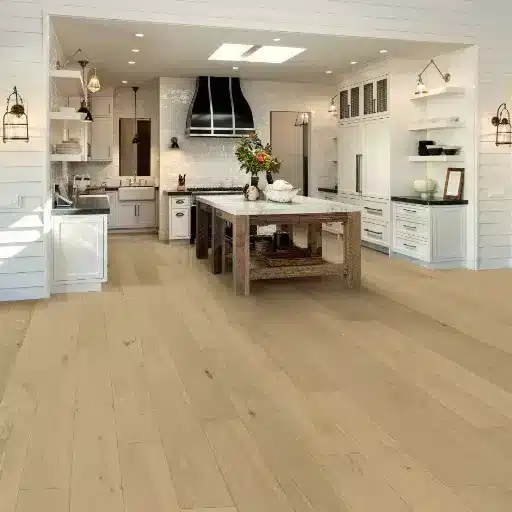
Sustainability is not just a marketing angle for engineered wood. The construction method itself uses resources more efficiently than solid hardwood. A 6 mm wear layer gives you the beauty of oak, walnut, or hickory while using a fraction of the slow-growing hardwood a solid plank would require.
Specifying sustainable engineered wood flooring starts with third-party certifications and transparent sourcing.
Certifications to Look For
- FSC (Forest Stewardship Council). Verifies that the wood comes from responsibly managed forests that protect biodiversity, water quality, and worker rights. Learn more at the FSC website.
- PEFC (Programme for the Endorsement of Forest Certification). Another globally recognized forest certification with strong chain-of-custody tracking.
- SFI (Sustainable Forestry Initiative). Common in North America, it sets standards for responsible forest management.
- FloorScore. Certifies low VOC emissions from flooring products, improving indoor air quality. Details are available from SCS Global Services.
- GREENGUARD and GREENGUARD Gold. Tests for chemical emissions and is often required in schools, healthcare, and LEED projects.
- EPA TSCA Title VI / CARB ATCM. Sets formaldehyde emission limits for composite wood products in the United States.
Low-VOC Adhesives and Finishes
The core and adhesive can be a hidden source of indoor air pollution. Look for products labeled E0, E1, or compliant with EPA TSCA Title VI. Water-based and UV-cured finishes typically emit fewer VOCs than traditional solvent-based finishes.
End-of-Life Considerations
Engineered wood is harder to recycle than solid wood because of adhesives and finishes. Some products can be downcycled into mulch or biomass fuel. Choosing a durable product with a thick wear layer extends the useful life of the floor and reduces replacement waste.
At VitalWood Global, we source engineered wood flooring from certified forests and verify emissions compliance so architects, builders, and homeowners can specify with confidence.
Best Engineered Wood Flooring: How to Choose
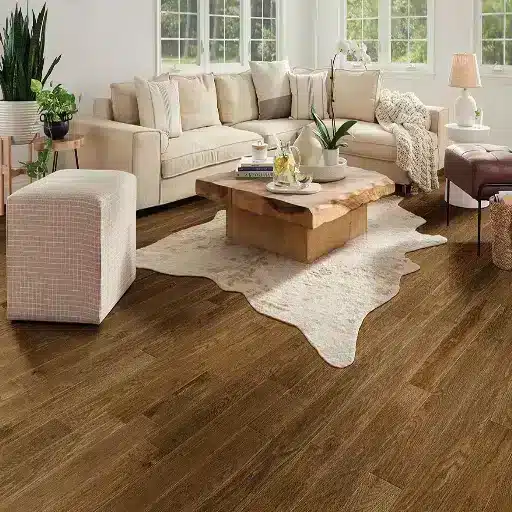
Choosing the best engineered wood flooring for your project means balancing wear layer, core construction, species, finish, and certification. Use this checklist to compare products without getting lost in sales pitches.
1. Wear Layer Thickness
For residential use, aim for at least 2 mm. For long-term value or commercial use, choose 3–4 mm or more.
2. Core Construction
Plywood cores offer the best stability and moisture resistance. HDF cores work well for dry, floating installations. Avoid thin, unspecified cores in budget products.
3. Species and Finish
Match the species to traffic level and style. Choose harder species for high-traffic and pet homes. Select a finish that balances durability with the look you want.
4. Certification
FSC, PEFC, FloorScore, or GREENGUARD labels are strong indicators of responsible sourcing and low emissions.
5. Installation Method
Make sure the product is approved for your planned installation method. Not all engineered floors can be floated, glued, or nailed.
6. Warranty
A strong residential warranty should cover at least 25 years for finish and lifetime for structural integrity. Commercial warranties vary by product grade.
Red Flags to Avoid
- Vague claims like “eco-friendly core” without certification
- Wear layers under 1 mm marketed as “real wood”
- No documentation of formaldehyde compliance
- Prices that seem too good to be true for the claimed thickness
For our full buying guide, see best engineered wood flooring.
2026 Engineered Wood Flooring Trends
Style trends shape demand, and engineered wood is flexible enough to follow them all.
Wide Planks
Planks 7 to 10 inches wide are replacing the traditional 2.25-inch strip look. Wide planks make rooms feel larger and show off grain patterns. They do require extra attention to acclimation and moisture control because wider boards move more across their width. Our wide plank engineered wood flooring guide covers sizing and installation tips.
Herringbone and Chevron
Geometric patterns add visual energy to entryways, dining rooms, and commercial lobbies. These patterns increase material waste and labor cost by 25–40%, but the result is distinctive.
Warm, Natural Tones
After years of gray and ultra-light floors, 2026 leans toward warm honey, natural oak, and light caramel tones. These colors hide dust and scratches better than darker floors while still feeling modern.
Matte and Low-Sheen Finishes
High-gloss floors show every scratch and footprint. Matte, satin, and low-sheen finishes are now the default for residential and commercial projects.
Waterproof Hybrids
Some manufacturers now combine engineered wood construction with water-resistant cores and sealed joints. These products handle kitchens, mudrooms, and basements better than traditional engineered wood, though they still cannot survive flooding.
Engineered Wood Flooring Maintenance and Repair
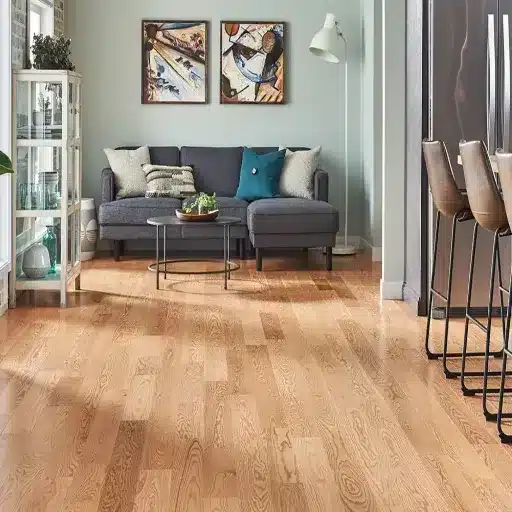
Proper maintenance extends the life of any floor. Engineered wood is no exception.
Daily and Weekly Care
- Sweep, vacuum, or dust-mop regularly to remove grit that scratches the finish.
- Use a damp, not wet, microfiber mop for cleaning. Avoid steam mops.
- Wipe spills immediately. Standing water is the enemy.
- Use felt pads under furniture legs and avoid dragging heavy objects.
Scratch and Spill Protection
Entry mats, area rugs in high-traffic zones, and pet nail trimming all reduce surface damage. For homes with active dogs, choose a harder species and a distressed or wire-brushed texture.
Refinishing Limits
Before sanding, measure or confirm the wear layer thickness. A 2 mm layer can handle one light sanding. A 4–6 mm layer supports multiple refinishing cycles. Screening and recoating, which adds a new finish layer without sanding through the veneer, is a safer option for thinner floors.
When to Repair vs. Replace
Minor scratches can be touched up with stain markers or repair kits. Deep gouges, delamination, or widespread water damage may require replacing individual planks or the entire floor. Keep extra planks from the original batch for color-matched repairs.
For restoration guidance, see our article on refinishing engineered hardwood floors.
FAQ
Is engineered wood flooring waterproof?
No. Engineered wood is water-resistant to varying degrees, but it is not waterproof. Standing water can seep into joints and damage the core. For wet areas, consider waterproof engineered hybrids or alternative materials.
Can you refinish engineered wood floors?
Yes, if the wear layer is thick enough. A 2 mm wear layer can usually be refinished once. Wear layers of 4–6 mm can be refinished multiple times. Products with aluminum oxide finishes are harder to refinish.
How long does engineered wood flooring last?
With proper care, engineered wood flooring can last 20 to 100 years. Budget products with thin wear layers may last 15–20 years. Premium products with thick wear layers can last as long as solid hardwood.
Does engineered wood increase home value?
Yes. Real wood flooring, including engineered wood, is consistently ranked as a desirable feature by homebuyers and can increase resale value compared to carpet, laminate, or vinyl.
Is engineered wood flooring eco-friendly?
It can be. Engineered wood uses less slow-growth hardwood per plank than solid wood. Look for FSC, PEFC, FloorScore, or GREENGUARD certifications to verify sustainable sourcing and low emissions.
How long should engineered wood flooring acclimate?
Most manufacturers recommend 48 to 72 hours. Some products and climates require 3 to 5 days. Always follow the specific product instructions.
Can engineered wood be installed over concrete?
Yes. Engineered wood is one of the best real-wood options over concrete, especially with a moisture barrier and a floating or glue-down installation method.
What is the best underlayment for engineered wood flooring?
The best underlayment depends on the subfloor. For concrete, choose one with a moisture barrier. For upper floors, prioritize sound absorption. For radiant heat, use an underlayment approved for high temperatures.
Is engineered wood flooring better than laminate?
Engineered wood is better if you want real wood, repairability, and resale value. Laminate is better if you need a lower price point and maximum moisture resistance. See our full comparison of engineered wood flooring vs. laminate.
Conclusion
Engineered wood flooring gives you the warmth and value of real hardwood with the stability and flexibility modern projects demand. It works in basements, over concrete, with radiant heat, and in busy households. It also uses forest resources more efficiently than solid hardwood, especially when sourced as sustainable engineered wood flooring from certified forests and finished with low-emission coatings.
The key to a successful project is matching the product to the space. Choose a thick enough wear layer for your expected lifespan, a stable core for your subfloor conditions, and a finish that fits your lifestyle. Then install it with proper acclimation, moisture management, and expansion gaps.
At VitalWood Global, we help architects, builders, designers, and homeowners find engineered wood flooring that looks exceptional and meets strict sustainability standards. If you are planning a project and need guidance on species, certification, or specifications, contact our team for a personalized quote.
Ready to choose your floor? Explore our top-rated engineered wood flooring options guide or get in touch to discuss FSC-certified and custom-engineered options for your next build.