
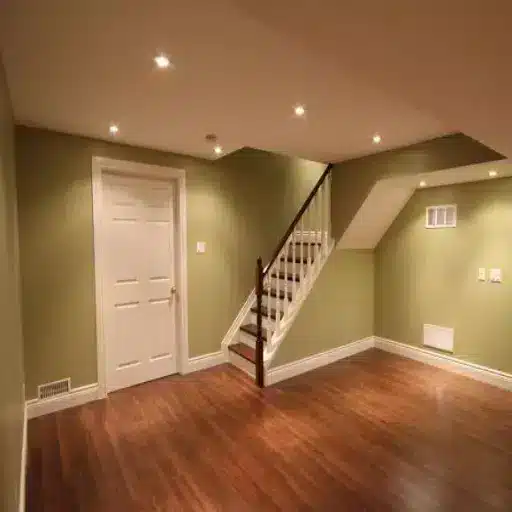
Engineered Wood Flooring for Basements: 2026 Installation & Moisture Guide
Yes, you can use engineered wood flooring for basement projects, but only if the space is dry, conditioned, and properly prepped. Engineered hardwood is not waterproof, and below-grade concrete slabs can hide moisture that destroys wood floors from underneath. The difference between a beautiful basement transformation and a costly repair usually comes down to three things: honest moisture testing, the right vapor barrier, and a dehumidifier that runs year-round.
Maya in Minneapolis learned this the patient way. She wanted real wood in her finished basement, so she spent two weekends on moisture tests, laid a 6-mil polyethylene vapor barrier, and chose a plywood-core engineered oak with a 3 mm wear layer. Three years later, her floor still sits flat and quiet at 40% relative humidity. David in New Orleans took a faster path. His basement felt dry, so he skipped the RH test and floated engineered boards directly over the concrete. Six months later, cupping appeared along the exterior wall, and the repair bill exceeded his original installation cost.
This guide will show you how to get Maya’s result, not David’s. You will learn when engineered hardwood is right for your basement, how to test and prep the slab, which products hold up best below grade, and when luxury vinyl plank or tile is the smarter choice.
Key Takeaways
- Engineered wood flooring works in basements only when the space is dry, conditioned, and protected by a vapor barrier.
- Solid hardwood should almost never go below grade; engineered hardwood’s cross-layered core resists the dimensional movement that ruins solid boards.
- Test concrete moisture with plastic-sheet, calcium chloride, or in-situ RH methods before you buy a single plank.
- Floating installation over a 6-mil vapor barrier is the safest method for most basement concrete slabs.
- Plan for roughly $8–$18 per square foot installed, plus basement-specific extras like moisture testing, subfloor leveling, and a permanent dehumidifier.
- Choose FSC-certified, FloorScore-labeled products to protect indoor air quality and support responsible forestry.
Can You Put Engineered Wood Flooring in a Basement?
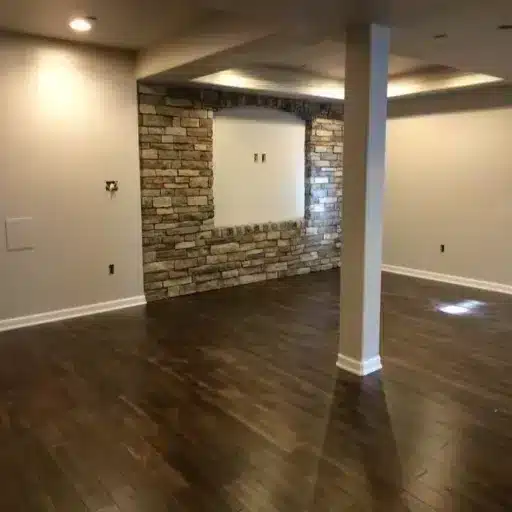
You can put engineered hardwood in a basement, provided the basement is dry, conditioned, and prepared correctly. Engineered wood handles below-grade humidity better than solid hardwood because its cross-layered construction limits expansion and contraction. That stability makes it the only real-wood option most manufacturers will warrant below grade.
But engineered wood is water-resistant, not waterproof. A product like Bruce Hydropel can withstand standing water for up to 36 hours, according to Bruce’s basement guide, yet even that protection has limits. Chronic moisture, flooding history, or an unconditioned basement will defeat any engineered floor over time.
Before you commit, run through this quick decision checklist:
- Moisture history: Has the basement ever flooded, had pooled water, or smelled musty?
- HVAC and dehumidification: Can the space stay between 60°F and 80°F with 30–50% relative humidity year-round?
- Drainage: Do gutters, downspouts, and grading move water away from the foundation?
- Slab condition: Is the concrete free of active moisture, cracks, and old adhesive?
- Budget: Can you cover moisture testing, vapor barriers, leveling, and a dehumidifier on top of the floor itself?
If you answer yes to all five, engineered hardwood is a strong candidate. If moisture is a recurring problem, keep reading; the comparison section later will show you better alternatives.
Why Engineered Hardwood Works Better Than Solid Wood Below Grade

The core difference is dimensional stability. Solid hardwood is one thick piece of wood. When humidity rises, it expands across the grain. When humidity drops, it shrinks. In a basement, those cycles are more extreme than upstairs, so solid boards cup, gap, or buckle.
Engineered hardwood sandwiches a real wood veneer over a stable core, usually plywood or high-density fiberboard (HDF). The core layers run in alternating directions, which locks the board in place. This construction lets engineered flooring handle the humidity swings that destroy solid wood below grade.
Concrete Compatibility
Basements almost always sit on a concrete slab. You cannot nail solid hardwood into concrete, so solid wood below grade requires a wood subfloor that raises the floor height and creates trapped air spaces. Engineered hardwood gives you two practical options over concrete:
- Floating installation: Boards click together and rest on an underlayment and vapor barrier. The floor moves as one unit, which is ideal for basements.
- Glue-down installation: Boards bond directly to the slab with a vapor-retarding adhesive. This feels more solid underfoot but demands a very dry slab.
For a full walkthrough of methods, see our engineered wood flooring installation guide.
Cost and Installation Efficiency
Engineered hardwood typically costs less to install in a basement than solid hardwood. You avoid the labor and materials of a sleeper subfloor, and floating floors go down faster than nail-down solid boards. The finished height is also lower, which matters when door swings and ceiling heights are tight.
Refinishing Potential
A thick wear layer lets you sand and refinish engineered hardwood one to three times. In a basement, that longevity matters. A floor that can be refreshed after years of use holds value better than a floor that must be torn out. Look for a wear layer of at least 2 mm; 3–4 mm is better if you expect heavy traffic or pets.
When Engineered Wood Flooring Is Not Right for Your Basement
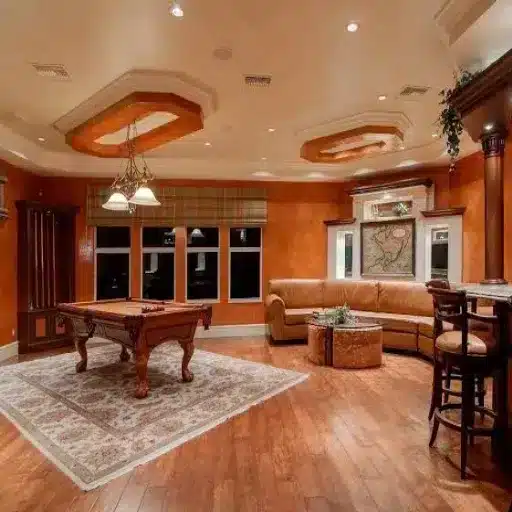
Honesty saves money. There are basements where engineered hardwood is the wrong choice, no matter how attractive the showroom sample looks.
Chronic Moisture or Flooding
If your basement has a sump pump that runs regularly, visible water stains, or a history of flooding, engineered wood is risky. Water can wick through the concrete slab, get trapped under the floor, and cause mold, mildew, and board failure. In these spaces, rigid-core vinyl or tile is the safer long-term investment.
Unconditioned Basements
A basement without heating, cooling, or dehumidification will swing through temperature and humidity ranges that stress any wood floor. If you do not plan to condition the space full time, do not install engineered hardwood there.
Damp Climates Without Mitigation
In humid regions, concrete slabs can stay moist even when the room feels comfortable. Exterior water management, grading, gutters, and downspout extensions must be in place before flooring goes down. Without it, you are treating the symptom while the disease continues.
Tight Budgets
Basement engineered hardwood has hidden costs. Moisture testing, vapor barriers, leveling, and dehumidifiers add $1–$5 per square foot. If the total project budget is stretched, waterproof engineered wood flooring alternatives or luxury vinyl plank may deliver a better result for less.
Basement Moisture Testing: The Step You Can’t Skip
Moisture testing is not optional. It is the single most important step in a basement engineered wood installation. Skip it, and you are gambling with thousands of dollars.
The Plastic Sheet Test (DIY)
Tape a 2-foot by 2-foot sheet of clear plastic to the concrete slab. Seal all four edges with duct tape. Wait 24 to 48 hours, then peel it back.
- Pass: The concrete looks dry and the plastic has no condensation.
- Fail: Darkening on the concrete or water beads under the plastic means active moisture vapor is moving through the slab.
This test is simple but not quantitative. Use it as a first screen, not as final proof.
Calcium Chloride Test
This test measures moisture vapor emission rate (MVER) from the slab. A sealed dish of calcium chloride sits on the concrete for 60 to 72 hours, then the weight gain is measured.
For engineered hardwood over concrete, look for an MVER below 3 pounds per 1,000 square feet per 24 hours. Higher readings mean you need moisture mitigation before flooring.
In-Situ Relative Humidity (RH) Test
The in-situ RH test is the most accurate method. A probe drills into the slab to 40% of its depth and measures the humidity inside the concrete. For engineered wood installation, the reading should generally be below 75–80% RH, though always follow the flooring manufacturer’s specific requirement.
Wood Moisture Content
Both the engineered flooring and the concrete or subfloor should be within 2–4% moisture content of each other before installation. Acclimate the flooring in the basement for at least 48 hours, or up to 5–7 days for some products, so it reaches equilibrium with the room.
How to Prep a Basement Concrete Slab for Engineered Wood
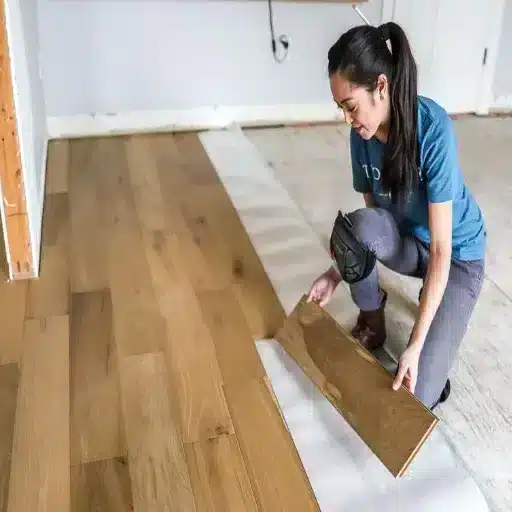
Testing tells you whether the slab is ready. Prep makes it ready for flooring.
Clean and Inspect
Remove old carpet tack strips, adhesive residue, paint, sealers, and debris. These materials can trap moisture or prevent adhesives and underlayment from bonding. Sweep, vacuum, and scrape until you are down to bare concrete.
Repair Cracks and Level
Patch cracks with a concrete patching compound. For uneven slabs, use a self-leveling underlayment. Most engineered flooring tolerates minor imperfections, but dips greater than 3/16 inch over 10 feet can cause boards to flex, separate, or squeak.
Exterior Water Management
Before any flooring goes down, walk outside. Make sure the soil slopes away from the foundation. Clean gutters and extend downspouts at least 6 feet from the house. If water pools against the foundation, it will eventually find the basement.
Dry Out Wet Work
Complete any masonry, drywall mudding, painting, or concrete patching at least several days before flooring installation. Wet construction raises humidity and traps moisture in the slab.
Vapor Barriers and Underlayment for Basement Engineered Wood
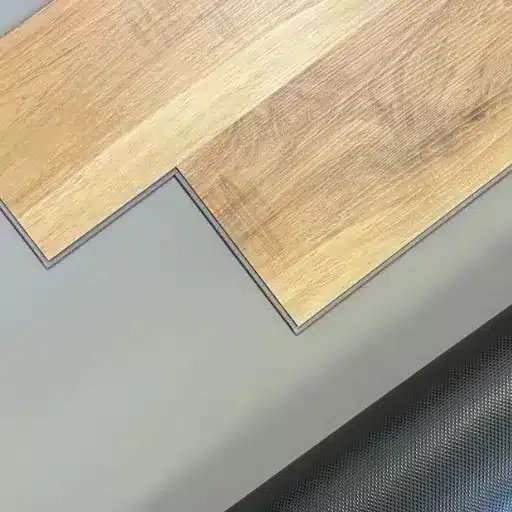
A vapor barrier blocks the moisture that rises through concrete. In a basement, it is non-negotiable.
6-Mil Polyethylene Vapor Barrier
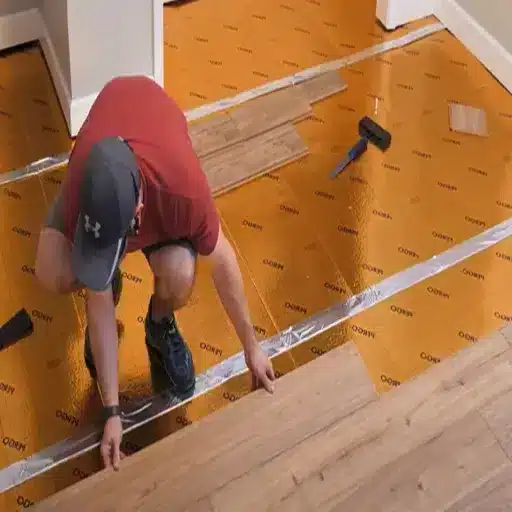
For floating installations, lay a 6-mil polyethylene sheet directly over the concrete. Overlap seams by 6 to 8 inches and run the sheet 2 to 3 inches up the walls. This is the minimum protection most manufacturers accept for below-grade engineered wood.
Underlayment with Built-In Moisture Barrier
Some underlayments combine a vapor barrier with foam or cork padding. This adds sound dampening, a thermal break, and a second layer of moisture protection. It is a good upgrade for basements where comfort and noise matter.
Glue-Down Adhesive Systems
Glue-down engineered hardwood over concrete requires a vapor-retarding adhesive approved by the flooring manufacturer. This method can feel more solid and is common in commercial spaces, but it is less forgiving of slab moisture than a floating floor with a separate vapor barrier.
When to Add a Raised Subfloor System
For challenging basements, products like DRIcore create a raised subfloor with an integrated air gap and moisture barrier. They add height and cost but provide the best protection for a wood floor over a questionable slab.
Choosing the Best Engineered Wood Flooring for a Basement
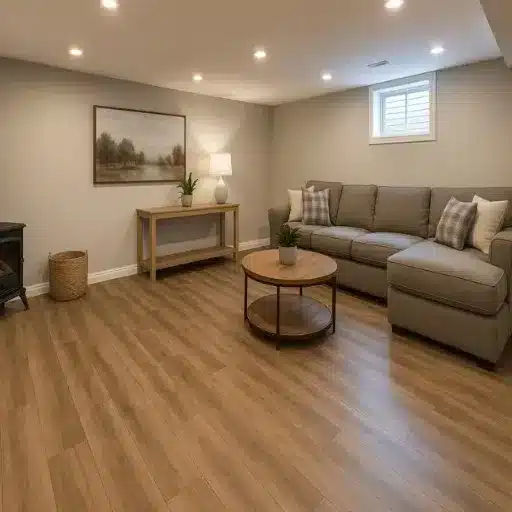
Not every engineered board belongs below grade. Use these criteria to narrow the field.
Core Construction
Choose a plywood core over HDF for basement installations. Plywood handles moisture better and is more dimensionally stable. HDF cores can swell and degrade if moisture ever reaches them.
Total Thickness and Wear Layer
Total thickness for basement engineered hardwood typically ranges from 3/8 inch to 3/4 inch. Thicker boards feel more solid and are generally more stable. The wear layer should be at least 2 mm for one possible refinishing; 3–4 mm is better for longevity.
Species and Stability
Oak and hickory are stable domestic species that perform well in basements. European oak is popular for wide-plank styles. Exotic species can be beautiful but often move more with humidity changes, so verify stability before choosing one below grade.
Finish and Warranty
Look for aluminum oxide or UV-cured urethane finishes for scratch resistance. More importantly, confirm that the manufacturer’s warranty explicitly covers below-grade installation. Some warranties exclude basements entirely.
Certifications
Choose products certified by FSC or PEFC for responsible forestry. Look for FloorScore or GREENGUARD labels to confirm low VOC emissions. These certifications protect indoor air quality and align with VitalWood Global’s commitment to sustainable sourcing.
Installing Engineered Wood Flooring in a Basement
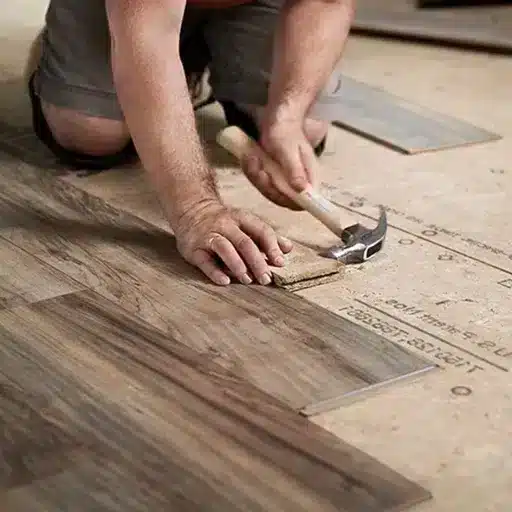
Installation is where preparation pays off. Follow these steps for the safest basement install.
Acclimate Before Installation
Bring the engineered flooring into the basement and let it acclimate for at least 48 hours. Maintain the room at 60–80°F and 30–50% RH during this period. Some manufacturers recommend 5–7 days for full acclimation. Do not stack boxes directly on concrete; use pallets or scrap lumber to allow air circulation.
Engineered Wood Flooring for Basement Installation Steps
Floating is the best method for most basement engineered wood floors. The boards click or lock together and rest on the underlayment and vapor barrier. The entire floor expands and contracts as one unit, which reduces stress on individual boards.
Leave an expansion gap of about 1/4 inch around the perimeter and at all vertical obstructions. Cover the gap with baseboard or quarter-round.
For detailed step-by-step instructions, see our engineered wood flooring installation guide.
Glue-Down Installation
Glue-down works best when the slab is very dry, the manufacturer approves it, and you want a floor that feels absolutely solid. Use a vapor-retarding adhesive and follow trowel specifications exactly. This method is less DIY-friendly than floating and harder to remove if moisture ever becomes a problem.
Nail-Down Installation
Nail-down is generally not suitable for basement concrete slabs. It requires a wood subfloor, which raises the floor height and adds cost. Only consider it if you have already installed a raised plywood subfloor system.
YouTube Reference: Engineered Hardwood Installation
For a visual walkthrough of the installation process, this video from Lowe’s demonstrates how to install an engineered hardwood floor over concrete, including subfloor prep and expansion gaps.
Humidity Control and Long-Term Maintenance
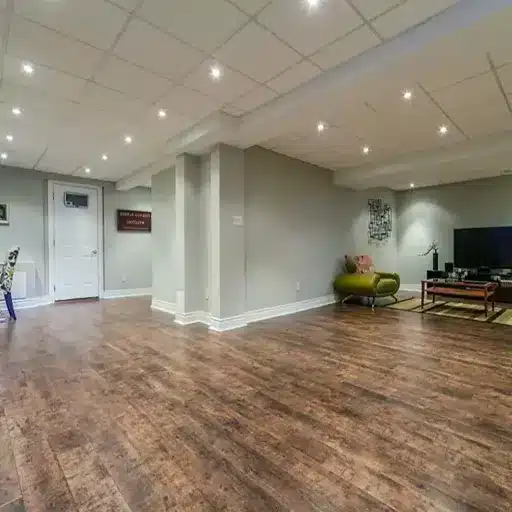
Installing the floor is only half the battle. Keeping it stable requires ongoing humidity control.
Target Conditions
Maintain 30–50% relative humidity and 60–80°F year-round. These are the same conditions recommended by the National Wood Flooring Association for hardwood floors. Basements tend to drift higher in summer, so monitoring is essential.
Dehumidification Strategy
Run a dehumidifier continuously during humid months. In damp climates, a permanent dehumidifier connected to a drain may be necessary. Empty reservoir-style units regularly, or they will stop working when you need them most.
Monitoring
Place a hygrometer in the basement and check it weekly. Smart hygrometers can send alerts to your phone when humidity climbs above your set threshold. Catching a humidity spike early prevents floor damage.
Cleaning and Care
Sweep or vacuum regularly to remove grit that scratches the finish. Use a damp, not wet, mop for cleaning. Never leave standing water on the floor. Clean up spills immediately.
Warning Signs to Watch
Call a flooring professional if you notice:
- Cupping: Edges of boards rise higher than the center.
- Gapping: Boards pull apart, especially in winter.
- Buckling: Boards lift off the subfloor.
- Musty odors: A sign of trapped moisture or mold.
- Soft spots: Could indicate water damage under the floor.
If stains appear, our guide on removing water stains from wood floors can help you address minor surface issues before they worsen.
Engineered Wood vs. Other Basement Flooring Options
Engineered hardwood is not the only option for a basement. Here is how it compares to the most common alternatives.
| Factor | Engineered Wood | LVP/SPC | Waterproof Laminate | Tile |
|---|---|---|---|---|
| Appearance | Real wood veneer | Photographic layer | Printed image | Ceramic or stone |
| Moisture tolerance | Moderate | Highest | Moderate to high | Highest |
| Cost installed | 8–8–18/sq ft | $4–$10/sq ft | $5–$12/sq ft | $8–$25+/sq ft |
| Lifespan | 20–40+ years | 15–25 years | 10–20 years | 50+ years |
| Comfort underfoot | Warm and slightly soft | Moderate | Moderate | Cold and hard |
| Refinishable | Yes, if wear layer allows | No | No | No |
| Best for | Dry, conditioned basements | Wet or flood-prone basements | Budget-focused projects | Utility or laundry areas |
For more on waterproof options, read our guide to waterproof engineered wood flooring.
Cost of Engineered Wood Flooring in a Basement
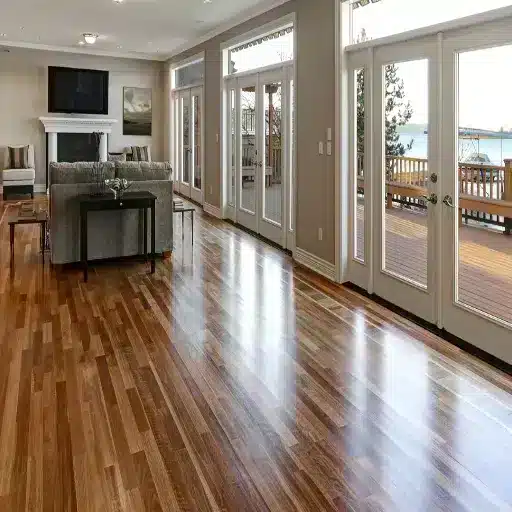
Basement installations carry extra costs that upstairs rooms do not. Plan for them so your budget does not collapse mid-project.
Material Costs
Standard engineered hardwood ranges from $4.50 to $16 per square foot. Waterproof engineered products typically run $6 to $14 per square foot. The price depends on species, wear layer thickness, finish, and certification level.
Labor and Installation
- Floating install: $3–$5 per square foot
- Glue-down install: $5–$8 per square foot
Basement-Specific Extras
- Moisture testing:$100–$300
- Vapor barrier/underlayment: $0.50–$1.50 per square foot
- Subfloor leveling or repair: $1–$2 per square foot; up to $10 per square foot for major work
- Dehumidifier: $200–$1,500 or more
Example: 500 Square Foot Basement
- Mid-range materials: $2,500–$4,000
- Floating labor: $1,500–$2,500
- Moisture prep and underlayment: $500–$1,500
- Total: roughly $4,500–$8,000
These figures align with 2026 national averages from HomeAdvisor and flooring industry sources. Your actual cost will vary by location, slab condition, and product choice.
Sustainability Considerations for Basement Engineered Wood
Engineered hardwood is one of the most sustainable ways to enjoy real wood. Because only the top layer is premium hardwood, the core can use faster-growing species or wood byproducts. A typical engineered board uses one-third to one-fifth the slow-growing hardwood of a solid board of the same dimensions.
Certified Sourcing
Look for FSC or PEFC certification. These labels confirm that the wood came from responsibly managed forests with chain-of-custody traceability. At VitalWood Global, we believe every project should support ethical forestry.
Indoor Air Quality
Basements have less ventilation than upper floors, so low-VOC finishes matter more. FloorScore and GREENGUARD certifications verify that adhesives and finishes meet strict emission limits. EPA TSCA Title VI and CARB ATCM standards set formaldehyde limits for composite wood cores.
Longevity Means Lower Impact
A floor that lasts 30 or 40 years and can be refinished once or twice creates less waste than a floor that must be replaced every 10 to 15 years. Choosing quality over the lowest upfront price is often the greener choice.
Frequently Asked Questions
Can you put engineered hardwood in a basement?
Yes, if the basement is dry, conditioned, and properly prepped with moisture testing and a vapor barrier. Engineered hardwood handles humidity better than solid wood but is not waterproof.
Is engineered wood flooring waterproof for basements?
No. Some engineered products are water-resistant for limited periods, but none are fully waterproof. For flood-prone basements, rigid-core vinyl or tile is a safer choice.
What is the best flooring for a basement?
The best flooring depends on moisture conditions. Dry, conditioned basements suit engineered wood or LVP. Wet basements need waterproof options like SPC, LVP, or tile.
Do you need a moisture barrier under engineered hardwood on concrete?
Yes. A 6-mil polyethylene vapor barrier is the minimum protection for floating engineered hardwood over a basement concrete slab.
How long should engineered wood acclimate in a basement?
At least 48 hours, and up to 5–7 days for some products. Maintain 60–80°F and 30–50% RH during acclimation.
What humidity level is best for engineered hardwood in a basement?
Keep relative humidity between 30% and 50% year-round, with temperatures between 60°F and 80°F.
Can you float engineered hardwood in a basement?
Yes. Floating installation is the recommended method for most basement engineered hardwood floors over concrete.
Is laminate or engineered wood better for a basement?
Engineered wood offers real wood veneer and can be refinished. Laminate is more budget-friendly and can handle moisture better than standard engineered wood, but it cannot be refinished and has a shorter lifespan.
How much does it cost to install engineered wood flooring in a basement?
Expect 8–8–18 per square foot installed, plus $1–$5 per square foot for basement-specific prep like moisture testing, vapor barriers, leveling, and dehumidification.
What happens if engineered wood flooring gets wet in the basement?
If water sits on engineered hardwood, it can warp, cup, buckle, or grow mold underneath. Clean up spills immediately, run a dehumidifier, and inspect for hidden moisture if a leak occurs.
Conclusion
Engineered wood flooring can transform a basement from a cold concrete cave into a warm, inviting living space. But it only works when you respect the moisture. Start with honest testing. Choose a plywood-core product with a thick wear layer. Float the floor over a 6-mil vapor barrier. Run a dehumidifier year-round. And know when to choose waterproof alternatives instead.
The homeowners who get this right are the ones who slow down at the prep stage. They test the slab, manage exterior water, and condition the air before the first board goes down. The result is a real wood floor that performs as beautifully below grade as it does upstairs.
If you are ready to explore certified, sustainably sourced engineered wood flooring for basement projects, browse our engineered wood flooring collection or contact the VitalWood Global team for a tailored recommendation. Your basement deserves a floor that lasts, and so does the planet.